

Jim Tuck
This transcript was generated by AI and may contain errors. It is provided to assist those who may not be able to listen to the message.
Well, you know, every child that I've ever known enjoys candy. I mean, parents occasionally allow their small children to have sweets that they have in a balanced way. I know my mother and father were that way about me when I was growing up. But I believe that every child has a fantasy, and maybe they've even dreamed about it, about being in a world of candy and chocolate. You know, wouldn't it be great to live in a town of candy and chocolate? You could sort of break off the, you know, a shingle and eat it, and it would be chocolate. I remember thinking about that when I was a kid growing up. You know, that's why Charlie and the Chocolate Factory was so famous, and kids really loved that, and Hollywood latched onto that and made a lot of money with that movie.
You know, have you ever had a time, though, as a child, when you had all the candy that you could eat? Now, I've had a few times where that occurred to me. I just had bags of candy that I could eat. And, you know, you could eat until your heart was content. You know, you could have jawbreakers, you could have M&Ms, you could have, you know, the Payday Bars and the Almond Joy, and every kind of candy bar that you want to imagine, you know, you could have. You know, I've had that happen to me again a few times. But what was the result of this gluttony on these sweet things in your life? What happened after that? Well, most of us end up feeling sick, don't we? You know, we really do. And we get nauseated because we've overtaxed our bodies with all of the sugar intake that we've had. And what began is a satisfying experience downing all those sweet things, and feeling miserable, and giving you a stomach ache. Now, what is the point of my bringing this up here as a by way of an introduction? Well, you know, life tends to be that way. You ever notice that about human life? That it is that way with us if we overdo anything in our lives. King Solomon experienced this same thing. Let's go to Ecclesiastes 5 over here, and Ecclesiastes 5 and verse 10.
Here, notice what he says. He, of course, puts it on an adult level. You know, sometimes you will see people. You know, all of you, like I said, look good, you know, and are holding your age well. But, you know, sometimes you look at people and you say, what in the world happened to you?
You know, and you know, you know what I say? Sometimes in my mind, I would never say it publicly, but to them. But this person has had too much of life, just too much living. But notice here in Ecclesiastes 5 verse 10, it says, he who loves silver will not be satisfied with silver. You know, you can get so much, you're not going to be satisfied with it. Nor he who loves abundance with increase, whatever it might be. One steak is good.
You know, eat three, and it's not very good, is it? You know, as you've seen, of course, the 72-ounce steak you can get, where is it over somewhere in Texas, that if you eat this thing, it's free. And by the time of it, you know, you're going to the Roman Vomitorium, you know, to get rid of it. It says, nor he who loves abundance with increase, this also is vanity. When goods increase, Ecclesiastes 5 verse 11, they increase who eat them.
So what profit have the owners, except to see them with their eyes. The sleep of a laboring man is sweet, whether he eats little or much, but the abundance of the rich will not permit him to sleep. There is a severe evil which I have seen, Solomon said, under the sun. Riches kept for their owner to his hurt. But those riches perish through misfortunes when he begets his son, there is nothing in his hand.
As he came from his mother's womb, naked shall he return to go as he came, and he shall take nothing from his labor, which he may carry away in his hand. No, that is the way life can be. You know, you can work and work and work all your life, and you can lay away and lay away, and something happens, and you lose it all.
It's gone. And Solomon, of course, came to realize this, even though he could have anything and everything that he wanted, he realized he could not take it with him. Now, let's go over to Matthew chapter 6 and get into what I'm really going to talk about here in the process of this message here, the second message for you today.
But in Matthew chapter 6, notice what Jesus says over here. And Jesus, of course, is evaluating life like no other human being could. He, of course, was living it as a physical human being, as a manual God with us, and, you know, feeling all of the feelings that we feel, and going through the experiences that we go through, but not sinning, of course. But here in Matthew 6 and verse 19, he says, do not lay up for yourselves treasures on earth where moth and rust destroy, and where thieves break in and steal, but lay up for yourselves treasures in heaven, where neither moth nor rust destroys, and where thieves do not break in and steal.
For where your treasure is, there your heart will be also, he says. So here in the Sermon on the Mount, Jesus admonishes his disciples to not lay up treasures, you know, not to be infatuated with silver and gold and the physical accoutrements of this life, to not lay up treasures here upon this earth and have that mentality about them, but to lay up treasures in heaven where they will endure forever. Like I said, Jesus Christ looked at life differently than we do because he's evaluating what is really important about life, and of course he could have anything he wanted to have, but he realized that to be happy in life, one has to lay up treasures in heaven, this physical life, at least, to lay up treasures in heaven where they're going to endure forever.
And one of the very important things that Jesus, of course, Christ saw, what he saw, is that God wants a relationship with you and me that is going to be forever. And so if we're laying up treasures here upon this earth, this physical earth right now, all these things are going to pass away. And if that's our sole ambition to do that, we're going to pass away too, and we're not going to have this relationship that goes on forever and ever.
So what he's saying very much relates, again, to the very topic he's discussing here, but not laying up treasures upon the earth, but laying them up in heaven because you can have a relationship that goes on forever and ever. Now, is Jesus Christ saying that we can't have treasures here upon the earth? Of course not. You know, we live here. You got to live here, don't you? You got to have a house to live in. You've got to have shelter. You've got to have clothing and food and that sort of things. But, you know, he doesn't want our primary focus to be on accumulating things here upon this earth.
You know, men work long hours to accumulate things, to build up things. And no matter how much they acquire, what good is it? Really, what good is it? You know, there's a singer that I enjoy very much listening to. In fact, it seems the older I get, the more I enjoy listening to some of his old songs because they carry a message, a very powerful message. Johnny Cash, all of you, of course, I'm sure are very familiar with old Johnny Cash. He's dead now. But prior to his death, he rewrote a song called Hurt. How many of you have heard this song, Hurt? I wish I could play it for you, but I can't, according to the copyright laws and all that. But anyway, it's a song that was written originally by Nine-inch Nails. Now, how many of you have heard Nine-inch Nails songs before? A few. Shame on you. Just kidding with you. But I haven't ever heard a Nine-inch Nails song, by the way, but I've heard of them. But here are the lyrics to this song called Hurt. And I want to read them to you, and I hope that you can get the message of what he's trying to convey here. Johnny Cash, he says, I hurt myself today to see if I still fill. I focus on the pain, the only thing that's real. The needle tears a hole, the old familiar sting. Of course, he was a drug addict at a time in his life. Tried to kill it all away, but I remember everything. What have I become? My sweetest friend, everyone I know, goes away, he said in the end. And you could have it all, my empire of dirt. I will let you down. I will make you hurt. I will wear this crown of thorns upon my liar's chair. Full of broken thoughts, I cannot repair. Beneath the stains of time, the feelings disappear. You are someone else. I am still right here. What have I become? My sweetest friend, everyone I know, goes away in the end. And you could have it all, my empire of dirt. I will let you down. I will make you hurt. And then he says this at the end of the lyrics of this song, if I could start again a million miles away, I would keep myself. I would find a way. This is Johnny Cash. It was like, in a way, he was coming to himself. Too late, of course, in his life, because he was near the time when he was going to die. Johnny Cash died, you know, at 71. He had failing health when he actually did this particular song, when he recorded it.
And many consider this an epitaph of his life, of his younger years of hard living, you know, the drinking and the drugs, that in his later life were expressed in the decay of his old age, when he realized he was broken down. And everything was going away. All of his friends, everybody he knew, was going away. And he died shortly after the release of this, what became an award-winning song for him. And a very, you know, it's a haunting type song, if you've ever listened to it, and it has a lot to say. But here's a man, by the way, who accumulated probably millions upon millions of dollars, probably over the years, and maybe had millions and millions of dollars at his death, but he called it an empire of dirt.
That was all he referred to it as. Now, I want you to think about that, brethren, when I talk about people maybe living too much life, getting too much in this physical life, and maybe laying up treasures here upon this earth, and not laying up treasures in heaven. You know, reflecting on the latest catastrophes that have happened to America, and it's uncanny how many there have been.
We, of course, remember what happened in Joplin, where so many people's homes were wiped out there, displacing thousands of people. I think there were like 75 percent of the people were displaced there in Joplin that were impacted in some way by the tornadoes that took place. You know, thinking about the Japanese tsunami that took place as well, and the thousands upon thousands that were impacted by that. And just a short space of time, and thinking about Katrina, again, back in America here again, and the hurricane there, and the floods that have taken place, and the fires, and all of these things. And basically what people have built up maybe for a lifetime is wiped out, just like that. It's gone. Totally gone. Maybe everything that they had worked for. Of course, they talk about how we're thankful to be alive, thankful that our family is alive.
You know, I like the way Johnny Cash refers to the earthly treasures of life as the empire of dirt, and in the end it all goes away. You know, why did Jesus Christ, brethren, put so much emphasis on laying up treasures in heaven? Well, number one, number one, earthly treasures are always insecure, always. You may be the smartest person upon the face of the earth, but earthly treasures are always insecure. You know, money can be eaten away by unforeseen events. You know, how many of you thought that your home was going to diminish in value so much? How many predicted that was going to happen? You know, none of us probably saw it coming to the degree that perhaps that we should have. Maybe we would have made some smarter decisions if that had been the case. It's like up in the Bay Area, there are some people that, you know, are upside down on their mortgages, and they've got houses that are like six, seven hundred thousand. Maybe they're worth three hundred thousand now. You know, still a lot of money, of course, but when it comes to loans that are on them, it's not very much. And again, here their wealth has been eaten away just like that. It's gone. You know, inflation can do it. Market crashes, deflation, bankruptcies, bad investments, all kinds of plans that human beings can make. You know, like the plans of mice and men, they can come to nothing. In the end, it can all go away. It can all disappear, and you have nothing. If you put your whole life into that, if you involve yourself in laying up treasures upon the earth, it could be gone. It could go away. But treasure in heaven is secure. It's secure. Let's go to 1 Peter 2. Notice what the Bible says about this. 1 Peter 2. 1 Peter chapter, I'm sorry, chapter 1, 1 Peter 1 and verse 3. Here it says, Blessed be the God and Father of our Lord Jesus Christ, who according to his abundant mercy has begotten us again to a living hope. So we have a living hope through the resurrection of Jesus Christ, of the dead, to an inheritance incorruptible and undefiled that does not fade away, reserved in heaven for you. And so here we see that God has this reward that we have in heaven that never fades away. No, it can't be tarnished. It doesn't rust away. No one can steal it. And notice in verse 5, who were kept by the power of God through faith for salvation, ready to be revealed in the last time. So God, we are told here in verse 5, guards the treasures reserved for us, ready to be revealed, as it says in the last time. And so our lives, if we are laying up treasures in heaven, are built on a firm foundation that cannot be taken away if we have put it securely in heaven. And God wants us to do that. And He wants us to build, you know, on a firm foundation. I'm not going to go to Matthew 7 in verses 24 through 27, but there, Christ talks about not building on sand, but building on a rock. And of course, we know that that rock is Jesus Christ that we need to be building on. And I'd like you to write down also in your notes 1 Corinthians 3 and verses 10 through 16. I won't go there either, but Paul said that no one should build on that foundation that he had laid, which was Jesus Christ.
No one else should lay any other foundation except Jesus Christ. And he told us to be very cautious about how we build, to make sure again that we build with things that are going to endure, that we build with gold and silver and precious stone and not wood, hay, and stubble.
Because the wood, hay, and stubble again is going to be burnt up, it's going to disappear, and it will be gone. So we must be building on an enduring foundation, which is Jesus Christ. And what we build needs to be enduring. It needs to be something that's going to survive and go on and on forevermore and endure. And Paul says, take heed, though, what you built, because it's going to be tested. You know, look at this very room right here today. And, you know, I was talking to George and Dave Lee Siders beforehand, and of course we've been here in this facility since 1992. You know, it's kind of extraordinary that you're still here. What is it? Running around 19 years now, that you've had the privilege of being able to be here. I remember how it came about, and how God blessed us with the facility here. It was truly a blessing to have this. But one thing we were commenting on is how, over the years, so many things happen. You know, so many things occur through the years, over the last 19 years. You know, and we've had trials and we've had tests that have occurred to us. And, you know, we know that those tests come, and we've got to endure those tests, as, you know, was talked about by Mr. Mitiger and his first message. So we have to take heed again how we build. There was a man at Ambassador College. When I got to Ambassador College, he had a PhD, and a very, you know, accomplished professor at Bixanti for Ambassador College for many years, as a matter of fact. The story of his life was quite interesting. When he was a child, his father was a grocer. And his father basically, you know, worked his fingers to the bone to build this grocery store. And he really related the story about how his father had spent all of his energy in his life to do that. You know, of course, to support his family, to take care of his family. But he put everything into that grocery store, and one night they heard that the grocery store was on fire, and it burned to the ground. It was completely gone. And he talked about, this professor at Ambassador College said that from that time he decided that what he was going to do is build things that could not be burned down overnight. And so he decided he was going to invest into knowledge. That's what led him to become a professor. You know, he was a theology professor at Ambassador Big Sandy, and later also in Pasadena for many years. Some of you may know who I'm talking about as Dr. Charles Dorothy, and a very intelligent man, and was very wise in so many ways. But I think in a lot of ways we need to take the same approach in our own personal lives. Is are we building things that are going to last a long time? You know, Jesus Christ, when he came, he warned his disciples. He said, beware of covenants-ness. In other words, don't get attached to things so much because you can lose it so quickly. And again, Christ is teaching this to again show us how life can change so quickly and how in fact it can all be taken away. Let's go over to Luke 12, Luke chapter 12, and down in verse 13. You know, here sometimes people try to draw Jesus Christ into their petty arguments, but he deflected them. But here in verse 13, notice it says, then one from the crowd, Luke 12 verse 13, said to him, teacher, tell my brother to divide the inheritance with me. But he said to him, man who made me a judge or an arbiter over you.
Now, of course, perhaps Christ was able to perceive the covenants-ness of the individual that was asking the question as well. And he said to them, take heed and beware of covenants-ness, for one's life does not consist of the abundance of the things he possesses. So that's not what life is all about, he's saying here. Then he spoke a parable to them, saying, the ground of a certain rich man yielded plentifully. And he thought within himself, saying, what shall I do since I have no room to store my crops? So he said, I will do this. I will pull down my barns and I will build greater.
And there I will store all my crops and my goods. And I will say to my soul, soul, you have many things and many goods laid up for many years. Take your ease, eat, drink, and be merry. Go buy yourself a yacht, you know, or whatever people do today with all their abundance. But God said to him, fool, you are a fool. You know, that man, in other words, that invests all he has in this physical life is a fool, according to what Christ says. This night your soul will be required of you. Then whose will those things be which you have provided? So is he who lays up treasure for himself and is not rich toward God. So again, the importance of laying up treasures in heaven here, not being covetous. Don't hang on, again, tenaciously to what you have. I was listening to a man, you know, coming down on one of the talk shows, and he was talking about how that people were going to have to readjust their lives in America. You may remember Mr. Armstrong said many, many years ago, he said, prepare to reduce your standard of liberty. Now we may actually have to do it, but this man was talking to a radio. He said, how would you survive if you didn't have the job that you have now and you just had to survive? He said, like, if you had to survive on three thousand dollars a month, how could you do it? My wife and I looked at each other and said, well, you know, I wish we had three thousand dollars a month. I think we could live on that, you know, but this is the way some people think. And I told my wife, I said, this man will be in trouble when things really do begin to happen, because you're going to be lucky if you have, you know, a thousand dollars a month, you know, or even less than that. And so, you know, people can get so hooked on these things that they can't live without them. You know, could we survive if we didn't have very much of anything? I think we could. We could. You know, you don't have to have electricity. You may say, well, I do. Here in Phoenix, I've got to have it in Phoenix. You don't have to have it. You can survive. You can survive. They did before air conditioning. Some of you, I think, told me that they used to, you know, wrap themselves in sheets during the summertime and wet them down and get under a fan somewhere or try to keep cool in some way or another, you know, and get by. And so we don't have to have some of the things that we think that we have to have. We don't have to have cable TV. You know, we don't have to have dish network or we don't have to have computers. You know, we think we do, but we don't have to have those things. So again, there may be things that we may find in the future that we may have to let go of in order to obey God. As a matter of fact, we may have to let go of them. You know, that could be a distinct possibility. Let's go to 1 Timothy 6.
1 Timothy 6 over here. 1 Timothy 6, verse 9 and 10.
You know, here Paul says, he says, But those who desire to be rich fall into temptation and snare, and into many foolish and harmful lusts which drown men in destruction and perdition. For the love of money is a root of all kinds of evil, for which some have strayed from the faith in their greediness and pierced themselves through with many sorrows.
Again, I don't think that necessarily we can... I could say here that here we've got a lot of people in the church in the Phoenix area or the Oakland area that are pursuing these things, but I think certainly we always have to put God first, don't we, in our lives, no matter what. It means, basically, as God's people, that we don't put the physical things ahead of the spiritual things. You know, that Paul was a man who knew how to be content, didn't he, in whatever circumstance he founded himself. I imagine there were times when Paul had abundance, and there were times when he had, you know, a pittance of what he had before. And so, again, time and time again in our lives, we have ups and downs, and we have to deal with them and have the right attitude and the process and keep the spiritual first in our lives. You know, we must keep in mind also that we cannot earn salvation. We can't earn salvation. Salvation is a free gift that God gives to us. Now, does that mean that we shouldn't have works in our lives? And the answer is no. You know, we do have to have works, because James writes that faith without works is dead.
And works, by the way, are necessary, though, to show we have faith in the promises of God.
And so we have to have works in our lives so that we can, you know, prove to God that we really have faith in Him, that we trust Him. Now, we can't earn our salvation by them or eternal life, because again, eternal life is a free gift. But what we are earning, and as Mr. Meitiger, part of what he was talking about, is that we're going to be kings and priests in the world tomorrow. We're going to have opportunities to be promoted in the future, and it is going to be based on what we do in this physical life right now. So we are going to be rewarded according to our works that we do. And we need to have works for the kingdom of God. You know, that's what the parable of the talents and pound is all about. You know, if you read those two parables there, that's what it's all about, that we are going to be rewarded for our works in the kingdom of God. Remember, they're going to be those who are going to be ruling over 10 cities. They're going to be those who are going to be ruling over five cities based upon what they do with what God has provided for us. And he who increases his talents is going to be given and rewarded when Jesus Christ returns.
But, brethren, how can you lay up treasure in heaven now? How can you do it in your life now? What can we build which will endure forever in our lives? Let me give you a few points on this.
Number one, brethren, make God your Lord and your Master. Make Him your true Lord and your true Master in your life. So we need to decide, brethren, in this life that we're living in. It's which side of the equation are we going to be on. You know, are we going to be on God's side or are we going to be on Satan's side? You know, God doesn't want us to be sitting on the fence in between. We need to, again, decide which side we're going to be on. Let's go over to Matthew chapter 6. Jesus Christ presented this Himself. And He was telling His disciples, look, you need to decide which side of the equation you're going to be on. He said that to them 2,000 years ago.
Matthew 6 and verse 24.
He said, no one can serve two masters. For either you will hate the one and love the other, or else He will be loyal to the one and despise the other. You cannot serve God and money. Or mammon, as it says here. Of course, it's interesting that Satan, one of the great sins that he committed, remember you read over there in the book of Ezekiel 28, was merchandise. He loves the merchandise. And apparently led the angelic realm that was upon the earth in his first estate, where they multiplied merchandise upon the face of the earth. And, of course, covenants, this probably was a part of that, very much so, back in that time. And eventually God cast him down, and he became Satan the devil. And while he, of course, was over, apparently, a third of the angels, he was called Lucifer. But afterwards he became God's adversary, or Satan. He was cast down to the earth. So, you know, Christ is saying you can't serve God in mammon. You can't serve God in Satan. You can't serve God in the world. You need to make up your mind of which side of the equation that you want to be on. Let's note this down in verse 33. This was a memory verse for Camp High Sierra. But seek you first, the kingdom of God and his righteousness, and all these things shall be added to you. So seek God's kingdom first, and everything that you do, you're seeking God's kingdom first. You're applying yourself to do that every day, every day of your life. You know, we have to, as God's people, again, put that number one. You're going to get a college education. The kingdom is number one. In other words, you obey God through the process of getting that college education. And, you know, you put God first. And believe me, I know what that is. I didn't go to Ambassador College the whole time. I went to Northeastern State University. You know, I was in a position where one time during the, in fact, the Day of Atonement period, I had a chemistry test that I was going to have to keep or to take. And it, you know, it fell on the Day of Atonement. That was the first, this is the first Day of Atonement I ever observed, by the way. And anyway, I went to my chemistry professor and I said, look, I keep the annual holy days observe the Feast of Yom Kippur, the Day of Atonement. I thought he might understand that a little more. I think he was Jewish and I was trying to get, make headway with it a little bit. And he said, I'm sorry. You know, if you don't take the test, you'll flunk it.
And just to not make it a long story, but what occurred is I didn't go and take that test on the Day of Atonement. And sure enough, I flunked the test. And anyway, after the, you know, the test was over and I went to talk to the doctor. I remember the professor's name was Dr. Ireland. And I said to him, I said, is there any way I can do something to make up for this F that I've made in this chemistry test? And he said, well, he said, don't really worry about it. I said, well, why?
He says, because everybody flunked it.
And he said, just do well on the next one. And the next time I made an A on it, and I was teacher's pet the whole rest of the school years. So I know what it's like, you know, to be put up against the gun that way. But, you know, if we put God first, brethren, it will work out for us. So make God your Lord and your master. Secondly, brethren, yield yourself to be an instrument of righteousness. Make yourself that instrument of righteousness, to do good in your life. Let's go to Romans, Romans 6. Romans 6 and verse 12.
No, when we were in the world, brethren, we were of the world. And we probably loved the world, didn't we? And we tried to make the world work.
A lot of people do, don't they? But, brethren, now that we're not of the world, you know, we've come out of the world and we come into God's church, are we trying to make God's way work to the same degree? You know, Paul was a man who attacked the church with all the vigilance that a human being could muster. He was against the church. When he came into the church, there was no greater advocate than Paul. That's what I'm saying, brethren, to all of us here today. But Romans 6 and verse 12, let's know this here. It says, Therefore do not let sin reign in your mortal bodies, that you should obey it in the lust. And do not present your members as instruments of unrighteousness to sin, but present yourselves to God as being alive from the dead, and your members as instruments of righteousness to God. So again, brethren, yield yourself to be an instrument of God. You know, that God uses you, in other words, that you would be a force for good in the world. You know, God wants us to be a tool upon the earth, you know, of righteousness, to be an example, a light of righteousness to this world. So yield yourself to be an instrument of righteousness. You know, there's many other scriptures I could turn to. You might want to write down Ephesians 5 verses 8 through 10, but there it talks about that not only, you know, are we to be a force for good in the world, but that we are to expose sin as God's people.
In other words, we should know the difference between right and wrong, good and evil.
And we should make it clear what is wrong. And, you know, not that again that we should get on soap boxes on the corner, but, you know, we should at least in a very peaceful, loving way let it be known if we think something's not quite right.
Another way, a third way, brethren, to lay up treasures in heaven is to make yourself a living sacrifice. Make yourself a living sacrifice. You know, are you sacrificing your life to God? Are you presenting yourself as a living sacrifice?
You know, God expects us to do that, you know. That's what He wants from us. He's building a living building, and He has living sacrifices. Let's go over here to 1 Peter 2. 1 Peter 2. 2 Peter 2 and verse 5. Notice this. Here it says, And you also are living stones. So we're stones that God is laying in His temple are being built up a spiritual house. So we're being made into a spiritual house, a holy priesthood to offer up spiritual sacrifices acceptable to God through Jesus Christ. And so that we are, again, to be living stones, and we are to offer up spiritual sacrifices, and that, in fact, the Bible says that we are to be living sacrifices.
Let's go over to Romans 12 here for this. Romans 12. So we are to be offering up those living sacrifices throughout our lives. But here, notice here Paul says in verse 1 and 2, he says, I beseech you therefore, brethren, by the mercies of God that you present your bodies a living sacrifice, holy, acceptable to God, which is your reasonable service. Considering what God has done for you and me, brethren, it's our reasonable service to give it back to God. Remember what Hannah's attitude was when she wanted a child so badly?
You know, in the story, in the account of how Samuel was born? You know, when God heard Hannah say that she was going to give her child, her offspring, back to God in service in the temple, then God blessed her with a child. And to me, that's a lesson, brethren, is that God will bless us abundantly if we have the willingness to give it back to him.
To give it back to him, Samuel went on to become one of the greatest prophets in the Old Testament. You know, a tremendous example of a prophet. And so this is our reasonable service, brethren. And do not be conformed to this world, but be transformed by the renewing of your mind that you may prove what is that good and acceptable and perfect will of God.
You know, I hope if I see you three years from now that you look the same or better physically, but not spiritually, I hope that we change every year more and more, and we grow every year more and more, become more mature, more spiritual, and more spiritually-minded is God's people as we go through our lives. So, brethren, again, make yourself a living sacrifice. Now, how are we a living sacrifice? Well, a good mother is a living sacrifice.
A good father who teaches and models God's way of life to their children. Mothers and fathers that do that, that's a sacrifice in your life. A mother providing a good home environment for the family, that's a sacrifice on the part of a mother. It takes hard work and time. A father providing for his family. You know, many of you grew up in homes where your fathers worked themselves, you know, all of their lives to support you and to take care of you and help you to become a better person. Children being obedient and respectful to their parents and their grandparents is a sacrifice. It's what we do. Brethren setting up for services or bringing flowers, a sacrifice. Playing the piano, it's a sacrifice. Taking care of the PA system, a sacrifice. It's a big sacrifice. It seemed like I saw you there 10 years ago, Jim.
It's a big sacrifice. And I don't know whether people do things as well, so many things. Being a choir director is a sacrifice. Special music, standing up, singing is a sacrifice. Translating for the deaf is a sacrifice. Being a greeter is a sacrifice. It's good to see Lela when we walked in there, you know, and very encouraged to see her out there. Working in the kitchen is a sacrifice. He had to talk to Karen Freyer about that. She's a sacrifice in herself there in Avilia as well. She even got me to flip some potatoes, you know, last time.
I work there in the kitchen, and by the way, I'm in charge.
You know, actually, I'm not in charge. The cooks are in charge, the ones that are running the kitchen there. My job is to mop the floors when I go to camp and to make sure that those stay clean. Write in a blog for church websites a sacrifice. Serving at camp is a sacrifice. Participating in church activities are a sacrifice. And be aware, brethren, that every sacrifice that you make, no matter what it is or how insignificant you may think it is, you're going to be rewarded for it in the future. Those things that you do in your life. And so, brethren, make yourself a living sacrifice. Number four, help in doing the work of God. Help in doing the work of God, brethren, if you want to lay up treasures in heaven. You know, Jesus Christ, we're told in John 4, 34, was to do the work. That's what kept him going. And you know, I look at those that have endured within the church, you know, the ones that have had their hearts in the church, that's what keeps them going, too. It really is. It keeps them going. You know, Jesus Christ has given us opportunity, brethren, in this time that we haven't had before. We're going to have the kingdom of God seminars that are going to come up here in the future, very short-term future, as a matter of fact. We need to be praying that God will open up the doors and give us response and action on the part of those that are here. We need to, as God's people, be willing to sacrifice our tithes and offerings to help to get the work done. That's a part of our responsibility. Malachi brings that out to us, that we're to bring all of the tithes into the storehouse. And God said that He would rebuke the devourer for our sakes. That He would bless us abundantly. Another way, brethren, that we can help with the work of God is by being encouraging and supportive, being positive, and supporting and participating, as a matter of fact. So all those things that we do in regard to doing the work, God's going to reward us in the future. And so that's the way, brethren, we can can lay up treasures in heaven. And, brethren, a final way that we can lay up treasures in heaven as giving to the poor and to the needy. You know, Jesus Christ talked about that in many ways within the Scriptures. He spoke about, you know, how the responsibility of people to help those who are less endowed in this world, in this life, the poor of the world. You know, God has not called many wealthy people into the church, but many have been blessed abundantly and bountfully.
You know, I've seen people come to the church and maybe came from very poor and meager background, and God has just opened doors for them, and they've been blessed abundantly right and left. And, you know, God wants us to be willing when we're blessed that way to share with other people, you know, to do that as much as we can. I know when I first started attending church, I started attending when I was about 17, and I attended a church in Jeannie Lynn, Arkansas, outside of Fort Smith. And I remember the car that we drove was put together by baling wire and chewing gum just about. And, you know, we drove it into the parking lot, and everybody else had cars like that, too. I felt like I was in good company, by the way, because most of the members didn't have cars that were all that good. But when I drive into the parking lots of God's churches today, I don't see that as much. I see people that have been blessed. I see people that are able to drive fairly decent cars. And so it shows, again, that God is blessing us, and that, you know, God's people are indeed, if we put Him first, that God will begin to open up the windows of heaven and give us the perfect gifts that only He knows how to give. Over here in 1 Timothy 6, 1 Timothy 6, over here, the Apostle Paul in talking to Timothy, instructing him. He was a young man, of course, and he had to learn some of these things. He had to learn the things that Paul himself had had to learn. But 1 Timothy 6, down in verse 17, notice it says, Command those who are rich in this present age not to be haughty, nor to trust in uncertain riches, but in the living God, who gives us richly all things to enjoy. Let them do good, that they may be rich in good works, ready to give, willing to share, storing up for themselves a good foundation for the time to come, that they may lay hold on eternal life. In other words, God wants us, if we're abundantly blessed, we ought to be, again, laying those treasures up in heaven and thinking about that. You may think that, well, I haven't been blessed with great wealth. Well, compared to most people in the world, brethren, we are fairly wealthy, all of us, even the poorest among us. And, brethren, we can give. We can help. When we're at the feast, we can help other people. You know, when we have the opportunity to maybe take a widow out or take someone out that, you know, you see them maybe across the way, you know, in the auditorium, you see them, it seems pretty lonely. You know, and you have a group going out to dinner, don't feel bashful. Go up and say, hey, begin to introduce yourself and say, how'd you like to come and join us?
You know, share some of the blessings that God has given you in that way and in that manner. And by doing so, brethren, you lay up treasures in heaven, just as Jesus Christ said that we should do. We shouldn't be stingy about what God has blessed us with. You know, we, as God's people, need to think about this because it was very important to Jesus Christ. You know, he pointed out very clearly there in the Sermon on the Mount for us, and we, again, need to be very aware of what he wants us to do with regard to this. I think a part of the reason, maybe just to tie it into the message that previously was given, is because, you know, we're going to be future kings ruling under Jesus Christ. And, you know, all of us, of course, are probably going to have opportunity to have wealth that we could never dream of in this lifetime, in this physical lifetime. And we're going to be over kingdoms of people. And God wants us to have the kind of compassion that Jesus Christ had and the kind of compassion that the Father has. That he looks at people, every person upon the face of the earth, that he has that love and that compassion for them. And when we're kings and priests, we've got to have that also as God's people and as God's future kings. So, brethren, people in this world often spend their whole lives laying up treasures upon the earth. And in the end, multiple millions have amassed a pile of dirt.
That's about what it is, because in the end, it will not give them anything. You think about it. Bill Gates, what is your worth? $50 billion? You walk before Jesus Christ, and Bill Gates walks before Jesus Christ.
Christ is going to say to Bill Gates, who are you? But he will know you.
He will know you, but he won't know Bill Gates. He won't know Warren Buffett. He won't know the wealthy and the mighty of this world. And the reason is, brethren, is because you will have laid up treasures in heaven, and he will know you. And so, brethren, our challenge is to build up treasures in heaven. Brethren, mouth them up. Build them up, those treasures in heaven that neither moth nor rust can take away, brethren. And Jesus Christ says this.
Jesus Christ tells us this in Revelation 22, verse 12. You don't need to turn to it.
It says, And behold, I come quickly, and my reward is with me, to give to everyone according to his work. So, brethren, we can look forward to his second coming, so we may be rewarded forevermore, forevermore in the kingdom of God. So, let's lay up those treasures up in heaven.
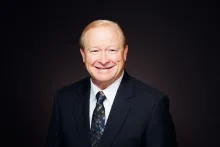
Jim has been in the ministry over 40 years serving fifteen congregations. He and his wife, Joan, started their service to God's church in Pennsylvania in 1974. Both are graduates of Ambassador University. Over the years they served other churches in Alabama, Idaho, Oregon, Arizona, California, and currently serve the Phoenix congregations in Arizona, as well as the Hawaii Islands. He has had the opportunity to speak in a number of congregations in international areas of the world. They have traveled to Zambia and Malawi to conduct leadership seminars In addition, they enjoy working with the youth of the church and have served in youth camps for many years.
