


Andy Duran
This transcript was generated by AI and may contain errors. It is provided to assist those who may not be able to listen to the message.
Hello, everyone! It is great to have you here on our Zoom webinar. That was such a lovely piece of special music. We really are thankful for people locally who have provided that music. That's one of my favorite hymns in our hymn book, and it was so beautifully arranged, so peaceful. I haven't considered it in that kind of tone and presentation before, and it's very, very meaningful. Well, we had hoped to be in person today, but unfortunately these wildfires continue to cause difficulties, and frankly, air quality is probably the least of the difficulties for so many who are continuing to be threatened by these fires.
We still have situations in Santa Cruz Mountains, east of San Jose, in the North Bay, so thank you for your continued prayers. I was able to give just a brief update to Mr. Kubik. He ended up including it in the weekly member of Ministerial Services email, so people around the country are aware of this as well and praying for that. So hang in there. We will get through this as we have and as we look to God to guide us.
You know, it's hard to imagine that 25 weeks ago, 25 weeks, we met indoors at the Arinda Community Center. It's been, as of today, I counted 175 days, nearly six months since we have assembled in person to worship God. We learned together from His Word and to fellowship. And in that time, our world has changed. And as much as I'd like to think we aren't influenced by events around this, I think we have changed too. We've changed in terms of what we hear on the news, and this impacts what we talk about and what our focus is, like navigating these new rules related to coronavirus, whether it's the health protocols that we will be following God willing next week in person, how these rules affect church services and the feast.
We might be talking about risks relating to keeping our job, maybe even when we lost our job. We might be talking about national and local issues, even here locally in Oakland, of protests versus riots, racial justice, law and order. We might be talking about the wildfires and how they affect us.
And we can't ignore the fact that we're in an election year, and those years are difficult enough for us to stay out of all the political things that go on. And that's an issue, frankly, whether it's in the United States or I see it in France, in other countries. God's people are in countries around the world, and no matter what country you're in, there are those issues of being sucked into the political things.
And this issue, the rhetoric, and of course with the stresses on us as Americans, it's much easier to be pulled into that. You know, if I had to summarize how many things I hear, or all the sort of things I hear, I feel like we hear a lot these days about what I might call peace and safety. Safety from the virus, peace on our streets. You know, we saw this year, I mean, we were under curfew here in Santa Clara, you know, a few months back because of these protests.
And unfortunately, these protests provide a way for certain, you know, people to do bad stuff. And so, and that's very, very unfortunate. So we hear a lot about how we can have peace, how we can have safety from things locally, from things nationally, from threats both domestic and international. But should we be talking about peace and safety? Should these things be our priority? Of course, we're not going to be reckless and unwise.
You know, we're meeting today online because the Bible says that a wise person sees the danger and turns away from it. And so we saw a forecast for what the Air Quality Management Board said was unhealthy air, with particular counts above 150. And we said we're not going to go into that situation. But we'll see from a message from the Apostle Paul that an undue focus on peace and safety can be a distraction for God's people.
And I think not being able to assemble in person has been unhelpful, as each of us has to navigate the changes that are all around us. You know, the way I think about meeting here on Zoom is kind of like what I call an excused absence from the Holy Convocation. You know, we have absences which are excused and unexcused from school. But we're still absent. We're still absent from being together to talk and to encourage one another. It's an excused absence.
There's a legitimate reason. There's a valid reason. We know the reasons. We've been through those reasons. But we're still absent. And as wonderful as the Zoom technology is, it's not the same as being together. And I think now more than ever we need to come together. And I really do ask that you would pray that we could come together as a congregation next week. That we could refocus our energy in our minds on what the book says is the day, capital D, that is approaching.
And so today I want to talk about what the Apostle Paul explained to the early church. We're the most important principles to focus on as that capital D day of Christ's return approached. There are principles that are found in 1 Thessalonians 5. And if you want to turn there, we're going to read from 1 Thessalonians 5 as our focus today. And we're going to see why these principles are so vital as we approach the coming return of Jesus Christ.
And the message that Paul gave here to the Thessalonians, I think, is just so highly relevant for us today as we see confusion, division, literally violence in our streets, and how we should behave 175 days into this pandemic and during this California wildfire season. And certainly, as we see the Feast of Trumpets coming in three weeks.
And these two principles, you can write them down here in your notes, these two principles are not peace and safety. The two principles that we'll see that are in 1 Thessalonians 5 are vigilance and self-control. Vigilance and self-control. And I think as we approach the fall Holy Days, which picture the coming of Jesus Christ, we can benefit from reviewing this instruction.
The title of today's message, if you want to put a title on the top, is, Are you looking for peace and safety? Are you looking for peace and safety? So, as I said, let's turn to 1 Thessalonians 5. And actually, let's start in chapter 4 and verse 13. And that really introduces this passage. And we see here that it says here, But I do not want you to be ignorant, brethren, concerning those who have fallen asleep, lest you sorrow as others who have no hope.
And then he goes on in verse 16 to say, Here for the Lord himself will descend from heaven with a shout, with the voice of an archangel and the trumpet of God, and the dead in Christ will rise first. And then we who are alive and remain shall be caught up together with them in the clouds to meet the Lord in the air, and thus we shall always be with the Lord. Therefore, comfort one another with these words.
So the Apostle Paul clarifies what will happen to each of us and to all those who have died in the faith at the return of Jesus Christ. We look forward to the Feast of Trumpets, as I said, in a few weeks. And this is a scripture that we go to regularly on that day as we think about that trumpet sounding and what that means. And a lot of times we stop in verse 18, because that's sort of the conclusion of that thought.
But beginning in verse 1 of chapter 5, Paul shifts the subject to address concerns over when these things are going to happen. So he described what's going to happen, which was a key concern of the Thessalonians. And now he shifts to the subject of when these things are going to happen and how we should behave.
He says in 1 Thessalonians 5 verse 1, he says, But concerning the times and the seasons, brethren, you have no need that I should write to you. For you yourselves know perfectly that the day of the Lord so comes as a thief in the night. See, he had already clarified these things to the church. And he is just calling to mind those things he had already said.
Specifically, he is saying that the time of Jesus Christ's return will come at a time when people don't expect. It is unpredictable, like the timing of a thief who comes to break into your house. You know, we could go to bed every night saying, well, we better get we better be ready for our house to be broken into. Let's get ready. But, you know, that's tough because you don't know. Is he coming tonight? Is he coming this other night?
And so you just don't know. We talked last week in the sermon chat about the Scripture in Matthew 24 and verse 36 where Jesus said that He Himself didn't know the time. And we had a discussion in the sermon chat whether Jesus Christ still doesn't know the time. You know, at this moment, now that He is at the right hand of God, we would only be speculating on whether these things have changed from what Jesus said.
Perhaps He does know. And perhaps He doesn't. But it's only because that decision is solely in the hands of the Father. And the Father hasn't decided because, as it says in 2 Peter, God's patience is our salvation. And He's waiting for some event or something to occur. And in His right time, He will allow Jesus Christ to return. So Paul just kind of goes back, Hey, I've told you this and you know well that we don't know when Jesus is going to return.
But he goes on to build on this thought, saying, well, even though we don't know these things, there's still a way that we need to behave. There's still a way we need to be thinking about this. And instead of going directly into how God's people should think about this, He contrasts in verse 3 those who are not called, the world around us.
Verse 3, Paul says, for when they say, the they is not God's people, for when they say peace and safety. Now there's an exclamation point there. So when they say peace and safety, then suddenly destruction comes upon them as labor pains upon a pregnant woman, and they shall not escape. Peace and safety is what everybody wants. I mean, that's what I want. Start with what you want. Who wouldn't want peace and safety? No virus, no fear of crime, no fear of a foreign power taking over our country. We want peace and safety, but that's not where God's people will focus.
And we're going to see there's a contrast to where God's people focus. Now, of course, there's peace as a fruit of God's Spirit. We're not talking about the peace that comes from having God's Spirit fill us. Of course, we seek that peace. But the peace and safety that's being described here is a physical protection. It's something that is physical in nature. It's like the famous phrase, peace in our time by Neville Chamberlain, as he pursued a policy of appeasement without Al Hitler signing a treaty with him before World War II that we heard about in the sermonette.
And that's the kind of peace that's described here. And the sense of verse 3 is kind of twofold. There's this incredible focus on trying to achieve peace and safety and perhaps an overly optimistic view or perhaps just a blindness to the reality that is around them, such that they're saying peace and safety when in actual fact things are not that way. And so we see something else introduced then in verse 4. We see then, by contrast, in verse 4, but you. You know, that's me. That's you. But you, brethren, are not in darkness so that this day should overtake you as a thief. And continuing in verse 5, it says, You are all sons of light and sons of the day.
You are not of night nor of darkness. Therefore let us not sleep as others do, but let us watch and be sober. For those who sleep sleep at night and those who get drunk are drunk at night. But let us who are of the day be sober, putting on the breastplate of faith and love and as a helmet of hope and salvation.
And with these verses, we get to where our focus should be. And what the New King James Bible says is watching and being sober. And we're going to see that there's a lot behind these words and behind these actions. But before we dig into this, let's make sure we understand the analogy that Paul is using here in verses 4 down through 8. As sons of light, we are in the light. And we do things that people do in the light, like being alert, being diligent, being sober.
By contrast, those not in the light are in darkness. And they do those things that are done in darkness, like sleeping or getting drunk. Most people get drunk at night. I mean, we even talk about people who drink early in the day. It's pretty bad if you're taking a drink at 11 o'clock in the morning. Because most people get drunk at the end of the day. They get drunk at night. And so Paul is contrasting alert with sleeping, sober with being drunk. The choice is obvious, right? Don't sleep and don't be drunk. But let's dig into these two things that Paul tells God's people that they should be doing in advance of this day.
So the word here for watch, in verse 6, is the word gregorio, which Strongs defines as to be awake or to watch. Hence the translation watch. The usage here is I am awake, I am watchful, on the alert and vigilant. Help word studies helps us along by saying it means to be responsible.
We are told to be responsible. We're told to be alert and vigilant. Somebody who is responsible is aware and conscious and focused and vigilant. Merriam Webster says that to be vigilant is to alertly be watchful, especially to avoid danger, adding that the word suggests intense, unremitting watchfulness. To be alert means that we are exercising good judgment in terms of what we are observing. The boy who cried wolf three times would not be considered watchful, even though he was supposedly watching for a wolf. The fact was he just got bored and decided to lie. Being alert means we know we're looking and discerning what we're seeing. Many in our society focus on the decline of the United States and seek to restore her to a former glory.
But in God's church, we look to the prophetic events associated with the rise of the Beast Power in Europe and understand that humankind's time is up, that unless these days be shortened, no flesh will be saved. Nations look to a king to lead them, but God's people know what the psalmist wrote. My hope comes from the Lord. Proverbs 27, 12 says, sensible people will see trouble coming and avoid it, but an unthinking person will walk right into it and regret it later. Vigilance and watching means that we know what we are watching for and what we should be concerned about. And the concerns of this world are not our concerns. The concerns that we have are the things that God tells us we should be concerned about. We should ask ourselves, how grounded are we in what really matters? What preoccupies our thinking?
Now, let's think about the second principle here. Sober. We're told to be sober. In the margin of my New King James Bible, it says self-controlled. The Greek word is nepho, which Strongs defines as to be sober, to abstain from wine. So this word that Paul chose is specifically not being drunk, being sober, abstaining from wine. But there's really a play on words here because if we understand this in the context of being actually literally drunk and being alert and so forth, help word studies goes in to elaborate a little bit more. It says Strongs' word 3525, nephio, to be sober or unintoxicated, refers to having presence of mind or clear judgment. Enabling someone to be temperate or self-controlled, which is why the New King James Version has the word self-controlled in the margin. It means uninfluenced by intoxicants and to have one's wits or faculties about them, which is the opposite of being irrational. That's a quote from help word studies on this word. We see then that Paul is making a word play here between being drunk and being sober by using a word that speaks to the opposite of what drunk means. It means uninfluenced by intoxicants. Have we been intoxicated by something that's other than alcohol? Something in our society that has intoxicated us with its presence, that has removed the presence of mind and the self-control and the clear judgment that we need? If there is anything that we could all use right now, it's clear judgment and presence of mind. The Proverbs says that in a multitude of counselors, there's wisdom. Making clear judgment means having good information and carefully evaluating it from multiple sources, not just our go-to sources. Clear judgment means listening more than we talk, reading more than we write, looking at situations from multiple points of view. Turn with me. You can keep your place here. We'll come back to 1 Thessalonians 5, but turn with me to Proverbs 9, verse 8. Let's read some fundamental principles of judgment and wisdom. Of course, the whole book of Proverbs is very much about wisdom. Proverbs 9, verse 8 says, Do not reprove a scoffer, lest he hate you. Interesting. Rebuke a wise man, it says, and he will love you. Give instruction to a wise man, and he will be still wiser. Teach a just man, and he will increase in learning. The entire book of Proverbs is about being sober, unintoxicated, and exercising good judgment. And we see here a key to being wise and increasing in learning is receiving instruction, rebuke, and just listening.
Notice what follows in verse 9.
Our greatest study should be into this word and understanding the mind of God. We must study other matters. Of course, if we're going to have careers, we're going to provide for our families, we're going to give back to our communities. We need to study. Paul learned to be a tentmaker. He didn't sit around all day long growing up just reading his Bible. He had to spend time learning a skill, learning a trade that he supported himself with. And he worked, and we can see places in Scripture where it talks about when he would stay in an area, he worked. We're going to have hobbies. We're going to have other interests, of course.
But if these things consume us more than understanding the mind of God, then we've misplaced our priorities because it begins with the fear of the Lord and the beginning. That's the beginning of good judgment. Let's go back to 1 Thessalonians 5. We're still looking at this understanding of verse 5 to 8. But let's focus here at the end here on verse 8. Again, it says, Let us, who are of the day, be sober, putting on the breastplate of faith and love, and as a helmet, the hope of salvation. This is interesting. Faith, love, and hope. Have you heard these three things before?
Yeah, 1 Corinthians 13. 1 Corinthians 13, 13. He's going back to these things. So Paul gives us an idea himself of understanding. When he said sober, what he meant was to build on the instructions here of having faith, hope, and love. 1 Corinthians 13, 13, you can note it in your notes, says, And now abide faith, hope, love. These things, these three. But the greatest of these is love. To be sober and self-controlled means we are putting on faith, love, and hope. And we sang about it today in some beautiful songs. Hope of salvation. Faith in the promises that God has given to his people. Love, one for another, is a sign of being true disciples of Jesus Christ. And a firm hope that despite what we see around us, we are not swept away by it. We're not remade by these events. We continue to keep our minds on what these fall holy days tell us about the return of Jesus Christ, pictured by the Feast of Trumpets, the removal of the evil influences of this world with the Day of Atonement and the restraining of Satan for a thousand years. And then finally, the Feast of Tabernacles, picturing a time when all mankind who is living at that time will have a chance to understand Jesus Christ, that we, as God's people, might work with them and prepare the earth for a time then when the dead will be raised in the Second Resurrection. And those people will have a chance to understand God's power and purpose as the earth has been prepared for them. And brilliantly, truly brilliantly, we can see just God's inspiration here. Paul frames verse 8. He frames these three elements in terms of being a soldier, a soldier who is fighting and is using protective equipment, a breastplate and a helmet. You see, these things protect us. So instead of talking all about peace and safety, we put these on and by trusting in God and putting on the breastplate and putting on the helmet and keeping our minds free from intoxicants, we fight the good fight of faith. The good fight of faith. But what are we fighting for? And who are we fighting against? We heard a reference to that in the sermonette. Let's turn over to Ephesians 6 verses 12 to 13. It was red, but we didn't turn there. Ephesians 6 verses 12 and 13. This is important to remember what we're up against and why taking on that breastplate and that helmet of love and faith and hope is so important. For we do not wrestle, Ephesians 6 verse 12, against flesh and blood. The physical things we see around this, the physical concerns around this, that's not really what we're concerned about, but against principalities, against powers, against the rulers of the darkness of this age, against spiritual hosts of wickedness in the heavenly places. This is what we're fighting against, the spiritual forces at work.
Interestingly enough, in 1 Thessalonians 5, we're not told about the sword of the Spirit. We're told about it here. But as we think about the things around us, going on around us, and what Paul focused on in 1 Thessalonians, we're defensive things, the breastplate and the helmet. But here it says in verse 13, Therefore take up the whole armor of God, that you may be able to withstand in the evil day, and having done all, to stand. What does the evil day look like? A time of plague? A time of economic distress? A time of wildfires? A time when God's people are kept apart and unable to celebrate the Feast of Tabernacles in the way that they're used to? Yeah, I think we're getting a little foretaste of things. We take up the breastplate of faith and love and the helmet of hope so that we can stand in an evil day. To be stable, to have peace that comes from God's Spirit and a focus on His way of life, not the kind of peace that the world seeks. A peace that comes from God's Holy Spirit and a safety that comes from trusting in God. And we understand that whatever physical thing is in front of us that is getting us down or consuming our thoughts, there is a greater spiritual element at work. And that is that spiritual element that we are more concerned with. Let's go over to 1 John 4, verse 4. I think these encouraging words from this disciple that Jesus loved was very close to 1 John 4, verse 4. John says, you are of God's little children and have overcome them because He who is in you is greater than He who is in the world. And the He that is in us is capitalized, and the He that is in the world is not. God, through His power, dwells in us. God in His power and His power dwells in us. And that is so much more powerful than anything we might see on the news. Anything we might see that causes us concern or difficulties.
Let's go back to 1 Thessalonians. And now Paul is going to close in verse 9 with a very powerful encouragement. 1 Thessalonians 5 and verse 9. It says here, You see, He finishes this passage the same way He finishes it. The same way He finished the passage that we always read on the Feast of Trumpets. By saying, comfort one another with these words. We so often read 1 Thessalonians 4 verses 13 to 18. And we talk about how we need to comfort one another with these words as we think about the Feast of Trumpets approaching. But Paul continued his thought in chapter 5 with something I think that is just as important to understand.
That as we see this day approaching, that we would also comfort one another with these words of being vigilant and being sober and putting on the breastplate of faith and love and putting on the helmet of hope. Because as we do things, it says in verse 9 that God did not appoint us to wrath.
Now, that may not maybe sound so clear, but the word wrath here that's being referred to is a reference to verse 3. And the destruction that will come upon the world. God did not appoint us to have to be part of the destruction that comes upon the world.
He didn't call us to destroy us in the wrath that's going to come upon the world in the run-up to Jesus Christ's return. Now, yes, some will be martyred. The Scripture is clear on that. But God didn't call us so that we would have to endure terrible suffering in the Great Tribulation. You know, I wrote in my Bible, and it's still here from decades ago, I wrote in my margin something that an instructor said in Ambassador College.
He said, we have been called to survive. You know, I wrote that in my Bible years ago because it meant something to me. It means something to me today. We have been called to survive. We have not been called to go through that Great Tribulation. There may be exceptions, as we see, as I mentioned, in other parts. Some, especially as it describes the Church of Laodicea and those who have a Laodicean spirit, certainly.
But we have been called to fulfill a purpose. This purpose is comforting. This purpose is grounding. This purpose is hopeful. He says, God did not appoint us to wrath, but to obtain salvation through our Lord Jesus Christ, who died for us. That whether we are awake or asleep, that is to say, whether some who are alive at the time Jesus comes or have already died, we should live together with Him. It's time to look up and beyond what's going on as the day, the D-Day, the capital D, is drawing near.
We will soon celebrate the Feast of Trumpets, picturing the return of Jesus Christ. And we have before us, in these few verses, a roadmap for behavior, for our focus day-to-day, vigilance, self-control, faith, hope, and love as competent soldiers standing in an evil day. I'd like to share a story here. When I was a teenager, I had a close friend who I met at church summer camp. He called it the Summer Educational Program back then. We met when we were both working as high school workers. He and I would both, we both loved to water-ski, and we'd go out water-skiing together.
He'd drive the boat and pull me, and I'd drive the boat and pull him. He was a year older, and as is common, when you're maybe 15 and someone is 16, you look up to that person. I looked up to him. He had learned to scuba dive and told me stories about it, and so I went and became certified in scuba diving at age 15 because it was so exciting. And he and I would go scuba diving together in Southern California. He seemed so confident about what he wanted to do, and I had no idea what I wanted to do in my life.
He was going to be an accountant, a CPA. Strangely, I ended up going into accounting, perhaps, because of some of that influence. He always seemed so sure. He met one of the prettiest girls at summer camp, I remember, when he was 18, and he eventually married her. He seemed to have everything going for him. But one thing he decided to do, even though he had grown up in the church and his dad was a minister, was he decided to not pursue his calling.
And I say that because all young people who grew up in the church, they are sanctified, as the Scripture says. They have a calling. Whether they decide to pursue it is another matter. He was never baptized. I lost track of him for many years, but later I saw him about 15 years after I finished high school. He was about a year ahead of me. He went to Cal State Los Angeles and went into accounting, and we lost track of one another.
But about 15 years later, we were at a high school reunion together. He and his wife were living in Palm Springs, and they looked a little less happy than I remembered.
But, you know, the years weighed down a little bit. He was a little more serious, maybe a little bit more heavy. And we talked, and I really enjoyed talking with him and catching up with him and his wife. A few years ago, I learned that he had gotten divorced. He had moved back with his parents because his father was ailing. His father was quite ill. I kept up with that because my mother was friends with the family. And last year, his father died after a long illness. And so I was going to send my friend a card of encouragement. But before I could do that, I received word that my friend was so distraught by the death of his father that he took his own life.
It doesn't matter how hopeful we might be, how talented, how together we might be. He was a together person, in my mind. He had an idea of where he wanted to go and what he wanted to do. But the weight of life can be heavy. The weight of things in our lives can get us down. Life can be filled with so many challenges that, as the years wear on, it can crush our soul. When I was first married and I traveled to France, I met for the first time survivors of Nazi-occupied France. People who had had to go to what the pigs would eat to survive. People who had lived through what would be for us unimaginable difficulty. The psychological scars were there, but I saw something that I never had never seen before in the same way. I saw resilience. God's people in France, who had been through trials and difficulties that we could not imagine in this country, and who were called from that into God's Church, and who worked through those things with God's Spirit, and were able to come through those and overcome. I pray that whatever lies ahead for us will not involve the kind of things that people in God's Church and friends had to go through under Nazi occupation. And that whatever trials you might be going through, that they would not crush your soul because God's Spirit is there in you, as it says in 1 John 4.4, that He that is in you is greater than He that is in the world. But if tough times are going to come, let it be said, we look to the Scriptures, we look to Scriptures like 1 Thessalonians 5, and we put on the armor of faith, love, and hope to weather the storms of life. Are you looking for peace and safety? Paul says that vigilance and self-control is what God's people need. But peace and safety is what we often seek. Vigilance and self-control in the context of understanding God's Word is the path towards being grounded in the truth of our calling and navigating the stresses of life. And we will have stress. We will have discomfort. And ignoring or glossing over it will not rescue us like it didn't rescue my friend. In one of the most powerful TED talks that I think I've seen entitled, The Gift and Power of Emotional Courage, Dr. Susan David addresses the problem with seeking to avoid discomfort and trying always to be positive. Peace, peace, peace and safety, as it says in verse 3 of 1 Thessalonians 5. I want to quote something that she said in that TED talk, which I think is very relevant in this discussion. She says, when we push aside normal emotions to embrace false positivity, we lose our capacity to develop the skills to deal with the world as it is. You see, that's like an intoxicant. It's like being drunk. It's the opposite of vigilance and self-control, of being sober, of looking at the world the way it really is. And then she says, we don't develop the skills to deal with the world as it is, not as we wish it to be. She says, I've had hundreds of people, hundreds of people tell me what they don't want to feel. They say things like, I don't want to try because I don't want to feel disappointed, or I just don't want to feel this way. I want these feelings to go away.
She says, I understand, but you have dead people's goals. Only dead people never get unwanted or inconvenienced by their feelings. Only dead people never get stressed, never get broken hearts, never experience the disappointments that comes from failure. Tough emotions are part of our contract with life. You don't get to have a meaningful career, or raise a family, or leave the world a better place without stress and discomfort. Discomfort is the price of admission to a meaningful life. I think in 1 Thessalonians 5, when they say peace and safety, it's because they want that so bad that a lot of times they can't deal with what the real world is really like. There's a delusion. There's an intoxication. There's a drunkenness. But not so with God's people.
In our case, the reality of difficult times now and in the future is a reality in advance of the return of Jesus Christ. We don't get to be in God's kingdom unless Jesus Christ returns. And Christ will not return until humanity is on the verge of destroying Himself.
As we endure these times ahead, God has given us tools to equip us, to equip the saints for tough times. And we see two things here. Vigilance and self-control. Let's quit worrying about peace and safety and focus on vigils and self-control. Jesus Christ has paid the price. Now we need to do our part. Thank you.
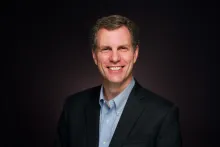
Tim Pebworth is the pastor of the Bordeaux and Narbonne France congregations, as well as Senior Pastor for congregations in Côte d'Ivoire, Togo and Benin. He is responsible for the media effort of the French-speaking work of the United Church of God around the world.
In addition, Tim serves as chairman of the Council of Elders.
