

Jim Tuck
This transcript was generated by AI and may contain errors. It is provided to assist those who may not be able to listen to the message.
Brought to us by our pastor, Mr. Jim Tuck. I want you to imagine the time ahead of us, brethren, when the clouds of heaven are going to open like a giant scroll that's going to be rolling back, and Jesus Christ will finally return with his holy angels. It's going to be a striking event, a striking time. And Jesus Christ the angel will, like lightning, shoot down from the sky, and Christ will set his feet upon the Mount of Olives. And he will subdue all nations before him. Every nation will be subjected to Christ as the King of Kings and the Lord of Lords. And he will set his temple in Jerusalem. And then the whole world will be brought under his authority. And then the millennium will finally begin that we've been waiting for, that we've been praying for. And peace and prosperity will come for all mankind, all humanity. Every man, woman, or child will be able to be brought under the umbrella of the kingdom of God. It'll take a while, but eventually peace and prosperity will ensue everywhere. And the world at last will be filled with transquility and peace. And hopefully, brethren, you and I will be right there. We're going to be right there in the midst of all the action when it begins to happen, when these momentous times began to occur. You know that God commands us to observe the day, the very day we're observing today, the Sabbath.
The Sabbath pictures the millennial reign of Christ. It pictures the thousand-year reign of Christ. We know there's a seven thousand-year plan, and to God a day is a thousand years. And the millennium is, in fact, the seventh day, as it were, of God's creative process, what is occurring and what He's accomplishing. And so this day pictures the kingdom of God, as it were, of the millennial reign of Jesus Christ. And God commands us to keep it every week to remind us of that, to point us toward that kingdom that is coming. And then the feast, actually, picture that great time too, but different elements of it, different details that lead up to God's kingdom. So I ask you, brethren, as I gave the title of this message, if you looked in the announcements, are you ready for the kingdom? Are you ready for the kingdom?
Now, why in the world do we need to go through and keep the Sabbath every single week? And why do we need to keep the feast every year as we are just about ready to enter into the fall festivals? Why do we have to go through the motions? And we do the same thing, don't we, every year? We do the same thing every Sabbath. We talk and we talk and we talk about these things. We go through these things. So why do we do that? Why don't we go through the motions that we do and the things that we do? You know, during the time of the Apostle Paul, Paul looked at the society that he was around, that he saw, and he often compared what he saw in society. For instance, the Greek games that were taking place that were quite impressive. Even today, we look at the Olympics, of course, that were derived from the Greek games that go back to that time. But what Paul did, he looked at events like that, and he compared it to the Christian calling to those who excelled in the world to encourage us to want to excel being Christians, of being successful. For instance, he used not only the Greek games, but he used the example of the Roman soldier. We, in fact, had the armor of God. It came from the fact of how a Roman soldier carried himself. All the parts of a Roman soldier. You see how Paul transferred, as it were, those qualities to what a Christian ought to be. Let's go over to 1 Corinthians chapter 9 and verse 24. I want to cover these things rather hurriedly to set the stage for what I'm going to talk to you further about. But here in chapter 9 of 1 Corinthians 9 verse 24, he says, Do not you know that those who run in a race—he was talking, of course, about these Isma'an Greek games—but one receives the prize. Only one of those that run received the prize. And so you've got to run, because of that, you've got to run in such a way that you may obtain it. Now, it's not that way when we're called, because if we're called, all of us get the prize, right? But you've still got to run. But Paul is using the analogy of this athlete, how only one's going to get the first place.
Maybe a second place or a third, but only one's getting the first place. But going on, he says that everyone who competes for the prize is temperate in all things.
Now, they do it to obtain a perishable crown, a carnal crown, but we, an imperishable crown, an eternal crown that will be forever, Paul says. Therefore, he says, I run thus. This is why Paul was so motivated. He says, this is why I run the way I do. Not with uncertainty, thus I fight. Not as one who beats the air. I'm not just, you know, out here doing things without purpose. There's a reason why I'm doing it. And he goes on to say in verse 27, but I discipline my body and bring it into subjection, lest when I preach to others, I myself should become disqualified. You know, so Paul said, you got to really work on yourself. I don't know if you remember, I gave the sermon about how we, as God's people, need to strive for the mastery or strive for excellence. That's another way we could have titled that particular sermon. There's another verse in Ecclesiastes 9 verse 10 that says, do what you do with your might. You put your entire being into what you do in order to accomplish it.
You know, so here are examples. Paul pointed up, you know, the Roman soldier, the armor, you know, the Greek games and other things that were no doubt that Paul could have used as well. Of course, we know Paul used many analogies in how he taught. You know, in the world today, we could see many examples out here that we could see the same thing, not just the Olympics. There are many things in society that we can look at and say, you know, we could transfer what they're doing in that particular profession. We could transfer that to what a Christian ought to be, what we ought to be. And, you know, examples are there to help us to see better what our calling is, what we ought to be doing, and help us to see why God has us keep the Sabbath and the Holy Days and all the other stuff that he has us do, why we're going through the emotions and doing the things that we're doing. You know, today, I would say probably in this very auditorium, we have some that are looking at a screen. We are a very, any more, you might say visual type people that we have to see something. You know, PowerPoint, of course, is something that other ministers and speakers have used, because it does. It's easy. You could see what he's talking about when we're talking about different parts of the armor of God. So, it can be a very good thing. We're visual in that way. We want to see things. Today, many follow in this world. If you go through the line of any Walmart or any grocery store, today, people follow the careers of righteous people. Now, which the last time you went through, you know, Walmart and you saw a man incredibly righteous. Usually, isn't it about this movie star or that movie star? Brad and Jen got back together. You know, will that ever work out? You know, but today, people follow the careers of people in movies, in place, other things like that. You know, good actors and actresses, frankly, it's, I don't know why it conveys it to an actor or an actress. If they're really famous, then they know everything.
I heard a man recently who talked about his fame. He said, he says, it does not convey to me a pulpit from which I can speak. He said, he had the right idea that being an actor doesn't make you all-knowing in life. But be that as many people look, again, to actors and actresses, and they are highly paid. Millions of dollars, you know, they're paid.
But what is, talking about actors, if we sort of look at this the way Paul might look at, you know, somebody in the games, the Greek games, you know, what can we learn from an actor or an actress? Okay. If they're very successful, what is expected from an actor or an actress? Well, generally, somebody who's really good, and to me, by the way, don't ask me who's good, because I don't know who's good. I mean, I think John Wayne's really good. So that gives you maybe an indication of what I might think about actors today. But actors today, they're really, really good. Generally, they choose projects which are of interest to them, right? Isn't that what good actors do? Now, please, some of the things that these actors have chosen are very much bombs who would ever watch. What benefit?
But, you know, you think about that. There are things we can learn about that and what we are doing as God's people. But when they choose a project they're interested in, they throw themselves into this project. They're dedicated to it. Now, here's another thing that is expected of an actor, a good actor or an actress, or else they'll be out of their ear. They must attend every rehearsal for the play or the movie that they're doing. How long would a good actor last if they, you know, would blow off all the rehearsals? Well, they wouldn't last very long, would they? Again, what can we learn from that as God's people? Is there any application to why we might be keeping the Sabbath every week? And why we might be observing the holy days and going through the motions and doing these things? Another thing about an actor, actress, they must know their part in the movie. You know, you can't make it up as you go.
You've got to know what your lines are in the movie. Now, and that's where I would really flub up. You know, if I had that job, it's hard for me to remember and memorize things and, you know, kind of spill them back or spit them back, you know, verbatim. But you must know your part in the movie or the play. Now, again, how does that relate to us as Christians? Is there any relationship here that you could see, the connections? And maybe we understand a little bit better how Paul's mind would work if he lived in the 21st century, how he would think.
Another thing, every good actor immerses themselves in the project. Maybe they immersed themselves in the character that they are playing. How does that transfer to us as Christians? About what our role is in God calling us. So these are things that come to mind about actors and actresses. And another thing that happens is, with all the rehearsals that take place, with all the preparation that goes takes place, there is a final rehearsal before the performance, and then there's the performance.
You know, you have a final, this is the way it's going to be, if we do the play or we're going to do the movie, and now we're doing the real thing. We're filming the real thing.
So there's some interesting analogies, brethren, that we can draw from these. But let's first notice what God commanded Moses over Leviticus 23. Let's go to Leviticus 23. This relates, brethren, believe it or not, to Leviticus 23. What I just talked to you about, and I'm going to show you how it relates to Leviticus 23. In Leviticus chapter 23, let's begin in verse 1 here.
I think we would be remiss if we didn't make this preparation as we advance toward the Feast of Tabernacles that is coming. But in chapter 23 in verse 1, it says, The LORD spoke to Moses, saying, Speak to the children of Israel, and say to them, The feasts of the eternal. So again, these are God's feasts that God is instructing Moses about, which you shall proclaim to be holy convocations. These are my feasts, God says. And as we always point out to people, notice it doesn't say that they're Israel's feasts, but they're God's feasts. They belong to God.
And it says, The feasts of the eternal, which you shall proclaim to be, notice this, holy convocations. These are my feasts. And so right here in this verse here, again, we see it very clearly that these are God's feasts, and that he says that they're holy convocations. And then he says in verse 3, Six days shall work be done, but the seventh day is the Sabbath of solemn rest, a holy convocation. You shall do no work on it. It is a Sabbath of the eternal in all your dwellings. And so here, the very first holy day he mentions, the festival he mentions is the Sabbath. That's why I say the Sabbath symbolizes the millennial reign of Christ. And then he goes on in verse 4, These are the feasts of the eternal, holy convocations, which you shall proclaim in all their appointed times. And so this is why we talk about these feasts when they begin to roll around. That's why I'm giving this sermon as we again advance to the feasts of tabernacles and the fall holy days. Now, in the remainder of Leviticus 23, Moses then goes on and describes each festival God commanded Israel to observe. Now, we have gone through three of the feasts of God already. We've talked about them. We, of course, kept the Passover. We observed the Passover. And it pictures, of course, Christ's sacrifice for us making possible our salvation. Without Christ, you know, we wouldn't be here even today. And we know that this is talking about prophetic events, because when they were offering the physical lamb back in ancient Israel, of course, they had no concept that it was the Messiah, that it was picturing. But there came a time where the true lamb of God came, and we know he came something around 2,000 years ago.
So what they were going through was prophetic. These holy days were prophetic as well. Then the next holy day that we observed back in the spring were the days of unleavened bread. And what do they picture for us? Unleavened bread pictures, putting sin out of our life. Leaven is a type of sin.
We put physical leavening out, and then we put the spiritual leavening out. But then we eat of the unleavened bread, which pictures the Christ we eat. In other words, we bring in the true bread, who is Jesus Christ, into our life. And through that, we have life. We develop again, and we grow, and we have life. We have the potential of eternal life in us.
Then we kept the Feast of Pentecost, which is pictures of firstfruits. We observe that. So we've done the three that we have run through already regarding the Feast of Tabernacles, regarding the first festivals. Now we're heading toward the fall feast. The next one will be the Feast of Trumpets on June on September 30th. I think it is on a Monday, if I'm not mistaken, that it will be on September 30th. And Pentecost pictures the calling of the church. That's you and me. That's why we're here today. Even though they were back then, they just baked two loaves.
And those two loaves actually pictured the old and the New Testament churches. They did picture the Old Testament church, and the other one depicted the New Testament church. So those are things that, of course, that we are taught in the church. But Pentecost pictures the calling of the firstfruits. That's you and me, all of us. They're called in this time.
And then we, of course, Trumpets pictures the time of the trouble that's coming ahead of us. There are going to be a lot of doubters that don't believe that that's going to happen, brethren, but it is going to happen. Just as sure as you're shooting, brethren, it's going to occur. It's going to happen. And it may be closer than you think, than I think, in fact.
Trumpets though pictures a time of trouble that is coming, and it pictures the second coming of Christ, and it pictures the better resurrection, which is the first resurrection. Then next we have the Day of Atonement, which pictures the binding of Satan and the atonement of the world, where the world comes into unity. And then next is the Feast of Tabernacles that we observe ahead of us, and it depicts the rule of Jesus Christ as the King of Kings and the Lord of Lords, and a time when the saints will rule with Christ for a thousand years.
And then we have the Eighth Day, which is the Great White Throne Judgment, or the Great Second Resurrection period, where every person that has ever lived or existed is going to be brought into existence again as a physical being, and they're going to have a period of time to prove whether they will obey God or not. So these are all, this is the picture. This is the movie, brethren. This is the story that you are a part of. This is the script, the script of what we're going through right now. And it's a little bit like what an actor is supposed to do that what we're supposed to be doing.
When I say, are you ready? Are you ready? Are you doing what you need to be doing because you're a part of something that's ongoing here. It's the greatest epic that has ever been known, ever been shown, in fact. No cinema, no picture compares, brethren, to what we are doing and what we're a part of here. Do you know, brethren, that one of the meanings of the word convocation that we're meeting right here on the Sabbath, it's a convocation, a holy convocation.
The meaning of the word convocation, one of the meanings, is a rehearsal. Rehearsal. You know, it's like a movie star, an actor, it rehearses, you're rehearsing. Hopefully you don't have to have somebody answer for you, what are we rehearsing for? We are rehearsing for the kingdom of God, ultimately.
We're preparing for the kingdom of God. A rehearsal means to go through a trial performance of a play or other work for a later public performance. What we're doing here, brethren, is going to translate into the kingdom of God when it comes.
Someday you're going to have meetings with people just like this in the world of our world. We're going to be talking about different aspects of things. I'm sure what we'll talk about then will be different than what we talk about now, but not by a lot. As we're learning those things that everybody that is going to be in the millennium is going to have to know as well.
But the feast, brethren, provides a plot to the story God is unfolding before us. And we're a part of this plot, this story that is unfolding before us.
And, brethren, Jesus Christ will not return until we're ready. We're all rehearsed up.
And we're ready for the final performance.
You know, Jesus Christ will not come until the groundwork has been laid.
He's been building his team for 6,000 years.
You know, he started with Adam, but Adam didn't do so well. He had Abel. Abel did all right. You have Enoch. After the flood, you have Abraham. You have Moses.
You have, of course, all of the patriarchs. You have the apostles. And you have the saints.
And we are preparing. And Christ will amass his team when the final performance is ready to begin. When the sky opens with a scroll, that is when it begins, brethren. When he sets his feet down on the mile of hollands. Where are we going to be? We're going to be with him when that happens. We're going to see this. We'll see this, brethren. We will be there.
So Christ will not come back until that is done. You want to see all the people that are involved in this great story? Look at Hebrews 11. I'm not going to take you there. So what parallels, brethren, can we draw from those who are in the performing arts of today? How can we learn the way that Paul learned in his day and how he taught people at that time? You know, actresses and actors generally choose projects, again, which are of immense interest to them. Well, brethren, that is what we should have done when we committed to baptism. That we show something that is of tremendous value and tremendous interest to us. Let's go to Romans 12. Romans chapter 12 over here. Romans 12. Here Paul had to appeal to the Roman Church. He said, I beseech you, therefore, brethren. Romans 12 verse 1, by the mercies of God. And God has shown so much mercy, brethren, to you and me.
No matter who we are, brethren, God has done that. That you present your bodies, it says, a living sacrifice, holy and acceptable God, which is your reasonable service.
You know, this role that you play in God's church is a reasonable thing, that you sacrifice your life to follow in the footsteps of Jesus Christ and to do what you're supposed to do as a Christian today. It's reasonable. And do not be conformed to this world, but you've got to be transformed. You know, you are like an actor who's committed to this project, and the the actress says, I don't know if I can do this person, this character, in this movie you're asking me to do, or this play. But we did. We committed. We said we could do that. We could be this person that we are supposed to be. So we're committed again to the project. And we are willing to transform ourselves, to change ourselves, and be transformed by the renewing of our mind, and have, as we've talked about recently, the mind of Christ, following the perfect will of God. So, brethren, an actor generally chooses projects which are of immense interest to him.
Next point is, an actor must attend every rehearsal to be involved, again, in a future performance. And again, if they don't show up to rehearsals, then they get thrown out, don't they? They get cast out, and somebody else is chosen. Well, how does that apply to us? It means, brethren, for us, we've got to show up every Sabbath. Every Sabbath. We've got to be here. These are rehearsals that we're going through every week, every holy day. It's a rehearsal in preparation for the kingdom of God. I don't know that I need to take you over to Hebrews 10, verse 25, where it tells us not to forsake the assembly of ourselves, as the matter of some is, and then it says so much as you see the day approaching.
I mean, do you see the things happening in the world? Does it concern you?
It should motivate us, brethren, to be more dedicated than ever before.
And what do we do on the Sabbath? Well, we discuss the Sabbath. We discuss the holy days, what these saints picture, how to be a Christian, Christian living, how to function in a godless world, how to be godly in a godless world. So being here is critical for our survival, and baptism is a commitment to obey all of God's laws. So that's a commitment, again, we need to keep. The next thing that we learn about actors and actresses, actors and actors and actors and actresses must know their part in a play or the movie. Well, how does each character fit with the other plot in the plot of the movie or the story? Well, in other words, you have to know and understand the story. What's the story about? Do we understand the story of the church, brethren? What the church is about? Do we understand the gospel? Do we grasp it?
Do we know our part in God's church? What our role is in the church?
It says in 1 Corinthians 12 verse 18, I won't turn there, but it talks about how God puts us in the church as it pleases him, as it is fitting to him. So God expects all of us to know what our parts are in this, his plan that is going on here today. We have a role. All of us have a role.
We may have different jobs in the church, but ultimately we're called for two reasons. Two reasons. You don't have to have a good memory to remember these reasons, but number one reason is to help get the work done. That's pretty easy, isn't it? There's a work going on that God is doing here upon the earth, so we are to get the work done. Number two is what? We're training to be teachers. We're teaching in the world to borrow. That's going to be our role. That's what we're going to be doing. That's all we have to remember about what our part is, brethren. So we've got to be like students who are always listening to learn. I was watching Mr. Armstrong as he was talking to a company, a corporation over in Japan. I can't remember which city it was, but he had come to know an industrialist over there.
This is when Mr. Armstrong was about 90-something years old back in those days. Anyway, I went over there and gave a lecture on the seven laws of success.
I was kind of interested. I looked at the cameras as they panned the audience where people were listening to what Mr. Armstrong was saying about the seven laws of success. I noticed that here these people had never heard Mr. Armstrong before, and they were taking notes about the seven laws of success. You and I know those laws of success. Many of us probably know them by heart, don't we?
From setting the right goal to number one law of success to having a relationship with God. Number seven, we know these laws of success. But here it was a young man who was writing these things down. I thought to myself when I was seeing this morning that I wish we had that commitment. I think many of God's people do. I don't want to again denigrate our people because I know some of you have been around for a long, long time. I see a lot of you take notes about different things and jotting them down and writing. But that's a good way.
Good way to learn. Good way to come to understand. When Jesus Christ returns, we will be, because we have been recruited, along with many others from the time of Adam, we're being recruited to be a part of God's international government in the world tomorrow.
That's our ultimate responsibility that was going to be in the kingdom of God. Christ is coming back as the king of kings. Who are going to be the kings? Right here. Right here. Who are going to be the lords? Right here. God's people are going to be there to help Jesus Christ. And it's a big job that, brethren, we're going to do. Right now, we are ambassadors of that coming kingdom. And God has got a place for us in the kingdom already. Think about that. He's got a place already for us in the kingdom. Because right now we're ambassadors for that coming kingdom. The time is going to come, brethren, when we're going to take those offices. It will come. It will happen. It will occur. You know, as Christians, we've got to be like actors and actresses. They must know their lines, brethren. And, you know, in filming a movie or doing a play, the less retakes you have to do, the quicker you can do a production, and the cheaper it is going to be.
You know, I don't want to trivialize, brethren, these things, but because actors merely act, don't they? And movies and plays are just merely that. Movies and plays. Because what we're doing is real. It's real life. It's not fake in any way, shape, or form, brethren. So we have to know, again, our lines. And so that's why we need to know what the truth is. And we need to be able to express ourselves. You know, I was talking to someone prior to services about these things, or how people grow up in the church, and how we acclimate. We begin to understand these things, and how that, in fact, sometimes when you're growing up, obviously, you wouldn't ever see yourself standing up and talking to anybody. I couldn't have imagined I would be in a place like this talking to people in Phoenix. You know, all these many years later, you know, I began to learn over 50 years ago now. A long time ago. I found it kind of interesting, because Mr. Armstrong was saying this morning he was relating the fact that his journey began 57 years before that particular speech he gave in Japan. And I think, well, wait a minute. I've been around here 50 years. Over 50 years, and some of you longer than that. You know, you've been long longer than I have, in fact, in God's church on this journey that we've been on.
But after a while, you learn things, don't you? But you've got to have your mind in gear wanting to learn things. And now is the time, brethren, because the time is going to come when the final performance is going to occur. It's going to happen, brethren. I won't take you to 2 Timothy 2 in verse 15, but it says, study to show yourself approved to God, a workman who isn't ashamed, rightly dividing the Word of truth. Using the Word of God, you know, you're going to be teaching the world tomorrow, so we're not only living God's way, but we're going to teach it. And what better people to do it than people who live it? You know, we don't want people that talk from the teeth out. We want people who have lived it and can talk to people from the heart that believe what they're saying. And I know the ministry, the people I know, those that are in the church, I know they're very dedicated. It is from the heart. We need to know, brethren, again, what the true gospel is. We need the vision of the kingdom of God embedded in our minds. What does it say in Proverbs 29 verse 18? It says, where there is no vision, the people perish. You don't have vision.
If we don't know where we're going, we're not going to be able to convince very many other people to go that direction, are we? If we don't act like we know where we're going. It's not just a matter of acting. We do know where we're going. We do know what we ought to do in order to get there. Another thing an actor does, and as I said earlier, every good actor immerses himself or herself in the part that they're playing. Sometimes an actor or an actress will actually go out and get a job in a business or something like that, which they would never, ever think of doing in order to learn their role in a movie they're going to do.
Obviously, again, what we do is not acting, because that's fake, isn't it? But we should immerse ourselves, brethren, in the role that we play. And that is, we are the sons of God. We are the children of God.
And one day we're going to be in God's family. And you ever notice about families? That very often all the family members have the same characteristics. You know, probably if you saw me talk with my physical brothers, you'd be able to know they were my brothers.
You'd probably be able to tell by just the way we express ourselves. You'd probably be able to tell the way we stand or the way we walk. You know, brothers tend to walk the same way. They have the same thoughts about things, about things, whether, you know, they think about things, you know, from a conservative or liberal point of view, because they're from the same family. Our family tended to be very conservative in basically mainstream of what most people would do in society.
And, you know, something's not so good and other things that were good. But a good actor, again, immerses themselves, and that's what we do. Some actors actually transform themselves into the person that they're going to play in a movie or play. And it can get weird, actually. I've heard of some actors that can get so deeply into a character, their accents change, their facial expressions change. You look at them, they don't look like the same people, because of the way they express themselves, the way that they are, the way they carry themselves. This is why we, as God's people, you know, we are coming from the direction of being out here in the world of this society. We have to be transformed, not only on the outside, like an actor might be, we can be transformed on the inside and walk and follow in the footsteps of Jesus Christ.
You know, for other words, we're striving for all intents and purposes because we are to be like Christ, that we're playing the role of Christ in our lives, that when people see us, they see Christ. Except it's real from the heart. Now, I understand, brother, we are limited, aren't we? All of us are limited. I wish I could say that we're all going to become exactly like Christ. That, you know, probably we're going to all be working on it until the day that we're changed.
But when we're changed, God is going to change us, and I think He's going to help us, you know, with the change that will take place when we're changed to spirit.
Now, so there's so many things, brethren, that we ought to do to immerse ourselves. We need to immerse ourselves in the Sabbath, to keep you in the Sabbath. We need to immerse ourselves again in the holy days as we prepare for the kingdom of God and the way of life. We need to live by this book. This expresses Jesus Christ right here in writing. We want to be like Christ. And the final point, brethren, about actors and actresses, there's always a full dress rehearsal before the performance. And each Sabbath, a holy day, brethren, let me give you is a full dress rehearsal. During the week, you know, we live our lives, but when we come on the Sabbath, it's a full dress rehearsal and preparation for the real event that's coming later.
But it's a full dress rehearsal. We should appear before God showing our respect and conduct and dress as we would for any head of state. We should wear clothing which befits a king, a future king. So this is why we do what we do in the church. This is why, brethren, we have a dress code, a dress standard in the church. We encourage the men, again, to wear a coat and tie, and the women should wear nice feminine and chase apparel because it's a dress rehearsal for the kingdom of God.
You know, brethren, we need to understand that on the Sabbath and during the Feast of God, we are rehearsing for the real things that are coming. They're really going to occur, and that is the kingdom of God. The Sabbath pictures again, the kingdom of God, and each festival is a step in God's plan of salvation for all mankind. And each step tells us a part of the story unfolding before us.
You know, what does the plot of the great story of salvation of mankind do for us?
Number one, it keeps us focused on what God is doing.
Every week we're focused on what God is doing, what God has accomplished. The Holy Days teach us God's plan of salvation for all mankind. And number two, it prepares us to rule with Christ in the world tomorrow.
Why do we have organizational things at the church? You know, why do we have policies in the church? You know, we always have had a policy that when we go out and we rent a facility, that we leave it better than we found it.
We've always had a policy that everything in the church should be done, as it says in 1 Corinthians, you know, that all things should be done decently and in order.
It's because, brethren, we're preparing for the kingdom.
We're not going to have chaos in the kingdom. You and I have learned, brethren, these things, and it prepares us for the kingdom.
And no matter who you are, whatever walk of life you've been in, you come into the church. If you immerse yourself in the church, you learn these things. God's teaching us. He's teaching us to the organizers in the kingdom of God. Frankly, if you can organize a potluck, you probably do a whole lot of things in the kingdom. And I think we're real good at potlucks, aren't we?
We're real good at other things as well. As I've said, we have a good camp program, so we learn things that way. We all work real, real well together with that kind of thing. Let's go to Isaiah chapter 9. Isaiah chapter 9 here.
In Isaiah chapter 9, let's notice this. Let's notice this.
In verse 6, and it says, unto us a child is born. Isaiah 9 verse 6.
Unto us a son is given.
And the government shall be upon his shoulders, and his name shall be called Wonderful, Counselor, and Mighty God, and Everlasting Father and Prince of Peace.
But notice this, brethren. Of the increase of his government and peace, there shall be no end.
Upon the throne of David and over his kingdom, to order it, to establish it with judgment and justice, from that time forward, even forevermore, the zeal of the eternal host will perform it. So that when Christ comes, brethren, his government is going to be established upon this earth, and there will be no end to that government. It will go on and on and on. It will expand forever. There will be no end to it.
All of us should know, again, what that means.
You know, it's interesting to me that every time, you know, some of these scientists feel like they've nailed down how many galaxies there are in the universe, they say, oh, no, no, erase that. There's many more than we thought. I think the latest guesstimate was that there were 200 billion galaxies.
You know, and I would almost guarantee you they're going to have to upgrade that number before it is all said and done. Let's notice over in Hebrews chapter 2.
Hebrews chapter 2.
We know that Jesus Christ, again, is the captain of our salvation, and there's a great responsibility that he had in bringing many sons into glory.
And we ought to be thankful that God has called us. We could be a part of this tremendous story that is unfolding, that we could be here, brethren, and hearing the message today and the messages that are given within the church. Hebrews 2 and verse 5.
You know, Paul here writes, for he has not put the world to come, of which we speak, in subjection to angels. So God, Paul is saying, God did not put the world, the universe, that is out here. He didn't put it under the subjection of angels. He could have done that, but he did not do that. You know, and maybe this was one of the things that, you know, ties into the fact that Lucifer was so angry that he wasn't not chosen, but rather God chose these weak, insipid, nothing's called human beings.
For a tremendous role in the future.
But it says, but one testified in a certain place, and of course that was King David, saying, what is man that you're mindful of him? You know, we are very insignificant, aren't we?
We are in a spiral arm of a Milky Way galaxy in the moon docks of this galaxy.
You know, we're not in the center of the galaxy, which is millions of light years away. We're out here on the fringes.
And it says going on here, or the son of man that you take care of him, you have made him a little lower than the angels. So we are lower than the angels.
And of course, Christ came in the form of a man. He was lower than the angels, too. And it says, you have crowned him with glory and honor, and set him over the works of your hands.
You have put all things and subjections under his feet.
For in that you put all and subjection under him, he left nothing that is not put under him. But now we do not yet see all things put under him.
So it hasn't happened yet. This implication here is that it's not going to just be the earth, it's going to be the universe. The universe out there, it hasn't happened yet. It's yet ahead. So you can understand why David wondered, well, God, what is man, this puny man that you even care about? That you're going to put everything under his feet. That you're going to put everything under his feet before all is said and done.
It's awesome to think about, brethren. Let's go to Romans chapter 8. Romans chapter 8.
Romans 8.
Here this chapter probably dog-eared and shop-worn from your reading through this chapter, particularly. But in Romans 8 and verse 16, Paul here writes, the Spirit itself bears witness with our spirit that we are the children of God.
Somehow we know that we've been transformed, that we're being changed. That we're not the people we were when God called us. We're being transformed. We're different. We're doing things that we thought we would never do. And, brethren, frankly, our future is tremendous.
What God is promising for all of us.
And if children, then heirs. We're going to be heirs in all of this, saying, heirs of God and joint heirs with Christ, if indeed we suffer with Him, that we may also be glorified together.
For I consider, Paul said, the sufferings of this present time are not worthy to be compared with the glory which shall be revealed in us. For the earnest expectation of the creation. This is the creation of God that it's talking about here. And the Father and Christ are creators.
What do you think our job is going to be in the future, then, if we're sons of God?
Think about it, brethren. But it says, eagerly awaits for the revealing of the sons of God. For the creation was subjected to futility, not willingly, because of Him who subjected it in hope.
So there is a purpose for us, brethren, to take away that futility that is out in the world, or out in the universe, I should say, that God is going to use us. And it says, the creation itself will be delivered from the bondage of corruption into the glorious liberty of the children of God. For we know that the whole creation groans and labors with birth pains together until now. Not only that, but we also have the first fruit of the Spirit. Even we ourselves groan within ourselves, eagerly waiting for the adoption and the redemption of our bodies. See, this universe is waiting for us. We are in rehearsals right now. We're rehearsing. We're going through rehearsal, rehearsal, rehearsal.
And then it's the real thing that's going to happen. And this universe is going to explode. It's going to rejoice at the arrival of God's children, who can begin to take on the roles and the posts that God is going to give to each one of us in the kingdom of God. So what we do in the Church is so important, much more important than you realize, and I realize, because we're preparing, brethren, to be used of Jesus Christ and His government when it is set up and when the kingdom of God begins. You know, shortly we're going to begin the fall Holy Day season with the Feast of Trumpets, climaxing with the Feast of Tabernacles in the eighth day.
So let's take our part in what is occurring, brethren, here seriously. Remember, you are not your own. You've been bought with a price by Jesus Christ.
Remember, what we do, we do in honor of God and respect for God. When we observe the Holy Days, when we do all these things, we do it in honor, respect, and reverence for God and His way of life. We are to rejoice in what God has commanded us to do, and we are to honor God.
We have a part to play, a very real part to play in this story that's unfolding. So, brethren, I ask you, are you ready? Are you ready for the kingdom? To the degree that you are participating in the story revealed by the Sabbath and the Holy Days, each one of us, brethren, is preparing for the kingdom of God, which will be our debut for the entire universe. This universe is going to rejoice when we appear on the scene. So then, let me encourage you to put your earnest effort, brethren, into your calling, to put your heart and your part in this play, in this movie that has been revealed, brethren, that is very real, though, that is going to occur not only in our personal lives, but for the entire universe. Remember, we're rehearsing now for the kingdom of God. One day, though, it will be real. It will be real. And you and I will be there. And let's pray always, brethren, that that is so.
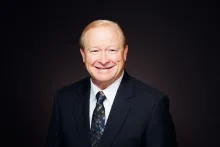
Jim has been in the ministry over 40 years serving fifteen congregations. He and his wife, Joan, started their service to God's church in Pennsylvania in 1974. Both are graduates of Ambassador University. Over the years they served other churches in Alabama, Idaho, Oregon, Arizona, California, and currently serve the Phoenix congregations in Arizona, as well as the Hawaii Islands. He has had the opportunity to speak in a number of congregations in international areas of the world. They have traveled to Zambia and Malawi to conduct leadership seminars In addition, they enjoy working with the youth of the church and have served in youth camps for many years.
