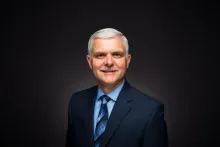



Randy Urwiller
This transcript was generated by AI and may contain errors. It is provided to assist those who may not be able to listen to the message.
Today, to begin, I'd like for you to turn with me, please, to Galatians 4, 3-7. Part of this was so conveniently read in the sermonette. Galatians 4, 3-7. And I'd like for us to read here where Paul is reminding the brethren of the precious calling and gift God our Father and Jesus Christ have given us.
This is a gift of liberty. The gift of liberty from bondage to sin and death. And let's read it here in Galatians 4, 3-7, reminding us that God is love, and He wants a large family, and He's given us a spirit as a begettle.
And it's all because Christ took our place for the penalty of death from sin. And so Paul writes, verse 4, verse 3. Get the right page. Even so, when we were children, we were in bondage under the elements of the world. But when the fullness of the time had come, God sent forth His Son, born of a woman, born under the law of the penalty of the law, like everyone else. He had to resist temptation to sin. Born under the law to redeem those who are under the law, that we might receive the adoption as sons.
And because you are sons, God has sent forth the Spirit of His Son into your hearts, crying out, Abba, Father. Therefore you are no longer a slave, but a son. And if a son, then an heir of God through Christ. We who have heard God's call and heeded it have been baptized, and we have received the enjoying of God's Holy Spirit, that begettle to a new life, the sons and daughters of God.
To a life of following now, a life of following Jesus Christ, our Savior, and of loving God, and of loving our brethren. And Paul emphasizes this, our commitment, if we now look at Galatians 5, verse 13 through 14. Galatians 5, 13 through 14, he says this, For you, brethren, have been called to liberty. Only do not use liberty as the opportunity for the flesh, but through love serve one another.
That's the scripture of the day. Through love serve one another. For all the law is fulfilled in one word, even in this, you shall love your neighbor as yourself. That's more words than one, but the point is, this is one principle, one powerful principle. And of course, Dr. Wardage gave a sermon a couple weeks ago now reminding us powerfully that God is love. Now, after we've committed ourselves to God, baptism, we're to continue tirelessly, and with the help of God's Spirit, we're to keep resisting the poles of our sinful flesh.
We are to be doing good works of love. Of course, the way of God can be challenging, but He allows us the help to do it. And so, Paul then continues, in Galatians 6, verses 9 through 10, he encourages us with these words, Galatians 6, 9, And let us not grow weary while doing good, for in due season we shall reap if we do not lose heart.
Therefore, as we have opportunity, let us do good to all, especially to those who are of the household of faith. The word household can also have in its place the word family of faith. In fact, that word is translated family, elsewhere in Scripture. My purpose today is to remind us that we are each called upon as brethren to serve one another through love.
Not love as we define it, but love as defined by God. My hope is to encourage us and to help us to become even more effective in serving one another as members of the body of Christ, and so that together we might endure to the end, and together we might be found worthy of receiving that precious gift of everlasting life at Christ's return.
Now, I've entitled this sermon, Are You Serving Your Brethren Through Love? Are You Serving Your Brethren Through Love? Now, when we hear the phrase, serve the brethren, we might think of the work that many volunteers, and in fact, I think just about everybody in this congregation does, an overt act of service. We might think of the work of many volunteers who together make it possible for us in this congregation to meet here each Sabbath.
And we get to meet in a nice, clean, and bright, pleasant, safe, friendly, and hospitable, because we like our coffee service and snacks. It's a very beautiful place to meet, to worship God and to have fellowship, but it's made possible by people who are willing to serve. And here we can worship God, be taught from scriptures, enjoy the godly fellowship. But we also need to remember that when it comes to serving the brethren, we should not just limit it to what goes on in and around this building.
That's only a minuscule amount of what we should be thinking of when it comes to serving the brethren. We can also be reminded of those who provide loving care of all sorts, such as providing food and clothing, such as giving car rides, mowing lawns, making repairs, sending cards of encouragement, like a concern table, and of course keeping in touch by phone, text, and all these other wonders of technology that make things possible in serving.
So I personally am very grateful for all of you that have been serving for years, and I'm looking forward to all the younger folks growing up and helping us out. We're going to try to make sure we bring everybody along if you want to help with the sound crew, if you want to help doing anything.
Special music, we encourage all that because we're all body, we're all family. We all family, and we have a place to serve. The thing about serving, though, of course, and I'm grateful for everyone, but I'm also grateful to those who serve each and his or own way, who are often unnoticed by others. But I hasten to say, he may be unnoticed by others, but he are not unnoticed by God. And that's whose eyesight very much matters when we serve.
But I'd like for us to consider a bit more about what God's Word has say about serving the brethren. So let's turn to a few scriptures here. 1 John 3, verse 16 through 18. 1 John 3, 16 through 18. Here John was inspired to write, By this we know love, because he laid down his life for us. Speaking of Christ, of course. And we also ought to lay down our lives for the brethren. But whoever has his world's goods, and see his brethren in need, and shuts up his heart, how does the love of God abide in him?
And so John then warns us, verse 18, By little children, let us not love in word or in tongue, but indeed and in truth. Let's also look at 1 Peter. In 1 Peter chapter 1, verse 22 through 23. 1 Peter 1, 22 through 23. Peter here, in this case, writes, Since you have purified your souls, and obeying the truth through the Spirit, in sincere love of the brethren, love one another fervently with the pure heart. Having been born again, and that's not really what should be there, it's the word anaganau, anaganau, which other places is translated correctly, to beget.
Having been beget, we'd say begotten again to a new life, a new way to live. Not of corruptible seed, but incorruptible, reference to the Holy Spirit, through the word of God, which lives and abides forever. Combining the Spirit and the word together, we thrive and we live and we serve under God's direction. Now, Paul in particular was inspired to teach us much about this vital aspect of God's love, which is service to our brethren.
So let's turn next to Romans 12, and we'll be looking in sections here, verses 1-18. Romans 12, 1-18. And I'd like for us to read how Paul further elaborates Christ's instructions that we find in Scripture. Now, we should remember that Paul did love God. He went through a lot. He served a lot in very, we might say, easy ways and very terrible and difficult ways in service to God.
He loved God and he loved the brethren. Paul was an instrumental part of God's establishing the church many years ago, and we read his words hopefully every day, more or less every day, because they still guide us, of course, to this moment.
Now, Paul wrote this letter to the brethren in Rome nearly 2,000 years ago, and he pleaded for them to love God and to love one another through selfless acts of love. He still speaks to his brethren today. That's you and me. And I pray that his heartfelt plea also stirs up our hearts and minds to service today. And so let's read Romans 12 verse 1.
Now, we should note that Paul's words here, they echo what he writes in Galatians 5.13, the scripture of the day. It's a reverberation, we might say, of what he wrote there. That is, his brethren, we must not serve the flesh, our carnal, selfish nature, but his living sacrifices, we must serve God and we must serve the brethren. And to make that clear, Paul then describes how God has placed us each as brethren into the body of Christ, the church. Let's look on now verses 3 through 8. For here he describes different functions needful to the body of Christ and how God has placed each individual member, that means you and me, in such a way so that we can together fulfill the needs of the church. Verse 3, For I say, through the grace given to me, to everyone who is among you, not to think of himself as more highly than he ought to think. Better be humble. But to think soberly. As God has dealt to each one a measure of faith. For as we have many members in one body, but all the members do not have the same function. So we, being many, are one body in Christ and individually members of one another. Verse 6, Having then gifts differing according to the grace that is given to us, let us use them. We all have different functions, different gifts. The point he's making, we need to use them. If it's prophecy, then let us prophesy in proportion to our faith. Or ministry, let us use it in our ministering. He who teaches in teaching, he who exhorts in exhortation, he who gives, will do it with liberality, he who leads with diligence, and he who shows mercy with cheerfulness. So what Paul is saying here, God inspired Paul to say, is all very important. We need to think about this when we go home and take time for a study. Go back and read these verses and think it through. Each member of the body of Christ, God's church, has an important part to be fulfilling. We have a function. You need to believe it. That's what Scripture says.
And each of us must be faithful to use his or her abilities or gifts in humble service to God and to the brethren. Now, I'll be the first one to add, none of us is good at everything. I'm trying to be good at just a few things. But we do each have a gift that is valuable to God.
And whether or not our abilities in preaching or teaching or exhorting or in giving, God expects you and me to be faithful in using that gift to serve him and the brethren. I'm going to be repeating that through love.
He is the one who placed us in the body to serve.
He expects us to be serving, however it is.
We serve.
But an interesting point here, God is not going to make you serve. He's not going to make me serve.
God allows us to choose to serve or not to serve.
Think about it. Why would Paul be be seaching, begging the brethren to serve?
Because they do have a choice. God allows us that choice. God would have us use our gifts. Now, if you hold your place here in Romans, and I'm going to do the same thing, because we'll be coming back to this part of Romans. Let's now turn to 1 Corinthians 12. 1 Corinthians 12-20. Yep, I said that too fast. 1 Corinthians 12, verses 12-20. Paul elaborates more on how God places each member into the body of Christ.
And he does so for particular reasons for fulfilling the needs of the brethren to help each other out.
And so in verse 12, we read this.
Again, it reminds us what Paul is talking about in Romans. For as the body is one and has many members, but all the members of that one body, being many, are one body, as also is Christ.
For by one spirit we are all baptized into one body, whether Jews or Greeks, where the slaves are free, and have all been made to drink into one spirit.
For in fact, the body is not one member, but many. It's composed of many parts, many members. If the foot should say, because I am not a hand, I am not of the body, is it therefore not of the body?
Well, of course not.
And if the ear should say, well, because I'm not an eye, I'm not part of the body, is it not therefore still the body? Of course it's part of the body.
Verse 17, if the whole body were an eye, where would be the hearing?
If the whole were hearing, then where would be the smelling?
I think you understand what he's saying. Aren't we glad we have different body parts?
I am. I'm glad I can hear and I can see and I can smell. Okay, I'm glad.
We should also be glad that there are many different functions in the Church and that we have very many different gifts that we can all find a way to serve one another, serve the body of Christ.
And notice Paul's next point here in verse 18. And here's the point to remember.
And now God has set the members, each one of them, in the body just as he pleased.
And if they were all one member, where would the body be?
But now indeed there are many members and yet one body.
Sometimes I think we might gloss over that point here in verse 18. Sometimes we might think we're not important, that we don't have a part, really important part in God's Church.
That's not how God sees it. And I think we need to see things the way God sees it.
I don't think it. I believe it.
He places us in the Church to function as he pleases.
We each have a function fulfilled, whether it's like an eye or ear, hand, foot, or nose.
The question we need to ask ourselves, though, and this is an important one, are we functioning members of the body of Christ? Are we functioning? We have a function.
Are we functioning? Am I? Are we functioning as God would like me, like us, to function?
Are we using our gifts, as Paul described, to serve God and to serve our brethren?
It's up to us to make that choice.
Now, in the next chapter, still in 1 Corinthians chapter 13, Paul again echoes the words we first read back in Galatians 5, 13.
We are carnal human beings, liberated from bondage to sin and death.
And God knows, he knows, that we need his help in understanding what his love is like, in understanding how we need to apply it, and especially to our fellow brethren.
And so in 1 Corinthians 13, 1 through 8, Paul goes into a little more detail to describe God's love.
In verse 1, 1 Corinthians 13, though I speak with the tongues of men and of angels, but have not love, well, I have become a sounding brass or a clanging cymbal, just making a lot of noise.
And though I have the gift of prophecy, and understand all mysteries, and I have all knowledge, and though I have all faith, so that I could remove mountains, but if I have not love, I am nothing. His point is that God's love is an action. It's more than just hearing about God's love. It's more than just memorizing what faith means. And I think we can define what faith is. We can give the definition. But to love is much more than that. It's to use this knowledge, to activate it, to make it useful, not just for ourselves, but for others especially.
And so we need to be understanding this and using God's love and action. In verses 3 through 8, Paul gets to the point of showing us what our action should be. So verse 3 through 8, he gives some examples as he continues on to describe how love is to work, God's love. And though I bestow all my goods to feed the poor, and though I give my body to be burned, even as a sacrifice, but have not love, that profits me nothing. Love suffers long in his kind. Love does not envy. Love does not parade itself. It's not puffed up. Love does not behave rudely. It does not seek its own. It is not provoked. It thinks no evil. It does not rejoice in iniquity, but rejoices in the truth. Love bears all things, believes all things, hopes all things, endures all things. Love never fails. It's powerful. It's an action. Paul reveals that God's love is purer. In other words, it's not self-centered. Like carnal love can be.
To love others God's way means we should not serve from a motive of pride. We should not serve in order to draw attention to ourselves or to make a name for ourselves.
God's love is no motive but to give, to help, to serve, and so on.
And when we serve, it's really not about winning some kind of popularity contest or becoming a name. Instead, we should see others—let me put that the other way. Instead, should others see our good work, should others see us serving, they will then see God's love in action in us, in the way we live. And when they see that love of God working in us and through us, they will then—maybe not ride away, but in time—give God the glory for what we are doing, even if they don't know what it is we're doing right now or why. You can jot down Matthew 5, verse 14 through 16. That's worth a good study later, Matthew 5, verse 14 through 16. Now let's turn back to Romans 12, though. Let's turn back to Romans 12.
Because with this understanding of God's love, we're defining it according to what God says.
When we turn back to Romans 12, verse 9 through 18, we now come to this series of exhortations. They're almost like little commandments—little commands, orders from Paul. These are exhortations that he gives us, directing us as to how we can serve our brethren and serve them with a pure motive, which is love. And so if I humbly yield ourselves to God, to serve God and one another with His love, when we do that, you see our hearts and minds are also going to become more like God's.
We won't be able to help ourselves if we're truly having God's help in mind and loving as He loves and serving as He would have us serve. Let's look at verse 9. Paul gives this exhortation, let love be without hypocrisy. It should be purely from pure motive. Appore what is evil, cling to what is good. Be kindly affectionate to one another. Notice that, to one another. He's speaking to us as brethren. Be kindly affectionate to one another with brotherly love and honor, giving preference to one another. Not lagging in diligence, fervent in spirit, serving the Lord, rejoicing in hope, patient in tribulation, continuing steadfastly in prayer. I'm going to come back to that in a minute. Verse 13, distributing to the needs of the saints, given to hospitality. All these are ways that broad ways we can be serving one another, serving each other as brethren. Verse 15, there's more. This is also part of serving our brothers and sisters. Verse 14, bless those who persecute you. Bless and do not curse. Rejoice with those who rejoice and weep with those who weep. Be of the same mind toward one another. That means do not sit your mind in high things, but associate with the humble. Do not be wise in your own opinion.
Repay no one evil for evil. Have regard for good things in the sight of all men.
And if it is possible, as much as depends on you, live peaceably with all men, all people.
And so again, Paul provides us with a, you might think of it as a very practical list of whys, dos, and don'ts, and how to love, and how to serve one another.
We should also note that Paul's direct orders here, they're for everyone in the body of Christ. They're not limited to those who are preaching and teaching. They're limited to nobody in the body of Christ. Everyone is to be practicing this as a way of life. They're for everyone in the body of Christ, no matter one's function, no matter one's gifts. All are to serve one another through love. Now, as I said, I'd like to take you back to verse 12. That exhortation that says we're to be continuing steadfastly in prayer.
I want to draw attention to that because over the years I've talked with different ones in their conversations talking with me about serving. There's been a number of times people approach me and say rather sadly and dejectedly, the tone to disappointment, and I'm quoting because I've heard this several times, I guess all I can do is pray.
You ever hear people say that? I guess all I can do is pray.
Now, I understand why we might say that. Prayer is so quiet, usually so private, it can't seem like a lesser service.
It can seem less important than speaking. It can't seem less important than sharing food or practicing hospitality. But actually, prayer is a crucial means of service. It's absolutely vital to the body of Christ, to each of us. You can jot down James 5.16.
Confess your trespasses to one another and pray for one another that you may be healed. This is part of our when you come to an elder and ask for an anointing. This is oftentimes what we'll refer to this very scripture. Pray for one another that you may be healed. The effective, fervent prayer of a righteous man and woman avails much. You might also jot down Psalm 145.
Psalm 145 verse 18 through 19. I'll read it to you.
The Lord is near to all who call upon him, to all call upon him in truth.
Imagine God's that close. It's pretty powerful. He will fulfill the desire of those who fear him. He will also hear their cry and save them.
Prayers are very powerful. So yes, there are many valuable ways to serve our brethren.
In prayer is a most powerful means of serving. We must never underestimate it.
We must be praying for another. And if praying is the gift God has left allowed to you, maybe your health doesn't allow you to do as much as you used to in times gone by.
If praying is that precious gift that God has left you, you better use it. Infervently so.
And so, going to Scripture, looking at Paul carefully, we know that God expects us to serve one another through love. We know that love is an action. We know that love requires that we do something, such as pray. And yet, within ourselves, we also know something else.
That's the other something else Paul kept going back to. We know that sometimes it's very hard to serve our brethren. That serving our brethren can be fraught with many challenges. Now, some of these challenges can be preventable, but others are a little harder to combat.
If we're not careful to guard our hearts and watch out for our attitudes, you need to be watching. We don't watch our attitudes. We start making excuses. Then even that powerful service of praying for others can be a challenge for us to do.
And why is that? It's because of our carnal nature. That flesh, as Paul talks about.
Galatians 517. Let's look here. Galatians 517. We're in the neighborhood.
Galatians 517. For the flesh lust against the spirit, and the spirit against the flesh. And these are contrary to one another, so that you do not do the things that you wish. You don't do the service to your brethren as you might want to do. And so we understand that even after we're baptized and receive God's Spirit in us, this Holy Spirit, our selfish nature does not want to give in to God's way of love. Now, sometimes we know that we should do the right and godly thing and serve.
But we resist serving. I know it. Sometimes we simply don't want to serve. I know it.
So we willfully don't. And sometimes, even when it's within our capability to serve, we will refuse and cover ourselves, try to cover ourselves with poor excuses.
I'm too busy. I'm too tired. I might hurt myself. I might hurt somebody else.
That's not my job. Somebody else will do it. I don't know if you ever heard things like that.
If we find ourselves resisting to serve when we know that we can and we should, then we need to ask ourselves, am I giving in to the flesh and not giving in to God's Spirit?
Is that what we're doing? We're resisting God, we're giving in to the flesh.
We must not take that possibility lightly. In Matthew 25, verse 31 through 46, Jesus taught that when the Son of Man returns to establish his kingdom on earth, he will judge the peoples. Matthew 25, and it's this parable, it's something I call a prophecy. Matthew 25, it's in 31 through 46, sometimes called the sheep and the goats. The Son of Man will come, he will judge the peoples, and he will separate, verse 32, he will separate them from one another. Sometimes it says, nations, he will separate them one from another. As a shepherd divides his sheep from the goats, and he will set the sheep on his right hand, but the goats on the left. He will judge them, you see, according to how they served his brethren.
He will say to the sheep, Matthew 25, verse 34, pick it up there, he will say to the sheep, come you blessed of my father, inherit the kingdom prepared for you from the foundation of the world.
For I was hungry and you gave me food. I was thirsty and you gave me drink. I was a stranger and you took me in. I was naked and you clothed me. I was sick and you visited me.
I was in prison and you came to me. Now, if you don't recognize it, I'll force it.
These are all examples of serving the brethren through love, aren't they? Verse 37, then the righteous will answer him, saying, Lord, when did we ever see you hungry or feed you, or thirsty and give you drink? When did we see you a stranger and take you in, or naked and clothe you? When did we see you sick or in prison and come to you? And the king will answer and say to them, assuredly I say to you, inasmuch as you did it to one of the least of these my brethren, you did it to me.
Isn't that powerful?
Now, what should be even more sobering to all of us is that the goats apparently had the same opportunities to serve the king's brethren, the brethren of Jesus Christ, who is the son of man.
And though they had the opportunity to serve them, they did not. They chose not to, apparently.
Verse 44. Then they also will answer him, saying, these are the goats now, their turn. Then they will also answer him, saying, Lord, when did we see you hungry or thirsty or a stranger or naked or sick or in prison and did not minister to you? We didn't see you. And he will answer them, saying, assuredly I say to you, inasmuch as you did not do it to the one least of these, again, he's referring to his brethren, you did not do it to me. And these, referring to the goats, will go away into everlasting punishment, but the righteous into eternal life. Those who absolutely refuse to love God and love his people, they will cease to exist. Second death. Now, I don't intend to be harsh, and I hope you're not taking that that way, but these are the warning words of Jesus Christ. These are his words.
It's my tone, but these are his words. Serving our brethren is a vital matter to God, and so it should be to all of us. A vital point that Jesus made is that when we sincerely love our brethren and serve them, we are also loving God. We are also serving God. People ask oftentimes, how can I serve God? Go love your brother or sister. You got a problem with him? Go work it out.
You did something you shouldn't have done to your brother? You better go take care of it.
Do you need to pray for somebody? Please go pray.
In 1 John 4, verse 20 through 21, in 1 John 4, 20-21, he echoes what Jesus said, if you did it to the one who least these my brethren, you did it to me. John writes this in 1 John 4, verse 20, in 1 John 4, 20-21, if someone says, I love God, I love God, and hates his brother, he is a liar. He's not speaking truth. For he does not love his brother whom he has seen. How can he love God whom he has not seen? In this commandment we have from him that he who loves God must love his brother also. Must love his brother also. And you can jot down for your convenience John 13, verse 35. John 13, verse 35. These are words of Christ. By this all will know that you are my disciples, my brethren, if you have love for one another, if you have love for one another. So quite clearly God expects us to serve one another through his way of love.
And yet none of us is perfect in serving. And that's why we're so grateful to our loving father that he allows us not just the help of his spirit to help us do what we really want to do, but he also allows us that wonderful gift called repentance. That we can humble ourselves before him, go to him, beg his forgiveness, ask him to forgive us through the shed blood of Jesus Christ, and he says he will. When we're sincere he will. And he gives us the strength to move forward, to do what we should. So what do you and I need to be doing to become better at loving our brother?
I'd like to give you some takeaways. I'd love to give you something that I'm striving to do and I think we all can be striving to do.
How can we better serve one another through love?
Number one, be diligent to put on the mindset of God. Be diligent to put on the mindset of God.
In Philippians 2, 1-7, we're likely familiar with this, but I've learned through the years to be very careful about assuming anything. And so let's read here. Paul again is exhorting us to love one another as brethren should. And to truly love one another, he reminds us that we must be like-minded, not just with one another, but like-minded with God, with Christ. Not to be falling in the ways of the flesh, but in the ways of God. And so in verses 1-4, he spends some time here describing again the mindset we need to have as brethren. Therefore, if there is any consolation in Christ, if any comfort and love, Philippians 2, 1, if any fellowship of the Spirit, if any affection and mercy, Paul says, fulfill my joy by being like-minded brethren, having the same love, being of one accord, being of one mind, and let nothing be done through selfish ambition or conceit. That's the flesh part. That's the carnal part. But in lowliness of mind, let each esteem others better than himself. Let each of you look out not only for his own interest, our own concerns, but also for the interest and concerns of others.
That's what family do. That's what good, godly families strive to do. Now, this attitude and approach Paul encourages us to develop is the mindset of Christ. Verse 5-7, he continues, and so he says, let this mind be in you, which was also in Christ Jesus, who, being in the form of God, did not consider it robbery, did not consider it unfair to be equal with God, but made himself of no reputation. Taking the form of a bondservant and coming in the likeness of men, he humbled himself. He humbled himself before God and before man.
He experienced again the same existence we have, and yet he did not sin. He did not deserve to die, but for the love of the Father and for all humanity, he willingly submitted to cruel suffering, painful, terrible crucifixion, so we might be free and have an everlasting relationship with our Heavenly Father so we could be members of God's divine family.
It's his mindset, Christ's mindset of humility, self-sacrifice, and love that God expects us to be developing. And we can do that as we draw near to God, and we know what the tools are.
Those tools are prayer and studying the Bible, meditating on what the words mean, making connections, actually thinking about it. Sometimes it means you need to slow down your reading program instead of trying to charge through a chapter. If you only get through one verse that day and you get a lot out of it, kudos! Wonderful! Now apply it! Now go do what it says.
And of course, the other fourth tool is fasting. Fasting is critical. Fasting is what helps us to stay humble enough so that we can actually pause and listen to Scripture and actually be humble in our prayer. So our prayer, our steadfast prayer, is more helpful and powerful and life-changing, not just for ourselves but for others. But of course, these four things, these four tools, are not useful at all if you don't do the next thing. You know what that is?
Repentance. That's the action. That's the action. You can study the Bible all you want, but if you don't repent, if you don't put it in action, you can learn all about love. But if you don't put love into action, you're just a banging gong, a clashing symbol. So we cannot understand how to love God or a brethren if we don't keep our hearts and minds and actions focused on God, putting on that mindset.
Number two, what can we do? We need to be motivated by the example of Jesus Christ.
Be motivated. Just don't know it, but be motivated by the example of Jesus Christ. And Paul makes this clear. Follow his example in Ephesians 5, verse 1 through 2.
Ephesians 5, verse 1 through 2. We must follow Christ no example. Ephesians 5, verse 1.
Excuse me, therefore, be imitators of God as dear children. We want to walk and do what our our heavenly Father does. Be imitators of God as dear children and walk in love, as Christ also has loved us and given himself for us, as an offering and sacrifice to God for his sweet-smelling aroma. And also back in Mark chapter 10, verse 43 through 45. Mark 10, 43 through 45. Jesus made clear. He made very clear that he came to serve. We're going to imitate Christ. We need to serve. Mark 10, 43. Yet it shall not be so among you, but whoever desires to become great among you shall be your servant. She reminds us of the foot washing ceremony at Passover.
And whoever you desire to be first shall be slave of all, slaves of God's love. For even the son of man did not come to be served, but to serve and to give his life a ransom for many. Christ served, so must we. In John 15, 13 through 15, we mustn't forget the words of Christ telling his followers, telling all of us with ears to hear. John 15, verse 13 through 15.
Greater love has no one than this, than to lay down one's life for his friends. You are my friends, if you do what I command you. No longer do I call you servants, for a servant does not know what his master is doing, but I've called you friends for all things I have heard from my father. He got this from his father and he's sharing it to us. He's also our spirit, our spiritual father, heavenly father. I have heard from my father, I've made known to you. And so Christ delivered us. He gave us liberty from sin and death, by which we receive salvation, become members of God's divine family. That is serving your brethren through love, isn't it? That is serving your brethren through love. And number three, I'll have to repeat this. This one's a little longer. When there's no good reason to say no, when there's no good reason, I don't say you're not going to have reasons, when there's no good reason to say no, pray for the faith to say yes.
When there's no good reason to say no, pray for the faith to say yes.
Now, I gave a sermon some weeks ago. I talked about the world's lifestyle, the world view.
It's called moralistic, therapeutic deism.
And Americans are increasingly gravitating for that. It's a fake Christianity. Its purpose, essentially, is to make people feel good about themselves by preaching easy and smooth things. We read about that back in Isaiah's day, of course. But people in our society only want to hear easy and smooth things. They just want to be encouraged to be nice and kind.
And people following this different world view, unlike ours, they are not encouraged to repent of sin. They're not encouraged to keep God's commandments with life. They're not encouraged to make some huge sacrifices in life. Not like scripture says we should. The danger is, and I hope you understand this, we're immersed in that world. We're not a part of it, but it's around us. And that desire to have it easy, because that's a carnal desire. I want it easy, but I know easy is not always good for me. It's not good for any of us.
It can influence the body of Christ to want to hear and to do only those things that are easy and comfortable. Instead of living by the ways of God and serving, serving sometimes is really tough. Jesus Christ proved that. He served, and it was really hard. He had to give up his life.
He didn't have to give it up. He wanted to give it up, and he did.
Ten years ago, last January 2011, many of you seated here will recall how necessity led many of us to serve, perhaps as we had never done before. That happened because, for those of you that were here, half of the congregation up and left, at the end of December 2010, half the congregation left, and come January, we're here. They left to join another church organization.
Others of us chose to remain.
And that was a difficult time, wasn't it? Those of you who were here. I remember my wife and I prayed to God to give us wisdom. We prayed to God to give us clear thinking.
There's a lot of emotional things going on. And we also asked for greater faith.
And just about all of us who chose stay took on new functions, didn't we? We discovered new gifts of service we didn't know we had, we didn't know we were capable of, and we took it on.
I served in a way I found, and I enjoyed it. I took out the garbage, and I swept the floor. I felt very comfortable doing that, and I did enjoy it. I do.
But then one evening in February, Mr. Dale Bauman called me at home and asked if I'd like to give a sermon at. I was surprised. Didn't see that coming. And I was ready to say no, because I usually said no to anything that made me uncomfortable. Anything that would shove me out of my comfort zone, I typically would say no. There are things I really didn't want to do, and I'd say no. Now, was I capable of giving a sermon at? Was I capable of giving a sermon at?
Yes. I had learned to give sermonettes in Ambassador College. I was also an English professor.
This is really shameful. This is really embarrassing. But there's a point.
I had been teaching on the collegiate level for many years. I had the training.
I had the ability to give a sermon at. But I had not given a sermon at in the 23 years since I graduated from Ambassador College. Well, there had been no real need for me to speak, and I really didn't have the desire to speak. For lack of a better reason, I didn't want to.
I don't know if you've ever felt that way before. But Mr. Bauman lovingly, kindly kept encouraging me. He kept encouraging me to say yes. But I had that little self-centered voice in my head, saying, No, don't do that. You haven't given a sermon at in umpteen years. You can't do that. You might preach heresy. There might be too much for you to do on top of all these other things you've got to do. The responsibility is too great. You might embarrass yourself in front of everybody.
That's no problem now.
Well, those were pretty pathetic excuses. They were poor for me, because I had the capability.
But as I listened to Mr. Bauman, I knew that I had to do the right thing. I had that feeling. You know what that feeling's like, too. I had the feeling I had to do the right thing.
The brethren needed more speakers here, and I had the capability to speak, and I had the capability to serve in that way. And so when it came down to it, I had no good reason to say no.
I had no good reason to say no. So I stepped out of my comfort zone, and I said yes. I said yes.
On April 2nd, 2011, I stood right here where I am now, and I gave a sermon at in East Texas. And since then, I have said yes to many other opportunities to serve God that God has placed before me, many of them I never expected.
And so now, somehow, I find myself, somehow, 10 years later, July 3rd, 2021, beginning a new function and a new role in God's Church.
And it's something I neither desired nor something I sought, but I had no good reason to say no. And so I said yes. Now, I don't usually tell stories about myself. I don't like to. I don't like to go against what my dad and mom taught me as a kid. They told us kids, don't talk about yourself, because people are going to think you're bragging. That's not my purpose.
I decided to talk some about myself and about my own struggle with serving the brethren. Not to brag, but to show by way a personal example what can happen when we ask God to increase our faith and when we stop saying no to serving God and to serving His people.
And so God has strengthened my faith, as I have never expected, I have never foreseen. It's amazing what happens when you start saying yes to serve God and to serve His people. Absolutely amazing.
Absolutely amazing. I encourage you to try doing it. I don't think you'll be disappointed.
I don't think you'll be disappointed. And I know God will continue to strengthen my faith in ways I've yet to learn because I endeavor to keep believing Him. I'm going to keep striving to do what He says, just like I and Dr. Ward and ministers for many, many years have encouraged all of us through the years to keep doing the same. And the credit for any good work I've done, any good work any of us do, ultimately goes back to God our Father, from which all good originates.
So we are not all called to be preachers or teachers in God's church, but God does place each of us in His church with a function and with a gift that we are to share in serving one another in love. We're to serve together in unity and harmony under God's guidance.
We're to follow His written Word, we're to be led by His Spirit at work in us and with us.
As part of our calling to repentance to become more like our Heavenly Father, we must be yielding our wills to God, to God's perfect will. We must be learning to say yes to serve.
And so I encourage all of us to resist our self-centered ways. I encourage all of us to allow God to transform our hearts and our minds. I encourage all of us to choose always to submit to God's will in ways and to become more and more like God. And please, brethren, I encourage all of us to serve the brethren through love.
