

Gary Petty
This transcript was generated by AI and may contain errors. It is provided to assist those who may not be able to listen to the message.
Happy Sabbath, brethren! It's great to have you with us today on this very beautiful and mild Sabbath day here in Cleveland, Ohio in January. Today I would like to talk about one of the most powerful tools to develop our relationship with God. Without it, without this tool, one can never truly get to know God.
With this tool, we can go directly to the greatest power in the universe, and we can literally influence events. If you have this power, you can change history. You could literally change the history of mankind. It's an essential form of communication, and healthy communication is a two-way dialogue of mutual respect. Healthy communication is talking and listening. Now, in my lifetime, I have found that some people become very good at talking. But two-way dialogue is also the art of listening.
And the art of listening means that you truly focus on what the person is saying. You don't think of what you're going to say next while they're speaking. You don't prejudge what they're speaking. You focus on what is coming out of their mouth, what they are saying, and that is quality listening. And this power that I'm talking about, again, is mutual respect, and it's a dialogue that includes both listening and speaking. We listen to God when we, with open hearts and minds, take this book and we read it. When we open the Bible with our hearts and minds and the right attitude, that is how we listen to God.
We allow Him to talk to us through His word. We listen to God when we read His word with an open heart and an open mind. And we speak to God when we consistently use this essential tool of communication. The tool that I'm talking about is prayer. Today I would like to discuss how we can make our prayers to God more effective, which means our relationships with God will be better. They'll be deeper. They will be richer.
They will be more meaningful if we develop our prayer lives. I really can't do justice to this topic in one sermon. I can only go through a small percentage of scriptures that deal with prayer or the fact that someone is praying. So please bear with me if I don't read a scripture that comes to your mind. That's a good thing. If a scripture about prayer comes to your mind. But in the limited amount of time that I have today, I have to zero in on a particular part of the subject of prayer.
And it's simply my hope today to give you some food for thought to enrich your prayer life. So what is prayer? That's the best place to begin. Prayer is a form of worship that seeks to build and maintain a relationship with God through deliberate communication. We communicate with God on purpose. That's what prayer is. You say, I'm going to do this on purpose. I'm going to communicate. I am going to talk to God. Prayer can be either individual in our homes. It can be congregational, like we do during services. When we say a prayer together, when we open services or we close services with prayer, it can take place in public, like we are doing here today.
It can be something that's private. It can include the use of words. It can include the use of a hymn. It can include reciting Scripture or spontaneous utterances, just talking to God like we would be talking to a close friend. Those are all different aspects of prayer, of praying. There are different forms of prayer, such as requesting a benefit or a blessing. Most of us are used to that because, frankly, that's what we usually pray about, is our own particular needs or problems that we're facing. But prayer is much more than that. Prayer can be a prayer of humble requests for others, like the young man we read about in the bulletin today, who, as he coli and without God's intervention, might literally die from a very terrible disease if God doesn't intervene on his behalf.
Prayers can also be thanksgiving. They can be focused around all the things that we have to be thankful for in life. The material blessings, certainly, but more than that, the fact that God loves us, the fact that God calls us, that he's opened our minds to his truth. We, of all people in the world, have the most to be thankful for. When God called you, you won the lottery. There are billions, and what? Seven billion people on earth.
And only if you have won the spiritual lottery of the fact that God called them now at this age, rather than waiting at a later time to give them their opportunity for salvation. So, prayers can be about thanksgiving, and prayers can be nothing more than worship and praise regarding the greatness of God. You are a great God. Your creation is so beautiful. When you walk and you see a garden, you see the sky, the clouds in the sky, on a beautiful, crisp winter morning, or an autumn afternoon, it's just so easy to be inspired by the beauty of this world.
And some prayers can be composed of nothing more than worship and praising our wonderful Father. Prayer is a universal form of worship that we find throughout the Scriptures. We find that the patriarchs prayed. We find that Moses prayed. The prophets prayed. Many kings of Israel and Judah prayed. Many other righteous people in the Word of God prayed. But we're going to start our sermon today by going to the book of Psalms, because if someone asked me, what is the one book in the Old Testament that focuses on prayer, the first thing that would come to my mind is the book of Psalms.
The Psalms teach us that variety and honesty, integrity, and prayer are essential in order to be like David, in order to be a person after God's own heart. The Psalms, they teach us to praise God. We go through the Psalms. We find that we can ask for pardon for our sins. We can seek through the Psalms. We learn that we can go to God and seek His relationship, communion with Him. We can ask God for protection. We can ask God to vindicate us when our enemies are slandering us, when they're saying things against us that, frankly, are not true. And it may include in the workplace when someone's trying to hold you back from getting a promotion or people are gossiping about you in the workplace and trying to put you down or get you fired.
You can go to the Psalms and see prayers of vindication that David prayed for. Of course, healing. You can go to the Psalms and see that we have a great God, the great God, our healer. Let's begin by going to Psalms 55 and verse 16. Psalm 55 and verse 16. David was inspired here to write. He says, As for me, I will call upon God.
I will pray to God, is what David is saying. And the Lord shall save me evening and morning and at noon I will pray and cry aloud, and He shall hear my voice. So that's three segments of the day David prayed. Now, it's good to be king. And when you're a king, you're not punching a clock. He had some advantages that we don't have. And being a king, he could go into the palace or he could take a stroll into the temple.
And it was convenient and easy for him to have a close relationship with God. And, you know, part of his job description when you were the king of Israel, part of your job description read, You shall remain close to God. If you knew what was good for you, knew what was good for the nation, part of your job was to maintain a close, loving relationship with the God of Israel. Continuing here in verse 18, he has redeemed my soul in peace from the battle that was against me. You know, David had a lot of political enemies, even within his own family and within the kingdom.
I can tell you that when you go to areas in your life in which you are in a leadership position, a lot of people take pot shots at you. A lot of people suddenly become critics. And this is what David faced. He says, For me, they were against me. God will hear and afflict them, he who abides from of old. So the God who's been the God forever, the eternal one, I'm going to leave it in his hands to take care of this problem, or Selah, which means to stop and pause and think about that for a second.
Because they do not change, therefore they do not fear God. He has put forth his hands against those who were at peace with him. He has broken his covenant. The words of his mouth were smoother than butter, but war is in his heart. His words were softer than oil, yet they were drawn swords. So David said, I have to be very careful, because there are people who come upon me and they act like my friend. They have smooth words. They act like they're righteous.
They act like they're really fine people. David says, and I need protection against these kinds of people, because though their words are softer than oil, they're actually like a drawn sword. They're trying to cut me to pieces. Verse 22, Cast your burden on the Lord, and he shall sustain you. He shall never permit. He shall never permit the righteous to be moved. That's an encouraging scripture. We stay close to God. If we have the right kind of relationship, he will not forsake his righteous.
He will not forsake his children. So here David comments on how he prayed. He prayed three times during a day. One of the reasons he did this was because prayer brought peace into his world of anxiety and chaos. When you're a king, people are constantly bringing problems to you. There were problems in the provinces. Some Canaanites he had conquered were rebelling. There were always squabbles between the Israelites.
There were family. He actually had a very dysfunctional family. There were family problems that he struggled with. David, at times, lived in the world of constant anxiety and chaos. But he knew that when he entered a period of prayer, as he says in verse 18, he has redeemed my soul in peace from the battle. It's a zone that we get in. An area of quiet, of solitude, of peacefulness.
He understood that. As I said, David had a number of political enemies, and he knew he needed God's protection. When we go to the Father in prayer, what can we receive? We can receive, as David says here, peace of mind. Our burdens are lifted as we are strengthened spiritually. If we understand what David's saying here, we can go to the throne of grace and say, You know, Father, these are my burdens. I'm giving them to you.
Lord God, here you go. Here they are. Now you own them. In faith, I'm leaving them in your hands. In trust. I know that you are the great God, and that you want what's best for my life. So I'm not going to dwell on anxiety and chaos. I am talking to you, Father, and I am handing my burdens over to you in faith.
That, again at the end of verse 22, and he shall sustain you, he shall never permit the righteous to be moved. That's faith. Now let's go to Psalm chapter 86. There are many who believe that this is a parallel with the Lord's Prayer that we'll read a little bit later. Psalm chapter 86, and indeed it has some similar themes.
Psalm chapter 86, beginning in verse 1, and notice immediately how David draws the right distinction between God and ourselves. Bow down your ear, O Lord, hear me, for I am poor and needy. He says, God, you're up there. You're in the heavens. You are great. You are awesome. You are mighty. On the other hand, I am poor and I need you. I need your sustaining presence in my life. Verse 2, preserve my life, for I am holy.
And that may sound like a pretty bold statement, but he knew what we know, and that is when you have a relationship with God, the presence of God in you makes you holy. Are we holy of ourselves? Absolutely not. We're just mere flesh. We're carnal people struggling with our sins, with our flaws, with our weaknesses. But when God dwells in you through the presence of his Holy Spirit, you become holy.
You are my God, Savior-serve, who trusts in you. Be merciful to me, O Lord, for I cry to you all day long. Now, here this was a time of affliction, and instead of just praying to God three times a day, he's saying that he prays all the day long. And we'll explore that a little later in the sermon when we get to some of Paul's writings and see what he meant by that. Verse 4, Rejoice, the soul of your servant for you, O God, I lift up my soul. For you, Lord, are good and ready to forgive and abundant in mercy to all those who call upon you.
And what does that mean? That's all those who pray to you, who on purpose stop what they're doing and pray to you. You are good, ready to forgive, and abundant in mercy. That's just what that verse said. Give ear, O Lord, to my prayer and attend to the voice of my supplications. In the day of trouble, I will call upon you. You will answer me. Among the gods, there is none like you, O Lord, nor are there any works like your works. He's saying, you are the true God. Your works are the greatest. And stand out. Verse 9, All nations whom you have made shall come and worship before you.
That's prophetic. He says there's going to come a time, and of course we understand that's represented by the Feast of Tabernacles. The Millennium comes to this earth. He says, Here all nations you have made shall come and worship before you. And there indeed will come a time when that will happen. O Lord, and you shall glorify your name, for you are great, and you do wondrous things. You alone are God. So there's no other God, he says. Teach me your way, O Lord.
I will walk in your truth. Unite my heart to fear your name. So he says, Unite my heart with your will through a deep and a meaningful relationship. That's the kind of relationship that I want to have with you, Father. Verse 12, I will praise you, O Lord my God, with all my heart. I will glorify your name forevermore, for great is your mercy toward me.
And you have delivered my soul from the depths of Sheol, which is the grave. O God, the proud have risen against me. And a mob of violent men have sought my life, and have not set you before them. Verse 15, But you, O Lord, are a God full of compassion and gracious, long-suffering, abundant in mercy and truth. Now, how did David come to know these qualities that God had? Compassionate, gracious, long-suffering, abundant in mercy and truth. It was through prayer. That is how he came to know these qualities of God by having a relationship with him.
Verse 16, O turn to me and have mercy on me. Give your strength to your servant, and save the son of your maidservant. Show me a sign for good, that those who hate me may see it and be ashamed, because you, O Lord, have helped me and have comforted me.
Brother, this is a model prayer in many ways. I'd just like to highlight some key concepts, give you some things to think about in this psalm that we just read. First of all, we see here that God is great in the heavens. That's where he lives. That is how we should view him. David says, Bow down your ear, which means God is high and I am low. He says that in verse 1.
He says, Save your servant. He says, I need salvation. I need to be saved. He says that in verse 2. He says, Preserve my life. He says that in verse 2. He reflects on the fact that we, brethren, are low and needy. David makes comments like he is poor and needy. He says that in verse 1. He says, Save your servant. Be a savior. I need salvation. He says that in verse 2. He says, Preserve my life. He also says that in verse 2. David says in this psalm that it's God who exalts us. We shouldn't exalt ourselves.
We shouldn't think more of ourselves than we are because anything that we achieve, anything good that comes out of us is because of the righteousness of Christ that lives in us. So he says, God exalts us. He says in verse 2, For I am holy. He says, You have helped me and comforted me in verse 17. He says, Teach me. Unite my heart with Yours, O God. That's verse 11. And he says that God delivered him from Sheol, delivered him from death, from the grave in verse 13.
Then he expresses how God's greatness is revealed. I want you to think of these. These are single words that David uses to describe the qualities of God that he learned through prayer. He says, God is a savior. He says that in verses 2 and 17. He says, He's merciful. He says that in verses 4, 13 and 15. He says, He's good in verse 5.
He's forgiving in verse 5. He is great, he says, in verse 10. He says he is full of compassion in verse 15. He is long suffering in verse 15. He is gracious. He gives grace. He says that in verse 15. He says God is truthful in verse 15 and that God is a comforter. He says in verse 17. These are marvelous qualities that he discovered about God by having a good prayer life. And finally, David mentions in this psalm that God is one and that he's universal. He's everyone's God. He says, there's no one who has works like your works. He says that in verse 8. He says that all nations, nations in Asia, nations in Africa, nations in the Americas, all the continents shall come and worship you.
He says that in verse 9. That's a prophecy that we look forward to. He says that you alone are God. He says that in verse 10. So one of the reasons that David was a man after God's own heart was because he prayed fervently, passionately, and he worked very hard at having a relationship with God. He was bold and he let his needs be known.
When he was down and he felt persecuted, he said, I'm down and I feel like I have the weight of the world on my shoulders. Sometimes we have a tendency to go to God so respectful of his awesomeness and how great he is that I'm sure God says to himself, just let it out.
Tell me how you really feel. I can take it. I promise you. I've probably heard worse. Just tell me how you really feel. That's the kind of relationship that God wants to have with us. Now let's go to the New Testament and focus on the example of Jesus Christ. Matthew 6 and verse 5. You'll turn there with me. Matthew 6 and verse 5. Jesus, speaking of the disciples, said, And when you pray, notice he doesn't say, And if you pray, when you can fit it into your busy schedule, No, he doesn't say that. He says, When you pray, that's an assumption you will pray, you shall not be like the hypocrites, for they love to pray standing in the synagogues and on the corners of the streets, That they may be seen by men.
How many sermons have I talked about in different ways that people want to draw attention to themselves? That is such the core and root of a carnal human mind. Look at me! I'm special! I'm important! And in Jesus' day, of course, there were people who pretended to be religious, the same people who went home and abused their wives and children, the same people who were corrupt and vile, would stand in the synagogue for three, four hours and, Great God, I love you God, oh!
People walked by, oh, that man! He's just so righteous! He's been here for three hours, praying, oh, he must have such a wonderful relationship with God! And that's the total reason that they did it, so that they could receive attention for their behavior. He says, For they love the praise, standing in the synagogues and on the corner of streets, that they may be seen by men. It's all about getting attention. Assuredly, I say unto you, they have their reward.
And what is their reward? It was that quick comment that someone makes, oh, they're so righteous. How valuable is that? Well, that comment and fifty cents will buy you a cup of coffee at McDonald's Unseniors Day. That's how great that reward is. Verse 6, But you, when you pray, go into your room, and when you have shut your door, pray to your father, who is in the secret place, and your father, who sees in secret, will reward you openly.
And when you pray, do not use vain repetitions like the heathen do, for they think that they'll be heard for their many words. Therefore, do not be like them, for your father knows the things you have need of before you ask him.
So Jesus here gives some good instruction about prayer. In context, again, the hypocrite was someone who prayed openly to draw attention to themselves, so that people would say how righteous they were. What Jesus says is that our personal private prayer should be secluded and should be behind closed doors. Now, Jesus is not talking about public prayer where many people pray together. We do that in a congregational setting, and of course, that's acceptable and that's honorable. That's not a problem.
He's also not talking about when a group of friends or family members gather together and pray as a small group together behind a closed door. This too is acceptable and honorable to God. What he's saying here is that prayer isn't about drawing attention to ourselves. It's not very humble, is it? If the whole purpose of our prayer is that other people will comment on how great we are, that kind of defeats the purpose of prayer.
So the point that Jesus is saying is that when you pray privately, when you're going to talk to God, your standard mode should go into a private room where you can be in the right environment, where people aren't looking at you, where there's no one to show off to and talk to God and have a meaningful discussion with God behind closed doors.
God is not interested in quantity or the length of our prayers. God is interested in quality. Getting to the point, having a heartfelt conversation with him. You know, years ago, my first job was at a counterboy at an electric store, and every morning I had to go in and I had a card and I had to punch in. And at the end of the day, the log, the number of hours I punched out.
And many people have that perspective of prayer. They're like punching in. All right, I'm going to log 30 minutes now. I'm turning the egg timer on. They punch in, they log their 30 minutes and they punch out. And I'm going to tell you when I gave that up, when I stopped doing it. Many, many years ago, I decided I'm going to pray for 30 minutes. I got down, dear God, I just poured my heart out to God.
30 minutes, look at the 30 minutes. And I talked about my needs and I talked about my family. And I talked about the church. And I talked about my job. And I talked about my neighbors. And I talked about everything that I could think of. And I peeked at the corner of the clock. There were 29 minutes to go. And I realized, this is not working. And God is interested in quality. He's not interested in quantity to how much time we log in.
He wants to know what's in our hearts. He wants to know what we're thinking, what is on our mind. He's not interested in putting hamburger helper into our prayers so that we pray for a certain amount of time. He wants to know what's inside our hearts. He wants prayers that are from the heart and spontaneous according to our present need. Let's now go to verse 9. In this manner, therefore pray, and this is an outline that Jesus gives our Father in heaven, Hallowed be your name.
Your name is sacred. Your name is holy. Again, that's putting things in the right perspective between who God is and who we are. Hallowed be your name. Your kingdom come, something that He looked forward to, that we look forward to. Your will be done on earth as it is in heaven. Give us this day our daily bread. And forgive us our debts as we forgive our debtors. And do not lead us into temptation, but deliver us from the evil one. For Yours is the kingdom and the power and the glory forever. Amen.
Verse 14. Forgive men of their trespasses. Your heavenly Father will also forgive you. But if you do not forgive men their trespasses, neither will your Father forgive your trespasses. It's a good scripture to think on when someone's offended us. When someone has hurt us deeply, we need to forgive them. That's the time when we say, well, let's see. According to this scripture, do I want God to just forgive me part way? Just a little bit. Do I want God to forgive me 50% of my sins? Nah. I probably want Him to forgive me 100% of my sins. Therefore, I have to forgive so and so completely. Even though I'm hurt, even though my emotions are wrong, even though they said something they should not have said, maybe it was gossip, maybe it was just rude, whatever.
I need to forgive them because I want God to forgive me. Here are some of the key points in what's traditionally called the Lord's Prayer. I want you to notice how it starts. He says, our Father is above us in heaven and His name is holy. Again, that puts God in the right perspective. He says, return your kingdom back to this earth and restore the harmony to this world that was lost in Eden. That's when He says, thy kingdom come. He says, your will be done on earth as it is in heaven.
He says, please restore your will in this earth. This is asking God to intervene to express His will. And why do we pray that? Because on earth, at this age of man, God's will is usually not fulfilled. There's a big difference between what God allows and what God wills. God's will is for peace and harmony, for His kingdom. His will are beautiful things reflected by the fruits of Holy Spirit. But God holds His nose for a period of time and allows sin and violence and negativity and all the terrible things that go on in this world.
And because we live in that world, it is important that our prayer says, Father, I'm asking that Your will be the will on earth. That's something that we need to continually pray for because God's will is not being fulfilled on earth.
There are a lot of things that He is allowing to occur because of His plan. He says here in verse, let's take a look at verse 11, give us this day, notice what that's a 24 hour period, our daily bread. He says, please provide my needs for today because I am not promised tomorrow. You see, the truth is that I could have a heart attack and die walking out the door this evening.
I could die in my sleep tonight. No one of us are promised a tomorrow. And what Jesus is saying in this prayer, He is saying, I am not promised a tomorrow if by the grace of God I'm here tomorrow, then I'll come back and ask you for bread for tomorrow. And the next day I'll do the same thing all over again. When you look at life that day, then you don't fall into the trap of entitlement, which plagues a lot of people. So He says, give us this day our daily bread.
Provide my needs today, Father. And tomorrow I'll come back and I'll ask you for the same thing for that 24 hour period of time all over again. It says here, that lead us not into temptation, but deliver us from the evil one and forgive us our debts as we forgive our debtors. That was verse 12.
Forgive me of my sins to the same degree that I forgive others of their sins and offenses toward me. I already commented on that. It's very important that we forgive people who have hurt us and offended us. In His statement here about lead us not into temptation, but deliver us from the evil one, He's saying, give us the spiritual strength and protection we need to resist sin and to resist Satan's influences. And Satan's influences are all around us. We are bombarded in a media, in a world that is just negative and selfish and narcissistic.
And it gets, unfortunately, worse and worse every day. Then He says here, for Yours is the kingdom and the power and the glory forever. He says, praise to the Father whose kingdom, power and glory will go on for all eternity. I want you to notice that the prayer ends the same way it begins. And that is praising and acknowledging God's greatness. It's like a sandwich. A good prayer begins, starts out with acknowledging God's greatness and giving Him glory and praise. And then we go through the heart of the prayer and our prayer should end the same way. Giving God acknowledgement and glory and praise for who and what He is. Acknowledging God's supremacy and holiness.
Now let's go to Luke, chapter 11 and verse 1. We'll see Luke's account of the traditional Lord's Prayer. Because he adds something a little interesting to it, a little different. Luke's account, Luke, chapter 11 and verse 1. Luke was recorded, the right now came to pass as he was praying in a certain place. When he ceased, one of his disciples said to him, Lord, teach us to pray as John also taught his disciples. So John the Baptist taught his disciples to pray. He was a godly man.
And the disciples wanted Jesus to teach them to pray as well. And he said to them, when you pray, again, not if, or when you get around to it, when you pray, say, our Father in heaven, hallowed be your name thy kingdom come, your will be done on earth as it is in heaven. Very similar to what we just read. Give us day by day our daily bread and forgive us our sins, for we also forgive everyone who is indebted to us. Do not lead us into temptation, but deliver us from the evil one. And then he says in verse 5, this is added, this wasn't in the other account, and that's why I wanted to touch upon this.
And he said to them, which of you shall have a friend and go to him at midnight? Now, listen to the middle of the night. You're interrupting your friend's lifestyle. They're sleeping. Go to them at midnight and say to him, Friend, lend me three loaves, for a friend of mine has come to me on his journey, and I have nothing to set before him. And he will answer from within. He'll say to himself or within the house and say, Do not trouble me, the door is now shut, and my children are with me in bed.
I cannot rise and give to you. Verse 8, I say to you that though he will not rise and give to him because he is his friend, yet because of his persistence, he will rise and give him as many as he needs. I'm going to read verses 5 through 9 from the New Century Translation. And Jesus said to them, Suppose one of you went to your friend's house at midnight, and said to him, Friend, loan me three loaves of bread.
A friend of mine has come into town to visit me, but I have nothing for him to eat. Your friend inside the house answers, Don't bother me! The door is already locked, and my children and I are in bed. I cannot get up and give you anything. Verse 8, I tell you, If friendship is not enough to make him get up, to give you the bread, your boldness will make him get up and give you whatever you need. Here's what the Believer's Study Bible says about this word, persistence, or the word translated boldness in the New Century Version.
It says, persistence is a translation of the Greek word, an adon, or shamelessness. The idea is not that God must be badgered into action on behalf of his children, but rather that God responds to the open, confident, trusting approach of his children. Have you ever read the Psalms? Have you ever noticed how bold and gutsy David was when he talked to God? When he felt that God wasn't listening to his prayers, David literally said, God, where are you?
Hello? And God acknowledged that. God said, hey, he's telling me what's on his mind. He's telling me exactly what's in his heart. When David felt like God wasn't responding to his prayers, David said, you know, why are you so far from me? When David felt afflicted and persecuted, my did he tell God how in rich embellishment, how persecuted he felt, and how afflicted and how his enemies were all over him and trying to destroy him.
Because he was bold. That's why God loved David so much. He went to God with boldness, with persistence. So it's not about nagging God. It's not about badgering God to get our way. But it's about showing God that in boldness and persistence, we're going to let our needs be known. And he follows up in verse 9. He says, so I tell you, ask and it will be given to you. Search and you will find. Knock. So that's that persistence and boldness.
Knock. And the door will be open for you. Yes, everyone who asks will receive. The one who searches will find. And everyone who knocks will have the door opened. So Christ is teaching his disciples to be persistent in their prayers. Don't just give up. Don't lose confidence in the Father's ability to answer your prayer. Temporarily, his answer may be no, for a reason that you don't understand. But don't give up. Now let's go back a few chapters to chapter 6, Luke chapter 6. And see an example of how long Jesus occasionally prayed. We saw David's example that it was three times a day. Then we saw another example, or in a psalm, where David said he had prayed all night long. Luke chapter 6 and verse 12.
It says, Now it came to pass in those days that he went out to the mountain to pray and continued all night in prayer to God. That's a long time, all night. Six hours, eight hours. However we consider all night, it was a long period of time. And when it was day, he called his disciples to himself, and from them he chose twelve whom he named apostles. So this wasn't something that Jesus did all the time. He was physical. He needed sleep. He needed rest like the rest of us. But he sets a good example. He was making a major life decision. He was going to choose which of the twelve of all the disciples were going to be his closest disciples and become apostles and be the foundation of the New Testament Church. Which twelve men would spend the next three and a half years intimately with him and become the foundation of the New Testament Church? And because his decision was so important, he prayed all night long. Now, if we're going through something alike, if we have a child that's ill, deathly ill, or maybe we're making a major career change, or something as hellacious as going on in our lives, a severe trial, then that certainly is a good reason to follow the example of Jesus Christ and to spend a lot of time in prayer. I can remember many years ago, an example of Mr. Armstrong, when he would make a major decision. He would fast, and then he would switch off, he would pray for an hour, and then he would study for an hour, then he would pray for another hour solid, he would study for an hour. Now, did he do that all the time? Of course not. But before he would oftentimes make a major lifetime decision that would affect people around him in his own life, he oftentimes would do that. So Jesus gives that example when you're going to make an incredible major lifetime decision. Now let's go to John 11, verse 31.
We won't turn to Mark 1, verse 35, but it states there that there was another time when Jesus rose a long while before daylight, and he went to a private location, and he prayed. So Jesus had the ability, and at times in his life, prayed long prayers. We're also going to see an example here that sometimes, actually the majority of his prayers could be very short.
John 11, verse 31, we're familiar with the story of the death of his friend Lazarus, who had died about four days earlier. By the time he got there, actually he had been notified that Lazarus was sick. He was delayed on getting to see Lazarus and intervening and asking God to heal him, and his friend died. We're going to pick it up here in verse 31. Then the Jews who were with her in the house, this is Lazarus's sister, and comforting her when they saw that Mary rose up quickly and went out.
So she spotted Jesus from a distance. She jumped up. She runs out. They said she was going to the tomb to weep there. Then when Mary came where Jesus was and saw him, she fell down at his feet, saying to him, Lord, if you had been here, if only you had been here, my brother would not have died. Therefore, when Jesus saw her weeping, and the Jews who came with her weeping, he was groaned in spirit and he was troubled.
He was groaned in spirit because he was sad. He loved his friend, Lazarus. He loved Mary and Martha. To see them suffer, to see the grief and the anguish that they were experiencing, it bothered him. It made him sad. It touched him emotionally. When people made comments like, well, if only you had been here, he wouldn't have died. Maybe Jesus said to himself, maybe I shouldn't have been delayed.
Maybe I should have made an effort to give. They trusted in me. They believed in me. I got here late. I didn't get here immediately. I was distracted for a few days. He was groaned in spirit. He was troubled. He said, Where have you laid him? They said, Lord, come and see. Jesus wept. He just torn up emotionally. He loved this man who had died. He loved the sisters of the man who had died. He experiences the emotion, the grief and the sadness of everyone who is there weeping over the death of Lazarus. The Jews said, See how much he loved him.
It was obvious that Jesus loved him. You could see it by his weeping, by his reaction. Some said to him, Could not this man who opened the eyes of the blind also have kept this man from dying? If only he had gotten here on time, he could have saved his life. Jesus again, groaning in himself. He is touched. He is torn emotionally. He came to the tomb and it was a cave and the stone lay against it.
Jesus said, Take away the stone. Martha, the sister of him who was dead, said, Lord, by this time there is a stench for he has been dead four days. Jesus said to her, Did I not say to you that if you would believe, you would see the glory of God? Then they took away the stone from the place where the dead man was lying. Jesus lifted up his eyes and said, This is a very short prayer. Father, I thank you that you have heard me. Notice the boldness. I thank you that you have heard me.
I know that you always hear me. But because of these people who were standing by, I said this, that they may believe that you sent me. So what really happened here is that Jesus is approaching the tomb before the words even come out of his mouth. He says in his mind, Great Father, Loving Father, I pray that this Lazarus will walk out of the tomb. That even though he's been dead for four days, and even though this is contrary to the physical laws of this world, that I have the ability to resurrect Lazarus out of the tomb.
He said that in his mind. He says when he lifted his eyes and he said, Father, I thank you that you have heard me. He says, I thank you that what I thought, what I asked for, that you've already heard it, and you've accepted it, and it's going to happen. So we see here, of course, that he says, because he said this because of the people who were standing by, I said this, that they may believe that you sent me. So that's why he said it audibly. That's why he allowed those words to come out of his mouth for the benefit of those people who were standing around so they would accept that he was the Christ.
Verse 43, when he had said these things, he cried with a loud voice, Lazarus, come forth! And he who had died came out, bound hand and foot with grave clothes, and his faces wrapped with a cloth. And Jesus said to them, Loose him and let him go. Then many of the Jews who had come to Mary and had seen the things Jesus did believed in him. So I want you to notice the qualities of this prayer of Jesus.
One, it is very short. So prayers can be long and effective. Prayers can also be very short and effective. There is not a law in the Old Testament that says a prayer has to be a minimum of 20 minutes long to be acceptable or to be presentable to God. Prayers can be long, effective prayers can be very short. Notice that Jesus expresses complete faith and confidence in his prayerful request. He doesn't say, well, maybe if you could only allow me, he says thank you.
He thanks God in advance. He thanks God while it's occurring. He thanks God after it has occurred. He has persistence and boldness and faith. Jesus could make a request in his heart and in his mind even before words came out of his mouth. So in this case, so others would believe he decided to speak audibly. Let's see another example of a prayer from Jesus shortly before he died. If you go to John 17 with me. John 17.
John 17 will begin in verse 1. We're not going to read the entire chapter. But if you read aloud slowly this entire prayer of Jesus, it would take you no more than a few minutes time. But it's very powerful. We usually read this in the Passover completely. John 17 in verse 1. Jesus spoke these words. Lifted up his eyes to heaven and sat. This is a prayer. Father, the hour has come. Glorify your son that your son may also glorify you as you have given him authority over all flesh. You should give eternal life to as many as you have given him. And this is eternal life that they may know you, the only true God in Jesus Christ whom you have sent. I have glorified you on the earth. I have finished the work which you gave me to do. Jesus continues to pray for the rest of this chapter all the way through verse 26. We're going to pick it up in verse 25. O righteous Father, the world has not known you, but I have known you, and these have known that you sent me. And I have declared to them your name, and will declare it, that the love in which you love me may be in them and I in them. And then it begins in chapter 18. The prayer is concluded. When Jesus has spoken these words, he went out with his disciples over the brook Kidron, where there was a garden, where he and his disciples entered. If you read this entire prayer slowly, it's no more than a few minutes long. But it's very powerful. It's a prayer of quality. It's not a prayer of quantity. In this example of heartfelt prayer, the Holy Spirit inspired John to recall the entire prayer. And remember that this was the last Gospel written, the Gospel of John. This was many, many, many years later after the event. The Holy Spirit inspired John to write down the entire length of this prayer word for word. I mean, that's incredible. That's how powerful it was. This prayer is only a few minutes long, but again, it is very moving and very touching. I want to emphasize quality, not quantity. Now let's take a look at some examples from the Apostle Paul as we begin to conclude the sermon today. Let's go and pick it up in 2 Corinthians 12 and verse 7.
There are times when God doesn't answer our prayers. And usually there are a number of reasons why that may be the case. Sometimes He doesn't answer our prayers because we ask Him this, as James would say, meaning we're asking for something that is against God's law. We would do that. Yeah, sometimes we do. Sometimes we ask for things that are not good for us. For example, if you prayed for wealth, you prayed for sudden wealth, you know sudden wealth has destroyed thousands and thousands and thousands of lives. Look at your typical life. Why do so many of them have drug problems and have all of these issues? You see these young athletes, basketball players, you know, the National Football League, they say NFL is the National Felony League. Why do so many of these people have problems? Because when you're 22 years old and you're given a whole bunch of cash, it usually will destroy you. Unless you're an exceptional human being, you'll destroy yourself. So sometimes God doesn't answer our prayers because we're asking for something that God knows would harm us. We destroy ourselves with it if we got it. Sometimes he doesn't answer our prayers because he's testing our faith. Will he give up? Will she quit praying about it? Sometimes he doesn't answer our prayers because temporarily the answer is no.
Maybe we don't understand why, but God understands why because he can see into the future and long term he knows what's good for us. Sometimes the answer is no for a while and then God opens the door and says, okay, now it's yes. In God's good time, when he is ready, prayers sometimes that go unanswered will suddenly be answered. This was the case with Paul. He had an unanswered prayer, 2 Corinthians 12. He said, unless I should be exalted above measure by the abundance of the revelations, he was a gifted man in many ways. He saw revelations from God. He was an apostle who literally, through God's Holy Spirit, brought Christianity, brought the understanding of Christ and salvation to the Roman Empire. He was a man who was very gifted. He said, so that he didn't get the big head, a thorn in the flesh was given me, a messenger of Satan that buffeted me, lest I be exalted above measure. Concerning this thing, I pleaded with the Lord three times that it might depart from me, and he said to me, this is God, he says, my grace, my favor, Paul, is sufficient for you. Look at what you have, not at what you don't have. That's how you should look at your life, Paul. My grace is sufficient for you, for my strength is made perfect in weakness. Therefore, most gladly, I'd rather boast in my infirmities, that the power of Christ may rest upon me. Verse 10, therefore, I take pleasure in my infirmities, in reproaches, in needs, in persecutions, in distresses, for Christ's sake. For when I am weak, then I am strong. It is thought by many that Paul had an eye ailment. And that this was the affliction that he was suffering from. And it may have been kind of like an open wound. It was grotesque looking. Maybe from one of the many beatings he received when he would be thrown out of a city. He was beaten a lot in his lifetime during his ministry. And it is believed that this may have been an eye problem that he had. He said in the book of Galatians, look with what large letters I write this book. And if he had an eye problem, he obviously would have had to write in much larger fonts. So that he could read what he was writing. But this is a great perspective about unanswered prayer. He isn't saying that we should pray three times and give up. What he is saying is that he prayed three times and then he realized that God allowed this health trial. So that Paul could remain humble and keep his feet on the ground. So that Paul wouldn't get carried away and wouldn't become narcissistic and wouldn't become vain and wouldn't become all puffed up. When we've prayed for something and it hasn't happened, be persistent. Don't give up. And in the meanwhile, remember that God may be trying to teach us something or reach us in a way that he hasn't before in the meantime. That's the perspective that we need to have with prayer. And we pray about something on that day and we should pray with faith and we should pray with determination and commitment and we should really believe it. And if the sun sets on that day and another day comes and that prayer wasn't answered, then once again with boldness, remember that scripture we read earlier, with persistence, with boldness. Like the parable of the man who went to the Prince house at midnight, we should go to the throne of God all over again and pray again for that need that we have. That is just so very important. Be persistent. Don't give up because God is probably trying to teach us something in the meantime while we're waiting for that prayer to be answered. 1st Thessalonians 5 and verse 14. 1st Thessalonians 5 and verse 14.
Paul gives us a whole different perspective on prayer as we get close to the conclusion of the sermon today that we haven't really touched upon much today. We've primarily been talking about what we could call formal prayer. We say to ourselves, I'm going to go to a mountain, a desert, a room, I'm going to get myself privately, and I'm going to spend some time and I'm going to pray. And that's wonderful and that's good. But Paul introduces an expanded concept and an attitude about prayer that he's lived with that obviously served him well. 1st Thessalonians 5 and verse 14. He says, 1st Thessalonians 5 and verse 14. He says, Now in context, Paul isn't saying quit your job. Join a monastery and pray 16 hours a day. He's not saying that. Have you ever heard the story of the young man who joined the monastery? And this was a unique situation. You were to pray 16 hours a day, but you could only say two words every 10 years. 10 years went by after the young man joined the monastery. The bishop called him in and said, All right, what are your two words? The young man said, Food, bad. Thank you, said the bishop. He went and prayed another whole 10 years. He's entitled to two more words. He comes back to the bishop. Bishops, that's okay. Two more words. He says, Bed, hard. Thank you, says the bishop. He sends him back. Another 10 years. 30 years now. He's been praying. Comes back at the end of the 10 years. He has two more words. He says, I quit.
The bishop looks up his records. He says, Well, I'm not surprised. You've been complaining since the day you got here.
So the intent of what Paul is saying is that not that we quit our jobs, that we join a monastery and that we pray 16 hours a day. What he's saying is that throughout the day, have a prayerful attitude. Offer short prayers throughout the day. Being thankful for the things that you see. When you experience something wonderful, say to yourself, Thank you, Father, for this beautiful sunset that I'm witnessing.
Thank you for the beautiful day that you've given us in winter, in Cleveland. Just look how nice of a day that you have provided. Thank you so much, Father. He's saying, Throughout the day, seek wisdom to solve a problem. When you confront a problem rather than cursing at the problem, rather than throwing a wrench at the problem, stop and say to yourself, Father, please help me to resolve and to solve this problem. If you're having a bad day and your attitude is like manna, it stinks and breeds worms, then stop and say to yourself, I need an attitude adjustment.
Father, help my attitude to be positive. Help my attitude to be better from this point on. When you see someone struggling with an issue, with whatever, stop and say to yourself, Father, please intervene on this person's behalf. I'm going to do what I can, but ultimately they have to solve their own issues and their own problems. Please be a merciful God and intervene on their behalf. What Paul is saying is, unlike formal prayer, this prayer is spontaneous and it occurs.
It can occur at a morning break. It can occur during your lunch break. It can occur in mid-afternoon. It can occur in the evening. You can say this kind of prayer while you're working. In your head, you can say this kind of prayer when you're walking and you're enjoying the nature and the beauty of God's creation. You can say this kind of prayer by taking out a moment of silence. But it is an attitude. It is a philosophy that I am connected with my Father 24-7. I'm not just connected to Him three times a day during some formal prayer process. I mean, that's fine and that's good. And we saw examples of that.
But what Paul is saying with his example was to pray without ceasing. Have that prayerful attitude in which throughout the day we are connecting with our Father in one way or another. Well, as we end the sermon today, I would like to offer some suggestions to all of us because it's easy for our prayers to become stale, become ineffective. And when this happens, it's easy to lose our desire to pray. And I can assure you that if your prayers are boring you, it's no great thrill for the Father either.
So here are some suggestions that I would like to offer for you. I'd like to encourage you to schedule time each day for formal prayer. I think that is certainly a biblical example and it's something we should all do. Usually early morning works best for most people because they're awake, they're fresher. The problem with doing it at the end of the day is usually you end up praying for a while and then you end up snoozing on the pillow god.
So at the end of the day it can be difficult for many of us. Early morning works best for most people. As a habit, go to a secluded private place and talk one-on-one with your spiritual father. I encourage you to meditate a few minutes to get into an environment of peace and sacredness. It is hard mentally to throw the switch, to come out of an attitude, to think of anxiety or whatever, and suddenly go into prayer.
It is much more effective if you take a few minutes to meditate, to calm down, to get your mind into a sacred environment that you are preparing to address our Father, our loving God, the great God of the universe. I encourage you to create a prayer list if you don't have one. Because if you don't have an official prayer list, you will forget certain things. Or you will forget a specific request that someone asked you about. The purpose of a prayer list is not to read it. It is not to read it like a President of the United States would read a teleprompter.
It is just to prompt a thought in your mind to remind you to pray about a particular issue. Some folks like to use 3x5 index cards, and they keep them in a box. This is actually a great idea. This has little waterfalls. This is kind of a feminine version. If you're a man, you could put pictures of dead cows on it. Whatever your masculinity requires you to have in your own prayer box. But you can use inside of this, for example, in this case, there are index dividers. Personal. And the person puts 3x5 index cards if they hand write on.
Personal needs. Family and friends. Brethren needs are the brethren. Church needs. International area of the work. Inspirations. Blessings to remind themselves how much they've been blessed. Praises. Prayers about the kingdom of God. So, with this kind of a system, for example, you can keep it fresh and updated. These cards are less than a penny. You can buy these cards very cheap. You can hand write a particular need or a prayer request that you see in a bulletin or receive in an email. And you can file it under the divider. And it is a great, inexpensive way to remember your prayer needs. In the past, I've had a list of prayers and then my family members would discover it.
And it's not that I'm ashamed of what I'm praying about, it's just that it's kind of personal. And I really didn't make it for other people to look at. If you have everything enclosed in a box, it kind of keeps it rather evident that it's private and that your thoughts and your prayer list are in there.
So I encourage you to do that. You can have separate types of prayer needs. Family, healings, the local congregation, the home office. Things that you're thankful for. Personal needs. If you can schedule the time, do some Bible study immediately following the prayer. I found in my life that I was amazed that I would pray for something. And then in the following Bible study, an answer to that prayer would jump right out of what I was reading.
It's amazing how that works. So if you have the time, get some prayer in and follow it with some Bible study. That can be very effective. Don't always try to get through all things in a single formal prayer. We have a tendency as a people to feel like we have to complete the job. I've got to pray for these 18 items or I'm not doing my job today. And it becomes rather routine and it becomes a checklist rather than something spontaneous from the heart. And we end up repeating the same request over and over again.
Remember, our Father knows all the things we need before we ask. So here's what I suggest. For example, on one day, pray for your family's needs and pray for your personal needs. The next day, just make a brief statement about your previous day for your personal needs and your family. And in that prayer, focus on all the things that you have to be thankful for. And then the following day, tell God, remind God of your needs, of your family, your personal needs.
Let him know a few things that you're thankful for. And in that particular day, talk about the healings that need to take place among your brothers and sisters in Christ. God is the creator of a great variety. And he's pleased when we offer up a variety of prayers.
Some of our prayers can be nothing more than 15, 20 minutes, 30 minutes of all the things that we're thankful for. We may not even mention a simple thing we need. And that is a prayer that pleases God. Some prayers can be 10 minutes long in which we do nothing more than praise God and let him know how awesome we think he is in his plan and the fact that he called us.
We need to say nothing else in that prayer about healings or about anything else at that time. God is a God of variety. And he wants variety in our prayers. And if we do that, our prayers will be more interesting to us. If we mix it up and we have prayers filled with variety rather than creating a checklist of all these things that we need to cover.
In every prayer I need to cover all of these things. That can get rather tedious and over a period of time you can lose your desire to want to pray. It's a good idea to follow the basic structure of the Lord's Prayer. And that is to begin by offering praise and glory to our Father. And to remind yourself that this prayer is to seek God's will, not our own will.
Frankly, that's why some of our prayers aren't answered. Because we're asking for our own will, contrary to what our Father really wants in our lives. Then we can make our specific requests known, whatever they may be for ourselves, our family, our loved ones, our brethren. Remember to ask for forgiveness and grace and mercy through the blood of the Lamb, Jesus Christ. And to request divine protection from Satan and his influences. We need to do that every day because we live in a dangerous spiritual world.
We need to follow that example from the Lord's Prayer. And then again, end the prayer with more praise and more glory for our great God. And end it with an Amen. And again, following the example of Paul, I'd like to encourage you to develop brief prayers throughout the day that show your thankfulness, your desire to seek wisdom, to solve a problem, a prayer for a positive attitude adjustment in the middle of the day, a prayer for someone that you see is struggling with an issue or a problem. Those are very important prayers, brethren. And I encourage you, before you end each day, to offer a brief prayer of thanksgiving.
As you're laying in bed and as your day is concluded, just take out 30 seconds or so and thank God for the day that you have had. It was a gift. Each day is a gift, my brethren. We are not entitled to another day. Thank God for the gift that you had called today.
And then ask for his protection throughout the night. Brethren, in conclusion, we are the army of the living God during this end time. Worldly armies, they move on their feet. We need to be moving on our knees and in our hearts to do God's will to complete our mission. As fellow spiritual soldiers, let's remember to pray for one another. Let's remember to look out for one another. And let's remember that we have a loving Father who wants to hear from us often. So let's do that. Let's pray to him. Let's show him how much we love him and make prayer a priority in our lives. Have a wonderful Sabbath day.
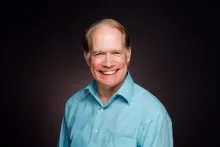
Greg Thomas is the former Pastor of the Cleveland, Ohio congregation. He retired as pastor in January 2025 and still attends there. Ordained in 1981, he has served in the ministry for 44-years. As a certified leadership consultant, Greg is the founder and president of weLEAD, Inc. Chartered in 2001, weLEAD is a 501(3)(c) non-profit organization and a major respected resource for free leadership development information reaching a worldwide audience. Greg also founded Leadership Excellence, Ltd in 2009 offering leadership training and coaching. He has an undergraduate degree from Ambassador College, and a master’s degree in leadership from Bellevue University. Greg has served on various Boards during his career. He is the author of two leadership development books, and is a certified life coach, and business coach.
Greg and his wife, B.J., live in Litchfield, Ohio. They first met in church as teenagers and were married in 1974. They enjoy spending time with family— especially their eight grandchildren.
