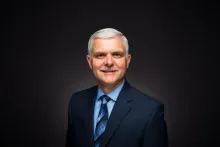


Jorge de Campos
This transcript was generated by AI and may contain errors. It is provided to assist those who may not be able to listen to the message.
Well, here we are. We're in mid-July now. The seasons are moving along, are they not?
It's a reminder to us all that life on earth goes along in cycles. God set it up cycles every year. He has it in his holy days, as we're reminded in the sermonette today and seasonally. And life has its... our human lives have their seasons as well. Life on this earth goes along in its cycles of change. And all that's according to God's design. That's what God intended. Now, King Solomon understood how life goes along. I'm going to read a few verses from Ecclesiastes, chapter 3, 1-4. No doubt familiar with them. And some of you back from the 60s, listening to rock and roll, might remember. A song by the birds, turn, turn, turn. It's still a great song. It's biblical. And here in Ecclesiastes 3, verse 1-4, Solomon understood how life goes along. And he described life on this earth under the sun. Under the sun meaning under this physical earth, this creation. He described it as recurring, contrasting events in each event according to its time and its purpose, God's purpose. And so we read Ecclesiastes 3, verse 1. To everything there is a season. There is a time for every purpose under heaven. A time to be born, any time to die. A time to plant, and a time to pluck what is planted. A time to kill, and a time to heal. A time to break down, any time to build up. A time to weep, and a time to laugh. A time to mourn, and a time to dance. And I know there are some here today ready to dance. The seasons have been turning. The times have been turning. Solomon recognized how things on this earth and life itself, though. The seasons are temporary. Life is fleeting in many ways. Now back in 1 John 2, 15-17, the Apostle John conveyed a similar inspired thought, inspired by God, of course. Let's look there. 1 John 2, 15-17. It does tie in with the words of Solomon and Ecclesiastes. 1 John 2, 15-17. In here, John emphasizes also that it's not just things, physical things of this earth that are fleeting, but also the world itself. The society under Satan's sway, it too is temporary. 1 John 2, 15. John writes, Here, John defines what he means. He says, He says, And so here he points out for us, The desires of the eye, the things that we take pride in owning and having and accomplishing and glorifying in. All those things are part of the world and they're temporary. But then verse 17, he adds this crucial point of warning and of reassurance. And he says, Think on that. What an amazing contrast. This world that seems so permanent right now to us, we're human beings. This is pretty much what we've always known. It seems like it's always going to be here cycle after cycle, season after season.
But it's not permanent. And actually, it's not permanent at all. And of course, this world began when Adam and Eve believed Satan's lives and chose to disobey God. They rejected God. And ever since, the world has been in the process of, we might call it, fading away. And one day, it will cease to exist. And with the world the way it is today, and I'm not going to start listing all of its problems. I'm sick of it. But it's going to be left during the week. The world with the way it is today, that it's going to go away one day. That is some good news we can think about on God's Sabbath. In the end of verse 17 assures us again, But he who does the will of God abides forever. Now that is refreshing. You see, there is something. There is something more important than all the other nothings that is going to last forever. Something permanent does exist, but only for those who choose to endure in faith and in submission to God's will and authority. True permanence is not found in the world or in its ways, but only in our ever-loving, everlasting God and his way of life. When we choose to submit to God's will to believe and to obey God, we can be a part of this permanence that God offers us, that he is promising his coming. We can, when we submit to God, we can and will develop the sort of living faith in God that we need to endure. And so today I want to encourage us to be ever faithful to God. And that is the title of the sermon. The title is, Be Ever Faithful to God. Be Ever Faithful to God. Now, to do the will of God, we should understand that we must be in the process of becoming more like God. We must be in the process of being more faithful in believing and obeying God. And yes, I'm going to be saying those phrases quite a bit today. Believing and obeying God. Those really are two choices. They are two choices to believe and to obey God. And they are the active components of faith. They are the active components of living faith and faithfulness in God. Let's turn to Hebrews 11. Hebrews 11, verse 1. And again, familiar verses, I'm sure, but verses we must never neglect.
Hebrews 11, verse 1. It says that faith is the substance of things hoped for, the evidence of things not seen. And then if we drop down to verse 6, the writer adds that faith requires that we believe God exists. It says, but without faith it is impossible to please Him. For He who comes to God must believe that He is, and that He is a rewarder of those who diligently seek Him. And as we rehearsed not so long ago, those who serve God will be rewarded. Those who serve God faithfully and worship Him will be rewarded. Now James chapter 2, verse 17 through 19 gives us some further instruction. If we believe that God exists, well then we have some things to be doing. If we believe that God exists, well then we should be striving to please God by living life His way and not our way. In these verses we see here in James tells us that faith requires more than just believing. James 2, verse 17. He writes, There is also faith by itself, if it does not have works, is dead. But someone will say, you have faith and I have works. Well, show me your faith without your works, and I will show you my faith by my works. You believe that there is one God, verse 19. You believe that there is one God. You do well. Even the demons, James writes, even the demons believe in God, and they tremble at that.
The demons tremble before God. They believe in God. Do we tremble before God? We believe God, which is good. We must. But let's believe God in understanding who God is, His authority. He is our Creator. He is the life-giver. Now, many people do claim to believe in God, but then they really don't want to try or even want to learn what God expects of them. They certainly may even believe it. They may even learn many things out of the Bible. But even as, I guess we could tie it into the sermonette today, even the Bible is rather explicit in explaining things, they still don't want to believe it. They don't want to do it. They don't tremble before God. But I suspect we do. It's our own way. We do respect God. We revere God. But the point is, simply knowing that God exists and knowing about His way, they are not good enough. They're not good enough. We only demonstrate our belief in God by choosing to obey Him, by choosing to submit to Him. Continuing on down here in James 2 to verse 20. James 2 to verse 20. He continues, And the Scripture was fulfilled, which says, Abraham believed God, and it was accounted to him for righteousness. And he was called the Friend of God. You see then, or you might say, therefore, you see that a man is justified by works and not by faith only. It takes both. So James tells us that faith in God does require belief and obedience. Our belief in God should then besture us. She makes us want to get up and do something about it. To motivate us to make choices in accordance with God's will and His way of life. And not just make choices and think about it. But as I was told as a kid, to get the gumption to do something about it. To get up and do something about it. And that's what we must always be doing. Living in faith requires belief and obedience. That means we must repent. We must change. We must do God's will, which pleases God and also demonstrates our earnest desire to please Him always and to be like Him. And to receive salvation in the kingdom of God and all the rewards that God has for us. Let's look at Revelation 21. Revelation 21, verse 1 through 4. This world is temporary. It's not lasting. And again, we're seeking the permanence that is only through God. Revelation 21, verse 1 through 4. We're reminded here that one day the world and Satan's influence over humanity will cease to be. It'll end. That'll be done. In the wonderful news, again here, even death will end. Let's read it. Revelation 21, verse 1.
And I heard a loud voice from heaven, saying, Behold, the tabernacle of God is with men, and he will dwell with them, and they shall be his people. God himself will be with them and be their God. And God will wipe away every tear from their eyes. There shall be no more death, nor sorrow, nor crying. There shall be no more pain. For the former things have passed away. It's all temporary. And it's so hard for us to grasp that sometimes. We're in the midst of severe trials and hardship and pain and grief. But yet God offers that powerful truth and hope for us. This is not going to last. We are called to something that is permanent, that is eternal, that is everlasting. And so again, I say the good news here is that this temporary world with its temporary problems—try to think of it in those terms. That might help us on tough days. This temporary world with its temporary problems, its temporary leaders, its squabbling factions, its brief glitz and cheap glamour, and its temporary filth and squalor on the other end of it, and all its fleeting knowledge, all sin, all pride, all greed—it's going to be gone one day. It's going to be gone.
In its place, amidst a new heaven and a new earth, will be New Jerusalem, God's holy city. It will come down from heaven and be on earth. We have got to be there. We have been called of God, our Father, to be there, to be part of that eternity, to be finding our place in that city for all eternity. And how can we be sure to be there? How can we be sure to be there and to witness this inevitable passing away of this world? It's coming. There's no stopping it.
How can we be sure to be there and witness that passing away and the passing away of Satan, its author, when he'll be put away forever? Well, we already know. We read it earlier in 1 John 2, 17. How do we be there? He who does the will of God abides forever. We have to be doing the will of God. We must be choosing to hold fast to those things that never change. We must be faithful to believe God and to obey God. Those are the components of living faith.
Now, we are not the first to grasp the magnitude of being ever faithful to God. Let's speak a little bit about believing God.
Let's talk a little bit and go back to what was mentioned earlier as we began about Abraham. Back in Hebrews 11, and you don't need to turn there right now, back in Hebrews 11, it's often called the faith chapter, there's a list. There are many people by name. Some of the names include Abel and Enoch, Noah, of course Abraham and Sarah, his wife, Rahab, Samson, David, and Samuel. But there are many, many other names, faithful ones, that are not listed, and we do not know who they are. But they are known only to God, and they are written in the Lamb's book of life. God called many before us, before we have arrived on the scene, you might say. God called them out from the world to follow him in a way of life that was also fraught with challenges. And like us, those who preceded us heard and accepted his call. And like us, they were not perfect. They struggled with sin too, and are human frailty. But they believed God, just as we've been called to believe God. And they put aside their own will to do God's will. They put aside their own will to live life his way. Let's recall the example of Abraham in more detail on how he walked with God. Let's turn back to Genesis 12, 1-5. Genesis 12, 1-5. Just to briefly recap what we are told about his life.
Sometimes we understand how the unexpected happens in our lives. Well, the unexpected happened in many ways in Abraham's life as well. Genesis 12, verse 1-5. Here we read how the Lord had said to Abram—this is when he was still Abram and not yet named Abraham— the Lord said to Abram, Get out of your country from your family, from your father's house, into a land that I will show you. Today we'd probably want to know where is it on Google Maps? How do we get there? I do not like going anywhere without first looking at a map. The Internet in the sky fails me, and I'm on my own. I like to know something of where I'm going. But Abraham didn't know where he was going, but God would show him where? Verse 2, And I will make you, Abram, a great nation, And I will bless you, and make your name great, And you shall be a blessing. And Abraham may have been thanking me, a blessing for others? How can that be? And I will bless those who bless you, I will curse him who curses you, And in you all the families of the earth shall be blessed.
In Abram's response, he said, well, I'll think about it. Let me think on it and see if I want to do that. We don't get any indication of that. He believed. And he acted. He simply says, so Abraham, excuse me, Abram, departed as the Lord had spoken to him, And Lot went with him, and Abram was seventy-five years old when he departed from Haran. And then Abram took Sarai, his wife, and Lot his brother's son, And all their possessions that they had gathered, And the people whom they had required in Haran, And they departed to go to the land of Canaan. And so they came to the land of Canaan. We don't get all the details in between. The Bible is very sparse at times in giving those details. But it gives us what we need to know.
Abram or Abraham believed God.
He gathered his possessions. He got his family, And all their people together to walk hundreds of miles to the land. He knew very little about this land called Canaan. He left forever his homeland. He left forever his urban culture, his familiar surroundings.
Why would you do a crazy thing like that, the neighbors say?
It's because he chose to trust God. To the very best of his ability, he would choose to obey God. And he never turned back. He never turned back. He never turned back. He walked to a land he did not know. This place God had promised to give him. He lived in tents, temporary dwellings for the rest of his long life.
I don't know how some of us would take to that. I kind of like my semi-permanent dwelling I'm in.
A house. He trusted God with his life. He trusted God with the life of his family. And if you think about it, again, we should know that Abraham was a lot like us. Maybe there is a lot between Abraham and us that there is in common, maybe more than we realize.
He committed himself to God. Why? He believed God. He believed God. Now let's turn to Hebrews 11, verse 8 through 10. Hebrews 11, verse 8 through 10. We'll come back to Genesis, but it'll be a little bit. Let's turn to Hebrews 11, 8 through 10 and get a little more of the story. And here's what the book of Hebrews, what Scripture tells us a little more detail about Abraham's faith. Hebrews 11, verse 8 through 10.
Why did he do what he did? He was by faith. Hebrews 11, 8, by faith Abraham obeyed when he was called to go out to the place which he would receive as an inheritance, and he went out, not knowing where he was going. By faith he dwelled to the land of promise as in a foreign country, dwelling in tents with Isaac and Jacob. The heirs with him of the same promise. Why? Verse 10. For he waited for the city which has foundations, eternal foundations, whose builder and maker is God. He knew about that city, that city we read about in Revelation 21. Abraham lived in his own here and now, just like we live in our own here and now. And yet he also believed in something far more permanent than that temporary world around him. And his actions proved his belief in God. God led him to a promised land in a world that was all temporary, but as Hebrews 11 tells us, Abraham set his heart on something beyond that, that eternal city, that permanence where he could always abide with God. He wanted to be with God. Let's also read Hebrews 11. Let's go down a little bit. Let's go down verse 17 through 19. We learn a little bit more about Abraham's total faith, total commitment to God. Verse 17. By faith, Abraham, when he was tested, God was proving the depth of his commitment, the depth of his faith. Even as God will at times take us aside as it were, allow things to happen to us to prove our dedication, our commitment, our conviction to him. It's part of what God does. He has to know. He has to know the depth of our faith, how much we will stay trusting to him. And so, let's see, verse 17. By faith, Abraham, when he was tested, offered up Isaac, and he who had received the promises offered up his only begotten son. That was his promise son. Of whom it was said, In Isaac your seed shall be called. He concluded, concluding, that God was able to raise him up even from the dead, from which he also received him in a figurative sense. So when he helped his son off that altar, where the angel had made him hold his hand and not plunge the knife into him, it was as if he was bringing him back from a death that he was going to give him, because God had told him, Give me your son in this way. And through his humble and determined commitment to God, Abraham came to know and believe, he had come to know and believe that no matter what God asked of him, he could trust God to do whatever was for the best. And by walking with God those many years, trusting in him, looking to him, believing him, he learned to trust God. So when God commanded Abraham to offer Isaac as a sacrifice, and it was a command that surely would have puzzled him, because that was not what God had asked him to do before, but he nonetheless trusted God, and he followed through. He took action to obey him. And so we are told there in Hebrews 19, 11-19, that he could see that he could trust God. He came to believe that God could raise him from the dead, which is really an amazing thing for Abraham, because there seems to have been no testimonies of God having ever raised anyone from the dead before. That was something new, that possibility.
Abraham believed and trusted God with his whole heart, his mind and being. And so he willingly did offer Isaac as a sacrifice. And having proven his faithfulness to God, God rewarded him abundantly, according to his promise. And that promise we can find mentioned in Genesis 15, verse 5-6.
Hold your place here in Hebrews. We may come back, or I may just reread those scriptures to you. Let's go look at Genesis 15, verse 5-6. So again, having proven his faithfulness to God, God rewarded him abundantly, according to his promise. The promise we read, Genesis 15, verse 5-6. And then he then God brought him outside, brought him outside the tent, had him look up the stars at night. And he brought him outside and said, look now toward heaven and count the stars if you're able to number them. I can't even number the stars. I can see through our cloudy, humid, somewhat polluted skies today. Imagine how many stars Abraham must have seen. Look now toward heaven and count the stars if you're able to number them. And he couldn't. And God said to Abraham, so shall your descendants be. And Abraham's response? He believed the Lord. Could he grasp it? Doubtful. Did he believe him? Absolutely. And God accounted it to him, his belief, for righteousness. Abraham believed God. He believed God. He probably couldn't comprehend everything that God was saying. Probably no more than we can comprehend what eternal life will be like. It's something I keep coming back to, and I can't grasp it. But I'm confident, I pray, that I will grasp it fully one day, and all of us will. Abraham believed God.
And he obeyed God. And so again, it is as Hebrews 11, 8-10 told us. His faith was revealed by what he did. By faith, I'm reading again Hebrews 11, verse 8, By faith Abraham obeyed when he was called to go out to the place which he had received as an inheritance. And he went out, not knowing where he was going. By faith he dwelt in the land of promise, as in a foreign country. He was a stranger in a strange land. It's not a comfortable position to be in. For he waited for the city, verse 10, which has foundations, whose builder and maker is God. Again, that new Jerusalem.
In James 2.23, we read this previously as well. Again, the outcome of Abraham's faith in God, his faithfulness. James 2.23 told us in the scripture, it was fulfilled, which says, Abraham believed God, and it was accounted to him for righteousness, and he was called the friend of God.
And so Abraham becomes an example for us of what it means to believe and obey God, of how to be faithful to God. He is an exemplar. He is the father of the faithful. In that sense, we need to walk in the steps of our father Abraham, the father of the faithful.
And I think wouldn't we all like to be called the friend of God? We certainly want to be called the friend of God as well. And we will be. We are, if through living faith in God and Christ, Jesus Christ, who is that promised seed of Abraham, if we also look for the city which has foundations, if we also look towards the city whose builder and maker is God.
Believing God will lead us to that glorious city. But to enter it, we must not waver in believing. We've got to be resolute. We've got to be resolute. We've got to be determined. We've got to be patient and steadfast like Abraham. Romans 4, verse 20 through 25. Romans 4, 20 through 25 describes, again, more of that faith. When you put it all together, it's really amazing how much is spoken of of Abraham and his faith.
You know, sometimes it's possible we might say, oh, we know about Abraham. We know about his faith. We hear about it. Well, do you believe it? Do you hear it? Do you know about it? Is that all you're doing about it? Or are you taking the next step, which we're going to come to? Are you taking action because of it? Because if all you say is, I know about Abraham, I know about his faith, yes, yes, yes, we've heard this many, many years. Well, these are words unto eternal life. These are words we need to put to heart and be motivated to get the gumption to take action on. Romans 4, verse 20 through 25, Paul writes, describes this faith that he had, Abraham had, and which we need to have, which we can have, and we can't sustain, and we can deepen as the years go by, the time that God gives to us and allows to us. Verse 20, Paul writes, he, Abraham, he did not waver at the promise of God through unbelief, but was strengthened in faith, giving glory to God. Get the sense he prays God all the time. Verse 21, in being fully convinced, fully convinced that what he had promised he was able to perform. He had enough proof in his life to know that God answers prayers. If God can do that, he can help me. That's what he was thinking. And therefore, Paul says, it was accounted to him for righteousness. Now it is not written for his sake alone that it was imputed to him, but also for us. And how many times does Paul say in Scripture that what has preceded us, the things that were in the past are recorded for us, they're written for us, for our example that we might learn from, that we might grow from. That we just don't treat it like, oh, it's a great story, it's so inspiring. Well, let the inspiration motivate us to the action we need to take. Otherwise, it is just another wonderful story.
There's so much more than that. So it's written, not for his sake alone that it was imputed to him, but also for us. It shall be imputed to us that faith who believe in him will believe in God, who raised up Jesus our Lord from the dead, who was delivered up because of our offenses and was raised because of our justification.
Pointing that we need to place our faith, our living faith, in Jesus Christ, the seed of Abraham, who's taken our place, took our place for death, the death penalty for death, so that we might be reconciled with God, so we might have that lasting eternal relationship with God. Just as God kept his promise to Abraham, God will keep his promise to us.
We can just be like Abraham. We must stay convicted, committed, faithful to believe, and of course, to live God's law and instruction. That takes us to the next point, the other part of the faith, believing God, obeying God. The second component of being faithful, obeying God. When we say obey God, what exactly are we to obey? What exactly are we to obey? Of course, that's a big topic. A simple answer appears in Ecclesiastes 12-13. Ecclesiastes 12-13. Many of you probably know that from the top of your head, spending years at camps and Sabbath schooled.
Of course, I'm talking to some of you older ones, too, because you were back in camp, and well, you many years ago, too, perhaps. Ecclesiastes 12-13. This used to be one of the memory scriptures, and it is a memory scripture, and should be. What exactly are we to obey? Ecclesiastes 12-13. Solomon concludes the book. He says, Let us hear the conclusion of the whole matter of everything he talks about in his pursuit to understand what the meaning of life is, what life's all about under the sun. What do people do? What's our purpose?
What do we do? How do we have a happy life? Do I need to go ask that guru on top of a mountain somewhere? I don't think he's on Mount Everest anymore. There's thousands of people up there now. Where do we go for the answer? What's the purpose of life? It's answered here. What do we do?
How do we have a happy life, a good life, a fulfilling life? Fear God and keep his commandments. For this is man's all. For this is man's all. The King James Version says, For this is the whole duty of man. There's that word duty again. It's our duty. It's our responsibility. It's our job.
It's our task. It's part of what it means to be a servant of God. So when we hear obey God, we should understand that that means to keep the foundation of everything else God instructs us through his entire Bible. It means that we keep his Ten Commandments. That's the basis of everything, of how our worldview should be built, of how we interact with other people, how we live out our own lives, how we think, everything, our very being. Now, unlike what many people say, many people who do not know or think they know, God's Ten Commandments are not passé.
They are not old-fashioned. They are not part of an ancient patriarchal society that is out to destroy the ecology of the earth. That's mocking. I shouldn't do that. But that's how people look at it. These are old, old laws. They're no longer necessary in the 21st century. But the fact is, God's Ten Commandments are part of the eternity because they are of God. God's Ten Commandments are not temporary like the world is.
They form—we often explain it—they summarize the way of God. They are the foundation of how to live God's way, which is the way of love. God's commandments are not a once upon a time sort of thing that people may think it is. They are not some kind of ancient cultural story that humanity has now outgrown, that we have matured as a human race that we somehow don't need these Ten Commandments.
We need them now more than ever. We need them now more than ever. The commandments are permanent, eternal principles that direct and guide us in all humanity in how to have that right relationship with God and a right relationship with our fellow human beings. We must choose, though, because it's up to us. We must choose to make God's law an abiding and permanent part of our being. And God will help us do that. God will help us do that. His commandments define God's love, His way of life.
To have a living, abiding faith in God, we have to be striving to improve our knowledge and practice living God's commandments. Can we truly love God? Can we truly love our neighbor without striving to practice His Ten Commandments? We can't. We have to love God and our neighbor as God directs us, as God instructs us. Our ways are not God's ways. Our thoughts are not God's thoughts. Let's read Deuteronomy 10, verse 12-13. And again, keeping the commandments is part of our faith. It's that action to separate belief and obedience, even as James is telling us. I guess we can separate it intellectually, but in real life, to extricate one from the other, it's not that easy. In fact, in our intellect, we can take it apart and try to observe it to help us understand the whole better. Deuteronomy 10, verse 12-13. And now, O Israel, what does the Lord your God require of you? Require of you. But to fear the Lord your God, to walk in all his ways, and to love him, to serve the Lord your God with all your heart and with all your soul, and to keep the commandments of the Lord and his statutes which I command you today for your good. That's the answer. What does God expect of you? God's commandments, then, need to be in our heart and mind. Obedience goes beyond just keeping the letter of the law, being focused on outward appearances and outward behavior. Obedience is a matter of the heart. It's a matter of our motivation. It's a matter of having God's law written on our hearts by the help of God's Spirit in conjunction with his Scriptures. Let's also read Micah 6, 7-8. It's never neglect the important great aspect of God's law. Micah 6, 7-8. Obeying God requires practicing justice, mercy, and faith. It's not just a letter of the law. Micah 6, 7-8. Will the Lord be pleased with thousands of the rams, with ten thousand rivers of oil? We're talking about sacrifices. Shall I give my firstborn for my transgression, for my sin, the fruit of my body, for the sin of my soul? He has shown you, O man, and the answer is no. He has shown you, O man, what is good. And what does the Lord require of you but to do justly, to love mercy, and to walk humbly with your God?
So Micah reminds us that God wants more than just physical deeds, even just more than the mechanical good deeds or works. Our hearts need to be into those things. Our hearts need to understand why we need to be doing good works, those righteous works. Those physical sacrifices were considered good works at that time. But if it becomes merely mechanical, if you're just doing it because you have to do it, that's not nearly as pleasing to God as you want to do it, because you want to please God, and you want to be like God. God wants our willing desire to please Him. He wants us to sacrifice our self-interest and to practice His law and way of outgoing concern, of practicing mercy, of helping people, and be compassionate towards others, and especially in accordance with the Spirit of His law, which is love, even as Christ would later teach. Let's turn to Matthew 19, 16-19. Matthew 19, 16-19. But again, people who don't know but think that they know tell us that we don't need to keep the commandments. They try to tell us that through His death, Jesus took away the need to keep the Ten Commandments. Matthew 19, 16. Jesus said, Now, behold, one came and said to Him, this man said to Jesus, Good Teacher, what good things shall I do that I may have eternal life, that I could see that eternal city like Abraham? And so He said to Him, Why do you call me good? Maybe it's a little clue. There's no, no one is good but one, and that is God. Scholars think, well, maybe it's a little hint that you know who you're really talking to. Do you know who you're asking? Have I got the answer for you? He's got the answer for us. He said, No one is good but God. But, okay, back to your question. But if you want to enter into life, keep the commandments.
And then the man said to Him, Well, which ones? As if it should matter. And Jesus said, You shall not murder. You shall not commit adultery. You shall not steal. You shall not bear witness. False witness. Excuse me. You shall not bear false witness.
You better witness to the truth. Better witness about God and His salvation, our hope. Witness in the appropriate manner, of course. Verse 19, He says, Honor your father and your mother. And kind of as a summary statement, you shall love your neighbor as yourself. Now some would say, Oh, but he left out keeping the shaft. Oh, he left out. No, come on. He's given enough commandments here to let it be known, obviously what he's talking about. And who knows? Perhaps Jesus mentioned these particular commandments because maybe the man asking the question recognized, I've got issues with some of these. I'm not doing so well on some of these commandments.
The point is, keeping God's commandments helps to develop us in God's very character and mindset. They are the framework. They are the guide. They help form this view of life that we are to be living now. It tells us how to love people. We don't know how to love people. That's why we have to turn to God and ask His help and get His instruction. Let's also read Matthew 22, 35-40. Just a few pages over. Matthew 22, verse 35-40. And here again, Jesus is referring to the Ten Commandments. And here he summarizes God's Ten Commandments into what we would understand as two broad principles, two broad categories, if you will. Now this one approached him with a similar question about the law. He was a lawyer. And maybe he was hoping to find a chink in the wording or something, a weakness in the wording. Then one of them, a lawyer asked him a question, testing him. See, they were wanting to accuse him of being a lawbreaker and other things, a sinner. So they were testing him, trying to prove him. And he said, teacher, which is the great commandment in the law? It's kind of a setup. But Jesus didn't fall for it. Jesus said to him, you shall love the Lord your God with all your heart, with all your soul, with all your mind. This is the first great commandment and the second is like it. You shall love your neighbor as yourself. On these two commandments, two but really part of the whole, all the law and the prophets hang. Hang all the law and the prophets. He's talking about the entire Bible that they had would have been the Old Testament. We understand it's the entire Old and New Testament. It's all combined. It's all one. It's interconnected. It is all the inspired word of God. And so we get the point. Love towards God and love towards humanity. God's commandments, we see, reflect God's divine nature. 1 John 4 16. 1 John 4 16.
We must be mindful of the Ten Commandments. Sometimes we don't investigate them from time to time. We may think that we got it all down pat and we're doing okay with it. But we need to go back and it's part of our review and our self-evaluation, trying to cast out the sin in our life. 1 John 4 16. John elaborates further, this truth further when he writes 1 John 4 16. 1 John 4 16. And we have known and believed, and we have known and believed the love that God has for us. God is love. And he who abides in love abides in God and God in him. So, commandments define God's love. It defines who and what God is, what he's about. And it's all about God's love, his way of love. So those who would do God's will, those who would abide forever with God, they will be striving to obey God's commandments. They'll be striving to live life God's way as God defines it, according to his instruction from Scripture. And again, keeping God's commandments, Ecclesiastes 12 13 says, is man's all. It's our whole duty. It's what we should be about. And so we are faithful to God when we choose to believe God and we choose to obey him. And that requires living according, keeping his ten commandments. Following the way of life as Jesus taught us, as Jesus exemplified, and as the Apostles under Christ's instruction, inspiration, continue to teach and elaborate for us. And so we must always be striving to submit ourselves to God's will and not our will. Now, at this point, we may be wondering, this is great, but what do we do? I go back to that question of the end of Peter's sermon, men and brethren, what shall we do? What shall we do? What are some takeaways? What are some actions? What are some things we could do to help cement the lessons of this message today? Now, of course, there are always numerable takeaways, any number of points. But today, I've narrowed it down to just two keys, two things we need to do. And these are not my words. These are God's words from Scripture. There are two keys to having enduring faith in God, to believe God and to obey God, as did Abraham and other men and women of faith, as we, as men and women and children of faith, want to be doing as well. The first key is this. Set our hearts and minds on God. Set our hearts and minds on God. And the Scripture references Colossians 3-2. Colossians 3-2. There Paul writes, set your minds on things above, not on things on the earth. Remember what I said, what we rehearsed, the beginning of the sermon. This world, the things of the earth, are temporary. They're fleeting. They're transitory, just like our flesh. We're looking for what's eternal. And so, no matter what today or tomorrow brings us, whether good or difficult, we must keep our minds fixed on pleasing God. Keep our hearts and minds on God. We must be committed to keeping God's ten commandments, all of them. We know that. The world doesn't. We're not of the world, or shouldn't be. And we must make God's thoughts our thoughts, His ways our ways. Again, that's Isaiah 55-8. So again, that first key was set our hearts and minds on God, Colossians 3-2. The second one, the second key, is do not be conformed to this temporary world. Do not be conformed to this temporary world. The scriptural reference is Romans 12-2. Here Paul writes, That's through Christ Jesus in us. But be transformed by the renewing of your mind that you may prove what is that good and acceptable and perfect will of God.
So that means, to not be conformed to this temporary world, we must align our worldview and our choices, our beliefs, with God's worldview. And of course, this ties in exactly at the first key. They're dovetail together about setting our hearts and minds on God. Align our worldview and choices with God's worldview. We must prove the excellence of God's way over the world's way. Prove the excellence of God's way over the world's way. And that can be a challenge for us. You know, as the world gets worse—and I think it's getting worse, well, but who am I to say? I only have a limited perspective. As the world becomes worse as its morals—I said it again. As the world's morals and morality becomes more loose, we would say, we need to be careful that our understanding of God and living his life in weight do not become loose. For example, let's see. For example, well, I only go to a tavern, a little neighborhood tavern, and I only have a couple beers, three beers maybe—oh, sometimes maybe four. But I'm not out there going to these raves across the street where they got all this loud music and gangster music and all this stuff. I'm not like that. Well, you're using whose guidelines, whose worldview might we be using at that point? Are we sticking with God's view? Are we sticking with God's words? Are we giving ourselves—are we compromising? Are we fudging a little bit? Because we're comparing our ways with the world's ways so that we can maybe get a little closer to the world's ways. Am I making sense? Okay, that's good to know. Thank you. So we have to be very careful that we don't look for wiggle room and justify our sinful action, our not-so-good actions, by saying, well, I'm not as bad as the world. I'm not as bad as what they're doing over there. My sins are not as great as that sin. Do we want to be comparing sin with sin, or do we want to be comparing our lives with God's righteousness, with His commandments? We have to be careful thinkers. Be careful of wiggling ourselves in a position where we're conforming a little bit more with the world instead of staying solidly steadfast with God. And so again, we want to prove the excellence of God's way. We don't want to go the world's way. We know where that's going to end up. We want to prove the excellence of God's way of life and the choices and the things we do and say. And then, under the same point, do not be conformed to this world. We need to believe and do what God says, even when we don't fully understand why. We need to follow what God tells us, even if we don't know why.
And, perhaps all of us have been in a position where we didn't understand why God says what He says. Why keep the Sabbath? If a lot of you started keeping the Sabbath, you grew up in a different way. That was a challenge, probably. That doesn't make sense. I mean, I can't work on Saturday. That's when I make some overtime. Remember those struggles perhaps you had starting out? Now that you've been keeping the Sabbath for a couple weeks, months, 20, 30, 50, 70 years, Can you imagine not keeping the Sabbath? Because somewhere along the way, we got it. We understand it. We may not have understood fully at the beginning, but at the end, we have come to understand and to believe even more profoundly that we need and must always be doing what God says and not conforming to this temporary world. So those are two action points, two takeaways, and be my guest to write more when you get home tonight. Okay? Add to these. And so my conclusion, brethren, I just want to encourage us that we not neglect our commitment that we made and continue to reaffirm to believe and obey God. To believe and obey God. Throughout all the temporary challenges, again, of this temporary existence of ours, let's be mindful not only of our faithfulness to God, but also let's be mindful of the faithfulness of God, our Father, and Jesus Christ towards us. They are faithful towards us. And God is always near us to help us in our times of need. We just have to cry out and pray, and He will be there.
God is ever faithful to us, brethren. Let us be ever faithful to God.
