

Frank Dunkle
This transcript was generated by AI and may contain errors. It is provided to assist those who may not be able to listen to the message.
Thank you very much, and good morning to everyone. Thanks to the chorale for all beautiful numbers. You have lots to look forward to, and they come back for their full show, and you'll be able to hear them sing full complete numbers, I believe, by the chorale, plus other numbers from the others. They work hard, lunchtimes and Friday afternoons and other times they practice during the week, so we do appreciate all the hard work that they put into it, and it was beautifully done. Thank you. Mr. Shoemaker, Garrett Fentchel gives up his time, volunteers to play the piano for them, and Courtney did wonderfully playing. She's part of our class. Garrett is kind of an honorary member of the class. He's been doing it for a few years, and we appreciate it very much. I was told that it's a hard act to follow, so I figured I'll sing my sermon today. I used to be in the Greek Orthodox Church, and so a lot of times they sing their part, so I could just sing the sermon to you, and maybe it'll come across better. I have some handouts for you. Maybe I'll ask them to go ahead and hand those out to you now while I do my introduction. I'll mention a few comments about the Winter Family Weekend coming up. We're really excited. The theme is the two great commandments, and a lot of the seminars and the sermon and Bible study topics will be related to that somewhat. I think you're going to really enjoy the weekend. We have a couple of other things, not only the dress exchange. We also have a zero to three-year-old play dates. They have a couple of...so if you're zero, it means you haven't been born yet. But if you want to go anyway, if you're pregnant, you can go there and learn. But anyway, from one to three, they have a play date for them, and Mandy Cobb is handling that out of Indianapolis. So they have like two or three times they're going to get together for the little kids to have some play time together. So the goal of the whole weekend is to try to provide activities, seminars, sporting activities, musical activities, art activities, anything, seminars and information and sermons and education, so that everybody has a chance to excel and participate. And I was told by Mr. Rick Shaby, who's the treasurer of the church, he said anything he's ever heard about the Winter Family Weekend has been great. He said people said to him, even if there were no other activities, just being at Great Wolf Lodge would be enough.
Because at Great Wolf Lodge they have all these swimming pools and various wave pools and jacuzzis and wading pools for the little kids and everything. Something for everybody slides and all the rest. So it's a great opportunity for us to come together. We try to do it in a safe and moral atmosphere. Safe, positive and moral atmosphere. That's our goal.
And I have about 34 leaders from the church in Cincinnati who helped prepare this. So I thank you for it. I thank all of them. They work really hard, volunteer most of them. Very few of them are full-time. And they helped prepare this weekend for everyone to enjoy. We should have about 1,200 this year. They're up like 20 percent in the sporting activities, those registered for it.
This year we also have, I'm told by Great Wolf, that they have every room booked. In fact, they gave us 230 nights on Friday and Saturday. So normally they give us 200 rooms. But now they have 230 for that weekend. And they tried to give us those extra rooms where they could. So it's been a real boon this year. We should have a great time expecting about 1,200.
The doors will open at 1 o'clock for you to go in and get a seat. At 1 o'clock, not before that. On Saturday and Friday night you can't leave your books in there because we have to readjust some things. So they'll ask you to take those out as well. So if you come Friday night, that's great. Don't leave your things there. We'll make some other announcements about it. But it should be a wonderful weekend. We're looking forward to it. This year's class is doing great.
I give them four scriptures to learn every week. And then I quiz them on those four scriptures. Plus I give them four new ones. So it ends up being eight scriptures they get tested on every week. And this week we did a row by row, five rows of answering questions. And I think they only missed two or three for the whole time. All 40 scriptures that we had. I just shuffled them up and I asked row one.
And they collaborated and they gave an answer. I think there were only two or three misses the whole time. And that was really great. So I commend them. They're trying to learn the scriptures, not memorization, but knowing where to find the scriptures to defend their faith.
The Apostle Peter wrote to a general audience, and he said this. Always be ready to give a defense to everyone that asks you a reason for the hope that is in you.
That's found in 1 Peter 3, 15. Always be ready to give a defense to everyone that asks you a reason for the hope that is in you. And by the way, thank you to Lewis Van Oostel for his sermonette. Appreciate that. I'm going to be in remembrance of what happened just a year ago at this time. And I will say there are questions that do come. There are no answers to. When I do a funeral for a little baby, and the parents say, well, why did my baby die?
You know what? I don't know. I don't know. I could suppose he gave a lot of possible answers. There are some things there are not answers to. I don't know. I don't know why. And some people say, well, why didn't God stop that? Why didn't God stop this? Why didn't He stop this? Okay. Put us all in straitjackets. Put us on strings. And make us walk. You know, put the puppeteer in the sky. And make you go everywhere God wants you to go.
You wouldn't like that either. God gives us free moral choice. And as long as human beings have choice without God's spirit to help them make good choices, you will have problems in this world. But let's go back to my premise. Are you ready to give an answer to everyone that asked you a reason for the hope that is in you? Let's understand this verse, what it says and what it doesn't say.
1 Peter 3 and verse 15. Let's take a closer look at it. And then my purpose today is to examine the Scriptures and see how we may be able to give answers to those who ask and to be able to defend our faith. Especially around this time of Christmas when people will be asking you questions. Why don't you believe? Why don't you do this? Well, don't you believe in Jesus?
Well, have you done your shopping yet and all this? You should be able to give an answer if you choose to. We'll see what this Scripture says and what it doesn't say. 1 Peter 3 and verse 15. I'm going to read it out of Old King James. Sanctify the Lord God in your hearts. Always make a place for God in your life. And be ready always to give an answer. Notice what he doesn't say first. He didn't say, give an answer. He doesn't say, you have to give an answer.
He says, be ready always. How well do you know your Scriptures? How well do you understand where to go to defend your faith? When I was a new minister, we used to go out visiting people who had questions to ask new visits. Take a big briefcase in. It was almost like an airplane pilot's briefcase. It was expanding, and I would have in there a concordance and maybe two or three different translations, and maybe even a commentary, maybe a Bible dictionary, and my magical Bible.
So I would bring those all in with me. You know what people thought? We're encyclopedia salesmen coming to their door, and many of them wonder, what's this guy going to come for? So then we got, okay, we're not going to do that. So then we started taking pocket Bibles, have a pocket-sized Bible, which we marked and knew. So somebody asked us a question. We could reach inside and whip out our little pocket Bible and answer their questions.
Well, then we decided that's probably not the best thing to do either. Now you have to go in cold. We would go in cold. They ask us a question. We say, may we have...can you give me your Bible? And when people see you know the answer, you could find the answer and explain it from their Bible. It's like somebody playing your musical instrument.
You know, you're fumbling around playing the accordion, and then you hand it to somebody, and they take it, and they make really good music out of it, and you go, Wow! I didn't know my accordion could do that. People take the Bible, and I've done that many times in the latter years. May I see your Bible and explain it to them? Can you find how to defend your faith? It doesn't say you have to.
It doesn't say you have to defend it. But it does tell us to be ready always. Are you ready? Do you know the basic doctrines of the church? Could you go through and explain anybody who asks questions for you? From any of the basic doctrines of Hebrews, chapter 6, or any of the basic doctrines, fundamental doctrines of the Bible that we believe, or of ours too, of the church? Can you explain? Do you know where to go? Somebody asks you, what do I have to do to be baptized?
Can you know how to explain it? Somebody asks you other questions, can you explain it? Do you know where to go? Somebody says, well, why don't you keep Christmas? Why don't you observe Christmas? Do you know where to go? What could you say? How do you explain it? I challenge all of us to make sure we are up on our Bible study that we could explain.
Notice he says, be ready always to give an answer to every man that asks you about the meaning of Habakkuk 3. I don't know if it was Habakkuk 3 or 2. Habakkuk 2. Can you explain Habakkuk? Do you have to explain the prophecies of Zechariah?
Is that what God says? You better be able to explain all these very detailed. Can you explain Daniel 8? All the historical back? Can you explain all that? Is that what he asks you to do? Notice what he says. Be ready always to give an answer to every man that asks you a reason for the hope that is in you. Now he brings a dime even more narrowly what you have to be prepared to do. Why do I believe in the kingdom of God? What is my hope? My hope is in eternal life.
What is my hope? My hope is in Jesus Christ. What is my hope? My hope is in God who cannot lie. Can you defend your hope? What are you looking forward to, heaven? Purgatory? Some paradise? What are you looking forward to? Being a part of the kingdom of God and living forever. Can you explain that? That's what he says at the basis you should be able to do. Now it's important for you to be able to defend your faith for your sake.
But this reverse tells you you should be ready. Then say you have to, and notice what he says, be able to give a reason for the hope that is in you with meekness and fear. Not with, I'm proud, I'll tell you I know it all. I'm a know-it-all, I can explain everything to you. Just listen to me. How are you supposed to explain it? With meekness and fear.
So some scriptures are on it. Titus 1-2 talks about hope, in hope of eternal life. Titus 1-2, just to amplify this 1 Peter, chapter 3, verse 15, Titus 1 and verse 2, says, In hope of eternal life, which God that cannot lie promised from before the world began. Do you know what it takes for eternal life? Remember the rich, young, noble man who came to Christ and said, What good thing may I do to have eternal life?
And Jesus Christ said, If you will enter into life, keep the commandments. So you could say, Boy, I'm headed for eternal life, and I believe that I need to be in line with God if He's going to give it to me. Colossians 1-27 talks about Jesus Christ in you, the hope of glory.
Can you explain what that means? Colossians 1-27. To whom God would make known the mystery of the riches of the glory of this mystery among the Gentiles, which is Christ in you, the hope of glory. Now how's Christ in you? How do you have some of Christ in you? Can you explain that as you go along? In Romans 8 and verse 24. Romans 8, verse 24, we read this inspired scripture by the Apostle Paul. Romans 8-24, for we are saved by hope. It's our salvation. Can you explain? What is about my salvation?
Can you explain that? We're saved by hope, but hope that is seen is not hope. For what a man sees, why does he yet hope for it? If I want a glass of water, if I hope I have a glass of water, I have a glass of water. I sure hope I have water. No, I don't have to hope anymore. It's here. I don't have to hope for it.
And my goal is to be a part of God's kingdom, and it's not here yet. We are looking forward to that awesome, wonderful time we need to be able to give an answer. So are you ready to give an answer to anyone that asks you about our faith?
About narrowly your hope? Are you ready? It doesn't say, give it. It says, are you ready? So let's examine some of the scriptures, see how we may give answers. I have three points. The third one, after the third one, you will use the sheet that I gave you. So one and two, don't worry about it. But the third one, I will use that sheet and give you some concrete points. But number one, first of all, it is imperative that you be prepared. Be prepared by knowing your Bible. Can you make music with this Bible? Can you turn and find the places? Now, that's a real clue. When you ask somebody to turn to the scripture, they have to check the table of contents. First of all, you know that they probably don't know their Bible really well. They have to check their table of contents. But, maybe they're learning. So, as you go along, do you know where they are? Do you know how to turn in the Bible? Are you familiar with the Word of God? That's really important. In 2 Timothy 2.15, we're given this encouragement, 2 Timothy 2, verse 15, to be familiar with where the key scriptures are, to study God's Word, to learn about God's Word. As you read an article, as you read our Good News magazine, or as you read one of the booklets, and you see some topical information there, write it down. Write it down.
Hey, this is a good scripture. Boy, that helps. Explain that. Write it in a place that you'll remember. But 2 Timothy 2.15, we're urged, study, Old King James, New King James says, do your diligence. Both of them are talking about the Word of God. Study to show yourself approved to God. Notice, a workman, you have to work at it. It takes effort that needs not be ashamed, rightly dividing the Word of truth. Rightly dividing. Wouldn't it be wonderful if everything on the topic of sin, all found in one chapter, everything on the Holy Days found in one chapter, it is Leviticus 23, as far as all of them listed. Everything about clean and unclean foods, Deuteronomy 14, Leviticus 11, find it there. So, yes, some of them, they are. But most cases, it's not. You have a little bit of information here, and a little bit of information there about that same topic, and we believe you have to coordinate those, not take one over the other, but coordinate them. So it takes some work, and it takes effort. You've got to be a workman. How well do you know your Bible? Does it sit on our shelves from week to week?
We pull it down on Sabbath, bring it to church, take it home with us, put it back on the shelf. Or do we use our Bibles? Are we workmen? Do we study the Word of God? Can you really defend your faith? Can you answer questions when people put them to you? If you choose to, give an answer. Then say you have to, if you choose to. I say we need to be ready. These will usually be topics in scriptures you want to know. These will be topics where we will differ from some of the modern-day Christianity and their explanations.
I found a person last evening, I was watching a little bit on the news, and his fellow was dancing all around whether somebody who tells a falsehood is a lie. Well, he misspoke. Well, he missed it. People misinterpreted. He didn't know what he was saying. He knew what he was saying. He didn't know what he was saying. He didn't want to say the word lie.
Bible says, do not bear false witness. So you can use that. But it also says, liar. It's plenty of proverbs. You don't tell the truth. You have lied. Whether you deliberately lied is another matter. And if you continue to tell the same falsehood you, or falsehood regularly, you become a liar.
Liars are those who deal in lies. A person may lie, not be a liar. He may have made a mistake. He may have said the wrong thing. They may not have been meaning to do it. But it was a lie. If you say something that's false, that's a lie.
What do I say that? Do you know your scriptures? Study your scriptures. Know them.
Topics where we will differ. Like immortal soul. Like kingdom of God. Like who Jesus Christ is. Like do we keep the commandments. Like which day is the Sabbath of the New Testament of the Bible.
Can you explain and expound on why you keep Holy Days instead of holidays? Can you expound and explain those areas in which we differ from others who claim to be Christians too?
So study. Do your diligence. Acts 17 in verses 10 and 11. These people were different in Berea than those in Thessalonica because they took seriously studying God's word. Do you? Do I? Acts 17 verses 10 and 11. The brethren immediately sent Paul and Silas by night to Berea, who coming there went into the synagogue of the Jews.
These in Berea were more noble than those in Thessalonica. Why were they more noble? In that they received the word of God, word, with all readiness of mind. So they were prepared. They're looking into it. I want to really learn. I want to study. I want to understand readiness of mind and search the scriptures daily. Whether those things were so. We are so blessed today. We have all of the scriptures, chapters, and verses. We have all types of Bibles around. All kinds of translations around. Commentaries on those translations. Concordances on those translations. They had to find the scriptures first before they could ever even search them. And if Paul said, it is written in Isaiah, as you know, we have 66 chapters. They didn't have 66 chapters. They just had the whole book of Isaiah.
If you had to search the scripture, if I said, it is written in Isaiah, you've got a lot of searching to do to prove me true or false.
Do we know the scriptures? Do we use the scriptures? Do we study the scriptures? Are we like the Bereans? Do we search the scriptures daily?
Whether those things are so positive attitude, not trying to disprove, but trying to shore up your beliefs.
2 Peter 3 verse 18. We need to be growing in knowledge as well as grace.
2 Peter 3 verse 18 is memorable scripture that we all need to know as Peter writes to the general audience of Christians.
2 Peter 3 verse 18. But grow in grace and in the knowledge of our Lord and Savior Jesus Christ.
What kind of knowledge did Jesus Christ transmit? What kind of knowledge did Jesus Christ give?
Well, you read that in Matthew, Mark, Luke, and John, but you read that in Paul's writings too, because Paul was trained by Jesus Christ.
And you read what he says. And you read what God says, because the whole word of God, the whole Bible, is God-breathed.
2 Timothy 3, 16. All scripture is given by inspiration of God.
So study the word of God. Learn about what God would say, as Mr. Van Ouzdell was bringing up.
How many different possible answers there could be to all these different questions.
That God's word does contain truth. And you could find it, but we have to be able to search it.
We need to be growing in knowledge and understanding and thinking about what those verses mean.
Matthew 13. This is still under that first point. We need to be prepared.
Matthew 13 verse 16. Brethren, we can be prepared. We can be prepared. Matthew 13 verse 16. And we can have an understanding, because when Jesus Christ was asked by the disciples, why do you speak to them in parables? Why do you always use these analogies and these anecdotes? Why do you tell people stories, these parables? He said, I tell them that so that they don't get it.
So they hear, but they don't understand. They see, but they don't really grasp.
I don't tell them those to help them understand. Notice what he says in Matthew 13 and verse 16. Blessed are your eyes, but blessed are your eyes, for they see, and your ears for they hear. For verily I say to you that many prophets and righteous men have desired to see those things what you see, and have not seen them, to hear those things which you hear and have not heard them. Remember what Daniel said? Daniel said, I'm writing these things down. What is the meaning of these things?
God said, go your way, Daniel. They're sealed up until the time of the end.
Go your way. You can't understand yet. It's not for you. He said, but blessed are your eyes, because you can hear those things which you hear they have, and they have not heard them. Blessed are your eyes, because they do see. Verse 18, he says, hear therefore the parable in the sower. Verses 16 and 17 are the key verses. John 16 and 13. He tells us, if you are converted, and if you have God's Spirit with or in you, that God gives you an edge to understand His Word. We need to be prepared. We need to be prepared. He says, be ready always. Verse 13 of John 16, albeit when he or it, the Spirit of truth, has come, it will guide you into all truth, for it shall not speak of itself, but whatever it shall hear, that shall it speak, and it will show you things to come. What will it guide you into? The truth. What is the truth? God's Word. John 17, 17. Thy Word is truth. So, first of all, we need to be prepared. We need to have our noses in the Bible. We need to call ourselves Bereans. Not literally, but figuratively speaking, we need to be like the Bereans. We need to study God's Word. We need to be able to be familiar with it, how to find our way around it. Second point I have for you is if someone asks you a question, now you're prepared. We must discern the attitude of the questioner. Are they sincere, or are they just trying to argue, or put you on the defensive? Jesus Christ encountered this many times. Pharisees would try their hand at it, Sadducees would try their hand at it, lawyers would try their hand at it, Herodians would try their hand at it, and they'd always come back losers. Foiled again, they say. But Matthew 22, verse 15, just to give you that sense, Matthew 22, verse 15, and I'll read this one part. See, the attitude of some, and sometimes Jesus Christ would answer, sometimes He'd answer a different question, and sometimes He'd give them a question. Oh, you have a question for me? Oh, by the way, I'll answer your question if you answer mine. But Matthew 22, verse 15, then went the Pharisees and took counsel how they might entangle Him in His talk. Did they really want to know the truth? As Mr. Van Oostel said, did they really want to hear God's answer? They didn't want to hear God's answer. They just wanted to try to trip Him up the same way with the Sadducees, who followed that, and the Pharisees who followed it, verse 34. That's all they were after. They just wanted to try to upstage Jesus Christ, show Him. He doesn't know what He's talking about. But they walked away, as it said here, verse 22, and when they had heard these words, they marveled and left Him and went their way, because the truth will always ring out. And so they went their way, but they were trying to get at Him. They were trying to ask out of a wrong spirit.
Now, you try to discern that attitude. Sometimes you can't. Try to discern the attitude of the questioner. Are they sincere? Are they just trying to put you on the spot? Are they just trying to mock you? Whatever your answer is, they're going to mock you. So you want to try to figure that out. Colossians 4, verse 6, tells us always when we answer that it should be with grace. I remember talking to some of my friends and saying, when you get angry at somebody and yell at them, all they hear is your anger. They don't hear your words. It is true. People yell at you. You start to defend yourself. Your walls start going up, and you're not hearing their words. You're figuring out how you can protect yourself. Colossians 4, 6 tells us, Let your speech be always with grace, seasoned with salt. That doesn't mean you don't call a spade a spade, but it's the tone in which it comes. Let your speech be always with grace, seasoned with salt. That you may know how you ought to answer every man, and, frankly, whether you ought to answer every man. You have to know how to deal with them, and you have to know how much. If somebody asks you to help them fix this leak scripturally, you don't try to renovate the whole house. You just fix the leak with the Scripture. In other words, if somebody asks you a question, you don't answer ten. You answer one. Sometimes we get so enthusiastic, we try to answer ten. Oh, by the way, one leads to the other, and the other leads to the other. We try to lead them to everything. And we don't want to do that. We want them to come in their time to that knowledge and understanding.
Answer with grace. Proverbs 26 verses 4 and 5 tells you about not answering always and sometimes answering. And it doesn't always have to do with whether it's a fool or not, because in Proverbs 26 verses 4 and 5, we read this. Answer not a fool according to his folly. So if somebody is just there to draw you into arguments, and I would say to somebody, look, I don't believe in engaging in argument. If we're not dealing with the same thing, what if somebody comes to me and they believe in this book, this holy book, and I believe in the Bible, and they want me to give them an answer. I give them an answer out of the Bible, they give me an answer out of their holy book. Well, we have no common means of discussion. If they believe the Bible, that's one thing. But if they believe the Bible in this other holy book, too, I'm sorry. We don't have a means of agreement. So you have to have the same rules. But answer not a fool according to his folly, lest he be you be like him. So he can draw you into foolishness. And Paul wrote to Timothy, he told him, avoid those foolish questions. But verse 5 says, answer a fool according to his folly, lest he be wise in his own conceit. So there is a time when perhaps he's trying to upstage you in front of those people who would understand the truth, and then you give him an answer. Those who understand the truth will know who's wrong. There's a time you don't let him get away with his foolishness. There's a time when you do. Jesus Christ didn't answer some questions. Remember the one time he said, well, tell me, who is this? Who's this? Why is the Messiah supposed to be? Who is he? And they said, the son of David. So why does David say, then the Lord said to my Lord? Why does David call his son, Lord? Oops! They couldn't answer. Another time he said, oh, by whose baptism is John? Is John's baptism of heaven or is it just this earthly thing? Well, we say it's heaven, and we say, why didn't we listen to him? We say it's earthly. The people hate us because the people like John. So we don't know. Nice way to dodge that particular one. I don't dodge that way. I just say I choose not to answer. I choose not to answer you. I will not say I don't know if I know. I choose not to answer. 2 Timothy 2, verse 23. How you answer is very important. 2 Timothy 2, verse 23. Bear in mind, too, that we do not want to cast our pearls before swine, which means you don't throw information out to people who are only going to trample it into the ground. Not calling people swine, but using the analogy of if you throw pearls in a slop in their slop, what are they going to do? Just grunt and trample it down. 2 Timothy 2, verse 23. But of foolish and unlearned questions, avoid knowing that they do gender strife. And verse 24, he said, the servant of the Lord must not strive. And one of the things that's popular on television, on many of the top channels anyway, is argument. Let's get both sides of the story. And then all they do is yell at each other. And some of the arguments are so stupid, so stupid, that it's almost inane. Why are you saying that? You know that's not so. Just to take the other side of the argument. And it's terrible. God says, you know, the servant of the Lord must not strive, but be gentle to all men, able to teach and patient. Verse 25, in meekness, instructing those that oppose themselves. Sometimes people don't even know what they're talking about. If God, peradventure, will give repentance to the acknowledging of the truth.
So how you go at it is really important. Point number two. Discern, try to discern the attitude of the questioner. Are they asking you seriously? Do they really? Well, sometimes I might even say, if I answer you, are you willing to do this? If I give you an answer, are you willing to follow it?
And they say, well, no, I just want it out of that moment. Then I choose not to give you an answer.
If I explain this to you, are you willing to abide by it? Sometimes, I don't know if I want to abide by that or not. They don't know what I know. I do recall one time I was put on the spot. I went on a visit in Canada.
And the guy asked me a question. He asked me about the thief on the cross. Did he go to heaven immediately or not? Because Jesus Christ said, this day you'll be with me in paradise. So did he go to paradise? Say, you go to heaven. He was a heaven and hell guy. And I said, no, you have to understand there was no punctuation in the original Greek. So he said, I declare to you today you will be with me in my kingdom, because we know that the Bible teaches the second resurrection. He'll come up and have a chance to be in God's kingdom. Not, I promise you, comma, today you're going to be with me in my kingdom. So the guy says, aha! So he thought he had me. He went running. I'm going down to my library. He ran running down. I didn't know what his library was. The first time I visited him, he went running down to his basement really fast. Like, aha! I got him. And I could hear his footsteps coming up very slowly.
I had a clue that I was right. Because I had heard this explained. I hadn't checked that out myself. I was hoping the person who taught me this at college was correct. And it was. The guy came up very slowly and said, you're right. So then I gave him other supportive scriptures, like, where did Jesus go that day? He went to the grave. If paradise is the grave, then he went with him in the grave.
He went to the grave three days and three nights. He didn't go to heaven anywhere. That first night. So I promised him, today you're going to be with me at paradise. Paradise must be the grave and it does not indicate the grave.
So I gave him some, and then I talked about the immortal soul. Do you really have a soul? He'll go here or there and everywhere. Do you really have an immortal soul? You say, you're eighteen, right? Four and twenty. Soul that sins, it'll die. Alright, so that's a second point. Now you can take your sheet out. I'm going to go through this for you in a moment. Thirdly, if you are going to answer, before I go down that list with you, if you are going to answer, get the context. Remember, all scripture is given by God's inspiration. You know what? I go in homes and I don't know when I go to visit new people. I have no idea what they're going to throw at me. But all I know is they ask me any question in the Bible I can agree with. I agree with the Bible. Well, it says here that you're justified by faith without the deeds of the law. You're right! You're right! I could never be justified by the law. I'm justified by faith in the blood of Jesus Christ. The law will never justify me. But if I want to be justified, Romans 2.13, not to hearers, but the doers shall be justified. I better be in line with God. If I want him to forgive me of what I did wrong, I better start turning to try to do right. But it will never justify me only the blood of Christ. It was, I'm agree... Hey, you're right! The law is your schoolmaster to bring you to Christ. You're right! The law showed me that I was wrong and I needed Jesus Christ in my life and I needed His forgiveness.
You bet! But I don't throw the law away because it led me to Christ.
So, once again, if you're going to answer, get the context. Read it. And you know what? When I'm reading that context, and somebody asks me a question about a scripture, I say, let's look at that scripture. In the meantime, I'm praying in my head, God, give me the wisdom, the understanding, and to be able to explain this in a proper way to this person. So, it gives me time to collect my thoughts and it gives me time to look at what's written because oftentimes people will take a portion of the scripture. Mr. Armstrong's famous statement that a person, a minister who did not like women wearing their hair up on the top of their heads, and he didn't like it, so he found this scripture that said, Top not come down. The Bible tells you, top not come down. Then he read the scripture, Matthew 24, 17. He that is on the house, top not come down. All they took out of that verse was, top not come down. That is a perversion of scripture. That's why I get the context. So you say, Matthew 24, 17 tells me, you should take your hair down, do not put it up. What about the scripture that talks about, you can't dye your hair? Did you know that? The scripture says you cannot make one hair white or black. Matthew 5, 36. There. Do you know that the Bible actually teaches you there is no God? The fool has said in his heart, think in Psalm 14, 1, there is no God. So I just take that part out, carve it out, and spout it out. I can try to use the Bible to prove my false points. Get the context. Look into it. Take a look. Make sure. 1 Thessalonians 5, 21 tells us to prove all things. Hold fast that which is good. Make sure you prove it out. Take time to think about it. Another scripture that's used often in this same type line is Romans 14, verses 5 and 6. Pick whatever day you want for this. You know, you don't have to keep the Sabbath. Keep any day of the week, because it says, if you regard this day, if you esteem this day, God will esteem it with you.
If you like this day, pick it. Romans 14, verses 5 and 6. The only problem is they don't read the verses before and after. They talk about people choosing days to fast, or do without meat, and only be vegetarians in that line. And choosing those days to be special to God. And God says, well, if you want to eat, eat, or you don't want to eat, don't eat. God will accept you either way.
And they want to take it to mean it's a day of worship. And in nowhere in those verses is He talking about a day set apart on a weekly basis for worship.
Get the context. Get the context. And at the same time, be praying for help. Let's take a look at the handout I gave you to give an answer. I'll summarize these. I'm not going to go through each one thoroughly just to give you something. And you can study some of them for yourself as well.
Look at point number one. Pray to God for understanding. Ask God, secretly or in private, ask God for the understanding of His word. God, help me to understand and help me to express this to others. Help me to explain it.
Matthew 10. He sent them out. The disciples, let's see, Matthew chapter 10 and verses 18. Matthew 10 verse 18. He says, you shall be brought before governors, kings for my sake, from testimony against them in the Gentiles. Verse 19, and when they shall deliver you up, take no thought of how, or what you shall speak, for it shall be given to you in the same hour what you shall speak.
Verse 20, for it is not you that speak, but the Spirit of your Father, which speaks in you. If you've done your studying, done your preparing, pray for God, give me understanding, help me to give an answer that's correct, that's true, that's in line with your word.
If you choose to give an answer, remember, you just have to be ready to give it. Be ready. But if you choose to give it, you could pray to God, help me to do it. Number two, don't be anxious to answer. James 1.19 says, be slow to speak. Slow to speak. Quick to hear. Slow to speak. Slow to wrath. Take your time. Take your time. Read over the Scriptures and give God's inspiration a chance to kick in. And I've done that, too. A couple times I've been called and asked a question. I look at it, I had a question about that, too.
I could never... And I'm just going over it, and, all right, let's see here. I'm praying, God, help me understand. And as I read the context, it becomes clear. I understand it better. And we'll talk about that in the end. You don't always have to be the answer man. Where's that Scripture found? What does this mean over here? Look, I'm not a walking encyclopedia, nor am I a walking concordance, nor am I a walking commentary, nor am I a walking 26 translations.
So I can't always have an answer. We'll see that in the last part. But don't be anxious to answer. Give yourself some time as you read the context. Read the before and after that verse. See if that helps you. And be praying at that time for God's help. Number three, get the context. Make sure you understand the question. Proverbs 18, 13, if you answer a question before you really hear it, then shame on you.
So I will say, just exactly what you want. Can you explain that verse? Well, what do you mean? What part of that verse do you not understand? Can you explain what you want me exactly, what you want from me, what you're asking? Ask for clarity from the questioner if needed. Exactly what do you want to know? What is your difficulty with this verse? Number three. Number four, examine clear scriptures on the subject. John 10, verse 35 tells us, the scriptures cannot be broken.
So I can't use one scripture. I'll take this one. This one is stronger scripture than this one. Bang! Totally disagree. No. The scriptures always harmonize. John 10, 35. He said to them, and the Word of God came to them, and the scripture cannot be broken. He talked about it. He called them gods. You are gods. And the scripture cannot be broken. Do not use one scripture to knock the other one in the heads. And this is what many times they'll do. They'll take one scripture out of context, say, all you have to do is believe.
You know, the scripture says, believe on the Lord Jesus Christ, and you shall be saved. That's all you have to do. And you know what? I agree with you. If it's the same type of belief that James spoke about, I go along with you. But if it's only an intellectual belief, you're falling far short.
Only believe? Yes. If you mean what James said, faith with works. Faith with works. Luke 24, verses 44 and 45. Luke 24, verses 44 and 45, Jesus Christ's words to us, on this point about examine clear scriptures on the topic. Luke 24, verse 44. He said to them, These are the words which I spoke to you while I was yet with you, that all things must be fulfilled which were written in the law of Moses, and in the prophets, and in the psalms concerning me.
Then he opened their understanding that they might understand the scriptures. Use the scriptures to explain. It is absolutely fascinating to find a scripture in Isaiah that dovetails with the scripture in Romans. Absolutely fascinating to find how a scripture in Proverbs helps explain a scripture in Peter. It's absolutely fascinating. That's the Word of God. Love it. Use it. Get clear scriptures on the subject. If somebody asks you about a topic, get all the clear scriptures on it. Use a concordance or a word study book to check the Greek or the Hebrew, or check other modern translations.
Many times, a modern translation or an understanding of a word here or there will help you be able to explain a scripture, to give an answer for the hope that is within you. There is absolutely nothing wrong with telling somebody, I need to check the Greek on that. I need to check that in another translation I don't have with me. I'll be happy to check it out and get back to you.
Nothing wrong with that at all. That's number five. Number six. Give your answer with humility and grace. Give your answer with humility and grace, not with pomposity, not where I'm the greatest, I know better than you, I'm smarter than you, I'm so glad that I know this and you don't do that. Give it with humility and grace. Titus 3, verses 1 and 2. I will turn there. Titus chapter 3, verses 1 and 2.
Put them in mind, he said, to be subject to principalities and powers, to obey magistrates and be ready to every good work, and to speak evil of no man, be no brawlers, but gentle, showing all meekness to all men. Show them kindness even as you explain something. I already read 2 Timothy 2, verses 24 and 25 before. It talks about do it with humility.
And, as you give an answer, be accurate. When somebody asks you a question and you're going to give them an answer, you become the teacher. And God's going to hold you accountable for what you teach them in that teachable moment. James 3, 1 says, don't be many teachers knowing you're going to have a greater condemnation.
Make sure of what you say. Don't give blather. In my early years, I thought a minister should know everything. I tried to find an answer for every single thing. You know what? Sometimes I learned big time. I don't know. That's point number 7. Don't be afraid to say you don't know.
I don't know. You pose a good question. I really don't have the answer to that thought about it. I don't know. But I will try to find it for you. And I'll get back to you. Give me your email or phone number. I will try to get back to you. I really don't know the answer to that. You know what? It doesn't show you're dumb. It shows you're smart. When you say, I don't know. When you don't know. It also shows you're honest.
And that you're not just trying to give them a lot of glib talk to fill in with you don't know. Tell them, I don't know. Don't be afraid to say, I don't know. You'll get the answer and come back. Daniel 12, verse 8, Daniel said, I don't know. I don't know what's going on here. I don't know the answer to this. I don't know what the meaning. God said, go your way, Daniel. You're not going to know.
It's for those at the end time. Don't be afraid to say, you don't know. You don't have to be the answer person.
Even though you would like to give them an answer, and as I said, search for it. In some cases, you may search for it and still not be able to come to anything conclusive. In which case, you could get back to them and say, now, here's a possibility, here's a possibility, but I really can't definitively tell you what way this is.
Any more than I can tell you why did God let little Timmy die, and not little Johnny. Was Johnny good and Timmy bad? Not necessarily.
We don't know in God's scheme of things why he allows things to happen. Hard to answer questions like that. Hard to answer what-if questions. What if? What if Adam hadn't sinned?
Point is he did. Point is he did. What if he had taken of the tree of life and not did... Would he have lived forever? No, he's flesh. He'd still have to be changed.
Symbolic of God's Holy Spirit, the tree of life. Still have to change, grow, endure.
But a lot of those are what-if questions. What if? How many angels can dance on the head of a pin? I don't know. What if questions? Can God create a rock larger than he can lift? Heavier than he can lift? What if question? Silly, foolish, avoid it.
Don't be afraid to say, I don't know.
Finally, in conclusion, the next time someone asks you a question about your beliefs or reason, that you have hope. If you apply this message, you'll be better equipped and ready to deal with that issue. 1 Peter 3, 15. Be ready always to give an answer for the hope that is within you.
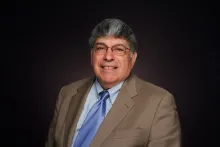
Gary Antion is a long-time minister, having served as a pastor in both the United States and Canada. He is also a certified counselor. Before his retirement in 2015, he was an instructor at Ambassador Bible College, where he had most recently also served as Coordinator.
