

Don Ward
This transcript was generated by AI and may contain errors. It is provided to assist those who may not be able to listen to the message.
When we talk about sermons, I wonder if you could name one thing that you have changed in your life or added to your life as a result of a sermon that you've heard in the past year. Could you name one thing that you have changed? Of course, psychologists divide learning into three domains. The intellectual domain, the cognitive domain, that of the intellect, the mind, then what they call the affective domain having to do with attitudes and behavior. And then there's the psychomotor domain learning motor skills. Of course, we would hope that in preaching, teaching, and our church activities, that we do come to affect the affective domain in which people actually change for the better and we grow. Of course, a lot of that hinges on the cognitive or the intellectual domain of understanding. Understanding what the Bible really has to say of digging deeper, and oftentimes understanding will motivate one to incorporate what is being said and to begin to practice whatever it is in their lives. And that was part of the opening prayer today, as it almost always is when we pray that to be with the speaker and with a hearing that we might put what we hear into practice in our lives. Today I have some questions to start with that involve moving into a deeper, more complete spiritual relationship and understanding about God and Christ and this way of life. This is an area I believe we really need to grow in and come to understand and appreciate more fully. So I'm going to ask some questions and hopefully we'll answer most of these questions in the course of the sermon. Maybe not everyone, but one question is, is your joy full? The Bible from time to time, especially the Apostle John, talks about your joy being full. It seems to me that we live in a world in which there's not a lot of real, just joy in our lives or in the lives of the people of the world. Another question, do you have the peace of God? There are two types of peace that are spoken of in the Bible. One is peace with God when you repent of your sins, exercise faith in the sacrifice of Christ for remission of sins that are passed, and you have your sins moved as far as the east is from the west so that you are viewed as blameless, as you heard in the special music. And then there's the peace of God. The peace of God is a... it's difficult to explain in a way in which there's just a settling that comes over your mind and heart in which you feel that you are at peace with yourself, with God, and with the world. And how much time do each one of us spend diligently seeking the Holy Spirit and the bread of life as compared to physical things? Of course, I know it's a difficult world that we live in, and to be able to really do what we need to do, just putting bread on the table as a... takes up so much of our time. Of course, if you're in a situation like I'm in, in the ministry, your job is trying to understand more fully, completely the Word of God and being able to communicate that to others in such a way that they can take hold of it and help enrich their lives. Is it possible, according to the Bible definition, to obey God? How important is it to believe in Jesus Christ and accept Him as your personal Savior?
Is it a sin not to believe in Christ? If so, what is the sin? Well, you might say the answer to this is very simple. We know that the Bible says in Acts 4, 12, that there's none other name given under heaven whereby men must be saved. So, obviously, Jesus Christ is central to the salvation process.
Did you know that you have broken and are breaking the First and Great Commandment when you do not believe on Christ? Let's look at 1 John 3 and verse 23.
There are many things here that we will tie together with regard to believing in Christ. What we want to explain today, as much as we can, is becoming the righteousness of God through Christ. We'll read that verse in a few minutes. In 1 John 3 and verse 23, this is the commandment that we should believe on the name of His Son, Jesus Christ, and love one another as He gives us commandment. He that keeps His commandments dwells in Him and He in Him. Hereby we know several times in John's epistle.
Hereby we know that He abides in us or lives in us by the Spirit which He has given us. See, this verse 23 is very similar to Matthew 22, 37-40. This is His commandment that we should believe on the name of His Son, Jesus Christ, and love one another as He gave commandment. Now, let's read Matthew 22, verse 37. The backdrop is that this one came to Christ saying, which is the great commandment in the law, and Jesus' response in Matthew 22-37.
Now, you can't love God without loving Christ, and you can't love God without loving your neighbor, and those things are reciprocals. And really, you can't love your neighbor as Christ gave commandment without loving God, and you can't love Christ as God gave commandment without loving God. So this is the first and great commandment. The second is like unto it, you shall love your neighbor as yourself, almost identical to the last part of 1 John 23. On these two commandments hang all the law and the prophets, the whole ball of wax. And one sense here is these two verses summarize the Bible.
And then, of course, this is based to a large degree on the Ten Commandments, Exodus 20, verse 3 says, You shall have no other gods before me. So to love God with all your heart, mind, and soul, to love Christ in the same way, and what we're going to see here is that you cannot love God with all your heart, mind, without loving Christ, and you can't love either one with all your heart, mind, and soul without loving God in Christ. Now many people still erroneously believe that the Jews merely rejected Christ, but they still believe in the true God. Can you really love God and really understand, know God, believe God, and everything that goes with it without accepting and believing in Christ?
Let's look at Matthew 11, 27, see if the Bible answers that question. In Matthew 11, verse 27, All things are delivered unto me of my Father, and no man knows the Son but the Father. Neither knows any man the Father except the Son, and he to whomsoever the Son will reveal him. Now look at 1 John 2, back to 1 John 2, verse 22.
Of course, there's a lot of furor continually today about does the Bible, has God, promise, through the Bible, through the Word of God, the land of Israel to the Jews? I've even seen it says, vote here today. Do you believe that God has promised the land of Israel to the Jews? Yes or no? Does the Bible make that promise? In 1 John 2, verse 22, Who is a liar but he that denies that Jesus is the Christ?
Well, the Jews rejected Jesus Christ. They did not accept Jesus Christ. He came to his own and his own received him not. This is from John, I think it's chapter 1, verse 12. He came to his own and his own received him not, but to those who received him, to them gave he power to become the sons of God. The Jews are still looking for a physical Messiah, someone who will restore to them the great political power that they enjoyed during the days of David and Solomon.
Zionism is about ruling the world. Who is a liar but he that denies that Jesus is the Christ? He is antichrist that denies the Father and the Son. Whosoever denies the Son, the same has not the Father. But he that acknowledges the Son has the Father also. Let that therefore abide in you which you have heard from the beginning. If that which you have heard from the beginning shall remain in you, you shall continue in the Son and in the Father. And this is a promise that he has promised us, even eternal life.
I don't know how the religious people of the world can go about saying that you have an immortal soul when basically Christianity is about salvation and attaining unto eternal life. If you have an immortal soul, you already have eternal life. And of course they just say, where are you going to spend it? Heaven or in hell.
And this is a promise that he has promised us, even eternal life. These things have written unto you concerning them that seduce you. But the anointing, this word anointing, is like the smearing end, like you take salve and you rub into and massage a muscle or something like that. That the anointing which you have received of him abides in you, and you need not that any man teach you. And some people read this and say, well, we don't need preachers, we don't need teachers.
We cover that a week before last, that who is the church, what is the church, and God has set some in the church. And among those are teachers. But as the same anointing teaches you of all things and is truth, and is no lie, and even as it is taught to you, you shall abide in him. You abide in him the one who has given you the earnest of the Spirit. So this verse here is very clear. Verse 23, "...whosoever denies the Son the same, has not the Father." Now let's go to John 5, verse 39, and see why Christ told the Jews what he did about Moses.
In John 5, verse 1 of the things that the Jews continually brought up was Abraham. They brought up Abraham. They would bring up Moses, and they would bring up David. There's probably the three most often spoken of the personages in the Old Testament by the Jews, Abraham, Moses, and David.
In John 5, beginning in verse 39, John 5, verse 39, of course this is in the middle of a debate with the detractors of the day. John 5, verse 39, searched the Scriptures for in them you think you have eternal life, and they are they which testify of me. You can memorize the Bible, and that does not give you eternal life. You can quote every Scripture in it. They are the holy Scriptures in that they have God's active presence in them. They are sacred in that they point toward a higher reality. And you will not come to me that you might have life. The Scriptures talk about life, how you attain unto life, but this says you have to come to me to have life.
I receive not honor from men, but I know you that you have not the love of God in you. I am come in my Father's name, and you receive me not. And if another shall come in his own name, him you shall receive. There's going to come, of course, this one, this Antichrist, who will come in his own name. He will be empowered by Satan the devil. He will do great signs, miracles, wonders. And he will be viewed as the Christ, as the Messiah.
And everyone whose names are not written in the Lamb's Book of Life will be deceived by this one. So Jesus here has even prophesied that one is going to come in his own name and be received. How can you believe which receive honor one of another and seek not the honor that comes from God only? Do not think that I will accuse you to the Father. There is one that accuses you, even Moses, in whom you trust.
For had you believed Moses, oh, we believed Moses. Just listen to Moses. Well, Moses prophesied of the Messiah, the Genesis 3.15 prophecy, the Deuteronomy 15.18 prophecy, or 18.15, sometime I reverse them. For if you had believed Moses, you would have believed me, for he wrote of me.
But if you believe not the writings of Moses, how shall you believe my words? And yet they claim that they really believe Moses. The Jews regarded basically only moral offenses and infractions of the ceremonial law and traditions of the elders as sin. Moral offenses and fractions of the ceremonial law and the tradition of the elders. To them, it was not a sin that they rejected the Son of God, Jesus Christ. They regarded the outward works of men, and especially the Pharisees, as the ideal. Like in Luke 18, where it talks about Pharisee and the public, and went up in the temple to pray, the Pharisee boasted of all the physical things that he did, fasting, tithing.
But they did not accept Jesus Christ. And the public, not so much as lifting up his eyes, having said, Lord, have mercy on me, a sinner. God's standard of righteousness and man's standards stands in sharp contrast. And even among some in the church today, it stands in stark contrast. The Holy Spirit and the Word of God convicts us. We're in the Gospel of John there in chapter 5. Let's go to 16. John 16. I don't think some people really grasp this Scripture.
We read these Scriptures here from John 13 through 17 on Passover. But in John 16, verse 7, Nevertheless, I tell you the truth, Jesus speaking. Nevertheless, I tell you the truth. It is expedient for you that I go away, for if I go not away, if I don't go away. Of course, there was a lot involved in him going away. He had to be crucified, put to death. He had to be resurrected, and he had to ascend back to the Father. If I go not away, the Comforter, which is the Holy Spirit, John 14, 26, the Comforter will not come unto you, but if I depart, I will send him unto you.
And when he is come, because of Comforter's masculine, the reference pronouns are masculine, but it is the Holy Spirit, and Holy and Spirit is referred to as it. And when it is come, it will reprove. That word reprove in the Greek is elancho, E-L-E-N-C-H-O. It means to convict, to lay a weight upon a person's mind or heart. It will convict the world of sin and of righteousness and of judgment. Three things right here. Next week, we weekend, Sunday week, observing Pentecost when the Holy Spirit was sent to the New Covenant Church. Here are three things that the Holy Spirit does right here.
It convicts the world of sin and of righteousness. See, what is righteousness? Well, the Bible defines what is righteousness. And much of what is righteousness hinges on Jesus Christ in understanding his role in our lives. He will convict the world of sin and of righteousness and of judgment. Of sin because they believe not on me. Of righteousness because I go to my Father and you shall see me no more. Of judgment because the prince of this world is judged.
I have yet many things to say unto you, but you cannot bear them now. How be it when the Spirit of truth, Talmuma, is come, it will guide you. How be it when the Spirit of truth should be it.
It will guide you into all truth, for it shall not speak of itself, but whatsoever it shall hear, that shall it speak. What is it here? It hears by, it hears the truth. It hears the Word of God. As it says in Romans 10.14, how shall they hear without a preacher? How shall he preach unless he be said?
How beautiful are the feet of those who preach glad tidings of peace. It is through the hearing, hearing by the Word of God. It is through the Spirit of God, the Word of God, that one is convicted. It shall not speak of itself. The Holy Spirit does not go around just audibly speaking to people. God works through humans. In a few cases, people were struck down supernaturally, as in the case of Paul, struck down, blinded, and all of that.
Whatsoever it shall hear, it cheers the truth. What is truth? Your Word is truth. Sanctify them through your Word. Your Word is truth. That shall it speak, and it will show you things to come. The Holy Spirit and the Word of God reveals things prophetically. It shall glorify Me, for it shall receive of Mine, and shall show it unto you.
All things that the Father hath are Mine. Therefore, said I, that He shall take of Mine, and shall show it unto you. So God's standards of righteousness is much greater than that of man, and it is known through the Spirit and Word of God.
Jesus Christ Himself, His standard, was that of to do the will of the Father. Look at John 5.30. We've already read this, but we'll go back. John 5. No, we didn't read this. We started in 39. John 5, in verse 30. In John 5, in verse 30, what are we talking about here?
We're talking about God's standard of righteousness. Jesus' standard of righteousness. In John 5.30, I can't have My own self do nothing, as I hear I judge, and My judgment is just, because I seek not My own will, but the will of the Father who has sent Me. Then in chapter 8, forward a few pages, Chapter 8, and verse 29.
John 8 and verse 29. In John 8 and verse 29, And He that sent Me is with Me, the Father has not left Me alone, for I do always those things that please Him. Now we'll look at Hebrews 10, Hebrews 10, and verse 7. Hebrews 10 and verse 7. Hebrews 10 and verse 7. Then said I, lo, I come in the volume of the book. It is written of Me to do your will, O God.
So the man, Jesus Christ, fulfilled this standard of righteousness. He was rejected. He was crucified by the Jews, by Israel, by the nations, and you and Me individually, because all have sinned and come short of the glory of God. And the only way that we can be viewed as blameless and have our sins forgiven is through the sacrifice of Jesus Christ. Now we want to go to Acts. We'll go to Acts 3 and verse 12. In Acts 3 and verse 12. Here Peter is giving a sermon after, see, Peter, James, and John went to the temple after the day of Pentecost, and there was this lame one there, and Peter, and they healed this one, and this conversation broke out between them and those that were standing by.
And we break in here as Peter begins to respond. In Acts 3 verse 12, And when Peter saw it, he answered unto the people, You men of Israel, why marble you at this? Or why you look so earnestly on us as though by our own power or holiness we had made this man to walk? The God of Abraham and of Isaac and of Jacob, the God of our fathers, has glorified his Son Jesus. Glorified him, he was returned. Remember the prayer in John 17, Restore unto me the glory I had with you before the world began, whom you delivered up and denied him in the presence of Pilate when he was determined to let him go.
But you denied the Holy One and the just, and desired a murderer to be granted unto you, and kill the Prince of Peace whom God has raised from the dead, were of your witnesses. And his name, through faith in his name, have made this man strong whom you see and know. Yes, the faith which is by him has given him this perfect soundness in the presence of you all. And now, brethren, I know that you, through ignorance, you did it, and so did the rulers. But those things which God before has showed by the mouth of his prophets that Christ should suffer, he has so fulfilled.
Repent you therefore, and be converted, that your sins may be blotted out when the times of refreshing shall come from the presence of the Lord. The righteousness of God is revealed in Jesus Christ. We should see by what we have covered so far that it is through Christ that the righteousness of God is revealed. Jesus Christ, who was slain for the sins of the world, and the resurrection also is so very important in this, because as Christ lives after he was crucified and resurrected, so we too must live the resurrected life.
More about that later. But now we want to look at 2 Corinthians 5, verse 14. Christ, who was slain for the sins of the world, resurrected so that we might become the righteousness of God in Christ. I wonder if we have really focused on this. How do we become the righteousness of God in Christ? In 2 Corinthians 5, verse 14, For the love of Christ constrains us, because we thus judge that if one died for all, then we are all dead. For all have sinned, come sure of the glory of God, the death penalty on everyone.
And that he died for all, that they which live should not henceforth live unto themselves, but unto him which died for them, and rose again. It's time after time this death to reconcile us to the Father in this resurrection so that he might live in us. Of course, it's not just Christ that lives in us. The Father does as well as we covered two weeks ago as well. Verse 16, Wherefore, henceforth, know we know man after the flesh, were to be known by living by the Spirit.
Yea, though, we have known Christ after the flesh, yet now, henceforth, know you him no more after the flesh, but after the Spirit, those who worship him must worship him in Spirit and in truth. Therefore, if any man be in Christ, he is a new creation. All things are passed away. Behold, all things are become new. And all things are of God, who hath reconciled to us himself by Jesus Christ. And in a moment, we'll read from Romans 5 about this reconciliation, and have given to us the ministry of reconciliation.
The key steps to living the reconciled life of the weighty of matters of the law, Matthew 23, 23, Judgment, Mercy, and Faith, which basically, through the ages, humankind has failed to do. And that's one of the themes that I am on. That's what I spoke on at the GCE. This is what we preface. We had council meetings this week. We want to judge righteous judgment, as it says in Leviticus 19, verse 15.
Now then, we are ambassadors for Christ. As though God did beseech you by us, we pray you in Christ's dead, be you reconciled to God, for he had made him to be sin for us, who knew no sin, that we might be made the righteous one. The righteousness of God in him. The righteousness of God in him. We cannot attain to the righteousness of God apart from Christ. That should sink him. Read that again. For he had made him to be sin for us, who knew no sin, that we might be made the righteousness of God in him. Verse 15 again, And that he died for all, that they which live should not henceforth live unto themselves, but unto him which died for them, and rose again. The preaching of the resurrection is so important to the gospel because it shows that if one lives as Christ lived, and is crucified with Christ, he too, she too, will live in resurrection. It also proves that Jesus Christ was and is the Messiah, the true David, the Son of God. I remember years ago when we were debating this nature of God thing. I don't know exactly how this came into view, but I wrote about the true David. And someone said, what do you mean by the true David? He isn't David, David. Yes, David is David. But who fulfills in the prophetic sense the office of David? The fulfillment of the office of David shows David will never lack for a man to sit on his throne. And that one is Luke 1.32. Luke 1 is taken up with Angel appearing to marry one of the big things in this chapter, and that she is going to be the mother of the Messiah. In Luke 1, verse 30, and the angel said in her, fear not marry, for you have found favor with God. Luke 1.31, And behold, you shall conceive in your womb, and bring forth the Son, and shall call his name Jesus. He shall be great, and shall be called the Son of the Highest, and the Lord God shall give unto him the throne of his Father David. From Pentecost, when the New Covenant Church began to the present day, the resurrection was one of the central themes of the Apostles' preaching. Now, the Jews, once again, they rejected Jesus, the Messiah, and they are still looking for the Messiah, some person coming in his own name, as we have read, to restore the kingdom of Israel. Let's look at Acts 2. You might call this the Pentecost chapter. In Acts 2, the account of when the Holy Spirit was sent, what we are picking up out of here mainly now is about the resurrection and the necessity of the resurrection, and how the resurrection plays a large role in us becoming the righteousness of God in him that is in Christ. Two main steps, reconciliation, and then living the resurrected life. In Acts 2, verse 22, You have taken, and by wicked hands have crucified and slain, whom God hath raised up. God hath raised up him, loosed the pains of death, because it was not possible that he should be holding of it. The grave cannot contain him. For David speaks concerning him. Of course, David was a king, he was a prophet.
Neither will you permit your holy one to seek corruption.
Men and brethren, let me freely speak unto you of the patriarch David, that he is both dead and buried in Sepulchre with us unto this day. Therefore, being a prophet and knowing that God had sworn with an oath to him, that of the fruit of his loins, according to the flesh, he would raise up Christ to sit on his throne.
Now you look at verse 31. Well, that's the one we're reading. Verse 31. He, seeing this before, spoke of the resurrection of Christ, that his life essence was not left in the grave, neither did his flesh seek corruption. This Jesus hath God raised up wherewith your all witnesses. Therefore, being by the right hand of God exalted, having received of the Father the promise of the Holy Spirit, he has shed forth this which you now see and hear.
So in this sermon that Peter preached, they were convicted in their hearts. We look at verse 36.
So let's notice from the Scriptures the two vital steps in this reconciliation and also this other part of the resurrected Christ living in us. In Romans 5, the first seven or eight chapters of Acts basically deals with the judgment on Israel, the Jews of that time. Of course, as the apostles tried to preach Christ, they were beaten, they were put in jail, they were ostracized. Finally, it winds up in chapter 7 of Stephen being stoned, the church scattered. And then finally in chapter 9, Paul is converted. And from that point on, it's judgment on everybody, Jew and Gentile. Peter goes to the house of Cornelius, chapter 10.
But now I want to read from Romans 5, these two main steps, becoming the righteousness of God, that we might become the righteousness of God in Him, that is, in Christ. In Romans 5, 6, For when we were yet without strength, in due time Christ died for the ungodly, for scarcely for a righteous man will one die, yet for adventure for a good man some would even dare to die. But God commends His love toward us, and that while we were yet sinners, Christ died for us, much more than being now justified by His blood, we shall be saved from wrath through Him. So one step is the reconciliation and the justification through His sacrifice. Verse 10, For if we were enemies, we were reconciled to God by the death of His Son, much more being reconciled, we shall be saved by His life. See, it would be impossible to become the righteousness of God apart from the sacrifice of Christ. There would be no amount of commandment-keeping, even of the spiritual law, to pay for the sins that are passed. It required the death of the Son of God. It required, then, that He be resurrected, and as we read from John 16.7, says, Unless I go away, the Comforter will not come unto you. So then, on Pentecost, we read the verse, That which was prophesied is now being fulfilled, which you see in here, that the Holy Spirit has come upon us. So after baptism, we are to live the resurrected life. Let's look at Romans 6. Romans 6, and we'll see this. In Romans 6, what shall we say, then, verse 1, shall we continue in sin, that grace may abound? See, this whole thing plays also into this, Are we saved by grace? Yes, we are saved by grace, but if you understand, grace is God's divine favor, through which He sent His Son to the earth to die for the sins of the world. And we cannot really have faith in Him apart from believing what He said to do.
So, Paul asks, he knew that some would get this notion that grace does away with the law. I just read a thing this morning, he says, Oh, the great scholar, the great whatever his name is, Ryrie, you probably heard of the Ryrie Bible, shows that the law is done away with. The Mosaic law is done away with, but not the spiritual law. God forbid, how shall we that are dead to sin live any longer therein? Know ye not that as many of us as were baptized into Jesus Christ were baptized into His death. This plays into being crucified with Christ. Therefore we are bared with Him by baptism into death. That like His Christ was raised up from the dead by the glory of the Father. Time after time, you see that Christ was resurrected by the Father. Even so also, we should walk in newness of life.
We are viewed as blameless. We are viewed as sinless.
And that takes place. For we have been planted together in the likeness of His death. We shall be also in the likeness of His resurrection. Knowing this, that our old man is crucified with Him, that the body of sin might be destroyed, and henceforth we should not serve sin. For he that is dead is freed from sin. That old man is down. We are now with a new mind, a new heart, a new knowing, a new conscience within. To live the resurrected life. And as God works with us, and we obey, we can become the righteousness of God in Him, that is, in Christ. Because it was through Christ that all of these steps have made it possible. Look at Philippians 2.13. Do we forget? Here's what Paul wrote to the Philippians with regard to what God is doing. See, it is both. We think because we are trying to increase our understanding with regard to becoming the righteousness of God in Christ, that somehow God is not in the picture, not playing a role. Of course He is.
He directs Christ. He is the source. The Holy Spirit proceeds from the Father, according to John 15.26. In Philippians 2.13, So God and Christ are in us. So some might ask, what availed to me is deliverance from sin and guilt and the death penalty, and then be placed in a relationship.
But yet at the same time, a relationship with God reconciles to God. But yet at the same time, I'm subject to the pulls of the flesh and Satan's deception. So the answer to that question, there remains another facet of the Spirit's work. That is, God and Christ are living in us. Now, that does not take away personal responsibility from each one of us, because the Spirit and the Word lead us, guide us, but we have to make the decision whether or not we will walk according to the Spirit.
Let's notice now in Romans chapter 8.
In Romans chapter 7, Paul describes the battle that is going on between the old man and the new man.
The old man does not just axiomatically die in the baptismal waters. Symbolically, we are saying that I'm putting the old man to death, but he still tries to get up, and there is this warfare. But we have this new essence abiding in us, the Spirit of God. Let's read the last verse of Romans 7. I thank God through Jesus Christ our Lord, so then with the mind I myself serve the law of God. But with the flesh, the fleshly nature is always there.
As we shall read in just a moment, the carnal mind is not subject to the law of God, but we now have a spiritual mind. Verse 1 of chapter 8, verse 1, There is therefore now no condemnation to them which are in Christ Jesus. That means no judgment is imputed to them who walk not after the flesh. They are not giving in to the pulls of the flesh, even though the pulls of the flesh are still there. But they walk after the Spirit. For the law of the Spirit of life in Christ Jesus made me free from the law of sin and death. So you've been set free.
Sin is removed as far as the east is from the west. For what the law could not do in that it was weak through the flesh, God sending his own Son in the likeness of sinful flesh and for sin, condemned sin in the flesh. How? By obeying the law of God through the Spirit. He walked according to the Spirit. That the righteousness of the law might be fulfilled in us, who walk not after the flesh, but after the Spirit. So even though that nature is still there, that's buried in baptism symbolically, it can still be ruled over by the Spirit. For they that are after the flesh do mind the things of the flesh, but they that are after the Spirit, the things of the Spirit. And so this understanding with regard to God in us, Christ in us, the Holy Spirit in us, the Word of God written on our inward parts, is a very sobering kind of thing.
The Bible speaks of it in terms of being set free. The great freedom that you don't have to pull around the past, drag it behind you. You can let it go. It is buried in the watery grave of baptism. Verse 6, for to be carnally minded is death, but to be spiritually minded is life and peace. Remember those questions up front? Can you obey God? Yes, you can. Can you have the peace of God? You can make peace with God and have the peace of God. Because the carnal mind is enmity against God, for it is not subject to the law of God, neither indeed can be. So then they that are in the flesh cannot please God, but you're not in the flesh, but in the Spirit. And so be that the Spirit of God dwell in you. Now if any man have not the Spirit of Christ, he is not of his. There's just one Spirit. And we covered that two weeks ago. For by one Spirit, you all baptize into one body. Ephesians 4, there is one Spirit, one baptism, and so on in Ephesians 4. In John 1611, Christ said the Prince of this world has been judged are condemned. So we're not left under the power of sin and death, as we've just read from Romans 6. We also have the wherewithal, the power, to defeat Satan and cast him out now. Now, I'm reading John 12.31. I guess we should turn there. Let's go to John 12.31. In John 12, verse 31, these Scriptures, these what I would call Scriptures of comfort and assurance, confidence, courage, courage builders.
To be aware of these helps in fighting our battles on a daily basis. In John 12.31, now is the judgment of this world. Now shall the Prince of this world be cast out.
You see, Jesus Christ led captivity captive. Who is the one that has held the world in captivity in bondage?
Well, it's Satan the devil. And Jesus Christ, you look at Ephesians 4.
He has led captivity captive. Through the fact that he came and lived a perfect life, was crucified and resurrected.
We'll start in verse 7, Ephesians 4. But unto every one of us is given grace, divine favor, according to measure the gift of Christ. And of course, divine favor, grace, is a broad topic to the degree that you are doing things as Christ gave commandment is the degree to which you are growing in grace.
Divine favor with God. Wherefore, he said, when he ascended up on high, he led captivity captive. See, the fact that Jesus Christ triumphed over Satan. Remember the great temptation in Matthew 4. He lived a sinless life. He was resurrected. He is now ascended to the Father. He has made it possible for us to be reconciled to God. He now, through him, the Holy Spirit was sent back to us. We have this knowing within us. He led captivity. The one who has captured the world from the Garden of Eden to the present time. He now can be put in prison by us in our own lives. Now, when the great day of atonement is fulfilled at the beginning of the millennium, he will be put in that bottomless pit and rendered of non-effect in that sense during the millennial reign. But he can be rendered of non-effect in our lives. Now, he led captivity captive and gave gifts unto men. Now, he that ascended, what is he but he... I'm sorry. Now that he ascended back to heaven, what is it but that he also descended first into the lower parts of the earth. He that ascended is the same also that ascended up far above all heavens that he might fill all things. And the reason for we covered that two weeks ago of setting those offices in the church that might all come to the unity of the faith. So Jesus Christ has triumphed over Satan the devil. Satan has been judged to lose his dominion and to be cast out, expelled from his usurped role that he has now as the God of this earth. He has no longer been going to have that role. Jesus Christ and God the Father are going to reign triumphantly. He is triumphed. Christ has over all things. Thus, there is nothing that can separate us from the love of Christ if we be crucified with Christ. There is nothing. Look at Romans 8. Romans 8. Yes, we can become the righteousness of God in Christ. We can live a basically blameless life. We can be continually reconciled to the Father. If we do sin, we can come boldly before the throne of grace, confess our sins. He is faithful and just. Forgive us of all unrighteousness. In Romans 8.31. What shall we say then to these things? If God be for us, who can be against us? He that spared not his own Son, but delivered him up for us all. How shall he not with him also freely give us all things? Who shall lay anything to the charge of God's elect that is God who justifies? We read how he did it. He did it through his Son, Jesus Christ. We do it by repentance and faith in the sacrifice of Christ. We become the righteousness of God as we live the life that Christ lived, doing the will of the Father. Who is he that condemns? It is Christ that died, yes, rather, that has risen again. Just time after time after time, you see this, that he has risen again. Who is even at the right hand of God, who also makes intercession for us? See, sometimes we tend to forget the Hebrews 7.25, that he ever lives to make intercession for us, therefore he is able to save us to the uttermost. Who shall separate us from the love of Christ? Shall tribulation or distress or persecution or famine or nakedness or peril or sword, as it is written, For your sake we are killed all the day long, we are counted as sheep for the slaughter. See, that is being crucified with Christ. The reason why a lot of people fail, the reason why most of the people that I know who have seemed to have failed have fallen away, the reason why? Because they will not fully deny themselves.
They want to hold back, they want to hold something to themselves.
So each one of us has to ask himself, herself, am I crucified with Christ? This is where most of those who fall, who fall away, or whatever you want to say, that is, they do not give up self and live unto God. They make God over in their own image and trade the pleasures of this world for eternal life. Is it worth it?
And you know what was counseled at baptism. He that is not willing to forsake father, mother, yea, even his own life is not worthy to be called my disciple.
The fact is, though, generally speaking, when we come to this state of mind that we have the peace of God within us, there's nothing about ourselves that we really want to preserve. We are called to be living sacrifices. So to be crucified with Christ means to give up self as Christ did, who, being in the form of God, thought it not a thing to be seized, to be equal with God, but made himself of no reputation and took on the form of a man and humbled himself even to death on the stake. And it is in that, and it's an area that is difficult to explain, but when one comes to that point of all the day long, we are counted as sheep for the slaughter. Then, of course, God can do mighty works in and through the people who are of that frame of mind and attitude. But so many of the people who have failed or who have, quote, fallen away, it is because there's something out there in this life that they would rather have, they would rather do, or they have some kind of grievance they want to hold on to, and they're willing to trade whatever it is for eternal life. Is it worth it? So we have to give up self and live under God, and that's what baptism pictures.
Verse 37, There are great trials ahead, but we can be more than conquerors. That nor height nor depth nor any other creature shall be able to separate us from the love of God, which is in Christ Jesus our Lord. So if we walk in the Spirit, obeying Him who spoiled principalities and powers, and made a show of them openly, triumphing over them through His life, we don't need to fear the power, the pulls of the flesh, or the enslaving power of Satan and sin. Christ is triumphed over all. He has given us the power to triumphe over all. He has translated us into the kingdom of His dear Son. He is not ashamed to call us brethren.
So brethren, I hope we have a clearer picture with regard to becoming the righteousness of God in Him. That is the righteousness of God in Jesus Christ. It all works together as a package. You can't have the righteousness of God, well, of course, without God, and you can't have the righteousness of God apart from Christ. We have shown how the Jews rejected Christ. We have shown how you're reconciled. We have talked about living the resurrected life and walking according to the Spirit. In doing these things, we become the righteousness of God in Him. And He has given unto us the ministry of reconciliation. And reconciliation, in practical terms, has to do with doing the weightier matters of the law. Judgment, mercy, and faith begins with judging ourselves, crying out for God's mercy. And we walk in a reconciled position with Him, and then we walk in a reconciled position with one another, through judgment, mercy, and faith. So brethren, there is so much to know in the Bible, so much to learn, and so many things. And hopefully, as we increase our understanding of these things, it motivates us to be even more determined and dedicated to doing those things that we already know that we ought to be doing. For years at the feast, one of the things I've said when I had opening night message was, we're here to close the gap between what we know and what we do. And if we can close that gap between what we know and what we do, just think where we're going to be. We have the knowledge. We have, I think our cognitive domain is way ahead of our affective, that is, attitude, heart, and actual implementation through our behavior and doing and walking according to the Spirit. So, I hope we will think on these things and that we will grow in every facet and dimension of our being. So let's set our affection on things that are above, be of good cheer. Christ has overcome the world, and through Him we can do the same.
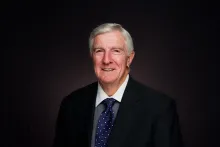
Before his retirement in 2021, Dr. Donald Ward pastored churches in Texas and Louisiana, and taught at Ambassador Bible College in Cincinnati, Ohio. He has also served as chairman of the Council of Elders of the United Church of God. He holds a BS degree; a BA in theology; a MS degree; a doctor’s degree in education from East Texas State University; and has completed 18 hours of graduate theology from SMU.
