

Gary Antion
This transcript was generated by AI and may contain errors. It is provided to assist those who may not be able to listen to the message.
Well, good afternoon, everyone, and thank you very much for a beautiful rendition of It Is Well With My Soul. I remember that song well. We used to sing it a lot. I think it was number four in the old book, but I may be wrong. Anyway, good afternoon to all of you. Good afternoon to those on the webcast. And thanks to all of you for such a wonderful day so far. The food was delicious. We had plenty of it. We had lots of individuals work very hard. I want to sing a lot. All the social committee who worked hard at it with Dr. and Mrs. Fouch, Dr. and Barb Fouch, looking after that, and also Roy, Roy, also Tim and Connie Sipes for all the work they did and their staff in setting up ahead of time for you and the ABC students for helping get things organized before you actually came. And thank you all for putting this back in order so rapidly and so quickly. We certainly appreciated your attendance this morning. This is the first of at least a couple of super-sabbaths we have scheduled. I was going to put one in April, but I think I will cut that one off and just use a sermon. We'll have another one in May. So we'll have at least a couple of them to take a look at and see how well you liked them. At least from what you sent back on your surveys, you really wanted that, and you really liked that opportunity as well as the biweekly Bible studies, so we gave you both of them. So we gave you biweekly Bible studies, which, by the way, have been well attended. Not only individually, we had about 50 coming on Bible study evenings, but even the hits from the people who tuned in to it on the webcast were like 270 one week, 230, and I think 220 or 40, whatever the other week. So it's been very well attended by those who weren't here physically, so we appreciate that. We thank you for it. We thank you to all the ladies and men who brought in the food for us today. I appreciate your service in that way, and it was all delicious. And so far, I haven't been sick, so I think I'm okay. So, and that was at least off the Kentucky Fried Chicken, which I had a little piece of before it got served. So anyway, nice to have you here. Nice to see you all this Sabbath day. A couple of announcements I'll make real quickly before I begin the sermon. There will be samples of unleavened ABC bake sale. The unleavened bread, the unleavened cookies and goodies that were for the ABC bake sale to raise money for the charity auction. There will be samples put out after services. They didn't want to challenge all the dessert items that were there. And we would suggest you take a find one of the order forms, have it in your hand, and as you take a bite, you know, I like that one. No, I like this one, too. Oh, I like this one. So we've already ordered.
I haven't tasted all of them, but we already ordered some ourselves, and we had several orders from Columbus. Took them up there. We've actually had people write to us from Columbus and send their order in already individually. So if you'd like to order something so they can know how many goodies and items to make, please get the order form. Please taste the various samples. One group are the homemade goodies. The other one is from Manashevitz. So you can take a look at them. The dark chocolate we could not have this year. It was not good. I don't know what happened. They opened the package up, and it looked white, so it looked like it was either old or from an old stock. So we had to send those back. So we don't have now time to reorder those. So we will have those triple chocolate, triple dipped chocolate, whatever matzo. So those look good. So you could taste and sample those. Those are there. And the toasted marshmallows are good, and they're all kosher. So you can take a look at those, too. They'll have those out there for you. So I encourage you about that. It helps that all this fundraiser does is go to help the young people in Zimbabwe to be able to get an education. So it's our project this year for our charity auction, as well as for this fundraiser. Also want to make mention that we have next week the ABC and Young People Saba Service. They'll be doing a lot of the activities. I talked with some of the some of the deacons, and some of the young people have not been in touch with them. Some of the ABC students haven't either. So if you want me to ask the various deacons to stand up, Mr. Wilmoth is here. Betty Griffith is there regarding the kitchen. Lloyd Goldson is he here this afternoon?
If not, you could talk with he is here. And you could talk with Derek Smith regarding ushering. Lloyd Goldson regarding greeters. Mr. Phelps, Floyd Phelps regarding the outside security. So take and ask any of the deacons to point you to the people who could help you regarding the various activities we'll be doing. We'll be doing setup and cleanup and greeting and instruction. That's Mr. John McClain, security ushering kitchen, and we'll actually do the Saba Service. So as far as the song leading sermonette, piano playing, and so on, that will all be done by us. So I just want to have you check with them so you could know what you're doing next week. Please do so after services if you haven't done so already.
John the Baptist had been questioned by the Pharisees about who he was and what he was doing baptizing these people. And while John the Baptist was baptizing, he looked up and he saw Jesus Christ, and he said, Behold the Lamb of God. Behold the Lamb of God. And in John 1, verse 36, that was in John 1, 29, but in John 1, 36, he repeated it again. He looked up, and he looked over at him, and he said in John 1, verse 36, and looking upon Jesus as he walked, he says, Behold the Lamb of God. As we approach Passover season, how may we as Christians behold the Lamb of God? I submit to you that one great way to behold the Lamb of God is to read about him, is to study about him, so that as you read about Jesus Christ, as you read about his life, you may come to appreciate him, you may come to see his example, you may come to appreciate his teachings, you may come to appreciate his sufferings, and you may come to understand his very presence, that he promises to be with you and each one of us, even to the end of the world.
It is important that we understand that Passover is not about, for New Testament Christians, is not about Israelites leaving Egypt. That was something that took place, to be sure. It was, it was not about being protected from the death angel passing over you. It is, however, a life and death matter, and it is important for us to consider the Lamb of God, because the Passover is all about the Passover Lamb, Jesus the Christ. So, to appreciate him, we need to read about him.
So, I'd like to share these four areas, his example, his teachings, his sufferings, and his presence. And we'll take a look mostly through the Gospels and take a look and see what we can appreciate about his example, first of all, and then his teachings, his sufferings, and his presence with us. So, his examples, as we read about him, we see how he lived, we see how he interacted with others, we see his desire to preach the gospel and to do the work, we see how he treated other people, we see his compassion, we see his love for others.
In Luke 2, verse 41, for the young people here, Luke 2, verse 41, we find Jesus Christ coming up to keep the Passover with his family, Luke chapter 2, and verse 41. Here's what we learn about him. Now, when his parents went to Jerusalem every year at the Feast of the Passover, Passover was called the whole season sometimes, sometimes it was called the event, sometimes it was called the Lamb itself, so sometimes it could be of that particular day, that service. So now, every year, every year at the Passover, Feast of the Passover, he went up with his family.
When he was 12 years old, they went up to Jerusalem after the custom of the Feast. When they had fulfilled the days, as they returned, the child Jesus remained behind in Jerusalem, and Joseph and his mother didn't know it. They probably assumed he was playing with his cousins and maybe caught a ride in one of the wagons with the cousins, or was walking along with one of his other relatives, his aunts or uncles or other cousins, and they, supposing him to have been with the company, went a day's journey.
They were traveling along, and, okay, nighttime, all right, I think we better see where Jesus is, so time for him to go to bed. And when they looked around, day's journey, they sought him among the kinsfolk and acquaintance. And when they found him not, verse 45, they turned back to Jerusalem seeking him. We didn't bring our son. I don't know if any of you leave your kids behind. Most of us don't, but if you did, you'd be pretty scared, pretty upset, pretty afraid, pretty worried, and they went dashing back to find out what was wrong.
They returned seeking him, verse 46, and it came to pass after three days. They couldn't find... They didn't know where to look. They were looking all over you. Maybe he went here. Maybe he's at the arcade. Maybe he's playing video games.
Maybe he's over here doing this. Maybe he's watching lawn bowling, or maybe he's over here watching a basketball game, or maybe he's over here... Yeah, where would they look? Maybe he went to these people, these friends we met them last time. Let's go to their house. Maybe they know of him. They went looking all over.
They couldn't find him. And it came to pass. After three days, they found him in the temple, sitting in the midst of the doctors, both hearing them and asking them questions.
Here he was, sitting right in the midst. And all that heard him were astonished at his understanding and answers. And when they saw him, they were amazed. And his mother said to him, Son, why have you dealt with us? Why have you dealt this way with us? Behold, your father and I have sought you sorrowing. We were all worried about you. What were you doing? Why weren't you with us? And he said to them, How is it that you looked for me?
Why didn't you know where to look for me, Mom? You told me all this time that I was the son of the father. You told me when we came to the temple every year that this temple was dedicated to your dad. Why didn't you know I would be in my father's house? Why didn't you know? And he said, Why didn't you know that I must be about my father's business? And they didn't understand the saying which he spoke to them. And he went down with them and became subject.
He went down to them and came to Nazareth, went down with them, came to Nazareth, and was subject to them. But his mother kept all those sayings in her heart. And Jesus increased in wisdom and stature and in favor with God and man. At 12 years old, he was already beginning to assimilate the drink in of the truth of God to really have it come active in his life. And he was there sitting in the temple being able to talk to and being able to discuss back and forth with those individuals who were learned doctors of the law.
So his example for young people, yes, he was able to hang in there, wasn't he? He was able to do what he needed to do to do what was right and to worship and honor his God. John 11. We find another aspect of Jesus Christ. We find that Jesus Christ was a friend. Jesus Christ was a friend. John 11. Now a certain man was sick named Lazarus of Bethany in the town of Bethany, the town of Mary and her sister Martha.
And it was that Mary which anointed the Lord with ointment wiped his feet with her hair whose brother Lazarus was sick.
So Martha, Mary, and Lazarus. And notice what it says, therefore his sister sent to him saying, Lord, behold, he whom you love is sick. He whom you love is sick. They were his friends.
When Jesus heard that, he said, this sickness is not unto death. He's going to be okay. But for the glory of God, that the Son of God might be glorified thereby. Now Jesus loved Martha and her sister Mary and Lazarus. Jesus Christ, these were his friends. These were his best friends. And notice what happened. And he went on to say in verse 6, when he heard, therefore, that he was sick, he waited two more days. And then afterwards he said, okay, let's go to Judea now. And his disciples said to him, Master, the juice of late sought to stone you. Do you think you should go there again? Yes, he was going to go anyway. And Jesus said, are there not 12 hours in the day? If any man walk in the day, he stumbles not. But he, because he sees the light of this world. But if a man walks in the light, sorry, in the night, he stumbles because there is no light in him. Verse 11, these things said he, and after that he says to them, our friend Lazarus sleeps.
But I go that I may awake him out of his sleep. So Jesus Christ then went and raised him from the dead. Our friend, my friend, Jesus Christ had friends. And he was a true friend because he risked his life to come and save him from his sickness and indeed to raise him from the dead. John, chapter 2, we read about Jesus Christ's example. Jesus Christ was dynamic. Jesus Christ was no pushover. He was dynamic. John, chapter 2, verse 13. And the Jews' Passover was at hand, and Jesus went up to Jerusalem, this is when he was older now, and found in the temple those that sold oxen and sheep and doves, the money, the changers of money sitting. Here are people just selling things, merchandise, oh, come buy my dove as a better dove than his dove, and come get my thing. And, yeah, if anybody needs to change money, I only charge 10 percent. He charges 15, and there's all this commotion going on. And when he had made a scourge of small cords, he drove them all out of the temple, the sheep and the oxen. He didn't drive the people out with the cords. And he poured out the money change, the changers' money, and overthrew the tables. You imagine what kind of a site that would have been for this one man to look at all those money changers and those men doing that, and throw their tables over it. Money goes flying every which place, chickens and birds flying here. They're thither and yawn, and all these animals scurrying about as he hits them, and they're squawking and bleeding as they leave out. Do you think they would have thrown Jesus out? Probably.
If he were the type of man that's pictured, but Jesus Christ was dynamic. And he said to them that sold doves, take these things from here, and don't make my father's house a house of merchandise. And his disciples remembered that it was written, the zeal of your house has eaten me up.
Jesus Christ had righteous indignation. Jesus Christ did not want to see his father's house turned into a place of merchandise. So we learn from that. We see his example. He had dynamism.
Jesus Christ also healed. Mark 9, verses 22 to 24. Jesus Christ healed. It says of him, all manner of sickness and disease. Mark 9, verses 22 to 24. We read this, and oftentimes this father, this man who came and asked if he came to his son and heal him, oftentimes this demon cast him into the fire and into the water to destroy him. But he says, but if you can do anything, have compassion on us and help us. This ruler came, this father came to ask about his son, please help me. And verse 23, and Jesus said to him, if you can believe, all things are possible that believes. Mr. Troy Phelps' sermonette, Prayer. All things are possible to him that believes.
You see, our God doesn't just do the possible. Our God does the impossible. Our God can roll back waters and people walk through on dry stream. Our God can walk on water. Our God can take a few pieces of bread and a few fishes and feed thousands of people with it. Our God can raise the dead. Our God can cure all manner of sickness. Our God can spit on somebody's eyes and give him good eyesight. And when it didn't, when he said, I see people walking like trees, he said, oh, it wasn't good enough. He laid hands again. Now what do you see? Now I see clearly. Our God can do the impossible if we believe, if we believe. And that takes prayer and faith to believe. Verse 24, and straightway the father of the child cried out and said with tears, Lord, I believe, help my unbelief. And if I'm any way, I'm lacking. Please do it any way. Please heal him any way. And, of course, Jesus Christ did. And he later on said nothing can come out. Of course, they said he's dead. And Jesus took him up by the hand and lifted him, and he arose. He raised him from the dead.
Mark 10, verses 17 to 22, Jesus Christ loved people. Jesus Christ loved people.
It's a great example that I learned from him. Do you love all people?
Do you only love those who are your friends? Do you only love those that you're close to?
Do you love all people? Do you see goodness in all people? Do you see in all people the potential of eternal life? Do you see in all people the potential of becoming a member of the very family of God, no matter where they live? No matter if they live in Libya, no matter if they live in Iraq or Iran, no matter where they live in the world, in China, in Korea, in India, in Africa, in Central America, in South America, in Canada or USA, or Europe?
They're potential members of the family of God. Do you love them? Because we find here in Mark, chapter 10, verse 17, and when he was gone forth into the way, there came one to him, running and kneeling, kneeled to him and asked him, Good Master, what shall I do that I may inherit eternal life? I want to be in God's kingdom. I want to have eternal life. I want to live forever. And Jesus said to him, Why do you call me good? There's none good but one that is God. Nobody has goodness as God has goodness. Verse 19, you know the commandments. Don't commit adultery. Don't kill. Don't steal. Don't bear false witness. Defraud not. Honor your father and mother. He said, Mother, he said, Yes, I know. Master, all these I've done since my youth. I've been doing these things. And then Jesus, beholding him, verse 21, loved him.
He wasn't converted yet. We'll see he didn't respond positively. Jesus saw in this young man, who wasn't one of his disciples, he saw in this young man some wonderful qualities. Jesus loved him. And he said, One thing you lack, go your way. Sell whatever you have and give it to the poor, then you shall have treasure in heaven. And come and take up your cross and follow me. He offered this young man the opportunity to become one of his disciples. Offered it to him. He loved him. He saw him. He loved him. And he said, Give it up and come follow me, in verse 22. And he was sad at that saying the young man was. And he went away grieved, for he had great possessions.
Couldn't give up his possessions to follow God. But the principle I want you to get from that example, Jesus Christ loved people. Do we love people enough to help them get the gospel? Do we love people enough to help them have an opportunity for the gospel? By tithes and offerings and support and prayer. Prayer for the telecast. Prayer for the literature as it goes out every month, that God would bless the readers. Bless those who are watching the program. John chapter 9 in verse 4. Jesus Christ had a zeal to do the work. And he said this, I must work the works of him. John 9, 4. I must work the works of him. That sent me. Is the time over already? I didn't, oh, okay.
Somebody's, it's okay. I did it to myself one time. I hope it's not mine.
Does anybody have a watch that's going off? That's not mine. Is it here?
It was mine. But I didn't set it. I didn't set it. I know the sermon should go short, but it was not 25 minutes. Okay. Anyway, that's, it was here. It said time set.
Because off again, I'll know how to hit it. But I, literally, I was giving a sermon one time, and I forgot to turn my cell phone off, and his phone was ringing ringing. Whose phone is that, anyway? It was mine. It was mine reading up. Did it to myself. Shot myself in the foot. Okay, John 9 and verse 4. I must work the works of him that sent me while it is day. The night comes when no man can work. I've got to do the job while I can do it. And that's what we have to say, because there is coming a time when there'll be a famine of the hearing of the Word of God, when we will no longer be able to broadcast, when we will no longer be able to put literature out, when we will no longer be able to do the work of God. We've got a job to do now. So, how can we behold the Lamb? Appreciate His example. And you find that as you read through the Gospels, you see what type of a man this was. His disciples marveled at Him when He awoke and calmed the seas and calmed the wind. And when He went back to sleep again, they said, what manner of man is this?
What kind of a man are we with that even the wind and the seas obey Him?
That's the awesome God that we have, Jesus Christ.
Secondly, as we read about Him, we see His teachings.
We see the awesome Sermon on the Mount, which forms the heart and core of Christianity.
We see how to solve internal difficulties, where He talked about, go to your brother. We see how to deal with marriage, Matthew 19. We see how to pray, pray without ceasing. We see how to pray. We see where He talked about the importunate widow. We see how we should keep on, keeping at it, keep coming back.
We see a prophecy of hope, Matthew chapter 24. But Matthew 13 kind of summarizes a lot of this, and I'll try not to spend too much time in this section because I want to also go to the next two sections as well. Matthew chapter 13 and verse 10. Matthew 13 and verse 10, we read this.
And the disciples came and said to Him, Why do You speak to them in parables?
Lord, why do You always give them a parable? Now, if I just stopped there, many religious men would say, Well, of course, He wanted to explain and expound His teachings. He wanted them to understand better. You give an example. You give them the circumstance and situation about how they can do it. You want them to be expounding and explaining and giving an anecdote. That's why He does it. No, He didn't. He said, verse 11, He answered and said, Because it is given to you to know the mysteries of the kingdom, but to them it is not given. So I throw these parables at them so they can take them and run in any direction they want and maybe not run in the right direction. Verse 12, For whosoever has to him shall be given, to him and he shall have more abundance, but whosoever does not have from him shall be taken away, even that which he has. Verse 13, Therefore I speak to them in parables, because they seeing will not see. They hearing will not hear.
Neither do they understand. They hear something, but it's not clear. They see something, but it's not clear. And their understanding is clouded. And in verse 14, and in them it is fulfilled, the prophecy of Isaiah, which says, By hearing you shall hear, shall not understand, seeing you shall see it not perceive. For this people's heart is wax gross. Their ears are dull of hearing. Their eyes are closed. They have closed, lest at any time. They should see with their eyes, hear with their ears, and should understand with their heart, should be converted, and I should heal them. I'm not trying to call everybody now. That's what he told them. I'm not trying to call everybody now. I made it difficult for them to understand. Verse 16, But blessed are your eyes, for they see, and your ears, for they hear. Verse 17, For verily I say to you that many prophets and righteous men have desired to see those things which you see. You have seen the anointed one.
You have seen the Christ. You have heard from Him. You now know what God is doing in His plan of salvation. You see it. You know it. Blessed are your eyes. These men wanted to. Remember Daniel said, What does this mean? God said, Shut up the words, Daniel. Close up the book. You're not going to get any understanding now. It's for those at the end. Many will run to and fro. Then they'll understand. For the end. It's not for you. The prophets did not understand. It says they wrote what they didn't understand. When David wrote, My God, My God, why have you forsaken me? He was probably talking about Himself. God, you've forsaken me. He was writing exactly the words of Jesus Christ. They didn't understand in many cases what they wrote. He said they wish they could. They desired to see those things which you see and have not, and to hear those things which you hear, and have not heard them. What a blessing you and I have to understand the teachings of God, the teachings of Jesus Christ. John 12, 25. John 12, verse 25. We read this, He that loves His life, one of His teachings, shall lose it. And He gave a lot of teachings that were contrary to what man might ever think of, because God's ways are not our ways and our ways are not His.
And His ways are higher than ours. He said, He that loves His life shall lose it. He that hates His life in this world shall keep it to life eternal. If all we're about is preserving ourself now, all we're about is what we can get out of life now, then what do we have left?
Jesus Christ said, if you lose your life now, you'll gain it in the world tomorrow. If you gain it now, you'll lose it in the world tomorrow. One of His teachings, another teaching, He said, was your who will be your enemies? Will your enemies be the person who hates you across the street? Or will our enemies be those in some cases of our own household? Matthew chapter 10, verses 34 to 36, He talks about it being those of who are closest to us. Matthew chapter 10, verse 34, another one of His teachings. So as we study the Word of God, we come to appreciate His teachings. We come to see that they had value. He said, Think not that I am come to send peace on earth. I came not to send peace, but a sword. And yet what do we hear every ex-mistime? Peace on earth, good will toward men. Jesus said, I didn't come to send peace because I'm not calling everybody now in this world, which is contrary to God. I came not to send peace, but a sword. For I am come to send a man at variance against his father and the daughter, against her mother, and the daughter-in-law against her mother-in-law, and a man's foes shall be they of his own household.
Verse 37, He that loves father or mother more than me is not worthy of me. He that loves son or daughter more than me is not worthy of me. That was the first thing he gave when someone asked how to be his disciple. He said, I've got to be first in your life. I've got to be first.
Yet how many times do people follow family or friends as they go down a wrong path, as they object to them, as they give them a little bit of flack?
Are you convicted of your beliefs? Are you so convicted you stand tall? That you know that you make a decision on your own before God to take Jesus Christ to be your Lord and Savior? You're not baptized together with anybody. You're baptized by yourself. I've never done dual baptisms.
I do one at a time. Each person is baptized. Each person accepts Jesus Christ as his or her personal Savior, and they have to, with that acceptance, move forward and walk with God on their own conviction. You know what else he said? Acts 20-35, it's more blessed to give than to receive. We don't find that in the Scriptures, but we find it written in the book of Acts.
Jesus Christ said it's more blessed to give than to receive, as the Apostle Paul spoke to the Ephesian elders. Luke 6-38, another thing he said, you want to be blessed? Give! Whoops! Give? Come on! You know, if I give it away, I don't have as much as I had before. You mean giving is better than getting? Most people can't see that. Luke 6-38, give and it shall be given to you. Good measure, pressed down, shaken together and running over, shall mend. Yeah, that full, that full, what is it, bottle, wide mouth bottle will be full. It'll have the rocks and the sand and everything else in it. It'll be pressed down. Running over shall mend, give to your bosom. For with the same measure that you meet, it shall also be measured to you again. If you give, it'll come back to you. But if you give for it to come back to you, you won't receive.
But if you give, God will send it back to you. And more. It's a living principle that God, Jesus Christ taught. Jesus Christ also taught in Matthew 25. Matthew 25 verse 31. So as you read the Gospels, you come to understand the teachings of Jesus Christ. You come to appreciate them and appreciate Him and God the Father for sending them. For after all, Jesus Christ said the word that He brought was not His own. He didn't make this up. Matthew chapter 25 and verse 31. When the Son of Man shall come in His glory and all the holy angels with Him, then shall He sit on His throne. Before Him shall be gathered together all nations, and He shall separate them, one from another. As a shepherd divides his sheep from the goats, He shall set the sheep on the ground. He shall set the sheep on His right hand and the goats on His left. And then shall the King say to them on His right hand, Come, you blessed of my Father, inherit the kingdom prepared for you from the foundation of the world.
Jesus Christ has promised us rulership. He's promised us a part in His kingdom.
If we are on His side, if we remain His sheep and don't get cast out as goats, His teachings brought us hope. His teachings brought us clarity. His teachings showed us that not always does He teach down the same line with the same reasoning that the world would have.
Third way we can appreciate Him as we read about Him is we can read about and appreciate His sufferings. And as we get closer to Passover time, we should really think about this part in particular. In Isaiah 53 and verse 3, we read this. He was a man of sorrows.
Could anybody else understand Jesus when He walked this earth? Isaiah 53. Really, He was the only converted person. Who could understand Him? Could His disciples? Who could He confide in? Who could really know what He was talking about spiritually? They couldn't. They constantly said, do you still not understand? Remember when He did the bread a couple times and they said something about bread. He said, are you without understanding? Don't you remember that there were five baskets and 12 baskets or seven and 12 picked up afterwards? Don't you understand?
I'm not talking about bread! If I need bread, I can make it right now without any dough or water or oven or yeast. I can make it right now. Are you without understanding? When He walked the earth, He walked alone. Isaiah 53.3, He's despised and rejected of men, a man of sorrows, and acquainted with grief. He understood humankind. He understood attitudes. Remember when He was going to heal that man? And He looked round about them because He could see these Pharisees just waiting to accuse Him of something He was doing on the Sabbath day? And He said, it says, He looked round about them with anger. Anger that these men were so hard-hearted that they would rather this man continue to suffer than see Him healed. And Jesus Christ said, put your hand out. And He put it out.
There was hole. He looked upon them with anger. He grieved that people could be so hard-hearted that they wanted to destroy Him because He did something good. They wanted to destroy the disciples. We read that and that was on Wednesday night. They wanted to take counsel to destroy the disciples because they did good. What kind of world was it? He's despised, rejected of men, a man of sorrows and acquainted with grief. And we hid, as it were, our faces from Him.
We didn't give Him any support because we didn't know Him either. He was despised, and we did not appreciate Him, says we esteemed Him not in old King James. We did not value Him.
What Jesus Christ went through, no man should ever have to go through. The book, The Day Christ Died by Jim Bishop, has very vivid accounts. I'll just share a couple of them with you, particularly at the end after He's been apprehended, after He's been sentenced to be scourged. They took Jesus, page 302, Jim Bishop, the day Christ died. They took Jesus to the nearest of the posts and removed all of His clothing, part of the shame of scourging, and crucifixion was nudity. Make Him bear. Humiliate people. You stand there, people seeing you in the nude. It doesn't make you feel good. They took all of His clothes and they bent His body forward. They pulled both of His wrists down the far side of the post and tied it to the ring. Bent Him over this pillar, put His hands down and tied them to a ring on the other side.
He's standing there nude right now. The entire cohort of soldiers on the garrison was summoned. The men, about 400, stood around the perimeter of the court to watch. Hey, guys! Roman soldiers, come watch this! We're going to have some fun with this guy, pretending to be King of the Jews. Roman scourging was called the halfway death, because it was supposed to stop just this side of death. It was not administered in addition to any other punishment. When Roman scourging was done, that left you halfway dead.
The two thieves who would die on this day were not scourged. Jewish law forbade any manner of prolonged death for condemned criminals, and exempted any who were to die from the shame of being scourged. But didn't for Jesus. The Jews called the scourging the intermediate death, although it was far less severe than Roman scourging. They're custom. They get them 39 lashes, save one, shoulders, and buttocks. And while it would leave scars that would never heal completely, it would always see the scars there.
It was the humility that a person had. Said the prisoner seldom died from it, but in time the scars might fade. The shame and the humiliation seldom did. That's the Jewish scourging. The scourging of Rome was more deadly. It was administered by a trained man called a lyctor. There was none in Palestine, and he used, the Roman guy, used a short circular piece of wood to which were attached several strips of leather, and at the end of each strip he sewed a chunk of bone or a small piece of iron chain, and the instrument was called a flagellum.
There was no set number of stripes to be administered, and the law said nothing about the parts of the body to be assailed. Jesus was standing, bent over the short column, tied to it securely. The tribune then addressed the cohort and explained the crime of this particular prisoner was that he pretended to be the king of the Jews, and then there was raucous laughter by all the 400 men standing around.
The Calisarian soldiers knew that the king of the Jews was no one but Tiberius, their own king. Anyone presumptuous enough to usurp the place of Caesar was a fool indeed. It was a custom, at times like this, to permit the soldiers to enjoy some play with the prisoner, provided that the play did not kill the culprit. So they would allow him to be played with, quote-unquote, until several who had amusing ideas asked the tribune for their permission to return to the barracks, and it was granted. So they went back to the barracks to get their little play act together to go up and humiliate him more.
The fresh coolness of the morning breeze came down on the back of Jesus. The muscles of his legs trembled involuntarily. The soldier who performed the flagellations for the Jewish garrison approached, and out of curiosity bent down to see the face of his victim. He then moved to a position about six feet behind Jesus, spread his legs, and the flagellum was brought all the way back and whistled forward and made a dull drum sound as the strapped strips of leather smashed against the back of his ribcage.
The bits of bone and chain curled around the right side of the body and raised small subcutaneous hemorrhages on the chest because he was designed to just beat around and pull out the flesh. Beat around and pull out the flesh. A moan escaped the lips of Jesus and he almost collapsed. The knees bent, then by effort they straightened. Soldiers murmured approval because they had seen others who passed into unconsciousness before the punishment was fairly underway.
The flagellum came back again, aimed slightly lower, and crashed against the skin and the flesh. The lips of Jesus seemed to be moving in prayer. The flagellum now moved in slow, heavy rhythm, and it didn't take long, three minutes, to inflict enough pain that his breathing became so heavy that the captain there who was in charge in his only function was to make sure that this man did not die. And when they saw his breathing so shallow, they stopped it.
Three minutes to beat him, beat his body, rip out flesh and skin, and they could hit him anywhere, including the face. After the scourging was done, the executioner with no more feeling of compassion than the priest had for the lamb with its head through the ring, untied the wrist ropes, and Jesus at once fell off the pillar and rolled onto the back on stones. He was unconscious. The washing of his body was hardly an act of mercy, because it returned the prisoner to gasping consciousness. And then it describes how he would be there. It came to make him a mock king. They took that crown of thorns, put it down onto his forehead, which was already injured.
They said when they looked into his face, they could hardly tell that this was a human being. And that's as the Bible says. It says, his visage was so marred that you could not even tell his form. A better rendering says this, so marred from the form of man was his aspect, that his appearance was not that of a son of man. You would not be able to recognize his facial features, because remember they could hit him anywhere they wanted to. And when those straps wrapped around him and ripped out, it disfigured his face so much that you could not even tell he was a human being.
That's what your Lord and Savior did for you and me. His sufferings are recorded. Matthew 26, Matthew 27. It's great to read through those and to say, he did this all for me. He did this all for me. Because when you go to Passover and you hear us crackling that bread, you can picture his body being ripped up. Thankfully, he didn't have one broken bone. The Bible says he had no broken bones. But he was ripped up for you and for me.
The day Christ died gives a chronology of how he understands from a lot of research the events would have gone on the day he died. Jim Bishop, the day Christ died. I won't read anymore. I could read about the crucifixion. How they took him, how they put that cross, that cross beam behind his head, and took him down to the ground. And how they kneeled on his forearm to hold it flat on the side. And how the man took two nails, five inch nails round, I mean square head, square point, and put it on there. Pounded it through. Same way on the other. Found the hollow spot, pounded it through. And then they dragged him on that to where there was already one in the ground. Then they put him down into that. Put him up on that particular pillow. And then they bent his legs up so he could suffer more. If his legs were straight he would just be hanging there. But they bent him, put his legs where they were bent so that he could, because when you're hanging like this you can suffocate. And when you start to suffocate you want to push up so then you'd have to push up on the nail that went through your legs, your feet. And then the pain would be there, all your weight's on that particular area. And then when you sag down again it's on your wrists and your breathing. And you would do this back and forth, back and forth, until you expired. But we know Jesus didn't just die of a broken heart, which many think, but rather the man came and speared him. speared him. And then he yelled out and died. We can read of his sufferings. He was prophesied. We can read of his sufferings at the end. We can read that he set us an example of sufferings, 1 Peter 2 21.
Through 24, 3, 1 Peter 2 21. That we should suffer. Jesus Christ suffered for us, setting us an example that we should walk in his steps. If we have to suffer a little bit for Christianity, we will never, at least as far as I understand it, ever suffer the way he did for us. It was the most cruel way that they could devise to kill somebody. That's why they did crucifixion. Read about his sufferings.
Appreciate him. And when you read them, say, he did this for me. He didn't just do it for everybody else. He did it for me. So appreciate his sufferings as you read through the Gospels, particularly Matthew 26 27, the last several chapters of Luke. Finally, number four, fourth point, that we can behold the Lamb by appreciating his presence. You see, while he was killed, while he was put to death, it was only for three days and three nights, and he came back again, and he appeared to his disciples many times. In fact, he appeared to 500 brethren at once at one time. He appeared to them to make them know he would always be with them, that while he had been with them walking on the earth, they thought, he's no longer here with us. But he said, yes, I'll be there. I will be with you. Philippians 2 5. Philippians 2 5, the mind of Jesus Christ can be with you always. Philippians 2 and verse 5, if we remember to take him with us, let this mind be in you, which was also in Christ Jesus. Let this mind be in you, who being in the form of God, thought it not robbery to be equal with God, but made himself of no reputation, and took upon him the form of a servant, was made in the likeness of men, and being found in fashion as a man, he humbled himself, became obedient to death, even the death of the cross. But even though he died, he said, I will still let you have my attitude, my approach to life, my approach to people, my approach to doing the work of God, my approach to loving people, my approach to healing people, my approach to being kind to people, my approach to caring for people. It'll be there if you will let it. Philippians 2.5. Matthew 28.20, beautiful Scripture.
You know, his disciples, when he walked the earth, felt very secure when Jesus Christ was with them.
I would like to have him with me on any trip I take.
He walks on water. He calms the winds. He feeds thousands. He can heal any disease. I'll take him with me any day. He's on my team. I'll pick him any day for my team. We're just talking about a human being. I hope he picks me for his.
The comfort, the safety, the security that they felt by having Jesus Christ around.
You can still feel it. Matthew 28. Matthew 28, verse 18, Jesus said, I know I'm afar. I know I'm gone. I know I'm leaving you. But Matthew 28, verse 18, Jesus came and he spoke to them, saying, All power is given to me in heaven and earth. You think I had power when I walked on the earth? I had lots of power. But now all power is given to me. I'm with my father again.
Go therefore, teach all nations, baptizing them in the name of the Father, Son, and the Holy Spirit, teaching them to observe all things whatsoever I have commanded you. Notice the last part. And lo, I am with you always. As we study, we can appreciate his presence will go with us. I am with you always, even to the end of the world. Amen.
In the Psalms, it says, he will be our guide, even to death. I'll be with you. Even if you have to die for me, I will be with you. Father wasn't with him, remember, because he became the embodiment of sin. He said, my father, why have you forsaken me? But Jesus Christ doesn't say that to you. He says, I'll be with you. He says, I'll be with you, even to the end. Hebrews 13 and verse 5. Hebrews 13 verse 5, as I read through the gospels and other scriptures relevant to Jesus Christ, my Lord and Savior, I come to appreciate the fact that I can have him with me anytime, anywhere. I've gone to some pretty scary situations. And as I drove there, I prayed, God help me. I'm going into a demonic situation here to have to deal with this. Help me to know what to say, know what to do. When I go to see people who are grieving after the loss of a loved one, help me to know what to say. I don't know what to do. I'm just a little one. I don't know how to do this. Help me. Jesus Christ will be with you. Hebrews 13 and verse 5.
Let your conversation be without covetousness and be content with such things as you have, for he has said, I will never leave you nor forsake you. I will never leave you.
I will always be with you. His presence we can see and feel. Acts chapter 18. We have a couple of examples of this. Acts chapter 18 and verse 9. The apostle Paul was asked to go to Corinth, and here he was at Corinth, preaching, and he had opposition from the Jews there, and he departed and he went to a home, and Crispus was the chief ruler there. Verse 9, and he was there in many Corinthians. It says, hearing believed and were baptized. Verse 9, then spoke the Lord to Paul in the night in a vision. What did he say? Do not be afraid. Don't be afraid. Speak and hold not your peace. Don't be afraid. Let him have it. Verse 10, for I am with you, and no man shall set on you to hurt you. Nobody is going to be able to touch you. I am with you. Oh, I won't let them hurt you.
I won't let them hurt you, for I have much people in this city. And he continued there a year and six months, teaching the Word of God among them. Don't worry, Paul. I've got you covered.
I am with you. Another instance in chapter 23 and verse 11. Chapter 23 and verse 11.
The Apostle Paul is having troubles and difficulties and had to appeal to the Pharisees. He's talking to the Pharisees and Sadducees, pitting them one against the other. He just appeared before the Sanhedrin in verse 11. And the night following, the Lord stood by him.
Acts 23, 11. The Lord stood by him and said, Cheer up, Paul. Be of good cheer. Cheer up, Paul. For as you have testified of me in Jerusalem, so you must bear witness also at Rome. Nobody's going to hurt you until you get to Rome. You have a free pass from now on until you get to Rome. I guarantee it.
Talk about confidence that you could have. The Lord stood by him. He was there. He said, I'll be with you, even to the end of the world. And of course, for you and me, Hebrews 14-16, as I bring this close to a close, Hebrews 4, verses 14-16. Seeing then, we have a great high priest. Notice, it doesn't just call him an average high priest. He's a great high priest. He's your Lord. He's my Lord, your Savior, my Savior, your high priest and my high priest. Seeing then, we have a great high priest that has passed into the heavens, Jesus, the Son of God. Let's hold fast our profession. Don't give up. Don't waver. Don't move aside. Don't be troubled. For we have not a high priest which cannot be touched with a feeling of our infirmities. Did Jesus Christ know what it was like for people to depart from him? Yes. Did he know what it was like to have only 120 disciples after all the time? He worked hard. Yes. Finished his ministry. 120 were waiting. He said to them, will you also go away? They said, where are we going to go? You have the words of eternal life.
Where are we going to go? He knew sorrows. He understood. But was in all points tempted like as we are yet without sin. And verse 16, let us therefore come boldly to the throne of grace that we may obtain mercy. Find grace to help in time of need. He's always there to extend his hand. He's always there to help lift us up. Hebrews 7.25, we find that he ever lives to make intercession for you and me. He can't wait to go to bat for you. He can't wait to interfere and intervene on your behalf. Hebrews 7.25, wherefore he is able also to save them to the uttermost that come to God by him. Seeing he ever lives to make intercession for them. He says, that's what I'm for.
He says, that's what I'm for. I'll run interference for you. You talk about blind side. You see the movie Blind Side with a big guy, Michael Oher, who gets out there and they said, protect he's strong and protecting his family. Protect your family, Michael. These are your family.
Okay. He knocks those guys out of the way. Jesus Christ said, I'll run interference for you.
I'll run interference for you. I'm your intercessor. I live to do that. I live to ask God to forgive you. I live to tell him how hard it was living in the flesh. I live to interfere and intervene on your behalf. His presence will always be with us. Passover is about remembering Jesus Christ. He's called the Passover Lamb in 1 Corinthians 5. Christ our Passover is sacrificed for us.
John called him the Lamb, John 1 29. The Apostle Paul in 1 Corinthians 11 says, When you do this, when you take that bread, do it in remembrance of me. When you drink that wine, do it in remembrance of me. And how often you do it? How often do we do it? Once a year.
Every time you do it, always remember my death. Remember it, remember it, remember it, remember it in honor of me. So I ask all of us as we prepare for the Passover in about four weeks, may we now be better able to behold the Lamb.
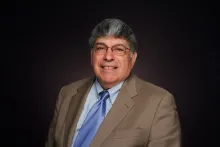
Gary Antion is a long-time minister, having served as a pastor in both the United States and Canada. He is also a certified counselor. Before his retirement in 2015, he was an instructor at Ambassador Bible College, where he had most recently also served as Coordinator.
