

William Hewitt
Two thousand years ago on the last night of His humanity Christ blessed His disciples by stating, "My peace I leave with you." Upon His resurrection He returned at a challenging moment and stood in the midst of them declaring, "Peace be with you." How do we today as disciples of Jesus Christ "worship God in spirit and truth" in times of trouble? Being at peace in Christ doesn't just happen---it must be understood what God grants and our personal role in exercising 4 basic principles to nurture and maintain the spiritual fruit of peace.
And perhaps very relevant, because again, remember that when we are called, we are called to worship God in spirit and in truth. And so that's important because we often talk about the truth. There's terminology in the Church of God community that say we have the truth. Or am I talking to the right people or not? But we've also got to recognize that it moves beyond what we know, but what we are before God and before man. And so that is the purpose of this message today. And in so doing, let's explore Scripture together and let's open up our Bibles. And as we do, to open up our hearts, to receive something in the minutes ahead, would you please join me over in the Gospel of John? In the Gospel of John. And we're going to pick up the story in verse 19. Let me lay some background to where we are at. Jesus Christ, before this, has been crucified. And for three days and three nights, he is in the grave, he's in the sepulchre. It is now that he is risen, and this begins the night thereof, the next day of when he is risen. And he makes an appearing, which is interesting because Jesus from the very beginning of that last night of his life, he said, I will come to you. So always think about when God says he's going to do something, he's going to do it, but it's not only going to be our moment and our time. And what we find here is very important. In John 20 in verse 19, then the same day at evening, being the first day of the week, when the doors were shut, where the disciples were, for fear of the Jews, Jesus came and notice, stood in the midst, and said to them, peace be with you. And now allow me to give you a little background to recognize why are the doors shut? Why are they up in that upper loft area? This is three days and three nights after the rabbi, their leader, their hero, was crucified on that altar of Gogotha. And again, to remember, one of the last things that Jesus has said is stick around. Don't go anywhere. Well, with the whole focus on the Jesus-follower's movement, you would have thought he would have at least allowed them to maybe stay in Bethany on the other side of the Mount of Olives about three, three and a half miles away, and they could kind of cool off there and have a little space. But no, he said, you're going to stay right in Jerusalem. And bottom line is, he didn't use the door. It wasn't open sesame.
He came. He was. He is. He was spirit. And now he's on the other side of that door. He's on the other side of that wall. And he comes, and notice what he does when he says here in verse 19, peace be with you. As you know, I like to go down and look at words. Very important. As he's speaking to the disciples in that century and in that time, he grants the blessing and the greeting, and really it is in that Hebrew phrase of Shalom, of what peace means. And I'll be covering that later. Peace be with you.
A peace that is not of this earth. And he says, to be with. In a sense, it's not to come or to go. It's actually not just to come and to go, but to ultimately grow, and that we're going to be discussing that. And notice that peace, as I give peace, be with. That's something to hold on to. Plant in the soil of our heart and see it grow. And with you. And I remember somebody, some of you remember many, many years ago, a gentleman named Dr. Clint Zimmerman. Had a big, big barrel of a man and a big, big voice. And then he'd say, and what's your name? I don't know if any of you remember Doc Z. He said, what's your name? You know, all of a sudden everybody look up. But it's personal. This is not just for 2,000 years ago. This is for you and me today, and we're going to continue to build on it. Join me if you would, then in verse 21. So before he left, so Jesus said to them again, peace to you, as the Father has sent me, I also send you. Very important.
He came with peace. He left with peace. But now, join me one more time in verse 26. This is now eight days later from this appearance in the upper loft. And after eight days, his disciples were inside again, and Thomas was with them. And Jesus came. The doors being shut.
Thomas was going to get the same treatment and stood in the midst. He stood in the midst. How clear can we make standing in the midst? He was surrounded by walls. He was surrounded by his disciples. And he was standing. He was upright. He was not dead. There was no mistaking here. And notice in what it says here, he stood in their midst and he said, peace to you. Now, one of the reasons why he did that is because Thomas had not, no, everybody always wants, you know, I'm kind of a, I'm a champion of Thomas. Because so, how would you like to have your name for 2000 years to be known as Doubting Thomas? But where would you be if you had not been in that room eight days before? Doubting.
You weren't there. I said, I'd be doubting. Okay, you'd be doubting. Right. And so he wanted to go there. In fact, you know, sometimes when, this is what is so, if I can use a, so cool about Jesus Christ, he can handle our doubts.
And then he allows us to poke him. He's ours. That's he wanted to do that. And he's so, so we take this to a much higher level. But of course, and he says later on, blessed are those who are not here, having not seen, but yet believe.
Oh, that's all of us. Because today, when we baptize BJ after services, it's not only his death, it is not only his resurrection, but to recognize it's his ascension. It's his exaltation. And he exists at the right hand of the Father to be our champion, to be our hero, to be our model, to be our savior, to be our sacrifice, to be our high priest. And that means we need to believe. But something comes with that when we believe. And that is the peace of God dwelling in us. This same one that came and dwelled in the midst of the disciples two different times is the same one today that dwells in the midst of our heart. You might say, well, wait, how's that work, Robin? In other words, I don't have to look off and see him in that sense figuratively, he's spirit, but to recognize he's not just besides us, he's not just a paracletus alone that comes and walks alongside of us, but that he has been placed into us by the laying on of hands, and that his spirit dwells within us as does the spirit of the Father, that very essence, and that peace is to be inside of us. But the Holy Spirit is just a seed that will bear fruit, and we have to know about how that fruit grows and what we can do about it.
One thing I'd like to mention about the subject of peace, because that's what we're going to be talking about, the peace of God inside of us. It's notable that the majority of the epistles in the New Testament begin with grace and peace. The majority of them do.
In just seeing as believing, like Tom, join me if you would in Romans 1 verse 7. Romans 1 and verse 7. And one thing I want to mention with Romans 1 verse 7 is to recognize that, you know, Romans is really very much about the... it is the doctrinal layout of the New Testament with what Paul goes through. But I want to have you focus, if you would, on verse 7.
To all who are in Rome, beloved of God, called to be saints, that means to be set apart, sanctified, grace to you, and peace from God our Father and the Lord Jesus Christ. This is the opening. Grace and peace. I'm going to send out my notes later to all of you because I could go through about five or six other examples. But in 1 Corinthians 1-3, grace and peace. 2 Corinthians 2 and verse 2, grace and peace. 1 Timothy 1-32, grace and peace. 1 Peter 1-2. Oh, it's not just Paul, but it's also Peter. In 1 Peter 1-2. But join me, if you would, for a moment in 2 Peter. In 2 Peter, we're there at the very end of the New Testament. 2 Peter, in picking up the thought in chapter 2 and in verse 2. Is that what I want? Let me see here. 2 Peter 2. I had it. Yeah, verse 2. Yep, you know what? I don't have it right now. I thought I'd... Oh, yeah, good. It's 2 Peter 1 verse 2. Pardon me. Notice this. Now, this is not just Paul, this is Peter. Peter, who writes two of the epistles. Grace and peace be multiplied to you in the knowledge of God and of Jesus our Lord. This is how Paul opens. This is the big push. This is the big story. And then we notice then, again, this 1 Peter 5 and verse 14, just a page away, 1 Peter 5 and verse 14. I want to show you something here. Notice this. Closing words of 1 Peter. Greet one another with a kiss of love. And then notice what he says. Peace to you all who are in Christ Jesus. Amen. What I'm... what am I trying to share with all of you is simply this. When we understand how the epistles are composed and what God wants us to get out of it are two very big themes here. Number one is the subject of grace. But for God, we would be dust and remain dust. It's not about us. It's about a God that loves us and gave his Son for us. And this God who first loved us broke into our human territory and said, I want you. And his Son, while on this earth, would say, I want you. Follow me. And it's by God's grace. Not by our good looks. Sorry. Not by our intellect. Just read 1 Corinthians. God has not called a lot of smart people out there.
But because of him. And one thing that we need to do in our conversations is we need to make sure that he always gets that credit. We understand the grace of God. That ultimately, his story becomes our story, and it's about him. And he's allowing us to have a part. You know what that will do? That will bring down the humility. It'll up the humility and down the pride that is within us. But number two, then, grace and peace. That wherever God is, peace ought to come into our lives and grow and develop. And what's very reason I'm giving this message is because, you know, we have a number of people. I could bring it right here, this audience. We have people here. They're keeping the Seventh-day Sabbath. Am I right? And they go to the Feast of Tabernacles, and you've all chosen your sight. You're ready to go to the Feast of Tabernacles. And I would bet that probably for years and years, none of you have had one ounce of piggy. Unless it's by mistake.
And we can go on with this one and this one with this one that we believe. But I just have a simple question for all of you today. As a Christian, as a human being, are you at peace?
Okay, a little testimony over here. Okay, thank you. Is that... Yeah, okay, yes, thank you very much. How much more could you be at peace? Maybe you're not at peace. Maybe you've not hit that bump in the road yet, where you're going to say, God, where are you? What's going on? What is this about? What's happening? That's why I'm sharing these minutes with you about this subject of peace.
Today, the title of my message is simply this, Being at Peace in Troubled Times. Being at Peace in Troubled Times. And to recognize that, you know, it's very interesting that when Jesus in John 17 was giving the prayer, the final words, the final prayer, actually what we might call the ultimate Lord's Prayer, the others a model in this beautiful, and I repeat it oftentimes, etc., but what we might call the essentiality of the Lord's Prayer we find in John 17. And what's the one thing that he does? Do you remember what he does when he's praying to the Father about his disciples? He says, Father, I don't ask that you beam them up. You know, kind of like Star Trek. Beam me up, Scotty. Out of here. Oh, okay. Is that, no, he said, I want you to keep them down here. To be your witness, to be your witness to a world that needs you, Father, more than ever. And sometimes you say, well, why didn't you do that? Because the witness, one of the greatest witnesses we have is having peace. Having Jesus Christ in the midst, who is the Prince of Peace. Isn't he the Prince of Peace? Isaiah 9, 6 through 7? And that when we are at peace, it is a witness that we truly believe that we have, and this is what's going to be happening here, BJ, today, is that we're asking God's Holy Spirit to come into you in its fullness. And that the one thing that we look at sometimes so much is that we look at reaching out for God. And that's a phrase, and we understand that. But we need to recognize that the peace that God wants us to have in our lives, men, women, young, old, everybody in between, is peace that comes from our heart. Peace that is here. The motor is here in our heart. The Quakers have an interesting saying, I remember years ago when one time at the auditorium in Pasadena for an afternoon, people said, we played an old movie, it's called Friendly Persuasion with Gary, Gary, okay. Were you in the movie? No, okay. So what happens is that it's the Quakers coming up to the Civil War, and of course the Quakers at that time were pacifists and still are, and what happened here was, you know, just a family wrangle. But I remember the scene where the Quakers would all go, you can learn something from everybody. The Quakers would go into this country, the country, church, and the men would be over on one side, and the women were over on the other side. You remember that? And you know what? What's that expression? You could hear something drop.
And what they were doing is they were focusing. Coming down. Coming down so that something more could come out.
Always remember that. And peace at the center. And I think of that expression, especially when Jesus Christ said, where it says, and He came and was in the midst of them. And that's what we want to talk about. And sometimes I want to share a few thoughts of maybe why peace is kind of challenging for us to understand that. Let's understand something in the world that we are, because you know what happens, and I think of our baptismal candidate today that's going to be baptized, and he's very mature. He's been around religion a long time in his life and gets it. But to recognize that when baptism is done, it's not like it's over. The real life is really beginning, because the vision of God in you is going to see more. And it's going to be not just what you know, but how you grow in following Jesus Christ. So there's a basic principle in all of this. God will always allow more to come into our lives than we can humanly handle. Right? Juggling. And maybe not even juggling, but the balls or the rocks landing on us, whatever it is, he will always allow more to come into our life than we can possibly handle, to see what we will put first. It's that simple. And it's that challenging. So we have to recognize what he wants to offer us. So let's consider that I'm going to just give you four basic principles to nurture the spiritual fruit of peace. Because remember, very simple, when we are baptized, we don't get peace packages. We may be in the Peace Corps of God, but peace is something that doesn't just happen. When we are baptized, we are given the seed of God's essence, and that's His Holy Spirit. But for the fruits of the Spirit to grow, we have to do something with it. Think of the orange tree, the lemon tree, the avocado tree, skips out here, his favorite pet, his pet tree. You have to work with it. You have to deal with it to all the seasons of the year as we have to deal with this seed that God has given us and fruit that is growing throughout all of the seasons of life. That's important to understand. So, number one, one thing I want to share with you—it's a phrase I'm going to use. I love early American literature, but we've got to be ready to lift our bows high, and that's important. Longfellow had a very famous message from the 1800s. If you would hit the mark, you must aim a little above it. Every arrow that flies feels the attraction of the earth. Every arrow. Robin's arrows, Susan's arrows, Suzanne's arrows, Dwayne, your arrows. Yes, everybody has to do this. Point number one. Here we go. Let's get right into it. Develop the spiritual muscle. Develop the spiritual muscle of being still. Of being still. Well, you say like this—I'm the PowerPoint here for a moment, excuse me—but that—does that take muscle?
It takes muscle. It takes human endeavor and strength just to stay still and remain still. That takes spiritual muscle from above, not by might, not by—but also by my spirit. It takes muscle to do that. Join me if you would in Psalms 46 and verse 10. Psalms 46 and verse 10, and we're going to build on this for a moment.
Again, to build the spiritual muscle, we must be still in Psalms 46 and verse 10. Notice what it says. Be still and know that I am God. Oh, wait a minute.
To know God and to know that He is God. Notice the introductory words. Be still. It might just be like this. Stop. Just stop. Stop spinning your wheels, worrying. You ever seen a hamster cage? You ever seen a hamster wheel? You ever seen a hamster that's lazy? No, they're spinning that wheel and they think they're going somewhere. But all they're doing is going around and around and around.
If we're going to connect with God, we have to come to that moment of being still. Stop.
And listen for the word and the voice of God in which direction to go.
In Habakkuk, join me if you would in Habakkuk. Habakkuk in chapter 2. I always have to find Habakkuk. Go Jonah, Micah, Nahum, Habakkuk. Okay. It's on page 1351 of my Bible. I hope that helps you. But in the book of Habakkuk, chapter 2, verse 20, notice what it says here. In all seriousness, notice what it says here. Habakkuk 2, yes, verse 20. But the Lord is in his holy temple. Let all the earth keep silence before him. Still and silence. Stop. And I'm not talking just about the Seventh-Day Sabbath from Friday night through Saturday night. We have this built-in vocation, vacation of rest to stop our normal duties and activities.
I mentioned this to the Redlands congregation. You know, when up at camp back in the mid-60s, they had archery. And they taught us how to loosen our bows. How many of you are... how many of you use a bow and arrow? Anybody? But, okay. But a bow and arrow, you know, you cannot keep a bow taught all the time. You can't have the string on that bow. Because that's basically going to ultimately affect the bow. And so they would teach you, you know, you kind of put your leg in. I hope I don't trip here. Put your leg in there. Then you push down and you take off. And that bow is no longer bent out of shape. It comes to a rest. To be able to serve us another day.
We might go into this lab session called the Sabbath to prepare us for the next week. But my question is simply this. How tight is your bow on Monday and Tuesday and Wednesday and Thursday as you come up against things that you wonder? God, are you there? And do you really understand what I am going through? Join me if you would in the book of Ecclesiastes, Book of Wisdom, in the book of Ecclesiastes in verse 3.
Picking up the thought if we could in verse 7.
Ecclesiastes 3 and verse 7. And this is the famous passage about the seasons of life, a time to do this, a time to do that. For all of us that are baby boomers, we remember the birds and remember the song, turn, turn, turn. It's probably as biblical as rock and roll ever became for a few minutes. But notice what it says here. And interesting, there is a time to tear and a time to sew. And notice what it says. And a time to keep silence.
To be silent. Distill your heart.
Distill your tongue. Which is the diving word for the words to come out. It says, it says, a time to keep silence. And notice, then after that, then it says, and then a time to speak. Just to help you a little bit, notice what it says in categorizing the action items. It doesn't say it's a time to speak. No, it's saying, first of all, there's a time of silence. Gain your life position where you are at. Look up and remember that you are a begotten, born again, born from above, adopted child of God the Father. And you have a responsibility not to act like everybody else acts on this earth. But for such a time as now, you know. You know, and you have that confidence that you are God's child, and that Christ does stand not only in the midst of a room in ancient Jerusalem, but that His Spirit stands in the midst of your heart, and that is your response guide. Not how you feel, but what you've come to know by His example. Very important. Join me if you would in Psalm 62 in verse 5.
In Psalm 62.
Psalm 62 in verse 5. Notice what it says here. My soul wait silently for God alone. So why are you waiting in silence alone? The rest of the verse. For my expectation is from Him. He only is my rock, and my salvation. He is my defense, and I shall not be moved. And God is my salvation and my glory. And He is the rock. He is the rock of my strength, and my refuge is in God. But to lead up to all of this, and we'll be going to be using a perfect example later on at the end of this message, we must exercise the muscle of being still.
Stop.
Take a deep breath.
Maybe you need to ring still for some days before the answer comes. And the answer will come.
You know, when you think of the book of Job, the answer didn't really come for 42 chapters.
And then at the very end there, he says, I've heard of God, but now I understand.
This is worshiping God in spirit and truth.
From the inside out.
This is important.
Having this confidence and having this understanding and having this belief is just as important as understanding that the seventh day Sabbath is still intact. It's just as important of understanding the food laws. It's just as important as understanding, contributing your tithes to God. It's just as important as understanding parts of prophecy.
Let me share something with you. If you don't want to jot this down, it's going to be very, very easy. It's not how much you know.
It's how much you grow in the spirit. Because all of that knowing of and by itself goes to the grave. God does not want your brain. It's not your brain that's going to be right. Okay, are you with me? It's not your brain that's going to be resurrected. It's going to be your heart.
It's going to be your heart. And a heart that was given over to him rather than in a fury, doing something that makes it worse rather than better in being a disciple of Jesus Christ. Let's go to point number two. Develop the spiritual muscle of solitude. Develop the spiritual muscle of solitude in heart and mind and presence.
It's hard to find getting time.
It's not just standing still, but having time away from a world and an age about us that does not stop, that does not allow you to rest. The world that we live in, you go into the restaurants, you have music blaring. I didn't realize I invited some rap star to my dinner. I mean, I could, or some other star doesn't have any rap, but you can't talk. You just have noise, noise, and noise. You're on the freeway, and everybody's sharing their music on the freeway, much less their carburetor is doing whatever they do anymore.
It just goes on and on and on. You have that little box probably in your purse called a smartphone, called a gadget. It's always pulling at you, kind of like the siren out of Greek mythology, calling you, calling you, come. Maybe there's somebody, maybe there's something new. Maybe I can read something, I found out that somebody really likes me. The like column is going up.
You watch the news.
When some of us that are older were growing up, I think there was about 15 minutes to 30 minutes of news at night. You know, with Walter Cronkite and John Chancellor, and I'm trying to think of the other. Now, you know, that was that. Now we know everything that is going on, and it burdens us. Right now, it's what's happening over in Iran, and we kind of know what's going on. We might as well be in the point of hermose ourselves. And I'm not speaking down on that, and or what is happening, but it's real. But that is on top of everything else. So you need to find, you not only need to be still, but then you need to find solitude to be able to do that. Allow me to share some thoughts with you, please, if I might. And basically, what I'm saying is that we need fasting from the noise of this world. We need fasting from the noise of this world, because if we don't have that fasting from the noise of this world, and if we are not still, and if we do not seek solitude, how are we going to hear the voice of God speaking to us over that roar of self that lies within each and every one of us, that even after baptism, we're going to have to confront, and we're going to have to deal with. Let's notice an example, if we could, over in the mark, excuse me, mark 135.
Mark 135. And this is at the very beginning of the Gospel.
In Mark 1, verse 35, it says this, Now in the morning, having risen, this is speaking of Jesus, a long while before daylight, he went out and departed to a solitary place, and there he prayed.
Now, this is the master rabbi. This is our heavenly rabbi. This is our teacher. And notice what he did. He got up early, got out of the normal, and he went, he goes out, right, he goes out and he parts into us, and there he prayed.
Solitude.
That he might be still and be able to see what his father above was doing and has done.
Interesting. Let me take a look at that.
And it's interesting, there's a reason why he did that.
Because he practiced what he preached. It's interesting when you are still and seek solitude, you begin to see things. And the one marvelous thing about Jesus, he always practiced what he preached. And one thing, where do you think it comes that, you know, when he said in the book of one of the gospels, Matthew 6, where he said, Oh you, oh you, haven't you noticed how your father cares? Haven't you seen how the ravens, have you ever missed a raven? You don't usually miss a raven. You know they're in the neighborhood, at least up in Riverside County.
And said, have you seen the ravens? Have you seen them go hungry? I wonder if that was in one of those solitude moments when Jesus himself, who as the I am, did create the bird life, but that now he's in human flesh and he's noticing the way he's noticing the cycle of God's love and care and provision for his creation. Or he says, which one of you, you know, you're going out to the wilderness and you see all of the lilies of the field and you see all the beautiful floral varieties and that they are cared for. Did you ever think about Jesus in being still and solitude? To recognize that in his life he most likely never traveled more than four to five miles per hour.
Now please understand, I'm not wanting to go back to the Neanderthal age. Okay, that's not what we're talking about. We are blessed in many, many ways, but just think of the contrast. How much that you can take in when you are still and when you give God solitude to be able to speak to you and open your eyes. You know, the other night I was, Susie and I, sometimes we like to just go out the back porch and just feel the breezes and sometimes I'll just go out there at night, maybe Susie's in the house, but just to be in the backyard and to stop.
And then to look up. And where we are, you have a moon too, but I was just quiet, just being still, and I looked at the moon. I said, I know this, but you know, that moon is always there. It doesn't change. It's always there. It's bright. It's beautiful. It's shiny. And not only that, but the moon actually then circles in order around this globe that I'm on, the earth. And I take it a step further.
And I think, and this earth is spinning at, you know what, a thousand miles. You know, we're actually at a thousand miles spinning. We just don't know it because of gravity. So there's the moon. The moon circles the earth. Here's the earth. We're not blowing out because we're traveling a thousand miles per hour. Nobody's given us a traffic ticket yet. And that we are in place. What's holding all of this together?
Where does this all begin? And then I think, and yes, and then the earth, I was kind of doing like a Galileo or Isaac Newton thing, you know, kind of thinking this one through. And then the earth circles the sun. It took humanity until Galileo to basically figure that out in the 1600s. And then it came back, almost back to when I was 11 or 12, and just hearing that voice of somebody with this large volume voice, there is a purpose that is being worked out here below.
And if God is taking care of all of this, take care of this, and you know, why aren't we having collisions? Is that just, did that just happen? Does this just happen? Who created gravity? Who did this and who did that? But you have to have time.
You have to make time. And if you can't don't have the time, and you can't make the time, you know what? In your life, stop the world and get a life in Christ and allow Him to speak to you above the roar of self, above all the distractions that are out here. Number three, develop the spiritual muscle of abiding faith in God.
Again, develop the spiritual muscle of abiding faith in God. Not weak faith, but abiding faith. Beyond the moment of answer, beyond the moment, it's not necessarily in your hand, and you know that Jesus Christ said at the end of Matthew, lo, I am always with you. In the downspots, in the plateaus of life, on the mountain peak experiences, our Christ, God's Christ, God's anointed, our Savior, our friend, remember, He's only said, I no longer call you students, but I call you my friends.
And to recognize, He made a promise. And, BJ, as we baptize you this afternoon later on, you always remember this day, you always remember this moment, and I'm looking at you right now, pal, and that is, remember what your older brother, Jesus Christ, said, lo, I am with you always, even to the end of this age.
You remember that someday, and somehow that moment's going to come, and you're still, and you're in solitude, but you need to cling onto that promise as if your life depends upon it, because you know what? Your spiritual life does, and He'll give you the courage, He'll give you the wherewithal to take care of your wife, to take care of those kids of yours, and to be His servant and disciple on this earth.
Amen? Good. Okay. Develop the spiritual muscle of abiding faith as quickly as things are changing below, there are some things that don't change, and those are God's promises. I'm just going to go to one verse, and that's in Philippians 4. In Philippians 4. In Philippians 4, and picking up the thought in verse 6, it says, Be anxious for nothing. You go, Who me? You know, like this. Be anxious for nothing, but in everything, not every other thing, not when you feel like it, but in everything, by prayer and supplication with thanksgiving, and let your request be made known to God, and the peace of God, which surpasses all understanding, will guard your hearts and minds through Christ Jesus.
Notice again, and the peace of God. Remember, this is peace that starts on the inside out. If you are a dead—yes, we are a human being, understood—but if you are a dedicated and sincere servant of God the Father through Jesus Christ, and you look at this, is to recognize something very important, that it says, and the peace of God. What does that mean? Allow me to share this. I know I've shared this before at times. In the Jewish community, they have—for Aloha in Hawaii, the Hebrews have Shalom. Shalom is both at the beginning of a conversation and at the end of the conversation. Shalom is a blessing, and Shalom is peace in Hebrew.
But what the blessing entails is not necessarily, boom, you got it. It's meaning that may God be with you in your understanding that in His time and in His way that He will answer your prayers. It may not be actually what you're thinking or hoping, but God's answers are always better, and His timing is always better than ours. So that when we say Shalom to somebody, is to recognize you're giving them a blessing. And the blessing is also not only what will occur from the Father and the Son at that time, but the blessing that they understand that.
You know, when you think again of Job, the book of Job is 42 chapters for us to understand the spiritual journey that we each have with our God. God is going to test us. He tested Jesus Christ. He tested us to where we come to this point, not my will, but your will be done, Father, and to recognize to have that patience that in His time and in His way, and that when He does answer that His perfection is always Trump's our very human best. That's very, very important. Let's go to point number four. Develop the spiritual—this is the last one—develop the spiritual muscle of moving forward. Develop the spiritual muscle of moving forward. Spiritual paralysis serves no one, not God, not you, and not your neighbor. I want you to join me in Exodus 14 to show you how this works in real time that is now passed but that we can draw upon. In Exodus 14, it's the story of the Exodus. Exodus 14. And picking up the thought here—so I get to Exodus. Okay. In Exodus 14, and picking up the thought in verse 13. And the point is, develop the spiritual muscle moving forward. In verse 13. Now, before this, we have the people in the crowd that are professional agonizer, you know, people stirring up trouble. Oh, you promised this, you promised this. Is this why you allowed us? Is this why you brought us out of Egypt to die here like a bunch of dogs in front of the Egyptians? Well, who are you? Weren't you the one that was a general in Ethiopia? Weren't you the one that triumphed over the Ethiopians with the armies of Egypt? But now you can't even lead us, and you've backed us up against the sea? What's going on? Then notice what it said. Then it said this, and Moses said to the people, do not be afraid. Notice what he says, stand still and see the salvation of the Lord, which he will accomplish you today. For the Egyptians, whom you see on this day, you shall see no more forever, and the Lord will fight for you. And notice, notice, are you with me? And you shall hold. See, God never does something on his own other than he wants us to do something. See, that's the relationship we have with God the Father and Jesus Christ. It is a relationship that God will ask us what we can do humanly. And as we follow that lead, then he will do what only he can do as God. That's the partnership. So, and he said, and you shall hold your peace. And the Lord said to Moses, well, why do you cry? Now notice this. A verse later, didn't take long, tell the children of Israel to go forward. So, you know, that means you have to, are you with me? You have to kind of stay tuned to God sometimes. One moment he's going to say, be still. And then maybe not one verse, maybe a chapter, I don't know, in each of our lives. And then he says, get the people moving. Skedaddle. He opens up the Red Sea. The rest is history. Develop the spiritual muscle of moving forward and be able and be ready to do so. So very important. I want to conclude, dear brethren, by repeating my points to you, then just one verse. The title of this message was Being at Peace in Troubled Times. We started with the first, developed the spiritual muscle of being still. Still. That is an activity. That is an action. And it does not happen naturally to most of us. How do I know? To use bad English to make a point, I is one. Point number two, develop the spiritual muscle of solitude. Get away. Make some distance from this world.
Recognizing that when you have that solitude, it is for a purpose, not for selfishness. Just as God would often send his prophets out into the wilderness, you talk about solitude. They would be out there for a while, whether it be an Elijah, whether it be a Moses, whether it be John the Baptist. But they needed that solitude, as Jesus did when he went out and found quiet time. When you are in that wilderness experience, God will always want you to come back and use that towards community. When we have that solitude, when God lays this on us and puts us some place, and it doesn't go away all at once, we are learning lessons in the wilderness, just like Jesus, when, in Matthew 4, he's fasting for 40 days, and then guess who he gets to pick on him? But it strengthened him. He just kind of looked down at Satan, and Satan says, you know, by the way, how would you like this, and how would you like that, and how would you like this? I will be your agent. All you have to do is give me 15 percent. No. What he really wanted was he wanted 100 percent of Jesus, and he wanted to foil God the Father's plan with Jesus and bring everything down. And in that solitude, it came clear, there wasn't the noise of this world. There wasn't the noise of Nazareth. There wasn't the noise of even little Bethlehem or Jerusalem. And he came back, and he nailed it. Three times he said, it is what? Written. It is written. It is written. And that's what you get when you stop, and you seek space, and remember what God has given us in this precious Word of God that is written, and to recognize that we are not alone. Allow me to conclude. Just listen, please. This is from Colossians 3, verse 12 through 16, and it's from the New Living Translation. Since God chose you to be the holy people, He loves you, you must clothe yourselves with tender heart at mercy and kindness, humility, gentleness, and patience. Make allowance for each other's faults and forgive anyone who offends you. Remember the Lord forgave you, so you must forgive others. Above all, above everything, above what you think you know even about Scripture, which is well and good, but is not just knowing Scripture. It is being clothed not only with Scripture, but being clothed with God's Spirit, and clothed with the example of Jesus Christ. Above all, clothe yourselves with love, which binds us all together in harmony. And notice then, and let the peace, let the peace that comes from Christ, that Christ that is in our midst, rule in your hearts. For as members of one body, you have been called, and you were called, the last words, to live in peace.
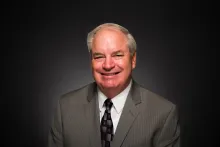
Robin Webber was born in Chicago, Illinois, in 1951, but has lived most of his life in California. He has been a part of the Church of God community since 1963. He attended Ambassador College in Pasadena from 1969-1973. He majored in theology and history.
Mr. Webber's interest remains in the study of history, socio-economics and literature. Over the years, he has offered his services to museums as a docent to share his enthusiasm and passions regarding these areas of expertise.
When time permits, he loves to go mountain biking on nearby ranch land and meet his wife as she hikes toward him.
