

John Elliott
This transcript was generated by AI and may contain errors. It is provided to assist those who may not be able to listen to the message.
And once again, happy Sabbath! Brethren, within the last week or so, we have all returned home from the Feast of Tabernacles, and most of us who were able to attend this year. And during the Feast, we celebrated the beginning of the Kingdom of God in the first 1,000 years of eternity. But now that the Feast is over, and we're back in the daily grind all over again, how can we carry the excitement of the Feast a little longer in our lives this year? Well, I believe we can be inspired to continue to grow in the grace and the knowledge of our Lord if we ponder—and a little bit of it is speculation, I admit—but if we ponder what God has planned for his family—that's you and I—after the 1,000 years have ended. We talk a lot about the Millennium in the 1,000 years, but we don't talk a lot about what's going to occur after the 1,000 years, do we? Well, there's going to be a new heaven and a new earth, and I'd like to talk about that a little bit today. Let's go to 2 Peter, chapter 3. If you will turn there with me, we'll begin in 2 Peter, chapter 3. And we'll pick it up in verse 1. Peter was inspired to write 2 Peter 3.1.
He said, Beloved, I now write you this second epistle, in both of which I stir up your pure minds by way of reminder, that you may be mindful of the words which were spoken before by the holy prophets and the commandment of us, the apostles of our Lord and Savior, knowing this first, that scoffers will come in the last days, walking according to their own lust, and saying, Where is the promise of his coming? For since the fathers fell asleep, all things continue as they were from the beginning of creation. And Peter says they're wrong. He says, For this they willingly forget that by the word of God the heavens were of old, and the earth standing out of water and in water, by which the world that then existed perished, being flooded by water. So Peter says this idea that everything's continued the same since creation isn't true. He said there was a flood. And except for Noah and his family, all life was wiped out on earth. He's saying that the earth is going through a number of environmental crises in its history. He mentions the flood, of course, in the day of Noah. This was the first epoch of the earth, and it was destroyed by water. And God used the existing matter that remained to refashion the earth for the family of Noah. So he's saying things have not always been stable on earth. This concept that since the beginning of times things just continue on like they always have happened.
He says that's just not true. That doesn't make sense at all. He says things have not always been as they are now, and they're not going to remain as they are now. Verse 7, But the heavens and the earth, which are now preserved, in other words, this existing world you and I live in, by the same word, that's the word of God, are reserved for fire until the day of judgment and perdition of ungodly men.
But brethren, or but beloved, do not forget this one thing, that with the Lord one day as is a thousand years and a thousand years is as one day. He says, you can't rush God. He is incredibly patient and long suffering. And even though we're all dying and we're in a hurry to do everything because we're physical and we know we're growing old, and we're reminded of that every day when we look into the mirror, he's saying God isn't growing old. To God a thousand years, because he's not aging, a thousand years is like the time of one day. It's no big deal to him. It's a big deal to us, but it's not to him. In verse 9, the Lord is not slack concerning his promise, as some count slackness. You know, God hasn't forgotten about us. God isn't tardy. God hasn't delayed his prophecies. Everything is on the time track. He's expected it to be on. But is long suffering towards us. God has suffered a long time and patiently endured the sins and the weaknesses of all humankind, not willing that any should perish, but that all should come to repentance. So first he talked about that first epic, which was the world before Noah's time that was destroyed by the flood. The earth that we now live in is the second epic of time. It is a world of evil controlled by Satan and, according to Peter, it is reserved for future purification and cleansing by fire. The heavens and the earth will be cleansed with fire after the millennium. Now, we don't know if this will be a result of the third resurrection and the fire that then will just at that time envelop the whole earth. We don't know exactly when, but we know here from the words of Peter that it's certainly going to occur. Everything physical will be consumed and purified. Everything in that fire that is consumable by fire will be destroyed. Paper, wood, polyester suits like Mr. Thomas wears, all the kinds of things that are consumable will be consumed in this fire. What won't be consumed is by precious metals, stones, gems, things that are not affected by a hot fire will not be affected by it. God is patient and merciful and he's working on a planet earth, and he's withheld his hand of punishment for what the earth deserves for thousands of years.
But the day of the Lord will come as a thief in the night, same phrase that Paul uses, in which the heavens will pass away with a great noise and the elements will melt with fervent heat. Both the earth and the works that are in it will be burned up. And again, anything that is consumable, wood, paper, vegetation, cloth, things that can be consumed by fire will be consumed by fire.
The heavens, I'm going to read this from the New International Version, verse 10, But the day of the Lord will come like a thief, the heavens will disappear with a roar, the elements will be destroyed by fire, and the earth and everything in it will be laid bare. The New King James said it would be burned up. So this fire consumes everything that can be melted and dissolved by heat and by flame.
Therefore, since all these things will be dissolved, what manner of persons ought you to be in holy conduct and godliness, looking for and hastening the coming of the day of our Lord, because of which the heavens will be dissolved, being on fire, and the elements will melt with fervent heat? He's saying, think about it. Now think about what our priorities should be.
Should our priorities be on all the things that someday will be ash, or should our priority be on spiritual riches? Things that we take with us, our character, our attitudes, our thoughts, the fruits of God's Holy Spirit we've developed in our life. He's saying, what's really... think about it. He's saying, what is really important here?
Verse 13, nevertheless we, according to His promise, look for new heavens and a new earth in which righteousness dwells. Because by that time in history of the new heavens and the new earth, only righteousness will exist in God's kingdom.
Verse 14, therefore, beloved, looking forward to these things, be diligent, to be found by Him in peace without spot and blameless. So again, what will we take with us into this new heavens and earth? We'll take with us our character. We won't take our homes. That'll be an ash heap. We'll take our cars. We'll be making Campbell's soup cans by then.
We'll take our 401k. Money will be worthless. Banks will be closed.
Can't take our clothes with us. What we can take with us is our character, our individual persona, what makes us unique from every other being that has ever lived, and that's a good thing.
What we take with us is the Holy Spirit within us and its fruits, but everything physical we possess.
That, unfortunately, as human beings, that we set our hearts on, that we make His goals, all those things we strive for in this present world will meld away with heat.
Because this present physical world was simply a tool that God used to develop eternal spiritual traits in us.
It's all a tool. That's what this is all about. This is just a training process. It is a tool.
A good carpenter, when he's going to shape wood, he has various tools in his toolbox to make that finished product the way he wants it to look.
And God created a physical world so that he could shape and mold us through this physical world until we look like Jesus Christ and we have the mind of Jesus Christ within us. It's all a tool. Verse 15, and consider that the long-suffering of our Lord is salvation.
And also, our beloved brother Paul, according to the wisdom given to him, has written to you.
So whatever congregation Peter is writing here to, Paul had written to this congregation as well.
Verse 16, as also in all his epistles, speaking of them, of these things in which some things are hard to understand. He was saying sometimes Paul writes things that are hard to understand.
Wow! The more things change, the more they remain the same, right?
Two thousand years later, Paul's writings are probably more twisted and distorted than any other author in the New Testament.
Again, he says, which untaught and unstable people twist to their own destruction as they do also the rest of Scripture. So Peter's saying stand course. Stay steadfast. Don't give up. Don't quit. Don't listen to the scoffers and the naysayers.
One of the brethren in our congregation here received an email recently sent by someone who used to attend the Church of God. In his email, this individual sent him, Back before you were converted, you were right then. Before you knew Jesus Christ, Before you changed your life and grew and became a new creature in Christ, you were right then. You're wrong now. That's essentially what this person told him in an email. But we live in these last days where there are arrogance, there are scoffers, there are mockers, there are people walking around with a chip on their shoulders, there are people that are angry and bitter because their lives have not turned out the way that they wanted them to. But we need to stay on course and not let this noise, the noise of the world, the noise of the scoffers, distract us from the things that we need to do. Let's go to Revelation 21 and verse 1. Revelation 21 and verse 1. Remember that phrase that Peter just used in verse 13. He used the phrase, Look to new heavens and a new earth in which righteousness dwells. We're going to see that phrase used again this time by John in the book of Revelation.
Revelation 21, beginning in verse 1.
John wrote, Now I saw a new heaven and a new earth, for the first heaven and the first earth had passed away. In other words, it died. Isn't that a phrase? We Americans, we don't like to say that people died. That just sounds so harsh. So we color-coded, don't we? You would use phrases like, They passed on. They passed away. They're in a better place, whatever that means, because we don't, because the word dead just kind of sounds too startling. It sounds kind of sure. It sounds too real. That's just the way our culture is. But it's an interesting phrase that is used here, that the first heaven and the first earth have passed away. In other words, they're gone. They're not here anymore. There was no more sea. Verse 2, This is what the Feast of Tabernacles always pictured a time. When the Father, the great God of the universe, would literally come and make His throne in His home, on that little, tiny speck in that dark sky, in that huge universe that we call Earth, little humble Earth will someday have the literal presence of God as His very throne upon it. Behold, the tabernacle of God is with men, and He will dwell with them, and they shall be His people. God Himself will be with them and be their God, and God will wipe away every tear from their eyes. And there should be no more death, nor sorrow, nor crying. There should be no more pain, for the former things have passed away. That's that phrase again.
Then He who sat in the throne said, Behold, I make all things new. You know, the vegetation you had in this world, gone. The things, the physical things that we've gotten used to, that we think are so wonderful, gone. Of course, God is going to make something new that is going to eclipse the vegetation that we have in this world. That's going to be far beyond the greatness of the physical possessions that we have in this lifetime.
It says, Behold, I make all things new. And He said to me, Right, for these words are true and faithful. And He said to me, It is done. I am the Alpha and the Omega, the beginning and the end. And I will give the fountain of the water of life freely to Him who thirsts. God's Spirit will be available to everyone. Verse 7, He who overcomes shall inherit all things. And I will be his God, and he shall be my Son. But the cowardly, unbelieving, abominable, murderers, sexually immoral, sorcerers, idolaters, and all liars shall have their part in the lake which burns with fire and brimstone, which is the second death. And that very well could have been what precipitates and begins this worldwide burning of the heavens and the earth to bring in and usher in a new heaven and a new earth. So the ultimate fulfillment of the Feast of Tabernacles. What it really looks forward to beyond a thousand years is when the Father comes to earth and makes this small speck in the universe, His throne, and His capital. Let's now go back to chapter 4 in Revelation and get a glimpse of what heaven is like as described by John. Revelation chapter 4.
What we're going to see here, as the materials that John describes are precious and they're durable, they can withstand heat. They are of startling beauty. Revelation chapter 4 verse 1.
Now after these things, I looked and behold a door standing open in heaven, and the first voice which I heard was like a trumpet speaking with me saying, Come up here and I will show you things which must take place after this. So it says in verse 2, immediately I was in the Spirit and behold the throne, said in heaven, and one sat on that throne. So he's literally transfigured in spirit, into heaven. And he who sat there was like a jasper and sardust stone in appearance. There was a rainbow around the throne, in appearance like an emerald. Around the throne were twenty-four thrones, and on the thrones I saw twenty-four elders sitting clothed in white robes, and they had crowns of gold on their heads.
You'll find a lot of symbolism in this scripture. Twenty-four is two times twelve, twelve the number of completion. Seven here is here, which is the number of perfection. Verse five, and from this throne proceeded lightnings and thunderings and voices, just like what occurred when God appeared in Mount Sinai. Seven lamps of fire were burning before the throne, which were the seven spirits of God, seven the number of perfection. Before the throne there was a sea of glass-like crystal, and in the midst of the throne and around the throne were four living creatures full of eyes, front and back. So this just gives us a foretaste of what John sees in a vision that's limited to his human understanding and perception of what he sees in heaven. What does he see? He sees precious, durable material, startling beauty, things that are so durable and lasting they are not consumed or melted away by fire. It's glass. You see a glass. It's precious jewels and gems. With that as a background, let's now go back to the original creation and ask some questions as we begin to think about what we may be doing after the thousand-year millennium is over. Let's go to Genesis 1, beginning in verse 1. Genesis 1, verse 1. It says, in the beginning God created the heavens and the earth, and the earth was without form and void, and darkness was on the face of the deep, and the Spirit of God was hovering over the face of the waters. There are a couple of very simple verses here, but there's a lot of information packed in these verses. First of all, God, it says in the beginning God, this is the Hebrew word Elohim, and this is the plural form for the title of God. Here's what the Believer's Study Bible says about this word. It says, quote, The purpose of the creation account is to magnify God as Creator, teaching men and women to praise and serve Him as Sovereign Lord over all things. The Hebrew name for God used here is Elohim, which is plural in form but not in number. We have a lot of other examples and terms in English that are plural in form but not in number. For example, tribe. There's one tribe, but the tribe is composed of many people within that one tribe. We use the phrase family. Family is one. There's one family, but there may be a number of individuals who are composed within that family. We use the phrase a team, like a sports team. Team is one. There's one team, but within that team are a number of individuals who compose that particular team. So these are examples in which, even in our own English language, there are words which are plural in form but not in number. Another interesting statement here is in verse 2. It says, The earth was without form and void. This is the Hebrew word ha'ya, and it means to become or to come to pass. Just hold your place there and turn to Genesis 19 and verse 26. But don't lose your place in chapter 1. We're going to go back there. Genesis 19 and verse 26, we're going to see the same Hebrew word translated became. Rather than was, as it is here in Genesis 1.2, it's translated became. Again, that's Genesis 19 and verse 26, the story of when Lot's wife became the world's first derelict.
But his wife looked back behind him and she became, that same Hebrew word, ha'ya, she became a pillar of salt. Okay, so now let's go back to Genesis 1. So when it says this phrase, the earth was without form and void, it can be translated, the earth became without form and void, meaning that something happened between verse 1 and verse 2. We'll read about that in a minute. Let's take a look, though, at another phrase in here. It says, the earth was or could be translated became without form and void. This is a combination of two Hebrew words. Form is tohu. It means to lie waste, a desolation. And then the word void is the Hebrew word bohu, which means to be empty, an undistinguishable ruin. So it is translated in English. It became form without form and void. I'd like to read to you, obviously, what I'm explaining here is something the church teaches, and it's known as the gap theory. And the best way to describe it, I think the Believer's Study Bible describes it well, so I'll allow them, I'll quote from the Believer's Study Bible, to explain a doctrine that we've had for many, many years.
The proponents of the gap theory translate the Hebrew word haya as became instead of was in verse 2. We just looked at that. Continuing, quote, according to this translation, verse 1 describes an original creation of God, and verse 2 explains that the earth became chaos. Verse 2 is interpreted negatively as the description of the earth under judgment, a state resulting from the expulsion of Satan from heaven. Therefore, there is an indeterminable gap of time between verses 1 and 2.
The six days of creation, verses 3 through 31, describe God's recreation of the chaotic earth. And that's called the gap theory, and that is a doctrine and a teaching of the church. The beauty about understanding this is that we have no problem that archeology shows that there are rocks and planets and so on that are millions of years old. People who take the Bible literally and don't understand the gap theory have trouble explaining how things can be older than 6,000 years, because they believe the earth was created 6,000 years ago. So when someone says, well, but we see that the dinosaurs died out 66 million years ago, and there was life, I mean, the archaeological record shows us there was abundant life, millions and millions of years ago in this planet, that died out suddenly, we can answer that.
We have an explanation for that. But if you just simply believe that the earth is only, was created 6,000 years ago and is only 6,000 years old, it makes it very difficult to apply what science understands through the archaeological record and the age of rock, compared to what people, how old people believe that the earth is.
Let's now go to Isaiah 45 and verse 18. I see another statement regarding this Hebrew word, tohu, that is translated form in Genesis 1. But we're going to go to Isaiah 45. Isaiah 45 verse 18. It says, Thus, for thus says the Lord who created the heavens, who is God, who formed the earth and made it, and who established it, who did not create it in tohu. That's the Hebrew word, it's translated in vain in the King James English, who did not create it empty or an undistinguishable ruin.
That's what the scripture says, who formed it to be inhabited, I am the Lord, and there is no other. So again, this scripture implies that the original earth was created in a beautiful finished condition as evidenced by the archaeological record. Millions of years ago, before God created Adam, there was vibrant life teeming on the earth.
That's pretty clear and easy to understand if you look at science. It happened. The evidence is there. Again, there was vibrant life teeming on the earth. That's what we learn from science. But I want to just interject and ask you this question. If it is true, as we believe that God is an organized God, that he's a God with a plan, that he's an organized God, and he doesn't start something and abandon it for a million years and then say, Oh yeah, I forgot about that.
I think I'll come back and finish it, that he's not that kind of a God. What about all of the planets in our own little solar system that are dead? They don't have atmospheres. There's nothing there. And when you go beyond our own solar system into our galaxy, as far as we can see, and I'll explain some statistics later how far we can see, as far as we can see, you know what we see? Nothing! It's dead! No life as we know it as we define life.
There is no evidence of life anywhere out there. Instead, it looks like ruin. It looks like devastating. Look at the planets, again, within our own solar system. They look like they've been beaten with a club. They're pitted. They're marred. They don't have an atmosphere. They're poisonous. Again, to life as we know it, there's nothing. Why? How did that happen? Why did that allow that to occur? What does God have planned for the planets in our solar system, for our own galaxy, for the universe? Let's go now to Isaiah 14, verse 12.
As I mentioned, think of all the dead, isolated planets that we can see through the Hubble telescope and through our own eyes. The other planets in our own solar system, and yes, I'm sad to report that Pluto is no longer considered a planet. Sad to say, one of my favorite Disney characters. That's supposed to be funny. It's not Pluto. Never mind.
Anyway, the other seven planets in our solar system is void of life. Isaiah 14, verse 12.
I will ascend above the stars of God. I will also sit on the mount of the congregation on the farthest sides of the north. I will ascend above the heights of the clouds. You see an ego problem here? I will be like the Most High. Yet the prophet says, you shall be brought down to Sheol, which is hell, to the lowest depths of the pit.
Now, in Revelation 20, it's called the bottomless pit, by the way, in Revelation chapter 20, verse 3. Those who see you will gaze at you when consider you, saying, you know, there's going to come a time when Satan is constrained by a spiritual chain, and he's just impotent and bound up in the spiritual pit. People will come and say, is this the man who made the earth tremble? This impotent nobody was the prince of the power of the air. This shriveled-up little thing shook kingdoms who made the world as a wilderness and destroyed cities, who had nations rise and fall at his inspiration, at his manipulation of people, who did not open the house of his prisoners, the one who kept mankind in slavery for thousands of years. Have you heard this? All the kings of the nations, all of them, sleep in glory, everyone in his own house. But you are cast out of your grave, because he's spirit and he doesn't die. You are cast out of your grave like an abominable branch, like the garment of those who are slain, thrust through with a sword, who go down to the stones of the pit, like a corpse trodden underfoot. You will not be joined with them in burial. Why? Because he is separated, he is isolated and put in a bottomless pit, as Revelation 20 and 3, 3, 12 tells us. It will not be joined with them in burial, because you have destroyed your land and slain your people. You just mutilated the human race for thousands and thousands and thousands of years and abused them. The blood of evildoers shall never be named. The point of this prophecy is that Lucifer was a trusted archangel serving God. And sadly, his vanity and his pride destroyed him the same way it destroys so many people today, who are influenced by this same kind of mindset, that it's all about me and I'm superior to everyone else. He became the God of this world, but at the return of Christ, he will remain alive and he will be sealed in a pit.
It says here, the lowest depths of the pit here in Isaiah. He is spirit and he doesn't cease to exist like the people and the nations he controls. Okay, let's turn to Job 38. Here in the book of Job 38.1, God in humbling Job reminds him who witnessed the original creation of the world.
And it certainly implies that the world was first created, not chaotic, not void, but very beautiful and very organized. It says in the Lord answered Job out of a whirlwind. Job had made a mistake earlier. And he said, oh, if only God would show up, I'd give God a thing or two. I'd tell God about what justice is. So God decides to take him up on it. The Lord answered Job out of a whirlwind and said, Who is this who darkens counsel by words without knowledge? Who is this gas bag? Now prepare yourself like a man and I will question you and you shall answer me. Where were you when I laid the foundation of the earth? Tell me if you have understanding. He said, explain to me the second law of thermodynamics. Who determined its measurements? Surely you know, Job. You're so smart. Who stretched the line upon the earth so that its foundations fastened? Who laid its cornerstone? Why does that ball just seem to hang in space and isn't attached to some string? How can it just float around in space without being attached to it? Explain that to me, Job, if you're so smart. Verse 7, he says, When the morning stars sang together and the sons of God shouted for joy, He was talking about heavenly hosts who were witnessing the creation, the beautiful creation of the earth, the verse 8, or who shut the sea with doors when it burst forth and issued from the womb. When the earth's crust opened up and water came out and created the oceans, he says, Were you there, Job? Did you witness that? I was there, he says. I made it happen. Verse 9, When I made the clouds its garment and darkness its swaddling band, When I fixed my limit for it and set bars and doors, When I said, This far you may come, but no farther, This is where a continent begins and where it ends. And here your proud waves must stop. Verse 12, Have you commanded the morning since your days began And caused the dawn to know its place? Are you a sustainer like I am? He says, Did you set in motion a beautiful world, Like precision and clockwork? Did you do that, Job? Verse 13, That it might take hold of the ends of the earth And the wicked be shaken out of it. So the point is here is that when God created the foundations of the earth, It was something with beauty. God does things with organization. He doesn't start projects and quit on them. He doesn't start something and get distracted. He allows things to be destroyed that He creates beautiful and perfect. But God doesn't get distracted. He doesn't forget about things. And here we see that the heavenly hosts rejoiced as they witnessed the creation of the earth. But what about us? What about our future? What about our calling? Hebrews 11, verse 1. If you'll turn there with me.
11 and verse 1.
Paul writes, Now faith is the substance of things hoped for and the evidence of things not seen. As I said before, if we can sense anything with our senses, we no longer need faith. We then have proof. So faith is something we have when we can't prove it through any of our senses, But we believe it and we know it to be true. Verse 2. For by the elders obtained a good testimony. By faith, we understand that the worlds, plural, were framed by the word of God, So that the things which are seen were not made of things which are visible. So the invisible created the visible. God, who is invisible, created the things that we see.
And the worlds, not just the earth, but God has a purpose for the worlds. They were all framed by God. There's a reason that they exist out there. They have a purpose in God's plan. I'm going to read this from the New International Version, verse 3. By faith, we understand that the universe was formed at God's command, So that what is seen was not made out of what is visible. So again, the invisible, the great invisible God created the visible. So the entire universe was framed by God for a purpose. And I think it's good for us to understand that His purpose goes far beyond what He's doing on earth.
The earth is simply the start of God's plan. He has greater things designed, not only for a new earth, but also a new heaven, right? The phrase new heaven and a new earth. So as we look at the universe in the 21st century, I thought I would blow your mind away with some dry statistics, because I'm really good at that. So I'd like to just mention a few things that have been discovered through the Hubble telescope that gives us a greater understanding of science.
Here's some things we now understand. The universe is expanding. It's growing larger, and new galaxies, our planets, are being formed continually, even as we speak. So it's not limited. It isn't stopped. It isn't shrinking. It's not collapsing. It continues to expand. The most distant object we've seen in the galaxy, our own galaxy, is UDFJ3954 6284. I hope you got that down. There's a quiz right after services. But that's the most distant object we've seen in our galaxy. The light from this galaxy has been traveling to us for about 13.2 billion years, and the universe has been expanding for that entire time.
According to astronomers, our Milky Way is just an average-sized spiral galaxy measuring up to 120,000 light years across. Our sun is located about 27,000 light years from the galactic core of the Orion arm. Astronomers estimate that the Milky Way contains up to 400 billion stars of various sizes and brightness. But that's not all, as they say in the TV at night.
There are spiral galaxies out there with more than a trillion stars, and giant elliptical galaxies with 100 trillion stars. According to astronomers, there are probably more than 170 billion galaxies in the observable universe, stretching out into a region of space 13.8 billion light years away from us in all directions. Now, if that's not enough, the conclusion, they said, and so if you multiply the number of stars in our galaxy by the number of galaxies in the universe, you get approximately 10 to the 24th power stars.
That is, one followed by 24 zeros. In other words, there's a septillion stars. Why? What does God have planned for all of those stars? And if there's a septillion stars, how many planets are revolving around some of those stars? And why? God doesn't do things, tohu and bohu, right? He doesn't do things out of chaos. He doesn't do things in vain. I know that this kind of information is mind-boggling, but allow me to speculate a little bit on our role in eternity. We know, of course, that God is a builder and a creator.
He built the earth, he created the earth, he's building a family. Even in his physical life when Jesus Christ came to earth, he was a carpenter, he was a builder, symbolic of who and what God is. He creates things for a purpose. He's a God of growth and organization who plans for events billions of years in advance. God doesn't just do things in spontaneity, like you and I do, which usually end up wrong. God plans things in advance.
It said, we were planned from the foundation of the world, our existence and our purpose. That's how far back his plan went. And perhaps because it's God's original intent to finish these worlds into something beautiful, that glorifies him and the family of God, our task may be to finish this seemingly desolate universe as the spiritual home for God's family to inhabit and enjoy.
Think about the way that we are even wired as humankind, because we were created in the image of God and that believed in far more than two eyes, nose, two ears, hands, and so on. There are other mammals that have those qualities. We have some of the instincts that God has. And you know what some of those instincts are to build, create? We have civilizations. What are some of those instincts? They also include the desire to want to explore and conquer space. Nations that can afford it, what do they do? They send up satellites. They send up man, mission to the moon. They send up NASA things around the world. They send out probes, telescopes to discover more about the world.
Because even instinctively, we are wired as a race of people to want to explore and conquer space, because maybe that's our destiny anyway. That's what God always had intended for his spiritual children to do. Just some things for us to think about. Daniel 12 and verse 1, if you'll turn there with me. Daniel 12 and verse 1. An interesting analogy that Daniel uses here regarding glorified spiritual beings and what they look like.
Daniel writing about this end time prophecy that he had come to understand. Chapter 12 verse 1, at that time, Michael, who is another archangel, one who was faithful, will stand up, the great prince who stands watch over the sons of your people, and there shall be a time of trouble, such as never was since there was a nation. We know, of course, that is the great tribulation. Even to that time, and at that time your people shall be delivered, everyone who is found written in the book, and that's the book of life, of course. Verse 2, and many of those who sleep in the dust of the earth shall awake, some to everlasting life, some to shame and everlasting contempt. Verse 3, those that are wise shall shine like the brightness of the firmament. Kind of like what the morning star, Lucifer, was expected to do, huh? And those who turn many to righteousness like the stars forever and ever, they will shine like stars forever and ever. But you, Daniel, shut up. The words seal the book until the time of the end. Many shall run to and fro, and knowledge shall increase. So Daniel likens the spiritual, glorified children of God to bright, heavenly objects, including stars. Who knows, as God's family are sent out to a darkened universe to finish the creation of galaxies, perhaps the brightness of their glory will be seen from earth at that time. Let's examine another one of those traits that can't be destroyed with fire. What we were talking about earlier, we talked about how character can't be destroyed with fire, how God's spirit within us can't be destroyed, the fruits of the spirit, the things that we develop to the spirit. Let's take a look at another example in 1 Corinthians 13. 1 Corinthians 13, verse 1. And I know some of the things that I have said today are speculation. But Paul's going to help us to understand in this context why we need to speculate a little bit. 1 Corinthians 13, verse 1. He says, Though I speak with the tongues of men and angels and have not love, I have become sounding brass or a clanging cymbal. I could speak five languages. He says, But if I don't have love, I'm nothing more than an irritating noise. Verse 2. And though I have to give to prophecy and understand all mysteries and all knowledge, and though I have all faith so that I could remove mountains but have not love, I am nothing. He says, If I don't have love, I'm a nothing. No matter how many gifts I have, no matter if I can understand prophecy, or I have spiritual knowledge, or I have the kind of faith that can move a mountain, he says, If I don't have love, I'm a nothing. Verse 3. And though I bestow all my goods to feed the poor, and though I give my body to be the burned, even though I make myself a martyr, but I have not love, it profits me nothing. Love suffers long and is kind. Love does not envy. Love does not parade itself. It's not puffed up, does not behave rudely, does not speak its own, is not provoked. Things no evil, does not rejoice in iniquity, but rejoices in the truth. Bears all things, believes all things, hopes all things, endures all things. Those are positive qualities, I might add. Love never fails, but whether there are prophecies, they'll fail. Whether there are tongues, they shall cease. Whether there is knowledge, it will vanish away. For we know in part, and we prophesy in part. So what Paul is telling us there is what knowledge and truth we have is what God allows us to know about His world and our world. It's limited and it's partial. We're looking through a glass darkly. We've been looking today at trying to understand what our role will be for eternity.
And we're physical, we're limited, we can't grasp the full glory and the joy and fulfillment that God offers us because we are limited, because of our carnality, because of our humanness. We can only understand partly these spiritual things. Verse 10. But when that which is perfect has come, then that which is in part will be done away. When I was a child, I spoke as a child. I understood as a child, I thought as a child, Paul says.
And for you and I, being a physical human being is like being a child. We are limited to the physical senses and the human desires that we have. We are spiritually immature, growing, but immature. We speak, understand, and think in a limited physical way. But when I became a man, he says, I put away childish things.
For now we see in a mirror dimly, but then face to face. Now I know in part, but then I shall know just as I am also known. And now abide faith, hope, and love, these three, but the greatest of these is love. So he's saying, as he grew more mature, he understood the power of love. And how much far more important love is than misguided knowledge or a zealous understanding of prophecy that ends up offending people and is rude are all of the things that people search for in this lifetime, to draw attention to themselves.
He came to see that the greatest of all these qualities, that by the way cannot be burned up in a fire, can never be destroyed, that you develop within yourself, is love. Some day we will outgrow this human tent that we dwell in, and we'll experience joy and fulfillment in a magnificent way that is far beyond our capabilities now. Father has important eternal rules for each of us, and duties that he's going to have every one of us share together. Let's prepare for the gift of eternal life by focusing on things that last for eternity, and move farther away from thinking like immature spiritual children who are just on milk, and closer to thinking like the mind of Christ.
Our final scripture, 1 Corinthians 2 and verse 7. 1 Corinthians 2 and verse 7 are final scripture for this sermon. Paul wrote to this congregation in Corinth, 1 Corinthians 2 and verse 7, but we speak the wisdom of God in a mystery. The fact that God is creating and building a family is a mystery to most people. They don't understand it, they don't get it, and they wouldn't believe it if they heard it, unless their blinders are taken off of their eyes, and spiritually they could see and perceive. But the wisdom of God is a mystery, the hidden wisdom which God ordained before the ages for our glory, which none of the rulers of this age knew, for had they known, they would not have crucified the Lord of glory.
But as it is written, and this is not explicitly in scriptures, this is a combination of Paul merging a couple of scriptures together, the meaning of a couple of different scriptures, including one in Isaiah, but as it is written, I has not seen nor ear heard nor have entered in the heart of man the things which God has prepared for those who love Him. But God has revealed them to us through His Spirit. Again, it might be darkly, we're looking through that glass darkly, but we can glimpse it. For what man knows the things of a man except the Spirit of man which is in him, even so now no one knows the things of God except the Spirit of God.
So as we go through the rest of this calendar year and enter a difficult winter, don't get discouraged. Keep doing what you know that you should do, you need to do. We need to stay close to God in prayer and study occasional fasting. We need to celebrate the Sabbath day and come here to worship together as God's people in the Sabbath, because God has things planned for us that are so beautiful and so wonderful. They're beyond our limited human vision and understanding to even describe in detail what we will be doing as the family of God.
But it'll be so much more fulfilling and joyful than the life that we have now, drawing the analogy of Paul, that we will no longer think like a child and act like a child and talk like a child, but we will think and act and talk with the full spiritual essence of being part of the family of God. Let's all look forward to that time. Have a wonderful Sabbath.
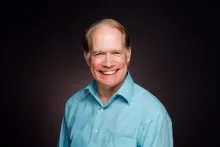
Greg Thomas is the former Pastor of the Cleveland, Ohio congregation. He retired as pastor in January 2025 and still attends there. Ordained in 1981, he has served in the ministry for 44-years. As a certified leadership consultant, Greg is the founder and president of weLEAD, Inc. Chartered in 2001, weLEAD is a 501(3)(c) non-profit organization and a major respected resource for free leadership development information reaching a worldwide audience. Greg also founded Leadership Excellence, Ltd in 2009 offering leadership training and coaching. He has an undergraduate degree from Ambassador College, and a master’s degree in leadership from Bellevue University. Greg has served on various Boards during his career. He is the author of two leadership development books, and is a certified life coach, and business coach.
Greg and his wife, B.J., live in Litchfield, Ohio. They first met in church as teenagers and were married in 1974. They enjoy spending time with family— especially their eight grandchildren.
