


Mark Welch
This transcript was generated by AI and may contain errors. It is provided to assist those who may not be able to listen to the message.
Now we are ready for the main message for today. And actually, you can call this Part 2 to the message I gave last week, because I wasn't able to truly get to the second part of the message.
The time just ran out, and I didn't want to give the impression that we should just focus on the fundamentals of the faith. And so I want to continue with this message because there's a second part which you can call beyond the fundamentals.
What happens after those fundamentals are established? They're like the foundations of a building, but they really aren't the building itself. It's actually just the basis for it. And I don't want to just leave the message half done, because we have to go beyond the fundamentals. Life is more than just practicing certain spiritual exercises, keeping certain days, and also doing certain spiritual exercises like fasting and prayer and meditation. All of these are very important, but they are not truly the end in themselves.
We are just talking about setting the basis. Just like in a sport, you can't just play the sport with the fundamentals. You need a certain strategy. You need to work together. People may have the fundamentals down, but that is just the first part of learning truly to master the game. And so it is with our way of life. The fundamentals are very important. They will determine, in a good degree, how we weather life.
Did we set up the right fundamentals? Are we able to continue with them or not? But again, that is just the foundation of this spiritual building. And we should never confuse the foundation with the rest of the building. That's why in Hebrews chapter 6, after Paul talked about some of the fundamentals of the faith, he didn't just stay there. He didn't just dwell on the fundamentals.
He said in Hebrews chapter 6 verse 1, he says, therefore, leaving the discussion of the elementary principles of Christ, we can call them the fundamentals of the faith, he says, let us go on to perfection, talking about spiritual maturity. Not laying again the foundation of repentance from dead works. Of course, that had to do with our former life, that before God was useless, it was dead.
There were works that did not help in our development, neither in our salvation. We all have a past life, and then after baptism and the laying on of hands, we have a new life that we can begin. Notice it says here, not laying again the foundation of repentance from dead works and of faith toward God. That's very basic. It's very important, but there are other elements that need to be incorporated.
Verse 2 of the doctrine of baptisms, and it uses the plural because in the Bible it's just not about water baptism, but there is also what the Bible brings up. There is a baptism of fire, which is a person going to be immersed in that lake of fire if he is not worthy of the kingdom of God, if he is disqualified. And so that is a baptism that is different than it says of the laying on of hands, which is one of the doctrines of the church that goes along with baptism, of resurrection of the dead.
Certainly that is a goal in the Christian life. We have to learn what that resurrection of the dead is all about, that we don't have an immortal soul, that we're not going to go up to heaven or down to hell, to have eternal torment. We have to understand the resurrection of the dead means precisely that, that a person is totally dead until he is resurrected by God.
He's not in some immortal soul. He's not floating up there in heaven. He's not in this disembodied spirit. No, he is asleep. He has lost consciousness. But then you are going to be reawakened and resurrected. Then it goes on to talk about the eternal judgment, which is toward the final part of the plan of God. Notice here it talks about eternal judgment. It is a judgment that determines whether a person is going to receive that second life forever or that second death forever.
But God is not interested in tormenting human beings forever. That's a false concept. And he says here, and this we will do, in other words, go on to perfection if God permits. And so this subject, we can call it beyond the fundamentals because many here have been faithful through decades. They set that foundation a long time ago.
But again, that is not the end in itself. That's a means to an end. The fundamentals have a purpose of equipping us for the destiny, for the goal to be reached. And so once you have those fundamentals down as a regular pattern for life, we go forward.
Notice what Jesus Christ mentioned in Matthew 7. Again, a lot of people think that it's just a matter of accepting Christ as your Savior, but there's a lot more to it than that. Matthew 7, verse 21, he says, "...not everyone who says to me, Lord, Lord, shall enter the kingdom of heaven, but he who does the will of my Father in heaven." Doing the will of God the Father is not just practicing the fundamentals. It has to go beyond that. Once you lay the foundation, now you can truly get to the spirit of the law, not just the letter, not just the basics down. And so, verse 22, he says, "...many will say to me in that day, Lord, Lord, have we not prophesied in your name, cast out demons in your name, and done many wonders in your name." So they used the name of Jesus Christ, but they didn't realize there is another false pretender, Satan, who can work many types of miracles and make different types of wonders. And Christ will reveal that they did not tap into the true power of God. Verse 23, "...and then I will declare to them, I never knew you, depart from me, you who practice lawlessness, the breaking of God's laws." So again, God's laws have to do with the fundamentals, establishing them. We should never forsake them or dismiss them as something unnecessary. They are very important and essential.
And as we prepare for the fall feasts, trumpets is this coming Thursday, then atonement, tabernacles. It behooves us to look beyond the fundamentals. The feasts are a wonderful opportunity to go beyond just keeping them to what God truly wants us to do, to just go beyond keeping them physically. Notice in Matthew 22 and verse 35, what are some of these weightier matters of the law? Matthew 22 verse 35.
Then one of them, talking about the Pharisees, a lawyer, this is a religious leader, not talking about a secular lawyer like we do, but one studying the law of God, an expert, asked him a question, testing him and saying, teacher, which is the great commandment in the law? Jesus said to him, you shall love the Lord your God with all your heart, with all your soul, and with all your mind. This is the first and great commandment. And the second is like it, you shall love your neighbor as yourself. On these two commandments, hang all the law and the prophets. In other words, they focus as a goal to be able to do that, to love God with all your might, with all your soul. Now, see, that doesn't deal with the fundamentals as such. That goes beyond the fundamentals. Now we're talking about love, how to express it properly toward God and toward our fellow man. The second, so we all understand the first four commandments. Focus on, again, the fundamentals of how to love God are in those four commandments. You shall have no other gods before him. So God is a jealous God. You choose him. You don't have other alternative gods. You don't have alternative religions or beliefs. This is the God that you are going to worship and serve. And so the first commandment deals with our relationship with God. He is first in our lives.
Anybody that we know is not up to that position. We have to put everything below that love toward God. That's why putting his will first in our lives. The second has to do with not making any images of God. God is spirit. He is invisible. He doesn't want us in our imagination to draw pictures of him because he is so far beyond anything that we can imagine. We are to worship him in spirit and in truth, as it says there in John chapter 4. And so the second commandment, we love God because we're not going to use any physical objects between God and ourselves. We don't have any physical. We don't have any of these special type of equipment that people use. We don't use crosses. We don't use statues to bow to. We don't even have men as such, intermediaries, as some do, to confess. No, we go directly to God to confess our sins, our shortcomings to him. He wants to have that direct line with us. And the second commandment is the one that says, don't have any type of idol. I don't want you to represent me with any object or put an object between you and myself. The third one is to don't take God's name in vain.
As many people do, sometimes they'll exclaim when something happens. They stub their toe. What do they say? They use the name of God the Father or Jesus Christ. You don't do that. That's a special relationship that we have with God. He is our Father, Jesus Christ, our Elder Brother, and we're going to honor that name in word and in deed. The third commandment shows us how to love God because we are going to honor his name in word and in deed. And the fourth commandment is to keep God's special holy days, which the first one is the Sabbath. That's our weekly day of worship. But then we also have the feast days, which are called in the Bible Sabbaths as well. Those are annual Sabbaths. So if we want to express love to God, we are going to honor not only his name, but also his days. He placed himself, he sanctified them, which means set apart for special and holy use. And so, again, I'm just covering essentials here, but these 10 commandments govern how to love God and then how to love our neighbor.
The fifth commandment is the first one that we learn to love our neighbor. And what does it say we should do? First, honor your parents. They brought you on this earth. They're the ones that reared you, sacrificed, and we should honor them. We should be respectful of them, especially as we grow up as children and being obedient and respectful to our parents, because those kids who do not learn to obey their parents when they're young, many of them become juvenile delinquents. They don't honor their family in the home. They're not going to honor people in society as well. And you see that rebellious streak. They don't want to be under anyone. Well, being under the parents is the first way that we respect God. We are placed under their authority. And, of course, as you grow up, depending on the example that parents have set, now when you become an adult, you have to consider that still you love them and you honor them. But that doesn't mean you have to obey their lifestyle if they go against God's laws, because we have one parent up in heaven, one father that is above, even our physical parents. And then the second commandment that explains how to honor our fellow man is, thou shall not kill. You shall respect the life of another person. Some people don't do the right things. Some people maybe don't deserve to live with what they have done. But it is not our prerogative to choose to take a human life.
We can always defend ourselves. We can protect others, but not taking the life of another. That's why Christ said, love your enemies. It doesn't mean that, well, you love them until you kill them. That doesn't work out that way. And then after that is the seventh commandment, which you honor your fellow man by respecting the marriage vows and respecting that very powerful desire that God created in us about the sexual desire, and that we're going to keep it under check. We're going to keep it within the bounds. When we're married, we respect the person that we have chosen, and we're going to share that special love only with them. And before we are married, we are not going to go and have sexual relations with others. We're going to keep ourselves pure and chaste until that marriage ceremony takes place. So that is a very powerful commandment. People say, well, I love God, but yeah, I can go out and I can fool around and I can do this. And that doesn't have to do with my love of God. Yes, it does. That's why God put the seventh commandment there, because that's what God expects us to do. Then, of course, we have the eighth commandment, which has to do with respecting the property of our neighbor. We are not to steal. We are supposed to keep those things that are in the possession of others to themselves. We're not supposed to even take a dime from them. We're supposed to respect that private property to the basis of a sound civilization and country. You see some of the poorest countries in the world. Why? Because they don't keep the eighth commandment. They steal from others. People can't be trusted. Government can't be trusted. Government takes from them what is unlawful, and they take from the government what is unlawful. And so they never prosper because they haven't learned to respect private property, not to steal. And then the ninth commandment, you shall not lie against your neighbor. So you're not going to take up false testimony and accuse your neighbor of something he has not done. You are not going to say falsehoods before your neighbor. You're going to respect him. And we're going to go into some of this later. But that's the ninth commandment. And the tenth is again protecting not only the property of the neighbor, but also not lusting after the property of the neighbor. You shall not lust after what the other person has. See, that's a mental obstacle that God has placed. We shouldn't even lust after that other person's goods or what they have or their wives or daughters or sons or whatever. We are not to let covetousness be in our life, in our hearts. And so again, we have to go beyond just the fundamentals and to realize that the tenth commandment is not only kept in the letter, but also in the spirit. And so as we proceed, look at the Apostle Paul, who had a very balanced view. He understood the fundamentals, and he understood the higher motives, the higher application of God's will. Let's go to Ephesians chapter 3. Ephesians chapter 3 is a wonderful epistle.
In verse 14, now we come to the higher purposes of our Christian life. Once the fundamentals are laid down, what should we focus on? This is what the Apostle Paul noted in verse 14. It says, For this reason I bow my knees to the Father of our Lord Jesus Christ, from whom the whole family in heaven and earth is named. Basically everything created in heaven and in earth were done through God the Father, using Jesus Christ the Word at that time to create all things. Verse 16. This is what Paul is praying, that he would grant you according to the riches of his glory, to be strengthened with might through his Spirit in the inner man, that Christ may dwell in your hearts through faith, that you, being rooted and grounded in love, may be able to comprehend with all the saints what is the width and length and depth and height, to know the love of Christ which passes knowledge, that you may be filled with all the fullness of God, now to him who is able to do exceedingly abundantly above all that we ask or think, according to the power that works in us, to him be glory in the Church by Jesus Christ to all generations forever and ever. And so, see, once the fundamentals are down, the chief task that we have is to grow in love, to understand the depth of what Christ has done for us and what God the Father has done for us, to go beyond just the fundamentals of attending church and tithing or going to the feasts. See, all of these are a means to an end.
We can just look at the fundamentals and stay right there, and we're not going to grow as a Christian. We have to go beyond that and begin to have Christ living in us, transforming us, as He was on the earth. Notice in chapter 4, He goes on to say, the same epistle, verse 11. It says, and He talking about Christ gave some to be apostles, some prophets, some evangelists, and some pastors and teachers, for the equipping of the saints, for the work of ministry, which the term here means service, for the edifying of the body of Christ, till we all come to the unity of the faith and of the knowledge of the Son of God. Actually, I should have corrected that when talking about He Himself gave some.
Has to do with God the Father as well. Goes on and say, verse 13, till we all come to the unity of the faith and of the knowledge of the Son of God, to a perfect man, again, a spiritually mature person, to the measure of the stature of the fullness of Christ, that we should no longer be children tossed to and fro and carried about with every wind of doctrine by the trickery of men in the cunning craftiness of deceitful plotting. People try to get us off base, and if we just have the fundamentals and we haven't matured, then we're going to be tossed to and fro. People are going to be able to persuade you with clever arguments about not keeping these fundamentals of the faith. He goes on to say, But speaking the truth in love may grow up in all things into him who is the head, Christ, from whom the whole body joined and knit together by what every joint supplies, according to the effective working by which every part does its share, causes growth of the body for the edifying of itself in love. So love is what circulates. The blood of this spiritual body is God's love in us. That's what edifies. I'm so thankful for the elders that we have and their wives, deacons and deaconesses and many servers here. They always are taking part of the load so it doesn't just overwhelm one person. I'm so thankful that we have this in this congregation, so many willing to serve and work out that good work of Jesus Christ in them.
He goes on in verse 20, putting on the practical part of this. Notice what it says in verse 20 after he talks about the difference between our lives before conversion and after. He says, but you have not learned, so learned Christ when you lived in the past. He says, So you see, you have to go beyond the commandments as you shall not lie. And actually here it says going beyond that it means you talk the truth to them. Your words are truthful. So a person might not lie, but that doesn't mean he's going to say the truth.
Maybe he's going to stay silent. Maybe he will just deviate the conversation and never say the truth.
Well, you see, that is a sin of omission in the sense that, oh yes, you haven't said a lie, but you haven't said the truth either. It says here, putting away lying, let each of you speak truth with his neighbor, for we are members, one of another. We're all sharing the same spirit. We have to speak truthfully, not deceitfully. Be angry and do not sin. Do not let the sun go down on your wrath. Do we harbor anger? Do we let it go one day to the next and just let it ferment in us and we're not able to get rid of anger, which many times can be misunderstandings. Or maybe it has to do with pride. That person isn't going to. Talk truthfully and be sincere about things. Continuing on, it says, nor give place to the devil because where there is unresolved conflict, where there is unresolved anger, boy, that is Satan's culture. That just is a real good place there, just like you've seen in laboratories where they'll build up a little culture of bacteria. They'll put something in there and all that bacteria just goes into it. So the same way when Satan knows there is unresolved anger, he can just go right in there and multiply his devices, his way of thinking. Continuing on, here's another example in verse 28. Let him who stole steal no longer. All right? So the fundamentals are you don't steal. But is that enough? No, it isn't. We have to go beyond the fundamentals, as it says here, but rather let him labor, working with his hands what is good, that he may have something to give him who has need. Instead of stealing, now you are giving. You are, through your work, sharing with others and serving with others. And that is so important, especially as we go to these feasts to spiritually be ready to fellowship, to learn, to serve, to share, and to rejoice. If we are in the proper frame of mind, that can happen. So here a person is learning before he took what he thought was for his own needs from others. Now he is giving according to the needs of others. What a whole change in life. Instead of becoming a parasite, now you become this fruitful tree that others can enjoy, the fruits that you share with them. Continuing on, here's another one. These are all based on the letter of the commandments, but it has to go beyond that. Verse 29, let no corrupt word proceed out of your mouth. So again, a person says, well, yes, I'm not cursing anymore. I'm not using bad language. Is that enough? Just to avoid using bad language? No, it isn't. It says, but what is good for necessary edification? Before, the words were negative.
They blasphemed. They cursed. But now it says, now you learn to edify with your words, to encourage, to uplift. But what is good for the necessary edification that it may impart grace to the hearers? They want to hear you because it's going to be something positive. It's going to be something edifying. You see, that love is building up. It is expressing itself. So yes, we have to go beyond the fundamentals. Continuing on, it says in verse 30, and do not grieve the Holy Spirit of God, which means don't diminish it in you. Don't cause it to shrink by whom you were sealed for the day of redemption. God's Spirit wants to grow in us, not to diminish. He says, let all bitterness wrath, anger, clamor, and evil speaking be put away from you with all malice and be kind to one another, tenderhearted, forgiving one another, even as God in Christ forgave you. And he certainly does that every day of the week. So as we grow in love, it's what Christ said was the highest virtue that we can develop in our lives. During that last Passover, he spoke with his disciples. What did he say in John 13 verse 34? John 13 verse 34. He says, a new commandment I give to you.
So basically he was adding the spiritual dimension to God's law. It's not a new commandment because love is but motivates God the Father as well as Jesus Christ. But he says, I'm going to add something, a new dimension to God's law. He says, a new commandment I give you that you love one another as I have loved you, that you also love one another. And the way Christ loved was a sacrificial love. He gave his life not only for his disciples but for every human being that ever existed and will exist on this earth. He goes on to say, by this all will know that you are my disciples if you have love for one another. So the point is, if people see a transformed life, maybe they will ask you, how did you get to be this way? And then you can go back to the fundamentals.
Then your light will bring them to those fundamentals. But frankly, there are people who keep the fundamentals and yet their light is not really shining. They are not showing that deeper love and concern for others. And so people are not interested in learning the fundamentals because of the results that they see in a person. Well, the person is religious, they do all of these different exercises and obeying certain things. But where is that love welling up in there? So again, see, this is the second part. This is the spiritual edifice that God wants to build in us.
The end result we can find here in 1 John chapter 3. 1 John chapter 3.
And brethren, none of us are ever going to achieve fully what God desires from us. But we have to be improving. We have to be bettering ourselves. In 1 John chapter 3 verse 1, it says, Behold, what manner of love the Father has bestowed on us that we should be called children of God. What an honor, undeserved, unmerited. And yet, with all of our imperfections, He calls us His children. Therefore, the world does not know us because it did not know Him. They don't really understand God's plan of salvation. They don't even believe God is a Father as such because they believe He's a Trinity, which is a closed entity of three persons, and that they will always just be above everyone and separate from everyone. But that's not what the Bible says. See, the love of God is, you're going to be part of my family. Yes, we are working out a plan, my Son and myself, so that you will all be our children. We want to share what we are, fully. We're not going to keep you as second-class citizens. We want to share with you. Now, that doesn't mean that we will ever be at the level of God the Father and Jesus Christ, but we are going to be part of the family. We're going to have that real and intimate relationship that we can call Him Abba, Daddy, just like a child when they talk with their beloved parent or grandparent. But they come up and, oh, they just think, oh, Daddy or granddaddy. Yeah, they're there for me. They have no compulsion. They have no inhibitions.
Well, that's the way God wants us to feel about Him. No inhibitions. He's always there. He loves. He wants to share that love with all of us. That's why He created this whole fundamental base, the foundation, so that we could eventually reach the love that He has for all of us. He wants to share that love and that we share it with others. We have to have it first. We can't give something that we do not have. Continuing on, it says, verse 2, Beloved, now we are children of God, and it has not yet been revealed what we shall be, but we know that when He is revealed, talking about Christ coming, we shall be like Him, for we shall see Him as He is. When it says, like Him, it means we're going to be spirit. We're going to be part of that God family.
We're not going to be some intermediary creature there between angels and God. No, we're going to be part of the family. Verse 3, and everyone who has this hope, this goal in Him purifies Himself just as He is pure. We want to be like God. The feasts are a type of purification. Yeah, we could be doing other things, but what are we doing? We're coming before God. We're kneeling before God. We're worshiping before God. We are being purified. So all of these are means to an end. These feasts are wonderful. How many people have the opportunity for eight days to just focus on God's kingdom? What is coming? What He expects of us? The promises given to us through His Word. What a privilege it is. And yet we take it for granted sometimes. We don't look at God's wonderful love when He gave us His feasts and sabbaths and many of these other things.
Let's go to Galatians, because it mentions here about the fruits of God's Spirit. Galatians chapter 5 and verse 22. This is what is produced after we get through with the fundamentals.
We put the building on top of the foundation, verse 22, but the fruit of the Spirit, this is what it produces. The results of God's Spirit is love, joy, peace, long suffering, kindness, goodness, faithfulness, gentleness, self-control. Against such fruits or results, there is no law. No law goes against these things. The law is meant to produce these things at the highest level.
And so again, it shows the higher goals that God expects from us.
Going on in chapter 6 now, in verse 9. Well, let's verse 7. Galatians 6 verse 7 says, Do not be deceived. God is not mocked, for whatever a man sows, that he will also reap. This is what will come back in return. Depends on what you invest.
For he who sows to his flesh will of the flesh reap corruption. If he's just focused on the physical and worldly incarnal, that's what his mind is going to look like. That is what the results are going to look like. But he who sows to the Spirit, those spiritual things, will of the Spirit reap everlasting life. And let us not grow weary while doing good. And it's easy. Especially as you get older, it gets harder. It's easy to get tired. You have to face burnout sometimes. It says here, let us not grow weary while doing good. For in due season we shall reap if we do not lose heart. If we don't, just give up. Get discouraged. Throw the towel in.
Verse 10, Therefore, as we have opportunity, let us do good to all, especially to those who are of the household of faith. These are all the brethren that we cherish, we enjoy. God put them there to be encouraged and served and share the blessings. So, as we grow, it all is like a pyramid with a foundation, and then you go forward perfecting, getting to the higher and spiritual things that is love. Let's go to, as we wind down this message in Romans. I'm sorry, not Romans. It meant Isaiah. Old Testament. Isaiah chapter 25.
We're going to be listening to many of these scriptures during the feast, or if you're online, if you can't make it, make sure you connect to the messages. Isaiah 25, talking about when Christ returns. Verse 6, it says, and in this mountain, talking about Jerusalem and the headquarters, the Lord of hosts will make for all people. So you see, no discrimination. It would be for everyone.
A feast of choice pieces, a feast of wines on the lees, of fat things full of marrow, which doesn't mean cholesterol. It means juicy steaks, real thick and juicy steaks, not out of some skinny animal. These are going to be just delicious steaks of well-refined wines on the lees. And he will destroy on this mountain the surface of the covering cast over all people, and the veil that is spread over all nations, the veil of deceit. Christ is going to destroy that. He's going to take the blindfold off of people's eyes. Today's it's very hard for people to be converted. We really are having such a hard time for young people to have their eyes open, to remove those blindfolds of society and see that society doesn't have the answer, that God does. He's going to remove the veil that is spread over all nations. He will swallow up death forever, and the Lord God will wipe away tears from all faces, all the sufferings people have gone through. They're going to really have a relationship with God, which is loving, and they're going to see His compassion.
He said, the rebuke of His people He will take away from all the earth, for the Lord has spoken.
And it will be said in that day, Behold, this is our God, not today. The name of God is blaspheme. You can't even use it in the schools or in businesses. You can get sued in many places now, but in that time, people are going to be proud. This is our God. We have waited for Him, and He will save us. This is the Lord. We have waited for Him. We will be glad and rejoice in His salvation. So we look forward because people are going to start building their lives on a sound foundation, so they can also grow in love to reach the pinnacle of what God created us for. And I'll just tell you, what God created us for is for us to be love like God is love. That is the ultimate goal, to be love as God is love. Notice in Isaiah 30 verse 20. It says, "...and though the Lord gives you the bread of adversity," talking about here at the beginning of the millennium, people have suffered a lot. There will be a lot of suffering. Just think, in basically three weeks, what two hurricanes have wrought in Houston and the area of Florida and the Keys, just two hurricanes. How much adversity has happened? Well, how much more before Christ returns. And he says, "...and though the Lord gives you the bread of adversity and the water of affliction, yet your teachers will not be moved into a corner anymore. But your eyes shall see your teachers." You're going to be face to face with them. Your eyes will hear a word behind you saying, this is the way. Walk in it whenever you turn to the right hand or whenever you turn to the left.
So there will be teachers teaching them the fundamentals. But again, the fundamentals are just the first part. It is for them to grow in love. And what is the result of teaching them this? Verse 22, "...you will also defile the covering of your images of silver and the ornament of your molded images of gold. You will throw them away as an unclean thing. You will say to them, get away. Finally, they will understand the second commandment." Verse 23, "...then he will give the rain for your seed with which you sow the ground and bread of the increase of the earth. It will be fat and plentiful. In that day your cattle will feed a large pasture." So God is going to remove the curse on this earth. There's going to be plenty for everyone. And people will learn how they should have lived, except that Satan deceived them in this life. So much wasted energy, so much wasted effort. But one day people's lives will truly be worthwhile to live. They will learn the way of salvation. So let's go to, as we are concluding, 1 John chapter 4. This is the goal, the ultimate goal. 1 John chapter 4 verse 8.
It says, "...he who does not love does not know God, for God is love." And that's the expression. That's why he's built all these fundamentals to reach this pinnacle of goals. In verse 16 it's repeated, "...and we have known and believed the love that God has for us. God is love, and he who abides in love abides in God, and God in him." So this is what we're all aiming for. This is why we go to the feasts, why we go on the Sabbath, why we meet together. It's not just to obey a physical commandment. That's just the basis of it. It's to share the fellowship, show concern and love one to another. One day, God willing, we will be transformed. Just like God is love, we can one day say that name, that person, is love, is God is love. That we can actually identify ourselves with the same love that God has, and he is reproducing himself in us. He wants to share, he and Jesus Christ, what they are to us. Let's finish in two last scriptures.
One is in Romans chapter 13. I mentioned to you how Paul expressed what love is but I want to show you that it doesn't contradict what God's law is about. Romans chapter 13 in verse 8, it says, Oh, no one anything except to love one another. We owe loving each other. For he who loves another has fulfilled the law. For the commandments, you shall not commit adultery, you shall not murder, you shall not steal, you shall not bear false witness, you shall not covet. And if there is any other commandment, are all summed up in this saying, namely, you shall love your neighbor as yourself. Love does no harm to a neighbor. Therefore, love is what? The fulfillment. The filling to the top of God's law. That's why it was meant to be. See, there's no contradiction here, but there are the fundamentals and then there are these higher virtues we should go. In 1 Corinthians 13, once we know that love is the fulfillment of the law, Paul mentions here in 1 Corinthians 13 verse 1, Though I speak with the tongues of men and of angels, but have not love, I have become sounding brass or a clanging cymbal. And though I have the gift of prophecy and understand all mysteries and all knowledge, and though I have all faith, you might have all the fundamentals down, so that I could remove mountains, but have not love, I am nothing. Sacrificial love, the God the Father and Jesus Christ, have shown us. And though I bestow all my goods to feed the poor, and though I give my body to be burned, but have not love, it profits me nothing. We haven't gone very far in our Christian path. Love suffers long and is kind. Love does not envy. Love does not parade itself, is not puffed up, does not behave rudely, does not seek its own, is not provoked. Things no evil, does not rejoice in iniquity, but rejoices in the truth, bears all things, believes all things, hopes all things, endures all things. Love never fails, but whether there are prophecies, they will fail. Finally, they'll be fulfilled. They'll be in the past. Whether there are tongues, different languages that God gives a gift, they will cease. There's a moment when there was no more gift of tongues. Whether there is knowledge, it will vanish away, for we know in part and we prophesy in part. And then he goes on to say in verse 12, For now we see in a mirror dimly, but then face to face, Now I know in part, but then I shall know, just as I also am known, and now abide faith, hope, love. These three, but the greatest of these is love. The motivating factor that we do things, what drives us, what creates what you see externally on the outside, has to be motivated with that sacrificial agape love. So let's prepare again for these coming feasts and let's go beyond the fundamentals.
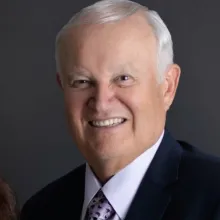
Mr. Seiglie was born in Havana, Cuba, and came to the United States when he was a child. He found out about the Church when he was 17 from a Church member in high school. He went to Ambassador College in Big Sandy, Texas, and in Pasadena, California, graduating with degrees in theology and Spanish. He serves as the pastor of the Garden Grove, CA UCG congregation and serves in the Spanish speaking areas of South America. He also writes for the Beyond Today magazine and currently serves on the UCG Council of Elders. He and his wife, Caty, have four grown daughters, and grandchildren.
