

John Elliott
This transcript was generated by AI and may contain errors. It is provided to assist those who may not be able to listen to the message.
Good evening, everyone, and welcome to the Wednesday night Bible study here in Cincinnati, Ohio. I'm Darris McNeely. Here, Antion and I are tonight going to be conducting Bible study and welcome to all of you here in the Home Office facility and also those of you that are online watching us, wherever you may be, or listening to this at a later time. We're going to be continuing tonight our Bible study in the book of John, and tonight we're going to be covering chapters 13 and 14. Mr. Antion will cover chapter 13 of John and I'll cover chapter 14. We want to remind you that if you have any Bible study questions that you would like to send in to us, you can email those right now to ... I'll give you the email address. It's ucgbiblestudy at gmail.com. That's ucgbiblestudy at gmail.com. So you can email those in to us and Mr. Antion will be glad to answer every one of them.
He's our Bible answer man for the night. It's a beautiful evening here. The temperatures have moderated somewhat. We had a very, very warm Memorial Day weekend, but it's beginning to feel a little bit more seasonal and much, much more comfortable. So I hope that wherever you are, that the temperature and weather is doing fine as well. So I'll turn it over to Mr. Antion to begin going through John chapter 13.
Okay, I'll go ahead and ask God's blessing on the Bible study. Almighty God, our Heavenly Father, thank you very much that we come together this evening to study Your Word together from various parts of the country and even world. We thank You, Father, for those who tuned in and pray that the webcast will be clear for them. We thank You, Father, for the opportunity we have to have Your Word and so many different translations and what a blessing it is that so many men gave their lives on our behalf so that we could have Your Word in front of us all organized in chapters and verses so that we can learn from Your Word the words of life.
So we thank You. We ask Your blessing as we go through this very important section of Scripture going through the Gospels, the Book of John. We pray Your inspiration upon both Mr. McDaley and myself as we speak Your words, but we also pray for Your inspiration on those who hear them. We ask Your blessing and give You thanks, in Jesus' name, Amen.
Amen. All right. Good evening to everyone out there. I know lots of you in various parts of the country that I've met over the last couple years have really appreciated the Bible study that we've been doing and several of us, we can even do it every week, and that becomes a bit tedious with us wearing so many different hats. But we are glad to be able to do it at least every other week, and some of you record it and listen to it later.
So we'll say hello to you today on this 30th day of May. We're almost entering into June. Summer is almost here. The way it's been, it felt like it already has arrived. So good evening to you. Let's go to the book of John 13.
Much of this, as we've gone over at Passover time, if you've kept the New Testament Passover, these scriptures have probably already been covered, some of them, but I'll try to go over them a little more quickly, maybe bring you some different perspectives on it as we go through them. So John 13, verse 1, Now, before the feast of the Passover, so this was the evening before the Passover day. Actually the Jews kept the Passover into the fifteenth. The Passover meal. The animals were killed late afternoon on the fourteenth. They ate the meal into the fifteenth.
That's why many times they say the fifteenth is the Passover. But that really is when they ate the Passover meal in the New Testament times and because of the Jewish way of doing it after the tabernacle was no longer in use and they began to use a temple. They began to do it in late afternoon on the fourteenth, eat it on into the fifteenth. So this is before that. This is the evening before the fourteenth as the fourteenth began. Did you know scripturally it's from sunset to sunset?
So this would have been that night before Jesus Christ was killed. He was killed on the fourteenth. So if you want to celebrate His memorial, you'll always do it on the fourteenth. You do it on the fifteenth, you miss the day. Alright, go to chapter 13 verse 1. Now before the Feast of the Passover, when Jesus knew that His hour had come, that He should depart from this world to the Father, having loved His own who were in the world, He loved them to the end.
Jesus Christ had the kind of love that never failed. 1 Corinthians 13 verse 8 says, love never fails. That's godly love, agape love. Jesus Christ loved His own right to the very end. He wouldn't give up. He loved them to the end. And that shows the consistency that Jesus Christ had for His disciples. He also knew that evening that He was going to be, one more day, He was going to be dead. One more day, He was going to have to go through a most excruciating death that man could devise. I have a book that I'm not going to read out of, necessarily.
I just looked at it. The Day Christ Died by Jim Bishop. And he goes through sort of a historical novel. He goes through and describes some of the events and how humans had done all types of things to kill people, boiling them, dismembering them. But they found that the best way to make them suffer the longest was to crucify them. It was painful, and it was long. And plus, it served as a reminder to others, do not cross the powers that be, or you'll be hanging on one of those as well. If you saw the movie Spartacus, they crucified 6,000 from one city to Rome, all along the way.
So people would have a reminder what happens to those who rebel against Rome. So verse 2, supper being ended. Actually, I checked this out. The Greek word could mean ended, but in all likelihood it means during supper, or while supper was being served, or when supper time came. It did not mean they were done with supper because, as you read on in chapter 13, you'll find that they did still continue to suffer. So it was during supper.
Many translations have that, but I checked on my computer. Many translations say during supper. Some say while supper was being served. So it does not mean supper had ended, because as we read through here in the very context, you'll see it had not ended yet. During supper, the devil, having already put it into the heart of Judas is scary.
It is Simon's son to betray him. There's a lot of history about Judas. First of all, Jesus Christ said, I chose the twelve of you, and one of you has a devil. He made that remark. Let me give you that scripture on it. John chapter 6 and verse 70. I'll turn to my other Bible there. John chapter 6 and verse 70. So Judas was already known. John 6, Jesus answered and said, this is verse 70, said to them, Have not I chosen that you twelve and one of you is a devil or an adversary?
He spoke of Judas Iscariot, the son of Simon, for he it was that should betray him, being one of the twelve. So Jesus Christ deliberately picked a shady character to be one of his disciples. God had a plan being worked out here below. Jesus Christ was not delivered because of humankind taking advantage of him and God the Father pulling a fast one on them. As Paul describes in the book of Acts, it was by the determinant counsel of God that he was taken. He was not taken because of man's great ingenuity or conniving, but rather he was taken because God allowed it. Part of the plan was Judas. It is interesting that Jesus Christ also said it would have been better if that person had never been born than for him to do this.
We'll also see in this chapter that when Jesus Christ identified him, that Satan entered into him. So he was no longer dealing with just a man. Satan the devil wanted to bruise him. Now he could bruise his heel, but Jesus Christ would bruise his head.
So verse 2 says, having put into his heart of Judas Iscariot to betray him, verse 3, he had already made an agreement with the powers that be to betray him. Jesus, knowing that the Father had given all things into his hands and that he had come from God and was going to God. Jesus Christ knew who he was, Philippians 2. He knew who he was, Philippians 2 verses 6 to 8, who being in the form of God did not consider it at all, anything to grasp after, to be very God.
You know, the Word, as John 1.1 points out. So he knew who he was. He understood, knowing that the Father had given all things into his hands and that he had come from God and was going to God. Now, he had a bitter trial to go through. He had a hedge of thorns to have to negotiate before he went back to his Father. This evening, that evening of Passover night, was a time that he, as a person, had to realize it's now begun.
He set the wheels in motion. You don't see that. Verse 4, so knowing that he was going to God, knowing he was going to be with his disciples anymore, he rose from supper, laid aside his garments, and took a towel and girded himself.
His disciples must have been quite surprised because he probably was sitting at the place of honor at the table, being their master and their Lord, their rabbi. And so, he took this towel and he girded himself. Jim Bishop describes it in the day Christ died as probably the servant had brought water in a basin because when they ate in the Middle East, if you've ever had a Middle Eastern food, they usually pour water over your hands in a basin and they give you a big towel, like a Turkish towel, and you wipe your hands on it and then you use that as kind of your napkin for the rest of the meal because you're going to be dipping in with your hands in the food with bread and eating it that way.
So, he describes it as the man coming along with this water and instead of putting it in a basin to wash their hands, Jesus takes it and begins to wash their feet. So after that he poured water into a basin and began to wash the disciple after that he began to wash the disciples feet and to wipe them with the towel with which he was girded. So you can imagine how humbling this must have been for him to do this, for the disciples to have him do this to them.
Jesus Christ already was humble. He chose to come into the world, remember, as a servant and not as a prince with a silver spoon in his mouth. I don't suppose it made a difference. His death is really what made a difference. Not his life at that time, though he wanted to set us an example. But he chose to come into the world as a servant and a servant he acted like in that particular evening. No fun to wash 11 dirty, 12 dirty feet. But anyway, verse 6, then he came to Simon Peter.
So he must have been washing the others along the way. So maybe on this side of the table and he came to Simon Peter, he still had the other part of the table to do. He came to Simon Peter and Peter said to him, Lord, are you washing my feet? And Jim Bishop describes it the day Christ died.
Peter probably pulled his feet up onto the sofa that he was sitting on and had his robe covering it. You're not going to wash my feet. You're going to hide them from him. So he couldn't get to the feet. And Jesus said to him, what I am doing, you don't understand now, but you will know after this. And Peter said to him, you shall never wash my feet. This is beneath you. Now, he loved Jesus Christ. He honored Jesus Christ. He worshiped Jesus Christ. And he couldn't see to let this awesome person bow down before him and wash his feet. And he said, you will never wash my feet. Jesus answered and said, if I don't wash you, you have no part with me.
You're not going to be one of my band anymore. I am firing you. And Simon Peter said when he realized the consequences of his impetuous action, when he realized that, Simon said to him, Lord, not my feet only, but also my hands and my head. If that's what it takes to have my feet washed to be a part of your group, wash me all over. Clean me all up. And verse 10, Jesus said to him, He who is bathed needs only to wash his feet, but is completely clean. And you are clean, but not all of you. So you could take that doubly.
Well, you know, if you bathe today, you're clean, you just have to have your feet washed. Or all of you are clean except one. And we'll see, he really was referring to Judas. You're not all clean. In verse 11, for he knew who would be, who would betray him. Therefore he said, you were not all clean. So Jesus Christ, this was a veiled reference to, very direct reference in some ways, to Judas.
For he knew who would betray him. In verse 12, So when he had washed their feet, taken his garments, and sat down again, so he washed their feet. We, as a church, washed feet. Now it's interesting, some of the commentaries, they say, well, you know, it's a good example. And washing feet was, it was to teach humility and to teach to serve others. And that's the principle. It really doesn't matter if you wash feet.
Well, we'll see what Jesus Christ said. In verse 12, after he washed their feet, taken his garments, sat down again, he said to them, Do you know what I've done to you? Do you realize what I just did? You call me teacher and Lord.
That's what he was to them. Their Lord, their master. He was their teacher. He was their leader. And you say, well, for so I am. I am your Lord. I am your teacher. If then, if I then, your Lord and teacher have washed your feet, you ought to wash one another's feet. So he didn't command his disciples, each of you washed twelve people's feet. He just said, each of you wash one another's feet. And verse 15, For I have given you an example that you should do as I have done to you.
Now, many of you will say, well, no, he really didn't mean to do that. Yes, he did mean to do that. Well, it's really the heart and attitude that's involved. It's also the act that's involved. Of course, the attitude is right. You could do the act and not be a servant. Absolutely. You could do the act and not have the heart of a servant. Absolutely. You could have the heart of a servant and not do the act. But Jesus Christ said, this do. Notice we'll see him remind them.
For I have given you an example that you should do as I have done to you. He didn't say, just get the principle from this. Most assuredly I say to you, a servant is not greater than his master. I did this for you. Can you do it for each other? Nor is he who is sent greater than he who sent him. So I'm sending you out. I'm greater than you. And I did what showed you an example that you should do to each other.
And also, I'm not greater than the father who sent me. It's another reference to his father who sent him. And he said, verse 17, if you know these things, blessed are you if you do them. He didn't say, blessed are you if you just get the principle. So as a church, again I remember the very first time I went in to wash feet. I had no clue. I had never washed an adult person's feet before. My first Passover in Pasadena, California.
I was already scared because I thought I was going to die if I did anything wrong that night. Because, you know, the Scripture says many people die of sleep because they mess up on Passover night. I was scared. Plus, I had never washed another person's adult's feet. I had washed my little brother and sister's feet before helping look after them. They were 11 and 13 years younger than I.
But I had never washed another adult's feet. What would this be like? And what would it be like for them to wash mine? I can say it's a lot easier for me to wash somebody else's feet than have them wash mine. It's much more humbling for someone to come and wash my feet. But Jesus Christ said to do it, and we as a church have done it, and continue to do it.
Because we try to follow what Jesus Christ said. And He said, if you know these things, blessed are you if you do them. Some commentary says just the attitude, but both are important. Both. The attitude behind it, absolutely. An attitude of service, and not just that one night, but an attitude of service throughout the year. Verse 18, I do not speak concerning all of you. I know whom I have chosen, and that the Scripture may be fulfilled.
He who eats bread with me has lifted up his heel against me. Psalm 41 and verse 9 was a reference to my friend. Someone, my own familiar friend will do this. Someone close to me is going to betray me, he said. And verse 19, Now I tell you before it comes, that when it does come to pass, you may believe that I am, says I am He. When this happens, His disciples were cruising along with Jesus Christ at their side.
Jesus Christ who could do anything, including walking on the waters and preparing food, making food for thousands out of a few morsels. They saw Him raise the bread. They saw Him heal all manner of sickness and disease. They saw Him cast out demons that were too difficult for them. As long as He was on their side, they couldn't lose. And now He was about to die. What a shock. I tell you before it comes to pass, that when it does come to pass, you may believe that I am.
Don't forget who I am. I am the I am. As long as Jesus Christ walked the earth, He was their comforter. He was one alongside the help. He was called a paraclete in 1 John 2, verses 1 and 2. And He did say in the book of John 13 and 16, I will send another comforter. I'm not going to leave you alone. I won't be here, but you know what? My spirit will be here with you, and it is a comforter. So while I may not be there, my spirit will. My mind will be in you, and I will try to live my life in you through the Spirit of God being in you.
So verse 20 says, Most assuredly I say to you, he who receives, and this verse is an incredible verse. A lot of people say, you say Jesus too much. At one time I said Jesus, and I was criticized for saying Jesus. You're supposed to say Christ. Don't say Jesus. Was his name Jesus, or wasn't it? You talk about Jesus Christ. Look at this verse. Most assuredly I say to you, he who receives whomsoever I send receives me, and he who receives me receives him who sent me.
If I reject and gain say Jesus Christ, what am I saying about God the Father who sent him? I gave a whole sermon on whatever happened to the Father. No, we don't forget the Father. We don't say everything is all about Jesus Christ. But you know what? The Father is glorified in the Son and has glory in him, and we should not be ashamed. We should not withdraw from talking about Jesus Christ, the Son of God. That doesn't mean we forget God the Father. That doesn't mean God the Father does not have a presence in our life.
We pray to him in the name of Jesus Christ. God is our Father in heaven. He oversees everything. But Jesus Christ also has an important part. Don't forget that. Verse 20 is very important. If you receive Christ, you also receive the Father. Verse 21. When Jesus had said these things, he was troubled in spirit and justified and said, Most assuredly I say to you, one of you will betray me.
Boy, it's coming down to crunch time, and I just want you to know where my betrayal will come from. It will come from one of you. If I were one of the twelve, that would have shook me up. I don't know if they didn't hear. There was so much going on in the room. They were maybe having a toast, or they were eating their parsley dipped in vinegar, or whatever they were doing. And maybe the vinegar was getting to them, and they couldn't hear properly.
Whatever it was, they didn't even seem to phase them. Then disciples looked at one another, perplexed about whom he spoke. But it didn't seem to make a real big reaction. Now, there was leaning on Jesus' bosom, one of his disciples, whom Jesus loved. And apparently, all agree that the disciple whom Jesus loved, while he loved Lazarus, Lazarus was not one of the twelve. So who was the one of the twelve that Jesus loved?
John, the apostle John. Some translations actually even say words to the effect that I saw this, or I was leaning on Jesus' breast. So Simon Peter therefore motioned to him, to John, to ask who it was of whom he spoke. So John, one translation puts it, the closest disciple to Jesus Christ, not proximity. He was his closest friend. Jesus Christ loved him in a special way. He loved all the disciples.
He would give his life for all of them. But there was something about John, and when I read through the Gospels of John, and I teach General Epistles, 1, 2, and 3 John, I see a love in John that probably endeared him to Jesus Christ, more than the other disciples. But anyway, he loved him, and of course he had the seat right next to him, so he would be reclining this way.
After he ate, Jesus would have been reclining the opposite way, so they had been fairly close to each other. And Peter was kind of giving John the high sign, asking him who it is. So, leaning back, verse 25, on Jesus' breast, he said to him, Lord, who is it? Reveal this mystery. And Jesus answered, It is he to whom I shall give a piece of bread when I have dipped it.
Now, I don't know if he gave bread to anybody else after that, but he certainly did go ahead and dip it and give it to Judas. Notice, And having dipped the bread, he gave it to Judas Iscariot, the son of Simon. Now, I don't know if they took it, Well, I'm going to give it to somebody, maybe it would be some special revelation. But he gave it to him.
He may have given that to others, dipping bread. And apparently, that was an honor for someone, the host especially, to break the bread and dip it. And apparently, it was, in this case, a type of bread that you could dip. It was unleavened, definitely, where you could dip it. He dipped it into the sop, or like a sauce, and he took it up and he gave it, it was kind of an honor thing. So, one of the last acts Jesus Christ did for Judas was to do something honorable to him.
So, he dips it in there, gives him this piece of bread, and having dipped the bread, he gave it to Judas Iscariot, the son of Simon. Now, after the piece of bread entered into him, after the piece of bread, Satan entered him. Then Jesus said to him, what you do, do quickly. Let's get it going. Get it over with. Let's get this show on the road. Get it going. Now, the disciples, they saw this, but no one at the table knew for what reason he said this to him.
So, maybe it's not Judas at all. Who is it? Maybe he's going to dip it in somebody else. Maybe he's going to dip it and dip his finger in the sauce and right betrayer or whatever on the person. They don't know what it's going to be, but they didn't pick it up that it was Judas, because then no one at the table knew for what reason he said this to him, because they heard that. Some thought, because Judas had the money box, that Jesus said to him, go buy those things we have need for the feast.
Oh, we're running out of matzo. Go buy some more matzo, or we might need a little more wine. Go get some wine, or go see if you could buy some more vegetables or whatever. But those things we need for the feast, or that he should give something to the poor. They didn't really pick up on it. Verse 30, having received a piece of bread, he went out immediately and it was night.
Now, the man who was Judas was no longer in control. They had been overtaken. Now, by his complicity, by his greed, by his betrayal, by his lies, by his theft. Remember, he was a theft thief he took from the purse. And he betrayed his Lord and Savior. It was all according to God's plan. But God says of Judas in John chapter 14 and verse 21. Sorry, did I say John? Mark 14, 21.
Mark 14 and verse 21, that would be better for him if he had never even been born. Mark 14 and verse 21. The Son of Man indeed goes just as it is written of him, but woe to that man by whom he has been betrayed. The Son of Man has betrayed it. Sorry, this says it would have been good for that man if he had never been born.
It would be good for him had he never been born. And then we find in other instances where Judas was the betrayer, where Jesus Christ talked of him and talked of him being the one who would be the one who would deceive and would betray.
So in verse 31, so he went out immediately, verse 31, so when he had gone out, Jesus said, Now the Son of Man is glorified. Now the deeds are set in motion, the wheels are set in motion for me to be killed, for me to be able to return to my Father in heaven. Now the Son of Man is glorified, and God is glorified in him. I can't back on now. Remember, he had prayed, Oh, don't let this happen to me. Don't let this happen.
And please, if there's any other way, now the wheels are set in motion for him to be betrayed. And in verse 32, if God is glorified in him, God will also glorify him in himself and glorify him immediately. So my glorification is coming. That's why he told his disciples, Boy, I wish you could come and see. I wish you could see me in glory. You've been with me as a physical human being. I wish you could see me in glory. Now they had a chance in the transfiguration to see a little bit.
I wish you could see me where I am, but you can't come there now yet. Can't come. I wish you could see me in glory. Little children, I shall be with you a little while longer and you will seek me. And as I said to the Jews, where I am going, you cannot come. So now I say to you, a new commandment I give to you.
I just want to leave with you that you love one another as I have loved you. You saw me for three and a half years. You saw the compassion I had. You saw the feelings I had. You saw the care and concern that I had for you. I want to leave that with you. And I want to ask you to do the same to each other as I have loved you, that you also love one another. The newness of it wasn't just love others as yourself. It's love others as Jesus Christ loved them with a pure heart and attitude because sometimes we love out of a selfish attitude.
Sometimes we love out of a carnal love, others. God says, I want you to love as I have loved you, Jesus Christ said. And verse 35, great scripture, by this all will know that you are my disciples if you have loved one for another. If you have loved one for another, this is the sign that you are my disciples. So going on, notice verses 33 to 35, in that section, he wanted us to keep that major characteristic of Christianity, that's love, the love of God in us, and the agape love, which is an un-swerving, caring love for others.
Verses 36 to 38, we see Peter's denial predicted. Simon Peter said to him, Lord, where are you going? Jesus answered him, where I'm going, you cannot follow me now, but you shall follow me afterwards. Peter, you're going to, remember what he predicted, Peter? You're going to, yeah, you can be baptized like I am. You're going to have to go through what I go through. You don't know what I'm going to go through now, and you can't follow me into this now, but you will afterwards.
And also, where am I going? I'm going into the kingdom of God, and you're going to follow me there, too. Peter said to him, Lord, why can I not follow you now? I will lay down my life for your sake. So again, Peter's very impetuous, very bold. I'm not criticizing him for being that way. Some people have to stand up first, but he stood up and got shot many times, and he stands up again. And I'll give my life for you.
Jesus answered, Will you lay down your life for my sake? Most assuredly I say to you, the rooster shall not crow till you have denied me three times. Now, trying to go over this, I'll go through some quotes with you in a moment, but Mark 14, verses 29 and 30. We see something in this section where Peter said to him, Even if all are made to stumble, I will not, yet I will not be.
Jesus said to him, Assuredly I say to you, even this night before the rooster crows twice, you shall deny me three times. John says, Before the rooster shall crow, you'll deny me three times. So, is it two times the crow, or does it crow once? Well, I looked up cock crowing as a real intricate subject, I'm sure, that everybody would be so enthusiastically interested in. Cock crowing. In our Lord's time, Jews had adopted the Greek and Roman division of night into four watches, each consisting of three hours, the beginning at six o'clock in the evening and so on, but the ancient division, known as the first and second cock crowing, was still retained.
The cock usually crows several times soon after midnight. That's the first crowing, and again at the dawn of day. That's the second crowing. Mark mentions, Mark 14, verse 30, the two cock crowings. Matthew 26, verse 34, alludes to that only, which was emphatically the cock crowing. That is the second. That comes from Eaton's Bible dictionary. Another one. This comes from the McLinnock and Strong Encyclopedia.
Under cock crowing, the cock usually crows several times about midnight and again in the break of day. This was roughly four to five o'clock in the morning. This was when he denied him, so it was likely the one at the break of day. Even though it would be the second cock crowing, it could crow twice. Apparently, what the commentators feel, commentators feel, is that Mark had some help from Peter himself. So Peter was able to say, no, the cock crows twice. Even though the other gospel writers say once, Peter said, no, it really did crow twice. But the once was the emphatic one, the last one, after he denied him three times, then the cock crows. So crowed once before and early in his denials, but before the last one, he did three times, then the last one crowed. So that at least seems to be the explanation that I've been able to dig up in this area. It says, Matthew, giving only the general sense of the admonition, evidently alludes to that only which was customarily called the cock crowing. But Mark, who wrote under Peter's inspection, more accurately recording the very words, mentions the two cock crows. So I thought that would at least give you a little bit of help in that area. So I'll turn it over to Mr. McNeely. Thank you, Mr. Antin. Mr. Antin, going through that commentary about the cock crowing reminded me of a conversation I had recently with Scott Ashley, our managing editor for The Good News. Scott has been going through a series of the harmony of the Gospels with his congregations out in the front range of Colorado. And he's been researching a lot about the culture of the first century Jewish world in which the Gospels were written and all these events took place. And he was sharing at our recent General Conference of Elders meetings in a conversation with some of us about the fact that it's really important to have a knowledge of the times and the customs and how they wrote, just as this example here of the rooster crowing multiple times in the night, helps to explain what might seem to be a discrepancy in the Scripture. And he had pointed out several other places where sometimes people look at whether it was a genealogy of Christ and Matthew and a supposed discrepancy or other things that you've got to know some of the background of even the way the Jews wrote and recorded things in that time and also certain other allusions to really fully understand the verse and also to avoid some of the pitfalls that can arise when people try to criticize the Bible and make it out to not be a trustworthy document, having internal problems like that. They can all be resolved and it does help to not only have access to other commentaries and resources but to be able to understand the background there and that does open up not only a solution to some of the supposed problems but also it opens up a lot of understanding as to what is really taking place there. So let's go ahead and jump into chapter 14 and Christ's continuation here of what he said.
Now, I have to admit in preparing for this, when I found out that we were right here in the smack in the middle of the Passover Scriptures, we just read these a few weeks ago in the Passover, and so when I got into them, and especially here in my part, John chapter 14, at Passover, you have a different emphasis as you're reading through these as we do that during that evening. We don't really go into a lot of depth throughout the whole thing. Tonight in the Bible study we do, and I learned a number of things in going a little bit deeper into the study of this in chapter 14 of preparing for it tonight, then we would have the time to bring out during the Passover service when we are really seeking to get an overview of the Scriptures here. So let's start in chapter 14 and verse 1. There are a number of familiar sections in here because Christ was building toward the event of His betrayal, having given the bread to Judas shortly before this, having said what He did to Peter about His betrayal. You can sense that there was a tension beginning to probably build among the disciples in the room that night as they sensed that something major was going to happen, something significant was going to take place, and things were going to change. So right off the bat in verse 1, Jesus says, let not your heart be troubled.
Don't let it be so distressed. He charged them and encouraged them in their belief. He said, you believe in God. They did believe in God. They should believe in God. You believe in God, and I do. And it is at a time of stress and trial that we have our belief tested.
And that's when we need to even have that belief bolstered. On another occasion, Peter said to Christ, I believe, help you my unbelief. Peter wanted to believe even more, but he also recognized that he was human, and he had a measure of unbelief. And isn't that so much like where we find ourselves at times when we are facing a trial or a challenge to our faith or some type of a difficulty we believe, we want to believe, and yet that faith is being challenged.
And it is at such a time as this that Jesus just points to us all to really continue to believe in God. And also, he said, believe also in me. It works together in that relationship with Christ, as we have with the Father, as we will see as we go further here into this chapter. In verse 2, he makes a statement. He says, In my Father's house are many mansions. If it were not so, I would have told you.
I go to prepare a place for you. Now, this is a well-known section of the gospel of John, where people can automatically and do automatically make a jump that this is talking about heaven.
That in my Father's house are many mansions. And Christ went to prepare a place for this.
Just a quick quote from the Expositor's Bible commentary, which I found to be intriguing.
On this verse it says, Nowhere does the Bible refer to heaven as my Father's house. It's very true. What Jesus was talking about here was the fact that he's really making an illusion most likely to the temple. Back in John 2, verse 16, he called the temple my Father's house. John 2.16, as he was talking about the way the Jews were treating it as a house of merchandise.
And so when he said this here, his disciples would automatically, their minds would have flown to that great temple, that second temple of Herod, that was just a short distance from where they were this night, and they would have understood it because that temple had dwelling places around it. Not only had the temple itself, where all the altars and the sacrifices and the Holy of Holies was located, but around that temple had been built a number of other buildings as part of the structure of that great temple mount. And in that area there were multiple rooms that were used for various parts of the service of the tabernacle. There were meeting rooms, there were banquet rooms. What do you think they did with a lot of the sacrificial meat that was offered on the altars day and night? A lot of that was consumed by the people who brought the offering as well as the priests. And so there were facilities for that. There were other rooms, storage rooms, and it was a vast complex. And so they would have understood that to be an allusion to the temple. Of course, Christ was even referring even something deeper than more than just a physical temple because He recognized that very soon He would really begin in earnest through the founding of the establishment of the church to begin to build a spiritual temple through the ages of the church. They may not have fully identified and made that connection on this evening. They later did. But Jesus Himself certainly would have. But the idea that He was referring to heaven and going there is just another one of those, again, the myth of the idea of people going to heaven. My wife and I were at a funeral last week. Her aunt died, a 91-year-old aunt that had been kind of a second mother to her. We attended the funeral over in northern Indiana. And her missionary minister did the funeral service, and they very much believed in heaven. And he preached her in heaven. And we both commented after we don't always set through sermons like this in the church. We give sermons against those things or preaching the truth. But when you go to a funeral service at times, you'll hear these things.
And the pastor was very sincere, and he was describing how my wife's dear aunt was now in heaven singing in that angelic choir. And what a magnificent voice she must have, according to the traditional belief. And my wife and I kind of snickered or kind of chuckled under her breath because we knew Aunt Anne Almond really didn't have that good a voice in this life.
And, you know, but that's not the only time I've heard that in those types of funeral sermons. But what I've always found is interesting is they always have them joining a choir as soon as they get into heaven. You ever notice that? They're up there singing, and they're joining. The first thing they do, and they go through those pearly gates, it must be, is join a choir. And I found myself thinking, what if they wanted to join the golf team or do something different, you know, instead of, you know, could they have done that? I don't know, but they always have them joining the heavenly choir and singing away there. So this verse is not one you can use for anything like that.
We also noted that the pastor had no reference to any verse to quote his allusion to her being in heaven. Toward the end of his funeral sermon, he preached about the Second Coming, and he quoted Thessalonians about coming back. And you automatically get this dissonance going on here, and as she's been in heaven and now she's coming back, and how do they all fit together? But they don't, but they had verses to quote for the resurrection, but not verses to quote for going in heaven. Well, going on here, he said, I will prepare a place for you, and I will come again and receive you to myself, that where I am, you may be also. The place that is to be prepared, we can understand that in the sense of a position of service, which really does fit with the parables, such as in Luke 19, where we have the parable of a nobleman who goes off into a far country to receive a kingdom and to return. And he gives to his servants a measure, tells them to occupy till I come. And then he comes back and rewards according to what individuals have done in terms of service in that sense. And that is really the preparation that is being done in a place for you. It's a role of service in God's kingdom, which multiple scriptures will certainly attest to when you really put it all together to see what this life is all about, and what the reward of the save is, and what God's plan is for during the time of the millennium and on beyond. There is a preparation that is even going on now as God is working through this church and preparing individuals as well as a place of service in that sense. When he says in verse 3, I will come again. This is one of the few places, even within the Gospel of John, where there is a reference to Christ's return.
John's Gospel doesn't have as many as the other Gospels, but this is one where there's a specific reference to the fact that he says, I will come again and receive you to myself, that where I am, there you may be also. There again, you would tie in other scriptures to show where Christ will be.
1 Thessalonians chapter 4 verse 17 says that we will ever be with Him as we rise to meet Him in the air. Those that are dead in Christ and alive at His coming will rise to meet Him in the air, and we will ever be with Him. And other scriptures show that in that day His feet will stand on the Mount of Olives in Zechariah chapter 14. And other scriptures that definitely very clearly show where Christ will be, where He will be when He returns to this earth as the conquering King of Kings.
Revelation also gives many references there. So, when you again follow the sound biblical principles and practice of line upon line and putting all the scriptures together on a subject, it is very, very plain what the scriptures do teach as to where Christ will be and who will be with Him and what the saints and the resurrected saints will be doing. And so He encouraged them, in this moment of growing despair and a kind of a sense of something significant major and even kind of a darkness of night was coming on and a gloom was beginning to come over them, He encourages them with the future and with the hope and with this understanding. And He says, where I go in verse 4, you know and the way you know. So here He makes a description or distinction here as to the way that He had lived, the way that He had taught, and how they understood that.
You would have to go back to John 10. And again, you would think that the disciples would have brought this back to their mind where He had described Himself as the shepherd and the sheep hear His voice and know the voice of the true shepherd. And so the sheep were going to follow Christ. He had taught the way, He had modeled that way of life. There was no question in their mind and should not have been as to what this way was all about. And several times within the Book of Acts, certainly we also have this way of life being referred to as the way. It is a complete, all-encompassing way of life that God has called us to. Now at this point in verse 5, Thomas interjects one of the disciples. This is the one that we would call the doubting Thomas because he had to see the wound in Christ's side after Christ was resurrected. And that episode that took place later on. But at this point, he raised the question. He said, Lord, we do not know where You are going and how can we know the way? Now, Peter had asked some questions just earlier about Jesus in a little different nature. Depending upon one's personality, bent of mind, and their character will depend on the types of questions that are usually asked in a situation. Peter asked some very impetuous questions. And Thomas here asks a rather doubting question in one sense. He says, we do not know where You are going.
Now, he was a bit bewildered, perhaps, as he sensed things beginning to change in the relationship between Christ and the disciples and the events that were gathering around them on this evening.
Perhaps he was a bit pessimistic. But certainly, he was uninhibited in just expressing himself through his questions like this, we don't know where You are going. How can we know the way?
There was an open honesty about it here. And even later on, when he wanted to see the wound in Christ's side, you have to sense that as well in Thomas. That did not take anything away from his character or the integrity of the man. But it just reveals his personality. And again, the fact that Christ called twelve men who were of completely different personalities and formed them together as a team during his ministry to form the basis for the church and that very important and critical role and moment they would have. And here we find a very honest assessment and revelation of Thomas here as he asked these questions. Now Jesus said to him in verse 6, I am the way, the truth, and the life. And again, later when we read in the book of Acts, again, this way of life, this Christianity is called and referred to as a way. It's like a paved road before us. And it's very clear as to what we are to do, how we are to live, the way we are to go, the path we are to travel in our calling and in our life, what God expects of us and how He wants us to live and to treat one another and to worship Him and to look at the world and do His work. And Jesus is saying, you want to know what you are to do and where you're going and this way, look at me, the truth and the life. What a wonderful model that they had. I dare say that most of us would not put ourselves up to that level. We would certainly out of humility, perhaps even a bit of fear and just real honesty know that we may not always be able to present ourselves certainly in that complete way, but we try and we certainly model this way of life and seek to be a good example to each other, to our families, our children and to those who know that we are Christian and that we worship God, but we also would be a little bit fearful, perhaps, if not humble, to want to put ourselves and say, follow me and I'm the truth. Only Jesus could say that in this full of sense that everything He had said and done modeled and expressed the truth and this way of life in a perfect way. And then He said, no one comes to the Father except through me.
You have that relationship. And again, here, as we'll see in this chapter, Christ will very much point to the Father. The Father is not left out of the picture. The Father was never ever left out of Jesus' teaching. And He pointed to the Father every opportunity that He had. He knew who the Father was, knew what His mission was, and that He was to represent the Father and that it was also through Him that we would have access to the Father.
He goes on in verse 7, if you had known Me, you would have known My Father also. And from now on, you know Him and have seen Him. And then Philip asks another question. Lord, show us the Father, and it is sufficient for us. More of a statement than a question, but He says, show us the Father, and it is sufficient. And then He goes on. I'll go ahead and read through verse 9. Jesus said to Him, Have I been so long with you, Philip? Or have I been with you so long, and yet you have not known Me, Philip? He who has seen Me has seen the Father.
So how can you say, show us the Father? Do you not believe that I am in the Father, and the Father in Me? The words that I speak to you I do not speak on my own authority, but the Father who dwells in Me does the works. Believe Me that I am in the Father, and the Father in Me, or else believe Me for the sake of the works themselves. Now, let's pause here for a moment, just consider what has been said. This is quite a bit, as Jesus reveals the Father and shows that if you've seen Me, you've seen the Father. Again, Jesus knew exactly what His mission was.
And as He expressed here and declared very adequately to them that He had presented through His life and His ministry up to this point, fully and completely and in truth, He had presented the Father to them. There would be other statements written in the Scriptures in regard to Jesus and what He was. It might be good to just note a couple of those right now.
In Colossians 1, verse 16, it says, When Paul recognized that the Father had intended that in Christ all the fullness would dwell.
Every aspect of the Father's personality, being, image was manifested through Jesus Christ.
In Hebrews 1, the opening verses of this epistle, this book is well-ephesian, or Hebrews 1, there's another statement in this line that is made.
Beginning in verse 1, God who at various times and in various ways spoke in time passed to the fathers by the prophets, as in these last days spoken to us by His Son, whom He has appointed heir of all things, through whom also He made the worlds.
Similar to what we just read there in Colossians 1. Speaking of His Son, who in verse 3, being the brightness of His glory and the express image of His person, and upholding all things by the word of His power, when He by Himself purged our sins, sat down at the right hand of the majesty on high.
Again, it says that Christ was the brightness of His glory and the express image of His person.
It's telling us that through Christ, as we go back to what He said here in John 14, His disciples and the world then, and we through the record and the story we have of Jesus and the Gospels, have the expression of the Father complete in Christ's life. He came to reveal the Father to mankind, the invisible God, the God that had been forbidden to the Jews and to Israel to make any image to or about in the temple or in any part of their life. They were to make no graven image, to in any form or shape or way try to symbolize the God of Abraham, Isaac, and Jacob.
And so He was a God that was invisible and with no expression of Him, even within the temple that was to be built. But He existed and He manifested Himself in many different ways, but there was no image to represent Him until Jesus Christ came. And as a human being, not as an animal, not as a bug, not as some other inanimate object, the Father was made known through the express image, if you will, of Jesus Christ in the flesh as the Son of God. This is a very, very important part of the story and of the knowledge of who God was and who Jesus was as the Word who became flesh and was with God and was God. To understand that is so critical in so many different ways of our life, but this is exactly what was being expressed here by Jesus as He said on this night to His disciples, you've seen Me, you've seen the Father. Time to reflect on that as the months and the years went on in their ministry and the life of the church. But what Jesus was saying to them here was some of the most profound aspects of the Gospel and of the reality of God and who He was and the meaning to their life that they did. And as John wrote, would later write here in his opening verses of this epistle that the Word was flesh and the Word dwelt with us. The Word was God.
And they threw Him as why there's such emphasis in John's Gospel here, the fact that Jesus came to completely make known who the Father was and to express the essence, if you will, of the Father in His words, deeds, and actions. Let's go back then to John 14 and let's pick it up in verse 12. He said, Most assuredly I say to you, He who believes in Me, the works that I do, He will do also. And greater works than these He will do, because I go to My Father.
And indeed, that is the case. As we read on into the book of Acts, we read where there was a continuous record through the book of Acts of deeds that followed on exactly as Jesus said would from here. Greater deeds in one sense, because it was not just the apostles that were doing it and the various individuals that we read about in the book of Acts, and even subsequent history of the church, but it was Christ in them. It was the living Jesus Christ in them that was doing the works and empowering them. Christ expected that His church would become an instrument of preaching the gospel and teaching the way of life to the world. And to take that as He opened the doors, as He gave opportunity, and would always be with them. Greater works would be done. And in a sense, we could extrapolate exactly what that is. I mean, the apostles took the word far beyond the confines of Israel, where Jesus Himself maintained and stayed. Jesus never left essentially that area. He went up beyond the bounds of the northern part at one point, but He didn't go into Asia Minor. He didn't go into Europe.
The apostles later would go. And even in our day, in terms of the reach that we have and the means that are available to us, there are other things that the church has been able to do in order to preach the gospel and to reach people with the Word of God. That would constitute, in a sense, greater works. But the point is that Jesus pointed them to the fact that because I go to the Father, that will be made possible. And again, as we yield ourselves to the work of Christ in us, and doing those things, we can expect to see even greater works, even in the future, for the people of God and among the people done by the church of God as well. Verse 13, whatever you ask in my name, He says, that I will do. But the Father may be glorified in the Son. If you ask anything in my name, I will do it. That's another promise. Now, does that mean that whatever we ask, God will do? Well, we could ask and we'll find out, as we've all done it many times and have made our request known to God. And at times, we've gotten an answer. And that answer was, no. And many times, that answer is yes, as He has answered our prayers in large and small ways. One of the things to recognize is this. He says, whatever you ask in my name, I will do, that the Father will be glorified again in the Son. Ask anything in my name and I will do it. This is a guarantee.
Let's look at it like an endorsement on a check. If you write your name on a check from your checking account, that's a guarantee to whomever you give that check that what amount is on there will be honored. And it is available to them to pay the bill, the debt, the gift, or whatever it may be. And that's an endorsement. And you're saying, this is in my name. I give you this check, and it's good. But it's only as good as the amount that is in that account at that moment in time. If we write a check for what is beyond us, then it can't be honored in that sense. Jesus is giving us a guarantee in the sense that there are certain limitations on our petitions and our request that we would make to Him and to the Father, because our request has got to be consistent with God's character. Certainly, it's got to be consistent with His law. It's also got to be consistent with His purpose. And His purpose even for us in our life in ways and things that He's working out that we may not even know and understand at that time. That's the beauty of God's omnipotence, His ability to know us and to know what He is doing with us, to know even our thoughts at times that we may not even know. We call on Him in prayer to do something and to work out His purpose in our lives, not just to gratify our own desire or our own whims. And we must always be careful about that. And even at times we will make an honest request, but again, we don't always know what God is working out, not only in our life but in the life of someone else as we make even a request and an intercessory prayer for someone else as well. The point is to ask, to take a request to God in faith and to keep going back to it. If we know that it is according to His law and that it is for good, whether for someone else, for His work, or whatever, keep doing that. God answers and will answer in His time. And we have to have faith in that and He will answer according to His will. But we also have to have the patience to wait for that answer and to accept that answer when it comes as well. On verse 15, he goes into another subject. He says, If you love me, keep my commandments. And I will pray the Father, and He will give you another helper, that He may abide with you forever. The Spirit of truth, and the world cannot receive because it neither sees Him nor knows Him. But you know Him, for He dwells with you, and He will be in you. For I will not leave you orphans, I will come to you. This is one of the most encouraging passages in this account on this evening. Again, Jesus is wanting to encourage His disciples at a moment of growing despair and problem leading up to His arrest, betrayal of His arrest, His suffering, and His death. And there are subsequent reactions to all of that. He is giving them the key to dealing with that and everything beyond by promising them the Spirit of truth, that I will not leave you orphans, that you will have a helper. And we know that this helper, the Spirit of truth here, is comes from a Greek word that is translated. The Greek word is parakletos. And it's a very interesting word. I spoke about this a few weeks ago in one of the congregations here prior to the Days of Unleavened Bread to illustrate what that was, what that really means. You may have in your margins of your Bible a comforter written out to the side there, and that is one of the meanings of this word parakletos. Barclay in his book New Testament Words has a lot to say about that and the origin of the translation comforter out of this Greek word parakletos.
And the way the word comforter was understood several hundred years ago, when one of the early translators of the Bible, John Wickliffe, used that word in the English comforter for parakletos to put it into the Scriptures, and it has come down to us. Today we use the word comforter a little bit differently than Wickliffe used it in his day and in the way that the word is actually meant in the Greek, according to the word parakletos. Today we think of comforter largely in regard to comforting someone at a time of distress, a time of sorrow, a time of trial.
Certainly that's an application, but it's not the full understanding of the meaning of parakletos and that word as it is used here by Jesus and as it comes to us from the Greek, because it has a much fuller multidimensional meaning to us that not only comforts us at a time of loss and a need for comfort, but as I was saying in my sermon, it's more than just chicken soup for the soul.
It is also a word that makes one brave and courageous, and that's the way it is also used and meant in the original Greek. It is meant to give the faint-hearted courage and bravery to meet the challenges of life, and that really fits what Jesus was really bringing out here with the disciples. That you have this ability that you will have this spirit of truth, this helper, this power of the Holy Spirit that will help you every day. It will help you to rise to the occasion, to rise to the challenge. I always like to kind of use the story from the movie Braveheart, which many of us I'm sure have seen, where Mel Gibson, where he is portraying William Wallace, is writing a source up and down in front of the line of the Scots to get their courage worked up to attack the English. He's waving his sword around and his kilts flying up and down, and he's basically encouraging them to go forward. In a sense, if you can at least use that to understand that that's really the meaning of this word paracledos and how Jesus is saying that you will have a helper that will abide with you forever. You'll not be left as orphans. You will have this strength, this paracledos that will give you the courage to meet the challenges of your everyday life and the trials and the tests that will come. If we can think of God's Spirit in that way, then it helps us to understand a fuller dimension of knowledge as to what this means and the power that we have within us as God has given that as His gift to us upon repentance.
Well, let's go on. We've got a lot more to cover here before the night is out.
He says in verse 19, a little while longer and the world will see me no more, but you will see me because I live, you will live also. At that day, you will know that I am in the Father and you and me and I in you. And again, you just see Jesus bringing in the Father and never ever leaving Him almost out of any sentence and any statement that He makes here.
He who has my commandments and keeps them, it is He who loves me. And He who loves me will be loved by my Father and I will love Him and manifest myself to Him. Obedience is a proof and a manifestation of the love that we profess for God. We obey God because we love Him. We keep His commandments because we love Him. We keep the Sabbath not because it earns us our salvation, but because it is part of God's law and we love that law and we love God. As well as all the other commandments that God gives us, we keep them out of love and obey out of love. We show God our love through our obedience, which also shows our faith. And it's when we mature to a point of obedience in that form of our life that we really do reach a level of maturity in our conversion, in our walk with God, when we understand why we do what we do. In every aspect of our walk and our faith, we obey because we love God. And we don't do it out of fear because it's fearful that we're going to be zapped if we don't or that we're going to lose out in that sense. Fear properly motivates us, but it should motivate us ultimately to obedience out of love. And we do what we do and we will continue to do what we do through the tough times all of our life enduring to the end because we love God. And we learn that through the obedience that we have in all aspects of His law. Going on in verse 22, Judas, not as scary, it said to Him, Lord, how is it that You will manifest Yourself to us and not to the world? And Jesus answered and said, If anyone loves Me, He will keep My word, and My Father will love Him, and we will come to Him and make our home with Him. That's how He would be manifested to the individual disciples and us today through that love, coupled with that obedience. He who does not love Me does not keep My words.
The word which You hear is not Mine, but the Father who sent Me. These things I've spoken to You while being present with You, with the Helper, the Holy Spirit, whom the Father will send in My name, He will teach You all things and bring to Your remembrance all things that I have said to You.
Again, another reference to God's Spirit that will be sent in Christ's name, that will even help us to remember. The older we get, the more we forget. Sometimes this is a promise that all of us need to ask of God to help us to just remember these things. I've referred to this verse in times of counseling with people that have a hard time remembering Scripture as they get older. They really lament that fact that they can't remember what they read. They can't remember what the sermon was about last week. When they tell me that, I always commiserate with them and say, don't worry, I don't remember what I spoke about either. I also may forget those things. But God's Spirit can help prod our minds and act as a conscience. Those times when we remember what we should do. When we are maybe tempted to go a different way and we pull ourselves up short and we call that conscience, if we're being led by God's Spirit, we should realize that that's God's Spirit working with us and calling to remembrance the things that we've been taught, the things that we have read from the Scripture that God has said to us through that. And when that is acting upon us, we're seeing the work of God's Spirit within us, acknowledge that, and be sure to tap into that power because it is a key to success. He says, peace I leave with you, my peace I give to you, not as the world gives do I give to you, and let not your heart be troubled, neither let it be afraid. You have heard me say, I am going away and coming back to you. If you loved me, you would rejoice because I said, I am going to the Father and my Father is greater than I. I just paused there. There was a question that had come in earlier that was asking this very question. As Jesus said, I am going away and I am coming back to you. Will this be a visible coming back, second coming, or hidden? And the answer is very clear from Scripture that Jesus said, I am going away and coming back to you. He will come back visibly. His return will be what all will say. Acts 1 verse 11, as he was ascending for the final time from his disciples in that period between his resurrection and Pentecost, as they watched him go into heaven, the angel said, this same Jesus will come back in like manner. And so, that's a very clear reference right there.
And in Revelation 1.7, it says that every eye shall see him. And so, it's a visible coming as he does come back. There's very clear references from the Scriptures to show that.
If you loved me, you would rejoice, because I said I am going to the Father, for my Father is greater than I. Christ understood his role, his relationship subordinate to the Father. That was by God's will and plan, and he willingly submitted himself to him in that way. And that, too, shows the perfect working of their relationship.
Now I have told you before it comes that when it does come to pass, you may believe. I will no longer talk much with you, for the ruler of this world is coming, and he has nothing in me. He's referring there to Satan, the God of this world, 2 Corinthians 4.4, that was orchestrating the events even as he spoke that night. The gathering of the priests, the gathering of the Roman soldiers, Judas' betrayal was in the works even as he spoke these words. He knew that the work of the ruler of this age was coming to pass in that very moment to make one grand effort to thwart the plan of God. And so he sensed it because he was in contact so intimately with that dimension, that spirit world that was beyond them and beyond us. In that sense, he knew what was taking place.
But that the world may know that I love the Father, and as the Father gave me commandment, so I do. Arise, let us go from here. It's all a very encouraging section that takes us down to Chapter 15, which we'll pick up next time. And I think we have a couple of questions and a few minutes to answer some of those questions before we conclude the evening. So I'll turn it over to Mr. Antion. Okay, good evening, everyone, once again. One question that came in and says, this is a question for the Bible study. Is there any way to know when the war in heaven will take place, or has it already? The only way I know when it'll take place is when it happens, and God knows that answer. But in Revelation 12, verse 7, it says, There was war in heaven. Michael and his angels fought against the dragon, and the dragon fought in his angels. And he prevailed not, neither was there place or seat of authority found any more in heaven. This is Revelation 12, verse 9. And the great dragon was cast out that old serpent, called the Devil and Satan, which deceives the whole world. He was cast out into the earth, and his angels were cast out with him. So apparently, there's going to be another casting out that for some reason Satan thinks in his particular state that he can somehow mount a second challenge to God and will be cast out. Now, do I believe it's happened yet?
Not when you see the force of things. Notice what it says in verse 10. Now I heard a loud voice saying, in heaven now has come salvation and strength in the kingdom of our God, the power of his Christ. For the accuser of our brethren is cast down, which accused them before our God day and night. And they overcame him by the blood of the Lamb, by the word of their testimony, and they loved not their lives to death. So there was martyrdom. But verse 12, therefore rejoice, you heavens, and you that dwell on earth, and woe to the inabitors of the earth and of the sea. The devil has come down to you having great wrath, because he knows he has but a short time. So it seems like when that final war takes place, shortly thereafter, there's not going to be a whole lot of time before the wrath of God.
Now the seals of revelation have to be opened. And you could say, as you go through and read them, have we had false prophets? Yes. Have we had wars and rumors of war? Yes. Have we had some famines? Yes. But in certain areas, not really all over the world. Have we had the major destruction pestilence? Yes, but not all over the world. So some of the things are rolling now out of the seals. But is it really time? Has Satan the devil actually had the war in heaven and been cast out? Are we really seeing a lot of where the inhabitants of the earth are in danger?
And is it now a short time to the end, possibly? But I haven't seen the great negativity yet.
It's certainly building up to that. I would say, no, not yet. But again, I don't know what I'm looking for, particularly in that area. So the first Satan's wrath, remember, happens at the first five seals. And the great part of it is the great tribulation. That is, Satan's wrath on man and what man does to man is the result of Satan's influence. Then you have, following that, the heavenly signs. Then you have, following that, God's day. And that's the day of the Lord, when that occurs. So the second part of the question is, one such church believes it had already taken place. Well, I don't care what any church believes. I care what God does. And God's the one that's going to determine when that happens. Is there both a tribulation of seven years, which includes the great tribulation as the latter half, or is there only a three and a half year? I've never heard taught by us in all the years there was a seven-year tribulation, only three and a half years. And the reason I say that is there are many scriptures that show, first of all, Revelation 3.10 shows the church is going to be protected. Revelation 3.10, I'll keep you from the hour of trial or tribulation, which will come upon the whole earth. You couple that with Revelation 12, verse 6 and 14, and you find that the woman symbolizing the church in Revelation 12 is to be protected for three and a half years, also for a time, times one, two, three, and half a time, which would be three and a half years, or 1260 days, which is three and a half years. You also find that same theme applied to the two witnesses. When they prophesy after the church is protected in Revelation 11.3, you find them prophesying for 1260 days. I drew up a little thing. I don't know if the camera can focus in on this or not. Clay, I don't know if you can focus on what I'm holding in my hand, but if you can't, that's fine. But what you want to do, if you want to understand the end time, you know that all events are going to end in the end time. So this is your end time over here. It's the end of the age, the beginning of God's kingdom, Christ's return. Everything points to the end time. That's the end. End of this world, Jesus Christ was asked, what will be the sign of your coming? The end of the world. He gave various signs in Matthew 24. So you have it at the end. So now you work your way back three and a half years. What happens in that three and a half year period? You have great tribulation. You have day of the Lord. You have, just before that time, the captivity of Israel, the fall of US and British Commonwealth countries, the downfall of the Western civilization, as we know it in our Western world. Then you find out that in Daniel, he talks about, if you're in Judea, well, in Matthew 24, he says, let him in Judea flee when he sees the abomination of desolation set up.
In Daniel 12, he says there are 1290 days from the time that happens. So is that extra 30 days to give those who are following God in the Middle East a chance to leave? Then he says, blessed and holy is he that comes to the 1335, which is an extra 45 days to the end.
So everything works toward the end. The end is the end of this age, the return of Jesus Christ, the establishment of God's rule on this earth and subsequent kingdom on the earth. So I see nowhere in there of a seven-year tribulation. I see all the events naming those numbers as either being a precursor, a type when the church fled into the wilderness in the early days, and then what the church is going to be protected in the future, three and a half years.
So they'll be protected from the tribulation and all the events leading up to it. The 1290 is probably extra time. Others to flee in 1335, extra time. But any numbers are going to go toward the end. They're leading toward the end. They all end in the same place. So you work your way backwards.
So that's what I see in that particular area. I could give you scriptures on Revelation 3.10. Church is protected. Matthew 24, 21, and 22 talks about, so shall be great tribulation, such as it was not since the beginning of the world. To this time you find the sequence of events in Matthew 24 verses 29 to 31. You have the tribulation, followed by the heavenly signs, followed by the return of Jesus Christ. So that's the key to understanding tribulation, heavenly signs, return of Christ. How long is the tribulation? Three and a half years.
Time, times, and a half a time. 42 months. Same. 42 months, three and a half years. So I hope that helps you understand that a little better.
We have one more question. Do we want to take the time?
If it's quick, you can go ahead and do it. Okay, we can try to make it quick. It's one of those questions that we can make it long if we wanted to, but I'll try not to.
The question is, as God raised up the Philadelphia era of His church, do you think that the Laodicean church has now come on the scene? Please comment. I always appreciate questions like this because it does give us an opportunity to go into what the scriptures does say about God's church. I think what we should emphasize and understand about the teaching there. In Matthew 16, verse 18, the key scripture that Christ said to Peter when He said, I say to you that you are Peter on this rock. I will build my church and the gates of Hades, or the grave, shall not prevail against it. A promise to be with the church, that no spiritual force would ever prevail against the church. He said, as He left the disciples in Matthew 28, I will be with you always even until the end of the age. Christ promises to always be with the church. In Revelation 1, there is the vision that John had that opens up this entire book of Jesus standing in the midst of the seven candlesticks in Revelation 1, verse 13. He says, In the midst of the seven lampstands stood, I add the word, was one like the Son of Man, clothed with a garment down to the feet, and girded about the chest with a golden band. These seven lampstands represent the seven churches that are mentioned in verse 11 that we are familiar with, that are also mentioned in chapters 2 and 3 of Revelation, getting an emphasis, stretching all the way through to Laodicea, seven churches that were on a mail route in Asia Minor, to whom this letter went in the first century as it was written by John, and opening up, as chapters 2 and 3 do, with messages to these seven churches, a whole wealth of information and understanding about the church spiritually and historically that seems to stretch from the time of the first century down to the culmination of the age. And we certainly know that these churches all existed historically in the first century, that Ephesus, Philadelphia, Laodicea, all cities in Asia Minor, where these churches existed. And we look at these messages, and as I said, there's a great deal of spiritual understanding, even historical understanding to understand it and to know as well. One of the things that we have certainly taught and looked at in the past and felt in regard to Philadelphia or Laodicea or Sardis is the sequential order of these churches down through history. And one of the things that that has led to, especially in the last, let's say, 25 plus years or 26 or 7 years, we might say, as there has been a great deal of division within the church and various organizations form after the death of Herbert Armstrong in our Church of God experience, we have encountered a labeling of various groupings and attitudes that have developed where some are Laodicean or some are Philadelphia based upon the descriptions given to those two churches. Philadelphia being a church of brotherly love, Laodicean being a kind of a lukewarm church. I think we also recognize that the qualities of those churches, characteristics of them, can exist in any given church at any given time. And as a pastor for all my years, nearly 40 years, I've seen all aspects of those characteristics at any given time in and among the churches where I have been and my church experience. I prefer to strive to be a Philadelphian, if you will, in terms of brotherly love as opposed to any other necessarily. I think what let me just make one final comment on this because we could talk all night about it. And that's why I say this gives us an opportunity to just look at what the Scripture says.
And learn some very important lessons from it. But also, I think, one among many is to avoid using labels to judge one another, which is all too often the trap you fall into when you begin to assign to any particular period of time or any particular group a name of one of these seven churches. And I think when that happens, you do dishonor to the body of Christ and we fall into a spiritual trap of judging. That is not what Christ wants us to do. That is not build a unity and a love that we heard earlier would be one of the identifying signs of the disciples of God, that we would have love one for another. So, again, I appreciate questions like that. It always gives us an opportunity to look into the Scriptures to see what the Scripture says about the church and Christ's promises to the church to always be with it. As He walks in the midst of the church, all seven of the churches, until the time of the end of the age. So, five minutes overtime. We'll conclude. Well, thank you for being with us and we wish you a wonderful rest of the week and Great Sabbath is coming Saturday and we also look forward to you coming back in two weeks to listen to the next presenters as we continue the book, The Gospel of John. Good night, everyone. Thanks for coming.
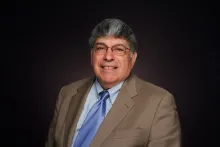
Gary Antion is a long-time minister, having served as a pastor in both the United States and Canada. He is also a certified counselor. Before his retirement in 2015, he was an instructor at Ambassador Bible College, where he had most recently also served as Coordinator.

Darris McNeely is a retired elder in the United Church of God. He and his wife, Debbie, have served in the ministry for more than 53 years. They have two sons, who are both married, and four grandchildren. Darris continues teaching at Ambassador Bible Center and is a member of the Council of Elders. Darris and Debbie continue to travel and keep up with the many friends and relationships around the world.
