


John Elliott
God our Creator gives each individual certain talents, aptitudes, health, mental prowess and opportunities that together constitute what Scripture says is, “power to get wealth.” Wealth is intended for good and is properly derived from a relationship with God. Let's examine a biblical guide for responsibly obtaining and managing personal wealth.
This transcript was generated by AI and may contain errors. It is provided to assist those who may not be able to listen to the message.
You may not have thought of it this way, but you are one of the wealthiest individuals who has ever lived throughout history.
You are rich.
You are the most comfortable of people who have ever lived throughout time. Your accommodation is heated. It's cooled. It's comfortable with some entertainment.
It is landscaped. It is safe.
Typically, individuals don't have to worry about crime. You are the most traveled of anyone down through time in luxury conditions. We might hear of some explorer who went somewhere on foot or by sea and made one or two journeys. But if you add up the mileage of where you have traveled and how often you have traveled, you have traveled more than anyone throughout time. And you've done so in the most comfortable, soft, air-conditioned, heated, no wind outside blowing in your face.
Conditions, along with some entertainment available on board, to destinations that come so quickly. It would blow the imagination of people in the old times who had to walk or travel by some cart or maybe on horse.
Today, we are the most traveled to foreign destinations in things like airplanes. Imagine someone in history being able to step on board a jet airplane and sit in a comfortable seat and be entertained and fed snacks and travel three-quarters of the speed of sound to a destination far away, wherever that is, and simply step out into another environment, perhaps another culture.
You live in a generation that has the most disposable income of anyone in history, including the wealthy.
We tend to think of our income as being used up. But what's it used up for? It's used up for having the most broad, widely obtained delicacies from around the world, any season of the year, any fruit of any type, anything that you want to eat. It's just walk in, pick it up, and eat it. Purchase it. Purchase it.
Purchase anything you want for your home, clothing. You don't have to make it. You don't have to weave it. You don't have to shear something. And you just put it on.
So many things that we have.
We have the greatest amount of knowledge and information that has ever existed at our fingertips. In fact, oftentimes it's in our pockets. And you can simply ask a question and get immediate answers on any topic, or directions, or information, or knowledge, or literature. It's all everywhere, all the time.
We live in a world that has the greatest infrastructure ever developed throughout time. The infrastructure of roads, electricity, gas, waterways, whatever. The infrastructure is there. And it's there to support you wherever you go.
We have the greatest education institutions that, for primary education, are generally free of charge, in the sense that taxation pays for them, and then the most abundant opportunities for careers. People asking you to come and trying to give you things and entice you and make you comfortable and hope you'll stay so that you can have a career. How does God want you and me to utilize the wealth that has come to us to be at our disposal? The title of this sermon is part one, the biblical guide to wealth. The Bible is full of information about wealth, what God expects us to do with wealth, and the relationship that you and I need to have mentally with wealth.
God is the creator of everything. That's where we begin. God created you and me. Sometimes we may not realize how special it is that you and I are actually alive. But let's take, for instance, if you are a female, a lady, when your mother was in her mother's womb, your egg that you were developed from was in that fetus, that unborn child at that moment, along with seven million others. Seven million others. Seven million others. How many were in your family? How many siblings did you have? You know, the fact that your egg was the one chosen and your father, sperm, millions of them, one of those created you and you are here, that is a special opportunity. That the rest of those elements never materialized. So just to have life. Now, if you step all the way forward as we sing in our hymns and as we look to the kingdom of God, and we look to being brought into the kingdom of God, Jesus Christ said, I go to make a place for you. We are transported to that place from death or from life at no expense. The place is being prepared for us, cost-free. That life, the eternal life, and the being that we will have is given to us. So what we have in between is this period of life to use our wealth, our talents, our God-given abilities in a way that pleases God, in a way that's fitting. We go to Psalm chapter 24 and verse 1. Psalm chapter 24 and verse 1. We've got some directions here. The earth is the Lord's. So when we think of outside, we think of your property, that place in which you dwell or anything that you have, it's God's.
And all its fullness, in other words, everything on the earth, it's God's. We're here for a little while. We get to use it. We can chew up and dissolve some elements and manufacture some stuff and pretty much throw it in the trash and make some more stuff and throw that in the trash. While we're here, we have stuff, but the world in its fullness is God's. The world and those who dwell therein, all of us, all of us, are God's. God has given us this wonderful opportunity, and yet sometimes we kind of think it's mine. You know, I have this little plot of ground and I maybe have a house on it, and I think, well, this is mine. I own this, and that's my tree right there. But we, like the people 100, 200, 1000, 2000 years ago, have also walked on that plot, and they probably felt some connection with it as well. We're all just passing through, having a little time on this earth. It's wonderful that we have this life and this experience. God's ownership then enables him to have a divine prerogative to do with it as he wishes, and he can steer some of that in some directions, or he can just let people take it and fight over it. But God can determine how all wealth is or should be utilized, and he has the right to tell you and me how to prioritize our use of wealth that comes our way. God gives us, along with that, free choice, and we can opt to do it his way or not. It's kind of like Adam and Eve in the Garden of Eden. It is our garden. It's where we live. It's our fruits, our trees, until it wasn't. Big surprise.
We are given laws. We are given encouragement by God, including directives as to how to use physical wealth, income, money, how to obtain it, etc. God is our teacher, and you can look at Deuteronomy chapter 28, and you can see how those who will allow him to teach them are taught. We're taught in a systematic way. He instructs us. He says, here's what I want you to do. Now, if you follow that, I'm going to bless you. At times, you won't follow that, so I'm going to correct you.
And then you have a chance to learn and grow and receive blessings. That's the way God works as we grow, and we want to grow. However, most of mankind rejects God as its teacher. He says, we would prefer Satan to be our teacher. We want to be influenced with him. Satan is the enemy of God, and he's the enemy of mankind. And so, by following the concepts and the concepts involving laws of life, including wealth, are reflected in what we see outside. Wealth, as we know it, as we see it, is reflected by government institutions, financial institutions, corporations, and individuals. All follow the satanic mindset of greed, of wanting greed or more, and people will move that economy along in that particular direction.
Basically, I would say it is, get more, give less, repeat.
And at every level, that's what you tend to see. Get more, give less, and then repeat. And so, with all the assets that there are on earth, you see a consistent declining of what's there. A declining of quality, a declining of support, a declining of elements. There's always more take than there is any kind of give back, even though it may be slight. The results down through all the empires have been increasing wages for decreasing efforts. You can go back to any empire in history, and this is what you'll see. You'll see increasing wages or payoffs or payouts or entitlements with decreasing contributions and effort coming back.
You'll see increasing costs, ever increasing costs. You can chart this in any country that's ever been. Increasing costs with decreasing quality. Increasing amount of money that's printed or minted with decreasing amount of value for that money over time.
You see increased borrowing, and yet the equity put up for those loans is always decreasing. Either the physical equity or the honesty and responsibility that goes along with that.
Exceeding spending using decreasing currencies. And all of these economies have failed, and all economies that we see today are failing for these very fundamental economic reasons. Take more. Give less. Repeat. And everybody's doing it. Let's go to 2 Timothy chapter 3 and verse 1. We'll be reminded here of a mindset of Satan's society. 2 Timothy chapter 3 and verse 1. The result is perilous times or dangerous times. Verse 2. Because men will be lovers of themselves. Everybody's taking. I call it the Hoover principle. It's a vacuum cleaner. You switch it on. That's me, and you start aiming it at things. You know, I want this, and I want that. Everybody's on the inhale setting. Who's got the exhale setting? Well, nobody. Nobody's just blowing out blessings and help. No, no, it's all inhale. And there's only so much you can get. It's kind of like the game musical chairs. There's only so many chairs, and one goes missing now and then. Nobody's sort of bringing a chair in and saying, hey, I got an extra chair. No, there's one missing. So they're lovers of themselves. Lovers of money.
Lovers of money. And they boast about themselves because they have stuff. Look at all the stuff I have. Look how smart I am. Look at this job I have. Or look at this. Look at that. And I'm boasting. And I'm proud of myself. Blasphemy mothers, disappear and unthankful and holy, unloving, unforgiving, slanders without self-control, brutal despises of good, traitors headstrong, lovers of pleasure. Let's go out and use this. Let's just party. Let's do everything we possibly can to satiate the hedonistic five senses. We're told at the universe five, from this sort of mindset, this type of mentality, turn away. Come out of her, my people, as it were. And you can see in Revelation how the end of that suctioning out of everything that's left comes down to a certain group that remains, and they're luxuriously still getting stuff for themselves until it goes out.
Well, that is not what we're about. God gave all humans certain talents, certain abilities that can be developed.
Aptitudes, health, mental prowess, along with opportunities.
Our lives consist of time within that realm, 70, maybe more years within that realm of intellect, opportunities, talents, all these together constitute our power to get wealth, if we want to use it.
In getting wealth, we are earning our daily bread, we're supplying the needs of self, for family, etc., etc. And the Bible speaks a lot about that. And when we couple that with a relationship with God, this becomes a synergistic relationship of being given opportunity, using that opportunity, giving back, being given more opportunity, using that opportunity, share it with others, grow a family, be part of a congregation, help with society, help the environment, etc., etc. Very synergistic and wonderful. You might relate that to the Garden of Eden. You know, a wonderful relationship with blessings and a wonderful life. In Deuteronomy chapter 8 and verse 11, God steps up and says something about this to us. Deuteronomy chapter 8 and verse 11, beware, once you have all of these things and you're coasting along and you know your mindset is going to be tempted to be like the Satan mindset of, I've got everything, I've made all this myself, I can be proud of myself. He says, beware that you do not forget the Lord your God by not keeping His commandments, His judgments, and His statutes, which I command you today. Often what goes along with wealth is people become self-sufficient and self-reliant. And they have reason for that, they say, because I have built up this treasure of extra resource that will see me through, and therefore I am self-sufficient. I have my stores, I have my accounts, I have my extras, therefore I am self-reliant. And many times they will forget to keep God's commandments, His judgments, His precepts, His statutes, which He commands us.
It's a tendency. Verse 17, and then you say in your heart, my power and my might and my hand have gained me this wealth. Let's go back to the egg in your grandmother's womb. You know, really? Did we really do this all on our own? Let's go forward into the kingdom of God. Did we really somehow get there in this time in between? Really? Is this just all me? You shall remember, verse 18, the Lord your God, for it is He who gives you power to get wealth.
Now, once we keep this in the right relationship, wealth is a great thing. And God gives you power, the abilities, the opportunities, if you are right with Him, to gain wealth. And to be tested by that. One's income is generally a reflection on the application of God's talents, coupled with your own personal diligence, interest, drive, to use those talents. When we think of wealth in the Bible, the first time the Bible mentions somebody wealthy, he is rich. I mean, he's really rich. I don't even know how this person had so much wealth and so much riches. I'm not even sure how you carry it around. Serious. You can read of him in Genesis chapter 13, verse 2. It just says, Abram was very rich in livestock, in silver, and in gold. And, you know, God had him moving from here to here and here to there. We don't know a lot about Abraham and how he got it, but he was evidently the son of a wealthy man, Haran, who moved to Canaan and founded a city-state called Haran. And they did really well there. And then God called Abram and said, I want you to come out of Haran and go into the wilderness, go off into Canaan, and cut off your ties to that system that made you wealthy. Cut your ties. Come with me. Come where I want to take you. Come with me. We're going to do something different. Do you trust me? Hmm. So here's Abraham trucking along out through nowhere with his gold, his silver, his animals. No connection whatsoever to that society where he would have felt self-sufficient. And then there's a famine and he ends up going into Egypt. There's no self-sufficiency here. Very interesting that Abraham was rich, but because of his relationship of trusting God in Romans chapter 4 verse 11, he's called the father of those who are faithful, those who are full of trust in God. He is the kind of the originator, the patriarch. And he says the father is the patriarch of those of us who trust in God. We trust in God. We don't have self-sufficiency. I mean, you might have to lose your job over the Sabbath or the feast. You don't know what's going to happen, what's going to come, but you trust God. And look, here we all are. And we're the richest people in history. God is not opposed to riches. In fact, he's the originator of financial blessing. In 1 Samuel chapter 2 and verse 7, this God who owns everything and is working with individuals to ultimately bring them into a very rich paradise with the most extravagant spiritual body in the greatest city that will ever be New Jerusalem, paved with gold and diamonds and riches and pearls and every amazing thing.
1 Samuel 2 verse 7 says, the Lord makes poor and makes rich.
There's a time for all of these things if need be. He brings low and lifts up. He raises the poor from the dust and lifts the beggar from the ash heap. God himself can make these opportunities abound or he can turn them off. People can learn lessons. I've known many individuals in the church. You might call them leading individuals. Well, they were wealthy. They owned corporations, you know, and they're not in the church anymore. It's a funny thing when they left the church, those things went bankrupt. They had nothing. It's interesting how high they fell. I once worked for an individual and every year he cut the new Lincoln Continental for himself. And I stayed in his lake house for a while. I'll babysit that in the wintertime while I work for the corporation. I mean, things are flying high. And he wanted to build a corporation on the west coast and wanted me to run it out there for him. Three years later, four years later, he didn't believe in God's way of life anymore. But he was self-sufficient and God turned it off. Just, poof, it was all gone. I visited him, I don't know, several years ago, stopped by and saw him and his wife in their old age. And, you know, it was sad. It was just sad.
What we find is the Lord makes poor and makes rich for a reason. Let's read the rest of this verse. To set them among princes and make them inherit the throne of glory. That's what this is all about. God wants us to inherit the throne of glory, to sit on the throne with Jesus Christ, to be in the God family forever as the bride of Christ. And so we need to look at these things, not as something that we would hang on to and cling on to no matter what. Well, I can't obey God because I'm in this situation. If I did, I would lose money or I might lose my job. But rather look at it through God's eyes here. Like God tested Abraham. He's testing you and me. In Proverbs chapter 10 and verse 21, it says, the lips of the righteous feed many. That's really what God wants us to do. A righteous man, a righteous woman, their lips should feed their children wisdom as they walk in the way. That's what it's all about. The righteous have lips that should feed many. But fools die for lack of wisdom. But wait a minute. God blesses the righteous with physical riches as well. And the physical riches of the righteous will feed many. Jesus said, remember the poor. They will help others as well. We do with our taxation, the taxes we pay. We feed many. But notice going on, verse 22, the blessing of the Lord. To who? Well, previous verse, the righteous. The blessing of the Lord makes one rich and he adds no sorrow with it. You don't rob a bank and then run and try to not go to prison. And then you go to prison. And then you're upside down. No, there's no sorrow with the blessings that God gives if we do it with honesty and integrity, if we're right, righteous with God and his laws. Now, God reminds us that personal diligence is an involvement that we contribute to obtain wealth. In Proverbs 10 and verse 4, and there's many such Proverbs like this, Proverbs 10 and verse 4, he who has a slack hand becomes poor. Notice the word becomes.
Becomes. That's a choice and that's a progressive state one becomes. You can always turn that around and have an unslack hand, a diligent hand, and become rich. So here's a principle, but that's up to us as human beings. And sometimes we as human beings will get into a state where I just don't want to work anymore. I just don't feel like it. And well, there's a slack hand. What's going to happen? Well, looks like you're going to be poor. Looks like you're going to become poor. But the hand of the diligent makes rich. And so at that point the person says, you know, probably ought to get off the couch, get a job, go back to work. And the diligent hand will make rich. Makes. See, the word makes and becomes. Those are our responsibility. And as we'll see, God doesn't really care whichever. That's not your salvation, whether you're rich or you're poor. That's not a matter of salvation. That's kind of our choice. The Bible also tells us that when we have more money or more wealth or more stuff than what we need at the moment, it's wise to store it up. This was a principle that God used with Joseph in Egypt. God showed Joseph there's coming a time of famine. So here's seven plentiful years. Store it up. And then the famine comes. You got all this wheat and all this grain, and now you use it. So that's a good principle to have. This is shown to us by our Creator in Proverbs 6 and verse 6 through 11. Proverbs 6 and verse 6.
We all know this story of the ant, but let's look at it a little closer. In the preceding verse, he first says to an individual who's not wealthy, doesn't have enough, he's now saying in verse 6, Go to the ant, you sluggard. Consider her ways and be wise. Now, maybe you and I don't know a lot about ants. So he's saying, well, go check it out. I made ants. If you look outside, there are no ants. You just won't find any ants. There are none. You might say, no, why not? Well, let's read on. Which having no captain or overseer or ruler, kind of like you and me, we have a choice of what we want to do in life. Well, it says, provides for supplies in the summer. When the harvest, when the crops are growing for humans, the trees, when the oil is coming into the olives and the grapes and, you know, the wheat is growing, the ant provides her supplies underground in the summer. It just fills it up down there, evidently. I don't know. I haven't been down there. But evidently, they're down there. And she gathers her food in the harvest. How long will you slumber, oh, sluggard, when you rise from your sleep? Little sleep, little slumber, folding hands asleep. So shall your poverty come on you. See, this is cause and effect. It's a choice. Your poverty will grow and come on you like a prowler and your need like an armed man. So suddenly, that's going to show up. And it's not going to be a pretty time, especially if you've run out of stuff and you don't have any way to obtain it. So saving up for the future is good on several levels. One thing is, you know, life kind of has this. Something breaks down, you have to fix it or something, you know, gets sick and you have to mend it. You have to maybe you have some guest come and you need more, or maybe one of your kids' families lose their job, have to move in with you. These things ebb and flow. Or sometimes there's opportunities maybe to go out and see God's creation when you have a vacation or some time off, and it's good to have something there to go do that with. Life is like that. This goes a little bit further when we come to Proverbs 13 in verse 22, which I'll just read a portion of to you. Storing up doesn't just mean for me now, today, my need, so I can sort of get over the next hurdle. Verse 22 of Proverbs says, a good man, one who is good in God's eyes, one who is responsible, leaves an inheritance to his grandchildren. So now you begin to think about having enough that's going to see you through now and help your children, but also have something for your grandchildren, so that when they're beginning to start out in life and don't have much of anything and need some help, there'll be some inheritance or some assistance there to begin to help them learn some financial fundamentals. That's a good thing. However, there are many today who are squandering the funds that they have, and once they have grandchildren, just set an example of debt. Big spenders and debtors, or poor and debtors, or as is common today, they have a little bit saved up, but they want more, and so they will fall for scams, investment scams, with a higher rate of return. So out of greed, somebody offers you 40 percent. Well, I'm not going to put it in the bank at 4 percent. I'll get the 40 percent. Here's all my money, and next thing you know, it's gone along with the person. How often does that happen? It happens a lot, and that can be done in many ways, not just scams, but sometimes religions will come along and get people all whooped up and get people who have inheritance saved up for their families will take that inheritance and disappear with it.
Just remember, a good man leaves an inheritance to his children's children.
Having access money then puts one in a position to be able to help others. Having no access money or being poor puts you in a position of not even being able to help yourself, maybe even drain others. Now, we've given some positive examples here. Abraham and individuals who are good and righteous and leaving funds to your children's children, etc. But these do not give the whole picture. These do not give the whole picture because a wealthy, godly person, and we are all wealthy. I could take you, we could go to a different country, and you would find out right away that you are rich. What happens here, though, is a wealthy individual must navigate certain pitfalls, certain temptations, certain distractions in order to maintain that relationship with God. Let's look at a few things here. As people become, as people accumulate wealth, let's say, whatever that is, things, we begin then to protect it with insurance. We put insurance on a car, insurance on a house, insurance on a life, and I don't know, begin to ensure things. Or you're protected. Well, if I have something here, I'm not going to leave it. I'm going to put that in a vault or in a safe. I'm going to pay somebody to keep that safe. You might think, I'm going to now rely on transportation. I've got this transportation. It's really working well. I rely on the job, the career I have. I have labor-saving devices in my home that do a lot of work for me. My life's pretty good. Got the food supply coming in. Maybe extra food supply in the freezer or stored in containers. And next thing you know, we begin to feel self-reliant. And that's a tendency. Self-reliance as a source of our stability and a source of our security becomes us and our stuff. In Proverbs chapter 18 and verse 11, let's see another proverb here that would warn us of a potential downfall. Proverbs 18 and verse 11 says, the rich man's wealth is his strong city. A strong city was a walled city back then. It's protected from invasion. Close that gate. You have a strong city. His wealth is his strong city. And like a high wall in his own esteem, I'm safe. I'm good. I'm good to go. Because of what? Because of my wealth.
Verse 12, before destruction, the heart of a man is haughty. It's haughty. Maybe you go back to, as we read in Deuteronomy, God gives the blessings that when you get wealthy, don't forget to keep his commandments. Don't forget to have that relationship with God. That is so, so important, and it's so easy to overlook. You get on your knees saying, well, what do I have to pray about? Not much. Right in the model prayer outline are the words, give us this day, that's today, our daily bread. Why is that there? Why is that there? We all just become, we don't need that. I've got the grocery store, I've got my grocery money. I don't need to really ask that. Why is that there? Obviously, we need the spiritual bread of life every day, God's Holy Spirit, but he wants us, Jesus is teaching us there to pray. He wants us to have that relationship of dependence on God for our daily food, our daily bread, our daily needs. Even though we are responsible and we have it, we thank him for that, and we realize it comes from him. That's why we pray before a meal and give him thanks for the food.
In Revelation chapter 13 and verse 15, we find people in the church who have lost this perspective. Jesus Christ is here speaking to the church, all of his church, not just some era, it's just the church. And we need to have ears to hear what he says to the churches.
I know your works. Revelation 3 verse 15. Okay, we have works. It's good. We have works. We're doing good. We're living by laws. We're keeping the Sabbath, keeping the Holy Days. We're working hard. That you are neither cold nor hot. Oh, somehow you don't really have a strong relationship with God. You don't have a weak relationship with God or no relationship with God. You're sort of out there on your own. Self-reliant, maybe a little hard to pray, a little hard to study. I've got important things to do, like making money, building wealth. You're not cold. You're not hot. I would that you were. Why? Verse 17. Why are you this way? Because you say, I am rich and increased with goods. There it is. This is one of the prime things that happens when we are comfortable or we have extra wealth. I'm rich. I'm increased with goods. I have need of nothing. I really don't have need of anything. I'm good. Not realizing that you are wretched, miserable, poor, blind, and naked. If you read in here, he says that you don't really perceive the relationship with me as necessary. You think you've got it on your own, but you're wretched, miserable, poor, blind, and naked. And then he says, I counsel of you to buy of me. Now, this is not a condemnation. This is not correction. This is a friend counseling his wife, his bride-to-be. He's saying, I'm counseling you. I'm giving you some good counsel. Here's your good counsel. I want you to buy of me 24 karat gold. The real stuff. You're out there chasing stuff you're going to throw in the trash, honestly. What's the lifespan of whatever that thing is? You save up and you buy it and whatever there. Or even your house, you build it up. Next thing you know, it's I don't know, it needs remodeling, needs repainting. I think it gets something else. Buy for me gold tried in the fire. Tried in the fire just means it's pure gold. It's 24 karat, not this stuff that is glitzy looking, that you may be rich. He wants to partner with us in both types of wealth. The daily bread, the spiritual, the physical. He wants to partner with us in this type of wealth that is physical as well as spiritual. That's a partnership. That's a synergistic partnership. And it works great across families, across all opportunities, across the kingdom of God. It works great when it's all together. But you can see it breaks down. If we let it become, oh, I'm rich, I have need of nothing, it's broken at this point. It's broken. And God will often pull the plug on that and let it fall. Well, then one might take the opposite and say, well, see all these rich people, man, they have problems with God. They have problems in life. It's better that I'm just poor. Stay on the couch.
Well, again, lacking wealth due to laziness makes, or squandering money, not using it rightly, reduces one's ability to help himself or others. Remember? That's no good either. In Proverbs 18, verse 9, it says, "...he that is slothful in his work is brother to him that is a great waster." And when you examine that, one who is slothful, a sloth just moves so slow, doesn't really accomplish much. So if you're slothful, you're a brother to him who is a great waster. The word waster can mean laying waste, ruining. It's brother to one who ruins. That person is going to ruin his marriage, ruin his family. It's going to be an eyesore to the neighborhood. We could point out a few places along the road. People who...
I could show you a person on a certain street. Just piled junk, old vehicles piling in, just stacked them in so much. Every one of them is falling apart. It's a detriment to everything. I was talking to a group of firemen last week, and they said, yeah, we stopped at that house. One of those old vehicles, something about the oil or something caught on fire, we had to go put it out. It's wasting the neighborhood. It's an eyesore, and the house is falling in. So you see, it's just a waster, and I don't ever see any family there.
So in the first sense, we need to have wealth, and we need to have that in relationship with God. Don't be some sort of self-confident individual, because we have things. Second element that we need to be wary of when we have wealth is that Satan wants us to lust for it. You have a little, then you want more. And there never seems to be enough. What does a billionaire need with more billions? They can't use the billions they have, but for some reason they want more. The Apostle Paul warns us that those who desire to be rich fall into temptation and a snare. Let's go to 1 Timothy 6 and verse 9. 1 Timothy 6 and verse 9.
Now you might think on the surface that what he's saying here is, being rich is bad. Oh no, he's not saying that at all. Jesus Christ was wealthy, Abraham was wealthy, David was wealthy. There were individuals in the church there when the church began. They owned land, and they were selling that land and using it so that they could all be together.
Here he says, those who desire to be rich. These are ones who are not rich. But they desire to be rich. That's what they want. They don't want to desire a relationship with God. They're not wanting to be a responsible individual, husband, wife, community person, etc., etc. No. They desire to be rich, and they fall into a temptation and a snare. You know what happens there is, I want rich, so I don't know how everybody else gets this, but I see they have it. Hmm, how can I get that? You know, maybe I'll sell them something. How would you like this? Except it's really this, and then I'll run away before they know. I'll trick people. I'll short them. I'll sell them things. I'll make products that look great for a week and then run. They've fallen into many foolish and harmful lusts which drown men in destruction and perdition. The end result of that you see often in the news. People are going to jail who are wealthy and financed, but they're going to jail because they broke the rules. They wanted more than what was due them. Now, verse 10, for the love of money, not money, money is not the root of all evil, but the agape of money is a root of all evil. It's not really agape. It's the type of philia. That love of money is actually one Greek word that's related to kind of the brotherly love, not the godly love. But this desire, this passion for money, it's a root of all kinds of evil from which some have strayed from the faith in their greediness. I knew an individual in the church once who went to jail. He owned a bank, dipped a little too hard in the bank commission, put him in jail. They strayed from the faith in their greediness and pierced themselves through with many sorrows. You know, the reputation fails, the family kind of breaks apart, and you know, I just mentioned a guy, right? Not in a glowing turn. He was a friend, and how do you recover from some of that? Well, verse 11, but you, O man of God, flee these things and pursue righteousness, godliness, faith, agape, patient perseverance, and gentleness. Fight the good fight of faith and lay hold on eternal life. That's what we're called to. So the Bible warns that a desire for money can be a root of all kinds of evil, but money itself, or wealth, or possessions, that's not evil. Just elevating it above God. I'll give you an example. You elevate wealth above God. Jesus said to the church, you have lost your first love. People think of that in time, but think of it in priority. First just means priority. Love, the word love, is agape. You have lost agape out of first place. Something else now has taken first place other than agape love, which is love God with your heart, soul, and mind, love your neighbor as yourself. Something else has become first or primary. You've fallen from that. And what is it? Well, it's physical stuff and physical wealth. Jesus gives proper priorities. He tells us we can't serve God and mammon. You can't serve that in sort of first place. You can't make that your God, your number one priority. And when you do, and humans do that, when you do, you tend to fall. I'd like to show an example of this in Mark 10 and verse 17 through 23, where there is a rich person that Jesus loved. Let's follow this story. Mark 10 and verse 17.
As Jesus was going out on the road, Mark 10, 17, one came running, knelt before it, and Lord, good teacher, what shall I do that I may inherit eternal life? Jesus loved this man. He appreciated this question. And Jesus said to him, verse 19, you know the commandments. Remember? Agape. Obey God. Keep the commandments. Here's what he said. You want eternal life. Keep the commandments. Don't commit adultery. Don't take sin. You don't want to do it. You don't want to take something that's not due you. That's somebody else's mate, not yours. Don't murder. Don't take a life and then take what that person had. Do not steal. See the financial elements here. Don't steal. Don't bear false witness. Don't defraud others. This person was wealthy, wasn't he? Why is Jesus telling him these things? And then honor your father and mother. And in Jewish society, part of that was supporting them in their old age, but they were ducking that.
And he said, oh, teacher, all these things I've kept for my youth. And then Jesus, looking at him, loved him, and said to him, one thing you lack, go your way. Sell whatever you have and give to the poor. Notice the words carefully.
We're going down this path. I want you to join me.
Go your way. Sell all that you have. Give to the poor. He didn't say, give it to the poor. He didn't say, give it all to the poor. Just give to the poor. And you will have treasure in heaven. Treasure in heaven.
King of God, treasure in heaven. Next he says, and come. Come with me. Take up the cross and follow me. We're going to an unknown destination. It has sacrifice involved. It's going to be like Abraham going off into the Canaan. You cut off all of those establishments that you have. Sell all that stuff. Give some to the poor and come with me. And trust me. Trust me.
But he was sad at this word, and he went away sorrowful, for he had great possessions. That's where his trust was. He could trust his possessions. He could not trust God.
He held on to that which he thought would provide for him and give him safety.
And Jesus then said, how hard it is for those who trust in riches to enter the kingdom of God. It wasn't about riches. It was about where we put our trust. God and Christ want us to trust them.
I mentioned before that God does not require more from the rich than from the poor, rather obedience. Let's go to Exodus chapter 30 and verse 15.
You know, your wealth is not a symbol of your status with God, of righteousness, or whatever.
Here, individuals are making a tone for themselves before the tabernacle is being built and the various things for themselves are being built. And that's what the Bible says. Tabernacle was being built and the various things for the tabernacle. And he says this, the rich shall not give more than the poor. The rich shall not give more and the poor shall not give less than half a shekel. So when it comes to... Well, read on. When you give an offering to the Lord to make atonement for yourselves, God doesn't need your money. He's not impressed with how much money you have. But we do have a responsibility. And the responsibility is that making atonement for yourself, whether it is in how you live and the things that you do, the tithes that you pay, the offerings you give, the financial benefits and blessings that come in that are used right, that are obtained right, that are spent right, all of these things for yourselves, do it right. Do it right. Now, it says in the next verse, you'll take the atonement money of the children of Israel. This comes to God from the whole church, the church in the wilderness at that point in time. And God saw that as even, as it were, proper from everybody. And you will appoint it for the service of the tabernacle of meeting, that it may be a memorial for the children of Israel before the Lord to make atonement for yourselves. So it's very important that we kind of understand the priority of life is a relationship with God. One of the additional benefits can be wealth, but ultimately we're going to leave all that behind. You know, when we die, we're dead, you know, and what remains can go to somebody else. But from there on, we're in God's hands totally. In 1 Samuel chapter 2 and verse 7 through 9, 1 Samuel chapter 2, let's look at verse 7. Again, the Lord makes poor and makes rich. Remember, if you're in a relationship with God, there is a, there's an interaction there in this, what we call grace, which is reciprocal favor. And the reciprocal favors should be going like this in your life. God's giving to you, you're returning with growth, he's adding more, he's returning that, he's giving various favors of all different types, you're using them rightly or not, so he gives correction. But this reciprocal relationship with God is going well. Now, in verse 8 in the second half, as we read before, let's come back to this. To set them among princes and make them inherit the throne of glory. That's what it's about.
That is what it's about. And all we've covered so far is the excitement of riches or the spinning of riches, the lure of becoming self-sufficient and leaving God, but ultimately this is to make them inherit the throne of glory. So we should actually focus on that aspect and not on the riches themselves. Proverbs 10.4 tells us that having wealth or poverty is pretty much a personal responsibility. It's up to us, whether we're diligent and we rule or we're indebted and someone's ruling over us. But Proverbs 23 and verse 4, let's turn to that. Proverbs 23 and verse 4, riches are not worth sacrificing yourself for. Riches or wealth or more wealth is not worth sacrificing yourself and your loved ones for.
This is Solomon, who is one of the wealthiest person who ever lived in a cold stone castle without air conditioning and had no car and couldn't fly in a plane. And he didn't have much information about what was going on through the internet. But he did come down to this as far as a point of wisdom. Do not overwork to be rich. You do have to work, but don't overwork to be rich. Because of your own understanding, cease! Exclamation point. That's some wise words right there. If you're going to go busy off and leave your family, your wife at home, and work real hard to get more money, you're going to have problems at home. And your children are going to have issues, etc., etc. But you may come up with, I don't know, some fantastic thing that you wanted or a store of wealth. The wisest, richest people in the world obtain their wisdom through failure. J. Paul Getty, named not well-known, but one of the oil empire leaders, said, I'd give all my money for a happy marriage. Had all the money in the world. Saw a lady recently related to oil in Oklahoma, end of her life, basically single, said the same thing. My wife and I know a lady related to one of the big companies here, who retired out in the west, and a grumpy old lady. My goal was to make her smile. I could never make her smile. Impossible. But anyway, it says here, will you set your eyes on that which is not? For riches certainly make themselves wings. They fly away like an eagle toward heaven.
Consider the fallacy of money. All the countries and empires throughout history had money. It's worthless. When I was a kid, I grew up playing with Confederate money.
Somebody had thought, oh, this Confederate money will keep a bunch of this. It would be, I don't know, and then I guess it wasn't worth keeping. And it came down and us kids just had piles of Confederate money. And we used to kind of play with it, and then we got bored with it. It's worthless. We don't even have it today. I mean, there's nothing there. And right alongside it, we were playing with German marks from World War II. Some of the troops, I guess, brought some of that back home. It was the kind where you fill a wheelbarrow with German mark, you know, the paper, and you take it in and get a loaf of bread. That's how devalued the currency was, they said. And here it was no longer a currency. Many of us have traveled to France and Italy, and the French Frank, the Italian lira, 2002, gone. Worthless. They use the euro now.
The United States has lost 97% of the value of its dollar in the last century. We're down to the last 3%. In 1916, a single US dollar would buy what it takes $1,000 to buy today. And it's continuing to develop or devalue. The US national debt is rocketing past 125% of GDP, and citizens' debt, credit card, etc., debt is growing as well. It cannot be supported.
And so you hear the hype. Get gold! I better protect yourself. Get some gold! Well, who wants to buy that stuff? It's pretty expensive. Is storing up gold reserves the answer?
The last few days, Politico, the European Central Bank News, says this, As war, ideology and protectionism divide the world into distinct blocks. Developing countries in particular are hoarding gold, bullion, to prepare for the day when a global financial system dominated by the US and Europe collapses, and a new one can take its place. A European Central Bank put the gold buying more bluntly. It's a sign of impending wars.
Other systems of payment are emerging, digital cyber-currencies. The advantage of those is, because they're digital, they can be controlled, absolutely. And that's a lure of being able to have everyone's wealth in, say, computerized, you might say, digitized, and observed and controlled. Let's go to Revelation 13, verse 16.
Revelation 13, 16 is talking about a one-world government that will be here before Christ's return, called the Beast, and he causes all both small and great, rich and poor, free and slave, everybody rich and poor, to receive a mark on their right hand or on their foreheads, that no one may buy or sell except one who has the mark or the name of the beast or the number of his name. Right now, you can take a, you know, stack of money, dollars or whatever, and go anywhere in the world and spend them. Nobody can track them. It's just, I give it to you, you give me the goods, nobody knows. But when you go into, say, credit cards and you start having a digital record, all of that is tracked. All of that is seen. Bank accounts are seen. You go into a cryptocurrency that is not protected, sort of like Bitcoin has a certain level of protection, but if you can get governments that are rolling out, China's rolling out, the United States is rolling out one, Europe is talking about rolling out one, not sure if they are, these things now are able to be controlled by the government, and you will not be able to use your wealth unless it's approved. What's going to happen to the security of gold? Gold is a funny thing, by the way.
Gold is a useless metal. When I say useless, it's just stored. You buy gold, and now you have to keep other people from getting it. And all you do is you pay somebody to stick it in a vault and keep it safe. Nobody uses it. Everybody wants more of it because it gives them a sense of security, and people out there who have a lot of gold are hiding it. I actually have some that was buried in the ground, a piece that was given to me by the person who buried it, later pulled it up, buried in the ground so that nobody could ever find it.
Only he knew where it was, and he showed me where it was, told me where it was. But you know, that's kind of odd to have a resource that's so valuable, that's so useless. And so in Ezekiel chapter 7 and verse 19, let's go forward. Let's just say you're one of those out there like China this year, I think about 350 tons of gold, and all the countries are just loading up on gold as some sort of a replacement for having dollar bills in their vaults.
Ezekiel 7 verse 19, at some point in time, if you have a controlled system of monetary finances, you don't need gold. Ezekiel 7 19, they will throw their silver into the streets, and their gold will be like refuse. Their silver and their gold will not be able to deliver them in the day of the wrath of the Lord.
Silver and gold, precious metals, will not satisfy their bodies nor fill their stomachs, because it, wealth, became their stumbling block of sin, of iniquity. And that's where all this is going. It's going nowhere. So remember that Jesus in the model prayer teaches us, pray, give us this day our daily bread. Have that strong connection with God. God wants to be involved. He wants to be the prime, supreme partner of us with our needs, not some unused metal that is hidden from others until it's useless.
I'd like to read two scriptures here as we think about wealth. And if you have it, great. Invest it, whatever you do with it at some point in time. Don't trust it, but, you know, use it as long as it's available. But realize this.
Luke 21 and verse 36, here's what Jesus Christ says to his wife. Watch, therefore. He's talking about observing. This word watch means to pay attention, right? Pay attention to our relationship with God. And pray, always. Be a person of prayer. Have that interaction with God. Have those bowls of heaven, those golden bowls, filled with the prayers of the saints.
Make sure yours are in there. Have that relationship with God. That you may be counted worthy to escape all these things that will come to pass and stand before the Son of Man. Gold isn't going to make you escape all these things. Money in the bank, property, I mean, whatever else, you know, food stores. God is going to help you be escaping all these things and to stand before the Son of Man.
It comes right back around. That's what this is all about. Realize that the only reliable asset that you and I have is Jesus Christ, the head of the church, our Lord and Savior, our husband, our brother. He is our husband, is our provider. That's what husbands do. They provide for us. And let's see the great provision that He will give us in the future. Revelation 12 and verse 14. Revelation 12 and 14. Think of, before we turn there, just be thinking about all the wealth you have, all the sources, all the reliance that you have, and let's compare it to what our husband is going to provide for us.
Revelation 12 and verse 14. Satan comes after the church, but to the woman, to the church, was given two wings of a great eagle. How much do you need to travel to where he's taking us? Nothing. You don't need anything. In fact, he says, don't even go back and get your coat. Don't get your coat. Don't go back in the house for anything. Just come on. Got you covered.
Two wings of a great eagle that she might fly into the wilderness to her place. What place? What? It's her place. It's provided for her. You don't have to buy it. Where she is nourished. Oh, what about all that food I was saving up? Do I need to tote that along? Kind of like Abraham got the animals, got the gold. No, no. She is nourished for three and a half years from the presence of the serpent. See, when God is the one that we rely on, Jesus Christ is leading us. We don't need to be self-reliant. We just use these elements we're given to love, to serve, to be responsible, to live this life. And we give God the thanks for them. But he wants to be the source of all physical, material, and spiritual blessings. It's Satan that wants us to develop a prideful mindset, self-sufficient, and cut ourselves off from God so that in the end we're part of those that, oh, Satan comes after us. We also keep the commandments, but we'd lost our focus. And we didn't really have that relationship with Jesus Christ, so we sort of weren't there at the right time. In conclusion, the entire Bible's advice about riches can be summed up in two verses. Let's read them. Jeremiah chapter 9 verse 23. If you took everything that we talked about today and you just put them into two sentences, we'll find them in Jeremiah chapter 9 and verse 23.
Thus says the Lord, and this was the one who became Jesus Christ, the Word, and the Word, let not the wise man glory in his wisdom. Remember that egg in that womb? Or egg in that ovary which is in somebody else's womb? You know, don't glory in your own wisdom. We didn't come up with this life. Let not the mighty man glory in his might.
You know, this opportunity God gave us started with our parents and others and teachers and educators and, you know, they helped contribute to a mighty man.
Nor let the rich man glory in his riches, but let him who glories glory in this, that he understands and knows me, that I am the Lord, exercising lovingkindness, judgment, and righteousness in the earth. For in these I delight, says the Lord.
Next time we'll go into part two honoring God with your wealth.
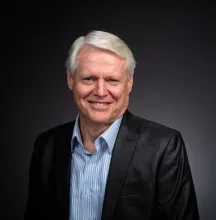
John Elliott serves in the role of President of the United Church of God, an International Association.
