


Mario Seiglie
This transcript was generated by AI and may contain errors. It is provided to assist those who may not be able to listen to the message.
So we begin this sermon, which is part two of the biblical lessons from the trip to Europe that my wife, Cottie, and I had the opportunity to do during the days of Passover and the days of Unleavened Bread. We were able to visit the brethren in Holland and also in Germany. In the meantime, we also were able to see some of the highlights of the most important places. We already covered the Netherlands or Holland and the previous one. And so now we traveled to the area of Berlin. As you can see, started over here in Amsterdam.
There we go. This is Amsterdam here, and we were able to make our way to Cologne, visit the Bonn office, and then go all the way to Berlin. Berlin has been freed for now 30 years. It was in 1989 when the Berlin Wall fell. And again, those Berliners and also East Germans were able to gain their freedom. And so here are some of the lessons that I wanted to cover.
We go back in time. Let's see here.
Okay, so we covered a couple of these biblical lessons last week, but I wanted to add a few more. So we covered the first principle, which is the Apostle Paul mentioned. I have become all things to all men that I might by all means save some. So Paul was multicultural. He was bilingual, multilingual in that sense. He spoke at least three languages. Greek, Hebrew, Latin. And so he said it pays off to study to be cultured and know a bit about history, especially when you can tie history to the Bible, as we're going to do today. Paul, when he was up in Mars Hill in Athens, he quoted some of the Greek poets. So he went to the audience, identified with them, so he could give the gospel in a more palatable way, so they would be more receptive to it. He also said our words should be quote, always with grace, seasoned with salt. You know, food can be very bland without a little bit of salt, and so our words should also have a bit of interesting things that they are receptive to what you say that you may know how you ought to answer each one. Also, knowledge can be quite useful, but it can also be a source of vanity. As Paul mentioned, knowledge puffs up, but love edifies. So you have to be careful how you use the knowledge that you obtain. Number five, so all we know should be used to glorify God and not ourselves, as it says, and whatever you do in word or deed, do all in the name of the Lord Jesus, giving things to God the Father through Him. So knowledge should be a means to draw a person closer to God, always acknowledge God as the source of this knowledge. We might be able to come across it, but God is the author of everything that we know. He created everything. So we should remember that as well. And so on this trip in Berlin, lesson number five, Nefertiti and Akhenaten. How many have heard of Nefertiti? Okay. How many have heard of Akhenaten? Okay. Nefertiti because of her sculpture and bust is known because it was so perfectly done. And as you go into this Egyptian museum in Berlin, you see here the bust of Nefertiti, and that's the only thing in the room. So they dedicated a whole room just to this sculpture.
Now, let me go into how this ties in with the Bible because there's a very important lesson and it's also support of biblical evidence. Now, Nefertiti was the wife of Akhenaten. He was actually named Putmos the fourth. But for some strange reason, he rejected his former religion and he focused on one god among all the hundreds of Egyptian gods they had, and he focused on one and said this is the one true god that we should worship. And he moved his capital from Thebes all the way to a place called Tel Amarna, halfway up the country, and he started a new religion founded a new capital and he basically rejected not only the previous gods in Egypt, but he rejected how they were depicted. He said these are not real pictures of these pharaohs. I want now to go to and focus on realism. I want the sculptures. I want everything that is made to be realistic. Let's show the errors and the defects of the pharaohs and not only how the ideal model would be pictured. So here we're going through a radical change in religion, culture, and perception of reality. Something big had to happen before that time. And so we go here to the Egyptian dynasty. And of course all of this, the dates, they're still pretty fluid, but here's one of the most probable cases with the exodus happening around 1446, which meant that they would be gone from Egypt for about 40 years. And then at 1406 they would begin the conquest of Israel, which lasted about seven years, and then there were some parts they never did conquer. And so there was this struggle with the Canaanite kings for dozens of years. The important thing is, according to our best understanding, it was Amenhotep II who was the pharaoh of the exodus. And he was the one that hardened his heart. As you can see here, about 1450 to 1423. 1446 would have been pretty close to the beginning of his reign. And then after he died, Thutmose IV took over. Amenhotep III and then Amenhotep IV. I'm sorry. Amenhotep IV is the one who became Akhenaten, the one that married Nefertiti. Around 1377, so we're talking maybe about 25 years after Israel came into Canaan, and then the conquest took place. Now, interestingly, during this time, the Egyptians had governed most of that area of Canaan. And so, during this period, especially Amenhotep IV, the kings and rulers in Canaan sent messages to the king to come and rescue them, because they were being attacked by this group of big masses of people that were foreigners that they called Habiru or Hapiru, which has very close, uh, linguistic relationship with the term Hebrews. And so they're being attacked. In Deuteronomy 11.4, it says that Egypt was devastated. Moses says, even unto this day. So, 40 years later, before Moses dies, he says, Egypt is still suffering the consequences of what happened 40 years before. And there's a famous papyrus called a pure papyrus, which mentions how Egypt was devastated, the Nile River was like blood. You couldn't drink it. It talks about the the slaves wearing jewels and precious things. And this is all written as this calamity that has befallen. It talks about the fields being basically barren, food, hunger, and all of this.
And it most likely deals with this time period. Now, here's the way the Egyptian pharaohs and the gods were depicted before Akhenaten. So you see here, everybody is very slim. Everybody has tall. They're crowning. Here's the queen and the king. And this had taken place for over a thousand years in the past. You had all of these temple reliefs and murals, and all of them were of this idealized heart. Akhenaten comes in and he says, no, we are not going to do what our ancestors did.
Now, this is going to be a reality. Art now is going to reflect truth. And so here you have Akhenaten. He's got a beer belly. And Nefertiti, yeah, she's got a belly of her own. Not stylized. And what are they doing? They're playing with their children. That's not very regal and royal. And who are they worshiping? They're worshiping Ra, the sun god.
Or Athen is another name. And so he just has one god now that he's focusing on. Here's where he moved his capital from the area of Thebes all the way to Amarna. And here is Memphis, the upper part of Egypt. But Tel-Amarna was a place that he came and he established virtually a new capital and religion. Notice how he depicts himself. Beer belly.
This doesn't look like the typical Egyptian god or Pharaoh, does it? It's got a long face. And during his stay in Tel-Amarna they were sending these tablets, the Canaanites, the kings. And what are they saying? The Habiru are now attempting to take Jerusalem. And sure enough, this was the period of time when the Israelites were conquering the country.
And I could just show you one after another because these were preserved in what was the library of the foreign kings. And so they have over a hundred of these messages all saying, please do something! Bring your armies! And this started even with the father of Akhenaten, pleading these Canaanite kings, please come! They're conquering us! You're the king! You're the one that's supposed to be over the territory.
You know what? Not one Egyptian showed up during that time. I wonder why. Is there something about the Hebrews that they are afraid of? And these kings, they didn't have any more conquests. They basically allowed all the northern territory that they had already conquered, Canaan and others, they basically neglected it during this whole period of time when Israel is conquering it, which is very important. Because if the Egyptians were to come at that time, they could have caused quite a bit of havoc. But they didn't.
And so you have this Egyptian king who suffers a trauma so great that he no longer believes in the Egyptian gods and has to focus on something very similar to what Moses had taught the Hebrew people. You're supposed to worship one god. Well, of course, the Egyptian is not going to worship the Hebrew god. So what did they do? They chose an Egyptian god. To have a type of monotheistic religion. But as soon as Akhenaten dies, he loses the influence and the priests of the former and the known religion before went back. And so Akhenaten's reform only lasted during his lifetime.
And then Tutankhamun, King Tut, as well known, was one of his sons that came to power and he brought the former. But it shows there is this tremendous trauma. You do not change a religion and culture of people that have been doing this for hundreds and hundreds of years and all of a sudden you have this radical break. So it indirectly indicates that the Egyptian people had suffered this great trauma that their Egyptian gods were humbled.
And now the king, this Akhenaten, recognizes it and tries to reform the Egyptian religion. Just like the Catholic Church in the 1500s came Martin Luther and others. They tried to reform the Catholic Church and they succeeded in part. We have Protestants and evangelical churches that come from that cause, but Akhenaten's reform was short-lived. It didn't last beyond his life. But when you see a picture of Nefertiti, that bust is quite realistic. We were able to look at it and it showed she had wrinkles.
You could tell her seventh vertebra from the neck. It was very realistic in comparison to the gods. Here's another picture of Akhenaten and Nefertiti worshiping the one god of the sun. And so I find it it does make sense that after a great destruction of Egypt, you would have this stumbling and bumbling of religion.
People no longer have that great respect they had for those Egyptian gods and idols. So that's the fifth lesson that can be learned. And anybody wants to study this further, please do so. It's just a fascinating story. Now, here's another one. Most people would not be aware of this. We visited the famous summer palace of Frederick the second, Sansusi or Sansusi, which means free of stress. He built this beautiful palace. You can see in the background, which was the summer palace close to Berlin. But what was interesting was what was on top of Frederick's tombstone. And what are they?
Potatoes. That's something that they place there every day. Germans visit the place. And to honor him, now he's been dead since 1786. So here we have close to 250 years, and they're still putting potatoes. What is that all about? Anybody ever heard the story of King Frederick and the potatoes? Anybody? Good! I have a captive audience. All right. Okay, so here's the story, and of course they mentioned this when you're visiting the place. But here's King Frederick the second visiting laborers encouraging them to plant potatoes.
And here they have the gathering of or harvesting of potatoes. And potatoes have up to four times the caloric value of wheat or barley. So if you were starving to death, it'd be better to have potatoes than to have some wheat or barley. You can live off of potatoes a lot better.
Here's a an article I read some years ago by William McNeil. It's called, What if Pizarro had not found potatoes in Peru? And when I saw this, I remembered that article that I had read. And so here's excerpts of this article.
It says, for Pizarro and his followers, the fact that the peoples of Peru did not raise wheat or cattle was a trivial inconvenience. Since it meant they had to eat unfamiliar, distasteful substitutes for the bread and meat they preferred. To them, that must have seemed a mere nothing compared with the wealth of booty they seized. Yet, I proposed to argue that the humble potato played a larger part in shaping the subsequent history of the world than did all the gold and silver that so delighted Pizarro and his successors. The same plant rescued Prussian peasants from the ravages of invading armies during the Seven Years' War from 1756 to 1763. That actually made Prussia into a great nation. Which, just a hundred years later, Bismarck would unify Germany, but it was through Frederick the Second consolidating all these German regions together that made Germany possible.
He says, this plant rescued Prussian peasants from the ravages of invading armies during the Seven Years' War, and their resilience made the survival of Frederick the Great's army and government possible.
Then, in the 19th century, an expanded supply of calories from potato fields sustained Europe's demographic and imperial expansion by assuring ample labor for factories and other urban occupations while sustaining massive emigration overseas. So we have here the British and American, you could add Dutch as well, the possessions that came in a limited sense to the potato in Europe that was harvested at industrial levels, and it raised the caloric value of people.
They could survive so much longer, and it brought prosperity that made Europe a world power. McNeil goes on to say, potatoes had several advantages over grain as a food for humans. First, and most importantly, it's suitably moist soils or insutably moist soils, the calorie yield from potato fields is usually much larger than what grain produces.
In northern Europe, caloric yields per acre from potatoes are between two and four times greater than that from grain. So here you finally had people that could be fed properly. It helped people to have more strength to reproduce and have more children because you didn't depend upon a wheat crop that did not provide all the calories.
Moreover, the potato has enough vitamin and mineral content to constitute a complete and well-balanced diet when supplemented by the fat, protein, and calcium of whole milk from cows. So basically, uh, milk in potatoes, and you can survive for a very long time. That, in turn, became possible because after 1750, the spread of potatoes across European landscapes ceased to depend on the initiative of illiterate peasants, relying solely on word of mouth. So he started planning it.
He said, hey, this really is helping my family. We're, we're, we're hung, we're losing hunger. We're getting stronger. But what happened? Government officials intervened and set out, first only in Prussia. Yes, with this gentleman, Frederick II, to propagate potatoes with the deliberate purpose of safeguarding rural taxpayers from wartime famine. What happened? Before, when they had wars in Europe, these armies would come and they would take the food from the fields. They would take grain. They would take everything that was harvested.
But guess what? The potatoes were underground. And so, yes, the armies took something, but you left the potatoes. And this is what Frederick realized. This got started when the youthful Prussian king, Frederick the Great, campaigning in the Rhineland during the War of the Austrian Succession, 1740-48, noticed how potatoes permitted peasants to survive military requisitioning. Accordingly, in 1744, he decided to introduce the crop to Prussia, ordering local administrators to distribute free seed potatoes with instructions on how to raise them.
Well, the Germans did not really care too much for potatoes at first. And so, what did Frederick do? Well, he said, I'm going to have a plot of land, and I'm going to plant potatoes, and it's all going to be secretive, and I'm going to fence it off. And I'm going to place guards there. And yet, if people wanted to come and grab a couple of potatoes, I'm not going to let my guards apprehend them. And so, out of curiosity, people said, this must be something special. And they started planting potatoes throughout that whole area of Prussia. And as a result, it says here, Frederick's initiative paid off handsomely during the Seven Years' War, when present peasants endured repeated invasions by Austrian, Russian, and French armies without suffering serious famine.
Survival of the Prussian peasantry as much as it did on Frederick's famous victories, it says, the Prussian army, survival of the Prussian state and army against apparently overwhelming odds depended on the new and surprising resilience of the Prussian peasantry as much as it did on Frederick's famous victories, British subsidies, and Russia's sudden change of sides. It follows that the subsequent history of Germany would certainly have been very different without the presence of potatoes in Prussian fields and gardens during the Seven Years' War.
That's why they still remember him and place potatoes on his grave. Goes on to say, peasant revolts, which began to trouble the Chinese imperial government in the 1770s, registered this unhappy circumstance in China. But across northern Europe, potatoes were available to invade the fallow grain fields, and official government policies stood ready to forward the process. Food supplies multiplied accordingly so that growing numbers of well-fed northern Europeans began available or became available to intensify agricultural, industrial, military, and other forms of organized effort.
The rapid surge of northern European nations to world dominion in the 19th century depended on this happy circumstance. Without the extra food, potato fields provided, the swarming of north European populations could not have occurred, because people didn't have the strength, the numbers, to spread out in this way. Potatoes thus powerfully affected the general course of world history since 1750. And what happens? God mentions about opening up the blessings, the British and U.S. Commonwealth after 1800. And of course, this is just a small detail, but a very important one that changed world history.
Silver and gold glittered all right, but potatoes inconspicuous and unnoticed at first, nevertheless were more important since they altered the course of human history in far-reaching ways, and did so repeatedly from the time Pissarro first encountered and disdained them. So what if Pissarro had not found potatoes in Peru? Our world would be radically different for sure, even though no one can say exactly how very different it would be. So again, these coincidences to bring about the blessings of Abraham around 1800s and change world history. So that's the sixth lesson we can learn. Here's the seventh lesson. This was next to the Egyptian museum. Again, the Pergamum Museum not only had Ishtar Gate, but it also had a panoramic view of what ancient Pergamum was like. So just remember what it tells us in Revelation 2 12 through 14. And actually the term Pergamum are the same. It says, And to the angel of the church in Pergamus write, These things says he who has the sharp two-edged sword, I know your works, and where you dwell, where Satan's throne is. And you hold fast to my name and did not deny my faith, even in the days in which Antipas was my faithful martyr, who was killed among you, where Satan dwells. But I have a few things against you, because you have there those who hold the doctrine of Balaam, who taught Balak to put a stumbling block before the children of Israel. Balaam was of the Babylonian system of religion. To eat things, sacrifice to idols, and to commit sexual immorality. Well, Jesus Christ knew very well what he was talking about, because Pergamum was unearthed. It was dug by archaeologists. And so here at the Pergamum Museum, you can actually go up. It's a huge room, larger than this whole area. And it has this tower with stairs where you can go all the way to the top. And around you have the panoramic view of the city of Pergamum, and especially the Acropolis, which was up on the top, in the first century period, around 100 AD or a little farther, but very similar to the time when John, the Apostle, was writing the book of Revelation under the inspiration of God. So here we get a view of what ancient Pergamum would have looked like. Now here at the Acropolis, it had all these temples to the different gods. And they had all of these different temples. One of the preferred gods was Dionysus, which was a god of wine and festivities, drunkenness. And so in this day that they are showing, it's a time of celebrating the god Dionysus. Some say Dionysus, but it's actually Dionysus. And here you have one of the temples dedicated to him. And here you have the big amphitheater that used to hold up to 10,000 people. And people are going up to watch a theater drama at the bottom, right at the bottom here. So they're all going up, and they are all looking back, and you have the emperor Trajan walking in. Because Pergamum was like the second capital in the Roman Empire, where you had Rome in the Italian peninsula, and then you had in Asia Minor, what today is Turkey, you had Pergamum as the capital of the Roman Empire. This was a very powerful seat where the laws emanated to govern all of that area of Asia Minor.
And what I liked is that everything is made life-size. So you see here people drinking wine, celebrating, and there was a lot of sexual immorality in that day. But here's the other side. As you turn to the other side, here is the altar to Zeus, which was the chief god. This is the famous altar of Pergamum, which was one of the seven wonders of the world. Until later, one of them was changed to the lighthouse in Alexandria. But this right here was one of the seven wonders of the world, and it shows how they are sacrificing to the god Zeus. Now, it's a pretty bloody thing because they didn't have plastics and wrappers. So what they do is they would sacrifice the bulls and goats, and of course all the blood would be splattered, and then they would take the entrails up to this huge altar where it was offered to Zeus, the chief of the Greek gods, which they worship. This whole place, this whole altar, is in the Pergamum Museum. They actually took it to Berlin and they built it. So you're looking at the authentic Pergamum Museum at that time. And so, of course, this was our favorite of all the places that we saw. Istargate is fantastic, but this showed us how the Christians living in Pergamum had to suffer what was the idolatry and also the immorality going around. That's why Jesus Christ mentioned there, I know your works and where you dwell, where Satan's throne is. At that time, the beast power that was in charge of that known world was Rome, was the fourth beast of revelation. And so, where did Satan have his throne? In that area, it was Pergamum. That's where Satan exercised his powers. Remember how in Matthew 4, he brought Christ up to a high mountain and he showed him all the empires of the world. Well, this was the great empire, the Roman Empire, and Satan said, I offer you. You can become emperor, not only of the Roman Empire, but of the entire world if you just bow down to me. And so, this is where Satan's throne was. And of course, it talks about eat, to eat things, sacrifice to idols. This was a big problem during that time because people, when basically they finished sacrificing the animal, they would take the meat and then they would sell it in a market. But you didn't know which was this meat that had been offered to an idol from one that was just ordinarily killed and then cut up. And so here, it was very difficult for Christians to live at that time. You think we have a hard time with this permissive society that's getting worse all the time, but in those days, that wasn't a Christian world. That was a very cruel Roman world where immorality was not looked upon as something that bad and getting drunk. They actually accepted that, especially during those feast days, like for Dionysus. Actually, this feast that was done in this area of Pergamum to Dionysus was so immoral that they banned it in Rome, but they permitted it in Pergamos. And so, everywhere you went, the temptation was to sacrifice, to eat, meet, sacrifice to idols, and also sexual immorality. And so here again, we have another evidence of the Bible converging with history. Ancient Pergamum is described very accurately by these archaeologists, and we see the similar descriptions in the Bible itself. So, of course, to me, that was a very important connection between the two.
Well, going now to the next lesson, checkpoint Charlie. I think Ray was in that area. Weren't you, Ray? Okay, this is going now fast forwarding to basically around 1950 or so. When the Berlin Wall went up, and Germany had been divided after the war into four sections. You had East Germany, basically run by the Russians using East Germans. You had the French with one quarter, the British, and then you had the Americans. And around 1950 or so, 1949-50, there were so many Germans that were escaping over to the American and to the French and to the British sides that the Russians decided to build a wall around this whole section.
That's called the Berlin Wall. And it lasted approximately from 1950 to 1989. So, almost 40 years, they began dividing up. They actually put two walls where there's no man's land, so they could shoot at you. If you got through one of the walls, they could still shoot you down in the others. So, here in Checkpoint Charlie, they have a museum where they showed all the ingenious ways that these East Germans would figure out a way to cross over, either to the American, the British, or the French side. Here's a Volkswagen, where they actually put a type of a case where you could put somebody in, and then they would close it, and the person would be in the inside there. So, the person would be driving by. You have anybody else? No? No? And they could open, and they'd still see only the engine. But actually, they had made a hood inside, covering the person. So, the lesson here is the man's unquenchable thirst for freedom.
Here, that's Cottie and myself at Checkpoint Charlie. You can still see there the place. And here, they have a movie out. It's called The Night Crossing. It's about 30 years old, but it shows these Germans actually sewed fabrics into a balloon, and then they used gas to light up a flame and then get the balloon. And two families, after the second attempt, the first one, they weren't able to make it, but in the second attempt, they were able to cross the Berlin Wall and make it to freedom. Here's another one, where they used a guitar amplifier, a speaker, and they were able to get that girl across. And here's an East German soldier. He'd had enough of the system, and he actually jumped the barbed wire fence and made it to freedom before they could catch him. In 2 Corinthians 3 verse 17, it says, Now the Lord is the Spirit. Notice it doesn't say that the Holy Spirit is a person. No, talking about Christ is the Spirit. He is the one that operates. God the Father is also Spirit. They send forth their Spirit, and where the Spirit of the Lord is, there is liberty. So that's what we preach. The liberty against sin, the liberty of happiness and blessedness and having a wonderful life, living within God's laws, outside of God's laws, just like the Berlin Wall. Yes, or being inside the Berlin Wall. You're trapped by sin, by the agents of sin. Where God is, there is liberty. Where Satan leads, there is slavery. A very important lesson to learn in life. Satan is a great deceiver, but he wants to enslave you. For instance, after the Berlin Wall fell, the Soviet Union collapsed. Nothing of the ideology or culture is left, which dictators such as Hitler and Stalin imposed on their own people. So yes, temporarily they can win some victories. Yes, they can be on top. They can feel it's going to last for a long time, but since their system is based on sin and deception and cruelty, once it collapses, nobody wants to hear about that anymore. I was reading today that over 100 million people died as a result of Hitler, Stalin, Mao in China, and the rest like Pol Plath and others in Indochina. 100 million people died. That's worse than any other type of war in history, and that was done through atheistic systems that wanted to control people's minds and hearts. And guess what? It didn't last. Just like Satan's system. It might look very powerful now. Oh yes, everybody thinks this whole society is going to last, but it's the same way. It is not based on the liberty of God's laws. It's based on breaking God's laws. That will never produce true happiness and peace.
And so we come to the ninth and final lesson. Yes, in Berlin we saw the evidence of the Holocaust, the Jewish Holocaust. It continues to haunt Berlin until today. We visited the rail yard where Jews and others, because also gypsies and others were shipped as well. This is where they were sent to the concentration camps during World War II. What remains is a dedication to them. Here, in every couple of yards, it says here there were 250 Jews that were sent to Auschwitz and other concentration camps. So you see this. That's the word Aaswitsch right there, one of the most terrible concentration camps.
Here you see this is what's left now. No train covers that area anymore, because it's dedicated to showing what happened at one time. And then in the center of Berlin, they have this very large area, and those are stones dedicated to the Jews that were killed during World War II. So this is the Jewish cemetery in Berlin. It doesn't have people buried there, it's just a monument, because many of those people, nothing was left to bury. And so they have this huge park where each one of those stones and different sizes, because it was children, adults. And so you just see these carved stones, just square and rectangular, to symbolize what happened during that period of time. And so again, it says that the Lord is the Spirit, and where the Spirit of the Lord there is liberty. So all of these lessons, going back, shows God is working in history. Don't ever forget that. He's going to carry out His will. The question is, is He going to do it with us at His side or with us against His side? Because He's going to triumph. He's going to bring a kingdom. And just as we have seen, I like to just go back to all this time again, to the Egyptians who tried to defy God, who tried to copy the religion. It was a complete failure. The only system where you have the one in God as a religious system with God the Father and Jesus Christ. Jesus said, my Father and I are one in the sense of harmony, but they are two beings, and yet they are one Godhead. And this collapsed. It didn't last.
You see how something apparently so insignificant, like the potato, but it just happened to be at the right time, brought to Europe in the most opportune moment, and planted and developed, so that there would be this huge population growth from the 1750s on that they were able to emigrate and be people that, with the potato, they were able to be healthier, stronger, and could outlast other armies of the world.
So you see the spread of the descendants of Joseph and Ephraim and others, like Zebulon, that had the choices, areas of the world. Look at all the sea gates they would have. They still have quite a number of them. They've lost some. You have Hawaii. You have other islands. You have key areas, the gates to go into the Gulf of Mexico, or outside. You have areas of the Caribbean. This is Bermuda. You have the Panama Canal. It still has a certain protection from the U.S. It used to be the U.S. Falkland Islands. This area used to be South Africa was part of this empire. All of these African nations, the gate of Gibraltar, and all the way across Asia.
And then ancient Pergamum. It was where Satan's seat was. God's people were in the midst. They survived. Ancient Pergamum did not survive. Even if they had all this power, it was those few people that were Christians, the ones that survived and continued with the faith, that today is part of our way of life and has influenced others through traditional Christianity. Yes, we don't have any sacrifices now offered to Zeus, as it was at that time. God defeated all the false gods. That quest and thirst for freedom, why we live in a land that is so blessed with it. We don't have the oppressors and dictators, as many still do, like in Cuba and Venezuela, Nicaragua, North Korea, and to a certain point even China still oppresses its people. So we are blessed to live in this land and have survived and outlasted the Berlin Wall. Something most people didn't think they were going to see in their lifetime. People will do anything to gain their freedom. And unfortunately, there's going to be one last time that Satan is going to lash out at God's people before he is defeated when Christ returns. Notice in Zechariah 2, verse 8, it says, For thus says the Lord of hosts, He sent me after glory to the nations which plunder you. For He who touches you, talking about Israel, touches the apple of His eye. The apple of His eye is right here, this little corner where it's a very delicate part. And it's talking about when you fool around with God's people, you're going to get yourself into a lot of trouble. Zechariah 14, 1-4, prophesies what's going to happen in the future. It says, Behold, the day of the Lord is coming, and your spoil will be divided in your midst. For I will gather all nations to battle against Jerusalem. That hasn't happened yet, but Jerusalem is a center of controversy in the world, and they're going to have nations come and gather around them. The city shall be taken, the houses rifled, and the women ravished. Half of the city shall go into captivity, but the remnant of the people shall not be cut off from the city. Then the Lord will go forth and fight against those nations as he fights in the day of battle. And in that day, his feet will stand on the Mount of Olives, which faces Jerusalem on the east. Yes, that'll be the end of man's history, of Satan's rule, and one day that's going to happen. So let's end, and let's continue with the words. Let's continue to pray. Thy kingdom come.
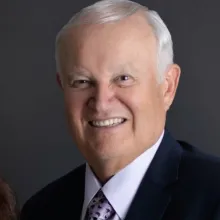
Mr. Seiglie was born in Havana, Cuba, and came to the United States when he was a child. He found out about the Church when he was 17 from a Church member in high school. He went to Ambassador College in Big Sandy, Texas, and in Pasadena, California, graduating with degrees in theology and Spanish. He serves as the pastor of the Garden Grove, CA UCG congregation and serves in the Spanish speaking areas of South America. He also writes for the Beyond Today magazine and currently serves on the UCG Council of Elders. He and his wife, Caty, have four grown daughters, and grandchildren.
