

Paul Moody
The Sabbath assembly is a holy convocation called by God. In it, we worship Him, strengthen one another in our common calling, and shine as a light to the world. The congregation itself is also an assembly called by God, and when He gathers us on the Sabbath, that gathering becomes God’s workshop—a place where He teaches us, shapes us, and forms us in His likeness. May we never take the blessing of God’s assembly for granted.
This transcript was generated by AI and may contain errors. It is provided to assist those who may not be able to listen to the message.
Well, for me, one of my favorite parts of being a pastor is the opportunity to go and visit people in their homes. A lot of times the coffee comes out, a snack comes out. You gotta watch the midline if you're a pastor. I used to be a landscaper and it was different, but people like to feed you, they like to have you sit down and just visit. And oftentimes, through that process, the stories come out. And for me, one of the favorite stories that I enjoy hearing is how someone was called into the church. You know, how did you first hear about the truth and how did you come into contact with the Church of God? And, you know, some of these stories go back decades, you know, decades before I was born, even. And for me, it's exciting to hear because maybe we're talking about a time when a radio program went out or a television program went out and people requested literature and it came in and they studied and they thought, I must be the only one. You know, they knew nobody like them who believed these things. I remember one story of a couple who, they had some relatives. They lived on these big family farm and it was a farming community and some relatives that lived. I mean, they could just see their house way across the field, but they weren't really all that close. The other relatives said, well, those guys, they're really weird.
You know, they do all this kind of weird religious stuff. And what do you know, one day when this couple walked into the door of the Church of God for the first time, there were those relatives across the field who they didn't even know they were connected with. So to me, those stories are neat to hear and consider. You know, how did they first learn of the truth, the Sabbath, the Holy Days, the kingdom of God to come? And, you know, those stories are generally a bit different because it's different people in different places and circumstances.
But something that's often common is an excitement, a zeal that people had. Again, when the Bible first began to make sense, it was like, wow, they were excited and they couldn't get enough to devour God's Word. There was an excitement about the first time they received a visit from the minister. Maybe they sent in a request to headquarters or the home office or, in today's day and age, email the minister and they get a response.
You know, the first time that minister to come and sit down and visit with them about the church. And then the first time, walking in the door to Sabbath services to look around and think, wow, I'm not the only one who believes this. To sit down with other people of like mind who worship God, who look into His Word, who seek to obey, and we're here doing the same things and realize, I'm not alone any longer.
You know, those stories are exciting to me, even here after so many years later. You walk in the church and you think, you know, wow, as some of these would relay, all these people must be perfect because I'm new. And I know I'm not nearly there, but look at all these people. But you know, after a little time in the congregation, you start to realize, hey, you know, pastor's not perfect. And members in the congregation, not quite perfect either.
And I know I have work to do as well. But you see that God is doing a work. God is doing His perfect work among imperfect people. And again, that zeal and that excitement was a part of the process. Now, if you grew up in the church like I did, your story might be a little bit different than that because this assembly is really all that we've ever known.
My mom came into the church and we started attending first when I was probably around six years old because we had lived outside of a region where there was a church area. But we walked into the church and this is what I've known basically the whole life that I've been involved with God. And I would say I didn't have that first zing of excitement like I was going this way in life. Now there's change and I've gone the other way. But for those who have experienced that for themselves, that's something they hold on to all their life.
And you hope that it is never lost. That thrill and that excitement to be among the people of God. But again, for those of us that have grown up in the church, there's a risk that familiarity can dull the excitement. Can maybe even dull our recognition of the blessing that it is to come together with God's people each week on the Sabbath day and that it's a blessing to be a part of a spiritual body.
If we're not careful, assembling as a congregation can become almost just like any other routine to us. You know, just another day of the week we show up. We sing a few songs. We hear a couple of messages. We have some snacks, some coffee afterwards, and chat with a few of our friends. And then we head home. And again, if we're not careful, this can become almost a rote or a routine activity. And we can begin to lose the zeal and the excitement for what it is that God is doing amongst the assembly.
And so today I want to remind us that this assembly is not routine, that it is not ordinary. Now coming together to be together where God has placed His name on the Sabbath day should not be something that is just a routine to us. This gathering, in fact, is God's gift because it is God who has brought us here, and it is God who has placed us here together.
The title of my message today is the blessing and purpose of the assembly. The blessing and purpose of the assembly. Now the Bible calls these gatherings we attend on the seventh day, the Sabbath, and on other holy days, calls it a holy convocation. And I do want to begin there today with the holy convocation. Let's go to Leviticus chapter 23 and verse 1. Leviticus chapter 23 and verse 1, it says, In the Lord spoke to Moses, saying, Speak to the children of Israel, and say to them, The feasts of the Lord, which ye shall proclaim to be holy convocations, these are my feasts.
So the chapter is filled with what it is that God says are my feasts, as in His feasts. We don't come here because this is what we're doing. We come here because this is what God is doing. And He says these are mine. Verse 3 says, Six days shall work be done, but the seventh day is a Sabbath, a solemn rest, a holy convocation. You shall do no work on it, is the Sabbath of the Lord in all your dwellings.
The Hebrew term here for holy convocation is mikra kodesh. Mikra kodesh. Mikra is M-I-Q-R-A, and it means a calling together, an assembly. It's like the call has gone out, the word has gone out. Gather in to this place. It is an assembly.
And kodesh, Q-O-D-E-S-H, means holy, means set apart. And so when we put these things together, we understand this is a holy convocation. It is a called assembly. That is holy. And what makes it holy is the presence of the one who says, you be there, and I'll be there as well. And that is God. As such, our gathering today, brethren, is not merely a social gathering. This is a divine summons from the king of the universe.
The root word kara, Q-A-R-A, is it's a root word from Micra. It means to call out, to proclaim, to summon with authority. Which means when God calls us, He wants His people present because He has something specific in mind. Right? He has something to teach us. He has a special work He is doing in us. He has special blessings that He wishes to convey upon us as a people in the assembly at the time of our gathering together.
It's a very important and a very special time. Now in the New Testament, the Church of God is also referred to as an assembly. And in John chapter 6 verse 44, Jesus gives us some insight into the dynamics of that assembly in a way that I think maybe we sometimes forget. John chapter 6 and verse 44 are the words of Jesus Christ. He says, no one can come to me unless the Father who sent me draws him.
And I will raise him up at the last day. Right? No one can come to me except the Father who sent me draws him. So this tells us that our presence here is not by accident. It's not, we would say, self-initiated. It is by the divine calling of God. He's our Heavenly Father who has appointed this day. Okay? We talked about holy convocation. He has appointed this day and this assembly. Okay?
But he is also the one who has called us here. He drew you to it. And it's exactly what the Church, that word in Greek, means. It means assembly. It means called out ones. Called out of the world. Called into assembly. Into assembly together as a people that will be a body, but also on these days of appointed feasts, will assemble before God in his presence. The Church is not the building where we meet. It's who and what we are to be as the people of God, united by his calling. And the Scripture shows us that we don't get to choose actually who we assemble with each Sabbath. Like, who's the assembly?
That's a spiritual body. No one can come to me except the Father who sent me draws him, Christ says. So you and I don't choose the assembly, the spiritual assembly. And we don't choose the day and the time where God says, I'll be there and you be as well. We simply respond. Respond in obedience as God who chooses these things. Now, the Church of God is not, as we would know from this, then a social club.
You know, you ever sign up to be a part of a group? Maybe a book club, another social club, a social group. You look around for people with interests like yours and you say, hey, I want to be a part of that group. Okay, that's not the Church of God. We're not out looking around for interests or personalities. We don't get to choose one another in the way that someone might pick their fitness club, right? Or fill in the blank, their bowling league. Whatever it might be, God brings us together for His purpose. It is God who does this. Now, we recognize the Church of God is scattered throughout various organizations of man, but I'm talking about a spiritual body.
When God brings people together in assembly on the Sabbath day, He is the one who extends the call. And it's for you and I, then, to respond. So when we truly understand these things, the Sabbath assembly becomes far more than just an ordinary routine. It becomes a blessing. It becomes a privilege. We come together each week with a zeal and a gratitude, knowing that God Himself has called us into His presence.
And we are responding to His voice. I don't ever want us to lose that, brethren, because we're not careful. It can just, again, become ordinary, become routine. Show up at this time, at this place, you know, socialize for a little while, hear a few nice words, and head home. And God intends this day to be so much more than that. So for today, I would like to remind us of this, and I want us to consider three specific reasons for our assembly on the Sabbath. You know, there could be many more that we could put into here, many more major reasons, but we're just going to look at three, again, to be a reminder of the blessing.
And indeed, how special not only the day is, but the ability to assemble as the assembly of God. Point number one, God assembles us each Sabbath to worship Him collectively. God assembles us each Sabbath to worship Him collectively. You know, the Bible doesn't present worship as being an individual thing exclusively. Now, we do worship God directly on our knees. You know, you go to your private place, you get down, and you pray to God. But the Bible is also full of examples of collective worship of Him as well. And it's something that God specifically desires of His people.
The holy convocations, then, the Sabbath and the Holy Days, enlisted out in Leviticus chapter 23, are specifically set-apart times when God's people are instructed to come before Him as one body in assembly. Right? So not only do we appear at a called assembly by God, we are the assembly as well as we come together, one body, offering up our united praise and prayer to Him.
Again, this is special time, and it's holy time. And God says, I'll be there, you be there as well. And so we make it the highlight of our week. You know, we don't tend to throw the term around loosely, but this is a worship service. Right? This time that we come together and we open it with prayer, we conclude it with prayer, but even buffer it on both sides of that with our fellowship. This is a worship service. We are here to, in part, worship God through this gathering, and it's one of the reasons we're here, to praise and to glorify the God who created us, created this day, and who brought us here together.
In my recent sermon on the topic of Thanksgiving, I quoted a couple of times in Psalms 100 verse 4. Psalms 100 verse 4, which says, Enter into his gates with thanksgiving and into his courts with praise. That's what we're doing when we come here together as a congregation on the Sabbath and on the Holy Days, is through this act of assembly that we worship God. And frankly, from the moment we walk in the door until the moment we walk out of the door again, God gives us all kinds of opportunities to worship Him in various ways.
I've already mentioned the fellowship. Right? We come in and I walked in the side door here today, and the room was buzzing with people greeting one another, telling one another about their week and the things that were happening in their lives.
And to me, at least what I experience each week in fellowship is somebody tells you how God has intervened in their life. You know, maybe there was a challenge, and he opened the door for them, or there was a health struggle, and God intervened. And the result of that conversation is God's blessing was in my life this week.
And our response is, praise God! Right? We give God the thanks for what He has done. Our conversations, our fellowship, can be a form of worship to God. Through the hymns, we're singing together, right, with one voice. Same words. Most of our hymns are Psalms, or they're taken from some passage of Scripture in the Bible, and we're singing those in praise to God, praising Him for, you know, His wonderful words, the way these things work in our lives. I appreciated the songs that we have here today and every week, because they get our focus on who God is, and what that relationship looks like. We worship Him through the prayers that are offered, again, on behalf of us all, and we worship Him through the messages we hear and we reflect upon together, because we all think of how it impacts our life, how these words matter dramatically to us, and for many of us it will be different and unique, but the messages we receive on the Sabbath should spawn a response of praise and worship to God in your life.
All these are part of our communal worship of God on the Sabbath day, and if we're in a position to participate in the assembly each week, brethren, we must. Absolutely must. God says, I'll be there. It's a meeting He has called, the Holy Convocation. He says, you be there as well. So to the best of our ability, and there's times of sickness, there's times for, you know, we have shut-ins. People are in a hospital. People are dealing, frankly, with infirmities, even of declining health and old age. So not everybody could be here as they would like to, but their desire is to be here.
And if we can, brethren, we must, because it is God's command, and it glorifies Him. Again, we know people who can't be here. They're on the webcast today, or on the phone hookup today, and they're participating from afar as they can. And that's a lifeline. That's a blessing to them. But if you sat in their home and talked to them, as I have done, what they will tell you is, I'm grateful for that lifeline, but it's not the same as being there.
I really wish I could be there, and they ask about this person or that person. Although, say, this person called, this person sent a card, and that fellowship was encouraging. But again, it's not a replacement if you can be here to withdraw from that assembly. God desires that His people would do so. They are called out, called out of the world. Again, that's what church means, called into assembly. And these are appointed days of assembly. You know, it's why God declared a pilgrimage feast.
Think about His pilgrimage feast three times in a year, right? And they went up to Jerusalem. You didn't just everybody stay in your own place and worship God on a special day in your own way, in your own place. Maybe if you were affirmed, maybe if there was some way you could not travel, God understood. But the command was, you come up, you assemble. And there was a whole system built around this. You know, people sung songs of ascents as they went up to the feast. And it was a gathering that God called in the place where His presence was, in the place He had placed His name.
And we have those same holy convocations today. We have them on the Sabbath. We have them on the high Holy Days throughout the year. So that God's people would assemble together in this form of structured worship. You recall that when God brought Israel out of Egypt, what did He tell Moses?
He said, bring them to Me. He said, gather the people to Me at Mount Sinai. It's actually recounted in Deuteronomy 4 verse 10, as Moses is recounting these things. It's when the time when the Lord said, gather the people to Me out at Mount Sinai. Why would that be? Why would the whole nation be gathered into God's presence at Mount Sinai?
Well, so that they could hear God's voice collectively as a nation, and they could learn to fear Him always as a people. This wasn't just, let me tell you something and pass the Word. God literally thundered to the people who were assembled, and unfortunately they weren't in the right heart and mind to receive it.
But the point was, this would be an assembly. So from the very beginning of that congregation in the wilderness, that is Israel is called a congregation in the wilderness, an assembly of God's people in the wilderness from the beginning, they were brought into this form of communal instruction in worship at God's request. And you see it carry forward throughout the Bible. Psalms of David, it's amazing to me, and not just David's, but the other Psalms as well.
How many details are packed in there that if you're studying the Psalms on one topic, that's the topic you see. And you go, wow, it's everywhere, and you read it, but you come back later and say, wow, I read these verses before and I didn't see this other nugget packed in here as well.
But all through the Psalms of David, we find similar admonitions to praise and worship God, not just individually, but in the assembly together, communally. Notice Psalm 111, verse 1.
Psalm 111, verse 1. Here's Psalm of David. Psalm 111, verse 1 starts out by saying, praise the Lord. You know, that's an expression of worship and praise to God. And it carries on, says, I will praise the Lord with my whole heart in the assembly of the upright and in the congregation. So he's talking about the fact that I have praised to God and I can give that, you know, on my own and in my time and place, but also there comes a time and place where he says, I will praise the Lord with my whole heart in the assembly of the upright and in the congregation, in the gathering among God's people, openly, publicly, rejoicing, praising God. You know, this is something that is...we kind of do it sort of formally, right? And we have a culture in the church where we do this formally, but, you know, our heart should not somehow be locked in a box where we don't just feel, you know, praise God. Hallelujah. When you hear of a blessing, when you are encouraging someone else and they're encouraging you and you see God's hand in their life, the natural expression should be to break forth with praise to Him. It is a form of our worship as we come together on the Sabbath day. But understand, praising God individually is great, and we must, right? Because we're on our own most of the week. But something additional happens when we praise Him among the congregation. His praise becomes infectious, right? It's something that is shared. It causes others to respond in the like manner, expressing their praise to God until we are all praising Him with one heart and one voice. There are things that we hear in our prayer requests that are sometimes heartbreaking, and we cry out to God together. Sometimes it's organized prayer. Sometimes it's in our head as we're sitting in our chair, and we hear the prayer requests. And in like manners, there are times where we rejoice before God together in the assembly. So again, I will praise the Lord with my whole heart in the assembly of the upright and in the congregation. The works of the Lord are great, studied by all who have pleasure in Him. His work is honorable and glorious, and His righteousness endures forever. It says, He has made His wonderful works to be remembered. The Lord is gracious and full of compassion. These are the things we share with each other as we come together on the Sabbath. How has this been shown forth in your life? You know, this week, what doors has God opened? What mercy and compassion has He had on you? Bring it to one another in the assembly that we might all rejoice together. Verse 5, He has given food to those who fear Him. He will ever be mindful of His covenant. He is declared to His people the power of His works, and giving them the heritage of the nations. The works of His hands are verity and justice. All His precepts are sure. They stand fast forever and ever. You know, they are guaranteed. This is God.
It says, and are done in truth and uprightness. Verse 9, He has sent redemption to His people. He has commanded His covenant forever. Holy and awesome is His name. The fear of the Lord is the beginning of wisdom and good understanding have those who do His commandments. His praise endures forever. His praise endures forever. Well, where does it come from? Who does it come from? It comes from His people who worship Him, who have been blessed by Him, who come together in this assembly and keep the praise flowing, and the God who has intervened so dramatically in their lives. Let's go back to Psalm 107. It echoes a similar thought. Psalm 107 in verse 31.
It says, O that men would give thanks to the Lord for His goodness, and for His wonderful works to the children of men. Let them exalt Him also. Notice in the assembly of the people, and praise Him in the company of the elders. Again, our worship is not meant to simply be an independent thing only. It is meant to be collective in the assembly, in the congregation, in the midst of one another. When we come together on the Sabbath and express to one another the blessings of God in our life, or the prayers that He's answered directly and dramatically in our life this past week, it brings responses from us like, praise God. That's not just a rote word if we use it heartfelt. Praise God. God is good. Thank you, Father, for your blessings. We should be free with these things.
This is where we come to worship our Father on His day, and it moves the rest of us into a place of collective praise. You know, as I was preparing this message, I was thinking about Dale Roaks, and I hope Dale doesn't mind me pulling his example out for us again.
But Dale, medically speaking, should not be here with us today.
Right? We know that story. Dale had a medical episode, and he was life flighted to the hospital, and the word was, you may not make it there, right? That's the word, Laura, God. You may not make it there. So the call came in, and the prayer request went out, and the congregation began praying, and Dale was praying on the helicopter. Laura was praying, and we were all praying collectively together. And as you remember, Dale stood up here a few weeks back, and he shared the example of his story, and thanked everyone for their prayers. But it was like suddenly something happened, and the doctors were like, you really shouldn't be here right now, and you really shouldn't be in the condition that you're in. Again, medically speaking, with what has taken place. But God intervened dramatically. And Dale, Dale shared that with us. He is free with that. Weren't you encouraged when Dale stood up here and shared that story with you? I was on the webcast with the congregation in Spokane. I can tell you the room was quiet, and everybody was listening, and they were riveting, riveted to what Dale was saying. And for me, sitting in my chair, in my mind, I said, thank you, Father, for, you know, our God of healing, for intervening on Dale's behalf. I had prayed for him along, but it was like to hear that story again. I just brought praise forward in my mind and in my heart to God. And, you know, that's how it should be among us in the assembly as we share our lives with one another. Sharing those things, praising God for his mercy. I know what it did for me in that moment. And again, it's worship. And it's the reason we've been called here together as the people of God. Psalm 22 is the Psalm of David, but it is also partly a messianic prophecy. Psalm chapter 22 and verse 22. So I want you to notice what it says about Jesus Christ's praise of God in the assembly. Psalm 22, verse 22 says, I will declare your name to my brethren. Again, it's the Psalm of David, but it's attributed as prophetic towards Christ. So he came to his own, right? And his own did not receive him, but he stood and proclaimed God's name, who God is, made God clearly known through the way he lived his life and the words he spoke in the midst of the assembly. Okay, I will declare your name to my brethren in the midst of the assembly. I will praise you. Recall he stood up in the synagogue on the Sabbath day and spoke, right, about the reason that he was sent. And even when he wasn't in the synagogue at times on the Sabbath and he's out and the multitudes are following him, he's declaring to the assembly, to those that had congregated around him, we could say, the truth of God and who he is and what indeed he is doing. He says, I will declare that. And what should the response then of the people be? Verse 23 says, you who fear the Lord, praise him.
Right? That should be the response to hearing the message, to hearing the words. You who fear the Lord, praise him. All you descendants of Jacob, glorify him and fear him all you offspring of Israel. For he has not despised nor abhorred the affliction of the afflicted, nor has he hidden his face from him. But when he cried to him, he heard. Verse 25, my praise shall be of you in the great assembly. I will pay my vows before those who fear him, right, in the presence of others, and the hearing of those who also seek God and know God, and would rejoice in these things.
Understand, brethren, there is a synergy that happens here which is different than when we worship God alone. It's an action that it encourages us, encourages us all. And it is inspired worship from us all. So that's the reason God brings us together on his Sabbath day. Point number two, God's assembly here, he assembles us each Sabbath to grow together in our common calling.
He assembles us each Sabbath to grow together in our common calling. Brethren, the congregation is not just the gathering place where we hang out for a good time together, shoot the breeze for a little bit, and head on our way. The congregation is God's workshop. I don't know if you've ever really thought of it that way or consider that as you're walking in the door. What does God have on the schedule today? You know, but the congregation is God's workshop. It's where he's doing something.
Understand, he is the potter, and we are the clay, and the congregation, the assembly, is the place where God shapes us and molds us, and he builds us up through relationships with him and one another. There's a lot that happens in the congregation, in our interactions between one another, and God is at work here, not just because he is here directly, but because he's at work in each of us, and he uses one another for the growth and the benefit of us all. Ephesians chapter 4 gives us a clear picture of this. Ephesians chapter 4 verse 11.
Ephesians 4 verse 11, the apostle Paul writing, familiar passage to us, says, And he himself gave some to be apostles, some prophets, some evangelists, some pastors and teachers. Notice why, for the equipping of the saints, for the work of ministry, for service, for the edifying of the body of Christ, till we all come into the unity of the faith, and the knowledge of the Son of God, to a perfect man, to the measure of the stature of the fullness of Christ, that we should no longer be children tossed to and fro, carried about with every wind of doctrine, by the trickery of men, and the cunning craftiness of deceitful plotting.
But speaking the truth in love, may grow up in all things, and to him who is the head, Christ. So ultimately, this is about becoming like Jesus Christ, about taking on the mind and the character of Christ. And it actually happens in the assembly. We're told that ministry is given to us for a purpose. And there's teaching, there's education that comes through that. But it's not just the ministry we're given to one another, brethren, for a purpose. I need you, and you need me, and we need one another in the work that God is doing here among us in this congregation.
Verse 16 highlights this. It says, From whom the whole body, joined and knit together, by what every joint supplies, according to the effective working, by which every part does its share, causes growth of the body, for the edifying of itself in love. And so we grow in this setting because of what every member supplies.
It means every member matters. Every contribution that each member brings matters to the whole. And each and every individual is essential to the work God is doing here. He placed you here for a reason, and He brought everyone else here into assembly for a reason as well. We won't turn there, but let me just give you a few connecting points in Scripture on this. Romans chapter 12 verse 5 tells us that we are one body in Christ, individually members of one another. Okay, that sounds like a relationship to me.
1 Corinthians 12 verse 21 reminds us that no part of the body can say to another, I have no need of you. You know, it's not like I can get up in the morning and say, you know, this foot, I don't need it today. Just, you know, get lost. This is not how the body of Jesus Christ works. You know, so the body here is described as an interdependent relationship, a spiritual family, again, where I need you and you need me, and we all need each other for the work that God is accomplishing in this assembly, in His workshop.
Right? He's the potter, we're the clay, and we might be like, well, God, if you'd asked me, I'd have chosen some other people to get together with on the Sabbath. I wouldn't. I'm glad we're here. But you get the point. This is not, as I said, a social club. This isn't where we look around and say, well, I pick them and them and them, and we'll replace those five and draw for the next.
You know, this is not how the church works. Jesus told His disciples, John 15 verse 16, you did not choose Me, but I chose you. And He also said, no one can come to Me unless the Father who sent Me draws Him.
So we're here with the people we are here with whom God has brought us together with, and says, I am doing a work with you and through you and among you between one another. And this indeed as well is a blessing of the Sabbath day. He's given us one another so that through these relationships, hopefully most of the time smooth, but sometimes difficult, sometimes challenging, but through these relationships nonetheless, He can form the character of Christ in us.
Now, I've talked about some of the blessing of the fellowship where we come together and encourage each other and remind each other how God is working in our life, and that's uplifting. You know, there's many things that God allows us to experience in the assembly. You know, when patience is required within the congregation, as in you walk in the door and there's that person that maybe tries your patience a little bit every week, you're there, they're there, what is God doing?
I think He is teaching you patience, a godly virtue, and likely on the flip side as well through your interactions. He is teaching that other individual something as well. You know, when forgiveness is needed within the congregation, God is teaching us mercy. Again, these are qualities of God, and we like the side of the coin that is all happy, wonderful, glossy, and good, and that is a time and a place, and that is good, but you flip the coin over and there's times for God allows us to learn things in the workshop of the congregation that are difficult, maybe a little challenging.
But you know what? If we're going to be serving the people of this earth in the millennium in a very broken world, these are things we need to learn through our relationships here.
How we interact, how we grow, how we work together to overcome. You know, when someone is hurting in the congregation, what is God teaching us? He's teaching us compassion, mercy. How do we reach out and help? Maybe it's a physical ailment, maybe it's something different than that. But God is teaching us how to respond to these things. When differences arise within the congregation, He's teaching us how to exercise humility and brotherly love while working through these things together. These things do arise, and they will arise.
And we say, well, God, why don't you just let us walk in the door and it's all happy and good, because I don't have time this week. I've been out in the world, and I just need some peace and quiet.
Well, I hope this is where we come for peace and quiet and encouragement, but it's also where we come that God allows us, and it's not peace and quiet, see, out of the world, into assembly.
But, you know, this is the place we learn, right? And we grow, and it is, I pray and hope, a safe environment. It's a safe environment where we learn these things together. If this sounds like a lot of work, it is. But again, this is where we are. This is where we've been called by God, and this is one of the workshops in which He uses one another to encourage, to strengthen, and to mold us in the process by which He is bringing us along in His likeness. Again, what we read from Paul's words, the stature, the fullness of Christ, that is the goal.
That is the goal. Many scriptures talk about the impact we have on one another when we participate in the assembly. I'll just remind us of a few. Proverbs 27 verse 17, is, iron sharpened iron, so a man sharpens the countenance of his friend. You know, it's rubbing up in relationship one to another in a positive way, right? But it's iron sharpening iron. I haven't done a whole lot of that, but I know at Thanksgiving the knives were dull, right? And it's like you're trying to cut something, and you're just making mush out of it. We need to sharpen this blade. What do you do? You take another, you know, type of piece of metal, and you're rubbing them together, and you're honing that edge. That requires some friction. That requires shaving off some material. That requires maybe a little heat, but not in a confrontational way, in a positive way, that builds and constructs and makes the end product better than where it was. That's what God brings us together to do among each other in the congregation. Hebrews 10 verse 24 urges us to consider one another in order to stir up love and good works. You know, look around. How can we? It says, consider one another to stir up. That's the new King James version I think is softened a little bit, right? If you have the original King James, what does it say? It says, provoke. Provoke one another to good work. Well, I just go around the congregation provoking people today. Again, there's a positive way to do this. It's a positive way to do this. One of the commentaries I read recently said, being an irritant for good. Are we here to be an irritant for good? Well, we could be if we allow God to use us in a right and proper way. Rejoice with those who rejoice and weep with those who weep. Paul tells us in Romans 12 verse 15, again, it's knowing the state of the flock, not just for the pastor, but the members between one another. Knowing when and where and how to come alongside. Put an arm around someone. Lift them up. You're going to learn a lot through this process. You learn a lot. I have learned a lot as a pastor simply holding the hand of the sick and the dying. There's a lot you learn that becomes a part of your nature. And I would say the compassion that God is trying to build, He allows us to experience that in the congregation among one another. Bear one another's burdens and so fulfill the law of Christ. Galatians 6 verse 2. What's the law of Christ?
You commandment I give you. Love one another. Right? The law of Christ is love. And we sang that song, if I have not charity. You know, there's a lot of things in love that is work. It says love suffers.
Suffers. Right? Long. But it's patient and it's kind and it does all these things. So we suffer for one another in various ways for the blessing of one another. It's when we come together in the congregation. We could go on and on with these, but the point is God has called us into a spiritual assembly, the church. And He brings us together every Sabbath so that we can fill the role He has given us to make a difference in the lives of one another, which is our common calling and the goal to be like Jesus Christ. Sometimes this growth is an incredibly joyful process and sometimes it's incredibly difficult. But this is where the blessing of the assembly really shines when we see one another and we see ourselves growing, maturing, overcoming, becoming more like Jesus Christ. We see that in our interactions with one another and that's where the blessing of the assembly really shines. And it's through that recognition that it becomes a joy to assemble on each Sabbath.
It's a joy to spend the day in our Father's workshop. Right? Among one another.
Third and final point, and this one I'll keep it brief. God assembles us each Sabbath to shine as a light to the world. I say, well, the world's out there and we're in here. While He assembles us each Sabbath to shine as a light to the world. Our example as a church is important. When we come together as a congregation, each Sabbath we have a unique opportunity to reflect something among ourselves and even outward. We reflect the love of God, the character of God in action.
Okay, it's through our unity and our interactions with one another that God is literally forming us into a witness to this world, showing the world that God's way works. You might say, well, how far out does that witness go? Well, you know, maybe here today it carries into the lobby and out into the parking lot where people carry on conversations before they, you know, part ways and carry on.
I know when we drive down our driveway and head out on the Sabbath, most of our neighbors know where we're going and what we're doing. And in fact, some of them show up in our congregation from time to time. So, you know, we have a witness that we are playing as an assembly, as we're coming together, as we are together, and the things that we do together, people say, you know what? Look at those people. God's way works. God's way works. Notice Philippians 1 verse 27.
Philippians chapter 1 verse 27. Apostle Paul writing to the church, basically, what is the expectation you think the Apostle Paul had? Because he traveled long distances and he left churches and went great ways away. What do you think the expectation was he would have about the news he would hear about one of those churches? Philippians 1 verse 27, he says, Paul saying is that their example as a congregation was to be a living witness of Christ in action, that whether he was there to see it or whether he was a far off, he would hear the word of the congregation in this place. The impact of how they were when they were together, and frankly, how they were when they departed the assembly. What was the fruit that they took with them from that place? You know, we haven't always done this perfectly in our modern history of the Church of God. Okay, but this is the goal, and this is the training ground, and it's one of the important reasons behind our assembly today, so that our word of faith and conduct would become known to all those who would see us in and outside of these walls. Again, who knows? You know, we've been meeting here probably close to three years now, and who knows? You know, people in the lobby see us come by all the time. I communicate regularly over email with the management, with other people. They know we keep the Passover, or they know we get water out of the kitchen. They know we're different somehow. Okay, it's an opportunity to be an example in assembly. Philippians chapter 2, dropping down verse 14, Paul says, Do all things without complaining and disputing, that you may become blameless and harmless children of God without fault in the midst of a crooked and perverse generations, among whom you shine as lights in the world. Among whom you shine as lights in the world. This world around us is dark, brethren, and it's searching. It's searching for hope. It's searching for truth. It's searching for genuine love. And God has placed us here not only to believe the truth, but to live it, and to show it, and to shine it as a light to this world. In John 13 verse 35, Jesus said, By this all will know that you are my disciples, if you have love one for another. It's not just a nice feature of the congregation, love. It is our greatest witness. So Jesus said, By this all men will know that you are my disciples, if you love one another. It starts here. That's the outcome of the hard work.
That's the result of coming together week by week and encouraging and strengthening one another, that all would know that we are God's disciples. Our love for one another cannot just be a nice feature of the congregation. It's our greatest witness. When the world sees a group of people who forgive each other, who sacrifice for each other, who serve one another, and who love one another, they see the love of God in action. And I do hope they see it in you and me. It's a great reason we are called together each week. Paul told the Thessalonian church that their faith sounded forth throughout their entire region. I mean, that would be a nice thing to have said about your church, right? Your faith has sounded forth like a trumpet call to the whole region. Everybody knows what you came out of, right? The Thessalonians. You came out of this pagan culture into this church, and you've gotten rid of the idols, and you've gotten rid of the way you did business, and the way you treated other people, and it is known. It has sounded forth throughout the entire region. Wouldn't that be a wonderful thing to be said about this assembly of the church of God? Indeed, a congregation full of the fruits of God's Spirit in action can't help but shine as a light to the world around them. And again, it's one of the big reasons that God has brought us here together today. I've only listed three. I like to give homework. Dale likes homework.
So go study. Go dig in your Bible. Find all the reasons that you can find for the assembly, why God brings us together, and indeed, the blessing of it. When God calls us together, each Sabbath, brethren, rest assured that it is never a common or a routine gathering. This is holy time. Right? This is holy time. God says, I will be there. You be there to commune with me and one another as well. It's an opportunity to focus upward, right, in our relationship to God, our worship. Our focus goes upward towards His throne. It's a way to focus as well inward.
We focus on our growth individually and collectively as a body, and it is a way for our focus to go outward as well, out to the world, as a light to this world. Let us always rejoice over the great blessing and purpose of this assembly to which we've been called. It is indeed a great and a precious gift of God. And I can tell you, brethren, there is no other place I would rather be, and no other spiritual body that I would rather be than with the assembly of God.
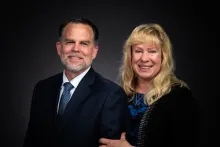
Paul serves as Pastor for the United Church of God congregations in Spokane, Kennewick and Kettle Falls, Washington, and Lewiston, Idaho.
Paul grew up in the Church of God from a young age. He attended Ambassador College in Big Sandy, Texas from 1991-93. He and his wife, Darla, were married in 1994 and have two children, all residing in Spokane.
After college, Paul started a landscape maintenance business, which he and Darla ran for 22 years. He served as the Assistant Pastor of his current congregations for six years before becoming the Pastor in January of 2018.
Paul’s hobbies include backpacking, camping and social events with his family and friends. He assists Darla in her business of raising and training Icelandic horses at their ranch. Mowing the field on his tractor is a favorite pastime.
Paul also serves as Senior Pastor for the English-speaking congregations in West Africa, making 3-4 trips a year to visit brethren in Nigeria and Ghana.
