
Blessing From "the Bread"
Given on
Given in
Downloads
Downloads
To download a file, right-click (or long press) a link above and choose Save As.
This is the second sermon in a four part series preparing us for the Passover. Each sermon looks at an aspect of how we are blessed through the keeping of the Passover. This sermon demonstrates the blessing received through " The Bread".
Transcript
This transcript was generated by AI and may contain errors. It is provided to assist those who may not be able to listen to the message.
I began getting us ready for the Passover a couple of sabbaths ago. It's a four-part series. Today we'll be having part three. Just to give you a little bit of a background, especially since we've got some visitors who are not here through the first couple of parts, as to what I've been trying to accomplish in the sermons.
On part one, the question was asked, how does a Christian cultivate a deep relationship with God in Satan's world? How does a Christian cultivate a deep relationship with God in Satan's world? We quoted Luke 5 and verse 16 where it says, So he himself often withdrew into the wilderness and prayed. And there we're talking about Jesus Christ. How did Jesus Christ maintain that tremendous relationship with the Father? He maintained his relationship with the Father by what I called wilderness time. In that sermon, I talked about the three benefits of wilderness time. Number one, that wilderness time with God helps us unplug from the spiritual draining effects of Satan's world so we can plug into the spiritually rejuvenating power of God.
Now, you've got that in your notes. You don't need to take that down again. Secondly, we saw the wilderness time with God helps clarify and redefine our spiritual needs and goals. Thirdly, we saw the wilderness time with God affords us the opportunity to reassess where we are in relation to where we need to be in our relationship with God. And then lastly, in that particular sermon, I gave some nuts and bolts of taking full advantage of wilderness time.
And one of those nuts and bolts was cultivating humility, which is a good segue into the second sermon I gave. The second sermon of the four was this, and that is, humility provides us with the blessings of a deeper relationship with God and man. In that sermon, we talked about the foot washing. We talked about the blessings of foot washing, not how to come by humility, not what is humility, but the blessings that come through being humble. And we went through actually 10 different blessings that are shown as we are humble before God.
And just to give you a little bit of a flavor reminder, one of the blessings was that we are looked upon with great favor by this tremendous, almighty being. Tremendous favor. You know, as I gave this sermon here, and then last week I gave it over in Chicago. In Chicago, I added a little bit. You know, typically you get the second sermon, so typically you get the add-ons. This time Chicago got the add-ons. But as I was reviewing my notes prior to giving it in Chicago, I was thinking, you know, it's really amazing when you think of it how that you've got God who's running the whole universe.
You know, our star is considered a medium to small star, our sun. There are some stars that you can put maybe a thousand of our suns into that. It's so huge, it's unbelievable. And yet, our father has designed, has created, has sustained our sun with all the chemistry involved, and all the dynamics, and all the engineering, and then all the universe, all the planets revolving around their respective stars and so forth. And if you were just to name the stars, as God says He does, you would take every computer on this planet and overload it, just with the names of the stars, and you couldn't still name them all.
And yet, God knows them all. And it just occurred to me, as I was thinking about that prior to giving last week's sermon, that as powerful and as mighty as our Father is, you know, in the world, the high and the mighty probably turn their nose up at us. Maybe look down their nose at us. For me, or for you to go see your doctor, may take you three or four months to go see your doctor.
But anytime you want to, you can pray to God. And even though He's running the whole universe, making sure everybody on His planet is breathing and their heart's pumping, and every little micron, as a microbe is doing what every microbe is supposed to do, He listens to you.
He listens to you. And you can go to Him with anything. And He rejoices at the fact you are coming to Him. I mean, you can go to Him and say, you know, Father, I've got a big decision to make.
I'll just put it right out there. I've got a big decision to make. Should I paint my front room blue or green? And He's delighted that we have those conversations with Him. Humility puts us in a relationship with that tremendous God. I went through other things. I went through 10 different blessings that humility brings to us. That brings us now to today's message, part three of the four parts.
Let's begin our discussion today by going over to 1 Corinthians 11. Because today we're going to be talking about the bread, the blessings we receive from the bread. On Passover evening, you'll be turning to this section of Scripture, 1 Corinthians 11, verses 27 through 29.
Verse 27, Therefore, whoever eats his bread or drinks this cup of the Lord in an unworthy manner will be guilty of the body and the blood of the Lord. But let a man examine himself, and so let him eat the bread and drink of the cup. For he who eats and drinks in an unworthy manner eats and drinks judgment to himself, not discerning the Lord's body. Not discerning the bread. What we see here are baptized members of God's church in 1st century Corinth who didn't fully understand the significance of the Passover. These are our brothers and sisters who lived 2,000 years ago, and they weren't really getting the picture. And that was a danger to them. They were in danger of observing the Passover in an unworthy manner. Now, Paul took the Passover very seriously, as we all should. His warning makes it clear that Christians should not only observe what Christ commanded, but understand the deep meaning behind what we do in terms of the eating of the bread and the drinking of the wine. It's vital that we understand that. Put a finger here. We're going to come back in just a couple of moments, but let's go over to John 6.
John 6 and verse 53.
John 6.53.
Then Jesus said to them, Most assured that I say to you, unless you eat the flesh of the Son of Man and drink his blood, you have no life in you.
Those couldn't be any more weighty words. It's a matter of life and death, spiritually speaking. We have to understand what we're doing, what we've committed ourselves to. Unless you're eating the bread properly and drinking the wine properly, you have no life in you. We're talking about spiritual life. Now, let's go back to 1 Corinthians chapter 11. I asked you to hold your place there. So what we're looking at here has tremendous import. 1 Corinthians chapter 11. Let's go back a few verses to verse 26. 1 Corinthians 11.26. For as often as you eat this bread and drink this cup, you proclaim the Lord's death till he comes. Now, that's an important scripture for us. We don't keep Christ's resurrection. We honor his death. People of the world will keep Easter. We keep Passover. There is a tremendous difference there. We are doing exactly what the scriptures ask us to do.
And when he says, as often as you eat, now some people take that to mean you can do it as often as you want. And yet we understand you take all the Bible and you put it together for an understanding. What does the Bible say about Passover? Can you do the Passover quarterly or semi-annually or every week? No. Passover is to be done once a year. As we see in this very chapter, it's a memorial. It says that twice. Do this in memory of me.
And here it says that we proclaim the Lord's death. How do we proclaim the Lord's death? By you and I participating in the Passover service, we are personally, individually proclaiming the death of our Savior, Jesus Christ.
So when you come here and you're listening to the service that Mr. Morrison is going to provide for you, please think on those things. Now today, we want to take a look at the blessings that come from the bread. And I understand, and I think you understand, that both the bread and the wine, the body and the blood, refer to the same sacrifice. Same sacrifice, the sacrifice of Jesus Christ. But there is a distinction. There's a reason why we've got two elements there. They both refer to the same sacrifice. But there is a distinction, and we need to understand the distinction attached to both the body and the blood, or the bread and the wine. And today, we want to do that with an eye toward the blessings that are afforded us through the bread. So if you're taking notes and you want a theme statement right across the top of your paper, your theme statement would be this. Christians are recipients of tremendous blessings through the bread. Jesus Christ. Christians are recipients of tremendous blessings through the bread. Jesus Christ.
First blessing, first and foremost, is the blessing of forgiveness. The blessing of forgiveness. Let's turn over to Hebrews chapter 10.
Hebrews chapter 10.
Starting here in verse 10.
Hebrews 10.10. We'll be going through verse 14. By that we will have been sanctified through the offering of the body of Jesus Christ once for all. Christ's body was to become a sacrificial offering for sin. And every priest is talking about, you know, Old Testament times. Every priest stands administering daily an offering repeatedly the same sacrifices, which can never take away sins. Those sacrifices were to show people they had sinned, to remind them of their sin, and remind them they needed to have something done with those sins. But as Paul says, those sacrifices could never take away sins, not the blood of a bull or goat. But this man, verse 12, after he had offered one sacrifice for sins forever, sat down at the right hand of God, the bread. From that time, until his enemies are made his footstool, for by one offering he perfected forever those who are being sanctified. So Christ's body, as I said, was to become a sacrificial offering for sin. As you accepted Jesus Christ's sacrifice in place of your own death, upon repentance and faith, God sets you apart. As it says here, you were sanctified. You were set apart so that you can live a proper life before the great God obeying his laws, being his son, being his daughter. So we've got the tremendous blessing of forgiveness. And you know, brethren, you cannot put a price tag on what that means. There are people all around the world who are living horrible existences because of guilty consciences, because of the weight of their sin, and yet we don't have to have a guilty conscience. We don't have to have the weight of sin on us because those sins can be forgiven, be taken care of. All of us are familiar. We've heard a number of sermons over the years about David's sin with Bathsheba. David's sin with Bathsheba. What we maybe don't talk about as often regarding that is for a full year after that. David was not close to God for a full year after that. Here was a man who refused to deal with his sin. Finally, the prophet Nathan came and confronted him. And when he was confronted, then he began to see where he was at spiritually. And of course, he didn't like it. Then, let's turn to Psalm 51. Then we've got Psalm 51. David is dealing now with his sin.
And we've read this any number of times. But again, this sermon is with an eye toward the understanding of the blessings of forgiveness. David, in the first part of Psalm 51, is talking about how he's praying that God would forgive him, heal him, thoroughly forgive him, so on and so forth. But we drop down to verse 13. Psalm 51 verse 13. David says, Father, I make a promise or a vow, whatever way you want to state this. As you restore verse 12, the joy of your salvation upholds me with your generous spirit. Then, then, I will teach transgressors your ways, and sinners shall be converted to you. So basically, David's saying, you know, please forgive me. I see the error of my way. I'm truly sorry. And as you, as it says there in verse 10, create me a clean heart and renew a steadfast spirit within me. Then I'm going to start discussing your laws and your ways as a person who has been forgiven and received that blessing. Now, we discuss Psalm 51 all the time, but let's now turn to what follows this Psalm. It's not Psalm 52. What follows this Psalm in terms of David's thinking is what we see in Psalm 32. Let's go to Psalm 32.
In my Bible, before the actual inspired wording is, it says a Psalm of David, a contemplation. Maybe yours has that. Maybe it's got something else there. But what Psalm 32 is, it's called a Maskell Psalm. There are 13 of these. This is the first. Now, they're not 13 in a row, but there are 13 of these Psalms which are called instructive Psalms. So there's going to be special instruction given by David in this Psalm. And the instruction has to deal with the blessings that come from forgiveness. Again, Psalm 51, in terms of what was happening in David's thinking, took place just prior. And now we've got the way he's thinking about the beauty of being forgiven here in Psalm 32. So let's begin to go through this Psalm. Psalm 32, verse 1 and 2. Blessed is he whose transgression is forgiven. Blessed! It's a blessing whose sin is covered. And we can stop right there and be so thankful that we have that. Each and every one of us. Verse 2. Blessed is the man to whom the Lord does not impute iniquity. They've been forgiven. And whose spirit there is no deceit. So what we see here, especially in verse 2, where it's talking about in whose spirit there is no deceit. Who does God forgive? God forgives those people who are genuinely repentant. If you're genuinely repentant, you're not going to have what it says there, a spirit of deceit. You are true to God. And because you're true to God, you are forgiven. And because you're forgiven, one of the blessings, as we begin to drill down here, is the blessing of a clean and a clear conscience. The blessing of a clear conscience. That's a tremendous blessing, brethren. A tremendous blessing. Let's look at Hebrews chapter 9. Put a marker here in Psalm 32. We're going to keep on coming back. Let's go to Hebrews chapter 9. Hebrews 9 will be another scripture we look at, or you will look at with Mr. Morrison on Passover evening. We will read this. You will read this on Passover evening. Hebrews 9 verse 14. How much more shall the blood of Christ, who through the eternal Spirit offered himself without spot to God, cleanse your conscience from dead works to serve the living God? The blessing of having our conscience as cleared so we can move forward. So we're not shackled to the past. We are cleansed from dead works so that we can have living works, vibrant works with God. There is a freedom from guilt. Romans chapter 8. Let's go to Romans chapter 8. Romans chapter 8.
In Romans 8 verse 1, there is therefore now no condemnation to those who are in Christ Jesus, to those who are in the bread, who do not walk according to the flesh, but according to the Spirit. There is no condemnation. And all I can say at this point is if you are having issues with your conscience, then we need to be talking to God about that. If there's a need for repentance, we need to repent. If there's any issues that need to be dealt with, we need to deal with those because God doesn't want us walking around with this horrible conscience issues. Conscience is only good when it brings us to repentance. When a guilty conscience brings us to repentance, it's done its job. Then we repent, we're forgiven, our conscience is cleared, and we move forward.
God is all about moving forward, not looking into the past. That's why it's such a beautiful saying in Isaiah where when talking about our sins, God says, He takes our sins and throws them behind His back. Poetic way of saying He doesn't want to look at those. He's not going to look at those because through Christ's sacrifice, we are forgiven. Let's go back to Psalm 32. There's much more here.
More blessings for those who have received God's forgiveness. Let's look at verse 6 and 7. So David here is saying that one of the blessings of forgiveness is having God be our refuge. God is our refuge. A refuge is a shelter. A refuge is a place of trust. A refuge is a place where we feel safe. A refuge is where we have peace of mind. And we have that when God is our refuge. We go to Him. We look to Him. And our troubles, even though we still have troubles, we still can look to Him and He's going to be there for us. Again, keep a marker here. Let's go to Psalm 46. Psalm 46, verse 1.
God is our refuge and strength, a very present help in trouble. You know, I appreciate very much the glespies coming as they have. And we view them as being our brothers and sisters here in Beloit and honorary members of the congregation here. They are looking to move down to Tennessee. So we want to make sure we give them all the hugs we can while they're still with us. But, you know, as He was speaking today, as Mr. Gillespie was speaking, I was just noticing they're in Revelation in relation to what I knew I was going to be speaking about. And I appreciate Mr. Gillespie bringing up the Scripture there in Revelation, where Christ said to His people, Satan is going to put you in jail. Christ didn't say, and I'm going to spring you out. Christ said, you're going to go to jail. And then Christ says, if you are faithful to death, you'll have the crown of life.
So just because God is our strength and a refuge doesn't mean we're not going to be scot-free of problems. We're going to have problems. David was a man after God's own heart. But after the Bathsheba thing, and you look at the rest of David's life, it was one series of troubles and woes after another. I was watching a baseball movie the other day, The Natural. I don't know how many of you have seen the baseball movie The Natural. Toward the end of the movie, Roy Hobbs is sitting in a hospital bed, and he's wanting to play one more game so his team, the New York Knights, can make the World Series. But he's in a bad way because of a decision he had made earlier in his life. And then he said something that was so true. Sometimes Hollywood actually gets a grain of truth. Where Roy Hobbs looked at the woman he loved, he said, some mistakes you never stop paying for. Some mistakes you never stop paying for. And isn't that true? So just because, you know, you and I are repentant people, and I'm not saying the people in Revelation were unrepentant by any means, but sometimes we do make mistakes. And sometimes God says, you know, for them to really appreciate true righteousness, let them see the folly of what the decision they made. And how many times, brethren, have you and I learned that? We've learned it, and we've relearned it. And it's good that we relearn those things because we want to be resurrected saints. And when we're given eternal life and eternal power, we never want to turn like Lucifer did. We don't want to make any mistakes like Lucifer did. And so we want to make sure that we God has our refuge and our strength, and we make the proper decisions. Going back now to Psalm 32. So we've seen in this psalm the blessings of a clear conscience, the blessing of God being a refuge. Let's take a look at verse 8 and 9. I will instruct you and teach you in a way you should go. I will guide you with my eye. Do not be like the horse or the mule, which has no understanding, which must be harnessed with bid and bridle, else they will not come near you. And so we see in the scholarly world there is a debate in verses 8 and 9. Who's talking here? Is David talking here? Is God talking here? In one sense, it doesn't matter, because the idea behind verses 8 and 9 is that God's instruction is a blessing. That's another blessing from forgiveness. As God forgives us, He gives us the blessing of His instruction. Whether it comes from God himself, you know, John 6 45, God teaching us, or whether it comes from those that God puts over us to teach us.
The blessing of God's instruction. Let's go again, keep a marker here. We're going to come back here another time. Let's go to Romans chapter 15.
Here's an aspect of the blessing of instruction here. Romans 15 verse 4. For whatever things were written before, and I think Mr. Gillespie mentioned this, or at least alluded to the principle here, for whatever things were written before were written for our learning, that through the patience and the comfort of the Scriptures might have hope. The Scriptures comfort us. The Scriptures give us hope. We understand the Scriptures because we have been forgiven. God gives a spirit to those who obey Him. Right? We're forgiven. We obey. Our mind is opened. And so we have the comfort of the Spirit. We have the hope. We have the hope. There are so many different ways we can look at the blessings that come through all of this. Lastly, let's go back one last time to Psalm 32, the instructive Psalm, one of the 13 instructive Psalms. Psalm 32, many sorrow shall be to the wicked, but do you trust in the Lord? Mercy shall surround them. Be glad in the Lord and rejoice, you righteous. Shout for joy, all you grant. Be glad in the Lord and rejoice, you righteous. Shout for joy, all you grant. Be glad in the Lord and rejoice, you righteous. Shout for joy all you upright in heart. So another blessing of forgiveness is the blessing of God's joy. Man's joy comes and goes. Man's joy is worth very, very little. God's joy is eternal. It lasts for all time. Last for all time. So the first major point here in this sermon is we receive blessings of forgiveness through the bread. The second major blessing through the bread is the blessing of healing. The blessing of healing. Let's take a look at 1 Peter 2.
Again, this is another section of scripture we'll be reading on Passover evening. 1 Peter 2, verse 24. 1 Peter 2, verse 24. 2 Peter 2, verse 24. So Jesus Christ's sacrifice, the sacrifice of the bread, is also linked very strongly with our healing. Let's turn to yet another Passover scripture in Matthew 8. Now we're going through all these Passover scriptures. That doesn't mean Mr. Morrison has the day off, the evening off, on Passover evening. He's still going to cover these scriptures with you.
Because this is very instructive, I feel, and that's why Christ put it in the Bible. It's fire for it to be put in the Bible, you know, under God's direction. While we read it on Passover evening, Matthew 8, verses 16 and 17. When evening had come, they brought him many who were demon-possessed, and he cast out the spirits with the word, and healed all who were sick, that it might be fulfilled, which was spoken by Isaiah the prophet, saying, He himself took our infirmities and bore our sicknesses. And of course, that's a quotation from another scripture we'll read on Passover evening from Isaiah chapter 53. But I quote this to show that healing is not just a matter of the physical body. Healing is all-encompassing. There's a tremendous blessing when it comes to healing. Healing incorporates the physical body. It incorporates the mind. It incorporates the spirit. It incorporates everything that we are as human beings. That's why it says, He cast out the demons. We can be healed from an emotional and mental frame of mind that is injurious if we allow ourselves to be.
Let's go way back to Exodus chapter 15. I quote this many times when I'm anointing people. I think I quote this almost every time I'm anointing somebody.
Exodus 15 verse 26.
If you diligently heed the voice of the Lord your God and do what is right in His sight, give ear to His commandments, and keep all of His statutes, I will put none of the diseases on you I have brought on the Egyptians. For I am the Lord who heals you. I am the Lord who heals you. The English Standard version says, For I am the Lord your healer. Brethren, this is one of the names of God. This is one of His names. The Lord our healer. In the Hebrew, it's a name. The Lord our healer. As you and I accept Jesus Christ as our personal Savior, as we accept the bread and the sacrifice of the bread, we have forgiveness. And we have the blessing that comes from accepting the bread. And one of those blessings, as we're talking about now, is healing. It's a blessing in that it strengthens our faith. How many of us in this room, I don't think this is a bad thing to do, how many of us in this room, at some point in our lives, have asked God to heal us of something and we've been healed?
Most everybody in the room, right?
Any number of things. I've been healed of, happy to be healed of, happy that God has been there for me, happy that He spared my life when my life could have been gone. I was reciting to the church in Chicago last week. We've got a number of people here from Chicago. But I was thinking about the various things that they've had to work on me. I've had operation on both of my eyelids. I have the droopy eyelid problem, where it looks like I'm half asleep most of the time. But what that is, is you've got muscles in your eyelids. And in my case, they weren't working properly. It's like you pulled on a shade and you let it go and it goes all the way up to the top. Well, my muscles went all the way up to the top and weren't holding on to the bottom so they can do the up and down thing. So here, just before I moved into this area, I had an operation where they put these big needles in your eyes and they numb you up. You're awake and they do this sniffing across your eyes and they pull that muscle down and they sew it. I won't get too more explicit. Some of you ladies are already being squeamish here. But after the operation, when I had blanked, you'd see these stitches. Two big black eyes look like I got the worst of it in an alley fight. So I've had that. I've had two procedures on the left nostril of my nose. I've had hernia surgery. I had an appendix explode to the place where they didn't fully close me up. They put a couple of stitches right in the middle of the incision. But since, as the surgeon said, my appendix exploded in me, they had to wash my various organs by taking some out, washing them and putting them back in. And they really were afraid if they missed the least little bit of junk that was in there, there would be all sorts of problems. They wanted to be able to get in there real quickly. And so poor Mary, who doesn't like the sight of blood twice a day for almost a full month, three weeks to a month, she had to clean out that wound every morning, every evening, pack it with gauze and all that stuff, rip the gauze down. And of course, that was very pleasant for me as well. Then, you know, after that, I had the quadruple bypass. So I appreciate the fact that God keeps me awake. That God keeps me alive. I appreciate the fact that God has healed me. I appreciate the fact that God was there with the surgeons when they did their jobs when they needed to do their jobs. It's all a matter of faith. It's all a matter of faith. And that's because of the sacrifice of the bread, healing. And as you and I have been healed, what does that do for us? That gives us a closer relationship and a closer walk with God. When you've been healed of something, and a doctor said, there's nothing we can do, and you've been healed, and you know you've been healed, there's no one in the world is going to tell you there is no God. You know there's a God. And you very literally will sing His praises because you have a closer relationship with Him.
Brethren, if we can't trust God for healing now, how can we ever expect God to resurrect us from the dead?
If we can't trust God for healing, how can we expect God will resurrect us from the dead? So sin brings suffering. The ultimate healing made possible by Christ, complete sacrifice, by the bread sacrifice, alleviates and eliminates mental, emotional, and physical sufferings as a result of our sins. Not that all suffering comes as a result of our sin. We've got an example from Christ in John 9, where His disciples asked about a blind man who sinned, his mom or a dad. Christ said, neither his mom or his dad. But He's been made blind so I can perform a miracle right now. So sometimes it's not a matter of sin. Sometimes things are just a matter of the way they are. So a second great blessing from the bread is the blessing of healing. The last one I'm going to go through with you today, and each of these blessings have their offshoots. The third major blessing is the blessing of new life in Christ. New life in Christ made possible through the bread. Let's go to John 6. You know, when I came in, I saw some trucks in the parking lot look like heating and air conditioning people. Am I going through a heat wave here? Is it a little warm? Is it just me? You ladies, you think you're cold. I guess I'm going through a hot flash. I don't know. Maybe it's just something happening right where I'm at. Maybe God's putting the fire to my feet. I don't know. Let's go. But anyway, John 6, the blessing of new life in Christ. John 6, verses 32-35.
Let's take that apart a little bit. Verse 32. Most assuredly I say to you, Moses did not give you the bread from heaven, but my Father gives you the true bread from heaven. We are given a tremendous blessing, a tremendous gift, Jesus Christ from heaven. Jesus Christ from heaven. And He in turn is bringing life for all of us. Man, no matter how great a man, no matter how fine a man, can provide what God freely offers. And you know, brethren, as I've said before, I'll say it again. On April the 18th, when you come to Passover services, you don't come here because somebody sold you a ticket to come here. You come here because God Himself has invited you personally to be here. A personal invitation from that tremendous God out there in the universe. He's invited you. Now the invitation is worthless unless you accept the invitation. So He's invited you and you've accepted the invitation. And now, as we see here in verse 32, this true bread from heaven is extended to you. This bread is holy, unique. It comes from the Father. And it comes to you as a tremendous blessing. A tremendous blessing. Let's go over to Ephesians chapter 1.
Ephesians chapter 1 and verse 3. Blessed be the God and Father of our Lord Jesus Christ, who has blessed us with every spiritual blessing in the heavenly places, in the bread, in Jesus Christ. Who has blessed us with every spiritual blessing that's made possible through the sacrifice of Jesus Christ. We know that in John chapter 10, verse 10, I'm not going to turn here, but in John 10.10, it talks about how Christ wants us to have the abundant life. The abundant life. I should have told you to hold your place there in John 6. Let's go back to John 6 and please keep a marker there.
John 6. So we see the true bread comes from heaven, so it's a very special source for a very special reason for His very special people. You. Now notice something else here, another blessing in verse 33. For the bread of God is He who comes down from heaven and gives life to the world. So here you have the blessing of new life, spiritual life, eternal life through the bread. A very special dimension coming from heaven, coming from God, giving us spiritual life.
And that spiritual bread nourishes us. These are all blessings. These are things we could take on as a sermon all to itself. We get nourished. We are sustained. We are satisfied. We are energized by that bread. That bread gives us a desire. It creates a desire for more. We want to grow in grace and knowledge, right? That's a blessing from God that the bread gives to us. Verse 34, John 6, 34. Then He said to Him, Lord, give us this bread always. This is something that we would say as well. We want permanent provision. We don't want just a one-shot deal. We want permanent provision. And then notice Christ's response to that in verse 35. I am the bread of life. He who comes to me shall never hunger, and he who believes in me shall never thirst. And brethren, the words never in both of those places in the Greek are in the emphatic. Never hunger. Never thirst.
In other words, the blessing of true, everlasting spiritual satisfaction. True, everlasting spiritual satisfaction. Because of the bread. Never hunger. Never thirst.
First John, Chapter 1.
Take a look at some associated blessings here. First John, Chapter 1.
First John, Chapter 1, starting here in verse 4. He who says, I know him and does not keep his commandments is a liar, and the truth is not in him. But whoever keeps his word, truly the love of God is perfected in him. And by this we know we are in him. He who says he abides in him ought himself also to walk as he walked. Bread and I write no new commandment to you, but an old commandment which you have had from the beginning, that you have heard from the beginning. Again, love. Love. So we walk in this way of love. That is a blessing. We don't walk in a way of hatred, in a way of getting our own way. We walk in God's way of love. And we would only know that because the bread has opened up our hearts and minds. God has opened up our hearts and minds, and the bread has shown us how we are to live that life. Ephesians 3 Notice what Paul is saying here in Ephesians 3, starting here in verse 14. For this reason I bow my knees to the Father of our Lord Jesus Christ, from whom the whole family in heaven and earth is named. That He would grant you according to the riches of His glory, to be strengthened with might through His Spirit in the inner man. Again, these are blessings that come from the bread. That Christ may dwell in your hearts through faith, that you, being rooted and grounded in love, may be able to comprehend with the saints what is the width and the length and the depth and the height to know the love of Christ which passes knowledge that you may fill with the fullness of God, all the fullness of God. These are all blessings that come as a result of the sacrifice of the bread. Now, verse 20.
We talk about being blessed by God. To Him who is able to do exceedingly, abundantly, speaking in superlatives, exceedingly, abundantly above all that we ask or even think, according to the power that works in us. So we're looking at there, folks, as blessings, blessings beyond what you and I could even imagine.
So today, we've taken a look at the blessings that come through the bread. You know, last time we were together, we went through humility, the foot washing, talked about that. We saw ten different blessings, and there could have been much more than that. I highlighted ten blessings. Maybe you can highlight more than that. Today, depending upon how good a note you took or how effective I was in giving you the notes, we went through another ten. Ten different blessings. Three major areas, but ten blessings in those three areas. In terms of the blessing and forgiveness, I gave you these four blessings. You want to take a look with your notes, make sure you've got everything. The bread through the blessing and forgiveness, you've got the blessing of a clean conscience, the blessing of having God as your refuge, the blessing of God's instruction, and the blessing of God's joy. Those four blessings, I lumped under that heading. Secondly, we talked about the blessing of healing. Two blessings there. By the stripes, we are healed. That's a blessing to be healed. As a second area, to kind of drill down, talking about different types of healing. You know, years ago, if somebody had a mental issue or an emotional issue, we didn't anoint for that. Too bad that we didn't anoint, we should have back in the olden days. Because those are very much maladies as well. Today, we're very much anointing for people who've got issues dealing with mental stresses and strains, and emotional stresses and strains. So, a second blessing of different types of healings. And then lastly, talking about the blessing of new life in Christ, four more blessings I listed there for you. The blessing of the bread coming from heaven, God being the source, a very unique type of bread.
Then there was the blessing of spiritual life, not just physical, but spiritual life.
There was the blessing of spiritual satisfaction.
And there was the blessing that I said that goes beyond even our imagining. Ten different blessings. So, so far as you and I have looked at the humility and the bread, two of the three things we discussed on Passover evening, we've seen 20 different blessings. And that's not even beginning to get to the very end of the story with all of that. So, next time we're here together, we will go through the blessings that come through the wine.
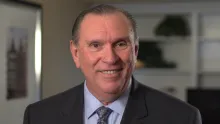
Randy D’Alessandro served as pastor for the United Church of God congregations in Chicago, Illinois, and Beloit, Wisconsin, from 2016-2021. Randy previously served in Raleigh, North Carolina (1984-1989); Cookeville, Tennessee (1989-1993); Parkersburg, West Virginia (1993-1997); Ann Arbor and Detroit, Michigan (1997-2016).
Randy first heard of the church when he was 15 years old and wanted to attend services immediately but was not allowed to by his parents. He quit the high school football and basketball teams in order to properly keep the Sabbath. From the time that Randy first learned of the Holy Days, he kept them at home until he was accepted to Ambassador College in Pasadena, California in 1970.
Randy and his wife, Mary, graduated from Ambassador College with BA degrees in Theology. Randy was ordained an elder in September 1979.
playlist
Related Sermons

The Last Day of Unleavened Bread Pictures All This and More
