
Victor Kubik
This transcript was generated by AI and may contain errors. It is provided to assist those who may not be able to listen to the message.
2 Timothy 3, starting here in verse 14. 2 Timothy 3, 14, for correction, for instruction, and righteousness, that the man of God might be complete, thoroughly equipped for every good work. Now, I'm not going to take the time to go through this part by part, because I've done this with you on a number of occasions. I would want to say that God has given His Word to us so we can do just what it says there in verse 17, that we might be complete, thoroughly equipped for every good work. Now, there's a particular book in the Bible that is traditionally read by the Jewish community on the weekly Sabbath during the Feast of Tabernacles.
You probably know what that book is. If you don't, you're going to find out.
But I thought it would be good for us, before we get to that book, to give you a little background as to how God has designed the Old Testament. This is where the Bible study aspect of this comes into play. I want to take a look at that book and some lessons to learn from that book that's read on the weekly Sabbath during the Feast, so that you and I can be better prepared for this coming Feast of Tabernacles. But again, let's look at the proper context. In this case, the proper context is the whole of the Old Testament. Now, the Old Testament is divided into three sections. You've got the Law, the Prophets, and what's known as the Writings. The Law, the Prophets, and the Writings.
The Law consists of the first five books of the Old Testament. Genesis, Exodus, Leviticus, Numbers, and Deuteronomy.
That's the Law. These five books deal with foundational material.
Some people would say they deal with the three Cs, the Creation, the Call, and the Covenant.
Now, there are many ways I guess you can take and analyze these first five books of the Bible, but these three Cs I think does justice to that. The Creation. Well, we know that God is the Creator of all things. But in these five books, we see God creating other things. He creates marriage.
God creates relationships with people that He loves.
In these five books, we see the Call.
We see Noah being called, for example. We see Abraham being called. We see Moses being called.
And we also have the Covenant. The Three Cs, the Creation, the Call, and the Covenant. There's the Covenant, the God made with Noah. There's the Covenant, God made with Abraham. There's the Covenant, God made with Moses and the children of Israel. Called the Old Covenant.
Now we move on to the Prophets.
The Prophets consist of the books of Joshua and Judges. First and Second Samuel and First and Second Kings.
Now, they consist of more books, but we'll stop there for a moment. Joshua, Judges, and Samuel and Kings are called the Former Prophets.
The Former Prophets tell the story of how Israel related to the Three Cs, the Creation, the Call, and the Covenant. Israel was a called people. They were a covenant people. They were, as a nation, were created by the Great God.
And the Prophets, Joshua, Judges, Samuel, and Kings, tell that story.
But there are other books in the Prophets.
Isaiah, Jeremiah, and Ezekiel are known as the latter Prophets, or the Great God.
The Major Prophets, where the first books we talked about, Joshua, Judges, Samuel, and Kings, talk about the struggle of Israel and Judah to live God's way.
The Major Prophets, or the latter Prophets, Isaiah, Jeremiah, and Ezekiel, and also the Twelve, the Minor Prophets, they talk about the grievous fall of Israel and Judah. And the judgment that God is bringing upon those nations, because they have not honored the creator, they've not honored their call, and they've not honored their covenant with the Great God.
Now we've got the third section of the Bible, and Old Testament that is. And this is where our sermon is going to proceed out of this section. This section is called the Writings. In this section, you've got Psalms, Proverbs, and Job.
These are called the Poetic Books.
Then you've got what is known as the Festival Books.
The Festival Books. There's five of these.
Song of Songs, or Song of Solomon, the one, the Book of Ruth, the Book of Lamentations, the Book of Ecclesiastes, and the Book of Esther.
Those were the five Festival Books. Then to round out the rest of the Writings, you've got Daniel, Ezra, Nehemiah, which is viewed as one book, and 1st and 2nd Chronicles. Those are known as the Historical Books.
Now the Writings are also referred to the Royal Letters because they discuss material relating to kings or written by kings. The Writings are also known as Wisdom Literature because they give counsel of the elders, counsel of the wise.
And sometimes this section, the Writings, is called the Psalms because the Psalms is the largest of the books and is the very first of the books. The Writings also deal with the three C's in a number of different ways. And we're going to take a look at one way as we look at the book I want to cover with you today. But let's again, we're going to zero down now. We've talked about the Law, we've talked about the Prophets, we've talked about the Writings. Just broad brush. I can give several sermons on each of those sections. But we're just looking broad brush here, kind of an overview. But let's take a look, a closer look, at the Festival Books. The Festival Books. Each of these was read and examined during certain times of the year.
The Song of Solomon was read during Passover or Unleavened Bread.
Again, this is why they're referred to as Festival Books, read during Passover and Unleavened Bread. The Song of Songs demonstrates a love that should exist between a husband and wife.
That's the physical aspect of it. The spiritual aspect of Song of Songs, by analogy, is the love that Christ has for the Church.
The Book of Ruth, another one of the Festival Books, is read during the Pentecost season. The Spring Barley Harvest season.
People view the themes of Ruth. There are a number of possible themes in the Book of Ruth. One is, Ruth is the story of a woman who accepted the laws of God and therefore became a part of God's people. Just as the Nation of Israel at Mount Sinai accepted the law of God and became God's people through that covenant. That's one theme. A second theme for the Book of Ruth, that it was also odd Pentecost that the Nation of Israel entered into its covenant marriage relationship with God.
And spiritually, for a New Testament Christians, shows the spiritual Israel, the Church, and her husband, the Great God. And a third theme that some see in the Book of Ruth is the Kinsman-Redeemer relationship. The book provides a clear picture of the Kinsman-Redeemer, an individual who, through relationship, is able to intervene on a family relationship.
In this case, Boaz prefigures Jesus Christ, who became a real human being, so he might be our Kinsman. Boaz, looking to take care of Ruth, Boaz picturing Jesus Christ, Ruth picturing the Church, and Boaz was a Redeemer. The Book of Lamentations was read on the 9th of Ab, A.B. That would be sometime in July or August on our calendar. The 9th of Ab commemorates the time when Jerusalem was destroyed by the Babylonians, and then later on by the Roman armies in 70 A.D. Our Bible commentary says there could be a thematic connection with the Festival of Trumpets, because the 9th of Ab pictures the sobering consequences of sin and the horrors of war.
Next comes the book I'm going to discuss with you today, but I'm going to skip this one for the time being and go to the last one of the Festival books. That is the Book of Esther. The Book of Esther was read on Purim, which is the 14th day of the month of Aedar in a Jewish calendar, roughly sometime in February or March in our calendar.
Again, I'll just quote here from the UCG Bible commentary regarding the theme. Read in conjunction with the Jewish Feast of Purim commemorating the deliverance of the Jews, as told in the book. This may be a figure on some level. The ultimate deliverance of all of mankind foreshadowed in the 8th day following the Feast of Tabernacles, often referred to as the last great day.
So all of these five books deal with one of God's holy days. Song of Solomon with Passover and Love and Bread, Ruth with Pentecost, Lamentations may well refer to have thematic tie-ins, the trumpets, the last one Esther, a tie-in with the last great day. And then we come to the one, the book I want to discuss with you today. What book is read on the weekly Sabbath during the Feast of Tabernacles?
That book is the book of Ecclesiastes. Ecclesiastes. Solomon's main theme was to show how utterly meaningless life is apart from God. On the other hand, a secondary theme, the book was designed to show people can enjoy things. There's nothing—you know, we don't have to be stoic all of our lives. We can enjoy things, and we're going to see where that comes into play in the book of Ecclesiastes. And I'll just read here again from our UCG Bible commentary regarding Ecclesiastes.
Read on conjunction with the Feast of Tabernacles, though this sober reflection seems to correspond with a Day of Atonement's focus in the runner-up to the feast. So all of God's Holy Days are pictured in one way or shape or form thematically with these festival books. Now, I want to discuss with you as we prepare for the Feast of Tabernacles the Book of Ecclesiastes. The Book of Ecclesiastes helps us prepare for the Feast of Tabernacles. That's my theme. The Book of Ecclesiastes helps us prepare for the Feast of Tabernacles. The historical setting of the book was the reign of Solomon. Solomon reigned between 970 BC and 931 BC.
His reign was the grandest reign of all Israelite history. At this point, it was the envy of all the surrounding kingdoms. They had guns. They had butter. They had strong military. Their orders were the largest ever, and yet they had a thriving economy. They also had a King Solomon, who was the envy of all the kingdoms around.
The theme, as I may mention, is the utterly meaningless life is apart from God. So let's take a look. I've got a number of lessons here that this book helps us to appreciate about the Feast of Tabernacles. As you and I get ready for the Feast, let's turn to Ecclesiastes. You want to put a marker there, because we'll come back to there several times, obviously.
Ecclesiastes chapter 1. We know Solomon was the king by what we see in verse 1. The words of the preacher are the son of David, king in Jerusalem. As we go through, there'll be other references to who wrote the book, but obviously this is talking about Solomon. We want to take a look at verse 2 here, which gives us lesson number 1 about this book of Ecclesiastes. And that is, At the Feast, enjoy the physical blessings, but worship God in Spirit and Truth. At the Feast, enjoy the physical blessings, but worship God in Spirit and Truth. Why do we go to the Feast? We come to the Feast to worship our very special God. Yes, there are a lot of things to do, a lot of things to see. There are great restaurants, there's wonderful eating, family time, all sorts of wonderful things physically. And we should be enjoying those, and God wants us to enjoy those, but He wants us to enjoy those things at the Feast in relation to our coming to worship the great God. So let's take a look at Ecclesiastes and other scriptures to see this point. Ecclesiastes chapter 1, verse 2. Vanity of vanity says the preacher, vanity of vanities, all is vanity. So again, regardless of the accomplishments of anybody in this room or anybody who's ever lived, apart from God, it's meaningless. People can go to their graves no matter how famous a person you are, but you'll be forgotten for the most part. Now, maybe if you're the President of the United States or some tremendous figure of history, people might remember you, but by and large, people don't remember us. How many times have you walked into a bank and you see various portraits of different bank presidents? You don't know their names unless you look at the bottom of the painting and it's got their name there. You just see a man there that looks very nice. Looks like he's a great businessman or something, but what do you know about his life? Nothing. He's gone. He's dead. He's dust. So all human achievements are empty and disappointing when pursued as ends in themselves. Let's take a look at chapter 2, Ecclesiastes, starting in verse 1.
I made great works. I built myself houses. I planted myself vineyards. I made myself gardens and orchards and planted all kinds of trees in them. I made myself water pools from which the water had the growing of trees and the grove. I acquired male and female sermons and had sermons born in my house. Yes, I had greater possessions of herds and flocks than all who were in Jerusalem before me. I also gathered for myself silver and gold and the special treasures of kings in the provinces. I acquired male and female singers and talented sons of men and musical instruments. And we can go on and on here. But the point is, all of this is vanity if we're doing it just for the physical reasons. So as we go to the Feast of Tabernacles, yes, enjoy all the things that God has there for you to enjoy. There's nothing wrong with that. God encourages that. But God encourages that with the caveat that we go there to also worship God in spirit and in truth. We have to meld those two things together to properly keep the Feast the way God wants the Feast to be kept. Put a marker here in Ecclesiastes. Let's go back to the book of Deuteronomy chapter 14. A couple things we want to see here. Deuteronomy chapter 14.
Deuteronomy 14 verse 26. And you shall spend that money talking about our second tithe for whatever your heart desires. For oxen or sheep. For wine or similar drink. For whatever your heart desires, you shall eat there before the Lord your God. And you shall rejoice, you and your household. So there's nothing wrong with going and enjoying the good things. God has designed the fact that he has a tithe system. There's the first tithe that we use to do the work of God. But there's a second tithe that we say for ourselves. 10% of our income we save aside and we go to the Feast. And we've got all that money. Many times, many thousands of dollars for an eight-day period. So we can stay in a nice place and have nice meals and that sort of thing. And God says we should enjoy that. We should rejoice with that. Nothing wrong with that. Don't need to feel guilty about that. But notice here in verse 22 of Deuteronomy chapter 14. Deuteronomy 14 verse 22.
Enjoy the Feast. Enjoy what God has given you through that second tithe. But enjoy it with an eye toward the fact that you're there at the Feast to worship the great God. To learn to fear Him. Many times we've said this in the past and it is true. The Feast is not a vacation. Now many times we have to take vacation time to go there. But the Feast is holy time. The first day and the eighth day. And we're there to worship the great God. We enjoy those other physical things so that we appreciate the fact that God has given us that tremendous bounty. Now let's go back to the book of Ecclesiastes. We see the preacher here talking about all the things he's done. And of course, as the king, he had the ability, the wherewithal, the wealth, to do all these wonderful things. But notice how the book concludes here. Ecclesiastes 12, verse 13. And verse 14.
Let us hear the conclusion of the whole matter. Fear God and keep His commandments, for this is man's all. For God will bring every work into judgment, including every secret thing, whether good or evil. That's the bottom line. Fear God and keep His commandments. This is our whole duty.
Real satisfaction comes from serving God, from following His will in our lives, and we can live a triumphant life. No matter what challenges we face, no matter what sorrows we face, as we are living God's way, we can enjoy what God has given us to enjoy. And realize that this visa tabernacle is pictures of time when we are resurrected to a newness of life, that we will be in the kingdom of God for all eternity. So yes, enjoy the blessings. Enjoy the blessings, but worship God in spirit and in truth.
John chapter 4. Let's just read that. John chapter 4. That way you'll have a complete set of notes.
John chapter 4 verses 23 and 24.
John 4, 23. But the hour is coming and now is, when the true worshipers will worship the Father in spirit and in truth. For the Father is seeking such to worship Him. God is spirit, and those who worship Him must worship Him in spirit and in truth. We're God's kids. But the reason we're God's kids is because we've got the Spirit of Christ in us.
And that Spirit wants to worship God in spirit and in truth.
So lesson number one. At this feast, enjoy the physical blessings. But worship God in spirit and truth. Make sure you're going to the feast to worship our very special God. Lesson number two. And I've only got four of these here for you. Lesson number two.
We need strong relationships built by godly fellowship.
We need strong relationships built by godly fellowship.
There's another way of saying this. We come to the feast to fellowship with God's very special people. We come to the feast to fellowship with God's very special people. Let's go back to the book of Ecclesiastes.
We want to look at chapter four here.
Ecclesiastes chapter four verse nine.
Two are better than one. This is Ecclesiastes chapter four verse nine. Two are better than one because they have a good reward for their labor. For if they fall, one will lift up his companion. But woe to him who is alone when he falls, for he has no one to help him up. Again, if two lie together, they will keep warm. But how can one be warm alone? The one may be overpowered by another, two can withstand him, and a three-forward cord is not quickly broken. So the more people we are friends with, the more people we have a tremendous relationship, the better off we are. And you know, brethren, as you take a look at what's happening in our world today, we better not be falling asleep at the switch.
You know, all of us, I'm sure, as we were watching the news, were horrified at what we saw in a nation of Afghanistan. Now, was there something wrong with us pulling out of Afghanistan after 20 years? No, there's nothing wrong with us pulling out. No, there's nothing wrong with us pulling out. But what was wrong was the way we did it.
The way we did it.
You know, we've got two things happening right now that I think are going to come to really bite us.
What's happening in Afghanistan, where we pulled out and left those people who were our friends in Afghanistan, people of Afghanistan, and American citizens, we left them high and dry. We just pulled out.
Those of us who were around back in 1975, remember what was like in Saigon in 1975, where we just pulled out there and people were trying to get into the last helicopter out of the airport. Well, here in Afghanistan, we saw people trying to get on that last flight out. You know, people were holding onto the airplane. How people were holding onto the airplane and finally fell off. You saw the video. A couple of people fell off of the airplane to their deaths.
Where remains were found in the wheel wells. People wanted to get out of that country so bad.
And what did our government tell at the first? Now, this was changed after the stink of it was known. But what was our government telling some Americans trapped in Afghanistan?
If you can make it to the airport, we will get you out.
But it's going to cost you $2,000. Can you imagine that? Our military has that motto, we don't leave anybody behind. But we were telling our American citizens in Afghanistan, if you can make it to the airport and you'll pay $2,000, we may get you on an airplane.
That's why this country is going down.
With an attitude like that. But you take that and you realize that when we pulled out of Afghanistan, we left the terrorists with an entire country. We left the terrorists with a cache of arms, weapons, munitions of various types, helicopters, airplanes, uniforms, everything.
And those are going to be used against us. And at some point, as they began to empty all the jails in Afghanistan with all these people that were terrorists and are terrorists, some of those are going to find their way into Juarez, Mexico, and other places like that, and they're going to come up our southern border.
And what we saw on 9-11, the number of years, 20 years ago, we're going to see more of that.
So what I'm getting at, the reason I'm making that a little bit of a detour, is difficult, hard times, the hardest times the world has ever seen, they're coming upon us. And we better not be an island. We better make sure we've got really good friends in the church, spiritual friends, people who are strong in the faith, people are strong in the spirit.
As it says there in verse 10, for if one falls, the other will lift them up. If you're feeling down or depressed or discouraged, you've got a friend who'll be there to help you, to pull you up, get you out of your funk. Let's look at Proverbs chapter 27.
Proverbs chapter 27.
Verse 17.
As iron sharpens iron, so a man sharpens the continents of his friend.
Brethren, we grow as we interact with others.
Now we can grow as we interact with others. We grow by ourselves, but we will grow so much more, so much deeper as we interact with others, as we have conversations, as we pray for one another and fast for one another, as we show love and compassion for one another, as we help one another.
That's what God wants us to be doing. Let's take a look at that again in Hebrews chapter 10.
Hebrews chapter 10.
This has always been God's desire for his church. Hebrews chapter 10, verse 24 and 25.
And let us consider one another in order to stir up love and good works, not forsaking the assembly of ourselves together as a manner of some, but exhorting one another, and so much more as you see the day approaching, and so much more as you see the day approaching, to stir up love and good works. What is going to be happening for the Laodiceans?
They won't be stirred. They won't have the kind of love they should have. They won't have the kind of good works they should have. They think they've arrived, but they're not. They're poor and blind and naked.
That's the church that we have at the end of the age when Jesus Christ returns. At least some of the Christians will be that way. You don't want to be that way. I don't want to be that way. And we don't need to be that way.
But we need to be doing what it says here. To consider one another in order to stir up love and good works. To be that iron sharpening, iron type of relationship. Let's look at 1 Corinthians chapter 1.
1 Corinthians chapter 1.
1 Corinthians chapter 1 verse 10.
angu.
All right, Christian! 2 Corinthians chapter 1 verse 10. Let's let St Mount our own life. Let's let St Mount our own life. Let St Mount our own life. Holy heart! I'm asking Mr. Schultz, how many were expecting for a Pee-Waukee? We're expecting about 180. If we get that, that will be a little more than last year. Last year we had about 160. But all this is predicated on what's happening with COVID at the time. You know, if all of a sudden there's a real bad outbreak of COVID in the area, we might not even have a feast in Pee-Waukee. So that's something for us to be pretty praying about. I don't know about you. I don't want to be at home for the Feast of Tabernacles with a Zoom meeting. You know, it's better than nothing. But I want to be there in Pee-Waukee with you folks, going out to dinner with you, or going out to lunch with you, and enjoying you, and learning from you, and vice versa. That's what I'm looking forward to. That's what we want. So let's go to the Feast and fellowship with God's very special people. Lesson number three of the four I've got here for you. Lesson number three. Lesson three from the book of Ecclesiastes. Life, live God's way, is to be enjoyed.
Life, live God's way, is to be enjoyed.
Or what we've always said, rejoice at the feast. You know, we're not a bunch of stoics. We're not a bunch of Mr. Spox, where everything is, you know, it's all logic, and there's devoid of emotion. No, we want to make sure we're rejoicing at the feast. Let's go back to the book of Ecclesiastes. And there's so many other lessons that we learned from this book. You know, what you may want to do is, during the course of the feast, just read this book through, over and over, to read a little bit every day. It's not a very large book. You know, if you just take the time to read through it and think about all the lessons, particularly the lessons that revolve around the Feast of Tabernacles, I think it'd be a time well spent. Ecclesiastes chapter 3, verse 12 and 13, We don't want to overlook that. Life's to be enjoyed. There's nothing wrong with that. Brethren, why did God give us five senses? God gave us five senses so that we can enjoy life.
You know, you can sit down at that breakfast, lunch, or dinner, and as you look at what you're about to eat, you start to salivate.
You know, people have talked about how they've got a weight problem, and they've got these issues. Well, I do, too. It's called a salivary gland. That's one of my weight issues. It's not something else internal. I just enjoy those sorts of things. They should be enjoyed in balance. God has given us tremendous blessings. We're able to go to the Feast, and so many times we go to the Feast, and we're with family that we can't always see. And we enjoy looking at family and being with family. This last Sabbath, the Christiansons were at another church area. It just so happens the church area they were visiting is almost entirely full of Mary's folks. And, you know, the Losted family and various other ones there. You know, Mary's step-siblings. Mary's got five step-siblings, and several of them on that congregation. And then those people's kids.
But it's just so wonderful to be with family at the Feast of Tabernacles and rejoice. To rejoice at God's calling. To rejoice that you have that second type. And also, brethren, to rejoice realizing some of our people are on fixed income, and you're going to take some people out. Or you're going to give somebody a little envelope with some money in it, so they can go do something. Now, if you've got that kind of income, that's wonderful.
You know, over the years, I've known of any number of brethren who have made large salaries and have taken a lot of money for the Feast and just given away to other people. And that's something that's a beautiful thing to do. A way to rejoice. Let's look at Isaiah 65.
Toward the very end of the book. Next to the last chapter. Isaiah 65, verse 21.
Talking about the Feast of Tabernacles. And actually moving into the last grade day. This is Isaiah 65, verse 21.
Now, obviously, I was talking about, can be talking about the elect being the church people, who have been made into spirit beings. But it's also going to be true of the physical human beings on planet Earth at that time. That as you and I are working with the people on planet Earth, we're helping them to see where their talents lie. Where their interests lie. Where those things intersect. So they can be doing a job they really enjoy. Wouldn't you like to have a job you really enjoy? I mean, too many people go to work because they simply have to feed themselves. And they hate work. They hate getting up. They love the weekend. But they hate going to work. Well, in the world tomorrow, we're going to work toward that's not being the case.
Verse 23.
So, you know, we can go on with that, but we'll stop there. There's a tremendous challenge we have in the world tomorrow. That education is going to really make a tremendous difference. And we're going to help teach people. Look at Isaiah 11.
Yes, we'll teach people about the Word of God. We'll have Bible studies and that sort of thing. But there's more to it than that.
There's practical matters to be discussed. Based upon the Scriptures, Isaiah 11, verse 9. And they shall not hurt nor destroy on all my holy mountain. Why? For the earth shall be full of the knowledge of the Lord as the waters cover the sea. So you've got part A and part B of that verse. Because part B, the earth is full of the knowledge of the Lord, then part A comes into place. They shall not hurt nor destroy. And that's true for so many things that we'll have in the world tomorrow. Because the people know the truth of God. There's no Satan. There's no demons. There's no false ministers. There's no false prophets. Because the Word of God, the true, pure Word of God is going out. The people are going to have a tremendous life. And they can rejoice at work. And they can rejoice at play. So lesson number three is, life lived God's way is to be enjoyed. Rejoice at the feast. Last lesson. And I say last, not that there aren't, because there are plenty more. These are just four that I put together. Lesson number four, godly life should be balanced.
Godly life should be balanced. Let's go back to Ecclesiastes.
Chapter three, one of the more famous sections of the book. There was a group, and I forget now what group there was back in the sixties, who sang about this. Notice, we see here, chapter three of Ecclesiastes, verse one and two. To everything there is a season, a time for every purpose under heaven. So basically it's talking about living a balanced life. When we go to the feast, we want to have a balanced feast.
It's great to have Bible study and prayer. We want to make sure we're doing plenty of that. But we also want to make sure we're balanced. We want to do things with our family, especially if we have little grandkids or somebody like that. We want to do things. A time for every purpose under heaven, a time to be born, and a time to die. There's a time for everything in between. Time for prayer, time for study. We want to make sure we get plenty of that. But there's a time to be with family. There's a time to go out to a nice restaurant. There's a time to do some maybe playful type things. Maybe just a walk.
As I've mentioned to you on several occasions, one of the reasons I so enjoy Hawaii is it's just so beautiful. And as you're walking on the beach, as I like to do early in the morning, and you take a look out at that ocean, and you realize what God... Each little drop of that ocean is just packed with life. And all those fish out there and the beauty of the islands, and I just get so much of a thrill spiritually of being in that setting. And I can't help but think that's exactly what's going to be happening in the world tomorrow. As the carnal people really begin to buy in to the world tomorrow. And as the world in the world tomorrow, as the earth begins to blossom like the rose, and that's going to take some time. That's going to be the subject of my sermon, the second day of the feast. When day one and day two of the feast take place, life is not utopia. The world is not a Garden of Eden. It's a horrible place to be in one sense, physically, because of what's taken place prior to the return of Jesus Christ.
But in time, the world will become a Garden of Eden. In time, it will become utopia, and people will be able just to walk and talk and enjoy what's there. So be balanced at the feast. Chapter 4 of Ecclesiastes. Chapter 4, verse 6.
Better a handful with quietness than both hands full together with toil and grasping for the wind. Well, that's really poetic, isn't it? That's beautiful. Better a handful, one handful of quietness than both hands full together with toil and the grasping for wind. So we want to make sure that we're using wisdom, that we've got a proper focus, a balanced focus, focused at the Feast of Tabernacles this year.
We want to make sure we've got our priorities right. Let's look at Ephesians chapter 5. Ephesians chapter 5. We went through this as a sermon some time ago, but let's take a look at it again. Ephesians chapter 5, starting on verse 15.
Ephesians 5, 15. See then that you walk circumspectly and not as fools, but as wise, redeeming the time, because the days are evil. Therefore, do not be unwise, but understand what the will of the Lord is. Redeeming the time, because the days are evil. Brethren, we need to really take that set of scriptures to heart. We are living in evil times, and we don't know how much time you have. I don't know how much time I have. You know, just a week or so ago, Kenneth, we were in the early days of the Bible, and Kenneth Martin was doing everything that he wanted to do. But now, we've not heard. But when they take you off of life support, it doesn't look too good. And any one of us on the way home today could be killed in a car accident, we could have a stroke, an aneurysm. We had a member of the Chicago church this last week who had a double. He had an aneurysm, and it's two strokes. One that went to either side of his brain. And when they took the MRIs and CAT scans of his brain, they saw an area like three quarters of an inch, an area that was an inch, one on each side of his brain. And the doctors looked at him and said, you know what? You shouldn't be here. Or you should not be able to talk, not be able to move, and be like a quadriplegic. And as it was, when I went to go see him, there he was, sitting up, talking, moving. He had a little bit of a problem with his right arm and right hand, a little bit. But he was very thankful that God had intervened in his life. And several of us in this room know what that's like to go through those kind of circumstances, realizing just how short time is, how fragile life is. And he was very thankful that God had intervened in his life. And realizing just how short time is, how fragile life is, how we need to redeem the time. The word here for redeeming the time or the phrase comes from Strong's number 1805. Thayer's Greek lexicon defines the phrase this way. The meaning seems to be, A wise and sacred use of every opportunity for doing good. A wise and sacred use of every opportunity for doing good.
The same phrase redeeming time from the Greek English lexicon says, To take full advantage of any opportunity and to make good use of every opportunity.
To do something with a sense of urgency. So if I were to put all these definitions together, it would be this. We are to wisely take full advantage of every God-given opportunity with a sense of urgency because the days are evil. Now that's a mouthful, but we should listen to that wise scripture. We are to wisely take advantage of every God-given opportunity with a sense of urgency because the days are evil.
So, brethren, today we've taken a look at the way God has put together the Old Testament. We've taken a look specifically at the book of Ecclesiastes. We've taken a look at a number of lessons here. My point for the sermon today was that the book of Ecclesiastes helps prepare us for the feast. Rather, let's be prepared for the feast. We don't know how many feasts we're going to have that are going to be relatively peaceful without all sorts of world conflict. We need to make sure that we're ready and we're really learning. We went through four points. I won't reiterate them here. You can go back over your notes and review those. But let's have a good spiritual feast of tabernacles this year.
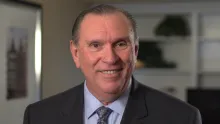
Randy D’Alessandro served as pastor for the United Church of God congregations in Chicago, Illinois, and Beloit, Wisconsin, from 2016-2021. Randy previously served in Raleigh, North Carolina (1984-1989); Cookeville, Tennessee (1989-1993); Parkersburg, West Virginia (1993-1997); Ann Arbor and Detroit, Michigan (1997-2016).
Randy first heard of the church when he was 15 years old and wanted to attend services immediately but was not allowed to by his parents. He quit the high school football and basketball teams in order to properly keep the Sabbath. From the time that Randy first learned of the Holy Days, he kept them at home until he was accepted to Ambassador College in Pasadena, California in 1970.
Randy and his wife, Mary, graduated from Ambassador College with BA degrees in Theology. Randy was ordained an elder in September 1979.
