
Chuck Smith
This transcript was generated by AI and may contain errors. It is provided to assist those who may not be able to listen to the message.
So here we are. We're in Isaiah 36. As I said, we teach this class, or this study, much like we teach a class at Ambassador College or at ABC.
In Isaiah 36, verse 1, now came to pass in the 14th year of King Hezekiah, and this is dated circa 701 BC, that Sennacherib, king of Assyria, came up against all the defense cities of Judah and took them. So Sennacherib had been threatening after he had taken the Northern Kingdom captive in 722 through 720, something like that, for about three years. He had taken the Northern Kingdom captive and had taken many of them to Assyria, and after that he continued to threaten Judah. And in turn, Judah had built several defense systems, walls, and various things to defend themselves against the encroachment of the Assyrian army. But Sennacherib was making great progress with his army, marching toward Jerusalem. And the king of Assyria sent Rabshaka. Rabshaka would be somewhat similar to the modern-day Secretary of State, a messenger representing the king from Lashes. Lashes was a major city in Judah. So from Lashes to Jerusalem unto King Hezekiah with a great army. So Rabshaka with him a great army, and he stood by the conduit of the upper pool and the highway of the Fuller's fields. So he was very close to encroaching upon the city of Jerusalem.
Then came forth unto him Eliakim. So do you remember Eliakim? We covered Eliakim and also Shebna in Isaiah 22 beginning verse 20, where God said that he was going to make Eliakim the head of the house, and he was going to bring Shebna low, and that Eliakim, which was a type of Jesus Christ, would have the keys to the kingdom. So we have talked about Revelation chapter 3, where the the key of David, really the keys of the kingdom, is how do you enter into the keys into the kingdom of God. You can also remember when...
Well, the light came on up there.
No, it's still on.
When Christ talked with Peter after the thing that he would build his church upon the big rock Petra, he said he would give the keys to the kingdom to the church of God. So the church of God holds the keys to the kingdom or the key of David. So Eliakim, hopefully you remember him, that he is a type of Christ who holds the keys to the kingdom. So Eliakim, which was over the house, so over the house of the king, over Hezekiah's house, and he was the principal spokesman, going back in 2, between Rabshakha and also later the prophet Isaiah, and Shebna the scribe and Joah, Asaph's son. Asaph's a recorder. You remember you see the name of Asaph very often in the Psalms, Asaph the recorder. And Rabshakha said unto them, Say you now to Hezekiah, Thus says the great king of Assyrian, What confidence is there when you trust? So Rabshakha is challenging Eliakim and Shebna and Joah at this time with why are you trusting? What are you trusting in?
So Rabshakha once again says unto them, Thus says the great king and the king of Assyria, What confidence is this wherein you trust? I say and say you, but they are but vain words. I have counsel and strength for war. So he had this great army with him. He had at least 185,000 soldiers with him, as we'll see later in chapter 37. Now on whom do you trust?
That you rebel against me. And of course, the me would be here, Sennacharib, the king of Assyrian. Rabshakha was the spokesman. He was like the secretary of state.
Lo, you trust in the staff of this broken reed on Egypt. Remember how we talked about that Judah tried to make a covenant with Egypt and they did make a covenant with Egypt, but Egypt really could not help them. In many ways, they were as weak as Judah. Whereon, if a man lean, it will go into his hand and pierce it, his pharaoh's king of Egypt, to all the trust in him.
So like a broken reed, and a broken reed, if you've ever seen that as a sharp pointed edge, sort of like the bamboo pole after you break it as a sharp edge, it will cut through. So he's saying in a figurative sense, it would be like a reed piercing through King Pharaoh or Pharaoh. In verse 7, but if you say to me, we trust in Yahweh, our God, isn't it He whose high places and whose altars has a kind of taken away and said to Judah and Jerusalem, you shall worship before this altar.
So you would turn to 2 Chronicles chapter 30. We want to look here how that Hezekiah had restored true worship in Judah, true temple worship.
In chapter 29, it covers how they had found the book of the law, and they had offered sacrifice, and now they're approaching Passover in chapter 30. It's a very interesting material that you find in 2 Chronicles, probably Ezra wrote 2 Chronicles.
And Hezekiah said to all Israel and Judah. Notice that he said to all Israel, because there were several who had escaped the encroachment of Assyria, and when he took when Sennacherib had taken the Northern Kingdom captive, there were several Israelites who had escaped and who had remained in the Northern Kingdom area of Sumerian. So Hezekiah said, sent to all Israel and Judah. You should note that carefully. He wrote the letters unto Ephraim and Manasseh, that they should come to the house of the Lord at Jerusalem and keep the Passover unto the Lord God of Israel. For the king had taken counsel in his princes and all the congregation in Jerusalem to keep Passover in the second month. The reason they kept it in the second month, they had to cleanse the temple, and the priests had to be cleansed. Everyone had to be cleansed before they could take the Passover. Verse 5, so they established a decree to make proclamation throughout all Israel from Beersheba even to Dan, all the way from south to north, north to south, to come up and keep the Passover unto the Lord God of Israel at Jerusalem, for they had not done so in a long time.
So the post went out with a letter to them, asking them to come to the Passover.
And we pick it up in verse 10. So the post passed from city to city through the country, of Ephraim and Benassah, even to Zebulun, but they laughed them to scorn and mocked.
So many of those in Israel had apparently become hardened and turned away from the true God, and they laughed them to scorn, the messengers that had brought the letters to them. Nevertheless, but in spite of that, different ones of Asher. And remember in Luke 2 in verse 36, where it says that Anna the prophetess from the tribe of Asher, Asher had been in the temple for all those years, praying that she would live to see the Messiah, and she did. So there were those who had maintained their identity of what tribe they were from, and the letters were sent to them. And nevertheless, different ones of Asher, Benassah, and Zebulun humbled themself and came to Jerusalem. Also in Judah, the hand of God was to give them one heart to do the commandment of the king and of the princes by the word of the Lord.
Verse 14, and they arose and took away the altars that were in Jerusalem, the false altars. So that's what Reb Shaka is talking about. It says, haven't you torn down all the altars in Jerusalem? So where are you going to worship? Because as a cause taken down all the altars, that's what he was supposed to do. It was the high places and altars and idols, and where they had fallen into idolatry and worship of Molech and other gods. And all the altars, for instance, took them away and cast them into the brook, Kidron. And they killed the Passover on the 14th day of the second month. So in a sense, it's like now, if you can't keep the Passover on the first Passover, then you keep the second Passover in the next month.
And the priests and the Levites were ashamed and sanctified themselves and brought in the burnt offerings to the house of the Lord. Verse 17, for there were many in the congregation that were not sanctified. Therefore, the Levites had the charge of the killing of the Passovers for everyone that was not clean to sanctify them unto the Lord, even in the multitude of the people and many of Ephraim and Manasseh, Isherk, Sibilun, and not cleanse themselves, yet did they eat the Passover. They did eat the Passover otherwise than it was written, that you had to be clean to keep it. But Hezekiah prayed for them, saying that the good Lord pardoned everyone that prepares his heart to seek God, the Lord God of his fathers. So that's one of the great keys of all times, is to seek God. In Proverbs 2, we're not going to turn to Proverbs 2, but you have the first several verses there through about verse 12, 1 through 12, telling you how to seek God and the benefits of seeking the God. So everyone had prepared their hearts, even though they were not cleansed according to the purification of the sanctuary, and the eternal hearken to Hezekiah and heal the people. So you get a lot more detail from 2 Chronicles with regard to what was going on at this time and what Rabshakam is talking about here in the verse 6, where it says that you've taken away the altars away from Judah, so where are you going to worship? So Rabshakam continues, Then will you turn away the face of one captain of the least of my master servants? I mean, you couldn't even defeat one division of our army, is what he's saying. You couldn't even defeat that, so how do you think you could defeat the whole army? And in addition to that, you're thinking that you could put your trust on Egypt for chariots and for horsemen. In essence, Rabshakam is saying you must be delirious to think that you can trust in Egypt or you can trust in your own strength and power to overcome our army. Our army is so mighty, so great, it has conquered the northern kingdom, it has conquered Lacious, it has conquered Kalani, it is encroaching upon you at Jerusalem. Verse 10, And am I now come up without the eternal against this land to destroy it? And notice this, the eternal said unto me, Go up against this land and destroy it.
So that's sort of an enigmatic statement there of Rabshakam saying that the king of Assyria had said go up and destroy Jerusalem, that God had told him that, which I would doubt, and it's seriously, that the true God had told him that unless God was using Assyrian army to really test Jerusalem. But the test has a kind of end the fate of Jerusalem. One of the things that you need to always remember is that God's plan and purpose is going to be fulfilled. And later on in either this chapter, the next chapter, that talks about the fact that God delivers them not for their sake, but for his sake and for the promises made to David. In other words, for the purpose and plan of God to be fulfilled, God had to protect Jerusalem and he had to protect Judah in order for his seed to come out of Judah. Of course, even after this, the Babylonians came and they took Jerusalem and burned the temple, but then Sarababel and Joshua returned and rebuilt the temple in the days of Zechariah and Haggai. And of course, that had to be done too, so that the Messiah could come out of Judah.
So now we come to verse 11 and Elaiachim's response to all the things that Rabbi Shaka had said. Then said Elaiachim and Shebna and Joah, to Rabbi Shaka, speak, I pray you unto your servants in the Syrian language, for we understand it and speak not to us in the Jews' language.
So it was apparently an insult for them to speak in the Jewish-Jews' language, and it was a show of audience to do that in the ears of the people that are on the wall. So there were people on the wall that Hezekiah and the Judahites had built to protect the city, and so they could hear much of the conversation that was transpiring. But Rabbi Shaka said, hath my master sent me to your master, words hath he not sent me to men that set upon the wall? In other words, I want the leaders to hear this, that they may eat their own dung and drink their own urine with you. So he's so sure of himself. I want everybody to hear this so that when the time comes, when I really press forward on you, that you'll be eating your own dung and drinking your own urine. Then Rabbi Shaka stood and cried with a loud voice in the Jews' language and said, Hear you the words of the great king, the king of Assyria. Then said the king, Let not Hezekiah deceive you. So Rabbi Shaka is, of course, accusing Hezekiah of deceiving them by telling them that God would deliver them. And he's trying to bring up every reason why they would not be delivered. You've torn down the altars. Egypt can't help you, and no one can really help you. Just surrender. Neither let Hezekiah make you trust in the eternal saying, The Lord will surely deliver us this city, shall not be delivered under the hand of the king of Assyria. So Hezekiah had assured Judah that they would not be able to take the city. Now continuing in verse 16.
Hearken not to Hezekiah. In other words, don't listen to Hezekiah. That's what Rabbi Shaka is saying. For this says the king of Assyria, Make an agreement with me by a present. So he tries to bribe Judah and King Hezekiah. Look, give us a present. Make an agreement. We'll take over the city and everything will be fine.
They'd probably take a lot of the people captive back to Assyria and set up some kind of provincial government under the Assyrians. So make an agreement with me by a present and come out to me and eat you every one of his vine and every one of his fig tree and drink you every one the waters of his own cistern. So in essence, this is almost a paraphrase of what God has promised in the millennium for people in the millennium. And it is like, look, I'll offer you a millennium on earth. If you will come out and make this agreement, give me a present. Make an agreement. I'm reading Michael 4-4 in just a moment here. So in essence, the Assyrian king Sennacherib is saying, look, if you will make this present, make this agreement, give me a present, then I'll not do this. I'll not conquer you. You won't have to die. And you'll be able to eat every one of his own vine, every one of his fig tree, and drink every one the waters of his own cistern. And so in Michael 4-4, and they shall set every man under his vine and enter his fig tree, and none shall make him afraid for the mouth of the Lord of hosts has spoken it. So in essence, Rav Shaka is promising them the millennial blessings that God has set forth for the faithful in the millennium. During the time of Solomon, there's also a verse similar to this in the days of Solomon, where it said, each man sat, had his fig tree in his vine, and he was filled, and so on.
So Solomon's reign was a type of the kingdom of God in one sense, that of being a time of plenty. Now verse 17, until I come take you away, a land like your own land, a land of corn and wine, a land of bread and vineyards. Beware, lest Hezekiah persuade you, saying, the Lord will deliver us. Have any of the gods of the nations delivered his land out of the hand of the king of Assyrian? So then, Rav Shaka continues, where are the gods of Hamlet? Where are the gods of Sarafan? And have they delivered Samaria out of Marhan? No, Samaria fell, the northern kingdom fell, they went into captivity, some escaped, and so on. But by and large, they went into captivity. Verse 20, who are they among all the gods of these lands that delivered their land out of my hand? You can't point to anyone. When I come up against them, I will be the one who will deliver their land out of my hand. And I will be the one who will land out of my hand. You can't point to anyone. When I come up against them, Sennacherib is saying, that's all for them. I'm going to conquer them. I'm going to take them over. Why do you think you'll be an exception? But the Lord should deliver Jerusalem out of my hand.
And as I said before, that in order for the promises to be fulfilled, God has to protect Jerusalem. And even though he allowed the Babylonians to conquer Jerusalem and to razz the temple, yet he brought them back. And so the scriptures could be fulfilled. But they, being Elaichim, Shepna, and Joah, they held their peace and answered him not a word, for the King's commandment was saying, answer him not. So Hezekiah said, don't try to answer him after he makes all these threats against us. Don't answer him a word. Then came Elaichim, the son of Hezekiah. Once again, remember Elaichim and Shepna in Isaiah 22.
You need to understand that Elaichim bears a type of Messiah, and the key of David was given to Messiah, as we read from Revelation, and also from Revelation, and also given to the church.
Matthew 16 verse 19. Then came Elaichim and son of Hezekiah that was over the household and Shepna the scribe, and Joah the son of Asaph, the recorder, to Hezekiah with her clothes rent, and told him the words of Rabshakam. And that was the custom in the Middle East at that time, and especially in Israel and Judah, that when you receive news like that, you would rent your garments, and also sit in sackcloth and ashes, and fast.
And so now in verse 37, chapter 37, we continue this.
It came to pass when King Hezekiah heard it that he rent his clothes, so he tore them and covered himself with sackcloth, and went into the house of the Eternals. So he went into the temple, and he said, Elaiachim, who was over the household, and Shepna the scribe, and the elders of the priests covered with sackcloth unto Isaiah.
So now they go to the prophet. It's very interesting to note that they go to the prophet.
And they go to the prophet, the one that God had ordained to interface with them at that particular time. So they go to Isaiah, and they said unto him, Thus saith Hezekiah, This day is a day of trouble, and a rebuke and a blasphemy, for the children are come to the birth, and there's not strength to bring forth. Now this is like a dual prophecy in the sense.
Of course, Judah was not going to be reborn in that sense at that time, but they were to be delivered. Now this similar language is used for the rebirth of Israel in the millennium Go to Isaiah 66 and verse 6. In Isaiah 66 and verse 6, I spend a little time here with this because in today's world, a lot of the fundamental ministers of the day, the evangelical fundamentalists, they talk about the restoration of Israel and quote these verses here in Isaiah 66 verses 6 through 9 or 10 with regard to the rebirth of Israel. But this really is talking about what is going to happen in the millennium and the spiritual birth that is going to take place in Zion. And Zion, of course, is symbolic of the church. And we'll ferret this out to some degree here. So this is very interesting about them coming to birth and there's not a strength to bring forth. Of course, God has the strength to bring forth and He will bring forth. He will deliver Judah at that time, or He did deliver Judah at that time, and He will bring forth and bring to birth the church at the appointed time. In Isaiah 66 and verse 6, a voice of noise from the city, a voice from the temple, a voice of the eternal that rends, recompense to His enemies. Before she travailed, before she travailed, she brought forth, her pain came and was delivered of a man-child. Now there is a almost a direct quote of that in Revelation 12 where it talks about that Judah brought forth a man-child and what happened after that? Of course, Satan tried to kill him and eventually he was crucified, buried, resurrected, and sent it back to the Father. Who hath heard of such a thing? Who hath seen such a thing? Shall the earth be made to bring forth in one day, or shall a nation be born at once?
And so the fundamentalist theologians tried to say, and it's necessary that Judah be restored in order for the prophecies of second Thessalonians and other places to be fulfilled. One sits in the temple of God saying that he is God, and that that has to be fulfilled. So it was necessary that Judah be restored. Of course, it's called modern-day Israel.
And we'll talk about that in just a moment, the name Jew in a moment.
But this is not, this is really talking about bringing to birth the church. And Isaiah talks about, in the psalmist, even David talks about God bringing forth the Son of God to birth.
Verse 8, Who hath heard of such a thing? Who has seen such a thing? Shall the earth be made to bring forth in one day? Or shall a nation be born for as soon as Zion surveilled? She brought forth her children. Shall I bring to birth and not to bring forth?
Said the Lord, shall I bring to birth and shut the womb, says your God. So he brought forth Jesus Christ. He resurrected Jesus Christ. He's now glorious, radiant spirit being in the firstborn among many brethren. And we, too, in our own order, shall be among the first fruits, Jesus Christ being the firstborn, as it says in 1 Corinthians 15. Rejoice you with Jerusalem and be glad for her, all you that love her. Rejoice for joy with her, all that mourn for her.
And of course, the church will be in mourning at the time that Christ returns and the resurrection takes place. And beauty shall be turned, ashes shall be turned into beauty at that time. Go back now to Psalm chapter 2, and you see a very important, incisive, insightful prophecy.
This is one of the clear distinctions that shows that about God the Father, what He will do in Psalm 2 and verse 7. I will declare the decree, the Lord has sent unto me, you are my son, this day have I brought you to birth, this day have I begotten you. The Hebrew word for begotten here is yalad, y-a-l-a-d. It corresponds to the Greek word ganauo in the New Testament, and it can refer to being begotten.
And we are there are two begettles, the physical begettle, Jesus Christ was begotten by the Holy Spirit in the womb of Mary and a physical begettle and he became the first begotten son of God and the only begotten son of God in such a way then we were begotten of our father and mother at a certain time. And then upon resurrection we shall be born into the family of God as Jesus Christ is the first born among many brethren.
Now let's prove this further in Acts chapter 13 with the apostle Paul. The apostle Paul gives a great summary sermon in Acts 13. You know, Peter gave a great summary sermon in Acts 2. Stephen gave a great summary sermon in Acts 7. The apostle Paul gives a great summary sermon in Acts 13. Do you have all that down? We're breaking in on the thought. Verse 28 of Acts 13, and though they found no cause of death in him yet desired they piloth that he should be slain and when they had fulfilled all that was written of him, they took him down from the tree and laid him in a sepulchre, but God raised him from the dead.
So what did I read just from Psalm 2 and verse 7? I will read it again. I will declare the decree. The Yahweh has said unto me, You are my son. This day have I brought you to birth. I have yallied you. I have brought you to birth, but God raised him from the dead. He brought him to birth, and he was seen many days when he came up with them from Galilee to Jerusalem who are his witnesses unto the people.
And we declare unto you glad tidings how that the promise which was made unto the fathers, God has fulfilled the same unto us, their children, in that he has raised up Jesus again, as it is also written in the second psalm that I just read twice. You are my son. This day have I brought you to birth. Here begotten is the great word kenao, which by the action of the father it means to beget, but the action of the mother it means to bring forth to give birth.
Now in Revelation chapter 1, verse 5, and from Jesus Christ who is the faithful witness and the first born, the word, the Greek word, the old King James has first begotten, but the Greek word is prototikos. It means the first born of the dead and the prince of the kings of the earth unto him that loved us and washed us from our sins in his own blood. Now we go to Romans chapter 1 and verse 3. Romans chapter 1 and verse 3. The beauty of the scriptures, the beautiful tapestry that is woven together when we put all the scriptures together, how beautiful it is.
In Romans 1 and verse 3, concerning his son Jesus Christ our Lord, who was made of the seed of David according to the flesh, so he had a physical begettle by the Holy Spirit and the womb of Mary and declared to be the Son of God. So he's a born son. We will be born sons of the same order in the kingdom of God. As it says in Romans 8 and verse 17, that we are heirs of God and joint heirs with Jesus Christ. In Hebrews chapter 2, it says we're not ashamed to call him brethren or he's not ashamed to call us brethren.
Declare to be the Son of God with power according to the Spirit of holiness by the resurrection from the dead. So I hope that we fully understand that. So Hezekiah says, is God not able to bring forth? In this sense, it means is he not able to deliver us, but at the same time, God is able to bring forth His children. We have turned to Hebrews 12 verses 23 in the past where it says you come to the church of the firstborn to the church of the living God whose names are written above and so on and paraphrasing.
So we should be thoroughly familiar with that, bringing forth and Zion being a type of the church. And we are born in Zion in the church, as it says in Psalm 87. This and that man was born in Zion. How can you be born in Zion and be buried all over the face of the earth? Because Zion is a type of the church.
Now verse 4, it may be the Lord your God will hear the words of Rabbi Shaka, whom the king of Assyria, his master, is sent to reproach the living God and will approve the words which the Lord your God has heard. Wherefore lift up your prayer for the remnant that is left. So the servants of the king Hezekiah came to Isaiah with that message about what Rabbi Shaka had told them and what Isaiah told them to tell him that is Rabbi Shaka.
And Isaiah said unto them, Thus shall you say unto your master, as a Chai, Thus says the Lord, Be not afraid over and over in the Bible that admonition is given, Be not afraid, be not afraid my people over and over again. Be not afraid of the words that you have heard, wherewith the servants of the king of Assyria blaspheme me.
Of course, blasphemy is a grave sin to blaspheme God and the Holy Spirit.
In verse 7, Behold, I will send a blast unto him. You want to talk about blast? Blast here means noise, a loud voice, and he shall hear rumor and return to his own land, and I will cause him to fall by the sword in his own land. Now this verse is somewhat obscure, and the commentators have quite a time over this, but I believe, I know what it's saying, I will send a blast upon him, and he shall hear rumor and shall return to his own land. Well, 185,000 soldiers are stricken in verse 36, and Rabbi Shachar returns to the king and tells him the news, and then it says, I will cause him to fall by the sword in his own land shortly after this event, that is, after the 185,000 soldiers were summoned, after Rabbi Shachar had returned to Sennacherib and told him the news that Sennacherib's two sons killed him, and it says, I will cause him to fall by the sword in his own land. So he was killed, apparently, in his own household, in his own land by his two sons. So Rabbi Shachar returned and found the king of Assyria, warring against Libna, Libna, another one of the prominent cities in Jerusalem, warring against Libna, for he had heard that he was departed from Lachish. Lachish was probably the principal city, and of course, after Lachish fell, Judah was really afraid. And he heard say, concerning Terhaka, Terhaka, the king of Ethiopia, he has come forth to make war with you. So the king of Ethiopia is saying he is going to make war with Assyria. He has come forth to make war with you, and when he heard, he sent messengers to Hezekiah saying, thou shalt you speak to Hezekiah, king of Judah. In other words, Terhaka was probably going to help Judah, but the Nacharib says, look, go tell Hezekiah king of Judah, saying, let not your God in whom you trust deceive you, saying Jerusalem shall not be given unto the hand of king of Assyria. Behold, you have heard what the kings of Assyria have done to all the lands by destroying them utterly, and shall you be delivered? Similar to what we read in chapter 36. And this verse as well, how the gods of the nations have delivered them, which my fathers have destroyed. And the other, these Assyrians, of course, were noted for their brutality and their ability to conquer other nations. And they had basically conquered all of the surrounding nations, and not much was left.
The fathers have destroyed as Gozin, Haron, Reszepah, and the children of Eden, which were in Pallasar. Where is the king of Hamad, the king of Arphad, and the king of the city of Seraphim, Hina and Ava? And Hezekiah received the letter from the hand of the messengers and read it. And Hezekiah went up unto the house of the Lord, and spread it before the Lord. And so in times of great trouble, this is what the great servants of God have done in the past. They were in their clothes, they get on their knees, they fast, they pray. And Hezekiah prayed unto the Lord and saying, O Lord of hosts, God of Israel. Now, once again, we see this term here, the Lord of hosts. Basically, the Lord of hosts refers to Jesus Christ. And Jesus Christ came to reveal the Father. Now, we're directed by Jesus himself in Matthew 6 to direct our prayers to God the Father. So I would not make the Lord of hosts can refer to the Father, the Lord of hosts can refer to Jesus Christ. Of course, when we pray, to the Father. Jesus Christ clearly told us that when you pray, direct your prayer in this manner. Our Father, which art in heaven, hallowed be your name. So we continue here.
So Lord of hosts, God of Israel, that dwells between the caravans. You are the God, even you alone. Of all the kingdoms of the earth, you have made heaven and earth. Of course, God the Father always directs the Son. The Son is His agent. The Son is the one who activates the will of the Father. As we read in John chapter one, that all of the creation was made through Jesus Christ. Also, we see something similar in Colossians, that through Jesus Christ, all things were created that were made, both in heaven and earth, whether they be through dominion's principalities, everything was created through Jesus Christ. Yet we can refer to God the Father as the Creator. We can refer to Jesus Christ as the Creator. Incline your ear, O Lord, and hear.
This is Hezekiah in his prayer. Open your eyes, O Lord, and see, and hear all your words, and hear all the words of Sennacherib, which has sent to reproach the living God. This is really not against me in one sense. It's against God. It's not against me, Hezekiah. It's against God. Of the truth, Yahweh, the King of Assyria, have laid waste all the nations and their countries. Of the truth, O Lord, Hezekiah is saying to God, yes, they have laid waste the nations and have cast their gods into the fire, for they were no gods, but the work of men's hands, wood and stone, therefore they have destroyed them. So they destroyed the other nations whose gods were made of wood, hay, and stubble, and they cast them in the fire. They were not able to deliver them from the kings of Assyria. Now therefore, Lord, our God, save us from His hand, that the kingdoms of the earth may know that you are the Lord, even you only. Time after time, we see that God does what He does in delivering Israel, in delivering Judah, in delivering us for His namesake, for His plan and purpose to be fulfilled.
Then Isaiah the son of Amaz sent unto Hezekiah, saying, Thus says the Lord God of Israel, whereas you have prayed to me against Sennacherib, king of Assyria, these words which the Eternal has spoken concerning him, the Virgin, the daughter of Zion, hath despised you.
So God says, Tell Hezekiah, the Virgin, the daughter of Zion, hath despised you, laughed you to scorn. The daughter of Jerusalem hath shaken her head at you. In other words, it's like, Oh, you have to be kidding that you think that you can defeat the God of heaven and of earth, the God who created all things. Do you really think that you can stand against God?
Whom have you approached in blaspheme? You're not really aware. You don't have a clue. Sometimes it's like we don't have a clue with whom we're dealing. We're dealing with God. We're dealing with His Son. We're dealing with the King of the universe. We're dealing with the omnipotent One, the all-powerful One, the all-knowing One, the ever-present One, and on and on it goes. And who are we? Even the nations are counted as grasshoppers before Him. And against whom have you exalted your voice? And lifted up your eyes on high, even against the Holy One of Israel. And once again, we see this term, this name, it occurs very often in the book of Isaiah, but it occurs in many other places in the Bible, the Holy One of Israel. It can refer to the Father.
In most cases in Isaiah, it is referring to the One who became Jesus Christ. Now, to show you that it can refer to the Father, and it can refer to Jesus Christ, I want to look at two scriptures here. Isaiah 49, verse 7. After we do Isaiah 38 and 39, we're going to get into some very heavy material with regard to the nature of God. Of all the things that other churches do not understand, it is the nature of God, that God is not a trinity.
We're talking about something else right now. Isaiah 49, verse 7, thus says the eternal, the Redeemer of Israel, and his Holy One. So here, it's clearly referring to Jesus Christ, to him whom man despires to him, whom the nation affords to his servant of rulers, kings shall see and rise, princes all shall all shall worship, because of the eternal that is faithful and the Holy One of Israel, and he shall choose you. So here we see that clearly that the Holy One of Israel refers to Jesus Christ. Now look at Acts 2. I want you to turn to Acts 2 and verse 27. We'll probably start in verse 26 or earlier in Acts chapter 2. The material that I'm covering here tonight, and the cover, you're probably not here covered very often, if ever, in this way. Not to boast, but it is what it is. We'll start in verse 25. Speaking of David, notice this. For David, speaking concerning him, I foresaw the Lord always before my face, for he is on my right hand, and I should not be moved. Therefore did my heart rejoice, and my tongue was glad.
Moreover, also my flesh shall rest in hope, because you will not leave my sukay in hell or in Hades. You will not leave my sukay in Hades. Neither will you suffer or permit your Holy One to see corruption. So the Father, as we've already read from Acts 13, raised Jesus from the dead, and here he's identified as the Father's Holy One that he raised from the dead. Now continuing in Isaiah 37 verse 24. By the servants have you reproach the Lord. You have reproach the Lord, and have said by the multitude of my chariots, I might come up to the height of the mountains, to the sides of Lebanon, and I will cut down the tall trees thereof, and the choice trees thereof, and I will enter into the height of the border and the forest of his Carmel, Mount Carmel. That's where Elijah had the great showdown with the priest of Baal.
I have digged in drunk water with the sole of my feet. I have dried up all rivers of the besieged palaces. Have you not heard long ago how I have done it in a batch of times that I have formed it? Now have I brought it past that you should lay waste the fence-sitties into ruinous heaps. Therefore their inhabitants were small of power. They were dismayed and confounded. They were of the grass of the field. They're just mere human beings. That is the green of the herb and the grass on the housetops. That is corn blasted before it has grown up. But I know you're abode, and you're going out, and you're coming in, and you're rage against me. See, that has to do with the omnipresence of God. He is everywhere at all times. He knows what Sennacherib is doing. He knows what we're doing.
So there is no way to hide from God, both in your mind, your intent, or in your heart, or in your physical actions. And this also shall be a sign unto you. You shall eat this year, such as grows of itself, in the second year, which springs are the same, and in the third year, sow you, and reap, and plant vineyards, and eat the fruit thereof. And the remnant that is escaped to the house of Judah shall take root downward and bear fruit upward. Of course, in the millennium, those that are escaped, God is going to protect 144,000 who will live over into the millennium. I'm not getting side-track on all of the 144,000 tonight. In Isaiah 37.32, for out of Jerusalem shall go forth a remnant, and they shall escape out of Mount Zion, the zeal of the Lord of Hosts shall do this.
Read about that in Matthew 24 verses 16 through 20.
Therefore, thus says the Lord, concerning the king of Assyria, he shall not come unto you, unto this city, nor shoot an arrow there, nor come before it with shields, nor cast a bank against it. By the way that he came, by the same shall he return, and shall not come unto this city, says the Lord. For I will defend this city, to save it for mine own sake, and for my servant David's sake. Then the angel of the Lord went forth and smote the camp of the Assyrians, a hundred and eighty-five thousand, and when they arose early in the morning, behold, they were all dead corpses. So Sennacherib, king of Assyria, departed and went and returned again to his home at Nineveh, the capital city of Assyria. And it came to pass that he was worshiping in the house of Nisrock, his god, what an irony this is, that at Ramalek and Shariza, his son, smote him with a sword, and they escaped into the land of Armenia, at Eshar-Haddon, that his son reigned in his stead. So two sons killed Sennacherib, and the other son reigned in his stead.
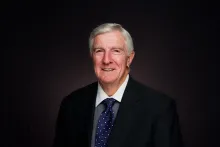
Before his retirement in 2021, Dr. Donald Ward pastored churches in Texas and Louisiana, and taught at Ambassador Bible College in Cincinnati, Ohio. He has also served as chairman of the Council of Elders of the United Church of God. He holds a BS degree; a BA in theology; a MS degree; a doctor’s degree in education from East Texas State University; and has completed 18 hours of graduate theology from SMU.
