
Don Ward
This transcript was generated by AI and may contain errors. It is provided to assist those who may not be able to listen to the message.
If we were in the book of James, we had gotten through eight verses in a verse study. It seems incredible. It's been almost two months because in May we did not do it because of GCE and so on. So the book of James chapter 1, and we had gotten through verse 8. I have some things, of course, I want to say before we launch into that. Bible studies analogous to mining for gold. The Bible contains the greatest hidden treasure of all time. The pearl of great price, the key to eternal life. There are so many different things that we could say with regard to, of course, what the word of God contains. The scriptures that lead to eternal life, the path to eternal life, and on and on we could go. Mining for gold is analogous to the story of sad and glad. That is mining for gold in the Bible. The story of sad and glad, which probably some of you have heard, but we shall repeat it. Now, this fellow was traveling on a dry riverbed called a wadi in the Middle East, and as he was traveling along on his camel, suddenly there was a voice that said, stop, dismount, get off, pick up the rocks in the wadi in the dry riverbed. Tomorrow you shall be sad and glad. So he dutifully dismounted, went to the riverbed, picked up as many rocks as he thought he could handle, and got back on his mount and took off. The next morning at sunrise, he looked in his bag, and the stones had turned to gold. He was glad that he took what he took, and sad he hadn't taken more.
People mine for gold in various ways, mainly to get rich and surround themselves with material possessions that do nothing to fill the hunger of the soul, the hunger of the heart and mind, for the peace of God that surpasses all understanding. Some mine for gold and hoard it. They receive some kind of psychological satisfaction from having gold. You can have all the gold in the world and lose your soul, your life, your life essence, and potential for eternal life in the kingdom of God. For where a man's heart is there, his treasure is also.
The nuggets of gold and truth that you mine from God's gold mine of the words of life are no benefit if you hoard them. You must act on the truth, the gold that you mine.
In the book of James, there are about 50 to 60 imperatives in the book. I'm going to repeat these imperatives. I don't know if we repeated these last time. I think maybe we did, but it gives those. There were several of you who were not here then. It gives you a little bit of an overview in it. And what I want you to do, I want you to do some mining during the weeks that lie ahead. I would really like for this to be done this coming week. And that is for you to go through the book of James and to write out each one of the imperatives. An imperative is something like this, let patients have her perfect work, or my brother encountered all joy when you fall into different trials. It's where you are given something specific to do. We're going to list probably two dozen of those, and you could dig out, I would say, probably 20 or 25 more. And then you dig out these imperatives, and then at least once during the week you go back and you ask yourself, how well am I doing with each one of these? So rejoice in trials, James 1-2, James 1-4, let patients have her perfect work. James 1-5, realize that true wisdom comes from God.
See, now you're going to write these out. You don't need to try to copy these down now. Well, maybe you want to jot one or two down. I don't know. But James 1-12, endure temptation, which should be translated trials.
James 1-17, realize every good and perfect gift comes from God. James 1-21, have a perfectly teachable heart. James 1-22, lay apart foul things, it's called the superfluity of naughtiness in the King James, lay apart foul things, those things that defile, and also lay aside desire for revenge. James 2-1, be a doer of the word, not a hearer only. Keep yourself unspotted from the world. Minister under the widows and orphans in their affliction. James 2-1, do not be a respecter of persons. Don't favor one person over another. Of course, you are to respect offices, but not the person per se. Respect is something that is earned and should be extended where it is due. James 2-22, exercise faith through works and or obedience. Works or obedience and faith are inextricably linked together.
James 3-2, control your tongue. James 4-2, lie not against the truth.
James 1-4 and 5, pray to God in faith, nothing wavering and according to His will. James 4-4, love not the world. Friendship with the world is enmity toward God. James 4-6, humble yourself and God will lift you up. James 4-7, cleanse your hands and purify your hearts, you double-minded.
James 4-7, 8, 9, flee evil and resist the devil. Resist the devil, he will flee from you. James 5-12, draw nigh to God.
Also in James 5-14 and 15, swear not at all, which means here swearing principally refers to saying you will do something apart from saying if the Lord will. James 5-14-15, when ill, request anointing by the elders, recognizing in faith that they are God's servants and representatives to you. James 5-16-19, exercise judgment, mercy, and faith toward God and toward your neighbor. Now the summary of all these points goes hand in glove with the theme of the book of James is going on to perfection through faith. The first hymn was, I thought I knew what his theme was, but he sort of threw me on those last two. But anyhow, going on to perfection through faith. So sit down with the book of James, as I said, there are probably another 20 to 25 more that you could dig out, that you could mine. This is how you really begin to study. Not just a cursory thing. We sat in Bible study, and they went over certain scriptures. You'll get a little bit out of that, but to really come to the point where you are mastering any book of the Bible or scripture, you'll have to do something along the lines that I just noted here. In our Bible study last time, we left off, as we said, at James 1-8. So let's look there. We're at James. We'll read 8 again and go on. A double-minded man is unstable in all his ways, so we're admonished to pray in faith, nothing wavering that particular scripture that precedes this. If any man lack wisdom, let him pray to God who gives liberally in a bradeth not.
One of the big things that's happening in the book of James is, do not be class-conscious.
Whether you are rich or poor, God doesn't really place a lot of stock in that. In fact, Paul even writes in his epistles that if you are a slave, and there were slaves in that day and age when the Bible was written, there were slaves who were converted. And Paul says, if you're a slave, don't care for that. I mean, that's not the big thing. The big thing is not whether you're rich or poor in the physical sense, monetarily. It's whether you are rich in the Spirit. So he writes this verse 9, let the brother of low degree. And it's referring more to that that has to do with realizing in your mind and heart where you stand before God. It could have to do with material wealth. I don't think you necessarily want to rejoice in being poor, but at the same time, I would say that probably many of the people who are even homeless are happier than some who live in mansions.
Let the brother of low degree rejoice in that he is exalted. See, you can be homeless, you can be penniless, and yet at the same time have the peace of God.
There are people, there were people, living behind what was called the Iron Curtain who were converted back before the Iron Curtain fell. Still the freedoms in that part of the world in Eastern Europe, in what used to be the Soviet Union, still not a great deal of religious freedom. There's not a great deal of religious freedom in much of the world, especially in the Islamic world. Recently, a man was jailed in Pakistan because he so-called helped one, a person, convert to Christianity. Verse 10, "...but the rich in that he is made low." By being made low, if God allows trials to come upon a person, being made low might get him to really examine himself, whether he is in the faith and to turn his life around. So let the rich in that he is made low rejoice in that he is made low because as the flower of the grass he shall pass away. Riches are only temporary. In fact, our whole life is only temporary, and whether or not we are rich or poor is not what is important to God. For the sun is no sooner risen with a burning heat, but it withers the grass, and the flower thereof falls from the grace of the fashion of it perishes. So the analogy of the sun coming up blistering heat, causing the flower to wilt or the vegetation, so is riches or anything like that. Material possessions, you're not going to take anything, and even then you're not conscious. You don't know whether they dress you and what you requested to be buried in or not. You don't know whether your casket is handmade or made of the finest materials that money can buy. In that grave, it's really not going to matter. And of course, some are not buried, as we would call it properly. Verse 12, blessed is a man that endures temptation, for when he is tried, and in this particular case, this word, temptation here, is pyrasmos. P-E-I-R-A-S-M-O-S. It is very important to know this word, pyrasmos, and it's pyrasmos.
And the definitions given by Strongs, that experiment, attempt, trial, proving, trial, proving, the trial made by you by my bodily condition, since condition served as to test the love of the Galatians toward Paul, the trial of man's fidelity, integrity, virtue, constancy. Then on the other hand, it could mean an enticement to sin. But in this particular case, it is the former. It is a trial that comes upon you that you have to deal with. It could range from sickness to you can't find your glasses. And so often the case with some of you. But anyhow, blessed is a man that endures trials, pyrasmos, for when he is tried, he shall receive the crown of life. Of course, that is always predicated on remaining faithful to the end.
He shall receive the crown of life which the Eternal hath promised to them that love him. So you're promised the crown of life if you endure to the end. Matthew 24. 13. And blessed are they that endure unto the end.
Let no man say when he is tempted that he is tempted of God.
And we want to talk a little more about this trials from two aspects. First of all, the ways that God allows you to be tried. The ways that God allows you to be tried. So we read the first part of verse 12 again. Blessed is a man that endures trials, for if he goes through them and remains faithful, he'll receive a crown of life paraphrased. So how are the ways that God tries you? This is not an inclusive list, but it basically covers most of the things that you are trying by demanding greater sacrifice. And sometimes you come to the point that I just can't endure anymore. And sure enough, you're asked to endure more. And as I have said from time to time, we reach our physiological limits long before we reach our psychological limits. The body can do amazing things. Psychologically, we may shut down or shut off. But one of the ways that God tries us, if you do a careful study of the book of Acts, and you look at all the different ways that the apostle Paul was tried from being beaten and thrown over the wall as for dead, to being in the deep after a shipwreck, it just goes on and on and on. A long list of all the things that he suffered, both physical trials and psychological persecution from the hands of those that he was trying to serve. Another way, by leading one in a difficult way. When Israel left Egypt, God didn't lead them through the way that was shortest and easiest. He led them through a more difficult and longer way. Much longer and far more difficult in the way of the wilderness. And after we are baptized, we are cast out into the spiritual wilderness to live by faith, just as Israel was supposed to live by faith all the way to the Promised Land.
Another way we're tried is by giving opportunity for choice, what we call free will. In the Garden of Eden, Adam and Eve were given freedom to make a choice.
Are you going to eat the tree of the knowledge of good and evil, or are you not? You have a choice. You can decide. Satan helped Eve decide by deceiving her. Adam was not deceived, but he went along with it. He made a choice. It was the wrong choice. Another way we're tried is by proposing difficult tasks. Oh, you're asking me to do that? I can't do that. I've never done that. I can't do it. But we can.
Another way, by allowing one to suffer while doing the work of God. And once again, I refer to the Apostle Paul. I don't know a person who suffered more than the Apostle Paul, and yet he continued to do the work. Remember there in 2 Corinthians where he talked about I besought the Lord thrice that he would remove the thorn in the flesh, a messenger of Satan that was there buffeting me. But it wasn't removed. Another way, by delaying an answer, by not answering a prayer, where we pour out our heart day after day, month after month, asking God for deliverance, and it does not come. Sometimes it does, and sometimes it doesn't. Of course, that ties back in with that first part there where it says, count it all joy when you fall into different trials, knowing that the trying of your faith works patience. Patience is closely connected with endurance. Then it says, but let patience have its perfect work. Now, patience having its perfect work.
The way I've explained this in practical terms is that you know, and you know that you know, that even if you die in your trial, that God will deliver you. He who was promised is faithful. As in the case of Abraham with Isaac in Abraham's mind, Isaac was as good as dead. He received him as a figure from the dead. But it turned out he didn't have to sacrifice Isaac.
At times, though, in the figurative sense, we have to sacrifice Isaac. That is, we have to go through with a trial that is unbelievable, and sometimes it is a person's life. Dying in the faith. It's sort of like that old country song.
It goes something like, I don't mind being dead, I just hate the thought of dying. And dying is depending on how you die. Of course, some people are blessed, as my aunt was. She had lunch and was her custom to take a nap after lunch. She was like 72 or 3, and she went to take her nap. Her husband came in after the period that she usually gets up, and she was dead. She died in her sleep.
So for some people, the dying is easy for others. This is very difficult. The purpose of trials. So here we've enumerated some ways that we are tried. Now, the purpose of trials is that one might have holy righteous character created within them. When you go through the trials and the difficulties, as God has outlined in His Word, then there is a reciprocation on His part. If you hold your place, we'll go to Romans 5. Paul in Romans 5 gives us a summary in three or four verses of what Christian life is all about, to a large degree. We'll read down into it from verse 1, Romans 5.1, Therefore being justified by faith, and the first four chapters of Romans to a large degree deals with justification, repentance, and faith toward God so that one can be justified.
Therefore being justified by faith, we have peace with God. So there is the peace with God. And then, as it talks about in Philippians, for the peace of God, which surpasses all understanding. "...by whom also we have access by faith into this grace divine favor wherein we stand and rejoice in the hope of the glory of God." That's the big picture that one day you also will be a glorious, radiant spirit being in the kingdom of God.
And not only so, but we glory in tribulations also knowing that tribulation works patience. And of course, patience is closely connected with endurance and experience. It works patience and experience. The word experience is dokime, which would be better translated as testing. And patience works testing because as you are enduring this, you're being tested. And hope makes us not ashamed. I mean, we have this hope. We have the big picture burning brightly in our minds and hearts of what we are to become.
Hope makes us not ashamed regardless of what we have to go through because the love of God is shed abroad in our hearts by the Holy Spirit, which is given unto us. So the product of living by faith here is the love of God shed abroad in our hearts through faith. Now look at 1 Timothy chapter 1. In 1 Timothy chapter 1, we see once again this product or the outcome of living by faith. 1 Timothy chapter 1. 1 Timothy chapter 1 verse 4, "...neither give heed to fables and endless genealogies, which minister questions rather than godly, out of edifying which is in faith so do.
Now the talios, the outcome or the result of the commandment, is charity, that is agape. I'd like to say agape better, but the correct is agape. Now the end of the commandment is charity, spiritual love, out of a pure heart, and of a good conscience, and of faith, unfeigned. In other words, if you go through the process, the outcome, the result, is becoming God as God is God. The love of God is shed abroad in our hearts through the Holy Spirit. So the purpose of trials, one of the great purposes, rejoice in tribulation, works patience, rejoice in trials, Paul in Romans and James in James.
That one might have holy righteous character created within him or her. Another great purpose is to cease from sin.
Now that's one of the great lessons that humankind has not learned. Why all the suffering? Why all the misery? Why all the pain? Because we have not learned to cease from sin. Sin has consequences. You look at 1 Peter chapter 2, and the apostle Peter addresses this. 1 Peter chapter 2. Notice how he frames this.
Well, I don't see you exactly what I'm looking for here.
I'm looking for he who has suffered in the flesh is ceased from sin. Anybody see that?
I guess you have your computer on you. What about your concordance?
4-1.
Yes, that's it. For as much then as Christ has suffered for us in the flesh, arm yourselves likewise with the same mind, for he that has suffered in the flesh has ceased from sin. Now when I repeat a sin that I've done over and over again, I think of this scripture and I said, why can't I learn that? He that has suffered in the flesh has ceased from sin. And so I try to keep that out of it. Don't do that again. Why can't I learn the lesson that he no longer should live the rest of the time in the flesh to the lust of men, but to the will of God? So we should, if we, in having our trials and difficulties, it says here, he that has suffered in the flesh has ceased from sin. And that's one of the purposes that we go through these trials and difficulties to learn to cease from sin. And the reciprocal of that, one of the purposes of trials is that we may learn obedience. Jesus Christ learned obedience through the things which he suffered, and we still have difficulty explaining that, but it's pretty simple. Look at Hebrews chapter 5.
In Hebrews chapter 5, verse 7, who in the days of his flesh, when he had offered up prayers and supplication with strong crying and tears unto him that was able to save him from death, and was heard in that he feared, though he were a son, yet learned the obedience by the things which he suffered.
God the Father allowed Jesus Christ to suffer as much as you could suffer in a 24-hour period of time approximately. It wasn't totally 24 hours, but it was several hours in which he was beaten in various ways, and a tremendous kind of physical torture that was meted out against him. And then eventually, having the nails driven through the palm of his hands and his feet, you can't imagine the pain. Now at one point, Jesus said, you know, I could cry out to God, and he would send legions of angels and deliver me. But see, Jesus Christ had to be obedient unto death through the most extreme suffering that could be meted out in that period of time and remain faithful, which he did. So in that sense, he learned obedience through the things which he suffered, and he went through with it all the way to the end. He was obedient in everything perfectly. But here came this final test. You know, early on after his baptism, he had this trial into the wilderness where he fasted 40 days and 49. Satan came to him. He triumphed over Satan, resisting those three principal temptations there. And now at the end of his physical life here on earth, he goes through this, and he learns this obedience. He is faithful unto death. And that's the sense there. And so we have trials that we might learn obedience. And going hand in glove with that is that we may learn to trust God. Yea, though I walk through the valley of the shadow of death, I will fear non-evil, for you are with me, your rod and your staff, they comfort me. Another purpose that one might learn is the providence of God. Now the providence of God, in plain language, is, and you'll see the Baptists like to name some of their churches, Providence Baptist Church. There's a Providence Rhode Island. Roger Williams, who came in there and founded churches. Yes, he was one of the great founding Baptist ministers. Providence has to do with God looking out for your best interests years in advance. The providence of God, that he has a plan for you, and it's not a predestination thing in that it's absolutely predetermined, but God is looking out for your interests best years in advance. For example, in the case of Joseph, Joseph was sold into, well, first of all, he was put into a pit by his brothers. They saw the media nights coming, and Judah said, well, let's sell him to them, which they did. And he eventually winds up in Egypt and in second in command over the whole empire, the Egyptian empire, and his brothers come down to buy grain. And the brothers were really afraid, tremulous, and Joseph eventually revealed himself to them, and they were just absolutely terrified he was going to kill us. And he said, my brothers, why do you fear? I'm Joseph, your brother. You didn't send me here. God sent me here that he may preserve posterity. So God was looking out for the one, the heirs to the promise, years in advance.
And so God looks out for us. That is what is meant by the providence of God. Another purpose is that one might bear more fruit, as in the case where in John, the Gospel of John, chapter 15, that he purges the vine, that it might bear more fruit.
Another purpose is that one might develop patience and courage. It takes a tremendous amount of patience and courage to go through some of the trials, especially some of the awful diseases that come upon people that oftentimes are terminal to go through that with grace and dignity, patience and courage.
Now we go to this verse 13, back in James. Let no man say, when he is tempted, I am tempted of God. For God cannot be tempted with evil, neither tempts he any man. Now this is a different Greek word than the word temptation. In verse 12. However, the word, pyrasmos, in verse 12, can mean to tempt with evil. Now this Greek word is pyratzo, p-e-i-r-a-z-o. It's pronounced pyratzo. And it has also a good or a bad meaning in the sense of to try whether a thing can be done, to attempt to endeavor, to try to make a trial or test for the purpose of ascertaining the quality or what one thinks or how one will behave under certain conditions. So that's one sense of the word. In a bad sense, to test one maliciously, craftily, to put the proof of his feelings or judgments. So in a bad sense, to test one maliciously, to try or test one's faith, virtue, character by enticement to sin. And this is what is meant by this verse. God does not test or try one to entice them to sin.
The trials that God allows to come upon us are for the purpose of us growing and the purposes that we've just gone over here. So God does not put a trial on earth to allow us to have a trial for the purpose of enticing us to sin.
Men are said to tempt God by exhibitions of distrust, as though they wish to try whether he is not justly distrusted. See, Satan tried to do that with this test, that he put number two of his tests. First of all, was turn the stones into bread. The second was, go up to the pinnacle of the temple and jump off, or it is written, his angel shall bear you up. Jesus said, you shall not tempt the Lord your God. Don't try to put God to the test in a foolish way.
So some people act. For example, one of the things they give here, by impious or wicked conduct, to test God's justice and patience, to challenge him as if it were to give proof of his faithfulness. I mean, God will allow you to do all kinds of things to yourself if you want to. He will allow you to kill yourself. We've had church members who have committed suicide. And God will allow various wicked things for you to do. It says in the Book of Ecclesiastes that because sentence is not executed speedily on the sons of men, therefore their hearts are continually on evil. So God is long suffering and will allow people to go a long ways. But if you think that you're doing anything to God, it's ridiculous for any of us to think that because of our action, in a bad sense, that we're going to influence God to do anything. What does it say? To this man will I look? He who fears and trembles at my word. So then he gets into, well, what does cause sin?
But every man is enticed or drawn away when he is drawn away of his own lust and entice, his own desire. Then when lust hath conceived, it brings forth sin, and sin when it is finished brings forth death. Do not err. And that word, err, in the Greek is planeos. It's the word from which we get planet. It means wonder or wanderer. Don't wander away, beloved brethren. So this part about how sin occurs in our lives, I want to go here now to the whiteboard and talk about this and show some things with regard to this. Each man is drawn away of his own lust and enticed. And what we're going to do here, this is your mind. So draw a circle on your paper. Your brain is not exactly shaped like that. We're going to draw a line across here. And below this line is what psychologists call the subconscious. And above this line is what the subconscious and above this line is what the psychologists call the conscious mind.
So the conscious mind and the subconscious mind. Another word we might use for subconscious is storehouse of memories.
Well, I know his name. I just can't quite think of it. I can't think of his name. I know his name as well as mine, but I can't think of it. Storehouse of memories.
This is your data bank here.
Up here is your... the conscious mind is the level of awareness. I hear some kind of a hum in the background of a fan or air conditioner or something. I just heard somebody sneeze or groan or moan.
The level of awareness.
So does the devil make you sin? Does God entice you to sin? No, God does not entice you to sin. Now, let's take a brief scriptural journey here. We look at Proverbs 4.23.
Proverbs 4.23 says, Keep your heart with all diligence, for out of it flow the issues of life. Keep your heart and heart that innermost being, that innermost part of you, which can be analogous to a certain degree with mind.
Then Proverbs 23.7, which says, As a man thinketh in his heart, so is he. In his inner being, as he thinketh in his heart, so is he.
Then, in Psalm 119, and verses 9 through 11, the psalmist talks about how shall a young man cleanse his way by taking heed thereunto your word. It says, Your word have I hidden in my heart that I might not sin against you. So we get into the, which we'll talk about a little bit more, the programming of the mind. Then we go to Philippians 4 and verse 8.
If there be any virtue, if there be any praise, think on these things. Watch everything's lovely, watch everything's good, watch everything's good, good report. Think on these things. The mind, to a large degree, is like a computer with the old computer saying the gecko, the garbage in, the garbage out, the g-i-g-o, the garbage in, the garbage out.
Keep your heart with all diligence, for out of it flow the issues of life. As a man thinketh, so is he. Your word have I hidden in my heart that I might not sin against you. Philippians 4 and 8. Watch where everything's are lovely, watch where everything's pure, watch where everything's good, watch where everything's good report. If there be any virtue, any praise, think on these things. Psalm 119 verse 97 through 105.
O how love I thy law, it is my meditation all the day. Your word is a lamp in my feet and light into my path. So how does this work? So when a the level of whatsoever comes into a person's mind at the level of awareness, this would be, of course, we have coming into your mind, how do things come into the mind? One, it begins with you, with your thoughts. And then it also has to do with the, we'll just say in the generic sense, we'll abbreviate environment. Well, maybe we'll don't have quite room. I believe out of the environment. And the environment, of course, includes so many things. Of course, you've got the people and the various aspects of people, family, friends, you've got media. And there are just a host of other things.
Ways that the level of awareness, whatever comes in here at the awareness level, is stored in this subconscious mind.
It is no wonder that the Bible speaks of, keep your heart with all diligence out of it, flow the issues of life. As a man thinking, so is he. Your word of a hidden in my heart, if there be any good things, think on these things. Oh, how love I lie, Lord, is my meditation all the day. Of course, the more positive things that you put into your mind and being, the less likely you are to sin. So how does sin occur? Each man is led away and enticed by his own lust. And when lust conceives, it brings forth sin, and sin brings forth death.
So you want to keep your mind and your heart as clear with as many positive affirmations as you possibly can have. And to a large degree, this, of course, begins with your thinking, with your thoughts. It's Proverbs 23-7. As a man thinketh in his heart, so is he. So once something is in the subconscious mind, once it's been stored down here, it can be emitted into the conscious mind. It can be emitted into the conscious mind, and you have to deal with it. So a thought, a bad thought, that you have bad thinking, especially hate, maliciousness, revenge. You could go through a lot of negative kind of things that maybe you have put away. It can come back again and be emitted into your conscious mind. One of the main things that tends to be emitted from the subconscious or the storehouse of memories into the conscious mind is music. And so you wake up in the morning and you have this song running through your mind, through your head. It's difficult to get rid of it. It's just there. And after a period of time, maybe it disappears or whatever, or you think about some thought from the past. Now, in the case of what we're talking mainly, what we're talking about here, that someone from either your thinking or something in your environment plants a thought into here at the level of awareness about sin. Well, the peer group wants a young person to smoke a cigarette, or they want to smoke marijuana, or they want them to take a drug, or they want them to buy liquor illegally. And they say, oh go ahead and do it. Go ahead and do it. Do it. Do it. You know, just one time it's not going to matter who will hurt you, all the various things you might say. Or this eternal fear of the whole human race is, if you don't do it, you might not be accepted. You'll be ostracized. You'll be labeled as a geek or whatever they might say. So you got that kind of thing with the young people, but with an older person. Let's say that through the sight in the 1 John chapter 2 verses 15 and 16, the apostle John labels three things. See, he says, lust of the flesh, lust of the eyes, and the pride of life. These, in the generic sense, are the great enticers.
So a man may have a thought about a woman, or it could be vice versa, a woman with a man. It enters into their mind, and they think about it, and they may say, I didn't know what would my life be like if I did this? Or some may not even think that far. But they may go ahead, and they may have it down here for a little while. But then it comes back, and then if they give in to the lust of the flesh, the lust of the flesh brings forth sin, and sin brings forth death. It is so important that you try to keep these scriptures in mind. Of course, there are more than just, this is not all-inclusive, with regard to keeping your mind free. And especially in the field of music, and that's what music could be used far more as a teaching tool.
Even music and dance played a role in Israel, ancient Israel. You can read about the music, you can read about the dance, because music has an uncontrollable effect on the human psyche and emotion and the nervous system. And when you link something with music, one of the things that the line of Cain did, as in Genesis chapter 4, I think it is, is perverted music. And when you link that together, and it has an effect on the human mind and nervous system, see there are things that take place, the things that are available that are called psychedelic. And that psyche from mind and delic can mean bending distortion. And when you take drugs, you can have a mind-bending effect, and music can even have an addictive effect. So whatever you do at the conscious level can be admitted into the conscious mind. And of course, the difficulty with people as they grow older with regard to memory is that somehow when you have a neuron and you have the branches going out, it's what's called neurotransmitters, this nerve coming in to the next nerve and so on, somehow this bridge, the synapse, begins to, something happened to it. I don't think they fully understand. There's all kind of chemical reactions that take place. But oftentimes, we think about, well, I can't think of his name, and then it's like a few hours later, the next day, there it is. We call it, it pops into my mind. Well, it was here, and it popped up there.
But that's not the main point. The main point here is this part here, and especially with parents and with their children, and of course the older people as well. And the main tempters here in the generic sense, less of the flesh, less of the eyes, the pride of life.
And Satan is ever out there trying to get us, entice us to sin, and he has all of these tempters out there. But he does not make us do it. If he did, if that were the case, then we couldn't be held accountable. Then we make, after these things, whatever it is that comes in that tempts us, then we make a decision. I'm going to do it. And we are held responsible. Eve made a decision. She's going to eat of that tree. Adam made a decision, and human beings have been making decisions ever since. And there are consequences for virtually every decision that you make.
They can lead to life, or they can lead to death.
So let's continue here. We'll read those verses again. Verse 14, Jesus Christ was never ever, he was tried to the uttermost. But in the sense of whether or not he teetered on whether or not he would sin, he never did. Oftentimes we teeter on whether or not we're going to sin. And of course, it's much better, even if we teeter on it, to put it away. I'm not going to do that. I know what that will result in. But so many people, it's just like the analogy that you use in the book of Proverbs. It's like a wild animal going for the prey. I think they even list the animal in the book of Proverbs, but like a wild animal going to the prey, you just, without thinking, jump to it.
Then when last death conceived, it brings forth sin. Sin when it is finished brings forth death. Do not wander, my beloved brethren. Don't fall into that trap. And once again, I would encourage you, these scriptures on the left, and as I said, there are others, and that's why the study of and the renewing the inward man, as in 2 Corinthians 4, 16, is so vital. Every good gift, every perfect gift, is from above. It does not come from this earthly environment. It does not come from lust of the flesh, lust of the eyes, or the pride of life. That which is eternal, that which does not perish. See, after John writes this for this 1 John 2, 15, 16, he says, and this world is passing away. And James writes in chapter 4, love not the world. Don't you know that love the world is enmity toward God. So every good gift, every perfect gift, is from above and comes down from the father of lights. With whom is no verableness, neither shadow of turning. That which was right or wrong in the Garden of Eden is still right or wrong today. Human nature has not changed from the creation of humankind to the present time. But the modern theologian, the modern, they want to talk about the change in the culture, and the culture is this. That was fine for that day, for that culture, but that... no, we can't be bothered with that today. That's not what the Bible is about, though. The Bible is about what we are, and we have been that way since creation, and the only way to turn it around is to turn to God. Of his own will beget He us with the word of truth. God had a hand. John 6 44. No man can come to the Father except... no man can come to me except the Father drawing him. John 6 44. God has a hand in giving you, drawing you to Christ of his own will. Beget He us with the word of truth that we should be a kind of firstfruits of his creation.
Wherefore, my beloved brethren, let every man be swift to hear. It's the in view of all of these things. Let every man be swift to hear. Slow to speak, slow to wrath, for the wrath of man works not the righteousness of God. When we get angry, when we fly off, then we are not thinking as we should. And oftentimes we make the wrong choice, and oftentimes immediately we realize it is the wrong choice, but it's been said and it's out there. We try to get it back, and sometimes we can, but still oftentimes there's a wound that has been inflicted that has to be dealt with.
The wrath of man works not the righteousness of God. So wherefore, this word wherefore means, in view of what we've just said, in view of that, lay apart all filthiness.
And this word, filthiness, has to do with anything that defiles. And superfluity of naughtiness, better translated, malice. Superfluid is overabundance of malice, seeking revenge, and receive with meekness. This is one of our keywords. We've already talked about it. Again, we say it, prautes, P-R-A-U-T-E-S. And it means, now if you just look it up in Strong's, it's not going to give you what I'm saying here altogether at all. But some of the lexicons and some of the more in-depth commentaries will tell you that meekness is difficult. This Greek word, prautes, is difficult to translate a complete meaning into English. It means a perfectly teachable heart. It is a heart and a mind that does not resist the truth. But yet at the same time, it does as Paul admonished the Bereans, or not admonished necessarily, but he commended them, that those in Berea were not like the desolate icons. They searched the scriptures daily, whether these things be true. They received the word with all readiness of mind, and searched the scriptures, whether these things be true. And received with meekness the engrafted word. The engrafted word, if you engraft something, you put it into the very substance of that being. If you graft skin on a person, you attach it to the skin. If you graft a branch into a tree, you actually put it into the engrafted word. The implanted word is probably a better word. The implanted word is able to save your souls. We want to look at this word, save. The word save here in the Greek is sozo, and it's spelled s-o-z-o. S-o-z-o. Very important word. Sozo. It says it's able to save your souls. Now, hold your place there and look at James 515. The prayer of faith shall save sozo. The prayer of faith shall save sozo the sick, and the eternal shall raise him up, and if he have committed sins, they shall be forgiven him.
Notice the word sozo, save.
It means to save, to keep safe and sound, to rescue from danger or destruction, to save a suffering one from perishing. To make well, it can mean to heal, to restore to health, to preserve one who is in danger of destruction, to save or rescue.
So it has a variety of meanings. It doesn't necessarily mean, in every case, to make a person, to heal a person. But to make one safe, to make them secure, it can mean to heal.
So lay apart all filthiness, superfluity of naughtiness. Lay apart all everything that defiles and everything that has to do with malice and seeking revenge, and receive with meekness a perfectly teachable heart the implanted word which is able to save, to keep, to make secure your very life essence. It's similar to the Psalm 119, verse 11, Your word have I hidden in my heart that I may not sin against you.
O how I love I thy law, it is my meditation all the day.
But be you doers of the Word. In other words, now you have the nuggets. You have the gold in the bag. You have the truth. You have the law of God. But what are you going to do with it? Are you just going to hoard it? But be you doers of the Word, and not hearers only deceiving your own selves. If you think that's going to get you there, you're wrong. Jesus told the detractors of his day. This is in John 5, 35, 36, 37, long and there he says, Search the Scriptures, for in them you think you have eternal life. And they are they which testify of me, but you will not come to me that you might have life. So having the truth is great, and it can save your life, but you have to be a doer. Be you doers of the Word, and not hearers only deceiving your own selves. For if any man be a hearer of the Word, and not a doer, he is like unto a man beholding his natural face in a glass, or like the guy who digs the gold nuggets and hoards it. For he beholds himself, goes his way straight for he forgets what manner of man he was. But whoso looks into the perfect law of liberty. How can the law be liberty? You see, if you do the law, if you obey the law, there's nothing that can be held against you. You are free! You are set free. And even if we sin, if we repent, he is faithful and just. Forgive us all of our righteousness, and we're freed from that.
The perfect law of liberty. Look at Galatians chapter 5. Fruits of the Spirit. In Galatians chapter 5 verse 22, similar to this, the fruit of the Spirit is love, joy, peace, long suffering, gentleness, goodness, faith, meekness, temperance. Against such, there is no law. And through obedience, there's no law against that, and you're free. The perfect law of liberty. Verse 25, Housou looks in the perfect law of liberty and continues therein, being not a forgetful hearer but a doer of the work, this man shall be blessed in his deed. If any man among you seem to be religious and bridles not his tongue, and it comes back to this in chapter 3 where if you control the tongue, you're a perfect man, if any man among you seem to be religious and bridles not his tongue but deceives his own heart, this man's religion is vain.
Pure religion and undefiled before God and the Father is this, to visit the fatherless and widows and their affliction, to minister to them, and to keep himself unspotted from the world. So all of these various imperatives are in the book of James. Let do.
And all of these action kind of verbs are in the book of James. So let's see how many nuggets of gold that we can dig out. The pure religion and undefiled before God and the Father is to take care of those whom the world might consider in the physical sense of low degree. But so many of those that you might consider, and we have many in our congregation, we have some in cyber land and so on, that are rich in spirit.
They have a kind of joy and peace and exaltation that cannot be measured in terms of material wealth or dollars and cents. And then those who are serving them, as so many of you do, at the same time you are practicing pure religion and before God. And of course, if you keep yourself unspotted from the world. Okay, so that is our Bible study for today. I hope that you will remember the assignment, take heed, and do that. It's almost like I wish we just go straight through the book of James. There's so much there for us to dig out. But we shall continue here with our chapter 2 the next time.
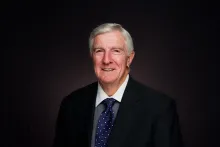
Before his retirement in 2021, Dr. Donald Ward pastored churches in Texas and Louisiana, and taught at Ambassador Bible College in Cincinnati, Ohio. He has also served as chairman of the Council of Elders of the United Church of God. He holds a BS degree; a BA in theology; a MS degree; a doctor’s degree in education from East Texas State University; and has completed 18 hours of graduate theology from SMU.
