
Don Ward
This transcript was generated by AI and may contain errors. It is provided to assist those who may not be able to listen to the message.
So we are ready to go now with Jeremiah. I told you some time ago that I did an outline of Jeremiah when I was at Ambassador College. This is dated May 1970, so this was done 50 years ago. 50 years ago, this outline of Jeremiah, and it is 38 pages single spaced. There is, of course, between the chapters, as a break, what we were asked to do is to outline Isaiah, Jeremiah, and Ezekiel. You talk about working, but at that time, I had just graduated from a non-electric typewriter to an electric typewriter, so this was done by a typewriter. It's 50 years, so I've known a little bit about Jeremiah since for 50 years. Once you outline a book, you become quite familiar with it. Okay, we were to start this evening in chapter four of Jeremiah.
Before we begin, we asked, do any of you have any question or comment at this time?
We had gotten to verse four, but I'll begin in verse one of chapter four and read into where we left off. Before we begin that, I want to once again remind you of a few things here. In Jeremiah, by the way, the name Jeremiah means Yahweh establishes. Yahweh establishes. Remember, he was to root up, pull down, and plant nations, and the great mission was to warn Judah of the impending doom. But in addition to that, he was a prophet to all nations. I remind you once again in the book of Jeremiah, there is a noted division between the northern kingdom, which is referred to as Israel oftentimes, sometimes Ephraim. You know, Israel can refer to all 12 tribes, but in the book of Jeremiah, Israel oftentimes refers to the northern kingdom, ten tribes, capital at Samaria.
And then Judah refers to the southern two tribes, Judah and Benjamin. When Jeremiah came on the scene in roughly 622 BC, the northern kingdom had already gone into captivity 721 to 718 BC. So it was 100 years after Israel had gone into captivity, yet God is pleading with Israel, the northern kingdom, to return.
Also, the name Jacob. Sometimes when you see Jacob, Jacob can refer to all 12 tribes. Jacob can refer to all 12 tribes, and usually Jacob is used to denote Israel in the fleshly sense. Whereas Israel, the literal meaning is, you remember Jacob's name was changed to Israel when he wrestled with the angel, the messenger that he wrestled with, and his name was changed to Israel, meaning ruling with God or prince with God.
And again, I remind you that one of the things that makes prophecy difficult to understand in some cases is to discern what is historical and what is presently going to happen, and then the future application, the duality aspect, and in some cases it's just purely future prediction. You may be reading a verse that applies to the present situation, but then it moves to the future fulfillment, and I will try to denote that as we move along. The Word of God, another thing to remember, the Word of God is living regardless of the time frame that it is written.
Regardless of the time frame, it is living, and it is for our admonition and learning for all times. So please keep that in mind. Jeremiah on the scene from roughly 622 BC to 662 BC, and he prophesied during the reign of Josiah, and Jehovah has, Jehovah Kim, Jehovah Chin, and Zedekiah. Those kings of Judah, they're the last kings, Josiah, and Jehovah Kim, and Jehovah Chin, Jehovah has, and then Jehovah Chin, and then Zedekiah. So I made up a little mnemonic device, has, Kim, Chin, Zed, and so you can remember Jehovah has, Jehovah Kim, Jehovah Chin, and Zedekiah. And one of the ironies that is present in the prophecies of Jeremiah and his work is that he prophesied during the most of the reign, or a good part of the reign, he came on the scene during Josiah's 13th year, and Josiah reigned for 31 years.
And in Josiah's 18th year, there was a great restoration of temple worship in Judah at that time under Josiah. I want us to look at that briefly here. So I want to look at 2 Kings in chapter 22, just briefly. In 2 Kings 22, in verse 1, Josiah was eight years old. His father, Ammon, had been assassinated by the house, by his own household.
He was so bad. Josiah was eight years old when he began to reign, and he reigned 31 years. In Jerusalem, he was killed at the age of 39 in a battle with the Egyptians. He made it back to Jerusalem, where he died. And his mother's name was Zeddedah, the daughter of Adiah of Boscath. And he did that, which was right in the sight of the Lord, and walked in all the way of David, his father, and turned not aside to the right hand or to the left.
And so it came to pass in the 18th year of Josiah that the great religious revival took place, the restoration of temple worship. And you can read about that in 2 Chronicles 35 and 36. 2 Chronicles 35 and 36 of the great revival restoration. They kept a great Passover, and Josiah took away a lot of the idols and a lot of the things, the groves and the icons and so on that were present.
But yet at the same time, he was not able, and neither was Jeremiah able, to rid the land of the evil. So it's sort of a paradox in one sense that you had this great restoration, but at the same time, they continued after the restoration. Even they fell right back into their ways.
So with that said, we'll go back to Jeremiah chapter 4. Those background things are very important to to try to keep in mind to try to visualize what is going on. In the book of Jeremiah, the things that he says are so applicable and so descriptive to what is going on in the nation today. So Jeremiah 4.1, if you will return Israel, see now here Israel, that's the northern kingdom, says the eternal return unto me, and if you will put away your abominations, out of my sight you shall not remove, and you shall swear the eternal lives in truth, in judgment, and in righteousness, and the nations shall bless themselves in you, for in him shall they glory.
Now what does that mean? See, if you will return in truth, in judgment, in righteousness, the nation shall bless themselves in him. Who is the him? The him is Jesus Christ, and in him shall they glory. The ultimate and true restoration of Israel will not take place until, as it says in Zechariah 12 and verse 10, they will look on him whom they have pierced, and they will mourn for him.
And so it's when Israel repents and recognizes Jesus Christ as their Savior, they will be saved. When you read Zechariah chapter 12, you find out from there to the end of the book, really, that it is only through God's intervention, his supernatural intervention, at the end of this age, that Israel, Judah, is not destroyed.
So it is through Jesus Christ that all the nations shall be blessed. I'm reading now from Psalm 102 and verse 15. I'm not going to ask you. I would ask you to write this down. I'm going to read it. Some might be able to turn to it. Psalm 102 verse 15, so the heathen shall fear the name of the eternal. The heathen meaning the nations and all the kings of the earth, your glory. See, they are going to glory themselves in him, that is, in Jesus Christ, when the ultimate restoration takes place. Now in verse 3, for thus as the eternal and the men of Judah, or thus as the eternal, the man of Judah and Jerusalem, break up your fallow ground. We talked about that fallow ground is land that has not been cultivated and it just grows weeds and is not fit for anything. So it is speaking in a metaphoric sense. Another thing, of course, was prophecy. Most of prophecy is written in poetic form. Poetic form, and it is rich in metaphors taken from agriculture, from animal husbandry, and from the cosmos, the sun, the moon, the stars, the wind, the rain, and all of that. The floods break up your fallow ground and sow not among thorns.
Of course, when the gospel message goes out, as it talks about in Matthew 13, that some of some of the seeds fall on stony ground and some among the thorns, and God is admonishing them to break up the fallow ground. See, when ground lies fallow, it becomes hard and flat. It is difficult for anything to germinate on it. So when you disc it, plow it, break it up, then the seed will stick to the earth and it will germinate. Verse 4, circumcise yourselves to the eternal. And circumcision, of course, now is of the heart, as it talks about in Romans 2 and verse 29, that circumcision is of the heart. Take away the four skins of your heart, you men of Judah and inhabitants of Jerusalem. Let fury come forth like fire and burn, that none can quench it because of the evil of your doings.
Declare you in Judah and publish in Jerusalem and say, blow you the trumpet. Now, the word for trumpet in this verse is veshofar. There were two different trumpets that were blown in Israel, and you can read about those in Numbers chapter 10. There were silver trumpets, and also there was the shofar made from the ram's horn. A clear sound, not very pleasing in one sense to the here, is the shofar. Blow you the shofar in the land, cry together together, and say, assemble yourselves, and let us go into the defense of the cities.
The Jews are warned to take measures against the impeding invasion that Jeremiah was predicting, and as we read through Jeremiah more and more, we'll see the identity of these armies. Jeremiah 814, why do you sit still, assemble yourselves, and let us enter into the defense cities. Let us be silent there. For the Lord our God has put us to silence and has given us water of gall to drink because we have sinned against the Lord.
But really, they did not heed any of Jeremiah's warnings with regard to preparing for the impending invasion of the Chaldeans and Babylonians upon him. Verse 6, set up the standard. The standard here means a flag or a pole, a sail. By implication, it is a flagstaff used for a signal.
So, signal toward Zion.
Retire the stay. Retire. Stay not. For I will bring evil from the north and a great destruction upon you. This word stay, it means to abide, to appoint, to arise where I will bring evil from the north and a great destruction. You see, one of the things that comes forth in this book is the fact that Jeremiah was accused of being a traitor because God told him to tell the people to capitulate, to not resist the invasion, because the invaders, the Babylonians and those that came were really from him, and he was the one that was bringing them against Judah. The lion has come up from the thicket. The lion is the strongest of the beast, that is, the beast of prey. Of course, there are stronger animals than the lion, but of the beast of prey, those that have to do with destruction has come up from the thicket and the destroyer. That should read the nations. It is not just the the Gentiles per se.
The Hebrew word here is goi. And goi is really like a derogatory term, came to be four Gentiles in Israel and Judah. Goi is spelled G-O-Y in English, and it's pronounced as a long e goi. And as a group, it's called the goim. And the Jews looked down, of course, on anyone who was not a Jew. And the story of the Good Samaritan is a prime example of that, because it says, you know, the Jews would not have anything to do with the Samaritans. And here was this fellow that was really in dire need of help and having his wounds bound up. And the Jews passed him by, but the Samaritan came to his aid. But here is this is talking about the nations. The destroyer of the nations is on his way. He has gone forth from his place to make your land desolate, and your cities shall be laid waste without an inhabitant. Now, some people read the Bible, and when the Bible says, without an inhabitant, it doesn't mean that every last person is killed or taken away when it says, without an inhabitant. So we have to keep that in mind. And the absolutes are generally stated in such a way that you know that they are absolutes. Now verse 8, For this gird you with sackcloth and lament. Of course, sackcloth was the the clothing of those who lamented, who prayed and fasted, who sat in dust and ashes, and how for the fierce anger of the Lord is not turned back. Verse 9, And it shall come to pass, at that day, says the Eternal, that the heart of the King shall perish, and the heart of the princes, and the priest shall be astonished, and the prophet shall wonder. For so many of the prophets in that time were evil men who prophesied, Oh Jeremiah, he is not right, he's not really a prophet. And so they would listen to the false prophets and not to God's true prophet.
And verse 10, Then said I, Ah, Lord God, surely you have greatly deceived this people. And the best that I can come up with, and the commentaries agree here with this, with regard to God allowed the false prophets to prophesy, even though they were telling them lies, he permitted them to prophesy, and God hardens the heart of people as he will. I'm reading now Exodus 9, 12, which says, The Lord hardened the heart of Pharaoh, and he hearkened not unto them as the Lord had spoken unto Moses. Time after time in sermons in recent years, I have reminded the brethren that you have to develop your own love affair with the truth. And that if you don't love the truth, it says in 2 Thessalonians 2 and verse 11, For this cause, for what cause? Because they did not love the truth. God shall send them strong delusion that they should believe the lie. And most translations it will have a lie, but it is the lie. And the great lie that is going to come upon the peoples of the world is this lie, that the one sitting in the temple in Jerusalem at the end of the age who is saying that he is God, proclaiming that he is God, that's the great lie. And through signs, wonders, and miracles, he deceives a whole world. Everyone whose names are not written in the Lamb's Book of Life, according to Revelation 13.8, will be deceived. So on the one hand, these prophets were saying what they said, and God allowed them to say that. Surely you have greatly deceived this people in Jerusalem, saying you have, you shall have peace. But instead of that, whereas they're not going to have peace. Whereas the sword reaches unto the soul. And this word soul here is nafesh, to the very life essence, life potential of a person. So I hope you get that contrast there. The deception that was taking place was from the false prophets, who were deceiving them saying, peace, peace, when there was no peace. There will be the same thing that will be said at the end of the age. When they say, as it says in 1 Thessalonians chapter 5, when they say, peace, peace, then sudden destruction comes upon them.
Now verse 11. At that time, shall it be said to this people into Jerusalem, a dry wind, a dry wind of the high places in the wilderness toward the daughter of my people, not to fan nor to cleanse. A dry wind, a wind, it was called the Samum, S-I-M-O-O-M. It was a terrific, destructive blowing from the southeast across the desert sands east of Palestine. Now, the good winds were the winds that would be there when they were threshing the grain and cleaning things. It was a cleansing kind of wind, but in contrast to that wind, this is a dry wind. It is a destructive wind. At that time, shall it be said to this people in to Jerusalem, a dry wind of the high places in the wilderness toward the daughter of my people, not to fan nor to cleanse, but to the contrary, to dry up, to destroy. May God is the one who is ascending. Verse 12. Even a full wind from those high places or from those places shall come unto me. Now also will I give a sentence against them.
From those places has to do with a fuller wind, a more threatening wind is going to come against them. Now verse 13. Behold, he shall come up as clouds, and his chariots shall be his whirlwind. His horses are swifter than eagles, woe unto us, for we are spoiled.
The metaphor of the clouds, the clouds of sand and dust, that accompanies the Samum, and after that, rapid gyrations come across.
And of course, the armies could be also part of the metaphor here that the horses, the chariots, are swifter than horses and eagles and so on. In chapter, verse 14 now, O Jerusalem, wash your heart from wickedness. And time after time in Scripture, it is the heart. It is the most innermost part of one's being, the very center of thought and consciousness and awareness that God is concerned with. There are all kind of actors out there, and image makers, and people who try to put on the facade, but God looks on the heart. And we know that Scripture well. God looks on the heart. Man looks on the outward appearance. So God is saying, wash your heart from wickedness that you may be saved. How long shall your vain thoughts lodge within you?
Now, verse 15.
For a voice declares from Dan, and Dan was the northernmost part of the land, and publishes affliction from Mount Ephraim. And Ephraim was to the south, joining Judah just to the north. And so from the northern part of the ten tribes all the way down through Ephraim. For a voice declares from Dan, and publishes affliction from Mount Ephraim.
The connection here is, there is danger in delay, for the voice of a messenger announces the approach of the Chaldean army from Dan, the northern frontier. And then it's coming all the way down to Judah, the Mount Ephraim, which borders closely on Judah. So the foe is coming nearer and nearer. And Dan and Bethel. Now listen to this. Dan and Bethel, which is in Ephraim. Bethel did mean house of God. But it was in Dan and Bethel that Jeroboam set up the two golden calves, the two idolatry calves. 1 Kings 12 and verse 22. And he set the one in Bethel and the other put he in Dan.
So those two places. Dan, where hardly anything is said good about Dan. And as you read the 12 tribes that are when the 12 tribes are sealed in the book of Revelation before the trumpet plagues are poured out, you'll note that Dan is left out. Now verse 16. May you mention to the nations, behold, published against Jerusalem, that watchers and in this case watchers means besiegers, those who are laying besieged.
That watchers come from a far country, those who are besieging and give out their voice against the cities of Judah. Verse 17. As keepers of a field are they against her round about because she has been rebellious against me, says the eternal.
You know, when Saul disobeyed and did what he did, and he sacrificed the best of the flock that the people had kept from Agag, that God said that, well, Samuel said on behalf of God that rebellion is as the sin of witchcraft. It's one of the worst of all sins.
So as keepers of a field are they against her round about because she has been rebellious against me, says the eternal. Your way and your doings have procured these things unto you. This is your wickedness because it is bitter because it reaches unto your heart. And that is the fruit of wickedness. If it is not rooted out, it will bear a bitter heart and a wicked heart and make it so difficult for a person to change.
Now in verse 19, my bowels, my bowels, I am pained. And very often, writers in the Bible, we have Paul using bowels in the New Testament. It has to do similar to heart. It's just I'm pleading with everything that I have. My bowels, my bowels, I am pained at my very heart. My heart makes a noise in me. I cannot hold my peace because you have heard, O my soul, the sound of the trumpet. And once again, the word here for trumpet is so far, the alarm of war. You have heard it. The trumpet is loud and clear. And Jeremiah was the one that was blowing that trumpet. Whereas on the other hand, the false prophets were saying, Oh, Jeremiah, he is a traitor.
We're going to have peace. Verse 20, destruction upon destruction is cried.
So breach upon breach is announced. The war trumpet, the battle shot, the destructions, the havoc throughout the whole land, the spoiling of the shepherd's tents, which means cities, which should be overthrown as easily as tents. Destruction upon destruction is cried for the whole land is spoiled. Suddenly are my tents, my cities spoiled in my curtains. Anything that protected are spoiled in a moment. How long shall I see the standard? Remember the standard, the banner, the warning signal, and hear the sound of the trumpet? How long is this going to last?
Are you going to take heed to the trumpet?
Verse 22, for my people are foolish. They have not known me. They are saddish. This word, saddish, means silly, foolish. They are silly, foolish children. They have non-understanding. They are wise to do evil, but to do good, they have no knowledge. And of course, you read in Hosea chapter 6, where it says, my people are destroyed for lack of knowledge. And today, as Isaiah writes in Isaiah 59, truth, in John 1717, says your word is truth. Truth has fallen into the streets, and no one takes heed. Judgment stands afar off. People know how to do evil, but they don't have the knowledge to do good. And do good has to do with the very social, civil, moral, ethical, spiritual, heart, consciousness of a nation. It's not just that you give the homeless clothing, or feed them Thanksgiving dinner, or Christmas dinner, or whatever like that. It has to do with moral, spiritual, ethical, civil kind of understanding and learning and knowledge. You cannot buy goodness. Goodness cannot be bought. Of course, there's a big debate going on now with regard to the stimulus bill for they just passed a big stimulus bill of almost a trillion dollars, nine hundred and something billion dollars. And then President Trump is saying that it families instead of getting each person getting 600 families should get four thousand dollars. And so it's like you can solve your problems with material goods. Now it will help, obviously it's going to help some people with regard to that. But it's obviously not the solution in the long term. The long term is moral, spiritual, leadership. A nation will always go in the direction of its moral and spiritual leadership down to the very smallest unit of society to the individual.
Verse 23. I beheld the earth and lo it was without form and void in the heavens and they had no light.
Similar to what you read in Genesis 1-2. I'm reading Genesis 1-2 now. And the earth was without form and void and darkness was upon the face of the deep and the Spirit of God moved upon the face of the waters. And you go on reading there in Genesis and it talks about it was without form and void. It was tohu and bohu. It was utterly chaotic until God began to recreate the earth and prepare it for humankind. So here in the metaphoric sense, in the figurative sense, Jeremiah is looking and the future of the nation was chaotic, confused, just as it was in primeval times before the recreation.
Now verse 24.
I beheld the mountains and lo they trembled and all the hills moved lightly. Of course, once again, the metaphoric poetic language here in nature is invoked. And of course, there is coming at a time, literally, as you read about, especially in Revelation 6. And the sixth seal is open and a lot of things happen. The moon has turned to blood and the sun stopped shining and mountains are moved out of their place. And that's God's intervention. It's not some kind of cycle that occurs every so many years. As the great Furo was raised by Jonathan Cawin and others with regard to blood moons back a few years ago, when they fell, blood moons fell consecutively on holy days and fall festivals. Now those were naturally occurring phenomena. When God intervenes, it will not be naturally occurring phenomena. It will be supernatural intervention from Him.
Verse 25. I beheld and lo, there was no man, and all the birds of heaven were fled. No vestige of human beings or the feathered creation to be seen. So total is the destruction that is coming. I beheld and lo, verse 26, the fruitful place was a wilderness, and all the cities thereof were broken down, and the presence of the Lord, and by His fierce anger, broken down at the presence of the Lord, and by His fierce anger.
See, when God intervenes and brings judgment, it's not just a naturally occurring phenomenon, though there are naturally occurring phenomenon that might be used. You think, okay, we're having floods, and floods can be a naturally occurring phenomenon, or we're having drought, and drought can be a naturally occurring phenomenon, but at the same time, God controls everything. He can cause it to rain. I think we have read about Noah's flood, and he can intervene in weather patterns, and he can intervene in any way he so chooses as he brings judgment upon the land. And he is going to plead with all flesh. Verse 27, For thus hath the Lord said, The whole land shall be desolate, yet will I not make a full end. And here's one of the great things about prophecies, nearly all the prophets, especially the minor prophets, that God, for example, the word Jezreel that is used there in Hosea chapter 1, Jezreel literally means God sows. But God can sow restoration, or God can sow destruction. So in judgment, he sows destruction, but in restoration, he sows the good seed. He sows restoration. So Jezreel, meaning God sows, can mean either one. In nearly all the prophecies, God holds out and says, I'm not going to altogether destroy all of you. I am going to leave a remnant. I'm going to leave seed. So he says, I will not make a full end. Verse 28.
For this shall be, for this shall the earth mourn. Of course, verse 27, verse 28, can be very applicable at the end of the age, especially when the seals are open and the trumpet plays begin to be poured out. For this shall the earth mourn and the heavens above, be black. Because I have spoken, I have purposed it, and will not change my mind. This word, repent, of course, God never has to repent. This word here is nokom.
It means literally to breathe strongly, to pity, to console, to rule, to rue, r-u-e, to ease. So it doesn't mean to repent of evil. What it literally means, in this case, I'm not going to change my mind. I have purposed it and will not change my mind, neither as it shows in the parallelism. Another aspect of prophecy is often written in parallelism. So one sentence states a fact, and the other, in the next sentence, reinforces that fact by saying it in a different way. So I have purposed it and will not change my mind, neither will I turn back from it, meaning both phrases meaning the same thing. Much of Isaiah and the Psalms are written, especially the Psalms, are written in that form, that is in poetic parallelism. I'm going to take a little breather here, get my breath, and take a drink of iced tea. Verse 29, Jeremiah 4 verse 29. The whole city shall flee for the noise of the horsemen and bowmen. They shall go into thickets and climb up upon the rocks. Every city shall be forsaken, and not a man dwell therein. These last few verses and the duality of prophets seem to be more applicable to the very end of the age than at that present time.
Now verse 30. And when you are spoiled, what will you do, though you clothe yourself with crimson? In other words, what are you going to do in view of this warning? Here are some of the things that people do to try to make themselves attractive. Though you clothe yourself with crimson, though you deck yourself with ornaments of gold, though you rent your face with painting, in vain shall you make yourself fair. Your lovers will despise you, they will seek your life. And so what Israel and Judah did in the latter years before they were taken captive was that they did try to appease and also to develop alliances with the neighboring nations. And so this has been the course of the world in recent times of alliances and blocks of nations coming together. But God is saying, no matter in metaphoric terms, He's saying, look, no matter how attractive you make yourself, no matter what you do, it's not going to be enough. It's not going to turn back my judgment. For I have heard a voice as of a woman in travail, a voice as of a woman in travail in the anguish as of her that brings forth her first child, the voice of the daughter of Zion that bewails herself, that spreads her hands, saying, woe is me now, for my soul is weary in my life, essence my life, potential is weird because of murderers.
So this chapter closes with this. No matter what you do, no matter how you dress yourself up, no matter who you make alliances with, it's not going to save you. Now we go to chapter five. Chapter five verse one, run you to and fro through the streets of Jerusalem and see now and know and seek the broad places thereof. If you can find a man there, if there be any that executes judgment and that seeks the truth, and I will pardon it. You remember the story of Abraham pleading for Lot and his family when God said, I am going to destroy Sodom and Gomorrah. And then Lot began that, I mean Abraham began that negotiating with God with regard per chance you would find so many righteous men, will you destroy the city? And God said, no, I won't destroy it if I find that it came on down. So similar to that, go see if you can find a righteous person in the city. Now, once again, I point you to the irony in one sense of this. In the case of Josiah, it was in Josiah's 18th year of his reign. So if you had 18 and eight, he was 26 years old, and Jeremiah began prophesying when Josiah was 21 years old. So Jeremiah had been prophesying five years when Josiah introduced those great reforms and tore down many of the idols and restored temple worship. But in spite of that, or despite, inspite, whichever word you want to use, they continued in their ways, in their heart especially.
And so God says, go see if you can find one person that executes judgment that seeks the truth, and I will pardon it. Verse 2, and though they say the Lord lives, surely they swear falsely.
It's not a judicial oath, per se, but their profession of the worship of God is insincere. One of the things that I did, that I said two times in the Theodora message of Dale Bauman on Monday, was that you either believe God or you're left to your own imaginations or that of other people. You either believe God or you believe yourself and other people.
And I said it in the context of virtually everybody will say, oh, I believe that God exists. Yes, I believe that God exists. You take a poll of the United States. I would imagine some 70-80 percent at least would say, I believe God exists. But yet, at the same time, you would ask the question, if you believe God exists, then what? Then the other thing is, if God exists, he must have a way of communicating with those with humanity. And the way he is communicated with humanity is through his word and through his spirit. As Paul writes in 1 Corinthians chapter 1, through the foolishness of preaching. So the foolishness of preaching some turn to righteousness, and God calls some into his marvelous light. But those who just take God in their mouth and say they believe in God, and then they create God over in their own image. And to a large degree, that is apparently what is happening here. Verse 2 again, and though they say, the eternal lives surely, they swear falsely. Oh Lord, are not your eyes upon the truth, and you have stricken them, but they have not grieved. You have consumed them, but they refuse to receive correction.
So if you go back in this nation to what's often used as a great benchmark in modern times, as 9-11, where for a few months the nation seemed to turn to God, and then in the last decade, there has been like a cataclysmic collapse of the whole societal, civil, moral structure of the nation. And now the world is facing the coronavirus. Are they turning to God? Are they crying out to God? Or of course, they're depending on science, so-called, to save them. When God intervenes, when he pleads with all flesh, there will be no vaccine, nothing that will save, except God and his Spirit.
So they have not grieved. You have consumed them, but they have refused to receive correction. They have made their faces harder than a rock. They have refused to return. You can see the faces of people at times, even in church, but especially on the streets and other places where you know that they are fooling themselves, but not desiring any correction. In chapter 5 verse 4, now verse 4, Therefore I said, Surely these poor, these are poor, and they are foolish, for they know not the way of the Lord, nor the judgment of their God. Once again, I reference Hosea 6. My people are destroyed for lack of knowledge. Verse 5, I will get me unto the great men, and I will speak unto them, for they have known the way of the Lord, the judgment of their God. But these have altogether broken the yoke, and verse the bonds, even those who knew God have turned away from God.
Wherefore a lion of the forest, the lion is the strongest of the beasts, to pray, The lion of the forest shall slay them, and a wolf, the wolf is the most ravenous of the wild beasts, ready to tear into raw meat.
And a wolf of the evening shall spoil them, a leopard, the swiftest of all beasts, shall watch over their cities. Everyone that goes out there shall be torn in pieces, because their transgressions are many, and their backslidings are increased.
In essence, this verse is saying, look, there will be no escape, whichever way you want to choose. You got the lion that is strong, you got the wolf that is ravenous, you have the leopard who is swift, there's no way to escape. Verse 7, How shall I pardon you for this? Your children have forsaken me, and sworn by them that are no gods. And of course, the Z generation, the new generation that is coming on, has a totally different mindset when it comes to traditional morals, values, and especially those that's revealed in the pages of the Bible. While they proclaim love on the one hand, they defy what is true love, and true love is defined by 1 John 5.3, for this is the love of God, that we should keep his commandments, and his commandments are not grievous. Or, 1 John 2.4, he who says that he knows him, he keeps not his commandments, is a liar, and the truth is not in him. So how shall I pardon you for this? Your children have forsaken me, sworn by them that are no gods. When I had fed them to the fool, they committed adultery, spiritual hortom, and assembled themselves by troops in the harlot's houses. There was, in going on in Judah and Jerusalem, the fertility rites of visiting the prostitutes, in addition to that, as we will read later in Jeremiah, that they were also sacrificing their children, sacrificing their children to their false gods. Verse 8.
They were as fed horses in the morning, everyone knayed after his neighbor's wife. So it's talking about when animals are in season, how they pursue each other. So our human beings are pursuing each other in the same way. The whole world is revolved. The cash cow of Hollywood is what is sexy, what is youthful, what is beautiful. You take that away, and they have very little to talk about, and neither does the advertising world. Verse 9. Shall I not visit you for these things?
Says the Eternal, and shall not my soul be avenged on such a nation as this? In essence, God is in one sense saying, look, I really don't have any choice in this. It has gone so far. If I'm going to be God, I can't let this go on. Verse 29, later in this chapter, which we'll read, I'm going to read it now, we'll read it also, but in this context, shall I not visit? Shall I not visit for these things, says the Lord, shall not my soul be avenged on such a nation as this? I can't let this go on and remain God. God, this is Jeremiah 9-9. Shall I not visit them for these things, says the Lord, shall not my soul be avenged on such a nation as this? This is Jeremiah 44-22.
So that the Lord could no longer bear because of the evil of your doings and because of the abominations which you have committed. Therefore, is your land a desolation and an astonishment and a curse without an inhabitant as at this day. So, as I said, God wouldn't be God if He didn't do something about it. And of course, we wonder at times, how long is this going to go on? And as some say, we haven't seen anything yet. Verse 10, Go you upon her walls and destroy, but make not pull in. Once again, notice that make not a pull in.
So God is going to be faithful to His Word. The words that He promised the patriarchs, Abraham, Isaac, and Jacob, in your seed shall all the nations of the earth be blessed. Take away her battlements, for they are not the lords. For the house of Israel and the house of Judah have dealt very treasurishly against me, says the Eternal. They have belied the Eternal and said, it is not He, neither shall evil come upon us, neither shall we see the sword nor famine. So it's not God is going to do this. By their idolatry, they denied God. God is not merely a name. He also is long suffering, merciful, not willing that any should perish. But at the same time, as we have said already here just a few minutes ago, He wouldn't be God if He didn't do something to stop what's going on. Verse 12, they have belied the Lord and said, isn't not He neither shall evil come upon us, neither shall we see the sword nor famine. Still crying, piece, piece. And one of the things that they would cry was, look, we have the temple here. Hey, you talk about they're going to destroy the temple. No way that's going to happen. And later on Jeremiah said, hey, go look at Shiloh and see what happened there. That's where the tabernacle was pitched when they came up out of when they came across Jordan and pitched the tabernacle in Shiloh, which is in Ephraim. Verse 13, and the prophets shall become wind and the word is not in them. Thus shall it be done unto them. So those false prophets were no more than speaking hot air because they were prophesying falsely. Verse 14, wherefore, thus says the Lord, God of hosts, the Lord God of hosts, because you speak this word, and behold, I will make my words in your mouth fire, and this people would, and it shall devour them. That's it.
That figurative metaphoric language there, God says, look, I got fire in my mouth, and you are the you're the firewood. You are, I'm going to put his mouth is like the firebox, and I'm going to put, I'm going to put you in my mouth and burn you up. In verse 15, Lo, I will bring a nation upon you from afar, O house of Israel, says the Lord, it is a mighty nation. It is an ancient nation, a nation whose language you know not neither understand what they say. The Chaldeans came originally from the Cardusian and Armenian mountains, north of Mesopotamia. Then they emigrated into Babylonian. Like all mountaineers, they were brave and hearty. So when you read Daniel especially, and when Daniel wanted, when the kings wanted dreams interpreted, they would speak about calling the the Chaldeans because the Chaldeans were those who were skilled in the occult, the black magic, the supernatural, the witchcraft kind of things. And so these, the Chaldeans, it seems like, and it's difficult to ferret this out, that the Chaldeans were somewhat like the upper class in Babylon, especially they were in the priestly class, that is the false religious class for sure.
So once again, 15, I will bring a nation upon you from afar, O house of Israel, says the Lord. It is a mighty nation. It is an ancient nation, a nation whose language you know not neither understand what they say. So I'm reading here from a commentary. This Jameson Fawcett Brown, and it says here, this shows that Aramaic was not understood by the multitude, but only by the educated classes.
Then the commentator Henderson refers it to the original language of the Babylonians. He thinks they brought it with them from their native hills.
It was akin to the Persing, not to the Aramaic or any other Semitic tongue. So there are people who, is it Phaladiah? Anyhow, the study of languages, people try to ferret out on that, where the language is originated, where they came from. In verse 16, their quiver is an open sepulcher. They are all mighty men. An open sepulcher is a metaphor for an open grave. So their quiver is an open grave. It's like you're going to fall into it and there's no way out. The quiver is all devouring. Just this grave open to receive the dead, so are their arrows going to fall upon you and you're going to be dead. Verse 17, They shall eat up your harvest and your bread which your sons and your daughters should eat. They shall eat up your flocks and your herds. They shall eat up your vines and your fig trees. They shall impoverish your fence cities wherein you trust with the sword. One of the things that this nation basically has not known in the majority of sense, and that is starving, starvation. Though it is said that a large percentage of Americans, especially young people, now go to bed hungry in this nation every night. It seems to me that one of the most difficult deaths to experience is starvation. Of course, you see those pictures of those emaciated little children in the foreign countries in Africa, in India, and other places. In verse 18, Nevertheless, in those days, says eternal, I will not make a full end with you. That's the third time tonight we have received that. Regardless of what I'm doing, I'm bringing this judgment, but I'm not going to totally destroy. My word is going to be fulfilled. Somebody's going to do it. And it shall come to pass when you shall say, Wherefore does the Lord our God, all these saints unto us? Then shall you answer them like that you have forsaken me and serve strange gods? So the wherefore means, Why are you doing all this?
What's up? Why are you doing that? The answer, you forsaken me, serve strange gods in your lands. So shall you serve strangers in a land that is not yours. And so the Babylonians came and took the Jews captive. They took, first of all, the intelligentsia, the most learned ones, and especially the youthful ones who had great promise, such as Daniel, Shadrach, Meshach, and Abednego. Now verse 20, declare this in the house of Jacob. See, Jacob here used for Israel and published it in Judah, saying, Hear now this, O foolish people, and without understanding, which have eyes and see not, which have ears and hear not. Fear you not, me? Don't you understand? I mean, it seems to me that if we could just get across one simple thing, God exists, and He's the one who created us. Fear you not, me? The Lord, will you not tremble at my presence, which have placed the sand for the bound of the sea by a perpetual decree, that it cannot pass it? And though the waves thereof toss themselves, yet they cannot prevail. Though they roar, yet they cannot pass over it.
Once again, a metaphor taken from nature and the sea, that the sea stays within its boundaries, and even though the waves pound the shore, it still remains within the boundaries.
Do you think you're going to stop me from doing what I said I'm going to do? Verse 23, But this people has a revolting and a rebellious heart, and they are revolted and gone.
Neither say they in their heart, Let us now fear the Lord our God, that gives rain, both the former and the latter rain. The former rain came in the fall, and it helped ripen the barley harvest, and then that they would harvest around Passover time, and then the latter rain in the spring, the main harvest, the wheat harvest, and Pentecost. And in this season he reserves unto us the appointed weeks of the harvest. Your iniquities have turned away these things, and your sins have withheld good things from you.
It's like God is saying, look, I really wanted to bless you. I wanted to continue pouring out blessing and having a relationship with you, but you just wouldn't have it. You wanted to do it your way. For among my people are found wicked men. They lay wait as he that set snares, they set a trap, they catch men, as a cage is full of birds, so are their houses full of deceit. Therefore they become great and waxen rich. One of the chief ways now, whereby people are forced into doing the bidding of those that are the elite, they have sacrificed themselves, they have done some evil, and they've either been taped, or they have been recorded, or they have been taped, meaning they've been filmed. And so, so many people are bribed blackmail, but it's their fault, because they have done evil things. And so you see from that time to the present time, people are controlled to a large degree by those who would take advantage of them and use them and then destroy them. Verse 28, they're waxen fat, they shine, yes, they overpass the deeds of the wicked, they judge not the cause, the cause of the fatherless, yet they prosper, and the right of the needy do they not judge. Shall I not visit you for these things, says the Lord, shall not my soul be avenged on such a nation as this, a wonderful and horrible things committed in the land. The prophets prophesy falsely, and the priests bear rule by their means, that is, they give them the money, and my people love it to have so, and what will you do in the end thereof? When the Judgment Day comes, what will you do? Will the priests, will the leaders, will the ministers of God cry aloud, spare not, lift up their voice like a trumpet, show my people their sins? Or will they do as these people did? They will speak smooth things, they will prophesy to seats, they will deceive the people, they will declare peace, and there is no peace.
So we conclude our Bible study for the evening there.
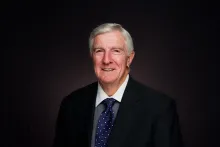
Before his retirement in 2021, Dr. Donald Ward pastored churches in Texas and Louisiana, and taught at Ambassador Bible College in Cincinnati, Ohio. He has also served as chairman of the Council of Elders of the United Church of God. He holds a BS degree; a BA in theology; a MS degree; a doctor’s degree in education from East Texas State University; and has completed 18 hours of graduate theology from SMU.
