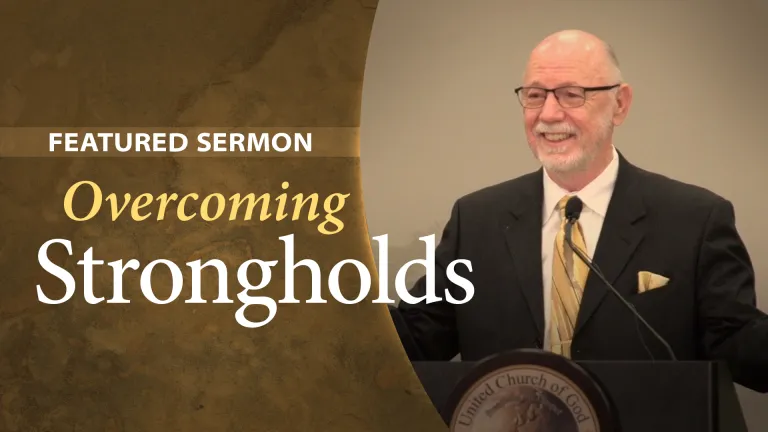

Robin S Webber
This transcript was generated by AI and may contain errors. It is provided to assist those who may not be able to listen to the message.
It's always a very busy time of year between setting up for the Passover services, the night to be much observed, and getting us around for the activity today. Thank you! Nice facility. And it's good to have a crowded room. This is good. Those are good problems for a church.
We want to outgrow this room. And also, thank you for the beautiful music and look at those beautiful flowers up there, just bringing out at you. And to recognize that it recognizes the whole theme of what the Feast of Unleavened Bread is about. It's about life. It's about newness. It's about the color that God wants to bring into us. The Passover was a memorial of the death of Jesus Christ. Now, with the Days of Unleavened Bread, we rejoice and we dedicate ourselves to having His life in us.
So, good to have all of you here with us to be able to hear these messages. Even as I said that we celebrate the aspect that we desire to have Jesus' life in us and live anew, it's also been said that old ways die hard. And it's also been said that you can't teach an old dog new tricks. Well, thank God we're not dogs. But sometimes, if the truth be told, we like to settle for the life of a dog, rather than settle for the opportunities and, yes, the dynamic challenges that God has yet ahead for each and every one of us on the journey that He has at hand.
We're reminded of this in 1 Corinthians 5. Join me if you would. Let's open up our Bible here on this Festival Day. 1 Corinthians 5, Paul speaks of this in the great anthem dealing with this book of Corinthians, which is actually a book in the New Testament that centers on these very days that we observe right now on the Passover and on the days of Unleavened Bread. And in 1 Corinthians 5 and verse 6, Paul reminds us, your glorying is not good.
He says, do you not know that a little leaven leavens the whole lump, and therefore purge out the old leaven that you may be a new lump, since you truly are unleavened. Why? Because of what we have done? Because of some formula that we came up with? No! It says it right here. For indeed Christ, our Passover, was sacrificed for us. That's the foundation. That's the framework. To recognize it's not because of what we have done, but because of what God has done.
But now, because that is in place with the Passover at hand and in heart. Because Passover is not just simply an event. It's an existence. It's a way of traveling, of recognizing what God the Father has done for us through Jesus Christ. We come to these days, we are excited, we are thrilled.
For anybody that's grown up in the Church of God community, or come into the Church of God community, there's a lot of excitement, there's a lot of anticipation, and there is a lot of hope that as we begin this cycle again, that new things, good things, great things, blessings will happen to each and every one of us. And we hope to move ahead with our hearts desire, we truly do.
But then, what happens when that old, old problem, that old, old way comes cropping up again? Same problem, same, just the same issue every year, just doesn't seem to go away. Now, I'm looking around at an audience of about 80 or 85, I think, today, and we don't have to raise our hands and tell everybody what their issue is.
But you know what that is. You know what is still inside of you, that you have not yet fully given over to God the Father and Jesus Christ, and allowed them to tackle it with you, and to help you, and to guide you, and to encourage you. You know, it's that same old familiar hunk of junk, same old, same old, that maybe we've just kind of literally held onto. Just holding onto it, and holding onto it, and yes, holding onto it, and we won't release it.
We don't want to tackle it, much less have God tackle it with us, and so we hold onto it. And you know, and I know, and I'm talking to myself today, so as we talk, please understand I'm not just talking to you, I'm talking to myself, because hopefully that's what good Christian communication is, is to recognize that whatever that issue is, sometimes it is buried deeper and down deeper than the treasure that was an Achan's tent in the sands outside of Jericho.
It's deep, deep, deep, deep, deep, deep, deep, deep, but it doesn't mean that it doesn't crop up all of a sudden, just at a moment's notice. Just when you have that external force come at you, just when the pressure comes on, and there we are with that same old problem. Well, we're not alone. We're not alone. The same man that wrote that startling anthem out of the book of Corinthians about these days and what they portray also shared something else with us. And I'd like to just read it to you, because it's going to be out of another translation.
And I think it's better said than just in the New King James, which I know most of you have. Allow me for a moment to read out of the book of Romans, in Romans 7, starting in verse 15. Words of Paul. Words of a Christian. Words of the man that's on the journey, on the pilgrimage, and yet he's got issues that he still has not tackled and dealt with. And out of the Living Bible translation, it goes like this.
I know I am rotten through and through so far as my old sinful nature is concerned. No matter which way I turn, I can't make myself do right. When I want to do good, I don't. And when I try not to do wrong, I do it anyway. But if I'm doing what I don't want to do, I am really the one doing it. The sin within me is doing it. Then he says, it seems to be a fact of life. Then when I want to do what is right, I inevitably do what is wrong.
Now, it's interesting, with all this conflict that's going on, his conflict is your conflict. It's my conflict. He says, I love God's law with all of my heart. But there is indeed another law at work within me that is at war with my mind. This isn't talking about somebody that hasn't met Christ. This is the guy that met Christ on the road. He's already on the journey. He's already stepped into the pilgrimage.
But he's having a discussion here with you, with me, a confession. This law wins the fight and makes me a slave to the sin that is still within me. Oh, what a miserable person I am who will free me from this life that is dominated by sin. Thank God! Wow! The tone has changed because of the little bleak and the little psychoanalytical there.
But then he just comes up and he anchors himself, gets his moorings, gets his pivot point, and is going to proceed. Thank God! The answer is in Jesus Christ our Lord. So you see how it is. In my mind, I really want to obey God's law, but because of my sinful nature, I am a slave to sin. That's why today I'd like to discuss an issue with each and every one of you. And as I do, please understand that I am not singling out any one individual here with the terms or the issues that I'm going to bring to the fore.
I think when it's all said and done, we'll find that, God willing, that this is going to affect each and every one of us. What happened is that I remember a long time ago, Mr.
Harold Jackson. I don't know how many of you remember Mr. Harold Jackson, but I remember one time, oh, about 25 years ago, and he was an older man by then. He set a line from the auditorium stage in Pasadena. He said, there must be something about human nature that we like, or we would have gotten rid of it a long time ago. But there's something that moves beyond the liking here that you and I have to understand.
And what I'm really talking about and going to be describing is addictive behavior. The addictive behavior of our sins, and to recognize the very real need to confront the addictive nature of the sin, that means to understand how sin does operate in us and what we need to do with it. Because like the Apostle Paul, it is a struggle. He was struggling here in the book of Romans.
He's a Christian. He's an Apostle. He's a man of God. He gets beaten. He gets thrown to the lions. He is shipwrecked. And yet, there's still this inner struggle that's going on inside of him. Ancient Israel, as was mentioned by Mr. Helmut, had that same kind of struggle going on as it left Egypt.
And it's very interesting. If you look at it, I used the word addiction, that what Israel was really going through was withdrawal pains from Egypt when you think about it. They had withdrawal. Here it was. God Almighty had taken them out of Egypt, but Egypt was still alive and well in the slave.
In other words, you can take the slave out of Egypt, but you can't take Egypt out of the slave. In fact, they were willing, which is very much a part of addictive behavior and the nature of sin, that they were even willing to go back to Egypt, even with slavery, even with the bondage, even with the whips. They were willing to be secure, in other words, in their own insecurity. You think about that for a moment. Interesting choice of words. How about us, as we move now forward, with the desire of newness in life?
What are we holding on to? What are we willing to be secure in, in the insecurity? And are we willing to have Jesus Christ live fully and live abundantly in us? The title of the message today is simply this, Removing the Bondage of Sin's Addiction.
Removing the Bondage of Sin's Addiction. And I hope that we can create a focus. And what I'm going to do is simply this. I'm going to show you how it pertains to sin. I want to show you what it is. And I want to offer some solutions. Not so that we are down, but that we are up. Because the last thing that we want to do during the Days of Unleavened Bread is to go back and to go down.
The Days of Unleavened Bread are about life. The life of Christ in us. But we also have a responsibility to make room for that life. To confront ourselves. Personally. Individually. Realistically. Truthfully. Otherwise, we can't move forward. First of all, let's focus on just what is addiction. Addiction comes from a term. The term is from the Latin. And it's interesting. It means to give over. It means to have given over. It means one awarded to another as a slave.
So the very word addict actually has its roots. Interesting. In slavery. And here we are with the type of old with ancient Israel in Egypt. In slavery. Join me if you would in Romans 6 and verse 16. In Romans 6 and verse 16, we find a Biblical term for this. And it's always good to anchor us in the Bible.
God is always very truthful. And it gets right to the point. Do you not know that to whom you present yourself slaves to obey, you are that one's slaves whom you obey. Whether of sin leading to death or of obedience leading to righteousness. God is very blunt. God is very direct. Do you know why? Because He loves us. He loves us. And He tells us like it is. He says, basically, you are slaves to whom you yield yourself to. Now it's very interesting when this was being written. Let's understand the composition of the Roman Empire at that time. The Roman Empire at that time, about one-fourth, that's 25% of the Empire, were basically slaves. So it was very well known what slavery was like during that time. And slaves were very noticeable either by their chains, by their clothing, by their markings, and or by their demeanor. Sometimes they say by their names. Nobody was really fooling one another who actually was a slave. And sometimes we can kind of put on errors as to we are not yielding to something, that we don't have something buried deep down in our life, that we have not yet given to God and given to His Christ. But we're not fooling anybody long-term. God knows. God is waiting.
And what basically the Bible is telling us here is that addiction is slavery, just as much as being under the lash. I'd like to just for a moment go to Roget Thesaurus and give you a few synonyms, few words that are likened to addiction, because that's what we're going to be focusing on today. Addiction. One who is devoted, one who is a fanatic or a fan, one who is enthusiastic, one that we would normally think of with addiction, a habitual user. But it's very interesting right out of the Thesaurus, slave to, just like the biblical terminology. Now, the power of these definitions is in offering you and me the reality that we are not totally, truly free to worship and please God, as long as we have something down deep that we have not addressed, that we have not tackled, that we have not allowed Christ to enter into our life, and that we hold on to, that keeps on cropping up. So we want to talk about this today because addiction, which is very interesting when you deal with it, is really not just simply about chemicals. There are many different forms of addiction, and we're going to move beyond that today. And I'm not just simply going to the point of chemical addiction, because I'm going to bring all of us into this conversation as we go along. So please put on your seatbelt. Please have your airbags ready because I'm talking to you. And to recognize that addiction is not just simply about chemicals, it is about the chemistry of your life. So we want to understand that, to do that. And I hope that we can pull some things together here. I'd like to talk about something that is interesting for a moment about addiction, some that we know about in America, things that go on, and why is it that people don't tackle them? Let's just talk about one for a moment. One is smoking. Now, most of you in this room don't smoke. Some might. That's not my issue at this point. But let's just talk about smoking because it's an issue in this nation. Smoking is very, very common in our society, and we know of the addictive chemical of nicotine. Millions and millions and millions of Americans smoke. Do you realize that up to one-third try to stop in a given year? One-third of all smokers, but less than one in ten, will succeed in quitting for one year or more. And not only that, but 40% of those people that are successful at that point will ultimately go back and smoke. Amazing. I talk to many people that have smoked. They don't want to smoke. They don't like smoking, but they smoke. You've been there. You know people like that. I know people like that. They hate it. They despise it. But, quote-unquote, what can I do? We know that there are pregnant mothers that smoke. We know that there are people that have cancer, heart disease, emphysema, and smoke to the very end. To the last day of their life in a hospital, even as they might have a tracheotomy. You've seen those, you know that ad where the lady, you know, puts the cigarette right up into the throat. Because she's addicted, or he is addicted. Interesting.
And yet, it only takes two weeks to remove the nicotine from anyone's system.
And at that point, the physical addiction, the physical addiction, is actually dormant. But the desire to smoke can last for weeks, and months, and years in our mind. Interesting. At one point, the addiction has dried up, but the desire, something that moves beyond simply the sig in the hand, the hand-to-mouth action, there's a desire there that lasts. Let's take it a further step and talk about alcohol abuse. A severe alcoholic can be dried out in 24 hours. They can basically become pretty clean and get it out of their system within two or three days in detox. The inpatient, excuse me, the inpatient care may be a month, the outpatient care might be two or three months, and then they get together with an association like AA or some other support group.
But the initial detoxification, the drying out, can be very, very quick, but it is about the desire, the desire that we need to touch upon. Now, with this in mind, you say, well, I don't smoke and I don't have a problem with alcohol, so may I please now go and we'll have a short service, because those are the best. No, you can't. Lock the doors. With this in mind, let's contemplate now our baptism. Baptism takes only the whole service 15 or 20 minutes. But whether there are lasting changes depends greatly on the person's attitude and their desire. And their preparation for the life ahead, and their life's programming that they choose to be involved in.
Desire, planning, and what they choose. And it is a choice as to what they are going to be involved in. Now, why do I bring this all up to point? Please stay with me as we make a point and then move forward. The powerful reality of understanding addiction, and therefore how to cope with our sins that so easily miss at us, is that the mind is where the real battle begins. Addictive behavior and the addiction of sin begins in the workings of our mind. In other words, let's use a point that Mr. Helmut just used. It wasn't so hard walking out of Egypt. They got that one done all right, didn't they? It was staying out of Egypt, walking back to Egypt, wherein the problem lay. Now, maybe you don't smoke, maybe you don't drink, maybe you're not having a problem with pornography or gambling. Does that not mean that you might not have other sins, other addictive qualities of whatever is buried under your personal tent? Actually, anything that you desire so much that it fills your mind and dictates your time and your energy and your sacrifice, but emotionally, financially, time-wise, family-wise, can also fit the mold of addiction. Some sins are incredibly addictive. Pornography, alcohol, some other drug.
And those are all very, very noticeable. Those are all very, very noticeable. There are other sins, such as gluttony, of which, in America, we know that over in Europe, they call us the rounds.
Because of the gluttony, that's in America, and I'm speaking to myself. But those are sins that kind of go out before us. Somebody who's an alcoholic, or somebody who has an issue with smoking, or somebody who has this issue or that issue. But let me ask you a question, good Christians. What about the polite sins? The quiet sins? The sins that don't show themselves like a pregnant woman who's having a baby out of wedlock.
Or we see the individual who stumbles and who is drunk. And thus, we see the exterior. We see the matters that are out before them. And we in our righteous indignation... Oh, my! Oh, look at that person! Oh, my! What are they doing in church?
Who let them in? Yeah, it's very interesting that when Jesus came, those were the people that he wandered into, had mercy on, talked with, brought information, brought inspiration, and allowed them transformation for the Father above through Him. What are we hiding underneath our tent still, as we march forward, that we haven't dealt with, as we come up to another day of Unleavened Bread that we just can't get rid of because we're not able to deal with that desire that is working in our mind? No, some sins are incredibly addictive. Join me if you would in 2 Peter. 2 Peter 2.
Verse 10. 2 Peter 2 and verse 10. And especially those who walk according to flesh in the lust of uncleanliness and despise authority. They are presumptuous, self-willed, and these people are not even afraid to speak evil of dignitaries. Whereas angels who are greater in power might do not bring a reviling accusation against them before the Lord.
And this echoes also in the book of Jude. Sounds familiar, but these like natural fruit bees made to be caught and destroyed speak evil of the things they do not understand and will utterly perish in their own corruption and will receive the wages of unrighteousness as those who count it pleasure to corrals in the daytime. Talks about them being spots and blemishes. And then notice verse 14. Having eyes full of adultery. And then here's the point I want to center on.
And they cannot cease from sin. Can't cease. They are addicted. They are stuck in a rut in their way enticing unstable souls. And then notice what it says further. And they have a heart trained in covetous practices. Addiction becomes a lifestyle. It becomes how you respond. It becomes how you act with your family, with others, with your God. It becomes a pattern. It becomes a practice. It becomes a whole lifestyle. And are accursed children. Interesting. So we see even from the Bible where it speaks about eyes that cannot cease from sin.
It describes a locked in behavior and pattern of thinking. Powerful, powerful, powerful habitual pulls. Hard to get rid of. And just like Israel willing to go back into the pit. Even with everything that was awaiting them as they went back, even with the lure of Pharaoh, they would face the whips. But that was what they were used to. That's what they would settle for. Security and their insecurity. And they were willing to give their all.
Which is very much a part of an addictive behavior. Allow me to share a story with you. There was an army marched through a certain country and the commander in chief ordered that there should be no plundering. No one must touch a bunch of grapes going through the vineyards or he would die for his disobedience. One soldier, tempted by a bunch of grapes, plucked it and began to eat it.
Well, he was brought before the captain who declared that the law must be carried out. And yes, the thief must die. Well, he was taken out, marched down the aisle to have his head cut off. But as he marched down the aisle to the scaffold, guess what he was doing? He was munching on his grapes. Well, one comrade of his just could not believe this. And he wondered about it. And he asked the condemned man what he was doing. And the condemned man answered that no one ought to grudge him his grapes, for they cost him dear enough.
Now, we laugh or smile and we think, wow, but it's kind of sobering. Just as God had given instruction to Israel to leave Egypt, and yet they wanted to go back.
And what they would face was going to be worth it to hold on to that addiction of sin that Egypt represents. Here's a man with the grapes, and he's munching it like a happy Italian going up to the scaffold, still eating those, you know, the little old winemaker with the little grapes, because they cost him so dearly. Why is it important, friends, that we today, on this day, define our grapes? What are your grapes that we're still munching on because of what they cost and they're so dear to you that we don't really reflect on what our Father above is doing for us? Why we must face those grapes and why we need to define them on this day is that God has great love for us.
God has great love for us. He asks us to examine ourselves, not only as we come up to the Passover, but on every day, because of what he has done for us. To face ourselves, to confront ourselves, to purge ourselves of sin, and its vindictiveness, to fully comprehend that when we allow something to go on and on and on, it plays with our mind. It becomes a pattern. It becomes a way of life. And that's why God says on, during these days, perch out the old leaven.
Perch out the old leaven. But I want to share something with you, if I may, for a moment. The days of unleavened bread are not just simply a matter of repentance, and days of repentance, of which they are, I hope every day is. This is a festival of faith. A festival of faith. You say, I don't want to let go.
I don't know if I can let go. I've held on to this for so long. It's bothered me so long. It's been an issue for so long. I don't quite know what I would do without it, because I've just lived with it, like my shadow.
And during the days of Unleavened Bread, God says, in a sense, what are you holding on to? What are we holding on to? And we grip it. Have you ever gripped that? You feel that grip, and you know, it takes a lot of energy of whatever we're holding on to that we have not yet given to our Father above. And that gripping takes a lot of energy. I'm getting tired while I'm doing this.
And with the days of Unleavened Bread are is that we believe that God the Father sent His Son Jesus Christ, that He lived the perfect life, that He died the death that He did, and that He's now resurrected at the right hand of His Father. And therefore, we say, whoa, not that it's easy. Paul had the struggle, didn't he? Right there for all times. But we let go, we release, and we surrender that issue to God.
We surrender whatever that issue that's down deep, deeper than Achan's treasure, down below the sand, and maybe you're the only one that you know where it is. That's what Achan thought. But somebody else knew, didn't they? God. And to release that. And then to be able to accept the life that God is going to give us, and to help that He's going to give us to conquer whatever's gone on before us.
We are to examine ourselves. I'd like to read for a moment, if you'll allow me, from a road less traveled by Scott Peck. It's very interesting what Mr. Peck mentions here on page 51 through 55. I'm not going to read all four pages for sake of time. What does total dedication to the truth mean? We might say, what does it take to be a slave of righteousness? It means, first of all, a life of continuous and never-ending self-examination.
We know the world only through our relationship to it. Therefore, to know the world, we must not only examine it, but we must simultaneously examine the examiner. That means Al, Pat, Bill, Walt, Ruben, Me, Mark, Paul, Bob, Sheila. Not just simply to be looking out, but to examine ourselves. Examination of the world without is never as personally painful as examination of the world within.
It is certainly because of the pain involved in a life of genuine self-examination that the majority steer away from it. They simply don't have the courage. It's easier to talk about everybody else and what everybody else is doing, rather than dealing with that which is inside of you. But if you're only examining the outside world, and if you're not examining yourself, you are always, and I am always going to be, the pawn of exterior forces that crushes the inward man because we have not learned that Christianity works from the inside out.
And we're still wanting answers from the outside in. And so the self-examination must be. Yet when one is dedicated to the truth, this pain seems relatively unimportant and less important, and therefore less and less painful. The farther one proceeds on the path of self-examination, we find then that Peck encourages one to dig deep.
I know this time of year the blossoms are on the tree. We have a couple of apple trees in our rear yard. Love it. Maybe you have somewhere you are. I know all of us at one time or another have gone to a store to buy some apples. And normally when you buy apples, what do you look for? Besides a good deal. You always watch the women. They always want the good deal. The guy just wants the food. The women are looking for the deals and the choices. Right, men? So anyway.
No, you're looking for that hole. You're thinking, oh my, maybe there's a hungry worm in there. So you look for the hole that's on the outside. Thinking, because we haven't thought, that somehow there was a hungry worm that just bored a hole in the apple. The truth being known, what happens is that the worm did not bore the hole from the outside in. But during this time of year, in the March and in the April, when the blossoms come out, is when the worm takes hold.
The worm works itself from the inside out. It's inside. Seeking to get out is why you have a hole. And yet, because we are so human, we always think of the exterior forces working in, rather than dealing with God's help in Christ's example, what is going on in our lives.
Interesting. This takes us then to the second point. What is the behavior of a sin addict? What is the behavior of a sin addict? Join me if you would in Exodus 1. Because Israel fits the classic definition of an addict. In Exodus 1, we find the story revealed about Israel and about people. And then we come, let's go up to verse 7.
They will go up out of the land.
And in brick. And in all manner of service in the field. And all their service in which they made them serve was with rigor. It shows the world of slavery and bondage that Israel is in. But then there was an intervention. And that actually often happens with addictive behavior, with what we call an intervention. Where there is an exterior force that comes in. In Exodus 2 and verse 23. Now it happened in the process of time that the king of Egypt died. That the children of Israel groaned because of their bondage. And they cried out. And their cry came up to God because of the bondage. So God heard their groaning. And God remembered his covenant with Abraham and Isaac and with Jacob. And looked on the children of Israel. And God acknowledged them. So there was a harsh life. There was a horrible lifestyle. There was slavery that was occurring. God heard the groanings. God begins to intervene. But as with all addiction, hear me please. But with all addiction the cure, at least seen from the addict's perspective, seems worse than the problem. Seems worse than the problem. Dealing with it. Moving out of there. Having a new life is worse. Join me for a moment over in the book of Numbers. Numbers 11. Fascinating description of what's going on here.
Numbers 11. Let's pick up the thought in verse 4. And this actually amplifies and echoes what Mr. Helmut was saying a little bit earlier in his first message. In Numbers 11, in verse 4. Now the mixed multitudes who were among them yielded to intense craving. No, that's interesting. Sounds like addiction. Intense craving. So the children of Israel also wept again and said, Who will give us meat to eat? We remember the fish, which we ate freely in Egypt, the cucumbers, the melons, the leeks, the onions, and the garlic. But now our whole being is dried up. They're in withdrawal. They're in withdrawal.
And they want to go back. The cure is worse than what led them there. There's nothing at all except the manna before our eyes.
The touted benefits of Egypt outweighed everything else, including common sense. You know, it's amazing when you go down this list of horror, as I call it, they threw in cucumbers.
I won't go into cucumbers. They threw in cucumbers. Like this is a big thing. You know, when you go throughout the Bible, terms like wine and oil and honey and grapes and pears and grains and pomegranates and apples and fat herds, those are normally defined as abundance, not cucumber. Most of the stuff here would be put on a Domino's Pizza. When you think about it, they wanted to trade in the bread from heaven for a loaded pizza from Egypt. But they weren't dealing with reality. Why is that? Addictive behavior is designed to mask the problem and avoid the real issues that are at hand. Why is that? And why is that in our lives? Some of us are masking issues, masking that old leaven, that S.O.S. same old stuff that is still in us that we have not yet chosen to give over to the God of grace and Jesus Christ, who lives, who died. It is for us at the right hand of the Father today.
Israel is interesting. They valued the familiar. They valued the familiar even when the quality of life as a result of sin was sparse and poor and basically a dead-in alley.
What do we do about all of this then? And what do we learn from it? I'd like to give you three steps to conclude today. Short, swift, hopefully to the point. They give you some encouragement about whatever is going on in your mind. Whatever is happening today in your life. I hope that I go beyond preaching. I hope I am meddling big time in each and every one of your hearts. Because it's not about me and it's not about a church organization. It's about being members of this spiritual organism called the Body of Christ. And to recognize that we worship Him who looks right down into our hearts and knows our being. And who was it that used to say that you know you could fool most of the people? Was it Abraham Lincoln? You can fool most of the people most of the time. Some of the people some of the time. But, Al, help me. Thank you. Glad we had a blessing on this today. We got it. But not all the people all the time. Absolutely. Join me if you would for a moment in Romans 12 before we launch into these three points to show you how important it is.
And to set a framework for all of us as we go into the Days of the Eleven Bread. Romans 12.
Show you something that maybe you've never noticed before. Even though maybe you've heard it from the pulpit and we have spoken it from the pulpit. But there is something very interesting going on in Romans 12 here.
And let's pick up the thought in verse 1.
I beseech you therefore, brethren, by the mercies of God, that you present your bodies a living sacrifice, holy and acceptable to God, which is, after all, your reasonable service. And I am blessed of parroting Paul's words to all of you today. For that is the very essence of the message that I'm sharing with you. That we truly might be all that God intends us to be and to. As Christ was sacrificed for us, we then in turn sacrifice all that we have for He and His Father. Then notice verse 2.
It's very interesting that it says, The Greek there is the term schema. Like scheme. And that stresses outward form. Stresses the exteriors, the outwards.
But that's not what God is interested in. He says here, But notice, be transformed by the renewing of your mind.
The word there for transformed is metamorpho. From morph, which stresses inward change. Inward change. And that's a challenge that each and every one of us took when we began the journey. Started the pilgrimage. Followed the shepherd.
And to recognize what a vast difference there is in that sense between Israel of old and the Israel of God today. The Israel of old was much about the exterior and outward form. What God is interested today is not what's happening on the outside, but on the inside.
On the inside of us. The inside. The inside. And that's somebody else's side. Ours. Inside. Me. Mine. Any worthwhile change is only going to begin with you and with me.
I find too often, I'll be very blunt, that we have a number of people. Number. I'm sorry, I'll mention it. That tend to be worried about everybody else. When we all have enough heart work and enough homework in our own lives to deal with, that it will take from now till Jesus Christ's return to deal with.
And yet we worry about somebody else's outward exterior or where they're at or their problems or their issues or what are they doing in the church. Kind of reminds me of Luke 15. Jesus is surrounded by all sorts of people because he always just drew all sorts of people. That was just what was neat about Jesus. And the religious folk came up to him and they said, coughing. Oh, you start with a cough. Get the attention. What are they doing here? Talking about everybody else without the fancy clothes. Maybe a pregnant woman without a husband. Maybe this or maybe that. Who are they? And you know, Jesus saved his best and his toughest speeches. Not for those who knew that they had addiction. Not for those who knew they were sinners. But for those who thought they didn't have any. And the gospel is full of that. That is why we need to be so concerned, friends, about looking at our inside. How do we do that? Allow me to give you point number one. Whatever is buried down deep. I want you to think about this for a moment. Whatever you're holding on to. Whatever you're gripping that you have not let go of and surrendered to God. I mentioned the other day as we were going through the book of Revelation how those 24 elders up in heaven, they surrender and they cast down their crowns before the Lamb. Before we have that privilege, we've not got to surrender our crown, but we've got to surrender our issues, our sins. The ones that are down deep that keep on returning and returning. You know, there's that old expression about returning like a bad penny. The issue is not that it's returning. Can I be very blunt? The issue is that we've never let go. We have never let go to begin with. Never let go. Why is this so important? Because the body of Christ is being prepared as the bride. That preparation is not what we know. That's good. That's well. That's fine. But it's what we are. It's not just simply information. It is the inspiration of knowing that Jesus Christ is living in us every day. And that's exactly where God the Father wants them. And therefore, we are to be transformed. Having information and having inspiration does not solve addiction.
Information, inspiration, must lead to transformation of whatever issue we have underneath our human tent. So, number one, ask God for His direction and help. Psalm 51, verse 10. Psalm 51, verse 10. Here's David caught in one of the great intersections of his life. This comes after the adultery with Bathsheba. And notice what David says, Because he knows he can't do it up and by himself. A clean heart, O God. And it says, And renew a steadfast spirit within me. Created me, a clean heart. And renew that right spirit. David always knew what he was supposed to do, just like we all know what we are supposed to do. But God is not called us just to be a supposed to do people. But here he asked God to help him to want to do, to desire to do what is right. The very first step is taking it to God. Here we are during these days of Unleavened Bread, in which we are to be that new lump. What a privilege. What an honor. I am overwhelmed. And I hope you are, that we have that privilege and honor to be in that sense, members of the Body of Christ, forgiven. To recognize that a couple of nights ago, we just didn't renew a contract. We renewed a covenant. There's a big difference, isn't there, between a contract and a covenant. A contract is, well, something that you undertake as long as it kind of works for you. Then you get out of there. A covenant is for life. A covenant is for life.
And that's what we have put ourselves to. During these days of Unleavened Bread, friends, ask God to renew in you, and I mean it with all of my heart, a right spirit. Ask Him to lift you, lift me, from the fishbowl of subjectivity. Life can kind of just get crowded down with our problems and our issues, and we're just locking eyeballs with our mate or our parents or our bosses, or just staring at ourselves in the mirror. That's a very, very, very small existence, when we've been called to live and walk before the Kingdom of Heaven.
Ask God to reveal to you. I'm going to be very blunt. Ask God to share with you what He doesn't like about you. Ask God to share with you what He doesn't like about you, what you need to yet have. Reveal it. Reveal it. Ask Him to give you the strength and the courage and the conviction to deal with that issue that has been down there for oh so long. Feast in and feast out, year in and year out. Travel up and down the 15 to church. Calling Mr. Weber, calling Mr. Smith, calling Mr. Gardenhire, when you want really good advice. Calling Mr. Miller. No, just teasing. No, that's not teasing. No, that's bad. I'm just moving that way, Skip. Just teasing.
But, you know, God has not called us to live the dog's life. He's called us to do more than learn new tricks, but to be a new lump. God didn't create us to be a hamster, to simply be spinning on a wheel. You know, the great lesson of ancient Israel is this. Because of their addiction, they got stalled out in the desert. What should have been, basically, perhaps a month's journey to what was the Promised Land wound up in circles, didn't it? For 40 years. Why? Because of their addiction, the sin of all that Egypt represents. As you ask this of God, parcel it down. Ask Him to give you the wisdom from above, as that answer comes to you, the timing, the message, and the messenger. It may not be this message. It may not be the message that you hear next week, or whatever, or some article, or be open, be receptive to God's help, wherever it comes from. Number two, accept personal responsibility for your need. Your need and your responsibility dealing with the addiction regarding this sin that is pulling you back. You cannot recover from any form of addiction, much less sin, by blaming someone or something else. Someone or something else. You will not recover. You can beat up your father, you can beat up your mother, you can beat up your church. Here I am. Beat me up. I'm your pastor. I've told people for years I'm served up like meatloaf somewhere at every table somewhere, every night somewhere around the world. So, just get used to it.
But I'm not your problem. I'm not your issue. If you do that, you're only wanting to be conformed. When God has called us to be what? Transformed.
A man can fight, and a woman can fight many, many things, but they only begin to fight well when the fight is with themselves.
Because otherwise we could collect a Gatling gun. I remember those old Westerns. They always seem to have a Gatling gun back in the 1950s. Just kind of go around like this.
I'm going to circle for a moment.
But you know what?
The only true surrender and the only true help comes when you, in that sense, figuratively turn the gun on yourself and deal with yourself. And don't be like Adam, who was hiding in the garden.
And then when God approached him, what's the first thing that he did? He said, God, it's the woman! Gals? Got it? I would not have any of these, as we say in 2009, issues. I'd have no issues if it weren't for her. And you made her! So what do we say? Oh, you're the issue now, God. You see, you know where I'm going. We take this chain up. It's not productive. Not productive at all.
Join me in Psalm 51 again, verse 5.
In Psalm 51, pardon me, and let's notice where the real power comes in from. Have mercy upon me, O God, according to your love and kindness, according to the multitude of your tender mercy. Blot out, notice, my transgressions. Wash me thoroughly from iniquity. Cleanse me from my sin. Notice the dynamism of the pronoun personality and where it is centered. It is in the singular. It is not outward. David is laid bare. He is naked in that sense before God and before man. He has released that which he is holding onto and is surrendering himself and saying, God, you help me. I open myself up to you and it is about me. My. You notice that it is the beginning of a new lifestyle that is going to be pleasing to God and is going to have results.
You ask God to reveal to you. Now, as you do, always be aware. He asks God, he may deliver, so you have to have the courage to do it, of where you yet need to be that new lump for him. You have to have the courage. You have to have the vision. You have to have the desire to do that. Knowing that he will be with you. The number two, you have to be willing to own it. You have to be willing to own it. Get rid of all of the telescopes and the microscopes on every other being on Earth. You take the mirror of God's Bible, God's holy law, and allow it to reveal to you the mind of the heart of the Father and the Son. Point number three, be willing to do whatever it takes to confront your addiction to your situation, to your problem, to that sin which so easily besets us. I've actually skipped over about 30 verses you didn't know about. We could have talked about the different processes and how sin just grows and develops, starts small, and entices and draws, and we become that. Don't have time for that. But here's what I want to share with you. Do whatever it takes. Number one, you may need to confide your problem to someone. You may need to confide your problem to someone. Pray who that someone is. Pray with wisdom. Know that individual. Ask God to guide and direct you to that individual. You know, it says we are to confess our faults, one to another. We're not talking about penance. I'm not trying to drive you to another church. I'm not trying to get you to confess. But confession is a start towards construction of solutions that lead to repentance. Otherwise, we're holding it in here. I know oftentimes there are people that have come to me over the years, share things with me. But I'm not the sole source. It may be somebody that you've known for 30 years here in San Diego. It may be a sister in Christ or a father type in Christ that you know. Somebody that you know, someone that you trust, someone that you know has the love of God in them. Someone that treasures you so much, that will hold that confidence. They will become a prayer warrior on their own to ask God to strengthen, to encourage, to fortify you, to be with you. Because it's going to be tough to withdraw from that which we've held for so long in our lives, underneath the tent of our life, just like Achan and his treasure. Number two, you may have to confront yourself with whatever it takes. Whatever it takes. Be willing to confront whatever it takes. Time, money, sacrifice, resources. You've got to get serious. You've got to get ahead. Times, you have to move away from something. The Bible talks about fleeing temptation to withdraw from that source, that spark of whatever brings back the process. Very important.
Let's conclude today's message by going back to Romans 6.
Because it's very interesting, you never want to leave a scripture alone to go to the next scripture. Because we certainly want to wind up on a note of positivity, especially during these days of 11 bread. Let's start back in verse 16. Do you not know to whom you present yourself slaves to obey? You are that one slave whom you obey, whether of sin leading to death or of obedience leading to righteousness. That's where I left you at the beginning of this message. But now the good news, verse 17. But God be thanked, that though you were slaves of sin, though you were drawn in, and though you were suckered in, and though you held on for such a long time because you weren't ready to let go, you have, and you've surrendered yourself now to God. Notice what it says, God be thanked, that though you were slaves of sin, yet you obeyed from the heart that form of doctrine to which you were delivered. And having been set free from sin, notice you become slaves of righteousness.
Good news. These days of Unleavened Bread and the Passover season bring us to the tremendous hallmarks of what our Christian faith is all about. Let's think about it for a moment. We're here today in this room, the first day of Unleavened Bread. We are here because there are three things that draw us together. We believe that God the Father sent His Son. God so loved the world. We heard that in the song today, didn't we?
We come, we are bound not at the hip, but at the heart and in the spirit because we have the sole belief that God came in the flesh. Number two, we are bound not at the hip, but at the heart and in the spirit because we believe that the Son of God, that perfect life, died a horrendous death. We are here today in this room because thirdly, we are not bound at the hip, but at the heart and in the spirit because we believe that Jesus Christ rose from the dead. It is during the days of Unleavened Bread.
Isn't that neat when you think about it? That the stone is rolled away. That God reverses the judgments of this earth. He says, Overturned. You condemned my son. I'm going to resurrect him. And that you and I believe that he is now at the right hand of God. With that thought, that during the days of Unleavened Bread is when Jesus came out of the Garden Tomb. And there was nothing that man could do to hold him back, to hold him in, and that there is no stone too heavy.
Let's take that encouragement with the challenges that beset us with maybe what only we know in our interpersonal life, in our marriage, in our happenings with one another as brethren, with what may be occurring on the job that is weighing you down. Whatever there is, there is no stone too heavy. That is the core essence of the Christian belief that God's purpose cannot be held down, cannot be held back.
And that God not only had a purpose for Jesus Christ, for he is only the first of the first fruits. Each and every one of us have that purpose. Each and every one of us have that opportunity. Each and every one of us have that same spirit working inside of us, the same spirit that allowed that stone to be turned away, and an opening, and a window to God's glory. Wherever you're at, whatever you're sitting on, whatever you're holding on to, release it, let it go, pray about it, be ready to receive God's answer. And just like ancient Israel, it ain't going to be easy for a while, you are going to go through withdrawal of whatever that issue is in your life that you and I have been holding on to.
There is a withdrawal period. I don't know if I can do this. You know, what have I done? You've done the right thing. You've done the right thing. And you're saying, God the Father and Lord Jesus, you help me. You be with me. You convict me by your spirit.
You have given me the incredible privilege of being one ahead of time to literally be a first fruit, to literally be a part of the bride of Christ. And I know that in me there dwells no good thing, but I do know because I love you and I worship you, and I know that you are, that you will be with me.
We are in covenant. It is not a contract. We are in covenant, Father. We are in covenant, Jesus Christ. You be with me. You help me. Help me to get rid of myself and allow that new lump to be inside of me, to expand out of me, to see and allow people to see how I am different. Because it is only in that, then, that we are able to be what we are supposed to be, which are witnesses for Jesus Christ. When we see somebody who has changed, when we see conversion, not just a baptism.
Baptism is when you get wet. Conversion is when you get it. And you start allowing Christ to live inside of you and to change your life, to move in your life. Wow! And what a light will be shown individually and together as a congregation. Let's allow that to be our thoughts, our heart, and our hope during this, the Days of Unleavened Bread.
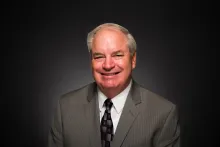
Robin Webber was born in Chicago, Illinois, in 1951, but has lived most of his life in California. He has been a part of the Church of God community since 1963. He attended Ambassador College in Pasadena from 1969-1973. He majored in theology and history.
Mr. Webber's interest remains in the study of history, socio-economics and literature. Over the years, he has offered his services to museums as a docent to share his enthusiasm and passions regarding these areas of expertise.
When time permits, he loves to go mountain biking on nearby ranch land and meet his wife as she hikes toward him.
