


Mike Phelps
The Tower of Pisa is one of the most recognizable buildings in the world, famous not for its architecture, but for its failure. Built on Italian clay, the foundation shifted significantly, giving the tower its characteristic lean. Why is building on the proper foundation so important? What can happen if we do not? Today we'll explore the 2025 United Youth Camp theme and subthemes, as we examine the importance of building our lives upon THE foundation.
This transcript was generated by AI and may contain errors. It is provided to assist those who may not be able to listen to the message.
Well, thank you, Mr. Kester. Once again, good afternoon to all of you. You're all in fine voice. Thank you for that special music. Thank you for that congregational AM. We certainly do very much appreciate the words and the praise and the music that we offer up to God. There's a water bottle. We got one of these. I think I'm going to need this. And I'm realizing as I was at camp the week before, I about lost my voice by the end of camp.
Managed to hold on to it this time. Usually I do end up losing my voice, but if it manages to crack a little bit, you'll know why in that sense. Brother, about 60 miles west of Florence, Italy, stands a structure that's famous, not necessarily for its architecture and its design. Though, I mean, it is a beautiful, beautiful structure.
But instead it stands famous because of its failure. The Tower of Pisa, known to most today as the Leaning Tower of Pisa, is an eight-floor high tower that's located in the town of Pisa, Italy. Originally it was intended to be a bell tower to kind of accompany the cathedral and the baptistery there on the grounds of the Piazza del Duomo, but its foundations were laid and construction began in August of—and this just boggles the mine coming from American mines here—in 1173 it was begun construction.
1173. It would not be completed until 1372, and it underwent three primary phases of construction during the intervening 199 years that it was ultimately under construction. During the process of its construction, the workers noticed that the tower began to sink. They began adding the second floor in 1178, and as they added that second floor, the bottom floor started to do one of these.
The soil in which they're building on in Pisa was a dense clay. Honestly, not too dissimilar from the type of kind of clay loam soils that we have here in the Willamette Valley. I suspect that similarity has something to do with why we can grow grapes as well as we can here in the valley, similar to Italy. But unfortunately, as many of you know all too well, that clay loam soil compresses and slides when weight is added to it.
It's got a lot of moisture. It stores a lot of moisture. It compresses. It slides. And in this case, the foundation stones of the Leaning Tower of Pisa, well, they were no exception. It had a three-meter foundation, okay, so a three-meter foundation, and it was working to support that entire superstructure. By the time the third floor had been added, the tower had settled significantly. By the time they got to the third floor, mind you, they didn't stop at the second floor and go, hey, wait a minute, guys! Hey, anybody notice? I mean, maybe it's just me.
Maybe I'm only wearing one shoe. I don't know, but it doesn't look like it's lining up like it should. They didn't stop. They put the third floor on it anyway, and once that had happened, it was exhibiting a very substantial lean.
Construction was halted for the better part of a century because the cities of Florence, Genoa, and Luca warred with one another, and it's probably a good thing, to be honest, because that time period allowed that soil to compact a little bit, and the foundation to settle so that construction could ultimately continue. When they began to build again, they thought, well, we got to kind of catch this thing up a little bit, so what we're going to do is we're going to add higher stones on the side that has the lean to kind of try to level this thing out as it went up.
Unfortunately, that effort only resulted in a further lean because they were adding heavier blocks to the side that was already leaning, and the tower now, by the time they finished it, exhibits a noticeable curve in the direction away from the lean, because the building is now doing one of these.
It's amazing it's still standing, to be quite honest, as many years later. But the tower, now famous due to its four-degree lean, has become one of the most well-known and recognizable monuments in the world. Italy, recognizing the tourist dollars and income that the tower brought in, reached out for help in the 1960s to the world in general to help preserve the tower. However, their one condition was it has to stay leaning.
Yes, we want to preserve it, but you can't straighten it up. It has to stay leaning, because that's why people come to it. If it's just the Tower of Pisa, I mean, really? So they ended up coming to, in the early 2000s, it was proposed to become one of the seven wonders of the modern world. It did not make the final cut. But numerous efforts were made over the years to try to straighten out the tower before Italy reached out. Many of those efforts actually caused Italy even worse. By the 1980s, the tower was more than 13 feet out of Plum.
It was more than 13 feet out of Plum. Plum, for those of you that are not sure, is this. This is Plum. This is not Plum. Plum, not Plum. Okay. 13 feet out of Plum, and it was actually growing at a rate of almost a tenth of an inch a year. So you can think it's getting worse as time went on, but something needed to be done. So beginning in the early 1990s, what they thought was, well, we'll just add a lot of weight to the other side of the tower and that'll counterbalance it so that it doesn't, you know, tip over. So they added 870 tons of lead weights to the opposite side of the tower to help to hold it in place. In January of 1990, the tower was closed to visitors while they underwent a significant effort to stabilize and support the structure. They actually wrapped guide wires around it and anchored those guide wires a few blocks away. And then what they began to do was siphon 70 tons, metric tons, of soil out from underneath one side of the building to help to kind of bring the foundation back to somewhat level. And in doing so, they took about 18 inches of lean out of the tower. Still preserved about a four degree lean, but it allowed that tower to settle and stabilize the foundation a little bit. They went ahead and removed the bells from the tower to reduce weight, which essentially negated the original purpose for which the tower was built. Blending Tower Pisa reopened in 2001 after all of the stabilization work with the engineers declaring it would be stable for another 300 years. I mean, what happens after that? We don't know, but another 300 years. It's amazing to consider the very first stones of that foundation were set 852 years ago. Actually, next Sabbath, August 9th. August 9th of 1173 was the first block that was set on that tower. Now, despite its obvious architectural challenges, thanks to the remediation work that was done over the past decades, it continues to stand today. How many have you ever seen it in person? Anybody ever been to the leading tower of Pisa? Anybody gone up in it?
Take your life into your hands on that. A couple back there. Okay, I've gone up in it. It's an iconic structure. I mean, it really is an iconic structure. Supposedly, they will let you go to the top now that it's been stabilized, but they do tell you not to go to the edge of it and lean out over the edge. I mean, I didn't realize it was that delicately balanced, but apparently it may be.
But even though it's an iconic tower, even though it's an iconic structure, it is one that was built on a foundation that was not stable. And from the very beginning, its issues were evident. You know, our camp theme this year in our United Youth Camp program was building on the foundation. And the whole concept that we operated with dealt with these concepts. What does it mean to build on the foundation? What are we building? How are we building it? What happens if we build on shaky ground? Why is it so important to ensure we build on stability? As I've done in recent years, I tried to bring the concepts from camp back to the local congregations. I realize many of you don't have the ability to go to camp, don't have the ability to go and experience these themes and lessons in real time, and there's value in recognizing what was discussed.
Helps jump-start conversations with our youth who have just returned. There's power in having this theme consistent across all of our camps in the UIC program. At this point, if you go to Northwest, Southwest, Pinecrest, Catubic, Woodland, you're getting the same concepts in much the same way. And there's strength in that. I'd like to take some time today to kind of briefly explore these concepts in this second sermon and the effect that they have on our spiritual lives. We are not going to have the time to go into these at the depth that we went into the camp, so this is really going to be more of a 30,000-foot overview that shows you kind of a thread, I guess, as these went forward. But the title of the sermon today is Building on the Foundation. You know, as you mentioned before, the Leaning Tower of Pisa, it's a beautiful structure.
It's columns, it's arches, they're aesthetically pleasing. But due to the issues with its foundation, while beautiful, it's world-famous not for its beauty, not for its architecture, but for its failure. And for the fact that it ultimately didn't serve the purpose that it was intended for, that it was created for. So we're going to jump into our points here today, and our very first point that we went through in our camp programs with our sub-themes is that God has a blueprint for your life. God has a blueprint for your life. You want to start by turning over to John 3 and verse 16. There's a reason that this particular passage is one of the most popular in the world. There's a reason why you see it at sporting events and on the sides of streets.
If you had to distill down the essence of the gospel of the kingdom of God, its fundamental nature is contained in these couple of verses. It's fundamental nature. Now, there's much more, right? But its fundamental most basic setup is here in John 3 verses 16 and 17. John 3 verse 16 says, For God so loved the world that he gave his only begotten Son, that whoever believes in him should not perish, but have everlasting life. For God did not send his Son into the world to condemn the world, but that the world through him might be saved. For those of you that are sitting next to some of our teens, if you see them going, it's because these were their memory scriptures for the week. And so many of the passages we're going to be reading here are the ones that they went through in their dorms and memorized as the week went on. So you may see them recitating as we go through this and maybe watermelon, watermelon, watermelon, if they've forgotten since camp.
But God in his infinite love for the creation prepared a way for mankind to be a part of his eternal family. Jesus Christ and the Father ultimately put this together to be able to save their creation, to provide salvation for their creation. And it's through his vision, it's through his blueprint. Now it's through that particular blueprint, through this set of plans, so to speak, in which we build our lives in accordance with his vision. Now today, blueprints, plans, engineering, these things are designed to take into account every possible scenario. Engineers plan for, they plan for loads, they plan for tensions, they plan for stresses, and they purposefully design elements to mitigate those things. So they purposefully design things in those plans to be able to allow for stresses and loads and other things that are going to take place.
Some cases, they need to plan for catastrophic earthquakes, catastrophic storms. They have to ensure that that structure that is built is going to hold up to whatever nature or man can throw against it. Similarly, similarly, similarly, he and the word, the Father and the word, determined before the foundations of the world that the word would divest himself of glory. He would come to earth, Emmanuel, God with us. He would come, he would experience the challenges of this life, live a life in which he was tempted, he was tried, yet lived without sin. He would be bruised, he would be beaten, he would ultimately die for the sins of mankind, providing a reconciling sacrifice between the creation and its creator. Now, why was that necessary? Why was that necessary?
Because God desires a family. God desires a family, and it is only through this blueprint, it is only in accordance with this vision, that that adoption can take place. This is the singular method by which God has purposed to adopt children into his family. Turn with me to Romans 8.
Romans 8, the Apostle Paul writes about God's desire, about what God wants, about what it is that God is doing. His plan, as Mr. Hansen mentioned, this plan for humanity, this recognition that God is doing something with this creation, that he is purposing to bring children into his family. Romans 8, we'll pick it up in verse 14, and we'll read through verse 17. Romans 8, beginning in verse 14, said, For as many as are led by the Spirit of God, these are sons of God. For you did not receive the Spirit of bondage again to fear, but you received the Spirit of adoption, by whom we cry out, Abba, Father. The Spirit himself bears witness with our spirit that we are children of God. And if children, if children, then heirs, heirs of God, and joint heirs with Christ, if indeed we suffer with him, that we may also be glorified together in order to be a part of his family. In order to be sons and daughters, we must be led by his Spirit, which means we must enter into covenant with him to receive it. That covenant requires us to believe in Christ, requires us to repent of our sins, to accept his blood on our behalf. And as a result, we begin the process of becoming more like our Father, more like our elder brother, Jesus Christ, because we are brought into alignment with him. So there's a blueprint. There's a vision in place that dictates how this process is going to go. And part of that process is us being brought into alignment with him. Which brings us to our second point. Jesus Christ is the cornerstone. Jesus Christ is the cornerstone. You know, blueprints are incredibly specific. Frequently, even the smallest of details are of utmost importance. Today, for example, there are specific nailing patterns required for exterior sheathing. You put plywood on the outside of a building, you have to nail it in a certain way, or they can fail it. They can come in and say, that is not going to work, because you didn't nail according to this required pattern because of the lateral strength that that sheathing provides. So they're very specific. They're very specific. They have the smallest details that are accounted for. And if ignored, some of those small details can cause the strength of a building to be compromised. If a contractor or a worker chooses to ignore the blueprint, chooses to operate outside of spec, bad things can happen. Now, it's kind of funny, 1949 my house was built. Nothing was built to spec. Currently, it's standing. I mean, we'll see what happens with earthquakes and whatever else. But there are certain specifics. There are certain specifications that are in place. You know, in the Tower of Pisa began construction in 1173. It's uncertain as to what the blueprints may have looked like at that time. I'm sure someone had something sketched out somewhere. But it is clear from the result that they didn't take into account all the factors that would be taken into account today. Now, ironically, it's still standing. But they didn't take into account all of those things today. As they built the Tower and that foundation settled, instead of stopping and shoring things up, the workers continued to add on to an already compromised foundation. Instead of recognizing something's wrong, take this thing back to the ground level and start over, they just kept adding to an already unstable and non-functional foundation, which only increased the instability. God has a very specific plan for our foundation, which includes Jesus Christ as a primary component. Let's go to 1 Corinthians 3.
As part of his letter to Corinth, Paul, as Paul often does, mixes his metaphors a little bit. But the underlying concept here is the same. He's bringing out this idea in 1 Corinthians 3 that he and Apollos, for example, or even, it's not mentioned specifically, but even fellow workers like Barnabas or Silas, those who brought the word to the people of Corinth, he says, are just simple fellow workers. They're just simply fellow workers. They're workers together, servants through whom the people of Corinth believed. Those servants were planting, they were watering, but ultimately, Paul brings out the idea that God is giving the increase. What Paul says is they were helping the people in Corinth to build on the foundation which was laid for them, which is Jesus the Messiah. 1 Corinthians 3, we'll pick it up in verse 9. 1 Corinthians 3 in verse 9, where he again brings this concept to bear. 1 Corinthians 3 verse 9, not 4 verse 9. I went, that's not right. It says, for we, 1 Corinthians 3 and verse 9, for we are God's fellow workers. You are God's field. You are God's building. According to the grace of God which was given to me as a wise master builder, I have laid the foundation, and another builds on it. But let each one take heed how he builds on it. For no other foundation can anyone lay than that which is laid, which is Christ Jesus, or Jesus Christ here as it's written. Now if anyone builds on this foundation with gold, silver, precious stones, wood, hay, straw, each one's work will become clear, for the day will declare it, because it will be revealed by fire, and the fire will test each one's work and what sort it is. So Paul here brings out two important concepts. One, there is only one foundation upon which we can build that fits the blueprint. The blueprint only has a single foundation, and that foundation is Jesus Christ. That is the foundation, ultimately. But number two, Paul brings out this idea that how we build on that foundation matters. It's not just enough to build on it. How we build on it matters.
During the time of Christ, during his lifetime, the primary method of construction in that area of the world was masonry. It was masonry block. I mean, they would go in and build many of the houses, even in Nazareth, you look at it, built from this beautiful white stone. This beautiful, beautiful white stone. They utilize a system of stacked block to kind of form up the foundation and the walls of the building. But in order for the building to be structurally sound, for it to not settle, it was put on compacted ground to the best of their ability at that time. And it was put in perfect alignment with the other stones that made up the foundation and walls so that that building was sound. How do you do that? How do you do that? Each stone is individual. They're not always uniformly shaped. Home Depot didn't exist. You know, you couldn't go down there and get a perfectly square block of this at this exact size, you know, by the thousands.
So how do you ensure that everything is aligned properly? You lay a cornerstone. You lay a cornerstone. Once you prepared the building site, once you have the soil area compacted, you lay a cornerstone. And that cornerstone often is hewn. So meaning they've actually taken the time to square the sides, to level the block, to make sure that it's plumb, that it's square, and that it's level using, you know, chisel and hammer. That cornerstone is a large, heavy block of stone made of very strong material, such as granite or marble, that was hewn out to a near perfect square. You know, in the case of our cornerstone, it is a perfect square. But this block established plumb this way, not in and out this way, but plumb. It established level, which is level, and it established square, meaning that the building would be square if that cornerstone had been set. And ultimately, you pull strings off of the cornerstone to allow you to then build that foundation and walls that would also be square, level, and plumb. So you set the block, you pull string off of that block, make sure it's lined up with the edge of the stone, and you've got a nice, straight, plumb line, as long as you continue to check as time goes on.
But those walls and the remainder of that foundation were square, level, and plumb because every stone in that wall and in that foundation was set in alignment to the cornerstone.
The cornerstone established alignment, and each of those stones was then set in that alignment. Ephesians 2, verses 19 to 20, we'll just reference identifies Jesus Christ as that cornerstone, as a part of that foundation. That cornerstone is a component of a foundation, and it's upon Him that we build as a sure foundation and as a sure cornerstone. But as Paul brought out in 1 Corinthians 3 how we build matters, how we build matters, he asked this question, will we build our lives on a foundation with gold, silver, and precious stones? Things that were not necessarily inherently flammable, things that have lasting value, or will we build with combustible materials? Will we build with hay and wood and straw? Paul says each one's work is going to become clear because the day will declare it, and in that it seems to be speaking very specifically of trials and challenges. In fact, you'll notice the capital day could even be referencing specifically the events of the day of the Lord. That these things that would be taking place could make very clear what this life had built on top of this particular foundation. Now, while not made of combustible materials, the tower pieces' shortcomings were made evident in times of trial. You know, they're obviously not combustible, the marble, but when the foundation of that building shifted, the structural issues made that tower lean almost 14 feet off of center. And that became very obvious very quickly. The effects of an unstable foundation was made evident. In times of stress and tension and trial, the foundation of that building failed. The foundation of that building failed. You know, our cornerstone understands trials and difficulties. Let's turn over to Isaiah 28 and verse 16. Isaiah 28 and verse 16. Isaiah here records, speaking of Jesus Christ, here records this concept of this cornerstone and what this cornerstone, the characteristics, rather, of this cornerstone. Isaiah 28, and we'll pick it up in verse 16. Isaiah 28 and verse 16 says, Therefore, thus says the Lord God, behold, I lay in Zion a stone for a foundation, a tried stone, a precious cornerstone, a sure foundation. Whoever believes says will not act hastily. Jesus Christ was no stranger to trials and challenges. He was tried. He experienced temptation. He experienced trial. And He did not fail. He is a precious cornerstone, one upon which we can align ourselves to, becoming like Him and the Father. He's a sure foundation upon which we can rest the life that we build, trusting in His stability. But He's also the cornerstone upon which God is building a spiritual temple. Which brings us to point number three. You are a living stone.
You are a living stone. If Christ is a cornerstone, what does that make each one of us?
Turns out rocks. Makes each of us a living stone in a building that God is creating. 1 Peter 2 verses 4 through 5. 1 Peter 2 verses 4 through 5. 1 Peter here speaks of this concept here in 1 Peter 2 as this idea of a living stone. 1 Peter 2 verse 4 says, Coming to Him as to a living stone, rejected indeed by men, but chosen by God and precious. Once again, a reference to that preciousness of Christ. You also, verse 5, as living stones, are being built up—a spiritual house, a holy priesthood—to offer up spiritual sacrifices acceptable to God through Jesus Christ. So, brethren, we are living stones being built up into a spiritual house, into a holy priesthood. We're not random bricks. We are stones that were specifically chosen, shaped and fitted into God's spiritual house. Stones that are in alignment with the cornerstone as part of the structure. We're not a brick or a stone outside of the plumb line, outside of the building, so to speak. We're a part of the spiritual building.
Plumb, level, and square. Because our cornerstone, our example, is plumb, level, and square.
And as we are yielding ourselves to Him, we begin to become in alignment with Him as well.
You know, the stones that were used to construct the Leaning Tower of Pisa had to be laid in such a way to account for the tilt. Because that foundation had failed early on, they had to be laid to account for the tilt, which means those blocks actually had to be laid out of level and out of plumb in order to go into the structure that they were a part of. They had to be purposefully set wrong because the foundation was ruined to begin with. That's not how God works.
That's not how God works. Christ establishes the standard. He establishes the frame of reference.
And then our expectation is that God will shape us and He will fit us into the structure as He sees fit, but He will do so in alignment with Christ as that cornerstone—level, plumb, and square.
You know, prior to our calling, there was just another rock laying there with the rest.
There's another rock laying there with the rest. God selected us. He began the process of shaping us. Think about river rock—rock that spent decades in a river or along a coastline. The rough edges are removed by that constant motion of the waves or constant motion of the rock along the riverbed. It ends up removing the rough edges. It ends up smoothing it out through natural and even sometimes human forces in order to become the shape that God needs to fit into the building that He is building—that spiritual building He is creating. Let's go to Deuteronomy 10. We'll pick it up in verse 12. Deuteronomy 10, verse 12 through 13. Because God is working on shaping each of us so that we can be placed into this building in the way that God needs us to be placed or the way that He desires us to be placed. Deuteronomy 10 and verse 12 says, Now Israel, what is the Lord your God require of you but to fear the Lord your God, to have that respect and that awe for God, to walk in all His ways, to love Him, to serve the Lord your God with all your heart and with all your soul, and to keep the commandments of the Lord and the statues which I command you today for your good. God provides His commandments. He provides His statutes, and He does so for our good. In order to shape us into the stone that you have in your life, He will shape us into the stone that He desires. As part of the blueprint, these standards provide us with the boundaries of our construction. They provide us with the lines, so to speak, that the building needs to be contained within. You put a rock too far outside of that plum line, and now suddenly you've got a wall that's building outward, not upward. Plum, level, and square, based on the alignment of our cornerstone. Much of the shaping of our lives comes from a result of our submission and our obedience to God in His ways. However, sometimes God needs to shape us through challenges and difficulties. Times in our lives where there might be a particularly stubborn piece that just won't come off with the gentle shaping that God is providing. Times in our life in which there needs to be the use of a hammer and a chisel. And sometimes whole pieces come off in those moments. But once God has shaped us, once we have been shaped, He fits us into that wall with the others that He has called, all of us aligned with Christ, aligned with a vision in the blueprint for the building that He is building. Brethren, what happens when we try to shape our own lives apart from God? What happens when we try to shape our own lives apart from God?
Psalm 127 describes what happens. Again, we'll reference it. You want to put it on the screen, you can. But Psalm 127 very specifically says, unless the Lord builds the house, the workers who build it toil in vain, any attempt to build our lives apart from God is vanity. And that was Solomon's conclusion. Any attempt to build our lives apart from God is simply vanity. God gives the blueprint, He gives the vision. He says, this is what it should look like. This is the building I'm building. Christ is the cornerstone. He's the alignment. We're shaped through His commandments. We're shaped through His statutes, through our submission, through our obedience.
And we're placed as spiritual living stones into that spiritual house that He is building. Now, there's a couple of tools that help us be shaped accordingly. Point number four, use the spiritual tools that God gave you. Use the spiritual tools that God gave you. There are several of these tools that God gives us. We only talked about two of them really in depth at camp. One of those that we didn't discuss at camp was fasting.
But fasting helps us cut through the noise, helps us to identify our own human limitations. Fasting helps us seek the will of God through a recognition of us being unable to live our lives without Him. It helps us recognize how critical that relationship is that we have with Him and where our true food, quote-unquote, comes from. Fasting is a reminder of our physical frailty.
It's a deepening of our relationship with God when we are appropriately humbled and in the appropriate frame of mind to be able to come to Him. Another tool that He gives us is meditation. Meditation is a tool that we're given to be able to feed on God's Word. It's like ruminating in a way. I know it's maybe not the best analogy in the world, but it's kind of like rumination. You kind of chew on the Word of God, you chew on His ways, you're thinking about it, really considering it, swallow it for a little bit, pop it back up again, chew on it some more. You know, it's kind of a... it's what meditation really is, is we kind of consider... it's not that blank-minded, you know, Eastern meditation that we often hear about in today's world. It's really just considering God's way, really thinking about God's way and helping maintain that perspective on Him and actively considering what it is that He desires of us.
Fasting helps draw closer to God and to determine His will. Meditation helps us understand what it takes to attain it. These two go hand in hand. We have these two incredible spiritual power tools that can be used to be shaped by God as we submit ourselves to His will and His way, but there were two additional ways and tools that are provided, which we use a little more frequently, probably, than fasting and meditation, but these two tools are ones in which we must be very skilled in our use. One of those is Bible study, studying into the Word of God, and the second is communication with God in prayer. The Bible is not just a list of do's and don'ts and the list of stories of people who did or did not do things the right way. The Word of God is an instruction manual for our lives.
Word of God is an instruction manual for our lives. It's a guidebook, so to speak, that helps us to produce the life that God is calling us to live. And so, yes, the Bible points out pitfalls. It shows the right paths. No other book can support your life like the Word of God can. We want to turn over to 2 Timothy. 2 Timothy 3. We'll pick it up in verse 14. 2 Timothy 3 and verse 14. As Paul writes here to Timothy. 2 Timothy 3 and verse 14. He tells Timothy... I'm sorry, 2 Timothy 3 is what I want. 2 Timothy 3. Don't go to 1 Timothy. That's not the right one. 2 Timothy 3 verses 14 through 17. Paul writes here to Timothy. He says, But you, Timothy, here, you must continue in the things which you have learned and been assured of. So, Timothy had already learned and been assured of these things. Paul says, continue in them. He says, You have learned and been assured of knowing from whom you have learned them, and that from childhood you have known the holy scriptures, which are able to make you wise for salvation through faith, which is in Christ Jesus.
Timothy knew the Word of God from an early age. He knew the scriptures. Those scriptures made him wise for salvation through faith in Christ. Because as a result of the Word of God, as a result of those teachings and those things he was assured of, Timothy exhibited a faith in Jesus Christ that was necessary for salvation. Timothy allowed the Word of God to change his life. He allowed the Word of God to shape him into that stone that needed to be fit into that building. He didn't push back and say, no, this characteristic is one that's just me. I'm going to hang on to this one.
Timothy let it change his life. Why? Why did he do that? Well, verse 16. Because he recognized all scripture, all scripture is given by inspiration of God. It's God-breathed, and it is profitable for doctrine. It's profitable for reproof, for correction, for instruction in righteousness, so that, verse 17, the man of God may be complete, thoroughly equipped for every good work. So Paul explains that the Word of God is given by inspiration. It is God-breathed. It is from his very mouth, through the Spirit, to those who are inspired to write the words that they wrote. He says it's profitable. It's profitable for teaching, for reproof, for correction, for instruction in righteousness. The Word of God is intended to complete us, to thoroughly equip us for every good work, the very good works that we were created for, as Scripture states, that we were created for good works. But we can't do these things if we don't spend time in the instruction book.
We can't do these things if we don't read the instructions. Men, we take a hit for this sometimes. Take a little bit of a bad rap every now and again for not being willing to read instructions or directions. All of you have likely purchased something from IKEA in the past. How many hands up have you bought something from IKEA? And how many of you looked at that and went, nah, I got this. I can see the package. I can see what the picture's supposed to look like. I'll just take all this stuff inside and just make it look like the picture. I don't need a book.
And when we're done, we find out that it's backwards, sideways, and there's a half a dozen bolts and whatnot left over. And we go, maybe I ought to go back and read the book. I've done that. How many of you have done that? Where you get done and you go, no one? I'm the only one. Thank you, Mr. Janisich. Thank you very much for admitting that. But we take a bad rap for it sometimes and deservedly so at times. But when there's a half a dozen bolts and whatnot left over, it's because we didn't follow the instructions. We didn't follow the guide.
You ever experience that in your spiritual life sometimes?
We rely on our own understanding to try to construct and build a life according to what we think it's supposed to look like, only to find out that God has very specific instructions and the end result didn't turn out the way that we intended it to. In fact, because God has very specific instructions, it's only by those instructions that it works out at all, that it actually looks like the picture at the end. We're given the Word of God to be able to understand how God desires us to live. And additionally, we're given the spiritual tool of prayer to be able to communicate with God. Through the sacrifice of Christ, we have been given access to the Father to come before that throne of grace to be able to communicate our needs, enabling us to build and deepen and maintain a relationship with God. To deepen a relationship like that with anyone requires communication. Communication upward to God through prayer and ultimately from God through Bible study and through the nudging of His Spirit helps build that relationship and helps us to be shaped to be more like Him. You know, the Tower of Pisa required centuries of bracing and supports, measurements and adjustments to try to correct something that wasn't built properly to begin with.
It's like they just ignored the instruction manual, so to speak. And at the end, it's misshapen and it's not doing what it's supposed to be doing because the instructions were just ignored. God gives us these tools to make sure that we build appropriately the first time around so that we don't need to fake balance. We don't need to make it look like we're balanced, but we are truly aligned with Him in His will. And that brings us to a very big question and the one that we left, the final question that we asked the campers during the week, and the one that ultimately spelled disaster for the Tower of Pisa, and that is, are we building on rock or are we building on clay? Last point is build your life on the rock. Build your life on the rock. As you probably guessed already, we're heading to Matthew 7. So Matthew 7, and we'll go ahead and we'll pick it up in verse 24, kind of at the tail end here of the Sermon on the Mount. Matthew 7, verse 24.
Christ here says in verse 24, Therefore, whoever hears these sayings of mine, again, these sayings that He's mentioned specifically in the Sermon on the Mount, but collectively all of His teachings, all of His sayings, says, whoever hears these sayings of mine and does them, I will liken him to a wise man who built his house on the rock. Rain descended, the floods came, the winds blew and beat on that house, and it did not fall, for it was founded on the rock. So in this passage, Christ connects the importance of both hearing and doing. It's not enough to know what's right. It's not enough to know what God desires. It is His expectation as a part of building on His foundation that we will do it, that we will follow through and take action on what we know to be true.
It's not enough to know that we need to love others. We actually have to do it. It's not enough to know that we need to be a light to the world. We actually have to be a light to the world.
I mentioned this to the campers in the Sermon on the Sabbath. It's not enough for us to come together and spend a week on the coast in the zone, enjoying fun and friends. We have to bring the zone home with us. We don't leave the zone at Magruder. We're bringing home with us because that's God's way at work. That is the way that God wants us to live all the time. It just so happens when we put all of us together, we're able to build that during the week of camp. Verse 26, He goes on, says, But everyone who hears these sayings of mine and does not do them will be like a foolish man who built his house on the sand. The rains descended, the floods came, the winds blew and beat on that house and it fell. And He says, And great was its fall. You know, storms will come, pressures of life will test the foundation upon which we've built.
Is our life built on the rock? Is it built on something that never shifts, something that's stable, something that's sure? Or is it built on shifting sands or clay soils like the Tower of Pisa that compress under the pressures of weight and life and its challenges and ultimately cause the building to collapse? You know, interestingly, despite the obvious issues, the Tower of Pisa has survived for 852 years. It survived earthquakes, it survived storms, but not because it's well built.
Wait, what? Not because it's well built, but because of outside intervention. It has remained standing because of outside intervention. Now, there are times in which we build on a shaky foundation in our life and in God's mercy He allows us to remain standing.
There are times in which, through His mercy, He provides for us outside intervention. When they closed the Tower of Pisa in 1990, it was because it had become clear the tower was in danger of imminent collapse. That's why they closed it for a decade in the 90s, because the tower was going to come down. It was just a matter of when. And they were concerned it was going to come down on the heads of a tourist. And so they took 12 years and 27 million dollars to shore it up and preserve it for the next 300 years. But without that outside intervention, the tower would have likely collapsed sometime in the early 90s. All that work, however, is a band-aid on a much larger problem.
It does not fix the structural issues. It simply kicks the can down the road. It prolongs the amount of time before it does collapse. And that's not the same thing as a solution. Again, the latest work that has been done will only allow for that for the next 300 years. I say only 300 years is a long time, but only the next 300 years. But in another 300 or so years, it is likely to need intervention again. Brethren, God doesn't want to stabilize our lean. He doesn't want to have to be the outside support to stabilize our lean. He wants us to build straight from the beginning.
And at times, He will take what we've built and He will knock it down. And He will say, no, I need you to start over from the foundation. I need you to start building right on top of this. And what you've built is not working. And down it goes. And He asks us to rebuild and to go through and do it as He instructs us. But God doesn't want to wait until our foundations have begun to shift and life begins to collapse, where we have to constantly intervene. He wants us to ensure that we build on the rock, that we build on that foundation of God and Christ as our cornerstone, something stable, something unchanging, something uncompromising. Laney Tower Pisa has become one of the most recognized and visited tourist sites in the world. Five million tourists a year come through there to take a picture with the tower, you know, holding it up with the tower. Again, not famous for its architecture, not famous for its design, but famous because it failed. It's beautiful.
It's memorable. Is it functional? Not really. I mean, kind of. But it's not really functional for its original intent. In fact, they had to take the bells out of it because they were too heavy and causing it to collapse. So it's no longer the bell tower that it was designed to be. Builders had to build it higher on the leaning side to try to accommodate the lean, and now it's crooked and curving the other way, and they had to add 870-some tons of lead to try to keep it from falling over and attach guide wires and siphon out 70 tons of soil just to stabilize it. And all of those measures are only prolonging the time before it does eventually collapse. Its eventual collapse is virtually guaranteed at some point in the future because it wasn't built on solid ground.
God doesn't desire us to have to patch the problems later. He desires us to do life his way, according to His blueprint, according to His vision. He has a blueprint for you. He has a foundation upon which your life is to be built. Jesus Christ is the chief cornerstone, bringing everything into alignment. And through it all, the warning of the Tower of Pisa is present.
Do it right. That's the lesson we can learn from the Tower of Pisa. Follow the blueprint. Build on a stable foundation. Build on something solid that is not going to shift. Ensure that you build your life on the teachings of God and Christ as the cornerstone, bringing everything into alignment.
Actively allow Him to shape you, to fit you into that spiritual house that He's building.
As a part of that shaping process, He's given us tools to be able to align ourselves with His will more fully and to grow in relationship with Him. Brethren, don't be a half a bubble out of plum.
Come into alignment with Jesus Christ. Come into alignment with the Father. Live uprightly and build on the foundation.
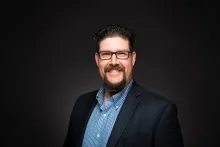
Ben is an elder serving as Pastor for the Salem, Eugene, Roseburg, Oregon congregations of the United Church of God. He is an avid outdoorsman, and loves hunting, fishing and being in God's creation.
