


John Elliott
This transcript was generated by AI and may contain errors. It is provided to assist those who may not be able to listen to the message.
Some of us have opportunities to travel to various cities around the world. And in many of the metroplexes, you'll find tall cranes. And a tall crane is an interesting statement of potential. Because in any city, it tends to be densely populated, very little land available. In any city where you find a vacant lot, what that vacant lot really pictures is potential. You might just see an old lot with weeds growing on it and a fence around it.
But someday, a crane may stand there. And that crane may be hundreds of feet in the air. And what fills that space, people will be excited about. What is all the steel going up going to be like? What's going to be here someday? What will be in that building? Will this be something that is a benefit to the town or a detraction from the town? Will it be great and will our city be recognized as having something special? Or will it be odd and will be known as having this really strange thing that's on our skyline?
Will it be a success or will it be just another building that one day gets boarded up and a big sign will be hanging over it that says, available or to let? When you look at a child, you see similar potential. The little child, the little baby, is like a building to be. It's like a lot with a crane on it. There is something that is not built up yet. There's an individual who begins sampling possibilities. The little boys will sometimes put on a little hat and say, I'm a fireman.
I'm going to grow up and be a fireman. Or I'm going to be a doctor. And the girls will put on some outfit and have something in their head. I'm going to get married or I'm going to be a teacher. Possibilities and sampling of possibilities. These can come through observation. Yesterday, my wife and I and our daughter had our two little granddaughters, and we were walking around and we came to a couple of fire trucks.
One was $750,000. A brand new fire truck had never been used, just received by the city. They took it down to the Ohio River and they hooked up water to it and they were trying it out. They were shooting water out in the river and they were trying this and trying that. The little girls were given little hats for firemen. They looked at that and I'm sure they thought, do I want to be one of these guys?
I want to work on a fire truck. They didn't seem to show much interest in that. But you see, you observe. As you go through life, you can see this, you can see that. As you grow up as a child and you also have education, you learn about certain things. And in learning, you say, there's an extension of this science. There's a science company. There's an extension of this nutrition.
There's a restaurant. There's a food company. There's an extension of this. There's a marriage. There's an extension of this. You see, and so you begin to see and observe and through education you get to sample. I like English or I like French or I like science. Maybe I'd like to be a teacher like my teacher is. Or I'd like to work in that profession. So as a child matures eventually, they will find an opportunity for employment. You know, the employment ads will pop up. People might even approach them and say, hey, how'd you like a job?
And the person without a job might say, wow, that's a great idea. How'd you like to work for me? Well, I don't have a job. You're offering me money. But is that the employment the person should do despite what it may pay? Is that the career a person should be involved in? Is that the person an individual should marry? Might be a great-looking person. A lot of opportunity, a lot of potential. Maybe there's money in the family, etc., etc. But is that something we should explore? Sampling will involve things like dating or social engagements, where a person actually can not only sample work, but sample relationships.
There will be religious opportunities, people knocking on the door. Let me teach you, let me show you, let me invite you. Come with us. Be with us in some group, club, or religion. And there will be benefits expressed. An individual has then a plethora of choices to make during one's life. And as the youth grow up, sometimes they choose wisely.
Often times they are lured by something that promises great rewards, quick rewards, easy rewards. And those short-term benefits can turn into long-term disasters. Let's ask the question of all of us here. The young, the old, the in-between. What are your life's ambitions? Don't think that they're over. Because at any age, you still have potential.
You still have choices. And you will still have ambitions, things you want to accomplish. What are your life's ambitions? And what are they based on? Are they based on money? Some kind of payoff? Are they based on fun? That's often a very compelling decision-maker. Will it bring me happiness? Will it bring fun or excitement or some immediate payoff? Some instant sort of gratification? Will it bring me fame or recognition? Some title? Some thing I would like to be in?
Some role? What is it? And what are you building your ambitions upon? It's one thing to have an ambition. We can all come to church and say, Yes, we're in the church and we want to be in the kingdom and we're keeping the Sabbath. And now on the other side of my life, I have my personal life, my personal ambitions. Well, I'm here to tell you today that's not true. You have been called and purchased with the blood of Christ to have one ambition.
In all that you are and all that you do, you can't play the game of church person and weekday person and succeed. It all rolls into either godliness or ungodliness, righteousness or unrighteousness. And the result of your life will be based on what you base your successes upon, your ambitions upon. Like the building that is going up with the crane, will it be a success?
And the companies that inhabit it, will they be successful or a failure? Will it contribute to the skyline and the city or will it detract? Will it be great or will it sort of be odd and disrespected? Let's take a look today at principles that will make or break all of your goals, your ambitions, the desires that you have in life. And don't think that you have already reached the point of having made or broken those dreams or that potential.
Because we are all works in progress. We are all somewhere along the way. And we can always change where we are for the better. The title of the sermon today is Building Successfully, Part 1. Building Successfully. It's one thing to build. It's one thing to build energetically, zealously, hopefully.
It's quite another thing to build successfully. The first point I'd like to give in building successfully is wise consideration. You go all the way back to the vacant lot. You go all the way back to the little child. You go all the way back to the little child in God's eyes, not yet baptized, with a plethora of religion to choose from, or the individual, a plethora of careers and marriage partners, etc.
Go back to that point. Wise consideration is very, very applicable to success in the end. Before you apply zeal to building your house, as it were, your marriage, your baptism, your church, consider what you are thinking of doing. What is that? Why do you want to do it? Consider it. Is that really something you should be doing? Whether it's a job opportunity that comes to you or somebody asks you to marry them, those are pretty easy. When somebody calls you, hey, will you work for me? That's pretty compelling. Or somebody kneels in front of you, ladies, and says, will you marry me? Well, here it is. Always wanted a job.
Always wanted to be married. Some religion says, can I baptize you? Well, I always wanted to be saved. We need to consider wisely what we are doing. In James 3, verse 17, we find there is a wisdom from God that you and I need to tap. Something my father taught me in early life was, John, pray that God will show you what he wants you to do. He started telling me that when I was 11.
At 11, I wasn't a really righteous kind of kid. I wasn't the spiritual guy on the block. I was just an 11-year-old kid. John, you need to pray. Why? I want to go out and pray. I don't want to pray. Pray. Ask God to show you and direct your life into what he wants you to do.
And so I did. I don't think I prayed very hard about it. But I remember by age 12 and 13, I didn't know what I wanted to become. I saw the choices. I was getting older. I was about to enter high school. I didn't know. So I started praying harder and a little more serious about praying. And then kind of looking at the opportunities. I hope you young people will do that.
I hope all of us, as we have an opportunity and come up to it, will do that. Because Godly wisdom, we find here in James chapter 3, is from above. James 3 and verse 17, the wisdom that is from above makes different choices, we might say, than what this chapter has been talking about. It is first pure. I looked up the word pure in Thayer's lexicon. It means pure from carnality. It's chased. It's clean. The wisdom from above is not going to be thinking selfishly.
It's not going to be thinking lustily. It's not going to be thinking about getting. It's going to be thinking in a clean, uncarnal perspective. And next, it's peaceable. The definition there was, it brings peace, indicating harmony with it. This wisdom is going to bring peace with it. So whatever my decision is, my goal, this building we're going to build, this decision I'm going to make, whatever it is that comes to me or you, and you say, the wisdom I'm going to use should, first of all, help it be pure.
It should be godly. And it should actually be peaceful with everyone it's going to be involved with. It's not going to bring lawsuits. It's not going to involve lawyers. It's not going to have hard feelings. No one's going to feel cheated or cut out or taken advantage of by this wisdom that is being used. It's gentle. The Thayer's definition of that Greek word means it's suitable and it's fair. Sort of different than gentle, isn't it? It's suitable. It's fair. Fair to all involved.
It's fitting. It's suitable for a member of God's church, a member of God's family. It's willing to yield. Thayer says easily obeying, willing to yield to God, to His commandments. It's easily obeying. It's full of mercy, which Thayer defines as goodwill towards all. This decision is going to have goodwill for everyone. And good fruits, good results, good effects will come from this decision, this wisdom. Without partiality, that means without dubiousness or ambiguity. Well, I don't know. I'm not sure. We don't know if it's good. We don't know. No, this is going to be clearly, cleanly for the good.
Everybody will know it's for the good. You'll know it's for the good. God will know it's for the good. And without hypocrisy, there's not going to be any Sabbath individual, and now we have the weekday warrior. No, it's going to be the genuine, godly, love-god, love-fellow man as self all the way through. So, considering a possibility here with godly wisdom begins the process in the right way.
There's a tendency in humans to seize an opportunity and then race into action. If you want to know how that works, just look at a hooker on a street corner. There's an opportunity, door opens, race into action. Not a good choice. It was not based on wisdom from above. It's a great opportunity, there's money on the table, all we've got to do is devise a salesman to get over there and get it. That's opportunity. It's easy. It's called bank robbery, embezzlement, things like that. It's easy, it's quick. It doesn't follow the godly wisdom concept.
That individual who quickly sees an opportunity and seizes the day can find him or herself in a marriage that's not fulfilling. Well, it was easy. He or she looked great, offered me what I was looking for, wasn't hard, got it now. But down the road, it can be less than, say, fulfilling. Same with a career. We can say, what careers are paying now? I'll study for that career, I'll jump into that career. Later on, you might think that building missiles in the church just isn't that fulfilling. Maybe I should have gone in a different direction. So, taking time and knowing from a godly mindset, a godly perspective, a godly wisdom is crucial to being successful in the long run. The same goes with religion. Diving into a church, being emotionally charged and making some decision, one can find themselves, a little bit later on, in a non-scriptural entity. Or with a human-based or a human-passion or emotion-based or whatever it might be, in an empty relationship that's man-devised. The first part of building something, choosing something, putting your life's energies into something, begins with why is consideration? It's the asking of the why, where, when, how, before one makes the decision to do. Jesus talked about this in Luke 14 and verse 28.
For which of you, intending to build a tower? I don't know about you. Anybody here ever wanted to build a tower? Some of us maybe want to build a house, maybe just a one-story house, nothing real big. But Jesus talks about building a tower. Barnes Notes says, the tower is tall and for a reason. It's going to be a more difficult structure to build, but it's for a reason. It's for defense and observation. This is going to be an important building, actually. This is almost like you and me wanting to be successful in God's church and ultimately be in his family. In a sense, we are each wanting to build a tower where we can see and observe and also strong to guard against enemies. It was the second aspect of a tower. So it would be impenetrable and not easily taken, like our spiritual lives. We'd be able to see and be warned and know and strong and defensive.
So, almost like your spiritual life or something, a decision, a tower of your marriage, one that's going to be strong and solid. It's going to see the danger, but it's going to be strong and defensible. Or your career, in an uncertain world, it's going to be able to see what's coming and stand and defend against economic upturns and downturns. All of these things, you see, if you want to build something here that's really going to last, then you want to build wisely. Which of you, intending to build a tower, does not sit down first? I guess he didn't say, just sort of think about it. He said, sit down. Sit down and think about it. And count the cost.
Think that through. Consider it wisely. Matthew Henry, the commentary says of this, let him consider all that it will cost. Spiritually speaking, he says, in the mortification or the mortifying of their sins, even the most beloved lust, you're going to have to fight in war against, you're going to have to get rid of those things, learn to hate them. Build that tower is going to cost you a lot, he's saying. It will cost them a life of self-denial and watchfulness and a constant course of holiness. It may perhaps cost them their reputation among men, their estates and their liberties, and all that is dear to them in this world, even life itself. Many that begin to build this tower do not go on with it, nor persevere in it. They have not a rooted, fixed principle. We lose the things we have worked for, and all we have done and suffered is in vain. That's what he's saying Jesus is bringing out in this. These opportunities that sometimes we launch into, we should sit down, sit down and count the cost. For instance, one kingdom, a king here might look at the kingdom next door and say, That kingdom over there, that nation, has more stuff than we do. It's got better rivers, better fields, better stuff, better buildings, better cars, better factories. It's got better oil, all this stuff. So what do we do? Let's go take it! That's the easy way. It's called robbery. No, it's called war. So the king sits down and decides, let's go get it! And everybody rushes off to get it. Dropping down in just a little bit, verse 31, Jesus says, Or what king, going to make war against another king, does not sit down first and consider? Hmm. Consider. See, when you go to war, you do stand the potential of getting everything that someone else has. But they also have the potential of taking everything you have, including your own life. It's good to consider. And that's the first point. Wise consideration. And the wisdom from above must be the basis for any wise consideration. That leads to the second point, which is wise planning. Once a consideration is done and the decision is made to move forward in a project, say to grow spiritually, become a member of God's church, you've identified what that is, where that is, you want to build a building, you want to build a career, you want to build a marriage, you've decided you're going to go forward with this course. Planning is very important. You don't want to fall into a ready, fire, aim. And it's kind of too late. Once the cannon is launched, you realize, oh, I should have done it over there. It's a little bit late. So planning is necessary. Let's go to Psalm 33 and verses 10 and 11. Psalm 33 begins in verse 10.
Here's something that David, who had a lot of experience of all kinds, good, bad, he grew, he grew in understanding and eventually in wisdom, he says this, The Lord brings the counsel of the nations to nothing. If you think that your plans of and by themselves on your own are great without God, be aware that God may just terminate your project to show you who's in charge, just like he did Nebuchadnezzar purposefully intervened. God causes things to happen for the good of those involved so that we can learn lessons, so that we can understand his preeminence, so that we can understand the wisdom that is from above. And God brings together the plans or the counsel of the nations to nothing. He makes the plans of the peoples of no effect. It's not that they were bad plans or poorly thought out. They weren't his plans.
Verse 11. The counsel of the Lord stands forever. Now, if you want to make plans that last, have God involved in them. Build him in from the very wisdom of considering it into the planning, because that stands forever. The plans of his heart stand to all generations. And you, or I, as church members in the body of Christ, are not privileged in this regard to have some affinity or some special relationship with God on the Sabbath, so that we can go out in our own lives and do whatever we want to do. And somehow God's going to leave us alone, or he's going to bless it if we ask him to. That's not how it works.
God will back those things that are of him and are of godly ethics. Like Proverbs 6, 16-18 says. Proverbs 6, verse 16. There's no privilege that comes from defying what God hates. Proverbs 16 says, these six things the Lord hates, except in church members. He didn't say that. He just hates them. He hated things that David did and suffered consequences. And he hates things that I do, and I suffer consequences. The same applies for all of us. So, these six things the Lord hates. Yes, seven are abomination to him. One is a proud look. It's about me. A lying tongue. Hands that shed innocent blood. Notice verse 18. A heart that devises wicked plans. Now wicked plans don't just have to be, well, let's go over and kill the neighbor's cat. Wicked plans just are not righteous plans. They're not love for God, and they're not love for man. They tend to be self-focused. Ooh, I have plans, you know. We found something we can do legally that requires somebody to give me money. And it's all legal, all signed by Congress, and I get the money. Of course, a whole bunch of people lose their life savings, a whole bunch of people lose their retirement. But it's legal. Now that's wicked plans. Legal or not. And the Lord hates wicked plans and feet that are swift and running to evil. We have to apply these to ourselves. That's the world. That's God. No, no, no. We, us. God is teaching us here. It's good to fast to find out what the source of our ambition is in the first place, and why our plans are going the way they are, and to find out if God's will matches one's personal ambition, rather than saying, oh, pray that God's will will, or God will support this. First of all, we need to stop and ask, wait a minute, as we plan this out, the way that we plan it, does it match God's will, which is defined as being love and support for everyone, including your enemies?
It evaluates your support of the project. Really, the support that you're going to have from God can be very clearly evaluated through fasting and counseling with godly people. It doesn't just have to be the ministry, but godly people, and hopefully including the ministry, can help one determine better if the plans being made have potential conflicts with God. Again, we don't want to fall in that category where God makes the plans of the peoples of no effect. Because if God's against you, who's going to be for you? But if God is for you, who's going to be against you in your marriage, in your spiritual growth and development, in that career that you're choosing, in whatever your hand finds to do?
Proverbs 15, verse 21 says, This sounds great to me! I'm in! Let's go do it! But a man of understanding walks uprightly. Again, that is what we come to over and over and over. God wants us to be people of godliness, walking uprightly, understanding. Verse 22, That is one thing that helps the church organization to have multitudes of counselors, for people in position to have counselors around them, for pastors to have counselors, for members to have counselors, all of us to have God as a counselor. These things can help solidify the integrity of what is being done, what is being planned.
Major decision needs assessment. Plans need to be evaluated. They need to be revised, usually. Ever notice that? I've got some plans. But you pass them through counsel, they get revised, and sometimes revised again. And then they get established, according to normal sound procedures. Proverbs 16, just one page over here, verses 7-9, Proverbs 16, verse 7, When a man's ways please the Lord. Now, all of you young people, if you're thinking about a career, or you're thinking about marriage, or you're thinking about a church, or whatever it is, and you old people too, and everyone in between, when a man's ways please the Lord, he makes even his enemies to be at peace with him.
God can make miracles happen. Unbelievable things can happen. Better is a little with righteousness in your planning phase than vast revenues without justice. A man's heart plans his way, but for the righteous, and those who will be successful, the Lord directs his steps. Start combining whatever it is you plan, whatever it is you do, whatever it is that you have an ambition for, with God directing your steps and being part of it. And if you're already into something, bring it in line with God's direction, and bring it in line with God's will.
Those things that maybe appeal to self, we're really about getting at one point. Change them. Those attractive propositions that were put to you, that maybe you accepted or whatever, find yourself a little far down the road. Ask God for help in modifying them, changing them over. Compare God's Word to your goal as part of the development of the project.
How will it help people? How will it help you be more like him? Be you therefore perfect like your Father in Heaven is perfect. How is this thing that you're wanting going to help you be more like God? How is it going to help the people that you're going to be involved with become more like God? How will it reflect well on God? You know, only when your plan has God's support, can you be confident in it? Can you know that this is going to stand? Can you know that my spiritual life, my baptism, my growth, my marriage, the service, the work, whatever that you have an ambition for, the only way that you can have confidence in it is to know that it is of God. It is godly. That God is pleased with it. An example is the temple in Jerusalem. Let's go back to 1 Chronicles 28-10. 1 Chronicles 28-10-13. It says, consider now, for the Lord has chosen you, he's telling David, the Lord has chosen you to build a house for the sanctuary. Be strong and do it. Now that's different than you or me saying, oh, I have an idea. I'm going to be strong and do it. Because the Lord may not be in it. But here is an example of God being in something and he being told to be strong and do it. You know, you can't find anything in this Bible where it says, be strong and of good courage, that God did not inspire or appoint. He chose Moses' successor and he said to him, Joshua, you go do this, be strong and of good courage. You go back into the New Testament, he chose you to grow up into Christ and to be persevering and having fruits that last. And he says to you, be strong and of good courage. He chose David to plan the temple and he said, you be strong here and do it. And then David gave his son Solomon the plans. This thing was planned.
Verse 12, and the plans for all that he had by the Spirit. God was involved in those plans. David did just cook them up. All that stuff was inspired by God. And so the planning involving God is very important as well. This brings us to the third point. Build on a godly foundation. Why do you want to get married? What are you going to build your marriage on? Why do you want a career? What are you going to build that on? Why do you want to be in the church? Why do you want to get baptized? What is this built upon? Is it a built upon the shallow foundation of, oh, I think it will be fun. I think it will be nice. I think it will pay off.
Yesterday we walked across a huge iron bridge that crossed the Ohio River from Kentucky into Cincinnati. This bridge was built in 1889, and it had separate lanes for train, pedestrians, and I assume horse-driven carts back in the day. And that bridge still stands today through hundreds of floods and hundreds of years, well not hundreds, but tens of years of this river roaring by underneath it. It is very sound and very stable today. As we walked along this structure, realizing that those big block stone columns going down to the water went down a little farther. I don't know how they did that in a river, but somehow they built a foundation under that that continues to stand. We've been there when big floods came by and actually seen a house coming down the river kind of collide with a bridge as it kind of crushed and tumbled underneath. The river has been up a little bit in recent weeks, and this time as we walked across it, on one end of the bridge up against the bank there was a beautiful new office building. Oh, it's gorgeous! And it was new. All the materials were new, the roof was new, all the little things and the lights around and the porch and the windows and the doors. It was just all new. And you think, wow, somebody had the money to build this nice little office building. And it was nice. There was one thing about it, however. It was twisted sideways and submerged 85% into the river. Only the end of the building, a portion of the roof, and the main entry door were sticking out. The reason for that was it was built on a floating foundation that turned out doesn't float. Or doesn't float anymore, anyway. And so there it was, sunken into the river. Beautiful building, though. Nice stuff. And you have to put yourself in the minds of those individuals who probably got all the money they could to start this building. And yet, the foundation was not secure. Foundations are to structures and lives the very basis for success or failure. Why do some of their hardest work on the foundations, which you don't typically see? They're usually underground. They're usually out of sight. And there's this concentration on the building and the superstructure and the excitement of the career and the excitement of the marriage and da-da-da. But what's the foundation? What pins this thing to success? In 1 Kings 7 and verse 8, 8 and through 10, 1 Kings 7 and verse 8, we find out a little bit about the temple. That temple was just an amazing building and it was a wow when you saw it. So was Solomon's house, it turns out.
1 Kings 7 and verse 8, 1 And the house where Solomon dwelt had another cord inside the hall of like workmanship. It's just fabulous they were going on about how beautiful this was. But verse 10, 1 The foundation was of costly stones, large stones, some ten cubits, some eight cubits. Those are big stones. Huge blocks of stone that were the foundation. That should not be lost on you or me. Like his house, the temple was to be gorgeous. Nobody would really ever see the foundation. Matthew 7 and verse 24, Jesus talks about our planning and our building and how we will go about that. And he says, 1 Therefore whoever hears these sayings of mine and does them, I will liken to a wise man who built his house on the rock.
2 And the rain descended and the floods came, and the winds blew and beat on that house, and it did not fall, for it was founded on the rock. I like that bridge still there. I like that office building that was not founded on anything substantial. The world's tallest building has been in Dubai, in the United Arab Emirates. The world's tallest building has been beautiful. Three gorgeous towers together that combine up to a single tower spire that goes up, all covered in bright glass and shiny steel. It's just a gorgeous sight, and at the base, reflecting pools and commerce.
The world's tallest building was built on sand. The entire foundation is on sand. Its future is not clear. Jesus talks about rain descending, flood coming, winds blowing and beating. The world's tallest building has not had those seismic events or those other environmental factors hit it yet, so its future is not 100% clear. You and I, verse 26, need to be like one who builds on the rock, not like one who builds some wonderful superstructure without it being built on God and on Jesus Christ in godliness. Verse 26, it be like everyone who hears these sayings of mine and does not do them.
It will be like a foolish man who built his house on the sand, and the rain descended, and the floods came, and the winds blew, and beat on that house, and it fell, and great was its fall. And should the world's tallest building ever fall, great will be its fall, I would assume. Temple buildings and walls in Jesus' day were built by an altered form of a Messiah. It wasn't a true Messiah. They were built for an altered form of religion that was not true to the covenant that God had with Israel.
In Mark 13, verses 1 and 2, we can see how God views things that are built without the right foundation. Mark 13, verse 1, Then as he went out of the temple, one of his disciples said to him, Teachers, see what manner of stones and what buildings are here. In other words, look at the beauty of the temple mount with its walls and the beautiful temple edifice, and over the colonnades of the military garrison and the other buildings up here.
These are beautiful, aren't they beautiful? Looking at the superstructure, not the foundation. Remember the foundation? Who built it? And for what it was built was not on God. And Jesus answered and said to him, Do you see these great buildings? Not one stone shall be left upon another that shall not be thrown down. So you and I don't want to plan and then start building without it being based on something that pleases God, that God's involved with. Jesus said, I will build my church. Later he said, you are the temple of the Holy Spirit. We are being built up into a holy edifice, all based on God's will and based on God's word and based on His ethics.
And so we also ought to build our own things in life, our own desires, our own buildings, as it were, of marriage and personal careers, whatever choices that we have, including our spiritual life, on God's mindcept as a foundation, that agape love. Let's look in Luke 6 as we wrap this up, verse 27. Luke 6 and verse 27. But I say to you who here love your enemies, do good to those who hate you.
That's part of the foundation we're to build our career upon, our marriage upon, our spiritual life upon. The foundation is a mindset that is different to carnal opportunity. It's agape, the mind of God. Verse 28, bless those who curse you and pray for those who spitefully use you.
Your business, your marriage, your spiritual life will be doing all these things and based upon these things. Verse 30, give to everyone who asks of you, and from him who takes away your goods, don't ask for them back. And just as you want men to do to you, do also likewise to them. Verse 45, a good man out of the treasure of his heart brings forth good. This is what will be your foundation. You'll be a good man or a good woman, and whatever you do will be good for everyone.
Bring forth good. You and I need to dig deep in all we do. We need to base every decision, every goal on God's will. His example, the purpose for which He has placed us here. In verse 47, Luke records this building a little bit differently. He says in verse 47, whoever comes to me and hears my saying and does them, I will show you whom He is like. He is like a man building a house who dug deep. You're going to be doing some work here before the superstructure goes up.
You're going to dig deep and lay the foundation on the rock. What if we try to lay some other type of foundation? What if we excuse our carnality or somehow think that we can get away with it and somehow God likes me so He'll like it? Whatever we come up with as humans. Verse 46, why do you call me Lord, Lord, and do not do the things which I say? Do you think He's going to let us get away with or be blessed with, even if we have some really wise thing that we come up with, if we don't do what He says?
No. He's not. So today we've looked at part one of building successfully. We have a potential for a happy life. We have a potential for being in God's family. But we need to get serious about being godly in every aspect of our life. About doing righteousness like the Father and the Son do righteousness. And we need to build on that foundation of what they are and what they do and imitate them.
In closing, let's read Psalm 89, verses 14 through 16. Psalm 89, beginning in verse 14. You see, God is founded on righteousness Himself. It's not just you and me. God's throne has a foundation. And we read of this in Psalm 89, verse 14. Righteousness and justice are the foundation of your throne. Should we have anything less, is the foundation of our endeavors? Mercy and truth go before your face, and blessed are the people who know the joyful sound.
They walk, O Lord, in the light of your countenance. In your name they rejoice all the day long, and in your righteousness they are exalted. So, brethren, get close to God, and He'll get close to you. Ask God to stir up His desire and zeal for you to be godly in all that you purpose to do in life.
If you build on the right foundation, with the right planning, and the right wisdom, the result will be eternal.
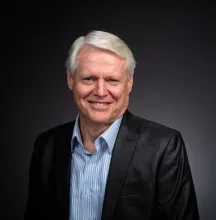
John Elliott serves in the role of President of the United Church of God, an International Association.
