
Steve Shafer
This transcript was generated by AI and may contain errors. It is provided to assist those who may not be able to listen to the message.
Before Passover, a member of the Flint congregation came up to me before services. You always love to have these things before services. But he came up before services, and he was very upset. And he came to me and he said, you know, you caused me to miss the Passover. I said, huh? What? And he said, well, the Passover still, you know, it's five days or so ahead of us a week. He said, well, it was three weeks ago. He says, we missed it. You missed it. He says, you're keeping the wrong calendar and we need to change. And anyway, I'm not going to go into all the details of it, but I'll just say this. He was keeping a version of a New Moon calendar, but not the New Moon calendar that some of you are looking into now or consider keeping, maybe others keep. It was a very different New Moon calendar. I don't know how many of you are familiar with Bill Dankenbrink or the Karaite Jews. Some of you may know Bill Dankenbrink or the Karaite Jews. And Bill Danken was a member of the World Wide Church of God years ago. He left in the 1980s when all the changes were beginning to take place. It was in the late 1980s. He was never ordained, but he was very, very studious. He used to write articles for the Good News magazine when the Good News magazine was a member of publication with the World Wide Church of God. And he wrote excellent articles. I always enjoyed his in-depth research in his articles.
He started a ministry, I think it's called Triumph Ministries. I think he writes a booklet called Prophecy Flash that he puts out and publishes, which I've subscribed to for many years because it has very interesting articles. I don't always agree with them, but it does give a lot of in-depth research. But his calendar that he published on his website, this member got to, was a version of the Karaite Jew calendar.
And their calendar, what they do is based on their understanding and their interpretation of Exodus 2, verse 2, with Exodus 3, 14, where it talks about abib and green leaves and so on. So what they do with Karaite Jews, my understanding is that they have certain fields in Palestine where they plant a seed in the fall. And then when they see that seed first come up, then the next new moon is the beginning of the year for the Karaite Jews.
Now, Bill Drankenbrink was using that calendar, but he was using his version of that calendar because this is one thing he didn't agree exactly with the Karaite Jews, so his calendar was slightly variation of the Karaite Jew calendar. But anyway, that's what caused me to begin to look into the calendar and calendar issues seven years ago. And I did a tremendous amount of research and tried to understand different issues that were involved.
I'd never done that before. But when you look into it, and all of you are very intellectual here in the sense that you have a lot of knowledge at your fingertips. Today we have the Internet. You can go on the Internet, you can research any subject due to the calendar, and you'll get dozens of websites with all kinds of articles, and they'll vary with one another, and some will be against what somebody else says, and so on.
So it's a complicated issue. But I had to address it in Flint seven years ago because it was causing division. In fact, it actually caused about 15 to 20 percent of the congregation to leave. And those who've left are now all scattered in different places. But anyway, that's why I had to address it and try to settle the rest of the congregation down to help them to realize, well, look, if there's other issues involved here, you need to understand a bigger picture.
But it does...the calendar can be complicated, but it's also, I think, an extremely inspiring issue to look into because it does involve astronomy and the study of God's creation, which is very, very inspiring when you look into it and see some of the aspects of it. But here are some of the questions we're going to address. Just to get started, I'll just give an overview. I'm not answering these today, but these will be addressed over the period of time that we cover this subject and look into it as best as I can, trying to rightly divide the word of truth as best as possible. Because again, like I say, it's complicated, and people take opposing views, and whatever you say on the calendar is going to be somebody who's not going to agree with you. But some of the questions to look at...what is the true biblical calendar? Is there such a thing as a true biblical calendar? Many say yes, but is there? What is God's calendar? What calendar does God use? What did God put in place? What calendar did Christ use in the New Testament? What is a calendar and what is the purpose of a calendar? How is a calendar determined? Are there different ways to determine a calendar? What are some of those different ways? What makes a holy day a holy day? Is it the right day that makes it a holy day? Or is it possibly something else? What is the difference between the weekly Sabbath and an annual Sabbath? Is there a difference? Is there a distinction between what makes them a holy day? What about the Hebrew calendar? Could we say that's God's calendar? Many would say it's not. How many versions of the Hebrew calendar are there? Right off the top of my head, I can come up with at least seven versions of the Hebrew calendar. And there are two overall ways you can calculate the Hebrew calendar, not just one way. Why then do we use the version we do if there are several different versions? What about the postponement rules of the Hebrew calendar? Should God's calendar, if there is such a thing, should it use postponement rules? Which people say are man-made rules. What purpose do those postponement rules serve? Do they serve a purpose? Do they serve any kind of spiritual purpose? Are the rules of men, or do they have, again, a spiritual purpose? What about simply going by the new moon? How many versions of a new moon calendar are there? There are more versions of a new moon calendar than there are in the Hebrew calendar. There are several different versions. I know I could sit down and think of at least eight different versions of the different moon calendars you could use for observing the God's Feast in Holy Days, and they would all come out with some variance of the days when those days would fall.
So if you go by the new moon, which version of the new moon calendar should you use? And should it be by astronomical calculation? Or, which you can, you can calculate the new moon, astronomically. Or should it be by observation? Now the Muslims go strictly by it. They have a lunar calendar, but they go strictly by observation. And there are some, I suppose, that would advocate just simply by going to observation.
There are some problems there. And finally, what does the Bible say and what doesn't it say? Again, the calendar is a large subject. There are a lot of various avenues you can look at, but it is a fascinating subject to explore. And I'm going to try to do it in an objective way. I'm not taking aside of this is the right calendar and there can't be any other calendar. This is the one you've got to use.
I'm not taking that position. I'm just trying to give you understanding of all the issues involved and the complexity of the issues. And so you have a little better understanding of what is involved when it comes to the calendar. But those are some of the questions that we will address in this series of Bible studies over the course of the coming year. And again, like I said, I'll try to be objective, but I am not going to explain every version, every aspect of it. That wouldn't be proper for any of us. You can do that yourself if you want to.
You can go on the Internet and explore all that. You'll find out there are just all kinds of conflicting information and positions people have. Now, I want to start off with giving you two biblical principles that I want to use. And then I want to give you an overview of the calendar and calendar issues. And then I want to begin to get into the perspective of the New Testament.
So the title of this is the calendar part one. And this is kind of an overview and beginning New Testament perspective. I want to begin with two principles from Proverbs. First, let's go to Proverbs 11 verse 14. This is the first principle I want to use when it comes to looking into the calendar.
Proverbs 11 verse 14. It says, Where there is no consul, the people fall, But in a multitude of consulers there is safety. Now, there are certainly a multitude of consulers when it comes to the calendar. But, and it does say there is a safety there.
So I want to use a multitude of sources that I'm going to use, both secular and ecclesiastical, to look at a number of sources so we can get a proper perspective and not just use the one source. I'm just going to use united sources to try to prove united's point. I'm just going to use a multitude of consulers. The other proverb that I think is very, very pertinent is Proverbs 18 verse 13, which says, He who answers a matter before he hears it, it's a folly and a shame to him.
So in other words, we shouldn't come to a conclusion on the calendar and understanding the issues involved. Don't jump to a conclusion before you hear the whole story and all the issues and what they are. First try to get all the facts. And I'm going to try to use both of those principles in examining the calendar. First, I want to start with an overview. What is a calendar? Well, if you want to look it up, a calendar is a system, excuse me, a calendar is a system for organizing units of time for the purpose of reckoning time over extended periods.
It's a sort of an organized time in a proper way. And of course, a calendar then organizes days into months, months into years, and years into centuries. Now, why is that necessary? Well, I'll give you a scripture that I think ties in, and that's 1 Corinthians 14, verse 40. 1 Corinthians 14, verse 40 says that all things be done decently and in order. Why is it necessary to have time organized in a calendar?
Well, society can function in an organized manner. And so all things can be done decently in order. Or in the case of God's Word, as we're looking at it here, so you have to have time organized in the right order so that God's Holy Days can be observed in an organized manner within their proper seasons. Because we know there's a spring harvest season, agriculturally, and a fall harvest season, and God's Holy Days are around those two harvest seasons. We have the spring harvest season, and we have the fall harvest season.
And spiritually, we're going to have the spring harvest of the first roots, which we hope to be a part of.
And we're going to have the great fall harvest when God is going to spiritually open up His plan of salvation and call the rest of the world. So you want to have something organized so that those festival seasons can always fall in their proper time. The spring festivals can fall in the spring, and the fall, and the fall. However, it's not as simple as it may seem on the surface when it comes to the calendar. Why not? Well, because we like to deal with whole numbers. Like 30 complete days in a month, maybe 12 complete months in a year. That would be nice if it all worked out that way. Unfortunately, it doesn't work that way. We live on a planet that's revolving around the sun, and it is rotating on its axis, with a moon that is at the same time revolving around the earth. Astronomically speaking, our lives, our time, and seasons, and our calendar organization of our time, are invariably tied to the motion of the earth and moon in relation to the sun, in relation to our revolution around the sun. This has nothing to do with worshiping heavenly bodies. It's the way God created things, the way God created the solar system in which we live.
It is simply a reality of God's creation, a reality as to how we must attempt to organize time by utilizing some kind of a calendar for that. And we organize time, and we use seconds, minutes, hours, days, months, years, centuries. But here lies the problem when it comes to using a calendar to organize time. A day, as we know, is one complete revolution of the earth on its axis, which we have divided into 24 one-hour periods of time. So one day equals, as we know, 24 hours. That's the way we have divided it. Now, in Genesis 1, the Bible simply says, God divided the light from the darkness and called the light day, and the darkness he called night, till the evening and the morning were the first day. Genesis 1, verses 4 and 5. We have subdivided that into 24 one-hour periods of time, so each day, each evening and morning, if you will, is exactly 24 hours. What about a month? Well, an astronomical month is the time it takes for the moon to make one complete revolution around the earth, from one phase of the moon until that phase of the moon begins again. Or, as we might say, one new moon to the next new moon.
How much time does that take in days, hours, minutes and seconds? Well, it's very interesting. You go in there and you can Google it, or Bing it, for those of you who are Microsoft. It takes 29 days, and this isn't the complete answer, but it's the first answer. It takes 29 days, 12 hours, 41 minutes and 2.7 seconds to go from one new moon to the next new moon. But I have to add this. On the average, that's what it takes. That's the average time.
Let's see, do I have that here or not? Yeah, I do. I'll just read this. It's kind of interesting. Determining new moons, an approximate formula. I'm not going to give you the formula. The time interval between new moons, a lunatician, is variable. This means between the new moons, this synodic month, is about 29.53 days, the time I just gave you.
However, periodic, this is a Raleigh's word of the day, periodic perturbations, don't use perturbations when writing to the factor. You could say, hey, what does that mean? Periodic perturbations change the time of the timeline conjunction from these mean values. For all new moons between 1601 and 2401, the maximum difference is 0.592 days. The duration of illumination, the time from one new moon to the next new moon, varies in this period between those last 400 years between 29.272 and 29.833 days.
So what I gave you there, 29.53, that's an average, that's the medium time. However, we can't use those kind of numbers for organizing time on a calendar. We have to round them off to whole numbers of 29 or 30 days in a month.
29.53 average days in a month. It doesn't work. And, of course, when you do that, that's what all versions of the Hebrew calendar do. And other calendars, too, have to round it off to so many days in a month. Now, in the Bible, a month does begin with a new moon. It goes from one new moon to the next new moon. But what is a new moon? There's actually more than one definition that you can get to, which we'll get to later on in another Bible study.
But a major follow-up question for all of us is this. What is a Biblical new moon? That's the one we want to look at. There can be different definitions. What is a Biblical definition of a new moon? How does the Bible define it? That's a very interesting question. I'll just put that before you so you can give me a scripture that defines it. But I'll cover that later. Well, let's ask another question. What is a year? Astronomically speaking, a year is the time it takes for the Earth to make one complete revolution around the Sun.
How much time does that take? Well, it takes 365 days, 5 hours, 48 minutes, and approximately 46 seconds. This morning, the figure they gave me was 45.51 seconds. Pretty precise. Pretty precise is pretty consistent. Think of that. That's amazing. The Earth is still a little bit to go around the Sun, yet it has that precise time that it takes every year to go around the Sun. It's pretty consistent year after year, within a tenth of a second. How can that be? What regulates that? What sustains that?
How did God create everything? So that happens. That's an amazing, inspiring story to look into. We already stated that an average lunar month from one new moon to the next new moon is 29 days, 12 hours, 41 minutes, 2.7 seconds average. We multiplied that, that average, by 12. So we could have 12 months in a year. It comes out to be... Now, we have 12 lunar months. It comes out to be 354 days, 8 hours, 48 minutes, and 36 seconds.
So an astronomical year, then, of 12 lunar months is a little less than 11 days shorter than an actual astronomical year, the time it actually takes the Earth to go around the Sun. They don't come out equal. 12 lunar months come out 11 days short of an astronomical year. And the actual time it takes for the Earth to make one complete revolution around the Sun. Again, there are approximately 11 days difference, which means what? It means we can't have a fixed calendar utilizing both the Sun and the Moon and get it to come out even.
It won't come out even. If we devise a calendar with 12 lunar months for a year, and that's all we used, the seasons would fall back by about 11 days every year, or by 32 to 33 days every three years.
And in 18 years, in the Northern Hemisphere, the Passover would then be in the fall, and the Fisa Tavern Acre would be in the spring. So what does any calendar have to do? I don't care what calendar you want to devise or use.
What does any calendar have to do in order to keep the year in alignment to the proper seasons, which is key in deserving God's Feast in Holy Days? It has to add or postpone time. Now, the Hebrew calendar, for example, adds an extra lunar month seven times in every 19-year time cycle.
Seven out of every 19 years, the Hebrew calendar adds a 13th month. You can agree with that, and I'm just giving you facts here. When a 13th lunar month is added, what does that do? It postpones the beginning of the next year by one lunar month. So here's the bottom line. Any calendar anyone can devise to organize time according to the movements of the earth and moon, in relation to their revolution around the sun, so God's Feast in Holy Days can be observed in the proper seasons, any and all calendars must have some form of postponement rules. The Muslim calendar doesn't. It just goes by lunar month with no postponement rules 12 months in a year. And guess what? Ramadan circulates throughout the whole year. But you can have a calendar that keeps the seasons in line without having some form of postponement rules. Now our Gagorian calendar that we use today has postponement rules. We add an extra day on February 29th, every four years, which we call then a leap year. What does that do? What happens when we add a February 29th to our calendar? It postpones March 1st by one day. In other words, ending February 29th, once every four years, is a postponement rule using the Gagorian calendar. But even that does not keep our Gagorian calendar in perfect sync with the seasons. They'll still drift over time. Thus, the Gagorian calendar then, Pope Gregory a couple hundred years ago, I don't go into all the history of that, but that's fascinating to look into. The Gagorian calendar we use today has another postponement rule that many of you may not be aware of.
That just postponement rule is this. Only turn-of-the-century years that are divisible by 400 are leap years with the addition of a February 29th. What does that mean? The year 2000 is divisible by 400, so the year 2000 was a leap year. It had a February 29th added. 1900 is not divisible by 400. So the year 1900 was not a leap year and did not have a February 29th added in that year. Same with in the future, we're going to look at 2100, year 2200, year 2300, done those are divisible by 400, so none of those will have a leap year. They will not have a February 29th, but 2400 will be a leap year. It will have a February 29th added. But even then, another extra day will have to be added once every 3000 years or so to keep it perfectly in sync. Which leads to something, and I have time to talk about this, I want to bring this up because this is something we all need to be concerned about. This is a big deal. Something we all will be concerned about that could happen in the near future. In fact, they've tried to push this through recently, but it didn't quite get through. And that's a proposal for what is called a New World Calendar. How many of you have heard of the New World Calendar? Some of you have heard about that? Some of you know about it. The World Calendar is a proposed reform of the Gregorian Calendar created by Elizabeth Ashelis of Brooklyn, New York. And she actually proposes back in 1930. The World Calendar is a 12th, and listen to this, because you know the Gregorian Calendar, you probably know the history of the Gregorian Calendar, to change the Roman Calendar, because Easter was drifting out of its season, so they took 11 days out of the calendar back in Pope Gregory's time. But they didn't change the sequence of the days of the week. They went from whatever it was, October 20th to October 31st, whatever it was, but they went from Saturday to Sunday. They didn't change the sequence of the days of the week. But here's the World Calendar we'll deal with, if they ever incorporate this. The World Calendar is a 12-month perennial calendar with equal quarters. It is perennial or perpetual because it remains the same every year. Each quarter begins on a Sunday and ends on a Sunday. Sunday is the key day in the New World Calendar. But it doesn't matter whether still the first day... It'll be the first day of the week, but it doesn't matter if the sequence is broken. I don't think Catholics really care. Each quarter begins on a Sunday and ends on a Sunday. The World Calendar also has the following two additional days to maintain the same New Year days as the Gregorian Calendar. Here's where you've got to watch out. If this ever happens, it's going to cause mass confusion for the churches of God and a big problem. World's Day. They're going to add a World's Day. Not just every year, but more than just every year. The last day of the year following Saturday, December 30th, will have a World's Day. This additional day is dated W, which equals December 31st and will be named World's Day, a year-end World Holiday. It will be followed by Sunday, the first of January in the New Year.
Now, did you get that? You've got December 30th is Saturday. December 31st is World's Day. January 1 is then Sunday.
You see what happens? You break up the sequence of the days of the week.
Saturday, the 7th day, will be followed by a World's Day, followed by Sunday, will be the first day of the week.
Leap Year Day. This day, a ceremony added at the end of the second quarter in Leap Year's is also dated W, which equals 31 June and named Leap Year Day. And if that day is on a Saturday, it will be followed by a World's Day and then followed by Sunday, July 1st.
Now, if they ever incorporate a World calendar, it's going to mess up the sequence of the days of the week. Saturday, the 7th day of the week, we observe, it can fall on Saturday, it can fall on Sunday, it can fall on Monday, it can fall on Tuesday, it can change.
So if you want to stay with the 7th day that we know it, the way we sequence the God created, you're going to have to observe it on different days of the week if they ever do this World calendar. Or else, the Church of God will have to come to the decision and say, well, we're going to keep deserving of what they call Saturday. I don't know. There are people proposing that. That ties in with something. It ties in with Daniel 7.25, and I won't take time to turn to there. But Daniel 7.25 talks about a power coming on the world's same.
It talks about an Antichrist. And it says in Daniel 7.25, he shall intend to change times and law. What is that talking about? Change times and law.
Well, you change times. If you change times, you change the calendar. And you change the laws concerning how you calculate the calendar. And if the world calendar ever comes up, that will do this act. It will change times and law. And there are people right now thinking to do that. You just need someone in power to do it, to bring it about. And it could happen in our lifetime. So that's something we should all be concerned about.
But the bottom line in regards to the calendar, man's calendar or God's so-called calendar, is it must have some form of post-moment rules. And many have been arguing over that and been revising that for hundreds of years. Maybe thousands of years.
And the bottom line is it's not going to be settled. Nobody's going to come up with a calendar that they use, and they're going to give it to everybody else who observes God's feasts and holidays, that that is the calendar you've got to use. It's not going to happen. It's not going to happen in our lifetime. It won't happen until Christ returns or until we see the restoration of all things, Acts 3 21.
Now, if you want to look at it, there's a lot of calendars that do a very good job, including the Hebrew calendar. It does a very good job of keeping, with this 19-year time cycle, it does a very good job of keeping all the feasts and holy days in their proper season and keeping in there and doing that every 19 years, a 19-year time cycle.
So we can either use that or we can devise some other calendar.
And again, what about a biblical calendar? Is there such a thing as a biblical calendar? We'll address that question in a future Bible study. But I want to look a little bit at the New Testament perspective, from the last 15 minutes here. What perspective does the New Testament give us in regards to the calendar and calendar issues?
Actually, we'll take several Bible studies to cover all that, but it has a lot to say and it has a lot it doesn't say. And I want to just quickly say there are five overall areas we need to look at to get the full perspective of the New Testament. I'm just going to touch on these real quickly, for the most part. Number one, is calendar calculation or observation of the new moons, is that an issue in the New Testament? When you read the New Testament, do you see that as being an issue?
And the answer to that question is no. No, you don't see that as being an issue in the New Testament.
Now, when you think about what was going on at the time of the New Testament, that becomes an interesting question. Why wasn't it an issue?
But there's not a word in the New Testament that indicates the calendar or the calendar dates as to when the piece of the day is where to be observed was an issue in the New Testament. Circumcision was an issue, but calendar dates are not brought up as being an issue.
The New Testament is pretty silent when it comes to the calendar and issues surrounding the calendar.
Now, that's especially noteworthy when we realize that the Jews, at the time of Christ, used three variations of whatever calendar they were using. You can argue what calendar they were using, but whatever calendar they were using, they used at least three variations of that calendar, which caused them to observe at least one or more of the holy days on different days or dates.
Why, then, is the New Testament silent in regards to that, since there was controversy over the calendar at the time of Christ? There was controversy! The Jews had different calendars. They weren't buying. But you don't see that as being a controversy in the New Testament. Why is that? See, that's something that's important to understand. Bottom line of point one is the New Testament is silent in regards to the calendar and calendar dates being an issue.
It's not a big issue that stands out in the New Testament. The question is, why? We'll get to that in the future Bible study, because there's a very important reason as to why it wasn't an issue. You need to understand that. Second area in the New Testament to look at is, what is really important from the perspective of the New Testament?
What's really important? That's probably the most important of all these Bible studies. I'm going to give that next time. I'm going to cover that. Number three, what does the day on which Christ died, what does that tell us in regards to the calendar? Does that tell us anything? Well, we know He died on the Passover. And I'm not going to go through all this, because we've all gone through it, as members of God's Church. But we know in the year that Christ died, whatever year that was, the Passover had to fall on a Wednesday, and the first day of Unleavened Bread had to fall on a Thursday.
Well, that doesn't happen every year. It only happens on certain years, on certain calendars. And if you look at all the information you have in the New Testament, that you can look at and compile, Herod's death when he died, how about Christ about 31, again, His ministry, He had to be about 33 when He died at 70, you put all that information together, you come up with probably either 30 or 31 AD as being the probable years in which Christ died. Can you go back and determine the calendar for those years?
Actually, you can. So that tells quite a bit. Now, a fourth issue is, what about John 737? What does John 737 reveal about the calendar being used by the New Testament church? Well, actually it does. It not only reveals quite a bit, in my opinion, this is my opinion, but John 737, when you really understand it, and you prove it, which you can. It, to me, for me at least, can at least be kind of a smoking gun when it comes to what calendar was being used by the New Testament church, although people could also rightfully dispute that.
Let's just read John 7, chapter 1, first of all. It says, After these things, Jesus walked in Galilee, for he did not want to walk into Judea, because the Jews sought to kill him. So this now is leading up to the time when they were seeking to kill Jesus Christ and crucify him. Verse 2, Now the Jews' piece of tabernacles was at hand. Question, why did John call it the Jews' piece of tabernacles? Why didn't he just say the piece of tabernacles is at hand? What possible reasons are there for that? Well, there are some reasons, which we'll explore at a later time, because I think there is an important reason why he called the Jews' piece of tabernacles.
Let's not go to John 7.37. On the last day, that great day of the feast, we're talking about the piece of tabernacles. But it says, On that last day, the great day of the feast, Jesus stood and cried out, saying, If anyone thirst, let him come to me and drink. Question, Is this the eighth day, sacred assembly, that holy day that follows the conclusion of the piece of tabernacle, we call the last great day, which we've used as verse to call it that for many years?
Or, as we now understand it, at least in United, is this the seventh and last day of the feast of Unleavened Bread? Actually, you can prove which it is. And we'll do that in the future Bible study. You can prove it. At least, in my opinion, you can prove it. Finally, when it comes to the perspective of the New Testament, what about Acts 2.1? Very fascinating. Acts 2, verse 1. Very familiar Scripture. When the day of Pentecost had fully come, they were all with one accord in one place. First, why does it say when the day of Pentecost had fully come?
Why doesn't it just say when the day of Pentecost had come? Well, because you have to count to the day of Pentecost. That's controversial as to how you count. But the day of Pentecost had a countdown period, and it couldn't fully come until that countdown period was complete. You had to count either seven weeks plus one day or fifty days. Leviticus 23, verses 15-16, which we'll go through later on in another Bible study, which is why the Old Testament Pentecost was called the Feast of Weeks, because you had to count seven weeks.
And the New Testament is called Pentecost, or count fifty, because you had to count fifty days. Again, as I said, Leviticus 23, verses 15-16 has been debated for centuries as to when this countdown period was to begin. At the time of Christ, the Pharisees counted from the first Holy Day Sabbath, or from the first day of Unleavened Bread, even as Orthodox Jews around the world still do today.
The Sadducees, on the other hand, at the time of Christ, counted from the weekly Sabbath that occurred during the days of Unleavened Bread, even as we in United and most of the churches of God do today. Depending on which way you count, you're going to come out with a different day for Pentecost.
If you count from the first Holy Day, it falls on a fixed day of the month, so you're going to observe it on the fixed day of the month. So the Jews always observe, Orthodox Jews observe Pentecost on the sixth of... ...Aceiving, on the sixth day of the third month. But there's a third, there's evidence that the group called the Essenes, and I'm proud to have seen it as Essenes, because that's... I had a great course that covered some of the Dead Sea Scrolls, and that's the way she called them, she called them the Essenes, E-S-S-E-N-E-S.
They're not mentioned in the New Testament. They were a group that is enlisted by Josephus and others that existed at the time of Christ. And they were the group that had a small community at Qumran, and they brought some of the scrolls in there that you pause in the case around Qumran, and they copied some of those scrolls as well. They're called the Dead Sea Scrolls, extremely interesting study. But the Essenes were that little group of Jews that settled in Qumran for a couple hundred years, right around the time of Christ.
And from the evidence you can go to, they counted Pentecosts differently. So I'm not sure exactly how they did it. They came up with a different... They observed Pentecosts on a different day than neither the Sadducees or the Pharisees. Now, today... We're all Essenes today, we have to worry about the way they count it, because there's no group that does that today. But you have a group that counts as the Pharisees did, and another's accountant as the Sadducees did.
And there is a third way today the churches of God count to Pentecost. Do you know that? You thought there were maybe only two, but there's actually three. Because every five or six or seven years or so you have a very unusual situation that occurs. The Passover will fall on a weekly Sabbath. Okay, when the Passover falls on a weekly Sabbath, do you start counting from Pentecost with that Sabbath? Or do you wait until the last day of Unleavened Bread, which is the only Sabbath that occurs during the Feast of Unleavened Bread?
It'll be the last day. Or do you count from that Sabbath? Because you're going to have a week's difference in Pentecost, depending on which Sabbath you count from. And then you've got the question, why would you count from the first Sabbath, the Passover Sabbath, when it is not yet the days of Unleavened Bread? Well, the thing is, what happened on the day after that Sabbath? You waved the Wave Sheaf offering.
So if you count from the Passover Sabbath, then the Wave Sheaf is offered on the Sunday, which is the first day of Unleavened Bread, and you're doing the Wave Sheaf offering within the days of Unleavened Bread. If you wait until the last Holy Day Sabbath, then the Wave Sheaf is going to be waved after, outside the days of Unleavened Bread. So that's a controversy. And there's actually a Church of God group today, a major one.
When that occurs, they count from the last day of Unleavened Bread, where all the other Church of God count from the Passover Sabbath, before the days of Unleavened Bread. So that's another calendar version, if you will. Now, it doesn't matter. The point I'm making here is, it doesn't matter whether you use a Hebrew calendar or you want to use a New Moon calendar. When it comes to counting to Pentecost, somebody has to decide how you're going to count. And you're going to have a different version of any calendar you use, depending on how you count to Pentecost.
Because there are three different ways right now you could use to count. And at times that's going to cause Pentecost to fall on a different day. So I'm just pointing all this out to you. So all this shows you some of the overview and the complications that are on the calendar. I'm going to end there for now. It's getting to be just about time. We'll continue to look at the perspective of the New Testament next time. And when we'll address a very, very important question, I might even make it as a sermon, because it could be a sermon subject rather than just a calendar subject.
And that is, what is really a primary importance when it comes to the New Testament? Anyway, that's just an introduction to it. It shows you a little bit of the complexities of it. It shows it's a very interesting subject and a very in-depth subject to look at. So thank you all for being here. And I know you're all thoroughly as confused as I am, so we'll stop there before you get any further confused.
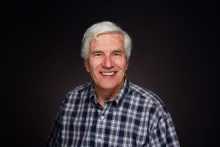
Steve Shafer was born and raised in Seattle. He graduated from Queen Anne High School in 1959 and later graduated from Ambassador College, Big Sandy, Texas in 1967, receiving a degree in Theology. He has been an ordained Elder of the Church of God for 34 years and has pastored congregations in Michigan and Washington State. He and his wife Evelyn have been married for over 48 years and have three children and ten grandchildren.
