
Steve Shafer
This transcript was generated by AI and may contain errors. It is provided to assist those who may not be able to listen to the message.
Well, instead of a sermon and a demo, I'll continue my series on the Bible studies on the calendar. I want to kind of get that complete in the next couple of months, if I can. Maybe two or possibly three more would complete it. In the last Bible study that I gave on that, I concluded by putting the biblical pieces of the puzzle together from John, chapters 7, 8, 9, and 10. Kind of tied all those together to show how they did relate to the calendar and calendar issues and how they kind of showed that on the piece of tabernacles in the year prior to the year that Christ died, in all probability would have gone from Saturday to Saturday, and that would have had to follow by, of course, Christ would know was died on a Wednesday the following year on that passage. So I had to follow on a Wednesday. So to find a calendar that would work for that situation that we have there in the book of John, you'd have to find a calendar with the piece of tabernacles from Saturday to Saturday, followed the next year by a Passover that would fall on a Wednesday. And the only years and calendar that seemed to work with that scenario, years 30 and 31 A.D., with the piece of tabernacles going from Saturday to Saturday in 30 A.D., according to the Hebrew calendar with post-Poment rules, and Passover being on a Wednesday in 31 A.D. with the Hebrew count, using the Hebrew calendar with post-Poment rules. So that was seen the most likely scenario, and I went over all that last time.
And I also showed that, you know, you just... that's the only calendar that works with the calculated Hebrew calendar. The going by the new moons doesn't really work. There isn't any new moon calendar that you can come up with that's there, that's calculated from when the new moons occurred back then that would really tend to work either. And I showed, you know, also in previous Bible studies, why going by just observation is... there are a lot of problems with that and difficulties.
But I want to mention, last time I just concluded, when I concluded last time, I mentioned that the Hebrew calendar that we use today, and the Jews around the world use, it calculates from the day of trumpets, or what is called the mollad, or the new moon of Tishri, which is the Tishri being the seventh month.
And of course, the day of trumpets is the first day of the seventh month, this is the new moon, which starts the months in the Hebrew calendar. So the Hebrew calendar that we use today, and used by Jews around the world, it's a calculated calendar that calculates from what is called the mollad of Tishri, or the new moon of the seventh month, or the day of trumpets, because the new moon of the seventh month, as we know, is the day of trumpets.
So today, then, in Part 10 of this series, we'll look at that, and the spiritual significance of that. Is there any spiritual significance or meaning we have from having a calendar, using a calendar that calculates from the day of trumpets? We'll also briefly mention the possible reference points other calendars have to use for their calendar, because every calendar has to have some kind of a reference point that it calculates from for the beginning of the year. And of course, we'll look at the beginning of the Holy Day year, in the Feast of Trumpets, not the beginning of the Holy Day year, that's Passover, but the beginning of the fall year from the fall to fall.
And we'll look at what the spiritual meaning of that is, the way it's used in the Hebrew calendar. And we'll also look just at possible origins of the Hebrew calendar as well, towards the end of the Bible study. But the title for my Bible study here this afternoon is the calendar part 10, Trumpets, Origins, and History. Part 10, Trumpets, Origins, and History.
Now, I want to begin with this question, because it's an interesting question to look at. There's a lot of spiritual meaning and significance behind this question. But why does the Hebrew calendar use the Day of Trumpets as its reference point to calculate from? Is there any real meaning to that? Why does it use that particular day? As I said, any and all calendars have to have some starting point, some reference point, for the first of the year, or they're going to use for determining when the Holy Days are going to be observed.
I also mentioned in a previous Bible study, I mentioned the Karaite Jews, who plant barley in certain fields in Israel, and look to see when that barley then begins to ripen, and when it begins to sprout, and then the next new moon, after they see that barley begin to sprout, then the next new moon, after that, is the beginning of the year.
And then they calculate from that, then they'll calculate the first day of the first month, and they'll calculate then the other Holy Days from that point. So they have that particular method they use, and I covered that last time and showed how the difficulties with that particular method and problems that that has, and also there's really no... When you get into the details of how they do that, there's really nothing in the Bible to specifically support the different things that they use, to use that particular method. Other calendars that are used and have to use some other reference point, a lot of them will use either the equinoxes, the spring or fall equinoxes, usually the spring equinox, they use that as their reference point, and yet the Bible doesn't even mention equinoxes at all.
So, in fact, today is, of course, the winter solstice. It doesn't... Bible doesn't mention solstices or equinoxes whatsoever. So, the bottom line, then, if the Hebrew calendar is rejected, then some other reference point, other than the Day of Trumpets, has to be used as a starting point for that particular calendar, whatever calendar you might want to use in order to determine when God's feasts and holidays would occur. And since the Bible does not give a clear reference point to use, those who reject the Hebrew calendar then have to rely on their own opinion regarding what reference point to use for that particular calendar as to when the year begins, or when they're going to have a beginning point for determining the Holy Days.
As I say, what the Hebrew calendar does is it calculates the Day of Trumpets and then figures out all the other Holy Days from that particular reference point, from the Day of Trumpets the following year. Now, what about using that? What about the Day of Trumpets?
Is using that as a reference point also just another opinion of men? Or is there any Scripture support for that? Are there any Scriptures that might support that as being used as a reference point for determining and establishing when God's annual feasts and Holy Days are to be observed? That's what I want to take a look at here today. Why does the Hebrew calendar use the Molad of Tishri or the New Moon of Tishri, which is the Day of Trumpets? Why does it use that as its reference point for establishing when to observe God's annual feasts and Holy Days?
And is there any spiritual significance to using that method? So first, then, let's look at that spiritual aspect of it. Is there any... Let's look at the scriptural aspect of it first before we get into the spiritual. Let's look at the scriptural aspect. Is there any scriptural basis for using the Day of Trumpets as a reference point for establishing a calendar? Is there anything in Scripture you could use that might support that method?
Well, yes, there is, actually. And the scriptural basis for using the Day of Trumpets for calculating the calendar is found in Psalm 81. So you want to be turning to Psalm 81. Psalm 81 is a psalm of Asaph, as it says, probably in the heading of that psalm. Asaph being one of King David's chief musicians.
However, this particular psalm makes references going all the way back to the time of Jacob and Joseph when they were in Egypt. If you read the whole psalm, it goes back to hundreds of years before the time of Moses, all the way back to the time of Abraham, Isaac, and Jacob. There's a reference to that later on in this psalm. And it gives scriptural support for using the Day of Trumpets as a reference point for the calendar, actually. Let's take a look at that. Psalm 81, and I'll begin in verse 1. Read the first three verses to begin with here. Psalm 81, verse 1.
Again, talking all the way back to Jacob here. Raise the song and strike the timbre. And we have this in our hymnal. The pleasant harp with the lute. And then, verse 3. And I'm reading from the New King James, which sounds a little awkward when you read it.
I'll mention the New King James in a moment. The New King James says, Blow the trumpet at the time of the new moon, at the full moon, on our psalm feast day. Now, the Hebrew word for, again, like I said, I'm reading from the New King James. And actually, what I just read here, the New King James, this renders this correctly. I want to mention the Old King James. The Old King James version renders verse 3 this way. Blow the trumpet in the new moon, in the appointed time, on our psalm feast day. Now, that incorrect rendering would lead us to believe that this is only referring to the day of trumpets.
Which is the only new moon which is also a feast day. Of course, the new moon begins each month of the Hebrew calendar, but the only new moon that is a feast day is the day of trumpets. But the New King James, that I just read, renders it correctly. Which says, verse 3, blow the trumpet at the time of the new moon, at the full moon, on our psalm feast day. Now, if you read that, what was that saying? Was that making sense?
What is that? The Hebrew word for new moon is used in the beginning of this verse, and the Hebrew word for full moon is used in the second half of this verse. So, the New King James is recognizing that it has this rendered correctly. The Jewish commentary, Soncino, which has the Hebrew and their English translation listed side by side, in the Soncino commentary, Soncino commentary renders verse 3 of Psalm 81 this way.
Blow the horn at the new moon, at the full moon, for our feast day. And Jewish tradition connects this particular psalm with the fall harvest of the Feast of Tabernacles. Now, the Hebrew word translated in the second half of verse 3 is Kiesa, K-E-H-S-E-H. I don't know how to pronounce that correctly, but you can pronounce it. K-E-H-S-E-H is number 3677 in strong concordance. And strong says it means the fullness or the full moon. And of course, the full moon is also a feast day, isn't it? The seventh month, the full moon of the seventh month, is the first day of the Feast of Tabernacles.
The fifteenth day of the seventh month is a full moon. So that's a feast day as well. Now, the old King James renders that particular word that translated correctly as full moon here in the new King James. It translates that word the appointed time. And you wonder why. Why did they translate it that way when it's not the correct rendering? Probably because it didn't make any sense to the King James translators, as they probably failed to realize that the full moon of Tishri is also a feast day.
You have to understand that. And they may not have understood that. Of course, the full moon of Tishri is the first day, again, of the Feast of Tabernacles, and that's also an annual holy day, or feast day. So Psalm 81.3 then actually focuses on two feast days. The new moon of Tishri are the Day of Trumpets, and the full moon of Tishri, which is the first day of the Feast of Tabernacles, and also an annual holy day. But is there more to it than that?
Is this also a law of God? Is establishing Trumpets to fall on the new moon of Tishri, and establishing the first day of the Feast of Tabernacles to fall on the full moon of Tishri, is that a law of God? Well, let's read the answer for ourselves. Psalm 81, verse 4. For this is a statute for Israel, a law of the God of Jacob.
To have the full moon of Tishri as a feast day, and I mean to have the new moon of Tishri as a feast day, and the full moon of Tishri also as a feast day. So is this the law of the God of Jacob?
How far back is this law traced here in Psalm 81? Was it a law that was established and ordained way back even before the time of Moses? Again, let's read the answer for ourselves right here in Psalm 81. Psalm 81, verse 5. For this he established in Joseph as a testimony, when he went throughout the land of Vibhish, when I heard a language I did not understand. So this law, for when to observe Trumpets in the first day of the Feast of Tabernacles, it says it was established in Joseph for a testimony.
So here then it's traced all the way back to the time of Abraham, Isaac, Jacob, and Joseph. Basically all the way back to Noah's flood, if you want to look at it that way, because Abraham, Isaac, Jacob, and Joseph are the first people God began to work with after the flood to reestablish the Sabbath and his annual feasts and holy days, if you will.
So here then this new moon and full moon at Tishri is given as being a law of the God of Jacob in connection with observing God's fall holy days, which in turn then gives us at least some scriptural basis for using Trumpets as a reference point for establishing a calendar by which you can observe God's annual feasts and holy days, which is exactly what the Hebrew calendar does. It calculates the mole out of Tishri and then establishes all the rest of the feasts and holy days for the rest of that year and the upcoming year from that particular reference point.
So everything in the Hebrew calendar, which is calculated calendar, everything centers on, revolves around, and is calculated from the new moon of Tishri. So I'll get back to my main question. Why does the Hebrew calendar use the Day of the Trumpets as a reference point? And why would the Jews establish that as a law of God for Israel? Why would they pass that on as a law of God for Israel?
Because that's what they use as well. And then, of course, the main thing I want to look at here now is, is there any spiritual significance for that? Is there any spiritual significance for using the Day of the Trumpets as a reference point for observing God's annual feasts and holy days? What might we learn from that? What spiritual lessons can we learn from that? Is there anything we can...
It helps us to understand things better by using that as a reference point. Let me ask this. What's going to happen when the Day of the Trumpets is fulfilled? Will Christ return at the sound of a trumpet? Number one. Let's go to Matthew, Chapter 24. We can go to many, many verses, but I'm just going to go to one here. Matthew 24, verses 30 and 31. Matthew 24, verse 30 says, Then the sign of the Son of Man will appear in heaven, referring to Christ's return. What's going to happen when He returns? And then all the tribes of the earth will mourn, and they will see the Son of Man coming on the clouds of heaven with power and great glory.
And He will send His angels with the great sound of a trumpet, and they will gather together His elect from the four winds, from one end of heaven to the other. Now, will this great sound of a trumpet, which will signal the return of Christ, will that occur at a time when the moon will not give its light, as happens on the new moon of Tishri? The new moon is when the moon does not affect any light to the earth. Well, let's go back to Matthew 24, verse 29.
Just go back a couple verses. Verse 29. Immediately after tribulation of those days, the sun will be darkened, and the moon will not give its light. And that's exactly what happens on the mole of Tishri, or on the day of trumpets. The moon does not give its light. It's the new moon. And the moon will not give its light, and the stars will fall from heaven, and the powers of the heavens will be shaken. So Christ is going to return with a great sound of a trumpet, at a time when the moon will not give its light, at the time of a new moon, if you will.
So the day of trumpets, which occurs on the new moon of Tishri, on a day when the moon does not give its light, which is also a law of the God of Jacob, established in Joseph for a testimony, the day of trumpets, the new moon of Tishri, is a perfect forerunner for the events it's portrayed to fulfill.
It fits in perfectly like a glove. Trumpets for the new moon of Tishri is for a testimony, then, to what? What is it a testimony to? What does it testify to? It's a testimony for the return of Christ, and for the events that are going to lead up to the return of Christ. That's what it's a testimony to. Now, spiritually speaking, then, what does establishing the day of trumpets to fall on a new moon?
What does that testify to? Think about it spiritually. It says Christ is going to return a time when the moon does not give its light. It's the time of a new moon. The day of trumpets is a new moon. The moon does not give its light. It's dark. And it's the law of God. So spiritually speaking, what does establishing that day of trumpets to fall on a new moon, what does that testify to?
It's a law of God. The trumpets must fall on a new moon at a time when the moon does not give its light. What does that law of God testify to spiritually speaking? What's the meaning behind that? Will Christ return at the very darkest, speaking spiritually now, as He can return at the very darkest point in the history of mankind? How dark is it going to be when Christ returns? Well, right here in Matthew 24, verse 21.
For then there will be great tribulation, such as has not been since the beginning of the world until this time. Nor shall ever be again. It's going to be the very darkest time in the history of man. Why is it going to be so dark, spiritually speaking? How dark will it be? Verse 22, unless those days were shortened, no flesh will be saved. No flesh will be saved alive. In other words, if God didn't intervene at that time, it's going to be so dark, spiritually speaking, that all life could be wiped off the face of the earth if Christ didn't intervene to return at that particular time.
That's how dark it's going to be. But for the next sake, those days will be shortened. Now, let me ask this question. Let's have another question here. Why will it be the darkest moment in human history? Why? Well, turn to Isaiah.
If you want to turn real quickly to Isaiah 4, if you can go back there, I'm just going to read the first verse. But that answers the question for us why it's going to be the darkest period of time in the history of the world. Because it says here in what it says in Isaiah 4, verse 1, Here, though, were the Lord, O you children of Israel. For the Lord brings a charge against the inhabitants of the land and the inhabitants of the earth. Why? Because there's no truth or mercy, and there's no knowledge of God in the land.
It's going to be the darkest moment in the history of the world because there will be no knowledge of God in the land. It's going to be wiped out. There will be no true knowledge of God. So let me ask another question. Why will there be no knowledge of God in the land?
For the answer to that, go to the book of Amos. Amos chapter 8. Amos 8, verses 11 to 12 answers that question. For they tell us why there will be no knowledge of God in the land. Amos 8, beginning in verse 11, verses 11 to 12, Behold, the days are coming, says the Lord God. I will send a famine on the land. There's going to be a famine. A famine of what? Not a famine of bread.
Not a thirst for water. But there's going to be a famine of the hearing of the Word of God. A famine of the hearing of the words of the Eternal. How bad is that famine going to be? They shall wander from sea to sea, verse 12, and from north to east. They shall run to and fro, seeking to find the Word of God. But they shall not find it.
There will be the darkest moment in the history of the world at the time Christ returned, because there will be no knowledge of God in the land. And there will be no knowledge of God in the land, because there will be a famine of the hearing of the words of God. It's going to be a famine. Not of bread or water, but of hearing God's words, God's truth. So let me ask another question, an obvious question. Why, then, will there be a famine of the hearing of the Word of God?
What's going to cause that? How could that be? Because of what is prophesied in Daniel 7. Let's go back to Daniel 7. Daniel 7 answers that question for us. Daniel 7, verse 23 prophesied on events that are going to take place leading up to the return of Christ. And he said, The fourth beast shall be a fourth kingdom on the earth. These kingdoms are going to arise, and these fourth kingdoms will be unlike any of the other kingdoms, and it's going to rise up just right preceding the return of Christ.
And the fourth beast shall be a fourth kingdom on the earth, which will be different from all the other kingdoms. It's going to devour the whole earth. It's going to affect everybody. It's going to affect everybody on the planet, all societies, all nations. And it's going to trample it and break it in pieces. Verse 25, And this king over this beast shall speak papa's words against the Most High. So persecute the saints of the Most High, and shall intend to change times and law, and then the saints are going to be given into his hand for three and a half years.
Why would there be a famine of the hearing of the words of God? Because, as it says here, times and law are going to be changed. What would be changed? Proclaiming the true Word of God could be outlawed. That could be against the law. And if it's against the law, then you can't proclaim it. And that's going to create a famine of the hearing of God's Word, which will mean there will be no knowledge of God in all hands.
See, proclaiming the true Word of God could become against the law. You know, it's very interesting. Of course, you saw Tim imitating Phil up here. But you could see this coming that way. It's heading that direction, isn't it? We are now rapidly heading in that direction right here in the United States of America, where it's getting to be difficult to proclaim the Word of God. There Phil got up and all he did, he quoted Scripture, and what did he get? Fired and wrote sort of a stern controversy against him.
That's already beginning to happen. And Psalm 81.3 proclaims to blow the trumpet at the time of the new moon, at the time when the moon does not give its light. Then the very same verse it also adds, at the full moon, on our solemn feast day, on our feast day, at a time when the moon is giving us maximum light. A full moon, of course, the moon is giving us maximum light.
It's reflecting the maximum light from the sun back to the earth. So as you advance from the new moon at issue to the full moon at issue, gradually more and more light is shed back to the earth until it becomes full. Now, it's interesting because, as we now know, we've read, Christ is going to return at the darkest moment in the history of the world, at a time when mankind will be on the brink of destroying all life from the face of the earth.
And when Christ returns, will He bring light into that darkness, even as the moon gradually brings more and more light to you as it goes from being a new moon to a full moon? Let's look again at Matthew 24. Go back to Matthew 24. Let's begin reading now Matthew 24, verse 23. Because it shows us that's what's going to occur when Christ returns. It's going to go from being very dark to gradually getting lighter and lighter and lighter as you get to the full moon, to the full light brightness.
Verse 23, Matthew 24. If anyone says to you, look here is the Christ, or there do not believe it. For false Christ and false prophets will rise and show great signs and wonders to deceive the apostle, even the very elect. See, I've told you beforehand, therefore they say to you, well look here, He's in the desert, don't go out.
Look, He is in the inner rooms, don't believe it. Then verse 27, for as the lightning comes from the east and flashes to the west, gradually lighting up that night. You open lightning storms at night, lightning flashes, lights up the sky, doesn't it, at night. And if you get more and more lightning, the lighter it gets. So Christ is going to come as the lightning comes from the east and flashes to the west. So also the coming of the Son of Man be. As lightning flashes, it begins to light up the sky at night.
Will those flashes of lightning eventually become so prevalent that the whole world will see Christ coming with power and great glory? Again, verse 30, which you read previously. Then the sign of the Son of Man will appear in heaven, and all the tribes of the earth will mourn, and they will see the Son of Man coming on the clouds of heaven with power and great glory. Gradually it's going to light up the entire earth. In Christ's glory, we'll gradually illuminate the entire world, even like the new moon atishii gradually becomes the full moon atishii on our song of feast day and lights, and becomes the full, full light. Reflecting back to the earth at the time of the full moon. Let's go back to Psalm 97, kind of summarize all of this. There's one particular psalm that kind of sums all this up, and that's Psalm 97. Let's read the first six verses of Psalm 97, beginning in verse 1 of Psalm 97. It's talking about the return of Christ. It's talking about a time when Christ is going to come back to reign on the earth. The Lord reigns. Let the earth rejoice. Let the multitudes of vials be glad. Clouds and darkness surround Him. He's going to come in a very dark period of time. The time when the earth is darker than any other time, spiritually speaking. Clouds and darkness surround Him, but righteousness and justice are the foundation of His throne. A fire goes before Him and burns up His enemies round about. His lightnings light up the world. Just like when you have a lot more and more lightening at night, all of a sudden it lights up the night sky, it lights up that darkness. His lightnings light the world. The earth sees and trembles. When lightening really gets a huge lightening storm, and just lightening is striking all continually, and if it's doing that around the world, the whole world would see it. And they'd tremble. What's going on? What's happening? The mountains melt like wax at the presence of the Lord, at the presence of the Lord of the whole earth. The heavens declare His righteousness, and all the peoples, all the people see His glory.
All the peoples and all the tribes of the earth will come to see His glory. Even as depicted by the full moon of Tishri, which begins the Feast of Tabernacles, which in turn portrays Christ's one thousand year reign on the earth as King of Kings and Lord of Lords. See, after Christ returns, the new moon of Tishri gradually becomes full.
Now, after Christ returns, the earth is going to become full.
Full of what?
Let's go back to Isaiah 11. We're very familiar with Isaiah 11. We used to read that a lot. We used to be a part of our motto, if you will, in old days.
Let's go to Isaiah 11. Let's begin reading in verse 1.
There shall come forth, again, the prophecy is referring to the return of Jesus Christ. There shall come forth a rod from the stem of Jesse, and a branch shall grow out of his roots. The Spirit of the Lord shall rest upon him, referring to Jesus Christ, of course. The Spirit of the Lord shall rest upon him, the Spirit of wisdom and understanding, the Spirit of counsel and might, the Spirit of knowledge and of the fear of the Lord. His delight is in the fear of the Eternal, and he shall not judge by the sight of his eyes and decide by the hearing of his ears, but with righteousness he shall judge the poor and decide with equity for the meek of the earth.
He shall strike the earth with the rod of his mouth, and with the breath of his lips he shall slay the wicked. Righteousness shall be the belt of his loins, and faithfulness the belt of his waist. And of course, the famous verse here, the wolf shall draw with the lamb, and leopard shall lie down with the young goat, the calf and the young lion, and the fatling together.
And little trials shall lead them, and have a time of peace. And the cow and the bear shall graze, and the young one shall lie down together, and the lion shall eat straw like the ox. And the nursing child shall play by the cobra's hole, and the weaned child shall put his hand in the viper's den, and they shall not hurt nor destroy in all my holy mountains. So animals are not going to hurt or destroy, and mankind will no longer hurt or destroy.
As Micah 4.3 says, they shall beat their swords into plowshares, and their spears into pruning hooks, and nations shall not lift up sword against nation. Neither shall they learn war anymore. Now why will they not hurt nor destroy anymore? What's going to change? What's the earth going to be full of? Again, verse 9, they shall not hurt nor destroy in all my holy mountain. Why? Because the earth shall be full of the knowledge of the Eternal as the waters cover the sea. And in that day there shall be a root of Jesse, who shall stand as a banner to the people, for the Gentiles shall seek him, and his resting place shall be glorious.
So gradually after Christ returns, the earth, like the moon, is going to become full. It'll become full of the knowledge of God. And it's going to become full of the glory of Jesus Christ, which will make the earth into a glorious resting place, as mentioned here in verse 11. It's going to be a seventh, colonial day, Sabbath, rest. Rest from oppression, rest from hurt, rest from hatred, rest from war, and rest from lies being destroyed by the thousands. And when that time comes, when that fullness comes, it's going to be the brightest and most glorious time in the history of the world it's ever seen.
And I just want to mention something here briefly. I'm going to cover this a little bit in the next Bible study. But that ties into postponement rules. I just want to make very brief mention of one thing about postponement rules. They can at times ensure something very interesting. Postponement rules can at times ensure that the full moon of Tishri, the full moon on the opening night of the Feast of Tabernacles, is the fullest and most illuminated full moon that will come in the night sky at that particular time.
I want to give you some examples to illustrate that. Back in the year 2000, in the year 2000, the Hebrew calendar without postponement rules would have established Thursday, September 28th, as the Day of Trumpets. And that would have made then, two weeks later, Thursday, October 12th, as the first day of the Feast of Tabernacles, which would have made the previous evening Wednesday, October 11th, as the opening night for the Feast of Tabernacles in that particular year.
And on that particular night, on that evening of October 28th, September 28th, or September, actually September 27th, Wednesday night, September 27th, that particular opening night, would have, the full moon, would have had an illumination of 96.71%. Now that's pretty full. 96.71%. That's close to 100%. And again, that's what trouble with observation. You try to observe differences, like what I'm going to explain here. You naked-eyed can't hardly pick that up. However, in the year 2000, postponement rules postponed the Day of Trumpets by two days. To Saturday, September 30th.
Causing the first day of the Feast of Tabernacles to a steady fall on Saturday, October 14th. And then making Friday night, October 13th, as the opening night for the Feast of Tabernacles instead of the previous Wednesday night, postponement of two days. In the year 2000, on Friday night, October 13th, the full moon had an illumination of 99.57%. About as close to 100% as the full moon had. About as close to 100% as you can get. So it was more full by postponing Trumpets by two days. You had a fuller full moon on that opening night of the Feast of Tabernacles. It had almost 100% illumination, 99.57%. Now, the naked-eyed might not be able to see that difference.
But it's interesting, and you probably noticed this, it's very interesting that oftentimes when you're driving to the Feast of Tabernacles, it clears up to where you can see the full moon. Very seldom, you can't see the full moon as you're driving to the Feast of Tabernacles, that opening night, as you get there. And you look at that opening night, you can usually see the full moon. And you look up there, and you don't think about it, but you think, boy, it sure seems bright, it sure seems full.
That's because it is. Most years, it's either the fullest full moon that will appear in that nice sky at that particular time, any of the full moons during the whole year, or it will be close to it, maybe be the second fullest. And that's because of post-pulmer rules and calculating with the Hebrew calendar. Now, I don't know if those who made up post-pulmer rules had that in mind, but that's the result of post-pulmer rules. They'll often make it so the full moon of the opening night of the Feast of Tabernacles is the fullest full moon of the year, or maybe the next the fullest full moon of the year.
The way it just comes out, which is quite interesting, when you think about what that portrays, the return of Christ to the earth and making the earth full of the knowledge of God. Now, I'll give you more concerning post-pulmer rules in the next Bible study, but let me ask this. Why would the Hebrew calendar, because this is a point that might come to some people's minds, why would the Hebrew calendar use the Day of Trumpets as its reference point, instead of the Passover? Isn't the Passover by far the most significant feast day in the year, and portraying the most important event of the year, the death and resurrection of Jesus Christ, or the death of Jesus Christ?
And the resurrection took place three days and three nights later? Isn't that by far the most important of all of God's feast days? Isn't Christ's sinless life to pay the penalty for mankind's sin? By far the most important event in the history of mankind, His death, paying the penalty of our sins?
Well, yes, it was, and yes, it is. So why then wouldn't Passover be the reference point for establishing the calendar instead of the Day of Trumpets? It doesn't tell us. You have to think about it. But my reasoning is this. For whatever that's worth. The majority of the people in the world don't accept Christ as being the Passover lamb that died for mankind. Now, a lot of Christians do, but they don't really fully understand it. They don't observe the Passover, and they don't think about it the way we do. But they don't think about Christ being our Passover, or dying on the Passover. The majority of the people in the world do not accept Christ as being the promised Messiah.
Christianity is actually a minority religion in the world. It's a very major religion, of course, but there's more Muslims and non-Christians than there are Christians in the world, as a whole. But the majority of the people in the world do not accept Christ as being the promised Messiah, or as being their personal Savior. And even most Christians don't observe the New Testament Passover. They don't really understand that. They observe other things instead.
And many doubt or don't believe the events that happened on that Passover day so many hundreds of years ago, and portrayed in the Gospels. The Passover really only affects the lives of those who observe it and who believe what it portrays. It has very little effect on the rest of the people of the world.
But that's not going to be the case when it comes to the fulfillment of the Day of Trumpets. The Day of Trumpets is fulfilled. The coming of the Son of Man is going to be seen as light and flashes from the East to the West, and it's going to be with great power and great glory that the whole Earth is going to see.
It says, all the tribes of the Earth will see the Son of Man coming. In Revelation 1, verse 7, it just adds this, it says, So Christ's coming is portrayed by the Day of Trumpets will be seen by and will be forever affect the life of every human being on the face of the Earth. Everybody's going to see it, and it's going to drastically change and affect every life on the face of the Earth. Unlike the Passover, which does affect every life on the face of the Earth, but most people don't grasp it.
They don't understand it, and it hasn't affected their lives yet. But when Trumpets is fulfilled, it's going to make a drastic change to every life on the face of the Earth immediately. Whether or not they understand or believe what's happening. So no one is going to see it, and they're going to see it.
Whether or not they understand or believe what's happening. So no event that has ever happened in the course of history will more profoundly or more instantly affect all the lives of people on the face of the Earth, every man, woman and child. Then will the return of Jesus Christ as portrayed by the Day of Trumpets. And that is why I believe the Hebrew calendar uses the Day of Trumpets as its reference points instead of the Passover.
And remember, the Hebrew calendar is the only calendar used by mankind that uses the Day of Trumpets as its reference point. And I believe this for good reason with far-reaching implications. Now, just briefly here before we conclude, I might want to mention possible origins of the Hebrew calendar. And I say possible origins because we really don't know where the Hebrew calendar originated from, but I want to touch on it just briefly here because I think it's interesting.
Let me ask a question. Could God have given the Hebrew calendar to Moses as a calendar used for establishing His feasts in holy days? Could He have done that? Well, He could have. Did He? We don't know.
But I've already shown that the Bible clearly indicates that Jews were using the Hebrew calendar at the time of Ezra and Nehemiah. It went through that one of the Bible studies. It's very evident that, boy, things were worse than Ezra and Nehemiah, that they were using a form of the Hebrew calendar back then.
And when God brought Israel out of Egypt from not being in slavery for an entire generation, they had not only lost track of the feasts in holy days, they had lost track of the Sabbath. They didn't even wish they had the Sabbath was. The guy had to show it to them. He portrayed in Exodus 16 with the manna. You know, he had twice as much manna on the sixth day and then none on the Sabbath, so they could learn which day with the Sabbath was. They'd forgotten that.
But God had to show them as he brought them out of slavery.
So obviously, while in slavery, Israel lost whatever calendar they had been using before going into slavery.
God then had to reveal a calendar to Moses to give Israel for observing the feasts in holy days. God had to reveal that to Moses, what calendar to use.
When might God have done that? When might God reveal to Moses a calendar to use for establishing his feasts in holy days that he wanted Israel to observe after they got established as a nation?
You know, Moses went up twice to receive the Ten Commandments. He had to go up on Mount Sinai and he fasted 40 days and 49 nights and he left to meet with God.
He did that on two occasions.
So he spent 40 days with God up at the top of Mount Sinai. You can cover a lot of things in 80 days.
So when God covered with Moses the first time, he is recorded there in Exodus 24, verse 15 through Exodus 31, 18. Some of the things that are covered when God went up to Moses the first time to receive the Ten Commandments.
Of course, you know that when he came back down, he saw Israel in gross idolatry with the golden calf and all that, and he got mad and he slammed, and he moved down the two stone, the two tapests of the Ten Commandments and broke them. So then he had to go up there and he had to fast for 40 days and 49 nights again and go back up again to receive the Ten Commandments from God. But note what is recorded concerning the second meeting that Moses had with God at the top of Mount Sinai and what was discussed.
Let's go back to Exodus 34. Exodus 34, verse 1, which sets a setting for this. And the Lord said to Moses, We'll cut two tapests of stone like the first ones, and I will write on these tapests the words that were on the first tapest which you broke. So be ready in the morning and come up in the morning to Mount Sinai and present yourself to me there on the top of the mountain.
Now on the second occasion, did God give Moses some instructions concerning his annual feasts and holy days? Exodus 34, verse 17. You should make no molded gods for yourselves, like they had done the first time. They had got Moses so upset. And then, verse 18, The peace of unleavened bread you shall keep. Seven days you eat unleavened bread as I command you. In the appointed time of the month of Abib, for in the month of Abib you came out from Egypt. Driving down to verse 21, Six days you shall work, but on the seventh day you shall rest, in plowing time and in harvest time, reiterating the Sabbath. Verse 22, And you shall observe the feast of weeks, or the first-roots of the wheat harvest, or what we call the day of Pentecost. And you shall observe the feast of ingotment at the year's end, or what we now call the feast of tabernacles. Three times in the year all your men shall appear before the Lord God of Israel. It's interesting to note that those were the words that God gave to Moses when he was up there meeting with him for the second time at the top of Mount Sinai to receive the Ten Commandments. Now, although nothing was recorded here on how to determine a calendar so they could keep the feast of unlemred in the appointed time, or how to determine the month of Abib, the insinuation is clear. God would have had to have given Moses some instructions on how to determine a calendar for observing his feast three times a year in the appointed time. He'd have to give him some means for doing that. That's insinuated. It's not mentioned here, but God would have to give him some instructions for doing that. And since God here gave Moses clear instructions to observe his annual feasts and holidays, wouldn't it then be logical to assume that God would also have told Moses how to determine when their appointed times would occur, and how to figure that out? What calendar to use? When to appoint those times for their observance? That's not only logical to me, it would be mandatory that God would give Moses some instructions on how to determine that. What calendar to use? So I have to ask the question, could that calendar have been the Hebrew calendar, or some form of the Hebrew calendar? Well, it could have been. We don't know if it was, but it certainly could have been. But whatever calendar God gave Moses here, it very well could have been, and most likely was the same calendar used by Abraham, Isaac, and Jacob, and Joseph long before the time of Moses. Probably the same calendar. Which is probably the same calendar referenced in Psalm 81, where again it's recorded, This is the statute for Israel, Noah, the God of Jacob. This is established in Joseph as a testimony when he went through the land of Egypt. So the calendar that God gave to Moses and Malzani was probably the same calendar that it's been referenced to in Psalm 81. And that calendar could also have been used by Noah before the flood, and by Noah during the flood.
As I showed in one of the previous Bible studies, clearly Noah had some kind of a calendar he was going by when he was on the ark. Because he knew when the first day of each month would occur, and you know what day of the month it was. He had a calendar that he could keep track of what day of the month it was, and what month it was, even while he was on the ark for over a year.
So this calendar could go all the way back to Adam and Eve. It could have originated from God at the very beginning. We don't know, but it certainly could have. It could have been the calendar which determined the appointed times for Cain and Abel to bring an offering to God, as it is recorded in Genesis 4.3.
Now sinners in Flavius Josephus has to say, Flavius Josephus, in his Antipas of the Jews, Book 1, Chapter 2, Section 3, says this, Seth became a virtuous man, and as he was himself of an excellent character, so did he leave children behind him who imitated his virtues. They were also inventors of that particular sort of wisdom, which is concerned with the heavenly bodies and their orders. And is the wisdom concerning the heavenly body and their orders, as I showed out in the previous Bible study, by which you use and determine a calendar.
Calendars all tie into our solar system and the heavenly bodies.
So it's the wisdom concerning the heavenly bodies in our solar system, which is used for determining a calendar by which we can observe God's annual feasts and holy days at their appointed times. Now in this same section, Josephus goes on to say this, and that their inventions might not be lost before they were sufficiently known. They made two pillars and they inscribed their discoveries on both. So this wisdom then could be preserved and passed on to others, to Noah and through the flood to Abraham, Isaac, Jacob, and Joseph, before it got lost when they became slaves in Egypt.
And then it had to be revealed again to them by God to Moses and Moses to Israel. It's also noteworthy what Joseph says of Abraham in Antiquities, Book 1, Chapter 7, and Section 1, where he says this, So understanding all things could undoubtedly include rules for determining a calendar. So what was the origin of the Hebrew calendar? We don't know. But the possible origin of the Hebrew calendar could have been none other than God himself. God could have revealed that to Moses. So I will conclude Part 10 of this series here. Next time I'm going to look more closely at the four post-modern rules that are used by the Hebrew calendar and look at the purposes that they have and the necessity for determining certain things. And we'll ask if it's possible that they could predate Rabbi Helio II. Rabbi Helio II lived about two or three hundred years after Christ, and most scholars say that the post-Pomar rules were originated by this rabbi, Helio II. It was two or three centuries after the time of Christ, and he could not have existed before that. But we'll look, is there a possibility that that may not be incorrect? Is it possible that Rabbi Helio II re-established those post-Pomar rules, but they actually could have been affected before that? It's very interesting when you look at the Hebrew calendar. It has a certain construction that's very interesting, very unique. It's unique to all calendars that have ever been devised. It's based on a nineteen-year time cycle.
How far back can you trace that nineteen-year time cycle? It's very interesting. You could trace it way, way back, long, long before the time of Christ. And we'll look into that next time, and just point that out. We'll also look at why there is no conflict in the New Testament regarding the calendar or calendar issues, even though there are at least two or three versions of the Hebrew calendar being used at the time of Christ, which would at least cause at least one of the Holy Days to fall at a different time. It's not only which calendar you use, but there doesn't seem to be any conflict whatsoever in the New Testament in regards to different calendars, even though we know there are at least two or three different calendars the Jews were using at that time, which would all have slight variances in them as far as when you observe certain Holy Days.
But why is there no conflict regarding that in the New Testament? We'll look at that next time as well. So again, we'll try to cover those issues next time in Part 11.
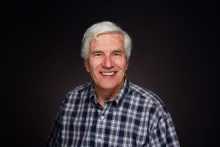
Steve Shafer was born and raised in Seattle. He graduated from Queen Anne High School in 1959 and later graduated from Ambassador College, Big Sandy, Texas in 1967, receiving a degree in Theology. He has been an ordained Elder of the Church of God for 34 years and has pastored congregations in Michigan and Washington State. He and his wife Evelyn have been married for over 48 years and have three children and ten grandchildren.
