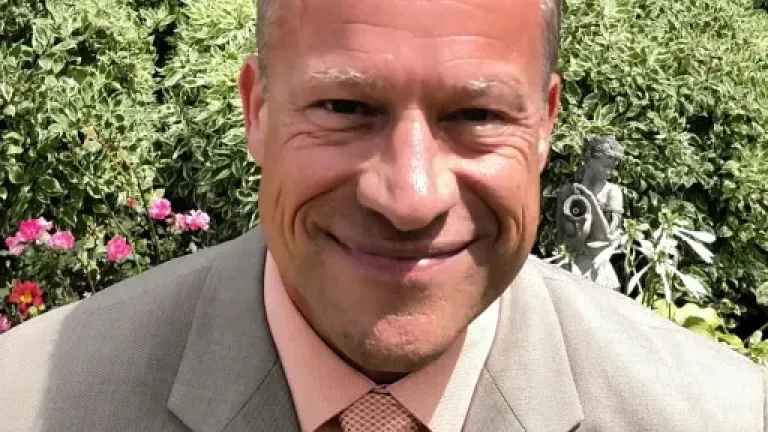

Mark Welch
This transcript was generated by AI and may contain errors. It is provided to assist those who may not be able to listen to the message.
Well, brethren, it is without dispute that our camp program is one of the most successful things that we do in the United Church of God. I think most people would agree with that.
Those who are a part of the camp program and have seen the fruits and the results of it and seen the changes that it has made in some of our young people's lives, all of them to some degree, I'm sure, but some more than others, it has been a very successful program in the United Church of God. We've been doing this for many years now since United started. That was one of the first programs that we got up and running.
That, along with the Feast of Tabernacles, and of course we've kept the Feast of Tabernacles certainly every year and intend to keep doing that. And we also intend to continue to have successful camps. And we have had some very successful camps so far this year. As I mentioned, our pre-team camp in Colorado went very well and the kids really loved it. They had a great time, really enjoyed being around each other. And we also had compass checks, which a compass, of course, shows you which way to go. It shows you the direction you should be headed.
So they're spiritual messages that give our children insight and foresight and help them see the way that they should be living their lives and the direction they should be going. It is important to start early instructing our children. So we start with pre-team camps. I believe they are very valuable camps.
And the kids do really have a lot of fun. And also we have Bible games every evening around the campfire. Although this year we had no campfire because we had wildfires instead. But thankfully not right where we were at. We weren't able to start any fires, though, because of the dry conditions in Colorado. However, I think it's rained like five days in a row in parts of Colorado anyway. It seems like I heard that today. Is that true? I think that's what I understood.
And hopefully we'll get a little bit of rain here this weekend. It was raining a little bit on the way here. But it was really a wonderful camp. And the kids and the staff and everyone came together. And it was really enjoyable for everyone. But also it was godly oriented, which is most important because these are church camps. We do want to point people to God and to Jesus Christ. We want to point our children to God the Father and Jesus Christ.
I'm sure we'll have a very successful summer with camps, many other camps going on around us. Camp Catubik, I understand, went very well. That was a camp that we have in Ohio. We had a lot of campers there, a lot of staff. Pinecrest, again, went very well. And we were up some over last year as far as attendance.
We were up a little bit in Colorado from last year. Not much, but a little bit, so that's always good. And undoubtedly we'll have a very successful winter camp as well. We have one camp in Wisconsin. I think it's still in Wisconsin. I believe it is, yeah.
I think it's Wisconsin. It's always been in Wisconsin. So we might ask ourselves, why is camp so successful? Are there any principles that we use at camp that could actually make our local church congregations more effective and more successful? And are there principles that we could use that would make the United Church of God stronger as a whole? So what can we as church members learn from camp? You know, I've had camp on my mind for the last couple of weeks, so I guess it's natural that I might tie in some of the lessons at camp to how we can use it in ways here in our local congregation and throughout the Church of God.
What camp principles may we apply to make our local congregations healthier and stronger? Now, you may think camp is just for kids, but camp isn't just for kids. In fact, there's a lot of adults who attend camp who are staff members. But camp is for all of us, in a sense, at least the principles that we can use at camp are for all of us.
So I'd like to share with you seven camp principles that will also apply for church members. So if you want a title, I guess you can call this Camp Principles for Church Members. Camp Principles for Church Members. And there are many other principles that we could talk about, but I wanted to focus on seven principles that we can use at camp and also use in the Church of God. And the first one is focus on the whole team, not the self or just part of the team. Don't focus on the self or part of the team, but focus on the entire team.
That's one very important lesson that we use at camp. We try to get that across to all of our young people, our teenagers and our staff, that we're all in this together. It is a whole team concept, and everyone needs to pull their weight and do their part. So we shouldn't be focusing just on the self or a part of the team, but on the entire team. And I think we can see how that relates to the Church as a whole. Focus on the entire team, not the self or just part of the team. So at camp we stress working together as a dorm or a team.
We break them down into smaller groups of dorms. They're each a team, which makes up a greater team, the whole. Now, we have head counselors, we have assistant counselors who answer to the camp directors. They work together to solve any problems or issues in the various dorms. And sometimes problems will arise whenever you have 10 to 15 teenagers living together for a week in the case of the teens or in the case of the pre-teens, four days, that seems to be long enough for the younger group.
But there will be certain problems and issues that arise. So the counselors and assistant counselors work along with the camp director to resolve any of these issues that come up. The overall camp director, which is Steve Neussman in this case, I am actually the overall coordinator of the pre-teen camps, but Mr. Neussman is the overall camp director of the entire camp program. And we all work together. In fact, we send a lot of emails. I don't really like sitting at my computer anymore, and I have to, but it seems like I have to more than I'd like, because there are a lot of details that need to be taken care of when you run a successful program.
So we have an overall camp director, and then we have camp directors under the overall director. We have the pre-teen camps that also work together. I send emails out to all the pre-teen camp directors, and we share information and things that we're doing at the various camps to make it more effective. Also, we begin really early. Once we have camp, it seems like we start planning for the next camp. It's kind of like the Feast of Tabernacles. Once we finish one Feast of Tabernacles, we start making plans for the next.
We actually have a meeting at the home office in November for all the camp directors. I went for the first time last. You know, we don't do it for all the pre-teen camp directors, but since I'm the overall coordinator of the pre-teen camps, I went out last November, along with all the team camp directors and the overall camp director, Mr. Neusman, and we had some fine meetings that lasted, I think, three or four days.
So we do spend quite a bit of time and effort and money actually planning for our camp program. It is important that we do that in order to have good results. We talk about Christian living classes. We talk about themes that we're going to have. We talk about various messages that we want to get across to our teens and our pre-teens. For the teen camps, an overall theme is chosen for every teen camp.
This year, it was calling, honor, and faith. And all of the messages were geared around that overall message. We talked about the calling of the children. In fact, I gave the sermon on the Sabbath and talked about God's calling and also God's plan of salvation and the millennial reign of Christ and how that all ties in together. And then the rest of the camp supported that overall theme of calling, honor, and faith.
If we will respond to God's calling with honor and with faith, we will have a very successful church. We'll have a very successful group of first-groups. As far as the pre-teen camps, we don't have just one theme that we dictate. The pre-teen camps are a little behind the curve. We've always put more attention on the teen camps. It seems like we're starting to put more attention now on the pre-teen camps. We did have a theme that we came up with. Actually, I decided on the theme for Colorado. It was, Friends Forever, God's Way.
I thought that would be a good theme for our pre-teens, because they really love getting together. They can't wait to see each other. They haven't seen each other for a year, in many cases, so they're really happy to see each other. I focused on Friends Forever, God's Way, because that's the only way that we will be friends forever, is if we do it God's Way. Because if we don't do it God's Way, we're not going to live forever.
We talked about the importance of being friends forever and doing it God's Way. That seemed to go quite well. Again, all of the messages were geared, the Christian Living messages, the compass checks were geared around that theme. We have a counseling staff, and we also have an activity staff that also covers various activities like volleyball, ropes course, we have archery, canoeing, arts and crafts, and there's a bunch of different activities at each of the camps, and we have staff that teach those particular venues.
Of course, the campers get the most out of it when the instructors are prepared. We have instructors that have put a lot of time into it. They've gotten outside training in some cases. I know I went to a ropes course training class about 15 years ago, and I've been doing the ropes course at Pinecrest for the last 15 years, and I checked out a number of different ropes courses in preparation for instructing those particular classes.
So we have a prepared team that shows up. We don't just show up not knowing what we're going to be doing, but we organize it, we spend time thinking about it, discussing it, preparing for it. And that's one of the reasons why camp is so successful. We focus on the entire team, everyone doing their part. And the Church of God is the most important team of all, isn't it? I mean, when you stop and think about it, the Church of God is far more important than some dorm, either teen or pre-teen. The Church of God is the most important team of all.
Jesus Christ is the head of the Church. He's the head of the camp, so to speak, the overall camp director. He heads this camp. By the way, I think it may be significant that the Apostle Paul was a tentmaker. He made tents. He did a lot of camping, probably. I'm just kidding. But Christ is the head of the Church under the Father's direction. The Father has made him head of the Church. And so we look to Jesus Christ. He is the chief cornerstone.
Let's go to Ephesians 4. And we've all read these verses, but let's think about this in the context of the overall team or the overall Church. Christ is very organized. He's not the author of confusion. The Church is very, very organized. And he himself gave some to be apostles, some prophets, some evangelists, and some pastors and teachers. So throughout history, we've seen apostles. We've seen prophets. The Bible is basically written by a number of apostles and prophets and evangelists and pastors and teachers. And today we have some of these offices that are continuing to be fulfilled in the Church. It doesn't mean that there has to be all of these offices at every particular juncture in the history of God's Church.
But there will always be organization. There will always be those who are in authority, so to speak, and who are organized doing the work of God. Because look at verse 12 here. It says, For the equipping of the saints, God is organized for the equipping of the saints, to equip the saints for the work of ministry, for the edifying or the building up of the body of Christ. Till we all come to the unity of the faith and of the knowledge of the Son of God, to a perfect man, to the measure of the stature of the fullness of Christ.
So the goal is to become unified. The goal is to have unity and to have faith and to become without spot or wrinkle. That's what Ephesians chapter 5 talks about, a church without spot or wrinkle or any such thing. So this is our goal. This is why the church is organized, that we might please God in the way we live our lives and the way we conduct ourselves, that we no longer be children tossed to and fro and carried about with every wind of doctrine by the trickery of man and the cunning craftiness of deceitful plotting.
Because Satan is a roaring lion, he is seeking to devour God's church. And there have been false apostles and there have been false teachers and false prophets throughout history as well. We have to be on guard for those who teach falsely and try to deceive the church of God. Verse 15, but speaking the truth in love, they may grow up in all things into Him who is the Head, Christ. Christ is the Head of the church. We acknowledge Christ as the Head of the church. Denny Luker is not the Head of the church.
Jesus Christ is the Head of the church. Dennis Luker is a President of the United Church of God and he will be replaced one day, probably not too far in the future. We've had a number of Presidents in the United Church of God, men who serve for a while. They're not expected to serve forever. They're not Christ. Christ serves forever as the Head of the church, but men will serve for a time.
And in the absence of God making it very clear who the Head of the church is from a human perspective, that's why United is organized the way it is. And I don't have time to go through the Constitution and bylaws, but if you want to take some time to study the Constitution and bylaws of the United Church of God, the reason it's designed as it is is because we acknowledge that God hasn't called one person at this time humanly to head God's church.
There's no evidence of that. Some people claim to be the Head of the church. Some people claim to be prophets. They claim to be apostles. But apparently, at least from my perspective, they are self-appointed. You know, that's a dangerous thing to appoint yourself as an apostle, to appoint yourself as a minister or an evangelist or a prophet. But we all know that's happened, right? Because there's conflict out there. Some people say they're apostles.
Others claim to be apostles. The one true apostle, you know, the one prophet that speaks for God these days. You know, that's the climate that we have in the Church of God as a whole. I'm looking at the different factions. Certain ones claiming to be this or claiming to be that. It's by their fruits that we've come to know these things. And in the absence of clear fruits and God's voice, that's why the United Church of God is organized as it is.
To me, we have humble beginnings because we realize that from the very beginning, that God wasn't calling me to be the Head of the church. He wasn't calling any of the ministers to be the Head of the church. Humanly, there was no evidence that one person was being used at this time. When Christ was here on the earth, He appointed twelve apostles. And you can't... There's no way that you can prove that there was a chief apostle that was to continue on and on and on. I mean, not from the Bible, you can't. Clearly, there were a number of men who served in different ways and at different times. James and Peter and Paul.
They all served in various ways. So we looked at the Bible for the way that the United Church of God was structured. And I have confidence that it was God's will. I personally have confidence it was God's will that the United Church of God began as it did.
And so we humbled ourselves and realized that there wasn't just one man who was humanly the head of the church. But we all come together striving to obey God by the power of His Spirit. It's by the Holy Spirit that we are led these days. We strive to be led. We don't always perhaps yield to the Spirit, all of us, in the way that we should. So we've had conflict.
We've had divisions in the church because of that. And that's going to happen as long as we have human leadership until Christ returns and really straightens everything out and shows us exactly the way to go. This is normal. That's the way it's going to be. So what's going on in the church in some ways shouldn't surprise us all that much. It's prophesied in the Bible.
It's in the Bible. But God has appointed some to serve in various capacities or offices. Now in Romans 12, let's go there. Romans 12. Romans 12, verse 3, For I say, Through the grace given to me, to everyone who is among you, not to think of himself more highly than he ought to think, when someone thinks he's an apostle and tries to prove it, then perhaps he's thinking a little bit too highly of himself.
But to think soberly as God has dealt to each one a measure of faith. God has given each one a measure of faith. He hasn't given all faith to one person these days and called him an apostle.
Verse 4, For as we have many members in one body, that all the members do not have the same function. So we, being many, are one body in Christ and individually members of one another. Again, it's a large team. We're all on the same team. We're in the same dorm, so to speak. We're one huge dorm from an analogy perspective. And we need to work together and realize that we all have a function to play within the body of Christ.
Verse 6, Having then gifts differing according to the grace that is given to us, let us use them. If prophecy or inspired preaching is generally the way this is translated, it's talking about inspired preaching. In some cases, God does use prophets where He shows them in a vision the truth and He shows the future. But we don't see a lot of that happening today. We see some false prophets who have claimed that the Great Tribulation was supposed to start in 2008, which means Christ should have returned by now, but that hasn't happened.
We see some false prophets, but we don't see a lot of true prophets at this point. Perhaps God will raise what we know the two witnesses are going to prophesy. They will be true witnesses of God, sent by God Himself, and their fruits will be evident at that time. We will know who they are if we have eyes to see and ears to hear. So we're to use these gifts that God gives us.
If prophecy let us prophesy in proportion to our faith or ministry, let us use it in our ministering. He who teaches in teaching, He who exhorts in exhortation, He who gives with liberality. God allows some of us to be able to give more because He's blessed us more.
He's given us more things. We've been richly blessed physically, so we are to give with liberality. Even those who haven't been blessed so much, we're still to be generous givers. He who leads with diligence, He who shows mercy with cheerfulness. Again, we should support one another, and we should strive to know our spiritual gifts and to utilize those gifts for the benefit of the Church. Let love be without hypocrisy. Love is what binds us together.
And love is to be shown without hypocrisy. It seems that we will always be evident as long as we have human beings. So we have to be on guard for hypocrisy. Saying one thing, doing another. God hates hypocrisy. Christ hates hypocrisy.
Christ railed at those who were hypocrites. The Pharisees, the Sadducees, who lorded over the people. That isn't how we're supposed to live. That's not how we're supposed to live our lives. That's not how we're supposed to be in God's Church. We're supposed to be true servants of God, and we should deal honestly with people, not be hypocritical.
And when we're wrong, we should be humble enough to admit that we're wrong and seek repentance from God. That's the kind of ministry that we need to have in God's Church today.
Not a perfect ministry. I don't think you're going to find a perfect ministry. Not as long as we still have this flesh. We won't be perfect, but we should strive to be humble and repentant.
And when we're shown that we're wrong, then we need to admit that we're wrong and go on from there. You know, I certainly don't claim to be infallible. I'm not the pope. Never have been. Don't want to be.
We all have our problems. We all have our shortcomings. We all have our mistakes.
So let love be without hypocrisy and abhor what is evil. Cling to what is good. That's a part of the team concept. Appore what is evil as an overall team. Cling to what is good. Be kindly affectionate to one another with brotherly love in honor, giving preference to one another.
We should respect each other and give preference to one another, not lagging in diligence, fervent in spirit, serving the Lord. Now, you can see there's a lot of camp concepts here.
When you stop and think about it, fervent in spirit. These kids are fervent. They come to camp. They're enthusiastic. They throw themselves wholeheartedly into camp.
So we as God's church should also be fervent members. We should be happy campers, so to speak. We should be zealous campers. That's another point that we'll get to later on.
All of these points that we'll be talking about, we can see as we read the scriptures, that they do apply. Fervent, zealous campers, rejoicing in hope, patient in tribulation, continuing steadfastly in prayer. We encourage the children to pray at camp, even though there's not a lot of privacy. We encourage them to pray, and we also obviously pray ourselves over every meal. We pray at various times throughout camp. Distributing to the needs of the saints, given to hospitality, bless those who persecute you and bless and do not curse. Rejoice with those who rejoice and weep with those who weep. See, that's another concept that we encourage the children to understand, that when someone's hurting, then we all hurt. If someone has a busted up ankle, then everyone feels the pain to some degree, because that person is not going to be able to continue in all the activities. So they try to encourage those who have... We had one young teenager who had a sprained ankle, and he was being cartered around on a golf cart part of the camp. He couldn't get involved in everything, because he hurt his ankle. It wasn't a bad sprain. In fact, he was dancing at the end. We had a dance the last night before camp was over, and he was healed sufficiently to be out there on the floor dancing.
So that was good. But, you know, a lot of these principles do apply. Rejoicing with those who rejoice when we announce the winner of the Aussie Engelbart Award. Everyone clapped and encouraged and hooted and hollered, and they were grateful for those who were given that particular honor, you might say. I forgot Danielle's name. Danielle was... Danielle somebody. I'd have to look it up.
Actually, I've got it right here. I'm highly organized.
I happen to have it right here. Danielle, let me look up her name.
Danielle Caldwell was the female recipient of the Aussie Engelbart Award. Aussie Engelbart was a very enthusiastic minister who died some years ago. He was at camp at Pinecrest while he was living.
He was at camp and was a very positive example, a very enthusiastic example.
So Danielle Caldwell was the recipient of the Aussie Engelbart Award for the girls, and Josh Halk was the representative from the boys. But everyone cheered and everyone was happy for them. That's the way it should be. Now, Satan wants us to be jealous, though, doesn't he?
Satan wants us to be jealous of one another, but that isn't God's way. You know, God's way is to rejoice with those who rejoice when someone's hurting, though, to mourn with them. Verse 16, Be of the same mind toward one another, and do not set your mind on high things, but associate with the humble. Do not be wise in your own opinion.
Repay no one evil for evil. Have regard for good things in the sight of all men.
And if it is possible, as much as it depends on you, live peaceably with all men.
We want all of our campers to live peaceably. We don't want any fistfights breaking out.
And thankfully, we didn't have any fistfights that I'm aware of.
But, you know, the potential there when you have teenagers together or anyone together for seven days, 24-7, the potential for a fight to break out, carnal human nature to raise its ugly head, it's always a possibility. But obviously, we teach the young people to live peaceably with one another. Verse 19, Beloved, do not avenge yourselves, but rather give place to wrath, for it is written, vengeance is mine. I will repay. I will repaste as the Lord.
So again, all of these principles can apply. How we live our lives, the example that we said, is important. So we should be humble in our approach. We should learn to serve as Christ served. Verse 21 says, do not be overcome by evil, but overcome evil with good. So we strive to set a positive example, to accentuate the positive, to overcome evil with good.
In 1 Peter chapter 2, verse 4, 1 Peter chapter 2, verse 4, 1 Peter chapter 2, verse 4, Peter says, Coming to him to Christ as to a living stone, rejected indeed by men, but chosen by God and precious. Christ was rejected by men, but he was chosen by God, and he was precious, you also as living stones. So obviously, he's using the analogy that Christ is the chief cornerstone, but we are all living stones. We're all part of the team. Christ is the head of the church. Christ is the camp director, but we're all a part of the team. You as living stones are being built up a spiritual house, a holy priesthood, to offer up spiritual sacrifices acceptable to God through Jesus Christ. Therefore, it is also contained in the scriptures, Behold, I lay in Zion a chief cornerstone, elect and precious, and he who believes on him will by no means be put to shame. So we should all place our faith and trust in Christ.
Then we will never be put to shame if we look to Christ as the head of the church. Therefore, to you who believe he is precious, but to those who are disobedient, the stone which the builders rejected has become the chief cornerstone. Christ again is the chief cornerstone, the head of the church, a stone of stumbling, and a rock of offense. No, he was a stone of stumbling for the Jews. The Jews rejected Christ. The children of God rejected Christ as the Son of God, and they crucified him. And of course, all mankind has entered into that. We're all guilty of the blood of Christ. They stumble being disobedient to the word to which they also were appointed.
But you are a chosen generation. You are a chosen generation. All of us here, collectively together, make up a chosen generation with all that God has called throughout the ages who have received the Spirit of God. You are a chosen generation. You are a royal priesthood, a holy nation.
You are his own special people that you may proclaim the praises of him who called you out of darkness into his marvelous light. That's what God has done. He's called us out of darkness, and he's given us his marvelous light, Christ living in us. Christ is the light of the world, who once were not a people, but you are now the people of God. This is a take on Hosea, the book of Hosea. Once you were not a people, but you are now the people of God, who had not obtained mercy, but now have obtained mercy. We're all sinners, so there came a time when we were guilty of the Body and Blood of Christ. And the wages of sin is death, and that is what we deserve. As human beings, we deserve death, and not just the first death, but we deserve the second death. You know, we don't deserve to live forever. That's a gift that God gives us by grace, because we have accepted Christ as our Savior, and we are repentant people, so our sins are covered in the Blood of Christ. We have obtained mercy. We've gone before the mercy seat, and we've obtained mercy. There's been an atonement for us.
Christ is our atonement, so we are now being saved through Christ who died for us. But we are a chosen generation. We're a royal priesthood. We're a holy nation. We are a team called out by God.
And remember, it's not about you individually, but it is about the team. It's about the team. It's a team concept that we read about in the scriptures. It's not about you, and that's one thing that we stress at camp. It's not about the individual at camp. It is about the team.
It's about everyone doing their part and not being selfishly motivated and selfishly oriented. If all of us looked at the team, we wouldn't have so many divisions among the team, would we?
We wouldn't have so many splits in the body of Christ if we all looked at the team concept.
Instead, we look at ourselves and we look at factions. Part of the team. Let's follow part of the team. Let's not say together as the whole team. Isn't that an important concept to grasp?
Rather than divide off of the whole team, we should learn to work together as the team.
That's a very, very important concept that we try to get across to the camp. We don't have divisions at camp. We don't allow it. We don't have it. We don't have one group that takes off and says, we're not going to follow the camp director. We're going to do our own thing. We're not going to archery class. We're going to ropes course. It doesn't work. That doesn't happen at camp. We don't have teenagers rising up and saying, I like Mr. Welch better than Mr. Smith.
I'm going to go ahead and follow him. He's going to be the new camp director.
Now, we don't have people buying for position. That doesn't happen at camp. That's never happened.
I won't say that. I think back in the old worldwide days, there was some conflict, even at camp.
As I remember correctly, there was some conflict that developed. That was a long camp. It went for a month or a couple of months at a time. I forget, maybe it's because we don't go very long, so we don't have as many problems. We can stick together for a week.
If it was the whole summer, who knows what might happen? Thankfully, that's not what we see. We had a very peaceful camp. It was extremely peaceful. We had everybody working together.
It's not about you. It's not about the individual. It's not about a part of the group. It's about the whole team. In Proverbs 18, verse 1, it talks about how a man can isolate himself. Proverbs 18, these are pithy sayings. 18, verse 1, a man who isolates himself seeks his own desire. And isn't that what happens when factions develop? Groups isolate themselves. They start petitioning and trying to get their way rather than praying about it, leaving it up to God, and following those who have been given authority. There are peaceful ways to work out differences. There are peaceful ways to do things, but not everyone takes the peaceful course.
A man who isolates himself seeks his own desire. He rages against all wise judgment or sound wisdom. So a man who isolates himself seeks his own desire, his own selfish desires, and does not have sound wisdom. There is safety in a multitude of counsel, and that's how the United Church of God was also formed. We would have a number of people on the Council, and that hopefully things would work better. I think things have worked in the United Church of God. It's been rocky and rough at times, but eventually it works itself out. The more we're willing to humble ourselves and look to Christ as the head of the Church, then the better things work out.
So let's not isolate ourselves. Let's not seek our own desires. Otherwise, we're going to lack sound wisdom. And that's what happens when these splits occur. There isn't sound wisdom.
I mean, they really don't make sense. I mean, when you think about it, a split or a division doesn't make godly sense. You know, a house divided against itself cannot stand. It goes against all godly wisdom to allow yourself to divide the body of Christ. I mean, it really does. It just goes against all sound concepts. We destroy ourselves by doing this, and God allows it to happen, but we're all responsible for our own choices and for our own decisions.
And I think we have to have a larger concept when we think about these issues that come up within our Church. So the first point... See, I'm not going to get through all these points today.
Focus on the whole team, not the self. We're just part of the team, but focus on the entire team.
Again, if camp... if we allowed these factions to develop at camp, we'd have horrible camps.
We'd have awful experiences. I wouldn't want to go to camp.
All right, let's go on to the second point. I think we can get through at least two points.
Realize that each person has a unique and special contribution to make for the overall good of the team. Now, we've already talked about that to some degree, but there are other verses that we can go to, and we can make a special point here. Realize that each person has a unique and special contribution to make for the overall good of the team. See, again, when we understand this concept, we're less likely to divide and to split. If everyone has a unique and special contribution, if we all respect each other, then we're not likely going to want to leave each other, are we? It's when we begin to doubt whether someone has a legitimate contribution.
And then we start choosing up teams. Instead of having one team, we start choosing teams. Who am I going to follow? I'm going to follow this person who stands for this or this person who stands for that. It gets real confusing, and that's what happened in a recent split not all that long ago. It's happened in all the splits, to one degree or another. I mean, there's only one split to me that wasn't all that confusing. That was the one that happened in in 1995, because it was over doctrine. I mean, we didn't have any choice but to move on, to go forward, because otherwise we'd all be keeping Sunday right now.
No, I mean, most of us anyway. I suppose there might be a few Sabbath clingers still in our formal affiliation. Somehow, I don't know how they do it, but anyway. For the most part, you know, we would all be down the tube, down the proverbial tube spiritually, if we had not stood up and obeyed God rather than man. But most of the splits aren't over doctrine.
And you know, someone once mentioned that, well, some people think eventually, eventually, the United Church of God is going down the tubes, you know, eventually. But are you going to make a move on what might happen down the road someday? Is that godly wisdom?
I mean, we would have split up so many factions 50 years ago if everyone looked at it that way. I mean, it's, you know, that's not the proper concept to have in regard to God's Church.
You know, divisions should only be over doctrine.
Not over leadership, because Christ is ahead of the Church.
And as long as the doctrine is being taught, then, you know, we need to stay together and continue to obey God. So again, realize that each person has a unique and special contribution to make for the overall good of the team. Everyone contributes to the team, so you don't want to cut them off. You don't want to get rid of them, because they have an overall contribution, unless they are indeed not truly a part of the Church. You know, in that case, the Bible talks about disassho—or dis—even disfellowshipping some that prove themselves, you know, that way. Wicked people that are not really there for the overall good. But that's a very rare case when that happens, and that should be done on an individual basis, too, not as a large group.
We accept just about anyone as campers. You know, almost anybody that applies to camp is accepted, unless they're known troublemakers. If they're known divisive people, then we won't accept them.
I mean, if we know that all they're going to do is cause grief and strife and dissension, then we won't accept them to camp. But most teenagers aren't quite that far along.
You know, they're not—most of them we accept. We allow them to come to camp, and we work with them.
And, you know, even this year, at the beginning of camp, there were a few teenagers that were clearly not on—they were not in the zone. There were certain things about that was evident right off the bat. But those young people with some prodding and some help, they did change, and they were positive—they gave positive contributions at camp. We didn't have to send anyone home. You know, everyone stayed, and everyone improved, and it was a good situation at camp. Each member is important for his own contribution to the team.
In 1 Corinthians 12—and this will probably be the last place we'll go today—1 Corinthians 12, this is the chapter that talks about the different contributions that we all have to give as part of God's church. 1 Corinthians 12.
Verse 1, Now concerning spiritual gifts, brethren, I do not want you to be ignorant. You know that you were Gentiles, carried away to these dumb idols, however you were led.
Therefore I make known to you that no one speaking by the Spirit of God caused Jesus accursed, and no one can say that Jesus is Lord except by the Holy Spirit. If the Holy Spirit is truly working in someone, then they will recognize Jesus as Lord. If the Holy Spirit is truly working in us, we will recognize that Christ is the head of the church, that Jesus Christ is Lord and Master. Now there are diversities of gifts, but the same Spirit, the same Holy Spirit. God the Father is Spirit. Jesus Christ is Spirit. We must worship God in Spirit and in truth. There are differences of ministries, but the same Lord. And there are diversities of activities. You know, at camp, we have different activities. I take care of the ropes course. Someone else does volleyball. Someone else does archery. Someone else does riflery. You know, we have a number of different activities, but it's all under the auspices of camp and the overall camp director who sets the schedule and decides which activities we're going to have. So there are diversities, verse 6, of activities, but it is the same God who works all in all.
But the manifestation of the Spirit is given to each one for the profit of all.
For to one is given the word of wisdom through the Spirit. To another, the word of knowledge through the same Spirit. Let's face it, we're all different. Some of us have better memories than others. Some of us remember things better. Some of us are better teachers. Some of us retain knowledge better than others. We can share it better with others. Some are better teachers than others. But it should all be by the same Spirit of God. Verse 9, to another faith. Some people have greater faith than others. Faith is a gift that God gives. He gives that gift of faith to some people in greater measure. Now those are the people that you need to follow. Those who have faith and trust God and look to Him. To another faith by the same Spirit. To another gift of healings by the same Spirit. And we have seen some miraculous healings in God's Church. I've seen some miraculous healings in the Church of God. I personally believe we'll see more miraculous healings in the Church and more miracles. We certainly will when the two witnesses are on the face of the earth. To another the working of miracles. To another prophecy, or in many cases inspired preaching. To another discerning of spirits. There is a demonic world. Some people do have gifts of being able to discern spirits and working with casting out demons and so forth.
To another different kinds of tongues. To another the interpretation of tongues. We know that the Bible does talk about speaking in tongues. We know that there is a proper manifestation of speaking in tongues and that there should be an interpretation of tongues. Perhaps we'll see more of that before Christ returns. But one and the same Spirit works all these things, distributing to each one individually as He wills. So it's God's Spirit working in individuals. Now when I look out here, I see a lot of individuals. You are all individuals and God gives you various gifts. And you are to learn what those gifts are and use those gifts for the edification of the body.
So if you haven't quite figured out what your gifts are, then put more time praying about it and asking God to help you use those gifts to edify the church, to build up the church.
Verse 12, For the body is one and has many members, but all the members of that one body being many are one body, so also is Christ. Christ is the head of the church and we are the body of Christ as a church. For by one Spirit we were all baptized into one body, whether Jews or Greeks, whether slaves or free. There's only one true church. And the true church is consisting of those who have the Spirit of God. And that's what makes you a member of the Church of God. If you have God's Spirit dwelling in you, if you're yielded to God and God's Spirit leads and guides you and is dwelling in you. Now there are others who are being led by the Spirit, but they're not yet baptized. They haven't received the Holy Spirit dwelling in them. They're not fully members of the Church of God, not in the fullest sense. You have to be baptized and receive the Spirit of God in order to truly be a member of the body of Christ. But God calls us and we make those choices and decisions as we go on and as we mature spiritually. Verse 14, for in fact, the body is not one member, but many. Again, I see many individuals out here, but I only see one body.
You know, I look out here and I see one body. This is the Church of God, or the Church of God in Tulsa, the congregation here, the United Church of God. You're one body, but you're also individuals.
For in fact, the body is not one member, but many. And if the foot should say, because I am not a hand, I am not of the body, is it therefore not of the body? And if the ears should say, because I am not an eye, I am not of the body, is it therefore not of the body? If the whole body were an eye, where would be the hearing? If the whole were hearing, where would be the smelling? Now, God has given us a nose to smell with. He's given us hands, and we use our hands for certain activities and things that we do. And God has given us eyes. We see with our eyes. We don't see with our backs. We don't have eyes in the back of our heads, either. We have a body that's put together in a certain way. Verse 18, but now God has set the members, each one of them, in the body just as He pleased. And if they were all one member, where would the body be? But now, indeed, there are many members, yet one body. There are many members out here, but one body, one congregation.
And the eye cannot say to the hand, I have no need of you, nor again the head to the foot.
You know, I can't look out here and say, I have no need of Carlos McGuire. I can't do that.
We have need of Carlos McGuire. We have need of Rhonda Lopez or Malcolm Lewis. You know, we have need of everyone who's in this room. And we should suffer. You know, people say, get on with your life. It's hard to get on with your life when people are missing, isn't it? I mean, I've had a hard time with this recent split. You know, I've had a hard time because people are missing. That I believe ought to be here. And I want them here. I don't want them gone. I want them back. Some may have to change some attitudes in order to truly be a part of the body in the way they need to be. I mean, God's the judge of that. You know, I'm sure I have to change things about me, too. I'm far from perfect. But I would want everyone who's left to come back. I mean, personally, I wish that they would all come back and they would want to come back.
And that we could all continue on together. I mean, that's how I look at these splits. I'm not glad they left. You know, I'm not glad any of them left. You know, I'd love to have them all come back. And I can go back years and years ago, not just this last recent split. I mean, I've been here 17 years. And a lot of you have been here that long and longer. And you can think back of others who are missing. That, you know, wouldn't it be wonderful if they all came back one Sabbath?
Every single one of them. If God brought them back here, you know, they'd have to repent, I'm sure, in many cases, because some aren't even keeping the Sabbath anymore.
Some are in various groups. They're scattered here and they're scattered there. And who knows what's gone on in their lives since they've left? But as far as I'm concerned, I would wish them all back. Now, again, I wouldn't want them all back, you know, if they weren't willing to be a part of the team, though. I mean, we all need to be a part of the team. And I think that's the attitude that God's looking for in the body of Christ. You know, I mean, it's pretty clear. It's not... this is not rocket science. You know, weak people of the earth can grasp these things if the Spirit of God dwells in them and works with them. So it's... again, it's clear it's in the Bible. It's not really that confusing in many ways.
In many ways, it's not that confusing. The Scripture tells us these things are going to happen.
And carnal nature is there, and we can all respond in carnal ways. And just because we're all here today doesn't mean we're more spiritual than those who left. We might have other issues. And we may have other problems that maybe manifest down the road sometime.
So just because we're here, we shouldn't feel superior.
So I think... I mean, I don't think I need to go on and read all of this. I mean, you can read the rest of the chapter, and you can go on into chapter 13, where it shows that love is the important factor here. I mean, if we have love for each other, we want everyone to be a part of God's true Church. We don't want anyone cast out. We don't want anyone to lose out on salvation. Or, you know, we should want everyone to work together, shouldn't we? I mean, that's a godly concept. So we didn't get too far today. Love is the key, though. It really is the key. That's how God's disciples are known, that they have love one for another. And love doesn't give up easily.
Love never fails. You know, love perseveres. Love carries on. You know, we do need to stir up the love of God in us, so that we can learn the lessons that God wants us to learn as God's people.
Because really, that is the key. If we have love one for another, those who truly have love will all end up back together again, eventually.
You know, I have faith because God is love, and God will bring us all back together. Now, exactly how He does that, exactly what that means, maybe in the resurrection He'll bring us all back together in love. You know, maybe we won't get back together physically. But those who love God and love His truth and His way of life, God will grant them repentance as time goes along if they are repentant people. And we'll all end up back together. So, I long for that time. You know, I long for the fulfillment of the Word of God, because we know that Christ is coming back.
And those who are His will hear His voice. They'll know when He's coming back. They'll hear His voice.
So, we've gotten through two out of seven principles today. I have a feeling I probably can go through the rest of them in the next sermon. I think these first two points were the most...
were probably the ones that... not that they're all important points, but I think I can get through the other points next time when we meet together. So, let's remember to focus on the team, not the self. Let's realize that each person has a unique and special contribution to make for the overall good of the team. And again, let's all be good and happy campers.

Mark graduated with a Bachelor of Arts degree, Theology major, from Ambassador College, Pasadena, CA in 1978. He married Barbara Lemke in October of 1978 and they have two grown children, Jaime and Matthew. Mark was ordained in 1985 and hired into the full-time ministry in 1989. Mark served as Operation Manager for Ministerial and Member Services from August 2018-December 2022. Mark is currently the pastor of Cincinnati East AM and PM, and Cincinnati North congregations. Mark is also the coordinator for United’s Deaf and Hard-of-Hearing Services and his wife, Barbara, assists him and is an interpreter for the Deaf.
