

John Elliott
This transcript was generated by AI and may contain errors. It is provided to assist those who may not be able to listen to the message.
I'm sure there are many things that we could talk about today.
I think most importantly, though, this is God's Sabbath. There are big issues that you and I need to be dealing with in our own personal and private lives.
Those issues, if you were here for the Bible study, revolve around who the head of your life is and who you seek direction from and the power to fulfill that life.
So today in the sermon, what I'd like to do is mention to you that the Church of God is always under assault. This is nothing new. It was under assault before it even got started. If you notice Jesus Christ beginning the church, persecuted every step of the way, killed off, the leadership dispersed for a time. It came back, began to grow, and immediately there were some issues within the members of the church. There were some issues that took place within the leaders of the church. And you can see within just 60 short years, the church was being mined by outsiders, false teachers, wheat, tares. Weets were being attacked by tares. There were wolves coming in among the sheep, etc., etc. And this is the legacy. This is the history. This is almost a purpose of the Church of God, if you want to say that. Because we are here to be tested. We're not here to live a real cushy life and just enjoy a bunch of blessings from God because we know the truth. We're here to knuckle down like Jesus Christ did and live the truth in a world that is hostile to truth. And so we are constantly challenged in this life. We will ultimately fulfill this as a church in an age where when the white horseman rides of revelation, before the tribulation begins, the church will be decimated. The power of the holy people will be completely shattered, be given into the hands of the beast. And you can read in Revelation that things don't go well. Satan himself comes after the church and Jesus has to take a part of that church into a place of safety away from Satan. Then the great tribulation begins and for three and a half years the church is in a place of safety, that part of the church, while Satan goes after those who keep his commandments. And so it's always a time where the prophets and the apostles are being persecuted and killed and Satan and those who he inspires goes after them.
That's the reality. And the other reality is that we win and we inherit all things and we become firstfruits reigning with Jesus Christ in a very, very privileged position of being called his bride, his helper, on thrones that reign with him for a thousand years. It's the ultimate position in being in the family of God, the divine family of God. And so the reward is high, but the stakes are also high. On a recent trip that we just completed in East and South Africa, church area after church area, region after region, has had another wave of individuals being stripped out, deceived, pulled away, and convinced that this is not God's church. That's nothing new, and I'm not castigating those people any more than maybe the apostle Paul did. What is right is right, and what's wrong is wrong. There are mindsets that are from below that we should not participate in, and yet the church is going to be whittled down more. In my years in the church, I've come to expect splits. I've come to expect miners who come in and mine and draw a following after a person. And the excuses, be they Lucifer's—not Lucifer, but the serpent, Satan's excuse to Eve, is it's not fair that you're kept away from that fruit that would help you be God, thinking, God-like. It's not fair. It's not fair. Or that people come in and say, oh well, there's a better form of governance, and this is of God. You've got to follow me. Or there's something wrong with the way your church teaches, or it's easier where I am. We don't have such strict rules. We're more righteous in some way, less legalistic, etc., etc. So there's this feeding that always goes on. Now that's good for us. That's actually good for us. It's a bad thing. It's a very, very bad thing. But God allows it. Christ said it would be there. Christ does not take false teachers away from the church. He does not take the... In fact, he said, do not pull up the tares. You might uproot the wheat also. It's part of the things that test us. It's like James said, count it all joy when you fall into these kinds of trials. Why? Are the trials joyful? No. Because, he says there, what you're seeing is an actual validation that you are strong, that you are persevering.
We have to have a very strong constitution to be in God's church. And it's been pretty cushy for the last century to be in a tolerant... a country that's tolerant of religion. But we read in the end time, it's not going to be that way. And one thing you need and I need nailed down in our lives is to know who our God is and what he expects of us. Who our God is and what he expects of us.
And Jesus's commission to the church was to have people who observe all things I have commanded them. No matter what, even when the false prophet, the great religious beast power, kills those who will not worship it. Just like Shadrach and Amishak would not bow down to the image in their day, you and I have to be prepared not to bow down to the image in our day. Not in our daily life, not in the future, when these events become reality. So you and I need to know our God and to know what he expects of us. Now those of us who have been in the church for a long time and have survived wave after wave after wave have a good idea of what God wants and what God teaches. You can recall back in the 1970s, there was wave after wave of individuals who left over certain things. Some were doctrinal, some were lack of fairness, some were somebody else was making a mistake, so I have to leave and start a church and have people follow me.
That was in the 1960s, the 1970s, the 1980s, in the 1990s, some people got in control of the administration of a corporate body and they decided to take off into evangelical Protestantism. Well, none of us bought that. We were not affected by any sort of a change. We know our God, we know what he wants of us.
But as we go forward, there's been, again, wave after wave of individuals who have promoted themselves sort of a personality thing, and you can find them all over the internet, you can find them throughout the churches of God who insist that they have to be the one that's honored and respected. In the United Church of God, we don't have any person that we look to. Rather, as Mr. Denny Luecker always focused us, the head of this church is Jesus Christ, as it says in the Bible. And Jesus Christ has told us in the model prayer, the daily prayer outline, to pray our Father in heaven, your will be done.
So we actually submit to God the Father through Jesus Christ. And they are the lives, they are the the Word, they are the life that we try to imitate, that we try to follow. Now, in the regions that we visited on this trip, all of the ordained individuals, country by country, left three years ago with a lot of the ministry. The majority of the members who went hurried to safety with them. Safety from the big, bad things that were going to happen that they were told about.
And it was sort of scaring sheep into their pen by allegations of what was coming. Something big was looming if they didn't leave. If they stayed in the United Church of God, they were going to be swept away by something that was that was horrible and awful. What was that dreadful, impending doom if they remained? Well, it was an easy trick. It wasn't even bright. It wasn't brilliant. It was an easy little trick that a three-year-old could have devised. It went like this. If a person was not realizing who the head of their life and their church was, God the Father in Jesus Christ, and didn't understand what God the Father in Jesus Christ expects us to do, which is obey everything they command, then they're looking to people.
They don't have a confidence in God as the head of the church. They're looking to humans. And so falsehood is what they followed. They followed lies. They believed the lie. They believed the falsehood. The little easy trick It's a stupid little concept that was floated out there because you and I know that our God is the Lord of the Sabbath. We know that in Isaiah 58, he said, this is my holy day. We know that in Exodus 20, he said, remember to keep the Sabbath day holy, not just keep the Sabbath day as most Sabbatarians teach.
God doesn't tell us to keep the Sabbath day. He tells us to keep the Sabbath holy. That's very different than going around under a little banner of, oh, I'm a Sabbath keeper. God told us to keep the Sabbath holy. That's a whole other dimension of just not working on the Sabbath or not doing weekday things on the Sabbath to move it up to the level of holy things on the Sabbath.
To move it up to the level of holiness is what God has told us. And so it should have been easy for anybody to know that a church that's founded on Jesus Christ as its chief cornerstone would not be going down this stupid notion of changing the Sabbath to Sunday. But like I said, many people focus on men, and the silly little notion was a leftover from 1995 when leaders of the last group that didn't affect us went back to Protestantism and we didn't go. And so now there was a rumor that circulated—actually not just a rumor, but a statement throughout this region that was said, United Church of God is going to Sunday.
I'll show you how preposterous that is. Sunday is not the first day of the week. Sunday never touches the Sabbath. Tonight when the sun sets, it won't be Sunday. Sunday is made up of three quarters of the first day of the week and one quarter of the second day of the week.
It's not a matter of even a shift here. It's a matter of a totally different foreign Babylonian concept that goes back through the Roman Empire of a midnight to midnight day that was established worshipping the sun. Let me tell you a little secret. As far as the research I've done, when the Catholic Church—and it has published, I've got some documents—it said, we changed the day of worship from Sabbath to Sunday. We admit we changed that. My research is that's not true. They did not change the Sabbath to Sunday. In their own religion, go back through the Holy Roman Empire, back to the day of Rome, back to the Church of Rome.
They never kept the Seventh-day Sabbath. They never changed anything. They continually kept the Sunday midnight to midnight day going all the way back to Nimrod.
Let's look then at these little clever twists that people use at times.
Sometimes people hear things and they tend to believe it, even though they're absurd, absolutely bogus. Like I said, Jesus Christ is the Lord of the Sabbath in the New Testament, and the apostles kept the Sabbath in the New Testament. But the United Church of God is going to Sunday, which is three-quarters first day of the week, one-quarter second day of the week. It's just ridiculous. One of their pastors afterward, after the split, admitted, United Church of God was never going to change doctrine. We knew that. That was here in the United States. But there's a new rumor going around Africa now because all the members that ran away are saying, well, but United didn't change to Sunday, did they? Well, duh. But the new rumor is United was going to change to Sunday, but they repented. Oh, well, now there's another grade school backup for your lie. But the damage is done, and people have moved on.
The question remains burned into some people's minds, and wherever we went, that kept coming up. We've heard. People are saying, we've heard, we've heard, we've heard. You know, when you take a piece of aluminum foil or even a piece of paper and you wrinkle it up, you say, oh, I've heard all the stuff, but then you spread it out, you can't get the wrinkles out, can you? It's never quite the way it was.
So the question remains, will United ever change doctrine? Well, as the chairman of the doctrine committee, I'll say, let's see. Let's look in the Bible. Let's take a look at scripture today, and let's see. So let's take a look at doctrine. Let's ask some questions like, what is doctrine?
By whom is doctrine given? What are the true doctrines? Can doctrine be changed? And if so, who can change it? I'm going to look at these and many other concepts today in a sermon. Doctrine. Will doctrine change? Will doctrine change? When we look at religion, most Christian and Jewish cultures say that their doctrines are based on the Bible. It's obviously false, but there's a reason why they say that. The Roman church never says that their doctrines are based on the Bible. They feel that their leader can establish whatever doctrine he wants because he's essentially a reincarnate or a current post-holder of the role of Jesus Christ. Well, he may be, but they've got the wrong Jesus. Their Jesus was born on December 25 and dates back to about, I don't know, 2500 BC in a place called Babel. And it's been worshipped down through Babylon through the ages and continues to be apart from any of the teachings of God. So that's obviously false. The problem is the churches that came out of her that don't look to that leader now say, well, we're stuck with this. So we've got to get all of the doctrines from the Roman church, all that philosophy out of here somehow. And so they one by one go in and try to find, well, can we get rid of all these commandments? Number one, maybe through grace.
How do we get to Sunday, which is not even the first day of the week, as I've said a couple of times, how do we get there from here? Well, we'll try to find that in there. And how do we kill one another? And how do we envy? And how do we commit adultery? And how can I get rid of my wife? And, you know, they'll use this book to try to weasel away to come back to those Roman teachings and justify them. But they are not based on this. Those are false. Around 10,000 new churches are formed in the United States each year, statistics say. Why is that? Well, it's part of the fracturing that goes on in Satan's world. It's the mindset of Satan. It's dividing, fracturing differences. There's no unity or oneness. And the doctrinal differences that people go through in their own Christian religions, and even the Jewish religion, tend to divide and separate and break apart. Plus, there's individuals who want to start up something themselves. But some new idea will come to mind, or some difference, or some societal change takes place. And people study, and they argue, and they wrangle. Some leave with a group that might agree with them. Some start a new group that has some special little idea. Some see opportunity in all of these things, and they will pick off weaker members. And so, here we go. Let's go to 2 Timothy 4, verses 3-4. Let's jump over all of this and go right to a principle that the Apostle Paul teaches us, the one who is most often charged with changing doctrine by the world. It's nothing new that people are said to be changing doctrine, but Peter says Paul's words were twisted, hard to understand and twisted. Paul wasn't changing anything. 2 Timothy 4, verse 3, says here, For the time will come when they will not endure sound doctrine. The term sound doctrine is different than just doctrine. The Greek word here would indicate healthy, helpful, life-giving. In other words, this is good doctrine from God. All of the things of God are for our good, that we can have life and have it more abundantly. So, people will not endure sound doctrine, but they will leave. This is talking about in the church. But according to their own desires.
Now, I said before that it's actually good for us in a way to have testing, or God wouldn't allow it.
Jesus Christ has determined that in His church, terrors will be allowed to be there, and even false teachers. Because we have desires. We have a nature. God wants to know, are we going to follow our self-centered nature, or are we going to humble ourselves and repent of that, and really follow and obey Him? Because they have itching ears, they will heap up for themselves teachers. And they will turn their ears away from the truth, and be turned aside to fables, fable doctrines, somebody else's doctrines. But He says, but you be watchful in all things, and endure afflictions. It's part of this. You're going to have afflictions from it. Do the work of an evangelist and fulfill your ministry, He tells Timothy. The Apostle Paul speaks of doctrine as a singular thing. In Romans 16, he speaks of something contrary to the doctrine. He establishes as the doctrine. There is a doctrine that is the doctrine. It's not just what somebody decides, or what somebody develops, or what somebody likes, but it's the doctrine. In corresponding to that, or corresponding to that, in 1 Corinthians 14, you don't have to turn there. Paul talks about people turning to their own doctrines or beliefs. In Ephesians 4, he mentions every wind of doctrine. In 1 Timothy 6, he talks about any other doctrine. In Hebrews 13, there are strange doctrines. And in 2 Peter 2, damnable heresies is what the Bible says.
Doctrines that are heresies that cause condemnation. So there's all kinds of stuff out there. The reason why you and I continue in the doctrines is because they are the doctrines. And they are sound, healthful doctrines. And they are the things that give life.
If we go back to Ephesians 4, we'll look in verse 11. You know, everybody talks about beliefs at some time. Even you, sometime this year, have talked about a doctrinal belief or some kind of a doctrine. Something to do with either the basic doctrines of faith, repentance, of baptism, the Holy Spirit, the resurrections or some of the other doctrines of the laws, the commandments, the Godhead, the resurrections to life. You've talked about doctrine. You've probably talked about it many times. But sometimes we don't see eye to eye or, as a person has called me, they say, I've seen something new here. I'm really thinking this is something new here. Okay, well, Bible is rich with things that we can mine and apply in our life.
How do we know what is true doctrines? Well, let's notice in Ephesians 4 and verse 11 that Jesus put something in His church. It should be evident to us if we look at the fruits of a person's life, not just the shiny exterior. If we look at the core, if we can see that with God's help. Ephesians 4 and verse 11, it says, He Himself, this is Christ, gave some to be apostles, prophets, evangelists, pastors, teachers. So we're not left without instruction, even as to what the doctrine, the doctrine is. Because as we see in verse 14, that we should no longer be children tossed to and fro, carried about with every wind of doctrine by the trickery of men in the cunning craftiness of deceitful plotting. See, Paul is writing this, and he's seeing this is happening within the church.
Trickery, winds of doctrine, craftiness, deceitful plot. That's part of being in the church.
That is part of the true church since Christ's time. So, what about doctrine? Are these doctrines valid? Are they set? Are they open for change and discussion? Let's examine this thing that we call doctrine. The term doctrine in the Old Testament, yes, doctrine is not a New Testament phenomenon, comes from the Hebrew word lekwa. It's something received through instruction. Can you remember some things in the Old Testament where people receive things from instruction? Well, we could start with Adam.
God walked with Adam and instructed Adam, and then with Eve. Then he instructed Cain and Abel.
And going down in time, he instructed and taught Noah. And he instructed and taught Abraham.
He instructed and taught the Israelites and Moses in codified law. And he taught David.
He came down through time throughout the Old Testament. God was a teacher. And God gave strong instructions all the way throughout the human history in Scripture. He established Torah. He established the Pentateuch, the law, the first five books of the Bible.
He inspired all the writings that take place in the Bible. So this term doctrine that we read in the Old Testament, like in Isaiah chapter 28 and verse 9, says, whom shall he, whom shall God teach He is a teacher of knowledge. And whom shall he make to understand doctrine?
We begin to see right here where doctrine comes from. It doesn't come from me. It sure doesn't come from the doctrine committee. It doesn't come from humans. It comes from God. Otherwise, it is some other doctrine, some other strange doctrine, something strange to God and the people of God. The term doctrine in the Greek is didache. We're used to the term doctrine, which is actually a Latin word. It comes from doctrina. But the original Greek word is didache, which is an act of teaching, either formally or informally. An act of teaching as one with authority. Now, can you think of a teacher in the New Testament who taught with authority?
Well, obviously, in John chapter 7 and verse 16, Jesus answered them and said, My doctrine is not mine, but his that sent me. Now we see what we might consider the source of doctrine to actually define for us the ultimate source of doctrine. It's God the Father.
My doctrine is not mine, but his that sent me. And Jesus taught, just like he taught on Mount Sinai, writing the Ten Commandments, he then sat on the Mount of Olives, gave the Sermon on the Mount, and he taught the disciples. He taught them law. David said, Oh, how love I your law. Those are doctrines of God. And he sat and he taught in Matthew chapter 5 and 6 and 7. He taught law and then he taught the applications of living that law with God's Holy Spirit.
So this is the source of doctrine. It begins with the Father. It comes through Jesus Christ into the Church. We can see right now that doctrine is nothing that you and I could ever have anything to do with. It's not like we get to choose or pick or adjust. We don't get to change it or say this doesn't apply anymore because of a societal change or something going on within cultures. These are the doctrines that the Father in heaven have established. And we get on our knees and pray, you know, Your will be done and forgive me my sins as I forgive those who sin against me. We are looking to fulfill His will. So the source of all doctrine that we have in the Bible is the Logos, the Son of God. And he was the teacher. He is the source.
The word, similar word, didaskalos, is instructor. Greek word didaskalos. He is an instructor, a master, a teacher. Didaskalos, 58 times in the King James Version, is translated master.
Master, 40 times teacher. It's very similar to the word didache, which is act of teaching, which is where we get our term doctrine. So didaskalos, or the teacher, not the act of teaching, but the one who does the teaching. Let's go to Matthew 22, 36 through 40. And here, we see this word used. We'll be very familiar with it instantly. Matthew 22, 36.
The very first word is teacher. Didaskalos, teacher. The one who is the source of the instruction, the one who is the source of the doctrine to humanity, the one sent by the Father.
Teacher, or doctrine teacher, we might even say. Which is the great commandment of the law? Wow! Now we begin to recognize the passage. What is the great commandment of the law? What are the chief doctrines here? Teacher of doctrine. And he says, Jesus said to him, you shall love the Lord with your God with all your heart, with all your soul, and with all your mind. This is the first and great commandment. Now, is there any question here about what he's saying? Is there any question here about who is saying it, the authority of it? We don't question this at all, do we? But teacher, source of doctrine, what are the great doctrines? He says with authority, this is number one. Love the Lord your God with all your heart, with all your soul, and with all your mind. This is the first and great commandment. He establishes that. And all the other commandments and laws associated with that come under that heading. And the second, verse 39, is like it. He says there is a second. He is the one establishing it. You shall love your neighbor as yourself. Now, we can look at the first four of the ten commandments, not like they're all of the law by any means, or all the doctrines by any means. But the first four take us up through keeping God's Sabbath. And that's part of the first great commandment. Five through ten deal with our neighbor. And that's the second great commandment. And all those laws apply. And none of them can be changed just because, well, society is unlawful, therefore I have to lie. Society is unlawful, therefore I have to steal, too. Society is unlawful, therefore I have to join in sort of the killing or the protection. We don't adjust doctrine because these are the principles of the law that God made. After Jesus ascended the term doctrine, Greek diddiskalia became teaching. And what is taught, it was used by the leaders for the formal doctrines and teachings of the church.
For instance, in 1 Timothy 4, verse 16, first we had doctrine, then we identified who the one who was the teacher of the doctrine. And now we have the teachings or the doctrines that he taught. These are three different Greek words. So diddiskalia teaching what is taught.
It says here in 1 Timothy 4, 16, take heed to yourself and to the doctrine. Take heed to yourself and to the doctrine, that which is taught. It's established. That's what is taught.
Continue in them, for in doing this you will save both yourself and those who hear you. So this is very life-giving doctrine. We are to take heed to that because, as we've already read, many will not. And there's always going to be the pull and the temptation for people to leave and water it down and go do something easier. To escape persecution, to run away. Even though Jesus said, if you deny me, I'll have to deny you. What they've done to me, they're going to do to you.
We have to obey this doctrine in all circumstances.
Not just when it's real convenient or real easy. God wouldn't want me to be inconvenienced or have any hardship. So he wants me to actually go against his teachings, his doctrine. That's a part of our human nature we can reason around.
But there are many examples, powerful examples, in Scripture of people who would not bow down and worship or would not have any variance with obeying that which God taught the doctrine.
Christ taught what was truth throughout the Scripture. When he went back to his Father's throne in heaven, the apostles wrote down his teaching. You could say they recorded the doctrines. They, in some cases, expounded or explained them in some of the application of them. The apostles did not establish doctrine, but they did formalize, if you want to say, the teachings of the church. Paul, for instance, in Hebrews 11, lists six basic doctrines. He calls them doctrines.
They essentially were, I don't want to say codified necessarily, but they were explained. They were explained, and the application of them is made throughout the New Testament.
But they didn't do anything but write them down.
They had lived with Jesus Christ. They had worked with him. They had been taught by him, and they wrote them down as they were inspired to do so.
Doctrine came only from God and Christ. It's explained through the apostles. It's explained through the prophets. It's explained through some of the writings of the Old Testament. That's very, very clear. But those who wrote them did not create them, alter them, adjust them, change them in any way. Let's go down to Ephesians 2, verse 19.
There's a whole book that focuses on the church of God.
Hebrews 2, verse 19, says, It says, The head, having been built on the foundation of the apostles and prophets, Jesus Christ himself being the chief cornerstone. Now we begin to see this thing as something really established. It's not flexible. It's not sort of a slap-up building. Do it yourself. It's something that we're invited to come into and be a living stone of, in whom the whole building, being fitted together, grows into a holy temple in the Lord. We conduct ourselves as holy individuals, just like the Sabbath were to participate in it in a holy manner, in a holy temple in the Lord, in whom you also are being built together for a dwelling place of God in the Spirit.
Christ is responsible to have a church that is a solid permanent structure. God never changes. He never changes. He said, I will never change one flick of doctrine.
And if he is the head of the church, well then, that's set. There will be no change by him, and no one else can change it. No one else can alter it. They can only rebel against it and leave.
So doctrine then has a basis of a church that is responsible to be true, that's founded on the apostles, prophets with Jesus Christ as the chief cornerstone. Otherwise, it's not that church. It's a different church. It's a different organization.
Doctrine then must come from Scripture, not because Scripture is where doctrine came from. Rather, it's recorded in Scripture. We can't use human reasoning and rationale to explain away what Christ has established.
We can't choose doctrine. We can't alter it. We can't develop it. We can't embellish it. Doctrine, again, was set by the head of the church. The head is the mind, the direction, the thinking. He is the head of the church.
Christ has called a few to discover the doctrines, though the doctrines have always been there. Jesus Christ has always been there.
In the last century, there was a man named Herbert W. Armstrong that God allowed to discover the doctrines. It was kind of an amazing discovery, a journey that he went on.
He did not establish doctrine. It's kind of like the Israelites once had gone astray from God, and then somebody found a copy of the law, and they got it out, and they read it aloud, and they rediscovered the law. They didn't write the law. They just found it and rediscovered it. Same thing with Mr. Armstrong. He was trying to disprove the Sabbath to his wife and ended up coming to understand that it's one of the core doctrines.
Other doctrines involve the festivals. He didn't understand the festivals. When you go out to a person on the street and try to tell them about the Sabbath or the Holy Days or various things, they're not going to understand. There's a statement in the Bible that says, a good understanding of those who do God's commandments. It took Mr. Armstrong seven years, I believe it was, before he understood why you keep the feasts. He understood what the feasts even mean. You just don't turn to a scripture and say, oh, the Feast of Pentecost means this.
The eighth day of the last great day means this. It's through doing. It's through coming to understand the plan of God and reading it. And then, oh, look, these things match up. They fit up to the plan of salvation for humanity.
In 1936, Mr. Armstrong wrote a statement of 16 fundamental beliefs. We might call them doctrines. 16. Ten years later, in 1948, he added four more. Which became 20 basic fundamental doctrines, we might say, that term or teachings. That term is more easily used, perhaps, than fundamental beliefs. Years later, the United Church of God used those 20 fundamental beliefs that he had established back in the 30s and 40s to formulate what we call the fundamental beliefs of the United Church of God. It's not that we base our beliefs on Herbert W. Armstrong. Remember, he just found them, came to understand them, and taught them, established them. Now, the 20 fundamental beliefs are not all the doctrines of the Church, but they're fundamental. In other words, they're basic. You might call them essential. They're essential doctrines.
We have published these. The dictionary meaning of the word fundamental is primary, primary, or basic. You might say essential as well. And in the table of contents, it lists them.
You can pick up one of these booklets. It's been around since the beginning of the United Church of God, of our organization. It's going on 20 years. I would encourage you to read them. You're probably familiar with the book, but if you're not, pick up a copy here in the lobby and notice that each fundamental belief is rather short, but it's buried in Scripture. It's based and it's absolutely rooted and grounded in this word. And there's no question about it. No question whatsoever. The United Church of God also has what we call a constitution and bylaws.
Article 2 of the Constitution, if you notice here, article 2.0, right after the introduction to the Constitution, we get right to the 20 fundamental beliefs of the Church.
Now, they're there. You might think, oh, why do we have religious stuff in our Constitution? Why do we have it first after acknowledging that God, the Father, and Jesus Christ are the head of the Church? Why do we go to fundamental beliefs? They are there because even in our corporate documents to the state of California, we state right up front all 20 of our fundamental beliefs and they are unchangeable. They are unchangeable. This is, you might say, a check and a balance that was intentionally placed in a document that cannot be altered without 75% of all the ministry in the Church agreeing to a single word of the Constitution being altered. It ain't going to happen in our lifetime, let me tell you.
This was put there intentionally, right up front, so we all know what is taught.
Now, it's very, very silly to say that a committee of the Council, a committee that serves the Council, that has no authority on its own, that makes no decisions on its own, it's just a Council committee could make a change to something that's in the Constitution that has to be approved by 75% of all the elders in the Church. So the Doctrine Committee doesn't even do doctrine. We don't come up with doctrine. Our whole purpose is actually to receive challenges to our doctrines and then to explain that those challenges are misnomers to the authors. We receive challenges to various things the Church teaches all the time, usually in the form of a paper. And so they formed a committee to deal with these. It's called the Doctrine Committee. We deal with prophecy challenges and doctrine challenges. And so what our committee does is go back in and we restudy on behalf of the question or the paper the challenge we restudy and then we explain why the Church has always taught what it teaches. And there's many, many scriptures that we base that upon. It's very enjoyable, actually, not necessarily to receive the challenges, but to study into God's Word. Because while you're in there, you're back into the Word of God and you see how solid and how stable doctrine actually is. It's been challenged all the way down through time, all the way throughout Israel, all the way during Noah's time doctrine was challenged. It was challenged throughout the New Testament. It's been challenged all the way down through today. It's going to be challenged right up to the end time. But it's stable. It's solid as a rock.
It's not going anywhere. And it's an enjoyable thing to go back and see how these doctrines really stand there like boulders in a creek.
The Doctrine Committee is just part of the Council of Elders. The Council of Elders can't decide anything. Because remember, out of 450 elders around the world, it takes 75% of them. I don't even know how many that would be. 112 would be... I don't know, it would be... anyway.
112 would be the only ones, maybe not agreeing. You'd have to have all the rest.
300 or, I don't know, whatever. A lot of people! It's not going to happen. These 12 guys, believe me, wouldn't let a flick of doctrine change.
Six of them are on the Doctrine Committee.
Believe me, we are, I will say this openly, more conservative with doctrine and more conservative with the commandments and teachings of God than most of those who have left us in the past, as you might guess, because people leave who disagree with doctrine. People leave who want an easier path. People leave who want self-promotion. People leave who don't want to follow doctrine. Therefore, the ones that remain following the doctrine are actually more conservative. I hope I explain that clearly. I'm not trying to put anybody down, but just to give a little bit of clarity. The Council just serves the Church in various ways.
Some believe that every man is an island. You have your own religion. You can stay at home. You can believe whatever you want. You can work out your own salvation, as it says in one case, misrepresented. 2 Peter 1, verse 20, says, No prophecy teaching, no doctrine of Scripture is of any private interpretation. It's not for us to sort of change it, alter it, interpret it for the day. Why are there so many ideas and groups out there? Because people believe that Scripture is a private interpretation. They can interpret it their own way.
But the original Bible text was inspired by God. It's always right. It's always truth. The challenge is that some of the translations, or all of the translations, were not done as carefully or accurately as they could have been. But that's the only issue. Remember, in 2 Timothy 4, there's sound doctrine, and that sound doctrine does exist. It's healthy for spiritual life. It's healthy for the kingdom of God. Let's go now to 2 Timothy 3, verse 16.
All Scripture is given by inspiration of God.
And that is where doctrine is contained, which is inspired by God. And it is profitable for doctrine, for reproof, for correction, for instruction in righteousness, that the man of God may be complete, thoroughly equipped for every good work. So we see that doctrine is absolutely vital. We can't live without it. It is there so that we may be complete and thoroughly equipped. It comes from inspiration. It is there to correct us, to reprove us, to exhort us, to encourage us to move forward. As we see here, this is a passage that Paul wrote. And Paul is often accused as being a doctrine changer. He got rid of the law. He says, I'm not under the law, which in fact is a total misnomer. He didn't say he's not under the law. He said he's not under the penalty for breaking the law. That's what he's referring to. He's not sentenced to the lake of fire in Romans 6. That's what he's saying. I'm not under sentenced to the lake of fire. You are not under sentenced to the lake of fire because within the chapter it's about repentance and baptism and righteousness and not being a slave to sin any longer, but serving God. And therefore, we are not in that condition, a repentance center, is not under sentenced to the lake of fire. Now, sometimes people think societal trends or conditions will change or alter doctrine. They don't. They do in the world. They do in other faiths. You can see things going on right now in the world. It shifts in people's sexual preferences and religion accommodating that and changing their man-devised doctrines, but not in God's church, not in the body of Christ.
Scholars don't believe that God wrote the Bible. They believe it was penned by people with their own ideas, philosophy of those who wrote it. And yet, we're told here by the Apostle Paul that all scripture is given by inspiration of God. Inspiration of God comes from a single word called theonustos, which means God-breathed or God-devised. God originated. All scripture is given by theonustos, theo meaning God. God-nustos meaning he breathed, he spoke it, he came from him, and it's profitable for doctrine. Paul here was not the source of doctrine, and he did not change doctrine. Another idea that will come from society, because they don't want to believe God's word. They want to toss it out. They'll say, well, four different people wrote the Pentateuch. Genesis, Exodus, Leviticus, Numbers, Deuteronomy 4, maybe five people wrote. One writer did this, and one writer uses that. To them, you see, it's the way they are. If you take some of the commentaries, especially the multi-volume sets, you often have atheists writing those. They are theologians by profession. That's what pays their bills, and they're very good with Greek, but the philosophy is that there is really not a God.
One teaches, for instance, that one author wrote Leviticus, had to be a priest. Deuteronomy had to be a different author. Another one had to be somebody else. Yet the Bible in Deuteronomy 31 and verse 9, and chapter 5, verse 46 states that Moses was the author.
Even Jesus himself said Moses was the author. So who are you going to believe? Well, we believe, as Paul did, that all Scripture is given by inspiration of God, and God knows.
John 17, 17, Jesus said, sanctify them by your truth. Your Logos is truth.
The Logos was Jesus Christ himself, and the Logos is the word that he had inspired and written down for us. And he himself is the living, the living Word. He lives in us. He can slice and dice us. He lives forever. He's there to help us. He can help us see our sins and where we are going against his doctrines. His Word is truth. If we go to an outside source, we have left the source of truth. And be careful trying to establish doctrine when it's not coming from God.
So we see that the God of the Old Testament and the God of the New Testament teaches the prophets and the apostles right. They may formalize, in a sense. They make sure it's established within the body of Christ. Biblical doctrine does not originate with men. It doesn't originate with ministers. It doesn't originate with the church. Thus, it cannot be changed. It will not be changed. There are those who leave and say they've changed, but they've simply rebelled. Any time somebody says a doctrine is changed, it's simply rebellion if it's not God's doctrine. In 2 Peter chapter 1 and verse 20, let's go and see a statement that he makes here. 2 Peter chapter 1 and verse 20. Somebody might argue, well, yeah, it's okay that he established the doctrine, but we have to interpret it. We have to apply it. We have to adjust it. We have to somehow, again, change it, water it down so it doesn't sting so much when we get our own way. But 2 Peter chapter 1 and verse 20 says, knowing this first, that no prophecy.
The word here from the Greek is prophetaea. The definition of this word is, a discourse emanating from divine inspiration and declaring the purposes of God, whether by reproving and admonishing or comforting or revealing things hidden. So this word, knowing this first, that no teaching, this is something coming from God, no teaching of Scripture is of any private interpretation. For this word, prophecy or teaching, the discourse emanating from divine inspiration, never came by the will of man, but holy men of God spoke as they were moved by the Holy Spirit.
Again, we, you, I, have nothing to do with doctrine. It comes from God. We have nothing to do with the things that were written down. Those were inspired teaching that came from God, who were moved by the Holy Spirit of God. Now, we know that, as it says in 2 Peter chapter 3, verses 15 and 16, that there is a tendency among humans to get in here and use, especially the words of Paul, and twist things hard to understand to their own destruction, as they also twist the rest of the Scriptures. You and I need to refrain from that. You and I need to be what you might call conservative in a sense of absolutely faithful to the law, to the doctrine, to what God spoke, what he has taught us, and not allow ourselves to be affected by those who do twist law, or those who take true doctrine, but then dismiss their own use or need to use it. I have no ministers who say, I know that it says that, but I don't have... that doesn't apply to me, or it doesn't apply to the ministry. It doesn't apply to whatever group I'm in. This does not apply.
That has been a challenge down through the years. I don't know of anybody still in the church that feels that way, but there have been plenty in the past.
We should not twist anything to our own destruction, whether it's Paul's writings, or as it says here in verse 16 of 2 Peter 3, the rest of the Scriptures.
So today, what we've covered is important. God, the Father, through Jesus Christ, established the divine teaching. Doctrine is divine teaching, as we've just read. It's not of humans. We can have nothing to do with it except disobeying and rebelling against it. That's our only input. Or we can obey it and be called part of this body, this temple, which Christ is the head, and we can let that doctrine flow from Him into us. We can grow by it. It's healthy. It's good. It's sound. It's nourishing. It's life-giving. The apostles explained and formalized Christ's teachings along with the prophets, the writers, the teachers in the Old Testament.
The United Church of God received the doctrines. We understand, not by divine revelation, necessarily, like has been done, but we rediscovered them. And through God's inspiration and through His Holy Spirit, you and I have rediscovered these and we live them. We cannot reject without being pushed outside of the church, without being cast out of the body of Christ. We cannot alter them in any way. They're not our doctrines. They're God's doctrines. Doctrine is permanent.
All that man can do is rebel against it. Let's notice in closing Matthew chapter 5 verses 17 through 20. Let's see what Jesus, the one who was the one who communicated the Father's doctrines to us. Let's see what he says about doctrine and the notion, any notion of doctrinal change.
Matthew chapter 5 and verse 17 says, do not think that I came to destroy, adjust, edit the law or the prophets. I did not come to destroy, but to magnify, is a good word. And he goes then and magnifies, not changing at all, but actually with the Holy Spirit showing us how we can apply that in a much larger way. And he mentions some of the laws, not all of them. He gives good examples for us. And going on in verse 18, for assuredly I say to you, now many people don't believe Jesus Christ. I mean, just think of the people who claim to be Jesus people, but he said, no man's ascended to heaven. Oh yeah, everybody goes to heaven when you die. I don't believe him. Okay, so he's going to do that. Oh no, you're not going to do that. You're going to do something else. Do we believe him? Or if we're in his body, yes, we do. We absolutely believe. Assuredly I say to you, till heaven and earth pass away. Let me check outside. Oh, still here. Not one flick of the Hebrew letter, not one alpha or phallic or hammock or whatever they call these little things, not one little dudah of the letter will by no means pass from the law till all is fulfilled. That's how nailed down doctrine is. Nothing will change, says the source of law. Now we get a little further. Verse 19, whoever breaks one of the least of these commandments in their eyes, because there are no commandments that are least, if you even break any doctrine and teaches men so shall be called least in the kingdom of heaven. And I think least in the kingdom of heaven would be not being there. If you want to go from very present to least present, it would be absent. It's not like you're going to be in the kingdom as a sinner, because Paul and John and others say those who practice lawlessness will not be in the kingdom, just won't be there. But whoever does these commandments and teaches them, he shall be called great in the kingdom of heaven, and especially those who have been tested all their lives in a hostile culture, in a hostile land, pushed at. People trying to deceive them, take them, persecute them, do anything possible to get them to move from the doctrines of God. They shall be called great in the kingdom of heaven. They will be called the priests of God and of Christ, and shall be in the temple of God as pillars. For I say to you that unless your righteousness, that's your obedience, and your observing of doctrine that God has laid down, that is, unless your righteousness, your law-keeping, your lawfulness, exceeds that of the scribes and the Pharisees. Oh, there's another one people use. That's Pharisaical to do what Christ says.
Oh, yeah? You better be better. You better be keeping the law better than the Pharisees, he says, or you will by no means enter the kingdom of heaven. So, brethren, look to the author and finisher of your faith. He is the one who has made the rules, set them down for us with the Father. He is the one that has established them permanently, and they are solid forever. Look to him. He changes not, nor does his church, nor do his faithful servants.
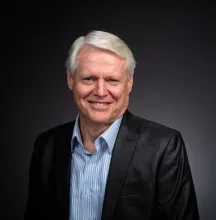
John Elliott serves in the role of President of the United Church of God, an International Association.
