

Howard E Marchbanks III
Is there anything special about the Sunday that falls during the Feast of Unleavened Bread? Today, I want to talk a little bit about this first day of the week, and use this as a teaching tool just as we might use other teaching tools like associating the number 7 with completion or perfection. This year, Sunday fell on the 6th day of the festival. The year our Lord Jesus Christ was crucified, it fell on the 4th day of the Feast. Why would I bring up Sunday, and what is so important about it?
For Jesus Christ to fulfill His purpose for coming to earth as a fleshly sacrifice, he not only had to become a sacrifice for our sins as the Passover Lamb, He not only had to be in the heart of the earth for 72 hours, He not only had to be resurrected, but He also had to then ascend to our Heavenly Father to be accepted on our behalf.
You see, after the wave sheaf offering was instituted, it ALWAYS occurred on the Sunday of the Feast of Unleavened Bread. This offering pictured what was needed for mankind to be accepted by the Father. READ NKJV; REFERENCE ESV
Leviticus 23: 10-11 … so that you may be accepted… (ESV)
So, let’s go to another scripture to see how Christ is associated with our being accepted. READ ESV
1 Peter 3: 18 For Christ also suffered once for sins, the righteous for the unrighteous, that he might bring us to God,
…
21 Baptism, which corresponds to this, now saves you, not as a removal of dirt from the body but as an appeal to God for a good conscience, through the resurrection of Jesus Christ,
22 who has gone into heaven and is at the right hand of God, with angels, authorities, and powers having been subjected to him.
So, just as a consideration on emphasis and potential value, by God’s design, He did not choose to say something like, “on the fourth day of the Feast, present to me a wavesheaf offering so you may be accepted.” That type of command would have fit perfectly with the timing of Jesus Christ’s actual ascension up to heaven. God chose the first day of the week, which over the centuries would end up falling on any particular day of the Feast. To me, that suggests emphasis, filling in the meaning of God’s completed work on any particular day of the Feast.
If we look back to the first festival for a moment since the wave sheaf was not yet instituted, could the Red Sea crossing, a baptism into Moses provide any parallels? Well, is it not that crossing that completed Israel’s hope? If God had not intervened at the Red Sea, Israel’s freedom from slavery would have been very short-lived.
Similarly, if the sacrifice of Christ had not included His resurrection and acceptance by the father on our behalf, though there would be forgiveness of sin, there would be no eternal life. READ NKJV
1 Corinthians 15: 12 Now if Christ is proclaimed as raised from the dead, how can some of you say that there is no resurrection of the dead?
13 But if there is no resurrection of the dead, then not even Christ has been raised.
…
19 If in this life only we have hoped in Christ, we are of all people most to be pitied.
20 But in fact Christ has been raised from the dead, the firstfruits of those who have fallen asleep. (ESV)
If Jesus had only died for our sins so that we could be forgiven, we would still die. If God had only taken Israel out of the civilization of sin, making them aware of sin and the need to follow Him, but had not miraculously delivered them to a new life on the other side of the Red Sea, they still would have died or been re-enslaved by Egypt, though initially freed from SLAVERY.
You see, Passover as Christ taught us to observe causes us to remember with reverence the sacrifice Jesus made for us. The Feast of Unleavened Bread, with us having remembered that sacrifice, with us obeying the command to remove the leaven beforehand, and us participating in the consumption of unleavened bread for seven days, added to THAT the revelation that it is God ONLY who paid the price for our sin, that it is God ONLY who has the might to deliver us out of sin, and that it is God ONLY who through our High Priest, Jesus Christ, makes us acceptable to God the Father, this Feast is intended to be a celebration. READ ESV
LOOK AT THE TIME!!!
1 Corinthians 5: 6 Your boasting is not good. Do you not know that a little leaven leavens the whole lump?
7 Cleanse out the old leaven that you may be a new lump, as you really are unleavened. For Christ, our Passover lamb, has been sacrificed.
8 Let us therefore celebrate the festival, not with the old leaven, the leaven of malice and evil, but with the unleavened bread of sincerity and truth.
May you enjoy fully the remainder of this day celebrating the hope that was given to us through Jesus Christ knowing we are already unleavened by God who gives us, by His Holy Spirit, the will and ability to remove sin and live righteous lives of sincerity and truth.
In 30-31 A.D., the hope for all mankind was established through the death, resurrection, and ascension of Jesus Christ, foreshadowed with the wave sheaf offering on our behalf. Today, in 2013, you and I are able to celebrate that hope established by these acts of God because God has graciously revealed it to us, even though this is not Sunday. After all, today could have been a Sunday in any particular Feast of Unleavened Bread. Happy Feast to you who celebrate our hope in Christ!!!
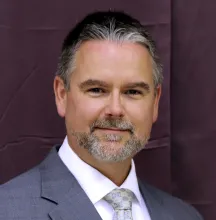
Kelly Irvin, who attends in Northwest Arkansas, is a horticulturist by trade, and spent ten years in fruit and vegetable breeding research before becoming a stay-at-home dad who now owns and maintains a flower bulb nursery for retail sales. Mr. Irvin believes he expresses thoughts and ideas best through writing and is especially interested in using this resource of communication to share the value of God's way with others.
In 1987, Mr. Irvin received an Associate of Arts degree in Theology at Ambassador College in Big Sandy, TX, after which he went on to complete a Bachelor of Science degree in Horticulture from Texas A&M University (1990). While serving full-time in vegetable breeding research at the University of Arkansas in Fayetteville, he then completed via the slow track a Master of Science degree in Horticulture (1999).
