
John Elliott
This transcript was generated by AI and may contain errors. It is provided to assist those who may not be able to listen to the message.
I would like to tell you about the room. This isn't just any room. This is THE room. It's a real room in a real home. It may exist in your home. It's not the room where the steamy, yummy food is cooked and prepared. It's not the room where the delicious food is served on, in a nice decorum, beautiful plates where wine might be served in cold chilled water.
No, it's not the room where the fancy collectibles are displayed. This room actually makes those rooms and all the other rooms pale into insignificance. They seem somewhat trite to the owners, because this room is far more exciting than those. Far more special, far more important. What's interesting about THE room is the decor is, you might define it as odd. It's quite unique.
It's different. If it were the living room and you invited people into it to sit, you would gasp. If it were the dining room and you expected them to eat there, they would certainly get indigestion. The decor of THE room is kind of carnival-like. It's somewhat outlandish. The room is so special, so special, that perhaps some guests get asked to sit and ask, would you like to see THE room? As you go down the hall and you approach the room, the owners will encourage you to tiptoe. This is a very special place. Upon entering, you're taken aback. The furnishings in the room and the accessories in the room are very expensive. They may have cost more than the furniture and accessories in the other parts of the house. Some are handcrafted for a special touch. The owners have gone all out in doing the decor, some of it themselves. The planning, the designing, the painting, the decorating, the purchasing, the arranging. And yet curiously, as you look around the room, there is nothing that you or the owners could use. Nothing whatsoever. Not one thing. There's nothing you could even sit on. There's nothing you could put on. There's nothing you could use in any way. In a curious and inexplicable twist, the owners will soon obliterate the room. They'll erase every trace of all the work they've put into it. They'll dispose of all the contents, keeping nothing. And they'll return the room into something else without a trace of it. The room is almost sacred. It's off limits to most. The room is open. If you're invited to see the room, your anticipation rises. You know that you've been invited to see something special. As you approach, you talk in whispers. As the owners turn the knob, you curiously see them peek through the crack until the all clear is declared. As you step inside the room, you know that you have entered a very, very special place. Welcome to the nursery. Welcome to planet Earth, the nursery of the children of God. It has a similar function to the nursery in people's homes. There are many similarities, in fact, to the ones that I just described. But the nursery in which you and I live is a very, very special place. You and I live in a specially created nursery.
Our eternal parents are expecting, you see. And they have created a place within the sphere of where they dwell that is unique, that is special, that is different. They're excited.
The first ones to be born are about done. There are going to be some children here soon.
They're ready to be born. And much like parents creating a special nursery for their home, our parents have created this nursery for the begotten children of God. And it's a temporary place of development. And they went all out. And they expended great effort and great expense, and nothing was too great. Today I'd like to take a look at some aspects of the sermon which is entitled, Children of the Room.
We'll see what is happening here. We'll see what lies ahead for the children of the room. When parents are expecting, there is nothing more important to them than the unborn child, the development of that child. Suddenly all the important things of life, the careers, the toys, the house, everything shifts.
And now it's about the baby and what is eaten and what is done and what is lifted and what is not and how much sleep and the preparations all go on. Nothing is more important. And the parents will do anything to ensure that this child is a healthy child. They'll go to any lengths, and that certainly includes the mother, ensuring that the fetus grows into a healthy child and that it's safe and secure and well developed.
They'll inconvenience themselves, but put themselves out. They'll inconvenience their finances. The mother will give her body, that which she has worked and crafted on and held very special. She will give that up. She will give up her comfort, her health. She'll go through morning sickness. She'll go through delivery, whatever it takes, even her own life, if that is required. In Matthew 3, verse 17, we will be talking about the health of the child. We will be talking about the health of the child. We see an expected parent from above with the same consideration, the same expectation for his unborn child.
In Matthew 3, verse 17, it says, And suddenly a voice came from heaven, saying, This is my beloved Son. Jesus Christ was in the nursery. And God was expecting him to be first born into his family. And he said, This is my beloved Son, in whom I am well pleased.
Incredible focus. And God loved the world so much. And he loved the children that he would have so much. He went to the expense of giving his only begotten Son that they could all live. What a gift that was and continues to be. In John 1, verse 18, we see another statement from the Father or from the Father's perspective. This is from Jesus Christ. He says, No one has seen God the Father, it is not God. It is not God.
It is not God. It is not God. It is not God. It is not God. It is not God. It is not God. You see how close that relationship, how dear that relationship, how special the children of God, the begotten children of God are? They're called the apple of his eye in another place. Begotten, the word that's translated here, begotten from the complete word study of the New Testaments, shows the Greek word to be megatonic.
So I Monogenesis, or monogenesis. It's a compound of the word monos, which means alone, and the word genos, which means race, stock, or family. This is about family. Jesus Christ here we learn is of the family, the same family, the same stock that God the Father is. For example, evidence in the Scripture, this particular word study, comes to the conclusion.
There's ample evidence in Scripture that the Godhead is a family. Now, we are blessed to understand that and know that. Some decades ago, Mr. Armstrong used the term begotten, this term begotten, in a sense that God is bringing children into that Godhead family. And as now, we're not the real children. In other words, we are not spirit being, we are not of the God family. But we are begotten of the God family.
Whereas unborn children in the womb, let's say, of the church, or of New Jerusalem, the mother of us all, and we are heading in the direction of being born into the family of God. He used the analogy of baptism as being a conception, where the Holy Spirit of God the Father enters a type of an egg, you and me, and a conception, a new birth, a new engenderment from above begins. And then the Christian life develops as a fetus and into an infant baby.
And finally, we are born into the family of God. That birth would take place at the return of Jesus Christ, the first fruits. There's a new United Church of God doctrinal paper that concerns the born-again process, and it states in it that the Bible supports that analogy I just described to you.
Plus, it uses other analogies as well. And I'd like to use a few of those analogies here today as we look at the concept of children of the room. We are currently flesh.
You and I are born of flesh. We are, therefore, flesh. And therefore, we are not, as our Father in heaven is right now, we are not. We are not born into His family. We are not born again. In John chapter 3 and verse 3, Jesus talks to us about our current state and about the future state of eventually being in the family of God.
John 3 and verse 3, Jesus answered and said to Him, Most assuredly I say to you, unless one is born again, he cannot see the kingdom of God. We are not going to see that in the flesh. Those who think that somehow this is the kingdom of God are mistaken by Christ's own word. Nicodemus said to him, How can a man be born when he is old?
Can he enter a second time into his mother's womb and be born? He thought he was talking about actually being born. That's not what Christ was referring to here. Jesus answered and said, I say to you, unless one is born, or in fact he's referring to being engendered, the impregnation, the being fathered from a different source, unless one is begotten or engendered of water and the Holy Spirit, he cannot enter the kingdom of God.
That which is born, literally of flesh, is flesh, and that which is born of the Spirit is spirit. Then he said, Do not marvel that I said to you, you must be born again. Now here's a couple of unique terms. You must be born again. Born again comes from the two Greek words, geneo for born and anothan for again. Geneo, anothan. Obviously, a change has to come for us to be in the family of God. But there's a change that is not an instantaneous change, but rather a process that we want to talk about. What seems obvious here, you must be born again, is actually not accurate. That's not the accurate translation.
He's not saying, he's not talking about you have to be born a spirit being. He's saying you have to be engendered from above. You have to begin to be part of a process that begins with God the Father. A process that begins with switching from your father to devil to a new way of thinking and then a new way of living that, yes, involves being changed ultimately into spirit.
The church does not believe that born again is a proper translation here, nor is it something that would apply to a Christian because simply the Bible doesn't use it. Why is that? Well, many people, when they come to this passage, say, oh, you must be born again. Therefore, when I get baptized, I'm born again. I have changed states, in other words. I have transferred status. I was once not, now I am. That's not it at all. This is actually referring to a lifelong process, not simply a requirement or a state of being, something that is done to you or done for you or done by you, and therefore now you're done. The proper translation of Gennao Anothan is fathered from above. In other words, you don't end up in the family of God unless you are first fathered from above. And so in this pre-birth analogy, we have to first receive God's Holy Spirit. We have to receive His mind, His way of thinking. And then, as that little egg would split and develop into a fetus, we must grow. And the Bible and Jesus Christ and the apostles all teach us to grow and grow more and develop more. We have to grow and keep growing.
The word Gennao, one definition of it is to beget, to be born, mainly of men, begetting children or of conception, metaphorically of God's divine nature, imparted to the believer.
Gennao emphasizes origin, not state. It's not the fact that you are born. It's who you are being born by. It's the origin of who you're engendered by. Gennao emphasizes the genetic origin or lineage of the new child. Jesus said in John 8, verse 23, you are from beneath, I am from above. There's something different about you. You're from beneath, I am from above. You are of this world, I am not of this world. So you and I begin by being totally different than the family of God, and some change has to be done over time to where we are no longer of this world and no longer of this earth. We need to be from above. In John 3, verse 3, Jesus said, Most assuredly I say to you, unless one is born again, these refer to the origin. These refer to the divine origin. We are engendered from God.
We are fathered from above. The doctrinal study paper on Born Again says, salvation is a process that includes two major events. Notice it's a process that includes two major events. The first event begins with being called by God, coming to understand His will, having faith in Jesus Christ as our Savior, repenting and surrendering to God, first being baptized and forgiven of all past sins and receiving His Holy Spirit. We call this part of the process conversion. The Christian is said to be converted. Not too often in the church, we understand conversion to be, you're either converted or you're not converted. Are you converted? Well, I'll tell you what, conversion isn't a state. It is in a sense, but it's not a state in completion. Let me give you an example. We'll go back to the van. My wife and I purchased our first new vehicle. Beautiful, new, brand new, shiny van. Interestingly, the van had nothing inside. If you open the doors, it was just steel, wobbly, curved things and support beams. The only thing inside the van actually was a driver's seat that wasn't really a seat. It was more of a stool and it had some simple bolts to unbolt it and throw it away, which after I bought it, I did. I didn't like driving on a stool. Besides, my wife had no place to sit because there weren't two stools.
That van was just a van, but on the outside of the van, it looked really nice. Didn't have windows in the sides other than the windshield and the front windows.
One day, my new precious van and I had a date. I was going to convert the van into what's called an RV, recreational vehicle van conversion. Never done this before. Brand new, shiny, silvery painted side, marked a hole, took a steel saw, and started cutting out sections of our new van and throwing them on the lawn. Now when you looked at the van, it was a holy van. Big holes in it. Was that van converted? We could say at baptism certain things come to us, forgiveness, some of God's Holy Spirit, and we could say we're converted at that. Now you're converted.
Didn't need an air conditioner because you got a lot of wind in the van.
And so it was at the store. They sold windows. You could buy carpeting at a carpeting store. You could buy lumber and build sofas. You could buy seats. You could buy a sink and build a cabinet and put a stove on it. And so we labored away there with things scattered around on the yard.
If you came by and said, oh, I see you. I see your van is converted. And there's a sink laying on the lawn. No, and there's a board nailed down in the van. Would you say it's converted? You see, the process doesn't ever finish. Conversion never is complete until we're actually in the resurrection.
So the word conversion refers to a change, but it refers to an ongoing change. It's part of a process.
Christian is said to be converted, and conversion refers to change that is going on in the individual. It's important to know that salvation requires more than some decision, more than repentance in baptism. It requires the individual to go through a process that's not finished at baptism and actually continues on for a person's life because baptism is only the beginning. It's said that an unborn child is quite comfortable in the womb.
They like it there. I don't know if they've interviewed a child or what. They always seem to be crying when they come out, so they must have really liked it in there.
They're nourished, they're comfortable, it's all they've known.
It's assumed they'd like to stay there, cry when they have to leave. Well, we too aren't to live forever in utero. We're not to live forever in the mother's womb. At some point, the development is complete, and we are to actually be born into the family of God or into the human family, as this analogy would show. The hope of every Christian is eternal life through the resurrection of the dead. That's what we really hope for and we long for. How Christians will enter the kingdom of God, the family of God, was demonstrated and showed by the example of Jesus Christ, who came, went through the entire process and showed us the way.
I'll read a verse from Colossians without turning there. And he, Christ, is the head of the body, head of the church, head of the church, who is the beginning, the first born. So we can see there is this analogy of one who is growing, growing, developing. He showed us the way and he was the first born into the family of God. He was the first born, it says, from the dead, that in all things he may have the preeminence. That's from Colossians 1.18. And he then showed us the way he set us the example.
In Romans 8.29, another one I won't turn to, for whom he foreknew, that's God foreknew, he also predestined to be conformed to the image of his son, that he might be the first born among many brethren, among many brothers and sisters, you see, that he is the first born and there are more to follow in this process.
This process is not completed until the return of Jesus Christ and then God changes Christians into spirit. And then ultimately they will be born of the spirit. You know what Jesus said about being born of the spirit? That's a different composition. It's like the wind, those who are of the spirit are invisible. The spirit world is different than the physical world. In 1 Corinthians 15, verses 51 through 53, we see that this must take place.
Now this I say, brethren, that flesh and blood cannot inherit the kingdom of God. This is 1 Corinthians 15, 50.
Flesh and blood cannot inherit the kingdom of God.
Nor does corruption inherit incorruption.
Behold, I tell you a mystery. We shall not all sleep, but we all shall be changed.
All shall be changed. Verse 53, for this corruptible must put on incorruption and this mortal must put on immortality. There has to be a change, a total shift to something else, to something different.
And Jesus said in John chapter 3 and verse 5, as I've already mentioned, most assuredly I say to you, unless one is born of water and the spirit, he cannot enter the kingdom of God.
The process of being born of the water at baptism, receiving God's Holy Spirit, begins a process that ultimately will end up in a transformation into a spirit being at the resurrection.
Now, this womb and this analogy is not the family home.
This is not what there is to be. This is the place where we grow and expect a birth.
We can now come to the maturing children concept.
Similar concept, same theme, but the Bible also uses another concept. And that is a child already, but an infant that needs to grow and ultimately mature and ultimately get married to marry Jesus Christ.
The maturing children concept puts a child in a cradle, in the nursery. And there you are in the nursery.
Humans only know the nursery.
Look up from the cradle, see this little mobile turning over, ding-dee-ding-dee-ding, little fish or animals or something turning. And you see daddy or mommy's face lean over once in a while, pat you on the head, give you something to eat, give you a toy to play with, pat your back.
There's some decor around there. It's kind of exciting. It's supposed to stimulate your thinking. You've got your favorite blanket. You might call it a blankie, holding that tight, chewing on it a little bit. There's an endless supply of clean diapers that keep coming and going.
You're kept comfortable.
You would assume, if you were the baby, that that is the family home, because that's it. That is what you see. That is where you are. That is your world.
And you would assume that this is it.
This is not the family home, as we shall see later. But to a child, they think this is it. And often, to you and me, this is all we've known. This is precious to us. We can't imagine being without it. You know, we just take away anything, but don't take away my blankie. You know, that's the most important thing in the world. And we want to carry some of this with us, as it were.
Behind every family home, also, is another curiosity. It's a collection of expensive things that don't work very well.
I think that's the best way you can categorize things in a backyard. Things that don't work very well. They almost work, but everything is a little bit dysfunctional. The cars don't really drive. The swings aren't really long enough to really swing on. The slides aren't really tall enough to have a good slide on.
The things that look like vehicles aren't really vehicles, and they don't function very well anyway, and most of it's made out of plastic.
It's small, it's strange, it's brightly colored. It's short-lived.
There's nothing that you or I could use out there or fit on. We would sort of look funny at those strange little so-called cars or things that look like things in the adult world. Go up to the little, for instance, the little girl's kitchen, and it's got the little fake stove with the little knobs that spin endlessly, and the little oven door that opens, but you can't cook anything in there. You wouldn't expect somebody to actually wash in the sink. There's no water. It kind of is a type, but it's not really functional.
But it's so important. The things that are there are so important, even though the parents will soon dispose of them. The backyard with its trikes, its play equipment, whatever it is, the fort, the little castle is not really a castle. The little house that isn't really a house. You can't even get in and stand up there.
These things actually are planet Earth.
This is us, the little children that God has called, and it's an important area for us to have as a playground or as an area to develop, because little people will actually do quite well on those things. Developing motor skills, developing balance, developing some of the challenges that will get them over fears and cause them to help one another, serve one another.
Romans 8, verse 16, tells us a little bit about the backyard or the nursery, depending on how old you want to place yourself out there.
It says, the Spirit itself, Romans 8, 16, bears witness with our spirit that we are children of God. In other words, if God's Holy Spirit is resident in us after baptism, then we are children of God.
And if children, then heirs, heirs of God. Now, the way I believe we look at this, the way I've heard Mr. Armstrong look at this, is when it says, heirs of God.
That's not just the individual, but heirs of, as it were, the Hebrew word, Eloim, could be placed there. Heirs of the God family, because God is a family. And therefore, for heirs of the God family, the next phrase is, and joint heirs with Christ, if indeed we suffer with Him, that we may be glorified together.
So, if we continue the analogy, we are now the children of God, growing up, maturing, preparing for marriage, preparing for the return of Jesus Christ. And once again, it's not good to be a little child, either in the nursery, looking up at the mobile, and stay there indefinitely. Remember the various parables that Jesus Christ gave about the development that needs to take place, the growth. He doesn't want us just to receive something and put it in an applicant and stay the same.
He wants us to grow. In 1 John 3, verse 1, imagine being called a child of God now.
This is an analogy where we're engendered from above, and therefore, God is saying, well, I consider you to be my future children. And I don't consider you to be the devil's children anymore.
I want you to be my children. I'm inviting you to develop and mature.
And so, here it is, as if we are the children of God that are young. Behold, what manner of love the Father has bestowed on us, that we should be called children of God.
Therefore, the world does not know us because it did not Him.
Beloved, now we are children of God, and it's not yet been revealed what we shall be.
Because it's different. We don't understand the spirit world.
But we know that when He, Jesus Christ, is revealed at His Second Coming, we shall be like Him, for we shall see Him as He is. Now, during this time of maturing, God is everywhere.
We may see ourselves at the beginning in the nursery, and we may see ourselves in the backyard as we grow older.
But God, God is like a human parent, and He's throughout the whole house. He's monitoring the nursery, monitoring the backyard.
Parents are like that. Parents are different than kids. Kids get the idea that, oh, nobody can see me. I'll just go around here. I'll just hide out in the crib. I'm alone. I can do anything I want. I just hang out out here in the fort. I can just go around in the back of the tire swing. I'll close my eyes.
Nobody can see me now. I'm invisible.
Not realizing the parents have what they call room monitors. You know what those are? Those are the little things that hear and transmit.
Parents have eyes. Even more than that, parents just know.
Parents know without...they know what you're going to do. They know when you're going to do it. They just know. And God the Father is much like that as well. And Jesus Christ.
But they're working. They're caring for their children.
Jeremiah 23, verses 23 and 24 say something important from God's perspective on this concept. Jeremiah 23 and verse 23. Jeremiah 23 and verse 23.
I am a God near at hand, says the Lord. We always think that God's probably not watching me.
God's probably not paying attention. I can get away with this. I am a God near at hand, says the Lord, and not a God far off. Can anyone hide himself in secret places so that I shall not see him? says the Lord.
Do I not fill heaven and earth? says the Lord.
God is everywhere. That's his role.
I'm reminded of some young children that were one of which was in my family one time.
We had some people over the house.
One of our girls, who shall remain nameless, was about three, four years old. Really small.
Watching her and the little boy that was over and the other kids, all of a sudden, the two of them disappeared.
Well, as a parent, you know, it had only been a minute or two, and they disappeared. Well, where are they? Oh, they're in the cupboard.
As little kids will be.
Parents go to the cupboard and say, Okay, kids, come out of the cupboard.
How did they know we were in here? They're thinking. I can't see in here. Come out of the cupboard. We know you're in there. Well, I can't come out right now.
Why not? Why don't I have any clothes on?
I'll be right out. You know, we are like that as little children. We think and we perceive certain things from our perspective that are really small. God's thinking is high. It's high above and far above anything that you and I would ever think. And His ways are far above our ways.
He says in verse 24, can anyone hide himself in secret places?
So that I shall not see him?
Says the Lord. Do I not fill heaven and earth? Says the Lord.
What is God's goal for us as His little children?
What is His goal? Says in... I'm going to read just a few verses here. You don't have to turn to them. I'll give them to you. Hebrews 5 verse 11.
You need milk, not solid food. What's the matter here? You need milk, not solid food.
Anyone who lives on milk being still an infant is not acquainted with the teaching about righteousness.
But solid food is for the mature, who by constant use have trained themselves to distinguish good from evil. There's a process here. From the crib to the backyard, from milk only, into more solid foods, God is wanting His children to grow up.
Solid food, verse 14, is for the mature, it says in the New International Version, who by constant use have trained themselves to distinguish good from evil.
We are to distinguish good from evil and then do the good and resist the evil. 1 Corinthians 13 verse 11.
When I was a child, I spoke as a child. I understood as a child. I thought as a child.
But when I became a man, I put away childish things.
In the next chapter, chapter 14 verse 20, Paul continues on this thought, this theme, brethren, do not be children in understanding. However, in malice be babes. Don't know anything about that.
But in understanding, be mature.
And then in Ephesians 4, 15, Paul says, but speaking the truth in love may grow up in all things into him who is the head Christ. That is the process God wants for us. And he's placed us in a very unique environment, depending on which analogy you want to use and how far you are along in that environment.
It's not the environment that we're hanging on to. This is not the family home.
Whether it's the nursery or the backyard or the fort or the dollhouse or those little plastic cars, these are limited types.
In his dedication of the temple, Solomon made some statements in 1 Kings 8 and verse 7 that show us that God is not resident here.
He doesn't live in the nursery. If you go into the nursery and you look around, you don't see a place for dad and mom, do you?
The little chairs, the little things, the little tiny bed, and you open the drawers with the little bitty clothes, the little diapers, and the little things that you would suck on, and the little cute lights. That's not where dad and mom live. They live on down the hall. They live in another part of the house. Verse 27 in 1 Kings 8, But will God indeed dwell on earth? Behold, heaven and the heaven of heavens cannot contain you. How much less this temple which I have built. Verse 30, And may you hear the supplication of your servant and of your people Israel when they pray towards this place. We work here, we live here, there are certain things we do here.
Here in heaven, your dwelling place. God lives down the hall, as it were. But not to think that earth and the physical realm isn't somewhere within his sphere as well. It's not in some far-off place. As he said and we read earlier, I inhabit all the earth and every in all of heaven and none of that can contain God. The real family home we know of, limited by some of the descriptions that the Bible gives us, including from Ezekiel. But there's a throne with God the Father and Jesus Christ. There's 24 elders around the throne. There are angels that come and go. Sometimes Jesus Christ comes and goes on a really exciting kind of a portable throne. Michael, the prince of the firstfruits, works for God. Gabriel does certain things, things that are challenging and dangerous. Angels are shown to protect as agents of God on God's behalf, protect from premature death.
Interdictions by demons, things like that. But the point is, is God's real house isn't this. We are unaware of it. We think this is forever. We think this is, we even sometimes project the future out by keeping this. It's interesting. We're going to become spirit beings, but we're going to hang on to our blankie. You know what I mean? And I think that's okay, because we only have limited understanding. The important thing, though, is as we develop, we must obey our parents. We must obey our parents. That's what all of this backyard, that's what the nursery, that's what the room is about. It's learning to mature and grow up in the instruction of our parents.
Ephesians 6, 1 says, children obey your parents in the Lord, for this is right.
Obey your parents. You know, when a child is taught to obey human parents, it is a type of the children of God obeying the Father and Jesus Christ.
I'd like to go to Psalm 11, verse 4.
Psalm 11, verse 4. We get some really good perspective here. David is inspired to write, The Lord is in his holy temple. The Lord's throne is in heaven. His eyes behold, his eyelids test the Son of Man. That's what he is doing. He is fathering. He is parenting. The Lord tests the righteous, but the wicked and the ones who love violence, his soul hates. Upon the wicked, he will rain coals. Fire and brimstone and a burning wind shall be the portion of their cup. He's teaching us here about good and evil, about righteousness and sin. For the Lord, verse 7, is righteous and he loves righteousness. His countenance beholds the upright. In other words, he smiles and he's looking at the upright. Psalm 103, verse 13. Psalm 103, verse 13.
As a father pities his children, so the Lord pities those who fear him, for he knows our frame. He remembers that we are dust. When a parent holds a little infant, we expect that person to walk and drive and why don't you have a job and why aren't you responsible? No, he knows our frame. He knows when to teach and how much to teach. Verse 15. As for man, his days are like grass, as a flower of the field. So he flourishes, for the wind passes over it and it's gone and its place remembers it no more. You see, God also knows that we're only in this room for a short time. The room is very important, but it has a limited purpose. It has an important purpose.
God has to know certain things before we can really be born into his family of spiritual children. The mercy of the Lord is from everlasting to everlasting on those who fear him and his righteousness to children's children, to such as keep his covenant and to those who remember his commandments to do them. Aha! That's what we're here for. But, verse 19, the Lord has established his throne in a different place, in a different dimension. You can't see it from the nursery. You can get the perception. You can begin to get the feeling that there's something else and you can get tired of the crib and say, you know, I'd really like to get up and walk. I know there's more. And his kingdom rules over all. Blessed the Lord, bless the Lord, you angels, you who excel in strength, who do his word, heeding the voice of his word. Bless the Lord, all you his hosts, you ministers of his who do his pleasure. See all that's going on there for the children. There's a big operation here that God has for the development of his children.
Bless the Lord, all his works in all places of his dominion. Bless the Lord, O my soul.
We also need to honor our parents. There's a little difference between honoring and obeying.
Obeying begins when we're little. Honoring comes as once we obey, we begin to learn, we begin to understand, we begin to really appreciate. And we need to be thankful and honoring of our parents. Continuing on in Ephesians chapter 6 and the second verse now, after it says, children obey your parents and the Lord. It says, honor your father and mother, which is the first commandment with promise. You know that obedience and the honor in a physical family was rewarded with long life, wasn't it? That your days may be long upon the earth. It's a type of obeying and honoring our spiritual parents so that you'll have a long life, eternal life in the family of God. That it may be well with you and you may live long on the earth. One's on a physical earth. We'll see the other is on a spiritual earth. Back in 1 Chronicles, in the 14th and 15th chapter, David had finally brought together the two divided houses of Israel, the northern kingdom and its ten tribes. And the southern two tribes, essentially Judah and Benjamin, had finally been anointed king of both. The northern tribes finally came together and it was an exciting time. He built Jerusalem up as the capital city. Things were transferred south into Jerusalem. He set up the tabernacle, brought in the Ark of the Covenant. And now we see in 1 Chronicles 16 and verse 7, the beginning of this exciting period was a big day for David. 1 Chronicles 16 and 7. On that day, David first delivered this psalm into the hand of Asaph and his brethren to thank the Lord. He wanted to thank God, to praise God, to honor God. And he said, verse 8, and we sometimes sing this, O give thanks unto the Lord, call upon His name, make known His deeds among the people, sing to Him, sing psalms to Him, talk of all His wondrous works. You can't express that unless you appreciate it. You come to know His wondrous works and you come to see what's being done in your life and you come to see the promises and the life that He's called you to live and all that He's done. Too many times children will grow up, let their parents expend all of this energy and help train them, give them all those toys and all those opportunities only for the children to never look back, never to be thankful, never to be honoring and appreciative. And they leave sometimes and don't even phone home. Don't even... All they can think of is how bad my parents were. My parents didn't give me enough. They didn't treat me right.
My parents, parents, parents. And I've got a problem with my parents.
Because we're not thinking, we're not considering, we're not appreciating, we're thinking of ourself. And so verse 10, glory in His holy name, not in me. Let the hearts of those rejoice who seek the Lord. Let the Lord in His strength, or seek the Lord in His strength, seek His face forevermore. Remember His marvelous works which He has done. Think about Him. Think about His wonders and the judgments of His mouth. O seed of Israel, His servant, you children of Jacob, His chosen ones. Yes, we are the spiritual Israelites that He has called now, His chosen ones. He is the Lord our God. His judgments are in all the earth. Remember His covenant forever, the word which He commanded for a thousand generations. We need to respect and honor that.
Verse 23, sing to the Lord all the earth. Proclaim the good news of His salvation from day to day.
Declare His glory among the nations, His wonders among all the peoples, for the Lord is great and greatly to be praised.
Someday, like the room in your house, this room will be obliterated. All the traces of it will be removed. No one will ever know it was ever here. Even the memory of it will be forgotten. Let's go back to 1 Peter 3, verses 10 through 13. 1 Peter 3, verse 10.
The day of the Lord. There is a time coming when things transition. When the day of the Lord comes and is finished and final, this period of the development of God's children will be over. The family will move on.
It says, in which the heavens will pass away with a great noise.
When they pass away, when they are taken, when they are dissolved, and the elements melt or are dissolved with fervent heat, both the earth and the works that are in it will be burned up. Therefore, since all these things will be dissolved, how long do you want to hang around in the room? Is this really the place you want to be forever?
What manner of persons ought you to be in holy conduct and godliness, looking for and hastening the coming of the day of the Lord, because of which the heavens will be dissolved, being on fire, and the elements will melt with fervent heat? Nevertheless, we, according to His promise, look for new heavens and a new earth in which righteousness dwells. Aha! A new heaven and a new earth where there is only godliness, where there is only the family of God, where there is only real family, complete whole family.
I'd like to turn to Romans 8, verse 21. It says, because the creation itself, if you look up the word creation in the Greek, it also will mean creature, or that which was created. I like to think of this as because the creature, or the created humans themselves, will be delivered from the bondage of corruption into the glorious liberty of the children of God. Because, as Paul says in 1 Corinthians 15, it is us who suffer corruption, and corruption cannot inherit the kingdom of God. And so those who are created, the humans, will be delivered from the bondage of corruption of death, physical death, into the glorious liberty of the children of God, spirit beings. That is our goal. In conclusion, let's turn to Revelation 21, verses 1 through 6. The children of the room are actually developing into mature Christians.
They're children moving through various phases of childhood, and ultimately, they're going to step out and marry a very important person. And they themselves will be a very important bride and assistant of Jesus Christ, of Messiah, of the one who will come and reign on earth, transformed into something very capable, very dynamic, very godly, and very God.
In Revelation 21, in verse 1, we see this process. Now I saw the new heaven and new earth, for the first heaven and first earth had passed away. There's no more room. There's no more backyard. All of this training ground, all of this that was developed and refashioned during the millennial period and used during the second resurrection, all of it's been replaced by new heavens and new earth in which we read righteousness dwells. And then I, John, saw the holy city, New Jerusalem, which you can read about more in the rest of this chapter, made of spirit composition for a new heavens and a new earth coming down out of heaven from God, prepared as a bride adorned for her husband. And I heard a loud voice from heaven saying, Behold, the tabernacle or the dwelling place of God is with those who are now men, but then they are spirit beings and He will dwell with them and they shall be His people. They will be of His lineage, of His type. They will be spirit. They will be God's. God Himself will be with them and be their God. God will wipe away every tear from their eyes for there will be no more death, nor sorrow, nor crying. There shall be no more pain. Why? For the former things have passed away. There's no more physical. What we have today is gone. There is a new birth, as it were, into a new dimension. And He who sat on the throne said, Behold, I make all things new. I make all things new. And He said to me, It is done. I am Alpha and Omega, the beginning and the end. I will give the fountain of the water of life freely to Him who thirsts. It's a wonderful opportunity that you and I have to be begotten children of God, to be children of God, to be developing and growing for a birth, to be growing and developing for a marriage. God has gone to great lengths. He has spared no expense or effort. Let's be growing children who will one day inherit the new family mansion in the kingdom of God.
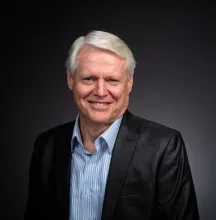
John Elliott serves in the role of President of the United Church of God, an International Association.
