

John Elliott
This transcript was generated by AI and may contain errors. It is provided to assist those who may not be able to listen to the message.
You have probably heard it said by someone, maybe yourself, life hasn't always been easy for me. I didn't have good schooling. Teachers didn't like me. I got into some trouble. Schooling college was difficult. Work was difficult. My career got torpedoed by the economy. My maid is troublesome. Not a good mate. Kids are troublesome. They're not good kids. Cars troublesome. It's not a good car. The house is troublesome. It's not a very good house. My health is troublesome. It's not very good. My possessions are junk. I lack friends. Life hasn't always been easy for me, and I am short of funds.
Bring on the Kingdom of God. Sometimes people will spend a life or live a life that is less than ideal, and they'll say, wow, bring on the Kingdom. I just really need the Kingdom to come. Deliver me from all this distress. When you think of a child, and we have some little children here, each of these children is full of bright potential. They have a gift, and that gift is a life. A life ahead of them.
A life that, when they're born, is like a canvas that one can paint on. They can write their life story however they want, and everything they do goes on the canvas. And at the end, as we approach the end of our life, we have this sort of painting of our life.
This is what I am, what I've done, who I am. This is the combination of my life. Some people don't paint so well. You look at their canvas and say, wow, guys should have gone to art school. That person really didn't understand how to paint, how to draw, how to be creative.
And someone else might say, well, I kind of like that. I like that. I wouldn't mind that hanging in my house. That life looks pretty good. Adults have painted their lives, but kids have not yet. They're just starting to. Paintings that don't seem all that artistic might include yours and mine at times.
I just want to share with you some concepts today about what we're doing with our own lives. How will that child draw? How have you been drawing? How will they create their life on that canvas? How have you drawn in the past? How will you draw today? How will you draw tomorrow? How will you add to what's on your canvas? I'd like today to examine personal responsibility from a biblical perspective. And the title of the sermon today is Choice and Consequences.
Choice and Consequences. You might say choice does and consequences, but really it's about choice and the consequences that flow from that opportunity God has given us to choose. The first point I'd like to make today is you are a product of the choices that you have made to date. Physical choices, spiritual choices. You are a product of the choices you have made. Now we all like to say, oh no, no, no, I had bad parents, had bad teachers, had bad school, all the stuff that other people make for me, it's all their fault.
And I'm just a victim of circumstance. Actually, you're not, nor am I. We'll take a look at some of that. Some people's canvases somehow got painted rather well. For instance, in Acts 6, verse 3, when it came to selecting the deacons of the church, the church members were asked to get involved in that.
Acts 6, verse 3 says, Therefore brethren, seek out from among you seven men of good reputation, of well-painted canvases, of lives that have good reports, full of the Holy Spirit and of wisdom. How did that happen? Nobody told me there was going to be a selection today, and my canvas isn't ready for that.
But look at that lucky guy. Look at that lucky person. The first deacons, for some reason, had well-painted canvases. They were men of good reputation, full of the Holy Spirit, full of wisdom, God's wisdom, whom we may appoint over this business. You know, it turns out that each person actually is a product of choices that you the right choices know. Do we sometimes make right choices? Well, yes, hopefully. But it's common not for us to take responsibility for poor choices and the consequences that come from those.
When you think, for instance, about some of the things that perhaps people say, as we said before, life has not always been easy for me. What we're saying is, I have not always made good choices. I didn't have good schooling. I chose to goof off. I chose not to do homework. I chose to play ball. I chose to not be interested in scholastic things and push myself and test myself and be around people who were really oriented towards learning.
The teachers didn't like me because I gave them so much trouble and I wasn't an interested student, and I've frustrated them. College was difficult for the same reason. I went to party and get my degree and get a big fancy job. Career was torpedoed by the economy. That's an easy one, but we all choose the career. We all choose the jobs. The mate is troublesome. We all chose nobody's like, who are you and how did you get in my bed?
We chose our mate. Children are problematic. We choose how we rear or don't rear or how we have relationships with those in our house. The car is problematic. There are a lot of cars in the world. Some have a reputation for no problems. Others have a reputation for lots of problems.
But oftentimes we make a choice to buy something that's cheap because we don't have to spend as much money. The same with housing. Same with health issues. We all control what goes in our mouth. We all made a choice. Nobody else came over and put a gun to your head and started force feeding you with a plunger. It made you eat or drink.
Every bite is a choice. Every sip is a choice. Everything we do is a choice. Well, my possessions are junk and all that junk from China. Well, guess what? There's a lot of things in the world that are really good quality. But we make the choice. Nobody put a gun to your head and said, you have to buy this. No, we're tempted by it.
Ooh, I could get that. A lot of features, a lot of stuff. It's cheap. It's really cheap. It's cheaper than cheap. And then we complain. We, again, are responsible. I lack friends. I'm short of funds. Bring on the kingdom. Are we responsible? That's the choice. No one ever asked you or nobody ever forced you to take the job that you currently work at or the one before or the one before that. He said, well, circumstances dictate. No, they didn't. Nobody told you or forced you to live here where you live.
You know, you live by certain choices. You make certain choices in life. Well, that's all I could find, which admits I found it. It was all that was available. Well, I took it. You know, you and I have chosen every lousy product we own. And I take full responsibility for the many things that sometimes have to go in the trash that aren't that old. I think, you know what? I saved some money, didn't I? Now I get to go buy it again. Adam and Eve chose not to eat from the tree of the knowledge of good and evil.
You ever think that? They chose not to. You can read it there in Genesis. They decided and chose and they didn't eat from the tree of the knowledge of good and evil. But they also chose to listen to a serpent one day who came along and said, oh, have you been told not to? Oh yeah, yeah, we don't do that. We're not even supposed to touch it, not let alone eat it. They chose to listen to a deceiver, to an outside source.
And they had certain consequences from doing that. And all these things that I mentioned seem important to your house, your car, your education, all family. They seem important. Sometimes we put that at the top of the list, but they're all physical, aren't they? Those are all physical things. They're important for human life, but they're of the flesh.
They're not the important things in life. They don't constitute sin or failure, rather, the quality of life. In the book of Proverbs and other scriptures are given to us to help us improve our quality of life. God doesn't want us to have a poor quality of life, so we need to follow some of those things if we want to have a quality of life. But I'm more interested in the spiritual choices than the consequences, because they're long-term. They're eternal. During my 40 years of ministry, I've come to receive many, many, many requests for members. Choices people make. Spiritual things. Mr. Eliot, I went on a website and I downloaded this information. I read it. Now I'm confused. Will you study this junk and set me straight? Mr. Eliot, I'm sure there's other religions. They gave me all this stuff and it looks convincing. Will you study it all through and see if it's right or tell me where it's wrong? People make choices, and gradually those choices start affecting the mind. It's like this. We all have a mind. We're called and we have the truth. But then we decide, oh, I want to go out and do a little research on the Internet and find out about things. About doctrine. Oh, maybe our doctrines aren't right. Or about people. Or about rumors. Or about statements made about other people. And then we come and say, Mr. Eliot, I have a problem.
You know, I'm kind of messed up here and I just want you to straighten it all out. Will you straighten it out for me? You know, if I could, will anybody get back to normal? We won't, will we?
So I don't go there. My answer is no. Sorry. You have gone and taken fruit, as it were, information, knowledge from a source that Jesus Christ did not set as that source.
Ephesians chapter 4 verse 11. He gave some in the church to be pastors so that the winds of doctrine wouldn't blow through. I do not go out and then say, oh, yes, I'm some huge spiritual giant. I can take on anything that's Satan or any deception or any false doctrine. I can just take all that on and come away pure and clean. No, I can't and I won't. I won't do that.
It's like when Adam and Eve heard in Genesis 3 verse 4, you will not surely die. Oh, really?
Well, then that God told me I would. He's probably lying to me. No, you're going to be like, you're going to be better off. Oh, great. See, they took the responsibility. Now, do you think that I think I'm smarter than Satan? And I'm not bragging. I'm just like you in that sense. I'm here to teach. But do you think I would take on Satan? There is no way.
Ponder that for a minute. You know, human arrogance always feels knowledgeable. Oh, yeah, I've been listening to this source. Yeah, now I know that I can stay home. I can be in my house and we're two or more gathered. God's there in the Sabbath and it's just as good as the holy convocation. And oh, and by the way, I'm independent and strong-minded and I've got other sources. So, I can now drink waters from my own well and my own sister and teach myself and all this stuff.
And absolutely defy what Jesus Christ, the head of the church, said. But in the arrogance of the mind, actually, twist Scripture, including the two or more gathered in His name, to meet the average, which has nothing to do with. It's in the administration of Christ being one who stitches together, who is about one. And the 18th chapter of Matthew speaks about offenses and bringing people back together. And that's what He is about. His whole life and death is about bringing people back together, healing relationships. And when you and the ministry are doing that, He says, I'm right there with you. I'm part of that process. So, once again, we have these things that we can choose. And if we're not careful in our own minds, we say, oh, that's alluring. And we can step into the quick stand of human logic and be easily steered by outside things. 1 Kings 13 tells the story of a prophet of God who went to a king of Israel. He was sent there to deliver a message.
And when he delivered that message, he was told, you go straight back. Do not eat. Do not stop. Don't stay. You go straight back home. Then another prophet heard about that and followed him and caught up with him. He said, oh, where are you going? He says, well, I have to leave. I have to go straight. Don't eat. Oh, he says, I'm a prophet too. And an angel told me that you're to come to my house and we're to eat and you're to stay overnight with me. And guess what? The prophet of God listened. And he went and he ate and he spent the night. And the next day a lion killed him.
He shouldn't have listened. He shouldn't have opened his mind. One was God talking to him. One was a false prophet claiming, making up a story about a lesser being, telling him what to do. But we as humans, you know, we tend to entertain things.
We should follow Jesus Christ's example. When Satan came and said something to him, he said, away with you, Satan. Away with you. I'm not going to listen to that. Away with you.
I read and explain God's Word, but I'm one of those, you might say, that's closed-minded.
People think it's open mind. If you're open-minded, you'll read anything. You'll absorb anything. You'll listen to anybody. It'll be like all the people in the Bible who got derailed.
You know, God has the truth. This Bible is the truth. He's put his church here. He's put his ministry here. And God supports that. He doesn't support the other stuff.
You know, I'm standing in front of a church. And in that cabinet are the books of the Bible.
Right? And guess what order they're in? They're in the original order. You know what the original order is? Individual scrolls stuck in a cabinet. There is no order that's original. There is no order to the Bible. There is no inspired or chronological or anything else order to a bunch of scrolls in a cabinet. They're just in the cabinet. And when you want to read one, you go and you pull it out. It's funny, in our modern world where we have the printing press and we stitch the Bible together, somebody's got to organize the books and then there's this argument about which is the holier version. The one that has the scrolls and somewhere. I think the Jews would just laugh at us. Or the people of all they say, what are you talking about? Order.
But some people will then convince, oh well, you don't have a Bible in the inspired order that I think they were in? Okay. There are many things that people want to follow, but what we should be following is Jesus Christ and developing the truths of a gape, love, and mindset that the family has. That's what we're here for. Not for some little alternate way in which we feel that we are creating our 24 parrot gold for the kingdom by not doing what God says, by avoiding all the things He says for those who have ears to hear, to be wary of, and to do, but by coming up with some other little alternate thing by which we are more approved than others.
Eve was open-minded to the serpent. And in 2 Timothy 4 and verse 3, we are warned that for the time will come when they will not endure sound doctrine. But according to their own desires, because they have itching ears, will heap up for themselves, teachers. These aren't the teachers that Jesus Christ put in the church to feed and teach the flock to prevent the winds of other doctrines and ideas from blowing in. No, they will actually go seeking other teachers, teachers of their own, and they will turn away their ears from the truth and be turned aside to fables. Fables. You know what fables are? The dictionary defines a fable as something not founded on fact. It's founded on logic. It's founded on ideas, superstition. It's founded on something other than absolute truth. It comes down again. What source are you going to choose for your spiritual life? Peter was the great disciple, the great apostle, and Jesus Christ once turned to Peter and immediately said, Get behind me, Satan. When he says, you'll know them by their fruits, he knows what he's talking about. Jesus didn't enter into a discourse when Peter said, Oh, Lord, we're not going to let you die. One of us has a sword here. We're going to take on Rome and we're going to prevail. You're not going to die. As soon as those words came out, did Jesus say, Well, let's talk about that, guys. I mean, it's probably not going to happen the way you think, but, you know, let's talk about it. We can at least discuss it. And I just want to double check here that I need to die. His instant response was, Get behind me, Satan. I'm not even going there. I'm not going to think about that. He says, For you are not mindful of the things of God, but of the things of men. Jesus had consequences for his choices, but they were all good consequences. They were all right. They were all approved by the Father. They were difficult choices, but he had the wisdom from above and he made the right choices. Let's go to 2 Peter, chapter 2, in the first nine verses. 2 Peter, chapter 2, beginning in verse 1.
But there were also false teachers among the people, even as there will be false teachers among you. Ah, this provides for us then a little smorgasbord of what we're going to eat, what we're going to feed on, what we're going to allow to come into our mind, who will secretly bring in destructive heiress piece. That's interesting.
Something that appeals, that sounds good, it's logical.
And bring on themselves with destruction. Many will follow their destructive ways because of whom the way of truth will be blasphemed.
By covetousness, they will exploit you with the stuff they want you. They want you with them, and they covet you. They don't covet people out in society. They covet the final product, the baptized, the converted, the tithe paying, those who are really members. They covet that. They want those in their group with deceptive words.
Verse 4, For if God did not spare the angels who sinned but cast them down into Gehenna, He will cast them down, and deliver them into chains of darkness, most angels made choices, and they suffered a consequence. And He did not spare the ancient world.
They made a choice when Noah preached to them.
Verse 6, bringing in the flood on the world of the ungodly, and turning the cities that's God of Agmora into ashes. They had Lot there, they had the angels there, but they made choices, and they burned.
But delivered righteous Lot who was oppressed by the filthy conduct of the wicked.
Verse 9, Then the Lord God knows how to deliver the godly out of temptations, and reserve the unjust under punishment for the day of judgment, choice and consequence. This is not something we get. There's no free pass here, is there? Well, I'm in the church, and I keep the Sabbath, so it doesn't matter what I do. Oh, it really matters what we do. And people who come along and try to say, and people who come along and try to say, Oh, you've got this little magic umbrella.
You've got this force field around you, because you're a Sabbath keeper, or you tithe, or whatever. And therefore, you're impervious to being wrong in God's eyes.
Just need to go read all of Jesus' parables, because they say the opposite. Just...
The apostles and Jesus Christ warned us repeatedly about choosing properly, about choosing truth, about choosing teachers, applying laws.
Let's notice something about the Sabbath command that you probably haven't noticed before. If you read it in context in Hebrews, let's go to Hebrews 10, verses 25-27. And notice the choice and consequences here.
Hebrews 10, verse 24-27. Hebrews 10, verse 24. And let us consider one another in order to love and stir up in love and good works. Stir up love and good works. How do we do that? Well, we follow God's command. The Sabbath is a commanded assembly. It's a holy convocation we read in Scripture.
Jesus Christ is the Lord of the Sabbath. It is holy. We are to assemble.
And we consider one another in order to stir up love and good works on the Sabbath more than any other day because that is when we are together.
Now, going on to the next verse. Not in the same sentence, not forsaking the assembling of ourselves together. Okay? So if you forsake the assembling of yourselves together, what is that?
Was that poor choice? Is that... well, it's an option, but it's not as good as actually being there. Let me think of what you think about assembling on the Sabbath for a minute because we're going to read in context what that means to God.
Don't forsake the assembling of ourselves together as is the manner of some, but exhort one another and spill much more as you see the day approaching for if we sin willfully after we have received the knowledge of the truth, there no longer remains a sacrifice for sin. That is often of judgment and fire indignation which will devour the adversaries.
So there you go. In one package, what is the sin by which... the only sin mentioned in this passage that would not have a sacrifice for sin but fire indignation and devour the... what was the sin?
Not assembling on the Sabbath. When you read that passage together, that's the only thing there mentioned as the sin that if we sin willfully will not be forgiven. It begins with the word right after, don't forsake the assembling of ourselves together.
Once again, the people say, I don't really need to do that. I have made a choice to live so far away it's inconvenient for me to go to church. I have made a choice to work so hard during the week that I'm pretty tired. I've made a choice to go to all these doctors and all these appointments and all these grocery stores and do all my shopping that I can never come on Sabbath.
Why? I mean, you've got to be kidding. I'm just not up to it.
You see, those are choices we make, aren't they? And yet, there's a choice and consequence that I personally would take to be very, very consequential regarding salvation.
I know we have a webcast and I know the church produces sermon tapes. I know that people have recordings and maybe they can listen in via telephone, but that's not assembly, is it? That's not coming together. That's not the holy convocation. That's not being in the room and loving one another and encouraging one another as the day approaches. Now, obviously, there are exceptions. There are some who literally cannot. And yet, right in this congregation, repeatedly, almost week after week, we have people that are extremely in their senior years who hobble in here and are here. We have one lady who even is totally paralyzed on one side and is here, as often as she possibly can be. These are great examples to us. So, we wake up somewhere and say, ah, I'm tired of air, kind of feels dressed or whatever. We've got to compare ourselves to some of those individuals. Some say, well, I live a long way away. We pastored three churches in South Dakota and one family. I think they lived three and a half hours from church. They were always there early and stayed late. It was interesting in how the people in the city often couldn't make it.
It's an overall principle here, not getting into the exceptions. We don't want people coming who are contagious. We don't want people coming that would be unable, literally unable to be here. At the same time, we do have these commands from God and we should be doing what God says.
The second point I'd like to make regarding choice and consequences is to get understanding.
Understanding from God's Word, from God's ministers, from Christ's inspiration, to get that understanding from Him, directly from Him, and through the sources that He places in His Church.
David said in Psalm 111 verse 10, Holy and awesome is His name. That's where our understanding should begin.
The name of God. The name that really we are attached to as children of the God family.
That is our name to be. That should be our name now. We are in the Kingdom of God, the sons, the children of God. And that's a holy and awesome name to be associated with. We should have deep reverence for it. The fear of the Lord is the beginning of wisdom and a good understanding have all those who do His commandments. See, anybody who doesn't do all the commandments of God does not have a good understanding, though they often put themselves up as teachers, and they think they have more understanding than others. But when it comes to you and me, being like those deacons who were wise and had good lives, their canvases were well painted on, this is the source. Get the understanding from God's Word, from God Himself, from the ministry of God.
Because a good understanding have those who fear God, those who reverence His name, those who are the called, those who keep His commandments. The third point is, get wisdom from above. Another choice. In Proverbs chapter 1 verses 1 through 7, this book opens up with profound statements, just profound. The Proverbs of Solomon, the son of David, which were inspired by God. To know wisdom and to know instruction, to perceive the words of understanding, to receive the instruction of wisdom, justice, judgment, and equity. Do we get this on primetime television, on sitcoms? Do we get this in the media? Do we get this from our teachers, at school? Do we get this from our politicians? Do we get this in our universities? Sadly, no, we get quite the opposite.
And so if a person wants to be a person who is full of the Holy Spirit and full of wisdom and understanding, we have to be studying, we have to be students, we have to be diligent in learning from God. To receive the instruction of wisdom, justice, judgment, and equity. To give prudence to the simple, to the young man knowledge and discretion. A wise man will hear and increase learning. That's a choice. That's what we would paint on our canvas. If we don't, then we can go get dumb sitcoms and laugh and fill our minds with a bunch of stupidity that won't even be remembered. But, ha ha, it was kind of funny at the moment. And we show up as shallow people with convoluted canvases that we don't really know what we're doing, see?
But, if we hear and increase learning, a man of understanding will attain wise counsel to understand a proverb and an enigma, the words of the wise and their riddles. The fear of the Lord is the beginning of knowledge, but fools despise wisdom and instruction. What are the results of those two things? Where will those two lives, those two different types of lives, take a person? You and I choose. We choose the consequences. We choose the canvas. We choose the drawing. We need to choose the wisdom that's from above. Let's go to James chapter one and verse five.
James chapter one and verse five. I'm not talking down to you. I'm talking across at you as my brothers and sisters, because I know that in me no great wisdom dwells, but I know the source of it, and I pray for it regularly and seek it. If any of you lacks wisdom, there goes my hand. That would be me. Okay? I don't have perfect wisdom at all. I lack wisdom. So, if any of you lacks wisdom, let him ask of God who gives to all liberally and without reproach, and it will be given to him. And guess what? God does give wisdom if we ask for it and if we really apply it.
And there's quite a bit of self-control involved in that process, but it is definitely available.
But we have to ask, and God will give to all liberally without reproach. It will be given to him, but we have to realize what kind of wisdom we get. You'll get two kinds. Not from God, you'll get one kind, but you'll get two kinds of wisdom. It's your responsibility to choose.
The source of wisdom becomes pretty obvious if you analyze it. Oh, here's what's here. It enhances my life. It promotes me. It's going to make my life, my possessions much better.
Alarm bells should go off for that kind of wisdom. Alarm bells should go off.
In chapter 3 of James, in verse 14, it talks about envy, self-seeking.
Verse 15, this wisdom does not descend from above.
Well, if I want a better job, and I want it better, and I want more money, and I want that gal, and this, and that, and oh yeah, it's working for me. This is wise. This is wise choosing error.
This does not descend from above, but it's earthy, demonic, sensual. The wisdom from above is first pure. It goes right here. It's good for everybody involved.
It's good for the ladies, the gentlemen, the friends, the employees. It's good for society. It's good for the kids. It's good for God. It's good for a relationship with God. It's good for relationships with everybody. It's good for me. It's good for my health. It's good for the environment.
It's pure. It's pure. And secondly, it is peaceable. It joins relationships. It is gentle, willing to yield to others, full of mercy and good fruits, without partiality, without hypocrisy. So, one wisdom is very logical. The other is transforming. A person can be very logical, very educated, and very, you know, my life looks really good. The other is transforming a person into a child of God. Get wisdom. Get it from above. And the fourth and final point is take action every day. Take action every day. You know, we are responsible for our choices. We need to get good understanding with them to apply it, but then we have to act. We can't sit back and say, well, I think I'll just take this canvas and put it in the closet and close the door. I'll take this opportunity and wrap it in a handkerchief, keep it nice and clean, and slip it under the rug.
We have to take action. We only have this life. Let's go to Philippians chapter 3, verses 13-21.
I love this passage because in taking action, we find out something interesting about the canvas.
Even though we may have a canvas that's not drawn on well, we can get a new canvas, any time.
Whoever heard of that? You know, when somebody's painted on a canvas, a real painting, you get what you get. I mean, I guess you can paint over it or something, but with God, you can have a fresh canvas. Tomorrow doesn't have to be what yesterday was, and that's a beautiful thing with God. So God does not sort of judge us for what we've done in the past. He wants to forgive us and clean us, cleanse us, and say, draw again. Start over.
So we need to take action. Philippians chapter 3, verse 13, here Paul is the one who made the ultimate bad choice and suffered the ultimate consequence. What was that? The ultimate one. Well, if you're a church pastor and you've been killing your members, that's pretty tough.
That's what Paul did. He had them rounded up, hauled up, killed, and then he got converted, and then he came back as the pastor, sort of the regional pastor. Ouch! Paul got a new canvas. Not everybody got to see it that clean. I mean, if it was your child, your spouse, your grandfather, your parent or something, it's kind of hard to let go. But for God, Paul had a clean canvas, and he said here, brethren, I do not count myself to apprehend the goal. I have not made it to perfection. I have not become perfect. But one thing I do, I forget those things which are behind. I wipe them off with a canvas, and I press forward to those things which are ahead. I get to paint new. I get to start drawing new. I get a new life. I get to start laying down organizations, good relationships, positive life. Let me tell you, there are pastors in the United Church of God today who, in their lifetime, made a terrible mistake, made a detour, crashed and burned.
They're pastors today. Paul made terrible mistakes, crashed, and how far down can you go?
Most prolific writer in the New Testament. God can take any of us from any place that he finds us and put us in a very valuable position regarding his family and his kingdom.
But we have to take responsibility. We have to get understanding. We have to get wisdom, and we have to start making right choices. There is no hobbling. There is no sky is the limit. That's what we get. Paul says, I pressed forward to the goal for the prize of the upward call of God and Christ Jesus.
Therefore, let us, as many as are mature, spiritually have this mind.
Nevertheless, to the degree that we've already attained, let us walk by the same rule.
Let us be of the same mind. Verse 17, brethren, join in following my example.
Paul was a great example. Look, I messed up big time. And look what God can do with me.
Follow my example. Don't mess up. But since we all have messed up, follow my example.
Clean up that or get a new canvas, as it were. And let's get going here.
Note those who still walk as you have us for a pattern. For many walk of whom I have told you often and now I tell you with weeping, they are enemies of the cross of Christ.
There will always be those who make wrong choices and ultimately are not walking the right way, whose end is destruction, who set their mind on earthly things.
We can all make mistakes, though, but we can all change.
For our citizenship is in heaven, from which we also eagerly wait for the Savior, the Lord Jesus Christ, who will transform our lowly body. He'll take whatever painting we've painted. He'll help us get it together and make it as good as it can be. It'll still be lowly, but He's going to conform us to His glorious body. One day, all of this will be in the past, but it will be a wonderful opportunity to struggle and to work and to try and to move forward.
Know this. Any time you choose to get on your knees and say, God, Father, I've made bad choices. I have sinned. I have had wrong thoughts. I've had wrong deeds. I've transgressed. Guess what? Clean canvas. New canvas to paint on. Let's read this in 1 John 1, verses 7 and 9. 1 John 1, if we walk in the light as He in the light, we have fellowship with one another, and the blood of Jesus Christ His Son cleanses us from all sins, like He says in Ephesians 5. He washes the bride. He washes and cleans us. White.
As far as cleaning, you know, it's no impurity.
As He says, if we confess our sins, He is faithful and just to forgive us our sins and to cleanse us from all unrighteousness. All you have to do is, I'm not going to say, say the words, but from the heart, that's all we have to do is say, look, I'm sorry, if we confess our sins, He is faithful and just to forgive us our sins and cleanse us from all unrighteousness. New slate. In God's eyes, let's go. How are we going to draw today? How are we going to paint today? What wisdom are we going to use? What are we going to do when we get on our knees, pray to God, and then follow it up with Bible study and then action?
In conclusion, I'd like to read some words from Psalm 37, verses 29 through 31.
Psalm chapter 37, beginning in verse 29.
Choice and consequence. It's in your life every minute of every day.
The consequences can be fabulous. There's nothing wrong with consequences. You really love consequences. Choices, however, sometimes are easy to make in a wrong way, and the consequences are more than difficult to bear. Through wisdom and understanding, we can really improve our pattern of choice-making, and then the consequences follow. Psalm 37, verse 29 says this, The righteous shall inherit the land. Now, how do those people get to be righteous?
Well, they made decisions, didn't they? They made choices. They chose to do certain things with their lives, with their prayers, with their study, what they filled their mind with, who they followed, what they did, how they applied those laws, and God saw them as righteous.
And they will inherit the land and dwell in it forever. The mouth of the righteous speaks wisdom. How did that happen? Well, it comes from a lot of study, a lot of listening, a lot of transforming with God's help and prayer. And wisdom then comes from the heart of a person who's living it. A good understanding of those who do his commandments, those of the righteous, and his tongue talks of justice. The law of his God is in his heart.
Why? Because he meditates on it and studies it, and he puts it there day and night. And none of his depth shall splite. And that's the consequence of making right choices.
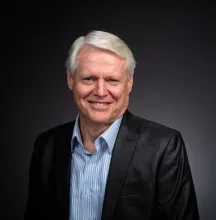
John Elliott serves in the role of President of the United Church of God, an International Association.
