

Steve Nutzman
Look at our lives and purpose from God’s perspective, rather than a negative human lenses. A focus on the examples of Christ and the apostle Paul. Topics that are mentioned in the Sermon are God’s purpose for our lives, appreciating the opportunity of being a new creature, allowing the Spirit to transform us and the importance of personal goal setting.
Happy feast! I wanted to say a quick shout out to all of those that are shut in at home and on remote connection. My dad's one of them. First feast, not physically here. But we have a lot. I think I heard there's 500 or so remote connections. So we wish you were here. Our hearts and minds and our time really wish you were here. So please know you're not alone. Like others who have been up here, I was born in the church. This is my 57th feast. But every year, growing up, when I was young, my family would leave our normal routine and go to this very feast of tabernacles. For me, that meant leaving school. All the kids that have left school this week, whether it's homeschooling, whether it's grade school, high school, college. I'm talking to all of us. So it's my classmates and teachers, and if you're not in school, don't worry about it. You're gonna get talked to here in a moment. My classmates and teachers generally knew very little about where we were going or why. To them, I was going on a little more than a weeks-long vacation when the school year usually had just started. So maybe a couple weeks or a month into it. But I knew, at least after a couple feasts because I was young, I knew what we were going to do. I had been taught that the Feast of Tabernacles pictures a coming rain under Jesus Christ on this earth with physical human beings but we being spirit. I also understood that God was preparing, preparing all of us, his people now for responsibilities in that coming kingdom, in that new world. There's an interesting irony in all of that because as a young person, I was leaving school to be able to attend a feast where I was learning about a future in which I would someday be teaching and leading other people. So leaving school to go and learn to be able to teach other people.
And we still do this today. That's why we're here. Our young people left school to be here. That might have been difficult this year. At times it was difficult for me. I hope you didn't have as much homework this year. Adults have taken time off. PTO, personal time off, vacation leave. That can be difficult. It can be detrimental for your income and for the time that you have remaining in the year. Some brethren already retired. You've had your lifetime of career and working and you completed that in this life. But whatever and wherever in life you are, none of us has actually finished preparing for a career that God has planned for us in his kingdom. And the Bible gives that future responsibility a very specific name. So the question I want us to think about today is, are we preparing to be tomorrow's priests? Let's begin in turning to Revelation 20 and let's see why I use this word priest. Revelation 20 verse 6.
Reading from the New King James, blessed and holy is he who has part in the first resurrection. Over such the second death has no power. But they, they shall be priests of God and of Christ and shall reign with him a thousand years. I know in the past we've done a lot of focus on the reign part as taking on the word kings in a kingdom. But let's dig into what this priest means. That thousand-year reign of Jesus Christ is what we celebrate here during his Feast of Tabernacles. God commands us to rejoice at this feast. Not to rehash, but throughout the year we set aside our increase. Ten percent of our increase for this very eight-week period, even an eight-day period, I wish it was eight weeks, eight-day period, seven days being the Feast of Tabernacles, one day being the last day, ten percent of our increase goes a long ways in seven and eight days. And we are commanded to enjoy it, and we do. We have good meals. I represent it. My clothes are fit and a little tighter today. We enjoy activities. Hopefully the teen activity was good yesterday. We worship together. This is a church service. We worship together. We sing. We listen to God's word. God's word is grounded. We spend time with brethren. We may see only once a year, and I'll be honest. There's people here I haven't seen, possibly in decades, so very excited to be here with people that I know and people I get to meet every day. But Revelation 20 verse 6 tells us something important about our place in a future that we're envisioning right now. We're not merely looking forward to living in a world as spirit beings, even though it will be delightful to not have the weight of the physical flesh and Satan's influence. We're pre-prepared to serve in it. Those in the first resurrection will be priests of God and of Christ, and it will reign with Christ. Now, you probably have your image of what a priest does or looks like, right? So, talks in the Bible about them wearing linen garments, and they go through rituals. But the role of a priest was so much more than what you can imagine, probably partially because of movies and the Leviticus elements of what they do in terms of sacrifices and washings. Those in the first resurrection will be priests of God and Christ, and we will reign. So, that means we fall under the government of God. And that is a real future career. A career. We go to school to earn a living, to know how to fit into the life of the world. I don't mean the world in that sense, but be able to provide for ourselves. We have jobs and careers. That's what schooling's for. There will be work to do. There will be physical people to serve, and they will need to be taught and led. So, what does God need to develop in us?
Now. And I think we can see two important areas or parts. The mind of a priest and the heart of a priest. Now, Malachi talks a lot about priests.
Unfortunately, a lot of it is about what the priests did wrong. Priests were to lead the people. They were to teach the people. Malachi gives us a critical element of that job description. Let's turn to Malachi 2. Malachi 2. Kids, this message isn't just for you, but really think as I was a kid, I heard these kinds of messages and I said, I have an identity. I have a purpose. This is for me as much as it is for my parents and grandparents. Malachi 2, verse 7, For the lips of a priest should keep knowledge, and people should seek the law from his mouth. If you tuned out at his in the kingdom as spirit beings, it says we'll be neither male or female. So as a priest in the future, all of us are included, not just men. And the people should seek the law from his mouth, for he is the messenger of the Lord of hosts. Before people can seek the law from a priest, the priest has to know it. So if we're preparing to be priests, we need to be learning God's Word now. And obviously we come to services and we hear those things. We go to Bible studies. Might go to ABC. We might take other classes to learn Greek and Hebrew so we can understand Scripture better. But let's step back for a second and say it can't simply be about, you know, can't simply stop at knowledge. Think about the best teachers you've ever had. If you're older, you probably have a longer list of people to select from. If you're young, hopefully you haven't had a bad teacher yet. The real choice is the really good ones didn't simply know the subject. They loved it. I've had teachers like that.
Hopefully you have too. And somehow they had the ability to share that love with their students. Their enthusiasm could create a spark that turned into a flame in someone that lasted for years. Sometimes it even influenced that person's career choices as a student they would eventually choose from. We've had probably the opposite. I can say I've had the opposite. A kind of teacher too.
They knew the material and they gave you that information, but there wasn't much heart behind it. Oftentimes, as a student, we tune out because there's no passion and there's no caring. God isn't preparing us to simply dispense information about his law. He's teaching us to know his way, to live his way, and love his way. That's part of what happens right here at the Feaster Tabernacles. We're hearing God's Word and being reminded of his plan. We're worshiping as we are right now. We're serving. We're spending time together.
We're experiencing some of the blessings. The feast isn't just an experience, but we are experiencing the blessings when we have 10% of our annual income to spend here. And it's to spend together and to spend in the right ways and make new memories. And remember, this is because God commands us and is blessing us in doing so. The feast keeps that flame alive in us, strengthening our love for God's way and renewing our excitement about the purpose he's called us to be.
This feast, it rekindles that fire, as priests will be teacher-leaders. So let's get a label on it more accurately of what it is. A priest will be a teacher-leader, as it was in the Old Testament, as it was in ancient Israel, under Jesus Christ. The book of Revelation tells us that we'll reign with him, and Malachi tells us what people should seek from a priest, God's law, out of the mouth of the priest. But don't let the word teacher create too narrow of a picture for you. We might immediately picture someone standing in front of a classroom or speaking to an assembly like this. For an extrovert, and I've been labeled as one, that might sound great. For someone else, just the thought of it might make them anxious and run for that door as fast as they could. We're different. Some of us are introverts, some are extroverts, some are somewhere in between. We don't all relate to people or learn in the same way. So if you ever thought, I don't know if I could ever be a teacher or a teacher-leader, notice the picture God gives us in Isaiah. Turn to Isaiah with me, chapter 30, Isaiah chapter 30, and verse 20. And though the Lord gives the bread of adversity in the water of affliction, yet your teachers will not be moved into a corner anymore, your eyes shall see your teachers. Your ears should hear a word behind you saying, this is the way, walk in it. Whenever you turn to the right or to the left, excuse me, turn to the right hand or whether you turn to the left. That's a very personal picture of teaching. This is the way, walk in it. Teaching in God's kingdom won't necessarily mean standing in front of a classroom or an assembly.
It will at times, and by far we don't know until we get there. But we do know that it can be personal, very personal. Understanding a person in front of you and helping that individual learn to walk in God's way. And our differences and experiences can now prepare us for that. We already know that something easy for one person can be difficult for another. People learn differently, respond differently, and sometimes need different kinds of encouragement. That can teach us to understand people better. And that brings us, you know, to the mind of a priest. It reminds us of the mind of a priest and the heart of a priest.
Jesus Christ, our high priest, and we are disciples of Jesus Christ, gives us an example. For sake of time, but write it down. Hebrews 4 verse 15. Hebrews 4 verse 15. For we do not have a high priest who cannot sympathize with our weaknesses, but was at all points tempted as we are, yet without sin. Christ understands human weakness. He doesn't excuse sin. He was without sin, though. But he sympathized with our weaknesses. He was compassionate. In fact, in the Bible, it talks numerous times in the Gospels about Christ's compassion. The people God gives us to teach and lead in the millennium will have weaknesses, too. They'll make mistakes.
They'll need instruction and correction, but they'll also need patience, mercy, and compassion. And we'll understand something about that. Not just a little, hopefully. The goal here is to grow, to be well-rounded disciples of Christ, to be then priests in the kingdom. We'll remember what it was like to struggle, to make mistakes, and to repent and overcome, and need God's patience and mercy ourselves. God can use those experiences in our lives to prepare us to serve with compassion. He isn't preparing us to stand over people someday and lord it over them and tell them everything they are doing wrong. I think we heard that yesterday as a way to lose the attention of our children.
He's preparing us to help them learn his way. That means God is working on more than our Bible knowledge. He's working on our character, our relationships with one another, our willingness to serve. Through all of it, he's teaching us to become more like him. That's all part of our education. A future priest needs knowledge in the mind and compassionate love in the heart. We're on the fifth day of the feast. Can you believe it? So the feast isn't yet over. We still have messages to hear, opportunities to worship, people to serve, and more time to rejoice before our God. So this is a good time to ask ourselves something.
What has God been teaching you and I at this feast? Has something we've heard deepened our understanding of God's Word? Has our time together taught us something about ourselves or given us an opportunity to serve, encourage, be patient with someone else? This isn't simply time away from work in school. We're still in school right now, and God is still teaching us. So here's a challenge. You'll need your pens. Before the feast ends, identify one thing God has been teaching you here that you need to carry home. Write it down. Put a date beside it.
October 16, 2027, the beginning of next year's feast. Then work on it. And when we return to the feast next year, be able to look back and see that you're not simply one year older—we all like having birthdays. Most of us do—but one year further along in that preparation. And that's really the point. What God is teaching us here is meant to go home with us. The feast gives us concentrated time to hear His Word. Think about His kingdom. Spend time with His people. And remember why He's called us. But our preparation continues in our ordinary life. In things we face, the choices we make throughout the year, God is preparing us for a real responsibility in His kingdom to serve with Jesus Christ as priests. Hopefully you have a better picture of what a priest is. This feast will end. Our preparation will not. So as we enjoy the remaining days of the feast, keep the flame of the feast alive. Carry home that sense of purpose, our calling, our love for God's way. And when we return home, keep learning from God because we're learning today to teach tomorrow.
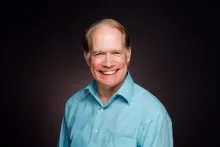
Greg Thomas is the former Pastor of the Cleveland, Ohio congregation. He retired as pastor in January 2025 and still attends there. Ordained in 1981, he has served in the ministry for 44-years. As a certified leadership consultant, Greg is the founder and president of weLEAD, Inc. Chartered in 2001, weLEAD is a 501(3)(c) non-profit organization and a major respected resource for free leadership development information reaching a worldwide audience. Greg also founded Leadership Excellence, Ltd in 2009 offering leadership training and coaching. He has an undergraduate degree from Ambassador College, and a master’s degree in leadership from Bellevue University. Greg has served on various Boards during his career. He is the author of two leadership development books, and is a certified life coach, and business coach.
Greg and his wife, B.J., live in Litchfield, Ohio. They first met in church as teenagers and were married in 1974. They enjoy spending time with family— especially their eight grandchildren.
