

Don Ward
This transcript was generated by AI and may contain errors. It is provided to assist those who may not be able to listen to the message.
Our title today, Christ our High Priest, Mediator, and Intercessor. Christ our High Priest, Mediator, and Intercessor. Then also we'll have some time with regard to our role as the royal priesthood. And what is our responsibility in view of all of these things? How would you like to spend a day at God's throne in the third heaven? And see all the activity that goes on in a 24-hour period there.
Remember, God never slumbers, never sleeps. He's on the job 24-7, as it say, never slumbers, never sleeps. It is difficult to even imagine what it would be like in God's throne room. The scene there would be awesome, as they say. The glory, the splendor of it all, would be mind-boggling. But more interesting to me would be the interaction that would be taking place between God the Father and Jesus Christ our High Priest, who is also our Mediator and Intercessor. And then along with that, the interaction with all of the angels that might be coming and going.
The ministering servant sent to the heirs of salvation, as it says in Hebrews 1.14. There are a few places in the Bible that provides us with a glimpse of that setting. If you look at Revelation 4, John and Vision seized the throne of God, Revelation 4. After this, I looked and behold, a door was open in heaven, and the first voice which I heard was, as it were, of a trumpet talking to me, which said, Come up here, and I will show you things which must be hereafter.
And immediately I was in the Spirit, and behold, a throne was set in heaven, and one sat on the throne, and he that sat on the throne to look upon was like Jasper and a sardine stone, and there was a rainbow about the throne, in sight like unto an emerald. And around about the throne were 24 seats, and upon the seats I saw 24 elders sitting clothed in white raiment. They had on their heads crowns of gold, and out of the throne proceeded lightnings and thunderings and voices, and there were seven lamps of fire burning before the throne, which are the seven spirits of God.
And before the throne there was a sea of glass like a crystal in the midst of the throne, and round about the throne were the four beasts, eyes before and behind. What an awesome sight that would be just just to see that. Then you talk about the interaction that must be going on. You know, the Apostle Paul was caught up in the third heaven also. He said, whether by vision or in reality, I was caught up into the third heaven, and there was revealed into me things that were unspeakable, which apparently he was told not to write down. Jesus Christ, our high priest and intercessor, is now sitting at the right hand of God on his father's throne.
If you look there at verse 21 above there in chapter 4, Revelation 3 verse 21, to him that overcomes will I grant to sit with me in my throne, even as I also overcame and am sat down with my father in his throne. He that hath an ear let him hear what the Spirit says to the churches. How many messages and petitions or process in the space of a minute would be mind-boggling?
Sometimes, as I'm praying, I think about how can God hear little old me and little old wherever in East Texas with seven and a half billion people on the face of the earth, and who knows how many people are sending up prayers at the present time? How can all of these things be processed? It's estimated within, I think it's, I don't know exactly the number of years, 20, maybe 30, or whatever years, might be 40, but the earth's population is exploding, especially in third-world countries that the earth's population is projected to be.
Within a few decades, something like 10 billion people. Not only this, but of the interaction and what's going on there and the petitions that are coming and going, the hairs on your head are numbered and not even a sparrow falls to the ground unless it is noticed, goes unnoticed, according to Matthew chapter 10. It is no wonder that God has thousands of angels who are ministering servants sent to the heirs of salvation.
And one of the greatest roles that our high priests perform for us today is that of intercession, to intercede on our behalf. In addition to that, as you can read in chapter 1 of Job and also in Revelation chapter 12, that Satan appears before the throne of God at times. This has somewhat mystified me. We're in Revelation. Just turn over there. If you turn over quickly in your chair. Now turn to Revelation chapter 12 and verse 10. Revelation chapter 12 and verse 10.
And I heard a loud voice saying, In heaven now has come salvation and strength in the kingdom of God and the power of his Christ. For the accuser of the brethren is cast down, who accuses them before God day and night. So one of the great characteristics of Satan the devil is he is an accuser. He's always trying to bring a case against you to God. But Jesus Christ is there. He is our intercessor. An intercessor is one who pleads our case, your case, my case, one who prays on our behalf. He's called an intercessor. More about that as we go along. In the physical family, the elder brother is oftentimes the one who is held accountable first by the parents. Well, you're the oldest in the family. Tell me what happened here. And oftentimes the elder brother passes it down to the younger brothers and sisters. But our elder brother doesn't pass the buck, so to speak. He always stands in the gap and pleads our case and prays for us according to the will of the Father. Our high priest is also our mediator. A mediator is one that stands in between an intermediate position or location to serve as a conciliator between persons. He is a medium for bringing about a result. We'll read scriptures later, both of these cases.
Today, let's explore intercession and mediation and our role as priests. We are anti-typical priests. I believe that we can come to a clear understanding of the role of our great high priest who makes intercession for us and that we will be encouraged by it. In the Old Testament, under the terms of the Old Covenant, Moses was instructed to speak on the behalf of God.
He was a mediator and intercessor under the Old Covenant. We can look at Exodus 3 and verse 15. In Exodus 3 and verse 15, we see and we'll spend some time here with Moses and some pretty astounding things here.
In Exodus 3 and verse 15, God said, "'Movah unto Moses, thus shall you say unto the children of Israel, the Lord God of your fathers, the God of Abraham, the God of Isaac, the God of Jacob, has sent me unto you. This is my name forever, and this is my memorial unto all generations.' In one place where Moses, where Miriam and Aaron complained about Moses and his exercise of authority, as you heard about in the sermon at, who do you think you are, Moses, taking such authority to yourself? Hasn't God also spoken by us? And of course, God took Aaron and Miriam to task, and he said, "'With others I speak in dreams and visions, but unto Moses I speak face to face.'" Moses, as we said, was a mediator of the Old Covenant.
Let's look quickly now at Exodus 24, where Israel entered into the Old Covenant, sometimes called Marriage Covenant, because the Bible does speak of God giving Israel a bill of divorcement because of her spiritual hordoms. In Exodus 24, in verse 1, "'And he said unto Moses, Come up unto the Lord, you and Aaron, nay, dah, bah, bah, bah, you, and seventy the elders of Israel, and worship afar off.
And Moses alone shall come near the Lord, but they shall not come nigh, neither shall the people go up with him.'" And so Moses went up, and he received the words, verse 3, verse 4, and Moses wrote all the words of the Lord and rose up early in the morning, built an altar under the hill and twelve pillars according to the twelve tribes of Israel, and he sent young men of the children of Israel, which offered burnt offerings and sacrificed peace offerings of oxen unto the Lord.
And Moses took. So we talk about ratifying the Covenant. This is the ratification of the Old Covenant, and it was the blood of bulls and goats. And Moses took half the blood and put it in basins and half of the blood he sprinkled on the altar. He took the book of the Covenant and read in the audience of the people, and they said, and all that the Lord has said will we do. That was there I do as they entered into that covenant relationship, as I said oftentimes referred to as a marriage covenant as well.
And Moses took the blood and sprinkled it on the people and said, Behold the blood of the Covenant which the Lord has made with you concerning all these words. Jesus, our high priest and intercessor, ratified the new covenant with his own blood. Let's look quickly now at Hebrews chapter 9.
Of course, I say quickly with everything is the way I want us to turn. Something about you have enhanced acuity when you are standing before an audience. In Hebrews chapter 9 verse 18, we just talked about Moses and ratifying the old covenant, and here is what Paul has to say about the new covenant. Verse 18, Hebrews 9 18, whereupon neither the first covenant, Actually, in the original the word diathica is not even there, but they filled it in, the ellipsis, whereupon neither the first covenant was dedicated without blood, for when Moses has spoken every precept to all the people according to the law, remember he wrote it down, he read it to the people, they said, I do, he took the blood of calves and goats with water and scarlet wool and hyssop and sprinkled both the book and the people.
Of course, at the baptismal waters, and before we go into the baptismal waters, we have repented. We have said, in essence, I do. I surrender. I totally surrender. I submit, and I will serve you, saying, this is the blood of the testament which God has enjoined unto you. Moreover, he sprinkled the blood with both the tabernacle and all the vessels of the ministry. So everything was involved in the worship, was sanctified, set apart, made ceremonially clean, and almost all things are by the law purged with blood, and without shedding of blood, there is no remission.
It was therefore necessary that the pattern of the things in the heavens shall be purified with these, but the heavenly things themselves with better sacrifices than these, for Christ has not entered in the holy place made with hands, which are the figures they represented, was symbolic of the truth, that which was to come, but unto heaven itself now to appear in the presence of God for us. Remember that account there in John? I think it's also in the other synoptic gospels as well with regard to the women went to the tomb, and they found the tomb empty, but then the disciples Peter and John and left, and Mary Magdalene was there, and she heard this voice, and then looked and recognized that it was Jesus, and Jesus said, Cling not to me, don't touch me, try to don't try to keep me here, don't touch me, don't cling to me, for I ascend to my Father, to your God, and to my God.
And then later in the day he appeared to them, and they touched his feet. So Jesus Christ appeared in the presence of God for us. He took the blood, his blood, and in the symbolic sense, into the holiest of all in the heavens. Not yet that he should offer himself often as a high priest enters also the holy place every year with blood of others. So we see that the new covenant was ratified with the blood of Jesus Christ.
Jesus, our high priest and intercessor, has ratified the new covenant. Not only was Moses a mediator between two parties, he also was an intercessor. So we go to Numbers 13 now and briefly rehearse this part of your remember in Numbers chapter 12 that Moses sent out the men to spy out the land, and 10 of the 12 that were sent brought back an evil report.
They talked about the giants in the land, the chariots, that they would not have any chance of conquering the Philistines, the Palestinians of that day. And so they brought back an evil report, and after they brought back the evil report, they were to the point that they were ready to slay both Moses and Aaron along with Joshua and Caleb. And notice what happened here in Exodus 14. And all the congregation lifted up their voice and cried, and the people wept that night, and all the children of Israel murmured against Moses and against Aaron. And the whole congregation shed unto them wood to God that we had died in the land of Egypt.
Of course, in the land of Egypt they were crying out saying that they wanted relief, and because of their cries that they sent it up to the ears of the Lord of Sibboleth, he did deliver them sending the plagues upon Egypt and delivering them parting the Red Sea and all of the things that went with their deliverance. And wherefore hath the Lord brought us into the land to fall by the sword?
Well, so they blamed it on God that our wives and our children should be a prey. Were it not better for us to return to Egypt, they said one another, let us make a captain and let us return unto Egypt. And Moses and Aaron fell on their faces and they cried out to God. Now look, as they cried out, the intercessory work here of Moses.
Moses was very bold in his prayers to God and he in essence did reasoning with God. As we'll read here, we'll start in 13 again, chapter 14 verse 13. And Moses said unto the Lord, then the Egyptian shall hear it, for you brought up this people in your might from among them. So God had said, you know, I've had enough of this, we'll just slay all of these people and start all over with you, Moses.
Now Moses was not the meekiest man on the face of the earth, maybe he would have gone for that. How many leaders today would say, yeah, that's a pretty good idea. Let's do that. But Moses said unto the Lord, you know, if you do that, if you slay all of them and start over with this, then the Egyptians shall hear it, for you brought up this people in your might from among them and they will tell it to the inhabitants of the land, for they have heard that you, eternal art among this people and you, eternal art seen face to face and that your cloud stands over them and that you go before them by daytime in a pillar of a cloud and a pillar of fire by night.
Now if you shall kill all of this people as one man, then the nations which have heard the fame of you will speak saying, because the Lord was not able to bring this people into the land which he swore unto them, therefore he has slain them in the wilderness. He couldn't do it, so he just killed them. Of course, the reason he's having trouble was because of their murmuring, complaining, and wanting to turn back.
And now I beseech you, let the power of my Lord be great according as you have spoken saying. So Moses now reminds God of his mercy, his kindness, his forgiveness as he intercedes on behalf of the nation. The Lord is long suffering and of great mercy, forgiving iniquity and transgression, and by no means clearing the guilty, visiting the iniquity of the fathers upon the children under the third and fourth generation. Oh yes, what you do affects others. I can do anything I want to do as long as it doesn't affect anyone else. Anything you do affects someone else.
Pardon I beseech you the iniquity of this people according unto the greatness of your mercy. And as you have forgiven this people from Egypt even until now, and the Lord said, I have pardoned according to your word. Notice this, but as truly as I live, all the earth shall be filled with the glory of the Lord. Of course, that is forward-speaking into the millennium, because all these men which have seen my glory and my miracles, which I did in Egypt and in the wilderness and have tempted me now these ten times, have not hearkened unto me.
Surely they shall not see the land which I swore to their fathers, neither shall any of them that provoke me see it. But my servant, Caleb, because he had another spirit. See, your spirit, your attitude, what you project, what I project, what was talked about in the sermonette, means so much to everyone. And of course, God knows our heart. Another spirit with him and have followed me fully. Him will I bring into the land whereof he went, and his seed shall possess it. And then he went on to tell them, of course, that those who murmured against him had already said it.
They're going to wander in the wilderness for 40 years. You look at verse 33. Now your children shall wander in the wilderness 40 years and bear your hoardings until your carcasses be wasted in the wilderness. But God did spare them at that time. And of course, the children that were 20 and under lived as well, along with Moses, Aaron, Joshua, and Caleb. So four people that were over 20 and then those that were 20 and under made it through the wilderness and into the promised land. In addition to the intercessionary work of Moses, there was a high priest, Aaron, who was ordained of God to offer up sacrifices for the sins of the people.
So the high priest was also a type of intercessor. We'll turn now to Hebrews 9 once again. Hebrews 9, Paul in Hebrews 9 in the first few verses here, to some degree summarizes the work of the high priest under the terms of the Old Covenant, with focus especially on the Day of Atonement. On the Day of Atonement, the high priest could go into the holiest of all. As we shall read later, one of the greatest things about the New Covenant is that we can live in the holiest of all. In that, as we talked about the scene in the throne room of spending some time there as we began, we can come boldly before the throne of God 24-7.
In the wee hours of the night, the wee hours of the morning, as they say, there is no time, there is no place. From the deepest, darkest dungeon to the highest, most beautiful setting you can imagine, there is no time, there's no place that can cut us off.
So here we read this somewhat of a summary of the high priest under the terms of the Old Covenant. Hebrews 9 verse 1, Then barely the first covenant had also ordinances of divine service and a worldly sanctuary, a sanctuary that was pitched by hands, made by human hands. Of course, now the sanctuary, God dwells in the sanctuary, not made by hands, which is the church. And we are the church, the members of the body.
Then barely the first covenant had also ordinances of divine service and a worldly sanctuary, there was a tabernacle made. The first we're in was the candlestick, the table that show bread, which is called the sanctuary. And after the second veil, the tabernacle, which is called the holiest of all, which had the golden center, the Ark of the Covenant, overlaid round about it with go, wherein was the golden pot that had manna and Aaron's rod that budded, and the tables of the Covenant, the Ten Commandments. And over it the caribbons of glory shadowing the mercy seat, of which we cannot now particularly speak. Now when these things were thus ordained, the priests went always into the third tabernacle, accomplishing the service of God.
But into the second, into the holy of holies, the holiest of all, went the high priest alone once every year on the day of atonement. It's the only time that even he could go, because it was above the mercy seat that the Shekinah glory, or the Shekinah glory, of God appeared above the mercy seat.
So in the presence of God, not without blood, which he offered for himself and for the errors of the people, the Holy Spirit thus signifying that the way in the holiest of all, the way in the holiest of all, was not yet made manifest while as the first tabernacle was yet standing, which were a figure, it was symbolic of, the time then, was used then, and it represented what was to come, in which were offered both gifts and sacrifices that could not make him that did the service perfect as pertaining to the conscience.
I've done quite a bit of talking in the recent year or so about having the new conscience, the new knowing within. Through the Spirit of God and the Word of God, we can have a new mind and thus a new conscience, a new knowing within, and it's by following that mind and that conscience that you walk according to the Spirit, which stood only in meats and drinks and different washings and carnal ordinances imposed on them until the time of Reformation.
So that was sort of a summary, a quick summary. Moses was the mediator of the Old Covenant. He ratified the Old Covenant with them. He represented God before them, spoke on the behalf of God, and God used him mightily. And Moses also was an intercessor, as we read from Numbers 14. And now we come to the New Covenant and we'll pick up where we left off there in Hebrews 9 and verse 11.
But Christ, being a high priest, of good things to come. Remember what Hebrews does? Compares and contrasts elements of the Old Covenant with elements of the New Covenant. So a contrast of the priesthood. The priesthood of Levi, the priesthood of Aaron, was an earthly physical priesthood in a sense, but it was a figure of that which was to come. And now we come to 11. But Christ, being come, is a high priest of good things to come by a greater and more perfect tabernacle, not made with hands.
That is, the Church of God, the members of the body of Christ, you are the temple of God. That is to say, not of this building, neither by the blood of goats and calves, but by his own blood, he entered in once into the holy place. And we read about that at the end of this chapter as well, having obtained eternal redemption for us. Redemption means what? Buying back power. He bought us back from sin and death. Now under the terms of the Old Covenant, the high priest could go in there and offer sacrifices for himself and the sins of the people.
And he served as a figure or a type of that which was to come. But now Christ has come. And now the contrast, verse 13, for if the blood of bulls and of goats and the ashes have been heifer sprinkling the unclean, sanctifies the purifying of the flesh, how much more shall the blood of Christ, who through the eternal Spirit offered himself without spot to God. Don't read over eternal spirit because what spirit do you have in you?
There is one spirit. The same spirit that is in God is in Christ is in us. And that spirit is eternal. So when we are born into the family of God, we then become members of the God family and on the same plane of existence as God. As it says in Romans 817 that we are heirs of God and joint heirs with Jesus Christ. Jesus Christ has already been resurrected. And he is now, as it says in 1 Corinthians 15, a life-giving spirit. How much more shall the blood of Christ, who through the eternal Spirit offered himself without spot to God, purge your conscience from dead works to serve the living God.
God removes our sins as far as the east is from the west, as it says in Psalm 103. It is us that brings our sins to light from the past up so often. And it's almost like if I enter into some kind of state of penance that God, that I can pay for my sins. Of course we cannot pay for our sins. Only the sacrifice of Christ can do that. And for this cause he is the mediator of the New Covenant, which we have already stated.
This high priest is our intercessor. Not only has he paid the price and redeemed us and bought us back, but now he's been resurrected. And as we read, he sits on the right hand of the Father making intercession for us. So let's look at this in Hebrews 7. Hebrews 7, starting verse 21. Hebrews 7 in verse 21. For those priests were made without an oath, that is, the Levitical priesthood, for this with an oath by him that said unto him, it is God the Father that said, you are to preach forever after the order of Melchizedek.
Let's read the whole verse. By an oath that said unto him, the Lord swear and will not repent, you art a priest forever after the order of Melchizedek. The first part of this chapter talks about how Abraham gave tithes to the priests of the most high God, Melchizedek.
By so much was Jesus made a surety of a better covenant, and they truly were many priests because they were not suffered to continue by reason of death. So of course you had the priesthood was basically an inherited position through the family of Aaron, and the study of how the priesthood has succeeded through the generations is an interesting study, but that's a different topic. But this man, this one, notice man is in italics, this one is Christ, because he continues ever has an unchangeable priesthood, wherefore he's able also to save them to the uttermost that come unto God by him, seeing he ever lives, to make intercession for us.
For such an high priest became us who is holy, harmless, undefiled, separate from sinners made higher than the heavens, who needs not daily as those high priests to offer up sacrifices first for his own sins, like we read about in Hebrews 9, and then for the people for this one he did once when he offered up himself.
For the law makes men high priests which have infirmity, but the word of the oath which was since the law makes the Son who is consecrated forevermore. So Jesus Christ is our high priests forever. You know, under the terms of the Old Covenant, and they were also known as, of course, the nation of Israel, but they also were known as a church in the wilderness, and Stephen uses that term, church in the wilderness, in Acts chapter 7.
Let's notice Exodus 19. We talked about this in our monthly Bible study, this last Bible study, about how that the promises and what God had intended for Israel to see what is God's ultimate goal. Why did he create men in the first place? Because he wanted to share who he is and what he is in a family setting, and he had to start somewhere.
Why did he start with the nation of Israel? Well, he had to start somewhere, and he started with them, the lowest of the nations, like you read about in Ezekiel 16. In Exodus 19, of course, Exodus 19 and on up to what we read in 24, leading up to giving of the Ten Commandments in Exodus 20, Moses receiving the commandments, the entering into the Covenant, and this is preliminary to that, where they are camped at Sinai in the third month.
And according to Jewish tradition, they received the law on the day of Pentecost. In Exodus 19, verse 1, in the third month when the children of Israel were gone forth out of the land of Egypt, the same day came they unto the wilderness of Sinai.
And they were departed from Rephidim and were come to the desert of Sinai, and had pitched in the wilderness, and there Israel encamped before the mountain. Moses went up unto God and the eternal call unto him out of the mountain, saying, Thus shall you say to the house of Jacob, and tell the children of Israel, You have seen what I did unto the Egyptians, and how I bare you on eagle's wings, and brought you unto myself. Eagle's wings symbolic of supernatural divine protection and care and concern, that he had brought them out of Egypt, and all the way now to Sinai, and now what do they need to do? Now therefore, if you will obey my voice indeed and keep my covenant, then you shall be a peculiar treasure unto me above all people, for the earth is mine.
Not because they are better than anybody else, but because God has selected them. His goal is to bring all nations into relationship with him. And you shall be unto me a kingdom of priests and an holy nation. These are the words which you shall speak unto the children of Israel. And Moses began to receive and to deliver the words of God.
Now you look at 1 Peter chapter 1, and you see that we are now that holy nation, and that brings up, and we talked about this also in our monthly Bible study. There is something called replacement theology, in which people claim that the church has totally replaced Israel. Well, that is not the case because many of the prophecies that talk about the restoration of Israel in the flesh and other nations. Zachariah 8 especially talks about the people of the languages of all nations will grab hold of the skirt of a Jew and say, show us your God for we have heard that God is with you, talking about the millennium.
In 1 Peter chapter 2 verse 9, but you, speaking of us, now the church, you are a chosen generation, a royal priesthood, and holy nation. Now some people read this and get the idea, okay, now everybody in the church is a minister because they're a royal priesthood. Well, the Bible talks about that as well. That's sort of a different subject, but God calls those into the ministry.
And Hebrews chapter 5 talks a lot about that, that just as Christ did not choose himself, that God chose him, then the ministry is chosen and ordained, and there are certain qualifications. Of course, in the Levitical priesthood, see, all Levites, all priests were Levites. All priests were Levites, but not all Levites were priests. And so in the church we are of this royal priesthood. We compose a holy nation. We are a purchased people that we should show forth the praises of him.
He has called you out of darkness into his marvelous light, which in times past were not a people. The word lo ami, as it talks about in Hosea 1, and are now the people of God. We are now ami. We are God's people, which had not obtained mercy, lo, ruhama, but now have obtained mercy, ruhama, in the Hebrew. So we have been called into this royal priesthood. We as begotten priests, no matter whether you are a minister or not, you have certain duties to perform, as did the typical sons of Levite. See, all the Levites were not priests, but the Levites labored in those that weren't priests.
They also labored in taking care of temple worship, setting it up, and so much of the physical work that had to be done. So we'll look here what it says leading up to this. Look at 1 Peter 2 verse 1. We're in 2. We read 9 through 10 or 11. So in 1 Peter chapter 2 verse 1, Wherefore, laying aside all malice and all guile and hypocrisies and envies and all evil speakings.
Man, if you get rid of all that, where would we be? All malice, all guile, no put-on, no pretense, all hypocrisies, envies, and evil speakings, we'd be pretty much perfect. As newborn babes desire the sincere milk of the word, whereby or that you may grow thereby, for if so be that you have tasted that the Lord be gracious to whom coming as unto a living stone, disallowed indeed of men, of course it's talking about Christ, but chosen of God and precious.
You also as living stones are built up a spiritual house and holy priesthood to offer up spiritual sacrifices acceptable to God by Jesus Christ. So all of us, whether we're in the ministry or not, are to offer up spiritual sacrifices. We see the identity clearly here of this stone, verse 6, wherefore also it is contained in the scripture.
Now he quotes Isaiah 28 16, Behold, I lay in Zion, remember what Zion symbolizes, a chief cornerstone, elect precious, and he that believes on him shall not be confounded. Now we're all to offer up spiritual sacrifices. Now look at Hebrews 13, back just a page or so, maybe four or five.
In Hebrews 13, one of the things that we heard about in the sermonette with regard to leadership was communication. Communication, let's see, sign language goes two ways, to and fro. To really communicate involves two people or two beings. So in Hebrews chapter 13, verse 15, speaking of Jesus, by him therefore let us offer the sacrifice of praise to God continually.
That is the fruit of our lips giving thanks to his name. So one of the great spiritual sacrifices would be prayer, praise, thanking God, and notice 16, but to do good and to communicate, forget not, for with such sacrifices God is well-pleased. So that's one of the main ways that all of us are to offer up spiritual sacrifices. Under the terms of the Old Covenant, only a high priest could go into the Holy of Holies and that on the Day of Atonement.
Today, as we shall see, we can live in the Holy of Holies. So you turn back a page or so to Hebrews chapter 12. No, I want 10. I'm sorry. Hebrews 10. In Hebrews chapter 10 and verse 10. Hebrews 10, 10.
By the which we are sanctified through the offering of the body of Jesus Christ, once for all. We've talked about that sacrifice two or three times. And every priest stands daily ministering and offering oftentimes the same sacrifices, which can never take away sins. But this one, after he offered one sacrifice for sins, forever sat down on the right hand of God. And we talked about, we read the scripture seated on the right hand of God. Ever lives to make intercession for us. From henceforth expect until his enemies be made his footstool.
For by one offering he hath perfected forever them that are sanctified. Whereof the Holy Spirit also has witnessed to us, for after that he had said before, this is the covenant that I will make with them after those days says the Eternal.
This is from Jeremiah. I will put my laws into their hearts, and in their minds will I write them, and their sins and iniquities will I remember no more. So instead of the tables of stone in the Ark of the Covenant and the holiest of all, now we have the Word of God written on our inward parts in that temple made not by hands in our bodies.
Now where remission of these is, there is no more offering for sin. Now the kicker, having therefore brethren boldness to enter into the holiest by the blood of Jesus, by a new and living way which he has consecrated for us through the veil, that is to say his flesh. And having a high priest over the house of God, let us draw near with a true heart and full assurance, having our hearts sprinkle from an evil conscience and our bodies washed with pure water.
Let us hold fast the profession of our faith without wavering, for he is faithful that promised. So that veil of his flesh and his blood, the veil, of course, there was a veil between the outer court and the inner court, from the first court and the holiest of all. And when Jesus died, that veil was split, representing that we had access into the holiest of all.
Let us come boldly before the throne of God. Now there's something in addition to that. Verse 24. So, I mean, you can have that right, that privilege, but what do you do? And let us consider one another to provoke unto love and to good works, not forsaking the assembling of ourselves together as a man or some is, but exhorting one another and so much the more as you see the day approaching, at a time in which the Church of God should be absolutely on fire.
Lighting ourselves and setting our congregations on fire should be what the ministry is doing and what each one of us should be setting ourselves on fire, staring up, as we mentioned last week, the gift that was put on us by the laying on of hands. For if we sin willfully after that we have received the knowledge of the truth, there remains no more sacrifice for sins, but a certain fearful looking for judgment and fire indignation which shall devour the adversaries.
He that despised Moses' law died without mercy under two or three witnesses of how much sore punishment suppose you shall he be thought worthy of who has trodden down underfoot the Son of God and have counted the blood of the covenant wherewith he was sanctified in an unholy thing and has done despite under the Spirit of grace. Sometimes I wonder if a lot of our people who are baptized really have read the Bible.
You know, just those those verses right there and our counseling for baptism and really it goes it goes back all of it to from a child to be taught that there is a God and that we can have a relationship with him and that our commitment is not to a church per se an organization it is not to mother or daddy per se it is to God and to Christ and the truth that can be taught from the very earliest of a child's life and so if we're to have a chance in the future you know more and more it is more and more difficult regardless as to what people might do in the sense of preaching the gospel to get anyone to really respond to the gospel and what growth that we have basically comes from within and so how vital it is to teach our children.
So God is our through Christ. He is taking care of us. He protects us. Christ is our mediator. He is our high priest. Look at 1 Timothy chapter 2. In 1 Timothy chapter 2 we see this part here about being a mediator that Jesus Christ is and also an admonition to each one of us in the world in which we're living.
We're living in some very troubleous and trying times. I mean even the whole domestic scene is like a powder keg, much less what is going on in the Middle East and other parts of the world. So here we are exhorted. This is 1 Timothy 2.1. I exhort therefore that first of all, supplication, prayers, intercession, and giving of thanks be made for all men.
Who do you call when you pray? Do you call anybody and say, I'm not praying for him or her because blah blah blah. Well, that's not what the Bible says. It says, made for all men. We could add men, men, women, for kings and for all that are in authority that they may lead a quiet and peaceful life in all godliness and honesty. For this is good and acceptable in the sight of God our Savior, who will have all men to be saved and to come into the knowledge of the truth. For there is one God and one mediator between God and man, the man Jesus Christ who gave himself a ransom for all to be testified in due time. And we're testifying of due time. So as we face life's problems, at times we don't even know how to pray or what to pray for.
Many times I ask in prayer, say, I ask that Jesus Christ our High Priest, our Intercessor, pray for me. Here I am in this situation, pray for me. Look at Romans chapter 8 verse 26. We'll look at a couple of scriptures along these lines of do we really understand how much that God and Christ love us, care for us, and are there, never slumbers, never sleeps, always on the job. It's like with open arms pleading for us Romans 8.26. Likewise, the Spirit also helps our infirmities, for we know not what we should pray for as we ought, but the Spirit itself makes intercession for us with groanings which cannot be uttered. And he that searches the hearts knows what is the mind of the Spirit because it makes intercession for the saints according to the will of God.
So not only do we have ourselves praying and maybe others praying for us, see, it's our role as priests, whether we are a minister or not, and of course we all know this, that we are also in the role of an intercessor for everybody. We just read it from verse Timothy 2.1, for all men and women everywhere. And we know that all things work together for good to them that love God. See, there's quite a condition there, that love God, and of course that would give a whole sermon on that of keeping the commandments to them that are called according to his purpose. Now to 1 John, the Spirit makes intercession for us. Now look at 1 John 2 verse 1.
My little children, 1 John 2.1. 1 John 2.1.
My little children, these things are right unto you that you sin not.
The purpose is that if you don't, you don't sin. But if you do sin, what do you do?
And if any man sin, we have an advocate. You know what that word advocate is? It is paracletos, the same one that is translated comforter, the same one that is identified in the scripture of the day, John 14.26, the comforter, which is the Holy Spirit. We have an advocate with the Father Jesus Christ, the righteous, whoever lives to make intercession for us.
And he is a propituation for our sins. Propituation means he went in our stead, and not for ours only, but also for the sins of the whole world. And hereby we know that we know him if we keep his commandments. He that says, I know him keeps not his commandments as a liar, and the truth is not in him.
So we face many situations, strongholds that come on our mind, negative thoughts that grip us, and we wrestle at times in the pittypits. Maybe we have a sick child.
Almost every parent I know that we did with our two children walk into the room, they're burning up with a fever. I mean, they have 104, or whatever it is. Sometimes the sickness cannot be...there's no immediate relief for it.
There might be a family squabble where people are at odds with each other.
It might be your attitude toward your neighbor. It may be any number of things that could come up on us. Attitudes of covetousness and envy. Who do he think he is? He think he's better than us?
Just so he turned over the water.
Or you're fearful, you're anxious, you're tormented.
So we have to take these situations to God and our high priests.
And in like manner, we make intercession, as we already noted, one for another.
Or if there are almost everybody has some kind of problem that they have dealt with, almost from the day they began to understand anything to the present day. And we wrestle against sin. And we wrestle against human nature.
But do we really take it to God and to Christ and to really focus on them helping us?
So, brethren, I hope we will realize here from what we have said today that we have access to the greatest source of power and energy in the universe. There's none greater. Everything was made by him and them, God through Christ.
We have a high priest over the house of the whole of God. We have a mediator and this intercession, whoever lives to make intercession for us. So let us be filled with zeal and shake off the shackles of complacency and the pitfalls of cynicism and self-pity and walk in the Spirit. We talked about how you can walk in the Spirit. It's simple. You have a new knowing within. You have God's Spirit in your word written on your inward parts that in essence are saying, this is the way walk you in it.
I hope that we will do that so that one day we will hear the words.
Well done, good and faithful servant. You've been faithful over a few things.
I will make you ruler over many things. Enter you into the joy of your Lord. The joy of your Lord. For it is your Father's good pleasure to give you the kingdom.
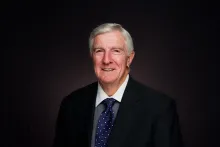
Before his retirement in 2021, Dr. Donald Ward pastored churches in Texas and Louisiana, and taught at Ambassador Bible College in Cincinnati, Ohio. He has also served as chairman of the Council of Elders of the United Church of God. He holds a BS degree; a BA in theology; a MS degree; a doctor’s degree in education from East Texas State University; and has completed 18 hours of graduate theology from SMU.
