

Don Ward
This transcript was generated by AI and may contain errors. It is provided to assist those who may not be able to listen to the message.
The Bible of the Most The Bible of the Most The Bible of the Most Sometimes the scripture in the Bible is so familiar we believe we understand it completely. There's nothing more we can learn about it.
John 14 verses 1 and 2, I believe, is a scripture that meets the description of what I'm talking about here.
John 14 verses 1 and 2, we're all familiar with this. My father's house or many mansions, if were not so, I wouldn't have told you. Normally, you don't think of mansions inside of a house. We've normally explained this, that the word mansion can be translated, abodes, or positions. Thus, in the past, we have gleaned the understanding that this passage refers to positions of rulership in the coming kingdom of God and what God has to offer. That may be true, but there's a lot more to it than that, as we will see this afternoon. So we want to take a look at this scripture. We will spend a lot of time in John 14 and 15, Psalm 13, verse 1 and 2 John.
Let's notice the context here in dealing with John chapter 14. Any time you read any section of the Bible, you should always make sure you read it in context, so you understand what's going on and why it was written. I want you to notice the quote to begin with in verse 1 of chapter 14 of this book. Christ said, let not your heart be troubled. Now, why would he say that? What would be troubling the disciples?
Well, he had previously told them that he was going to go away.
Let's back up to chapter 13 and verse 33. Christ said, Little children, I shall be with you a little while longer. You will seek me, but as I said to the Jews, where I am going, you cannot go. So now I say to you, so he said, look, you know, I'm going away and you can't go where I'm going. I'm sure this calls some anxiousness among the disciples, some anxiety, some confusion in their mind, so much so, if you'll notice in verse 36 here in chapter 13, that finally Peter can restrain himself, so he had to ask, where are you going?
That would be like you saying, well, I'm going to go. I'm leaving, and you're wondering, where are you going? And maybe you're going to California. Maybe you're going to go hunting, or you're going to go somewhere else. Well, they were wondering. Simon Peter said to him, Lord, where are you going? And Jesus answered him, where I am going, you cannot follow me now. You can't follow me presently, but you shall follow me afterwards. And Peter said to him, Lord, why can I not follow you? Now I will lay down my life for your sake. And Jesus said to him, Will you lay down your life for my sake? Most assuredly, I say to you, the rooster shall not crow till you have denied me three times. So here we have Peter saying that he was willing to die for Christ, and yet at that moment he was not prepared to go through it. We all have the annoying feeling of being left out or left behind. This is the way the disciples felt. If you ever had relatives visit with you, children, close family members, and they're visiting with you, you are excited about spending time with them, and then finally comes the day that they've got to leave. And they drive off into the sunset, and you're left behind. And they go back home, and you're there by yourself. Well, you can imagine the empty feeling that a person can have. And I think this is partially what the disciples were going through. They were not quite sure because their minds had not fully been opened yet to understand exactly what Christ was saying here. Consequently, the entire 14th chapter of the book of John is a record of Jesus' reassurance to his disciples that he was not planning to leave them alone or to abandon them.
In fact, he said, on the contrary, if you really understand why it's necessary for me to go away, you would rejoice. You'd be happy. Let's notice verse 28, chapter 14.
Chapter 14, verse 28. You've heard me say to you, I'm going away, coming back to you. If you love me, you would rejoice. So you'd be happy. You'd be rejoicing because I say, I am going to the Father, for my Father is greater than I.
So Christ said, I'm going to go away. Obviously, he had been there with them three and a half years. He'd been teaching them. They'd gotten close to Jesus Christ, but he said, it's necessary for me to go away. Because if he didn't, then the Holy Spirit would not come. The same principle is true today. I mean, obviously, wouldn't it be nice if Jesus Christ were here with us? He'd get up here and speak to us, teach us, and we'd have him every Sabbath. But you find that we still have the words of God written down that Christ spoke. So we can certainly look to those. One of the things that we find, and we're going to discover as we go through this section today, is that Jesus Christ made many promises that we tend to look at and overlook. We don't think about through this section. These are abiding promises. There are something that you and I can take a look at, and we can absolutely rejoice in. We can be thankful over, and we should. So we're going to go through some of these today. I want you to notice the last part of verse 1 of chapter 14. Jesus, in the last part, he says, don't let your heart be troubled. There's no need to be troubled about all of this. He said, you believe in God, believe in me also. So he's telling them, you need to trust me. You need to be able to rely upon me. You need to be able to have faith.
And so he's asking them to have faith and trust in him. Yet, a lack of faith is one of the biggest problems that we have today in the church community. We find that Christ said when he returns to this earth, would he find faith on the earth, or would he find even the faith, however you want to translate that. But faith is a critical issue today. That as we get closer to the end, Satan the devil is certainly up to doing the work that he has been doing. And we live in a society, our cystic type of society and world, and belief in God, trust in the spirit dimension, is something that is certainly lacking. But Jesus Christ told his disciples, he said, look, I will not abandon you. Verse 18 of chapter 14, Christ said, I will not leave you orphans. Notice he says, I will come to you. Now, he was going to send the Holy Spirit, but he was going to come to them through that Holy Spirit. He said, on the contrary, I will come back to you as a special helper. I'll be able to come back by means of the Holy Spirit and do even more for you, living in you, as opposed to living with you. Christ was with them, but he promised that there would come a time when he would actually dwell in them. Let's notice verse 15. If you love me, keep my commandments, and I will pray the Father, and he will give you another helper that he may abide with you forever. What is that helper? Well, he said, the Spirit of Truth, whom the world cannot receive because it neither sees him nor knows him. That's the way the world is. When you have not been called by God, your mind has not been opened, you're cut off from the spiritual world and God's Spirit. They didn't know him, but you know me, or you know him, he says, for he dwells with you. In essence, Christ was with them at that time, and will be in you. There was coming a future time, as Paul wrote in Galatians 2.20, you might remember. He said, I am crucified with Christ, nevertheless I live, yet not I. He said, Christ lives in me.
So you can't be any plainer than that. That once you receive the Holy Spirit, I baptized Tanya Jennings this week. I laid hands on her, and she received the impregnation of God's Spirit. God, Christ, came, the Father came to dwell within her through the power of their Spirit. We realize that the Holy Spirit is the power of God, the essence of God.
So he promised that he and the Father would come and make their home with them. Notice verse 23. Again, as I say, this whole chapter deals with a reassurance to the apostles. Actually, it's something that you and I, once we begin to feel discouraged, down, our chins are dragging you down. We need to pull this chapter out and read it, because it's a very encouraging chapter. Verse 23, Jesus answered and said to him, If anyone loves me, he will keep my word, and my Father will love him. And we, the Father and the Son, will come to him and make our home with him. So there's the promise that the Father and the Son would make their home, would dwell within the converted Christian. So what is the meaning of the word mansion? Here in verse 2, verse 2 says, In my Father's house are many mansions. If it were not so, I would have told you. And he says, I go to prepare a place for you. Well, the Greek word translated mansion here, and as home in verse 23, you'll notice again, I just read verse 23 to you, we will come to him and make our home.
It's the same Greek word. The Greek word translated mansion in home here is moni.
And there are only two places where the noun is translated or used in the New Testament. And they're both used right here. One is mansion, the other is home. However, the verb form of this word is used 121 times in the New Testament. But 69 of those are in John's writings. So John is prolific in his use of the verb mino, spelled a little different. One is moni, the other is m-e-n-o, mino. And in the King James Version, it's translated 61 times as a by, 16 times as remain, 15 times as dwell, 11 times as continue, nine times as terry, endure, and various other translations. And it's instructive to consider some of the ways that the translators decided to translate it. Perhaps the best English word to express the entire range of meaning is to stay. The word stay. You and I, if we go on a trip, and it's a long trip, well, we say, well, tonight we will stay in a hotel or a motel. We say we stay in the truth or stay with the truth. Or we stay faithful to God's law, his way of life, despite trials, problems, and difficulties that we have. So most of us probably, when we think of a mansion, and that's why perhaps the word mansion here is not the greatest translation, we tend to think of a huge, large mansion. Big edifice, big house. A mansion. One's got maybe 20, 30 rooms, 5, 10 bathrooms, you know, just a huge mansion. But yet that's not what the word actually means. Even in Webster's Collegiate Dictionary, 10th edition, it gives an alternate meaning to the word. A separate apartment or lodging in a large structure, so it can refer to that. Notice what the Expositor Bible Commentary says about this section. The imagery of a dwelling place or rooms is taken from the Oriental house in which the sons and daughters have apartments under the same roof as the parents. Now in the Orient, many of the houses are like even in the Mideast.
They're not exactly laid out the way we think of a house being laid out.
They have a court inside, and the house is built around like a square or a rectangle. Parents may live over here, the daughter may live up here, the son may be over here, somebody else may be in a different spot. They all come together in the courtyard to meet and talk, fellowship, and so on. So he's using this type of an analogy, and Christ is telling them the purpose for his departure was to make ready the place where he would welcome them permanently. That there is going to be a permanent abode or dwelling, and that he was going to go, and both he and the Father were going to prepare a place for them. So he wanted to allay their fears, their worries, and again, as it says, they're being troubled about what he had said. And so he's emphasizing, as we will see, that there is plenty of room for everyone to live with him and the Father forever in God's kingdom. It's not something that it's going to be limited, that we reach a certain number. That's it! Cut off! Everybody else out. It's not going to happen that way. So Jesus assured his disciples, in my Father's house there are many abodes, many dwelling places, and as we will see, these are going to be permanent. So what are the abiding promises that Christ gave to us, and that John wrote about? Notice what Barkley has to say about this section, the Daily Study Bible series on the Gospel. Barkley writes, there are many abiding places in my Father's house, may simply mean there is room for all. An earthly house becomes overcrowded. Now, we all understand that. You first get married, your first house maybe has two bedrooms, bathroom, all at once one or two or three children come along, and guess what?
We don't have enough room. We don't have enough bathroom, so you buy a bigger house to take care, to accommodate everyone. So a house can become overcrowded. An earthly inn will sometimes turn away the weary traveler. It's full because its accommodations is exhausted, but it's not so with the Father's house. In the Father's house, there is room for all, is what he's basically saying. So he's saying, don't be afraid. Man may shut you out, but may close the door, but you don't have to worry. There's plenty of room in my Father's house. Now, another important point regarding the connection between the noun moni and the corresponding verb mino can be found by considering what Christ told the disciples in John 14 and 15, as we're going to see. Notice the passages that we're going to read here. I'm going to read some of these to you. That a person, the word mino, the verb refers to a person remaining or dwelling in a place.
How many people do we have here who have lived in their home for 25 years? Anybody? Five years? Ten years? Some of us, I know people who have lived in their home almost from the time they were born. They were born there, they're going to die there. But most of us don't just dwell in one place, do we? But yet, this is what the word here is implying. You can supply the meaning to the word, and as we go through this, you think in the back of your mind, abide, remain, dwell, endure, continue. All of these would be appropriate words that could be used in the scriptures we're going to read. We're going to start in chapter 14 verse 15. We've already read this, but let's notice something we didn't focus on as we went through the scripture earlier. Beginning in verse 15, Christ said, If you love me, keep my commandments.
So here's an identifying sign. If you love God, you will keep His commandments. Anyone who claims to be a Christian, who claims to obey God, serve God, that He's a converted child to God, and is not keeping God's commandments, is no more converted than a rock is.
Christ said, If you love me, you'll keep my commandments. I will pray the Father, and He will give you another helper, that He may abide with you forever. Word abide there, again, is mino. And it means to abide, or He will dwell with you forever. So once hands were laid on you, and you were baptized, and you had hands laid on you, and He gave you His Spirit, God says that Spirit will remain with you forever. Now, the only kick to that is if you commit the unpardonable sin. If you turn your back totally on God and reject Him and His calling. But as far as God is concerned, He gives you that Spirit, and that helper is going to be there to help you, to assist you. And He'll abide with you forever. It says, The Spirit of Truth, whom the world cannot receive, because it neither sees Him nor knows Him. But you know Him, for He dwells. Again, the Greek word mino. He dwells with you. He abides with you. He stays with you. He continues with you and will be in you. And you could go on to read verse 18, which we did. I will not leave you orphans. I, Christ said, will come to you. So Christ said He would come to us. Now notice picking it up in verse 4, John 14 in verse 4.
For where I go you know, and the way you know. And Thomas said, Well, Lord, we do not know where you're going, and how can we know the way?
Well, actually, that's not the section I wanted. Let's go over to chapter 15.
Chapter 15 in verse 4.
It's a good section, but it's not the one I was going to read. Chapter 15 in verse 4.
Christ says here, again, we're using the verb here, mino. He said, abide in me.
So you and I are to abide. We're to be faithful. We're to be loyal. And I knew. So God gives us His Spirit, and that Spirit places us in the Church. And so you and I are to stay with Him, continue with Him, dwell with Him. We're not to leave. We're not to go off, do our own thing. He says, abide in me, and I in you. And as a branch cannot bear fruit of itself, unless it abides in the vine, neither can you, unless you abide in me. Now, this is so clear that it's elementary. You've got a tomato vine. It's producing tomatoes. You cut the branch off from the vine. Guess what? No more tomatoes. It's going to die. It'll shrivel up because it's not receiving nourishment from the vine. And so Christ says that you and I must abide in the vine. We must stay with Him. And the only way that we can produce fruit is not on our own. Spiritual fruit comes from God's Spirit through God dwelling in us. So we don't just go out and generate spiritual fruit. It's got to be fruit. It's got to be from God. He says, look, I'm the vine. I supply the power. I supply the Spirit. You're the branches. He who abides in me, and again the word abides, in me and I in Him, bears much fruit. For without me you can do nothing. Now, Jesus Christ said on more than one occasion, I can do nothing of myself.
And He acknowledged that His strength, His power, came from the Father. That the Father was the one to guide Him, lead Him, teach Him, direct Him. So if you and I are going to bear fruit, then that fruit has to come from our abiding, remaining, and dwelling connected to the vine. So that means you've got to study, you've got to pray. If you're going to maintain a connection, a friendship, you've got to be doing what's necessary to do that. Now, verse 6, if anyone does not abide in me, he's cast out as a branch and is withered. They gather them and throw them into the fire, and they are burned. So again, we see that we have to abide or dwell in Him. Verse 7, if you abide in me, my word abides in you.
Okay, now Christ abides in us, but notice something a little different here.
God's word must abide in you. You will ask what you desire, and it shall be done for you. If you did not have a Bible, God's word is to be written in our hearts, Hebrews 8 and Hebrews 10. Not just on stones, but it is to be written in the mind and in the heart of an individual. And you and I are to be motivated. We'll see a little more about that as we go along. Verse 8, and by this my Father is glorified that you bear much fruit, so will you be my disciple. So when God looks down, how does He know who His disciples are? They're going to be bearing fruit. They will have the fruit of the Spirit, and they will be bearing that fruit. Verse 9, as the Father loved me, I also have loved you, abide, remain, dwell, stay there in my love, He said. And if you keep my commandments, verse 10, you will abide or dwell in my love, just as I kept my Father's commandments and abide in His love. So again, we find that anyone who claims to be a Christian, who says he knows the Lord, 1 John 2.4, and he doesn't keep the commandments, is a liar, and the truth isn't in him. These things I have spoken to you, that my joy may remain in you, and that your joy may be full. So Christ said, I'm telling you this so that you're not discouraged, you're not despondent, you don't give up, you're not troubled. Now notice in chapter 15 verse 16. Verse 16, Christ said, You did not choose me, but I chose you, and appointed you, that you should go and bear fruit, and that your fruit should remain. The word remain, again, is me know. Should stay, should continue. Your fruit should remain. See how the word is used, that whatever you ask the Father in my name, He will give you.
Now it's very interesting that John was the last apostle alive that we know of, of the original apostles. He lived to around the turn of the century. He wrote the book of Revelation, probably his last book that he wrote, but he also wrote 1 John, 2 John, 3 John. He wrote those books because heresy was multiplying in the church. There were the Gnostics, there were the cynics, there were all kinds of people who were coming forward with their own ideas and putting them forward. And so on 1 John, 2 John, 3 John, let's go over to 1 John chapter 2. The apostle John begins the battle against some of the heretics, and he does battle against those who were preaching false doctrine.
So let's notice, and every one of these verses I'm going to quote to you has Meno, or Meno, in verse 6.
He who says he abides in him, ought himself also to walk just as he walks. So somebody who says he abides in Christ, or he dwells in Christ, he's Christian, he's converted, got to walk, got to live. His whole way of life has to be the same as Jesus Christ. Verse 10, He who loves his brother abides in the light, and there is no cause of stumbling in him, but he who hates his brothers in darkness and walks in darkness. So you and I are to abide in the light, brethren. If we abide in the light, light is symbolic of truth, understanding, then we will love our brother. Verse 14, I've written to you, fathers, because you've known him, who is from the beginning I've written to you young men, because you are strong, and the word of God abides in you. So again, we find that God's word dwells or abides in us, and you have overcome the wicked one. Verse 17, the world is passing away and the lust of it, but he who does the will of God abides forever. If we do God's will, we will dwell with him. We will abide forever. Then verse 19, they went out from us, but they were not of us, talking about those who had departed the church in the first century. For if they had been of us, they would have continued. The word continued there is minnow. They would have remained. They would have continued. They would have stayed, is what he's saying with us. But they went out, that they might be made manifest, that none of them were of us. Verse 27, verse 28, you find that John extensively uses this word. Notice in chapter 3 and verse 6, whoever abides in him does not sin. Uh-oh! Houston, we have a problem. Do you sin? Do I sin? Well, of course we do. We all sin. But it says whoever abides in him does not sin. Well, the tense in the Greek means does not practice sin. It's talking about sinning as a way of life. You and I, before we were converted, lived in sin. It was our practice. It was a way that we lived. We didn't know any better before we understood about the Sabbath or the Holy Days or God's law. Now we do. So we still sin, but we don't live in it. We don't practice it. It's not to be a way of life with us. So that's what he's saying here, that if you abide in him, then you do not practice sin. Verse 9, and whoever has been born of God does not sin. And his seed remains. God's seed remains, me know, in him. And he cannot sin because he's been born of God. So God's Spirit dwells in us. And if God's Spirit is dwelling in us, and that Spirit is active, then we're not going to want to deliberately sin or to practice sin. We're all weak. We will all stumble. We'll all fall. But we get back up. We repent, and we move on.
Chapter 4, verse 12, says, No one has seen God at any time. If we love one another, God abides in us. And his love has been made perfect in us. So, you know, a number of other scriptures here. But let's go over to 2 John, chapter 1, verse 2. Of course, there's only one chapter. So it's not too hard to find. Verse 2 here, Because of the truth which abides in us, and will be with us forever. So, brethren, the truth of God abides, dwells in us. What is truth? Thy word is truth, the Bible states. Notice verse 9, Whoever transgresses and does not abide in the doctrine of Christ.
The word doctrine can mean teaching, what Christ taught. If we don't stay with that, if we don't abide with what Christ said, if we don't follow His example, it goes on to say, In the doctrine of Christ does not have God. He who abides or dwells in the doctrine of Christ, stays with it, doesn't give it up, as both the Father and the Son. See, both are with Him, dwell in Him. So, if anyone comes to you and does not bring this doctrine, if somebody comes along, they're not going to bring the teachings that Jesus Christ taught, what He had to say.
Do not receive Him into your house, nor greet Him. For He who greets Him shares in His evil deeds. Now, today it's easy to do that through the internet, through literature, and in all kinds of ways. Okay, let's back up to chapter 2 and verse 24, 1 John 2.24. There's a section here I'd like to analyze a little bit, and it applies.
I've already touched on this. Verse 24, Therefore, let that abide in you which you heard from the beginning. Okay, they had the gospel preached to them. They had the truth preached to them. The section here, the title says, Let truth abide in you. Therefore, it says, Let that abide in you which you've heard from the beginning. If what you heard from the beginning abides in you, the truth about Jesus Christ, the Word of God, the plan of God, the gospel, the kingdom of God, you also will abide in the Son and in the Father.
So we find that the truth, God's Word, the gospel, what we've been taught needs to abide in us. So you find, if you begin to look at this section, they, in contrast to the Adichrist or those who were teaching false doctrine, are exhorted to make certain that they, what they heard in the very beginning, the truth that they heard, what the apostles brought to them and taught them and explained to them, that that remains in them.
And if it remains in them, they can be assured that the Son and the Father remain in them and that they remain in the Son and the Father. Again, the word remain or abide here is mino. And the gospel, as one of the commentaries goes on and says, must not only be heard, but it must have a vital place in one's life.
Not just a matter of hearing the truth. It's easy to be able to recite it, quote it, hear it. It's got to be something that's in you. As Marshall says, it's not enough merely to have heard it and to have sent to the message in time past. So yeah, I believe that and agree with it. The message must continue to be present and active in the lives of those who have heard it. They must continually call it to mind and let it affect their lives.
So it's not just a matter of knowing the truth. We have to live the truth. We have to obey the truth. If you ever had a trial or a test and as you're going through this, certain scriptures pop into your mind or you open the Bible up and begin to study. And you'll find some scriptures that talk about trials and tests. All at once you begin to remember more and you cross-section others. And as you're studying, the scriptures, what you've heard, sermons, principles pop into your mind. And all at once, these things begin to take hold and you remember them. And so you're encouraged by it and you are able to live it.
So you and I are to be faithful to the Word of God by not only professing it, but by living it. Where the Word abides, the Son and the Father also abide. And you and I can have fellowship with the Father and the Son. The Word of God is not the goal, it's the means to the goal. It's the means to the end. And so you find here that you and I have access to the Father and to the Son.
Now let's turn back to the book of John again. And very quickly, let's take a look at a few scriptures and then we'll change gears here. At some of the abiding promises, the book of John is a unique book among the Gospels. Matthew, Mark, and Luke are part of the Gospels, but they all basically say the same thing. One will add more details to certain accounts than others. The book of John, about half of it, deals with the last Passover or the events leading up to it to the last Passover.
And we find in the book of John also that John emphasizes Christ as the Son of God, coming from God, looking to the Father. Now notice several of the passages here where Minow is used before we come to Chapter 14. John 5 verse 38 to begin with, and we'll cover these very quickly. John 5 verse 38.
He writes, "...but you do not have his word abiding in you, because whom he sent.
Him you do not believe." And so Christ is telling the Jews, look, if you believed, and if you really believed what I said, then that would be proof that God's working with you or in you, but his word doesn't abide in you. So Jesus said this to a group of the Jews seeking to kill him. Then in John 6 and verse 27, Christ said, "...do not labor for the food which perishes, but for the food which endures to everlasting life." Now here was a major lesson that Jesus Christ was teaching them. You might remember the first part of Chapter 6. Christ feeds the 5,000. So a lot of that crowd continued to follow him. Why? They wanted a free handout. Hey, make them get a free meal. And so Christ then is emphasizing, "...don't labor for the food which perishes, but that which endures." Me? No. The word endure. That which endures. So it was a major lesson that physical food can nourish us for a short period of time, but it's the spiritual food brethren that is going to give us eternal life. I can eat a meal tonight and feel full, and it will supply energy to my body. It will be digested and pull nutrients out, go into my system, provide energy, and the waste product is eliminated through the digestive process.
Tomorrow, I want to eat again, because that's the way we are, humanly speaking. If you don't eat, after a while you begin to run out of energy. If you don't drink, your body gets out of the shelter, your electrolytes get upset, and things begin to go haywire with you.
But if you eat the Word of God, the spiritual food of God, this will give you eternal life. This is what gives us that life that we're wanting. So the major lesson that Christ said, don't labor for the food that perishes, but that which endures, that stays there, to eternal or to everlasting life. That's the promise that we have been given. Now in John 6 and verse 56, John chapter 6 and verse 56, He who eats my flesh and drinks my blood abides in me, and I in him. We dwell in Christ. So speaking of the Passover, partaking of the symbols of the Passover, confirms our continual relationship with Christ. And it shows that we believe, we trust, in His sacrifice. John 8 and verse 31, Jesus said to those Jews who believed Him, If you abide, if you stay, if you dwell in my word, you are my disciples indeed.
So you see, we have to abide in His word. Many people start following Christ, but they didn't continue. They didn't remain faithful. They turned back. The same is true today. Many hear the truth. Many read it, but they don't stick with it, and they drop from it. As Matthew 24 and verse 13 tells us, He who endures to the end, the same shall be saved. Or as one of the modern translations say, For if we are faithful to the end, trusting God just as firmly as when we first believed, we will share in all that belongs to Christ. And so you and I have to endure to the end. John 8 and verse 35, A slave does not abide in his house forever.
He's not going to inherit that house. Not the slave. Who will? Well, says, But a son abides forever. You and I, as the sons and daughters of God, will abide in his house, my father's house, or many mansions. You and I will abide forever, as it goes on to say here. Now this is part of the promise that Christ has made. If you'll back up here to verse 32 to get the context. Remember verse 32, You shall know the truth, and the truth shall make you free. So he's talking about freedom. Well, the Jews took offense at this. They said, We're Abraham's descendants, and have never been in bondage to anyone. I've had a short memory of history. But says, How can you say we will be made free? And Jesus answered them, Most assuredly I say to you that whoever commits sin is a slave of sin. If you practice sin, you're going to be a slave to sin. So they were a slave to sin.
And a slave does not abide in the house forever.
But a son abides forever. Therefore, if the son makes you free, you shall be free indeed. How are we made free from sin? From its penalties. Well, by repenting, being baptized, having our sins forgiven, and continuing to repent on a regular basis.
Now, one other scripture in John 12, 46.
John 12, verse 46, Christ said, I have come as a light into the world, that whoever believes in me shall not abide in darkness. So Christ is the light of the world. We are part of His body. He's a head. We're part of the body. And as such, we are no longer to abide in darkness, but we do abide in the truth.
So with all of that in mind, let's go back to John 14 again. John 14, verses 2 and 3.
What we've read basically so far is that first Jesus assured His disciples with general statement that there's plenty of room in the Father's house. Don't have to worry about if I'm there, will somebody else take my place? Everybody can be there. He then spoke of a specific place that He was going to go prepare for them by extension for us, for everyone through all ages. He says in verse 2, in my Father's house are many mansions. If it were not so, I would have told you, I go to prepare a place for you. And if I go and prepare a place for you, I will come again. So He promises to come again and receive you to myself, that where I am, there you may be also. So He said one day, he will come and receive them to himself. Greek word for place here is topos. The main contextual meaning probably means a specific place. However, the word can mean a position held in a group for discharge of responsibility. Jesus Christ had already told His disciples that each one of you in the regeneration shall sit on a throne judging the twelve tribes of Israel. He already told them what their reward was going to be, that they would judge Israel. They will be kings over those tribes. The responsibility of ruling with Christ, brethren, is our destiny, is our calling, is what the kingdom of God is all about, the family of God. We are to be born into the very family of God and rule with Him forever. Let's notice Revelation 21 and verse 1, and we'll finish with this scripture.
Revelation chapter 21 and verse 1.
John writes, Now I saw a new heaven and a new earth, for the first heaven and the first earth had passed away, and there was no more sea. And I, John, saw the holy city, new Jerusalem, coming down out of heaven from God, prepared as a bride adorned for her husband, made ready. She's all dressed up in white raiment. And I heard a loud voice from heaven, saying, Behold, the tabernacle of God is with men, and He will dwell with them. The word there, schno, meaning He will tabernacle. He's going to dwell with them, and they shall be His people, and God Himself shall be with them, and be their God. And God will wipe away every tear from their eyes. There shall be no more death, nor sorrow, nor crying. There shall be no more pain, for the former things have passed away.
Now, when you put it all together, you discover that God's plan is not just the millennium.
We know the millennium is an important part. You and I are being trained and prepared now to rule in the world tomorrow. We have a number of scriptures that deal with that. And yet, the Bible clearly says in 1 Corinthians 2, Eye is not seen, ears not heard, neither has it entered the heart of man, the things that God has prepared for him. When is that time of things prepared for us that we can't see? Now, we don't know everything about the millennium, but there are books, there are chapters in the Bible that are written describing the world tomorrow, what it's going to be like. We go to the Feast of Tabernacles for seven days, and we have the truth preached to us about the way the world tomorrow is going to be. The millennium. Then comes the white-thrown judgment, but that's not the end either. White-thrown judgment is the chance for everyone who's never had an opportunity to come up, know God's way, be taught the truth of God, have their chance at salvation, their first chance. Then comes the end. Then comes a new heaven and a new earth, in which will dwell righteousness. And only those who have remained faithful and endure to the end, who've overcome, developed God's character, who have been made a part of his family through the resurrection, are going to be there. God himself, the Father, will come down to this earth, but it won't be the old earth. It's a new heaven and a new earth. And it has been and will be prepared for the family of God. The New Jerusalem is probably prepared for the bride of Christ. But you go through the rest of this chapter and you'll find that there are kings who bring their glory into the New Jerusalem. Jesus Christ and the Father have been preparing. We find in the book of Hebrews chapter 11, the Father is preparing right now the New Jerusalem. He's in the process. And so they are preparing a destiny for us. Do you know what we're going to do for all eternity? Has it entered into your mind yet? Do you know? Can you turn to a scripture and say, here it is, this tells me what I will be doing.
We wonder, we guess, we speculate, we talk about it. But what does God have in store for the family of God for all eternity? Ruling from the new earth and ruling forever with God the Father. Well, our minds probably couldn't even begin to comprehend. We know that God works. God is not a slugger. God plans. God is a creator. Obviously, some of the things that he's going to do will revolve around that. But, brethren, that's our destiny. That's our calling. That's why God has called us out of this world to be a part of his Church today. And eventually, he will extend that to every human being. So, when you put it all together, Jesus assures us that if we continue to keep his commandments, remain steadfast in his love, and in our relationship with him, he will make sure that we have a permanent dwelling place with him and the Father. We will dwell and abide with them forever. Whatever the God family will be doing at that time, we will be a part of it. And we will be an integral part of it. And so, what we've read is that there are a number of promises that God makes to us.
And many of those are listed here in John, 1st, 2nd, 3rd John. So, brethren, let's rest assured on the abiding promises of God, the sure promises of God, that through Jesus Christ, we know that we will receive them and that there is coming a time here in the future when you and I will abide and dwell with the Father and the Son forever.
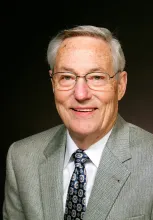
At the time of his retirement in 2016, Roy Holladay was serving the Operation Manager for Ministerial and Member Services of the United Church of God. Mr. and Mrs. Holladay have served in Pittsburgh, Akron, Toledo, Wheeling, Charleston, Uniontown, San Antonio, Austin, Corpus Christi, Uvalde, the Rio Grand Valley, Richmond, Norfolk, Arlington, Hinsdale, Chicago North, St. Petersburg, New Port Richey, Fort Myers, Miami, West Palm Beach, Big Sandy, Texarkana, Chattanooga and Rome congregations.
Roy Holladay was instrumental in the founding of the United Church of God, serving on the transitional board and later on the Council of Elders for nine years (acting as chairman for four-plus years). Mr. Holladay was the United Church of God president for three years (May 2002-July 2005). Over the years he was an instructor at Ambassador Bible College and was a festival coordinator for nine years.
