
Roy Holladay
This transcript was generated by AI and may contain errors. It is provided to assist those who may not be able to listen to the message.
Well, good afternoon, everyone! Got a little bit of a scattered crowd, but you're kind of an example of the sermon I'm going to get today. So you all probably don't need to hear this because you showed that you're already doing this. But anyway, now nice to have all of you here. I know it's been very difficult weather out there and it's been difficult to get here. I do want to mention we do have one couple, Barton, Roxanne, Pope, who came all the way from the UP. So they get the prize of being here from the furthest distance. I don't know what kind of a prize that is, but they had to go down to Detroit yesterday for an appointment of some kind. So I thought that must have been interesting, making it down to Detroit. So I guess they're up there in the UP. They're used to snow and hazardous driving weather. But again, very nice to have all of you here who made it. I know it's a little bit of a shorter crowd today, but I know there's a lot of you probably online with us as well today because of the bad weather and hazardous driving. So welcome here to the services in Flint. All of you happen to be online with us as well. Well, it's now only a few weeks from Passover, which this year is going to be on Thursday evening, March 29th. Again, here we have that Sarah R. Church building here for those of you in Flint. And we're all familiar with what Paul wrote in 1 Corinthians 11 regarding the Passover. But let's briefly review that, what he wrote here at the beginning of my introduction here. Let's turn to 1 Corinthians 11 to review what Paul wrote concerning the Passover. 1 Corinthians 11, beginning in verse 23, where Paul writes, For I received from the Lord that which I also delivered to you, that the Lord Jesus, on the same night in which he was betrayed, he took bread. And when he had given thanks, he broke it and said, Take and eat. This represents my body, which is broken for you. Do this in remembrance of me.
And of course, we do that in remembrance of him on the very anniversary of when he made that commitment. And when he did that, when he initiated that new Passover service on the very Passover day. And that eve. In the same manner, he also took the cup after supper, saying, This cup is the new covenant in my blood. Do this as often as you drink it in remembrance of me, as we do on the eve of Passover every day, every year, I should say. For as often as you eat this bread and drink this cup, you proclaim the Lord's death until he comes. Therefore, whoever eats this bread or drinks this cup of the Lord in an unworthy manner will be guilty of the body and blood of the Lord. Verse 28 is the one I want to come to and emphasize. Verse 28 says, But then, what a man examined himself, and so let him eat of the bread and drink of the cup. Let a man examine himself. We all try to do that in the weeks leading up to the Passover, which we now have six weeks or so to go. But I want to ask this here. What is the best and maybe most effective way to do that? To answer that, I want to approach this from a slightly different perspective, because I feel the best way. This is actually suggested to me by Evelyn, by the way. Evelyn brought this up, and we were just talking about it, and she says, Well, maybe this would be a good way to approach it. And while that would be, I started thinking about it and it led to this sermon. But maybe another way of approaching examining ourselves is to examine Christ. And how do we compare to Christ? That's a good way, maybe, to approach a little different way, examining ourselves, to examine Christ's commitment and His example. So when we partake of the New Covenant Passover, we are really renewing the covenant relationship that we made with God the Father and Jesus Christ in our baptism. And we are renewing our commitment to follow Christ unconditionally. And we were baptized. We made an unconditional commitment to follow Jesus Christ, follow His example, follow God's Word, follow God's laws and principles in our life. And follow the example that Christ set for us. Regardless of trials, problems, setbacks or losses, things that happened to us along the way. Regardless of what we might have to give up or sacrifice along the way in order to keep our commitment. So this year, then, in examining ourselves prior to partaking the Passover, I want us all to focus on Christ's commitment that He made to be our Savior, to be our Passover.
And to do that, I would like to pick up from where we left off in my last sermon on the Wise Men from the East, part 2. This is not a continuation of that series. I ended that last time. But that was a distinctive, separate sermon. But I want to conclude in part 2 of Wise Men from the East directly leads into the lifelong commitment that Christ made in order to become our Savior.
In order to become, as it says in Revelation 13, 8, the Lamb slain from the foundation of the world. So today, then, we want to look at Christ's commitment to become our Savior. We want to look at His entire lifetime commitment that He made. And also, when we do this, we have to realize that Satan is in the background doing everything within His power to thwart Christ's commitment, to keep Him from keeping that commitment.
So my title for the sermon here this afternoon is this. My sermon is in the form of a question. Is Christ's commitment our commitment? Is Christ's commitment our commitment? Where should we begin? Well, let's begin where we left off in the Wise Men from the East, part 2.
Let's begin in Matthew 2. Just to review that for a minute, we'll pick it up a little bit beyond what it says here. In Matthew 2, verse 1, After Jesus was born in Bethlehem of Judea and the days of Herod the king, Behold, wise men from the East came to Jerusalem, saying, Where is he who has been born king of the Jews? For we have seen his star, and he represents an angel. Obviously, I covered last time. We have seen his star in the East and have come to worship him.
Verse 3, When Herod the king heard this, he was troubled, and all Jerusalem with them. As we reviewed last time, the last two servants, Jerusalem had a population of about 30,000, which welled to maybe 60,000 or more in holy day seasons, pass over. So, you know, there had to be more than three wise men. They wouldn't even notice coming into a town of 30,000 or more.
But now we know why King Herod, where the king was troubled and all Jerusalem with him, because these wise men were Jews and Israelites, leaders from the Parthian Empire, who knew and understood the 70-week prophecy of Daniel 9. And like I said, last time there had to be a lot more than three of them. They came with a small Parthian army, as escorts, which undoubtedly numbered maybe in the hundreds, if not in the thousands. And it says they came with their treasures, as we read in verse 11.
And when they had come into the house, they saw the young child, because Christ by this time was a young child, no longer a babe, He's probably close to a year old. They saw the young child with Mary, His mother, and they fell down and worshipped Him.
And when they had opened their treasures, they presented gifts to Him, gold, frankincense, and myrrh, which are very valuable gifts. But obviously, when they went into last time, those treasures were worth a great deal of wealth and so on. They didn't just come to any king.
He was not just the king of the Jews. They had, as I said last time, they called their king, King of Parthian Empire, they took around the title King of Kings. And so they came here to make sure Christ, as they looked at Him as fulfilling that 70 weeks prophecy, they could have enough wealth to become their king of kings, which was the title that was bestowed on the kings of Parthia. What happened next? Verse 12. Then being divinely warned in a dream that they should not return to Herod, they departed for their own country another way.
So in other words, they returned to Parthia by a different route than they came by. Then what happened? Verse 13. And when they had departed, behold, the end of the Lord appeared to Joseph in a dream, saying, Arise and take the young child and his mother, and flee to Egypt, and stay there until I bring you word. For Herod will seek the young child to destroy him. So let's pause here for a moment. Here we see two things. One, Satan is, when you look and understand this, Satan, he must really destroy this person, this Christ child.
It's Satan. Satan is the spiritual influence behind this scene, seeking through Herod to destroy Jesus Christ. And number two, Joseph is indicated as being the guardian of this young child at this time. Now, why is that significant? And now is it to tie into where we left off last time in the Wise Men from the East, Part 2. See, Joseph, as the guardian of Jesus, would also be the guardian of the wealth that was bestowed on him by these wise men from the Partian Empire.
In this case, which meant what? It meant that Joseph had the financial means to flee with his family to Egypt and stay there as long as necessary and to support them in Egypt as long as necessary. That would not be cheap. It would take financial means. And if he had that financial means, it would be bestowed upon him now to do that. Going on in verse 14, When he arose, he took the young child and his mother by night, Joseph did, and departed for Egypt, and was there until the death of Herod, that it might be fulfilled, which is spoken by the Lord, through the prophet, saying, Out of Egypt I called my son.
And quoting the prophecy from Mos. 11, verse 1. Fulfilling this prophecy meant what? Stop and think about it. It means that God and everything worked out in advance, and that God is sovereign over all things. God is in control of these events that are taking place here. Going on in Matthew 2, verse 19, down to verse 19 in Matthew 2, Now when Herod was dead, behold, an angel of the Lord appeared to dream to Joseph in Egypt, saying, Arise, and take the young child and his mother, and go to the land of Israel.
For those who sought the young child's life are now dead. Verse 21, So then he arose, and took the young child and his mother, and he came into the land of Israel. But when he heard that Arceus, Arceus, as it says right there in your Bible, Arceuschilius, was reigning over Judea, instead of his father Herod, he was afraid to go there. And being warned by God in a dream, he turned aside into the region of Galilee.
Now, to understand what's being said there in that verse, we need a little background to help us understand why God warned Joseph not to return to Judea. Herod was trusted by Rome and was given a considerable area to rule over. And when he died, the area over which he ruled was split into three overall areas or territories or sections. Now, Herod had three sons, and he gave each son jurisdiction over one of those three sections that he had formally ruled over.
One area was Galilee to the north, second area was Samaria, which was in between, in the middle, and the third area was Judea to the south, from which Joseph had left with his family to go to Egypt. He came from Judea. That's where Jerusalem was. So Judea was now ruled over by his son, Arceus, as we just read.
Now, you're going to look a bit back on it. He was a very, very bad king, who was not to last long on the throne. I think he did rule for eight or nine years. William Barkley in his New Testament study Bible says this of Arceus, He had opened his rule with the deliberate slaughter of 3,000 of the most influential people in the country, talking about Judea. So, needless to say, it was no longer safe for Joseph to return to their home in Judea. Joseph being down in Egypt, he wouldn't know all this stuff was going on. He's being warned in a dream by God what's happening. Galilee, on the other hand, was the furthest area in Palestine away from Judea, and was ruled over by Herod's son, Antipas. He became known as Herod Antipas. And Herod Antipas, contrary to his brother, Arceus, was a comparatively mild prince. He was a fairly good ruler overall. Which is why God warned Joseph in a dream to turn aside from Judea and instead go to the region of Galilee to the far north. Again, it shows that God is in... He knows what's happening. He knows everything's going on. He is in control of things. And God is directing events in the sovereign over everything that's happening here in this story. So now that we have Joseph and Mary and their young child dwelling in Nazareth in Galilee. Now I begin by asking, when it comes to Christ's commitment, where should we begin? Well, we'll begin right here with Christ as a young child, now dwelling with Joseph and Mary safely in Galilee. Now we come to something very intriguing, which you don't hear talked about very often. We come to two very interesting periods of time in the life of Jesus Christ. We now come to what I will call the silent years. There's only two gospels that really give anything about Christ's birth and life as a young baby or a child. And that's Matthew and Luke.
But those two accounts, Matthew, then skips from the time he's a young child all the way up to the beginning of his ministry. That's when John the Baptist comes on the scene to baptize Christ. Let's look at that. Matthew 2, verse 23, just to show you how Matthew 2 ends. And he came and dwelt in a city called Nazareth, as we just covered, that it might be fulfilled when it's spoken by the prophets, he shall be called a Nazarene. Again, God's in charge of all this. He's in control of all these events that are taking place.
Then it skips from there, in the next chapter, Matthew 3, verse 1, to the time that Jesus is nearly 30 years old. So now he's going to be baptized by John the Baptist. In those days, John the Baptist came preaching in the wilderness of Judea. And saying, Repent for the kingdom of heaven is at hand.
Dropping down to verse 13, then Jesus came from Galilee to John of the Jordan to be baptized by him. Leaving us in with about a 29-30 year period of silence, where Matthew says nothing about the life of Jesus Christ during those years.
Where was he? What was he doing? What was taking place? Now, the only other gospel that gives us any information during this period of time, and it does give us a little information, even if it gives another period, one thing that happened in between those silent years, and that's in Luke, Luke's count. Let's go to Luke chapter 2. Again, Luke's the only other gospel that talks about the birth of Christ and the events surrounding the birth of Christ, and that's in Luke chapter 1.
We'll pick it up in the first part of Luke 2 as well. So let's go to Luke chapter 2, and we'll pick it up in Luke 2 verse 41. It tells of another period in the life of Christ that takes place between the time he's a young child until the beginning of his ministry, at about age 30.
Luke 2 chapter 41, his parents went to Jerusalem every year at the feast of the Passover, and when he was 12 years old, here's an event that takes place when Christ is 12 years old, the only description of any event that took place between a young child and when he began his ministry. And when he was 12 years old, they went up to Jerusalem according to the custom of the feast, the feast of the Passover. And when he had finished the days, the days of unleavened bread, that was observed after the Passover, as a return, the boy Jesus lingered behind in Jerusalem, and Joseph and his mother did not know it.
But supposed him to have been in the company, they went on a day's journey and then sought him among their relatives and acquaintances. So, he was with them, but then all of a sudden, after about three days, they lost track of him and wondered where he was. What would this indicate, generally speaking? Well, it would indicate that Christ was very mature for his age, and he was very well trusted by his parents, his legal father, Joseph, and his mother, Mary.
So here, then, we have a very brief glimpse into Christ at the age of 12. Let's continue in verse 45. So when they did not find him, the return to Jerusalem seeking him. And so it was that after three days, they found him in the temple, sitting in the midst of the teachers, both listening to them and asking them questions. And all who heard him were astonished at his understanding and answers. And when they saw him, they were amazed, and his mother said to him, Son, why have you done this to us? Look, your father and I have sought you anxiously.
So they're wondering what happened. But Christ, even at the age of 12, was very well informed and well educated in the Scriptures and in the Law, to the point where he astonished even the teachers of the Law. Very, very well he understood God's Word. Of course, he'd written it and inspired it. But he not only surprised him with his questions, but with his understanding and his answers.
Verse 48, so when they saw him, they were amazed, and his mother said to him, Son, why have you done this to us? Look, your father and I have sought you anxiously. And he said to them, Why did you seek me? Remember, he's 12 years old, and he says this. Why did you seek me? Did you not know that I must be about my father's business? He tells us what? He tells us, at least at this point, Christ is fully aware of who he is, to the point where he is fully aware of who he is.
He's fully aware that he is the Son of God. God is his father. Not Joseph is not his real father, but his real father is God.
So he's not aware that God is his real father, and his father in heaven. And from this point on, then, he says he must now be about his true father's business. God the father in heaven. He must be about his true father's business. Now, what business was that?
John 3, 17. For God did not send his Son into the world to condemn the world, but that the world through him might be saved. So he now fully realizes that at age 12, he must now be about his father's business, and his father's business was that the world through him might be saved. Think about that. 12 years old. And the weight of the whole world, past, present, and future, was now on the shoulders of Jesus Christ at age 12. So then, we're talking about his commitment. Let me ask this question. And how much commitment would it take to fulfill that role and that commission? You know, is Christ's commitment our commitment? Now, there are two periods of the silent years, as we just noted. One was from being a young child to age 12, the other from age 12 to about age 30, when Christ was baptized by John the Baptist. Now, there is one more brief glimpse into the life of Christ after the age of 12 that is given to us by Luke. This covers the ongoing years after age 12. Let's go back to Luke 2 here. Let's continue in Luke 2, I should say. It's going on in verse 39 of Luke 2. Pick it up there. He said to them, Why did you seek me? Did you not know that I must be about my father's business? It was we just talked about. But then going on to verse 50, going on in verse 50, they did not understand the statement which he spoke to them.
They did not understand all this. So then he went down with them and came to Nazareth and was subject to them, but his mother kept all these things in her heart. And then verse 52, which I want to focus on, that kind of carries it past age 12. And Jesus increased in wisdom and stature and in favor with God and men. So during the silent years between age 12 and age 30, Jesus increased in wisdom and stature and in favor with God and men. So as we now begin to look at Christ's commitment, let's first note this. I want to make a point of something. And that is that the life and the death and the resurrection of Christ is confirmed by sources outside of the Bible. We're talking about his lifelong commitment, but that life of Christ and his even death and resurrection is confirmed by sources outside the Bible. For example, the Jewish historian Flavius Josephus lived in the first century AD during the very time of Christ. And here's what Josephus wrote in Anticities of the Jews, Book 18, Chapter 3, Section 2. I'm going to quote it. There was about this time Jesus, a wise man, if it would be lawful to call him a man, for he was a doer of wonderful works. He drew over to him both many Jews and many Gentiles. He was Christ. And when Pilate, that is Pilate, Roman, Procurator, Judea, and when Pilate, at the suggestion of the person among us, had condemned him to the cross, he appeared to them alive again the third day, as the divine prophets had foretold. So here, Josephus refers to his resurrection as an historical fact, saying he appeared to them alive again the third day. He's just a historian, but he's writing what he knows of personally firsthand, right there, living at the very time that this all took place in the first century AD. So there are also three other authors of that time period who also refer to Christ as being an historical figure. I'll just give you their names, and I'm not going to go into that. One was Celsus, C-E-L-S-U-S. Another was a historian by the name of Quadratus, T-U-A-D-R-A-T-U-S. The other is, when it's more familiar to us, Tacitus, T-A-C-I-T-U-S. So the life and the depth and resurrection of Christ and his influence on others is confirmed by sources outside of the Bible.
So let's now move on to the beginning of Christ's three and a half year earthly ministry.
Christ began his ministry. It tells us that in Scripture at about age 30. Let's read that, Luke chapter 3. Luke chapter 3, verse 23 tells us he began his ministry at about 30 years of age.
Luke 3, verse 23, Now Jesus himself began his ministry at about 30 years of age.
Now, I want to stop for a second because you read over that and not think about it too much, but why is it significant to know that?
Why is that in Scripture? Why is that point brought out to us?
See, Jesus was God in the flesh, and he undoubtedly reached adult maturity much sooner than a normal person would. We already read that from verse 3. We just read there about what happened when he was 12 years of age. He was very, very mature, both physically and spiritually at that time in many ways, much more so than a normal 12-year-old would be. He already had the maturity of an adult at age 12, as we read in Luke 2.
Yet Jesus chose not to enter into his leading religious role until he had attained the age of 30.
So he asked, well, why is that? Why didn't he start sooner? He certainly was mature enough.
Well, there are probably two reasons. The Bible doesn't tell us, so all I can do is speculate, but there are probably two reasons for that. I think one is probably indicated by what it says in Numbers 4, verses 1-3. In Numbers 4, the first three verses say this, Then the Lord spoke to Moses and Aaron, saying, Take a census of the sons of Coeth among the children of Levi, they were the priests of the Old Testament, the Levites, and take a census from the sons of Coeth among the children of Levi, from 30 years old, and of all who entered the service to do the work of the tabernacle of Median.
So in other words, that's telling us the priests of the Old Testament could not begin their full function as priests until they had attained the age of 30. So Christ, He is a priest. He's not of the tribe of Levi, He's the tribe of Judah, but He's a priest. And He chose to be subject to that requirement, waited until age 30. That's one possible reason that I can come up with. A second reason, I would say, would be to fulfill the 70 weeks prophecy of Daniel, chapter 9, which I'm not going to have time to go into. That would take a total entire Bible study. But that prophesied the exact time of his three-and-a-half-year ministry, and the exact time of his death. So those then are two possible reasons why it is significant that Christ began His ministry at about age 30. But now let's look at Christ's commitment, the main point of this sermon. Let's look at His commitment. And as we look at that, let's ask ourselves, is Christ's commitment our commitment? How committed are we to the calling that God has given to us, and to the covenant we made with God and Christ at baptism? So as we now begin to think about partaking of the Passover, about renewing that commitment that we made at baptism, let's note the tremendous commitment Christ made on behalf of all of us. I'm going to bring out about six points here. So here's the first point that shows His commitment. Number one, it says Christ was in all points tempted as we are. Let's go to Hebrews 4, which even carries out a little bit further. Hebrews 4, verse 14. We'll start in verse 14. Verse 14 and 15, but let's begin in verse 14.
No matter how difficult that might be at times. Why? Verse 15.
All points tempted like we are, and yet without sin. Can we even begin to imagine what commitment that would take? To be committed to the point of being without sin indeed, or even in thought. What kind of commitment would that take? You know, you stop and think, I ask myself, could I even fulfill that commitment of not sinning in deed or thought for even 24 hours? Not easy. You get to really be focused and have control of your mind and your thoughts. So think of the commitment it took for Christ to, in all points, be tempted as we are, yet without sin. See, that of him by itself shows the unbelievable commitment Christ made on our behalf. Number two, second point that brings out his commitment. Christ was committed to endure suffering, shame, and tremendous hostility, and even to being forsaken. Let's go to Hebrews 12. Hebrews 12, beginning in verse 1.
Therefore, we also, since we are surrounded by so great a cloud of witnesses, let us lay aside every weight and the sin which so easily ensnares us, and let us run with endurance the race that is set before us, looking unto Jesus, the author and finisher of our faith, who for the joy that was set before him endured the cross, and all the pain and suffering and humility that entailed, despising the shame, and has sat down at the right hand of the throne of God. For consider him who endured such hostility from sinners against himself, lest you become weary and discouraged in your souls, because you have not yet resisted to bloodshed, striving against sin. So Christ committed himself to endure everything that was set before him that he had to go through.
And he knew exactly what he was going to have to go through. He knew what he was going to have to suffer. He knew what that would entail, including being forsaken by his father, and to have to, in the end, go it alone.
He knew the prophecy of Psalm 22. He knew Psalm 22 was a prophecy about him, and what he was going to have to go through and endure. He ended up pertaining to him, which begins... I'm not going to go back to Psalm 22, but just to read the first verse. Psalm 22 begins by saying this, prophecy of Christ is, My God, my God, why have you forsaken me?
Why are you so far from helping me? He knew he was going to have to be forsaken by his father. He couldn't ask... his father was not going to intervene for him. He's going to have to go it alone. He's going to have to take away the whole world upon his own shoulders and bear that himself.
So, knowing for well that the prophecy of Psalm 22 pertained to himself, Christ was still committed to becoming our Savior.
He was committed to endure suffering, shame, hostility, and to being forsaken, which we have described in detail in Psalm 22.
So, again, it's Christ's commitment, our commitment.
Third thing that shows Christ's commitment, and this is one that I think is important to bring on to look at. You have to kind of search for it because you have to go back into the silent years to even maybe get a glimpse of it.
But it's something that we all have to go through, that we all sometimes have to be willing to give up in keeping our commitment.
And that is, Christ willingly gave up earthly success.
Again, this will take us back for a moment into the silent years.
But we'll begin with an incident that occurred immediately after Christ died.
Let's start there. Let's go to John 19.
We'll look at two verses there in John 19.
First John 19, verse 30.
So, when Jesus had received the sour wine, He was given to Him, and He was up there on the stake.
He said, it is finished, and He bowed His head, and He gave up His Spirit, and He died.
Don't end up dropping down to verse 38.
He talks about an individual who was there.
After this, Joseph of Arimathea, being a disciple of Christ, but secretly, for fear of the Jews, He asked Pilate that He might take away the body of Jesus, and Pilate gave Him permission, so He came and took the body of Jesus.
That tells us a lot more than you think.
To be granted permission to take the body of someone who had been crucified, because usually what they did, they were just criminals of the world, and they'd just take them down, throw them in a pit, and bury them.
There would be no way to claim their bodies. They were criminals.
But to be granted permission to take the body of someone who had been crucified, you had to be a relative.
The Jewish Talmud and other sources recorded that Joseph of Arimathea was an uncle or great-uncle of Jesus Christ.
And as an adult relative, he would have the right to claim Christ's body, so it could then be given a proper burial, as it was. We know he had a cave, and it was buried in a cave, and he was given a proper burial.
But there is more to the story given to us in Luke's account, the same incident.
Let's go to Luke's account, which is found in Luke 23.
It gives us a little bit more information of Joseph of Arimathea.
Luke 23, verse 15. Luke 23, verse 15, And behold, there was a man named Joseph, this is talking about Joseph of Arimathea, as it will tell us in the next verse, there was a man named Joseph, a consul member, a good and just man. Now, being a consul member indicates he was a member of the Sanhedrin, which had actually plotted and consented to Christ's death.
But notice what the next verse tells us in regards to Joseph. Verse 51, But he had not consented to their decision indeed. The Sanhedrin made a decision to put Christ to death. But as a member of the Sanhedrin, he would not consent to that. He had not consented to their decision indeed, and he was from Arimathea, a city of the Jews, who himself was also waiting for the kingdom of God. And this man went to Pilate and asked for the body of Jesus, as we just read, and then he took it down, wrapped it in linen, and he laid it in a tomb. The proper tomb gave it a proper burial that was soon out of the rock, where no one had ever lain before. So this then indicates that Joseph of Arimathea was a powerful figure in Jewish society at that time, and was a member of the Sanhedrin. And when the Sanhedrin plotted the death of Christ, he did not consent to it.
And the fact that Joseph did not consent to their decision to condemn Christ implies he was a member of that body, and had the inherent right to consent to, or to consent from, their decisions and actions that they made. Now, after the death of Christ's legal father, after the death of Joseph, that was when he was married, Joseph of Arimathea, as Christ's uncle, or great-uncle, as someone who was also waiting for the kingdom of God, undoubtedly had a very close relationship and companionship with Christ. They obviously would have had a close relationship. Now, there are some sources that indicate that Joseph of Arimathea had an international mining and trading business, and that Jesus may well have traveled with him in carrying out his father's business of preaching the Gospels of the kingdom of God. Now, it's very interesting that it took place just this past week. They have a show on television. I think it's called Travels with Rick Steves. Rick Steves travels all around the world in various places. He actually lives not too far from Seattle, I believe. But he travels all over the world, different places, and he does these special shows on that particular place, getting background and history on him. He travels with Rick Steves. We were watching the show last week, I think it was, and I stepped out for a moment. Everyone was watching. She said, Quick, come back in quick. I said, I want you to hear this. He was doing a program in England. When he does the program, he doesn't just do it with a whole country. He picks out certain spots in that country to focus on, and he'll give a portion of that show on.
In this one, he was going there, and he was giving a little... He was in England, and he was talking about Glastonbury. He was talking about the city of Glastonbury in southern England. In this 30-minute travel show on this location here in Glastonbury, he ever called me to come quickly to hear what he was saying. Here's what he said. I can't say a quote for word for word, but he mentioned that Joseph Rivera-Muthaya had come to Glastonbury where he had a mining business. I thought, wow! Because Miss Steeves does a lot of research. He doesn't say anything on his show that he can't confirm historically. He makes this comment that Joseph Rivera-Muthaya had come to Glastonbury because he had a mining business there. I thought, wow! That even confirms that he talked about Joseph Rivera-Muthaya in the Bible. Now, it's very likely that Christ could have had a great deal of earthly success since he was related to Joseph Rivera-Muthaya. He probably traveled with him, but Christ likely traveled with him. And there's even some historical evidence that Christ did not spend his silent years all in Nazareth, as some would think. He just grew up there as a boy. He traveled probably with his uncle. And there's even some evidence that he actually was with his Joseph Rivera-Muthaya at one point, even in England. So he traveled a lot. I would say there's evidence that Christ did travel a lot in that area. Which is another reason why he grew in wisdom and stature because he was very much informed of what was going on in the world in various places of the world. He wasn't just confined to one little town in Nazareth. He would not have learned much or had much contact with people. So he could have then, you'd have to assume, maybe have shared in that very, very prosperous mining business or the success that his uncle had, that he was related to and a very close acquaintance with. But he only gave up that success to instead commit himself to being our Savior instead. He was not interested in worldly success. He was going to be about his father's business. So it's Christ's commitment, our commitment. Again, not that we shouldn't strive for success. That's not the point. We should all strive for success in whatever way we set out to be successful as long as we seek first the Kingdom of God and His righteousness. This is Matthew 6.33. Now, a fourth thing that shows Christ's commitment, and that he was willing to give up a possible earthly success, is that number four, Christ refused sanctuary in Parthia. We already showed the relationship Parthia had with Israel, with Jerusalem, and Palestine, and so on. But after high officials from Parthia came to worship you to mourn King of the Jews, and had given their treasure, they would have undoubtedly kept track of this promise Messiah was born to be King of the Jews as he was growing up. They would have kept track of all that wealth, and they'd have forgotten about it.
They would have undoubtedly kept track of how he was doing as he was growing to adulthood, and to where he could then actually become their king, their King of Kings. That was their point. They would have known about what was happening in Jerusalem and about his miraculous healings. Now, Eusebius was a Christian historian who lived from 260 AD to 340 AD.
And here is what he wrote in his history of the Christian Church in regards to a letter which he had been written to Jesus by King Abgar, who was one of the regional kings. He wasn't the main King of Parthia, he was one of the regional kings of Parthia, the Parthian Empire. And there's a letter that's in the archives of the city of Edessa. It says, Abgar, to Jesus, who was appeared as gracious Savior in Jerusalem, greeting...
Again, this is one of the kings of the Parthian Empire. He said, I've heard about you and the cures you perform. If the report is true, you make the blind to see again, the lame to walk about. You cleanse lepers and raise the dead. I concluded that either you are God come down from heaven to do these things, or you are God's son doing them. Accordingly, I'm writing to you to beg you to come to me, whatever the inconvenience, to cure the disorder from which I suffer. He was very ill. I may add that I understand that Jews are treating you with contempt and desire to injure you. You knew what was going on in Jerusalem, how the Jews hated him or applied against him. Now, here's what he says in this letter next. He says, my city is very small, but highly esteemed, adequate for both of us. So he was thus offering Christ's sanctuary in Parthia. He was riding from Edessa, E-D-E-S-S-A, a city in Parthia near the Euphrates River. And Eusevius then records the reply that he received from Christ, which is this.
He's mentioned there in Mark 3.18, a man by the name of Thadeus. He says, I must complete all that I was sent to do here. And when I've been taken up, I will send you one of my disciples to cure your disorder and bring life to you and those with you.
And then, according to Eusevius, in the archives of Edessa, he recorded that Thadeus, mentioned in Mark 3.18, he mentioned there in Mark 3.18, a man by the name of Thadeus, that Thadeus was sent by the Apostle Thomas to Edessa, who then healed King Abgar and others. Anyway, it's very interesting that all that took place.
So, it indicates that Christ could have taken sanctuary within the Parthian Empire, because they wanted him to come over there and be their King of Kings. So, he obviously would have been offered that during those silent years, I would think. But he instead, he would have given himself to be our Savior and to complete all that he was sent to do.
So, we complete everything that God called us to do, that we've been sent to do. It's Christ's commitment, our commitment. The fifth point that shows Christ's commitment is that the Pilate knew Christ was innocent. Very many scriptures show this. And he tried to save him several times, but Christ refused to be saved. Let's go to Matthew 27. Matthew 27, beginning in verse 15. Matthew 27, verse 15, Now at the feast, speaking of the Feast of the Passover, the governor was accustomed to releasing to the multitude one prisoner whom they wished. And at that time, they had a notorious prisoner called Barabbas. Therefore, when they had gathered together, Pilate said to them, Whom do you want me to release to you, Barabbas, or Jesus, who is called the Christ?
For he knew that they had handed him over because of envy. In other words, Pilate knew that Jesus was innocent and had been framed by the chief priests and the elders and the Pharisees. Pilate then tried to save Jesus on several occasions. A, the first time. First, Pilate offered Jesus the opportunity to defend himself on more than one occasion. Let's just read that. Matthew 27, going back to verse 11. Jesus then stood before the governor, and the governor asked him, saying, Are you the king of the Jews?
And he said to them, It is as you say. And while he was being accused by the chief priests and elders, he answered nothing. So he was making all these accusations against Christ, and he doesn't defend himself. He doesn't say a thing. So then Pilate said to him, Do you not hear all those things they are saying against you? And he didn't believe it. He didn't think they were true.
But Jesus cried, verse 14, But he, Christ, answered him not one word. So the governor marvelled greatly. Pilate marvelled greatly when Jesus took no action to defend himself. And it answered him not a word. Normally, a person would say or do anything to avoid being put to death, wouldn't he?
Pilate even became exasperated with Jesus' refusal to defend himself. As according to John's Gospel, in a later incident, after he had been discouraged, let's go there to John 19. John 19 begins in verse 6. John 19, verse 6, Therefore when the chief priests and officers saw him, they cried out, saying, Crucify him, crucify him. And Pilate said to him, You take him, and crucify him. For I find no fault in him. But the Jews answered him and said, We have a law, and according to our law, he ought to die because he made himself the Son of God.
Of course, he was the Son of God. Therefore when Pilate heard that saying, he was more afraid, and he went again to the praetorium, he said to Jesus, Where are you from? But again, he didn't give him an answer. He said nothing. He made silence. Verse 10, Then Pilate said to him, Are you not speaking to me? Do you not know that I can save your life?
All you've got to do is just come up and defend yourself. Give me something. Give me an excuse to save you. Are you not speaking to me? Do you not know that I have the power to crucify you and power to release you? Now, Christ does respond to that, but not to defend himself. Then Jesus answered, Verse 11, You could have no power at all against me unless it be given to you from above. Therefore the one who delivered me to you has a greater sin.
Now, going back to what we read in Matthew 27, verses 11 to 19, and putting all this together, Pilate was determined to try to find a way to save him. So that's one thing. If he wanted to save him, then Christ remained silent. He wouldn't answer. He wouldn't defend himself.
Secondly, Pilate offered to free Jesus as a part of the tradition to release a prisoner at the Passover, as we already read in Matthew 27, verse 17, where Pilate said, Whom do you want me to release to you, Barabbas, or Jesus, who was called Christ? Now, a third thing, Pilate's wife or her husband also not to harm Jesus. Matthew 27, going back there to Matthew 27, verse 19. Matthew 27, verse 19, while Pilate was sitting on the judgment seat, his wife said to him, saying, Have nothing you do with that just man, for I have suffered many things today in a dream because of him. So Pilate's wife had nightmares about Jesus, adding that in her view, he was a just man, as it says here.
So people in positions of power knew Christ was innocent and would have released him if Christ had just said anything in his defense. But Pilate was also afraid, of course, of the crowd, and he allowed himself to be manipulated by the crowd, fearful of facing an insurrection.
Pilate then turned Christ over to Herod, to see if Herod could save him.
It's very interesting what we read then. Let's go back to Luke 23.
Luke 23, beginning in verse 4.
Very interesting, putting all this together. See, all these people in power, they wanted to save him. They thought he was innocent. But he refused to be saved. Luke 23, verse 4.
So Pilate said to the chief priests and the crowd, I find no fault in this man. But the crowd was of more fear, saying, He stirs up the people teaching throughout all Judea, beginning from Galilee to this place. When Pilate heard of Galilee, he asked if a man was a Galilean. And as soon as he knew that he belonged to Herod, he was a Galilean and that would be under Herod's jurisdiction.
So as soon as he knew that he belonged to Herod's jurisdiction, he sent him to Herod. See, if Herod could save him. And Herod was also in Jerusalem at that time. So Herod had the power now to save Jesus, but again he answered him nothing. What's going on in verse 8?
Now when Herod saw Jesus, he was very glad to see him. For he had desired for a long time to see him, because he had heard many things about him and he hoped to see some miracle done by him. So he had a very positive attitude towards Christ. He wanted to save him. He even said, well maybe he could perform a miracle for me. Verse 9, But then he questioned him with many words, but what did Christ do? He answered him, nothing. He refused to say anything. He refused to defend himself. And the chief priest of the scribes stood and vehemently accused him.
He vehemently accused Christ. Then Herod with his men of war treated him with contempt and marayed him in a gorgeous robe and sent him back to Pilate. See, Herod didn't want to go against the crowd either. He was afraid of the crowd. Pilate and Herod were both facing the same dilemma. They both knew that Christ was innocent, but they were facing an extremely hostile crowd, threatening insurrection. So they had both those things to deal with in common.
Must go on to verse 12, 12-25. So that very day Pilate and Herod became friends. They had not been friends. They both were vying against each other for power, but all of a sudden they were friends because they both knew he was innocent, and they also were both facing insurrection with the crowd.
So they had this in common. So that brought the two of them together. So that very day Pilate and Herod became friends with each other, for previously they had been at enmity with each other. Then Pilate, when he had called together the chief priests and the rulers and the people, said to them, You have brought this man to me as one who misleads the people. Indeed, you haven't examined him in your presence. I find no fault with this man concerning those things which you have accused him of.
Nor either did Herod. For I sent you back to him, and indeed nothing deserving of death has been done by this man. I will therefore chastise him and release him, because he hasn't done anything wrong. For it is necessary for him to release one of them at the Feast of the Passover. Verse 18, And when they cried out of one, saying, Away with this man, and released to us instead Barabbas, who had been thrown into prison for a certain rebellion made in the city and for murder.
Pilate, therefore, wishing to release Jesus, again, called all to them. But they shouted, saying, Crucify him! Crucify him! I'm saying the powers in B wanted to save Christ. They knew he was innocent. And he said to them the third time, What evil has he done? I find no reason for death in this man.
However, chastise him and let him go. But they were insistent, verse 23, demanding with loud voices that he be crucified. And the voice of these men and the chief priests prevailed. So Pilate gave sentence that it should be as they requested, and he requested to them the one they requested for rebellion and murder had been thrown into prison. He released that Barabbas, but he delivered Jesus to their will. So the bottom line is this. Pilate, the Roman governor of Judea, tried to keep Jesus alive and save him from being put to death, as did Herod.
And they both had the power to do so if Christ had just spoken up to defend himself. They both would have wanted to do that. But finally Pilate was out of options. So what did he do then? Matthew 27, going back to Matthew 27, verse 24. Matthew 27, verse 24, when Pilate saw that he could not prevail, he was out of options. But rather, the tumult was rising. It was about to have a face insurrection.
He took water and washed his hands before the multitude, saying, I am innocent of the blood of this just person, so you see to it. In saying this, Pilate was doing some political posturing. He was disassociating Rome from the killing of a celebrity who was very popular among the people. And remember, he was also looked upon by the powerful Parthians as becoming their future King of Kings. Pilate wanted to be publicly known that the responsibility for Christ's crucifixion lay with the Jewish hierarchy and not with Rome.
He wanted to make sure the leadership in the Parthian Empire would not hold Rome accountable for killing their future King of Kings, which could have potentially stirred up a war with Parthia. And since all this took place at the Passover, Parthians would have been there, even as they were for Pentecost, as we read in Acts 2. A lot of Parthians came over who were more converted, who understood the Scripture, were more righteous.
They would come to Jerusalem for the Feast and Holy Days. So we're focusing on Christ's commitment to become our Savior, so we have given five overall points showing that commitment. One, he was tempted at all points as we are yet without sin. Two, he was committed to endure suffering, shame, and hostility, and being forsaken. Three, he willingly gave up earthly success and prosperity.
Number four, he refused sanctuary and Parthia, which he probably could have had. And five, he remained silent and refused to be saved by Pilate or by Herod. So that's like a one additional passage that clearly reveals Christ's commitment. This is the most astonishing of all. Christ refused to use divine power. Let's go back to page two here, to Matthew 26, verse 26, when we started. Matthew 26, 26, as they were eating, Jesus took bread himself and broke it and gave it to his disciples and said, Take, eat, this represents my body.
And he took the cup, gave thanks, and gave it to him, saying, Drink from it all of you. For this represents my blood of the new covenant, which is shed for many for the remission of forgiveness of sins. Dropping down to verse 36, then Jesus came with him to a place called Gethsemane and said to his disciples, Sit here while I go and pray over there, going up in the Mount of Olives.
Torey was praying with his disciples. And then it tells the next few verses different things that took place up there. So let's skip down to verse 45. Then he came to his disciples and he said to them the final time there, and they're getting tired, but this time it's probably midnight or after. He said, Are you still sleeping and resting? Because it's the eve of the Passover, Passover night. Are you still sleeping and resting?
Behold the hours at hand, the Son of Man is being betrayed into the hands of sinners. He says, Rise, let us be going. See, my betrayer is now at hand. And while he was still speaking, behold, Judas, one of the twelve, with a great multitude with swords and clubs, came from the chief priests and elders of the people.
And now his betrayer had given them a sign saying, Whoever I kiss, he is the one who sees him. Immediately he went up to Jesus and said, Greetings, Rabbi, and he kissed him. But Jesus said to him, Friend, why have you come? Then they came and laid hands on Jesus and took him. And suddenly one of those who were with Jesus, stressed out his hand and drew his sword and struck the server of the high priest and cut off his ear.
Jesus said to him, Put your sword in his place, for all who take the sword will perish by the sword. That was Peter. Of course, he did that. Any time Christ could have called the whole thing off. Verse 53, he said, Put your sword in his place, for all who take the sword will perish by the sword. Notice verse 53, he said, Do you not think that I can not now pray to my Father, and he will provide me with more than twelve legions of angels?
This tells us that any time Christ could have called the whole thing off. He could have used his divine power to save himself, avenge his suffering, and a horrible death. In other words, this indicates that God the Father left the final decision to Christ. It was his to make. So let's now conclude by noting some of the miracles that took place on that Passover afternoon at the moment Christ died, where he did not use his divine power, but he went through with it.
Let's look at the miracles that took place at Christ's side to fulfill his commitment, when he died, and to show that indeed, when he died, that he was the Son of God, who kept that commitment and fulfilled it. Just very quickly, Matthew 27, beginning in verse 50, verses 50 through 54. Matthew 27, verse 50, and Jesus cried out again with a loud voice, and he yielded up his spirit. He died. And behold, what happened? Look at the miracles that took place. That was probably three in the afternoon, approximately on that Passover day.
Then behold, the veil of the temple was torn in two from top to bottom. There was a huge earthquake, and huge rocks, boulders were split. And the graves were opened, and many bodies of saints who had fallen asleep were raised, again, to physical life at that time, part of that miracle, to show that Christ had power over life and death. That his death would be, now God had power over life and death. And coming out of the graves after his resurrection, they went into the Holy City and appeared to many. So when the centurion and those with him who were guarding Jesus saw the earthquake and the things that had happened, they feared greatly, saying, truly, this was the Son of God.
This was the Son of God who carried out and fulfilled his Father's will, who kept his commitment to all mankind, past, present, and future, to be their Savior. So Christ's commitment was total and unconditional to the point where, on the eve of the Passover, he says he even sweat, his sweat, I should say, even became like great drops of blood falling down to the ground, as we record in Luke 22, verse 44. So Christ was the Son of God, and he had access to God's power, which he could have used at any time, but he refused to use it so he could keep his commitment.
Just going back quickly now to Matthew 26, verses 53 and 54. Matthew 26, verse 53, do you think now that I cannot now pray to my Father and he will provide me with more than 12 legions of angels? Verse 54. But then how could the Scriptures be fulfilled that it must happen thus?
In Christ, he was committed to fulfilling the Scriptures, fulfilling all the prophecies of himself, so he could become the Lamb slain from the foundation of the world, and so the gift of eternal life could then be made available to all of us and to the entire world. So as we now then prepare to take the Passover and to renew our commitment to continue following Christ, think about Christ's commitment to all of us, and ask, is Christ's commitment our commitment?
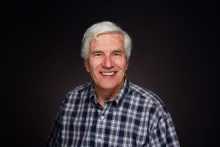
Steve Shafer was born and raised in Seattle. He graduated from Queen Anne High School in 1959 and later graduated from Ambassador College, Big Sandy, Texas in 1967, receiving a degree in Theology. He has been an ordained Elder of the Church of God for 34 years and has pastored congregations in Michigan and Washington State. He and his wife Evelyn have been married for over 48 years and have three children and ten grandchildren.
