
John Elliott
This transcript was generated by AI and may contain errors. It is provided to assist those who may not be able to listen to the message.
Okay, we have a lovely day here inside, if it is cold outside. It's beautiful weather in here. And I wanted today to actually have done this in the other three churches last four weeks, I guess. Give this sermon just for the purpose of helping to focus our minds on our calling and on what are we doing here, our business that we have. Which, of course, we have a good introduction for that because Gene just talked about the very basics of Christianity. Three weeks ago, I introduced this sermon the first time because the Newton shooting massacre, a new town shooting massacre, had happened out east. And everybody was all upset, which they should be. It was terrible, terrible news. But I could point out that it's a rare thing. I heard something on the news that I was surprised that this kind of mass shooting is actually down from when they started taking records, keeping records. It started in 1900 and kind of the ones that we knew. I couldn't imagine that, but it's not getting worse in the sense of more often and worse, bigger. And that's a hard statistic. It hardly matters because it's just enormous shock whenever it does happen. But I just did notice that a couple of things. First of all, these things go on far, far worse all the time in other lands. They are more violent than ours. America is an anomaly. God has given us peace. He gave us a special nation. He put his laws, even those principles, into the Constitution. And the framers were aware of that at the time and attempted to do that as much as they understood how. So the world in general has been violent because of human nature, the nature of man, and it just will continue to be. Another observation is that America started out deeply in debt and very violent. So God has blessed us. He put in, he made special a nation. America is special.
Just as he did with ancient Israel, he said, don't fight. Here's the law of military service and war in the Bible, simplified. God said, do not fight. I will fight for you. I will drive people out with bees and hornets. My bees. I think it says, my bees. So you won't have to fight. Israel came up to the challenge and said, sorry, we don't have the faith. We're going to fight. So God said, okay, have it your way. This is simplified version. Okay, have it your way. Because of my will and what I want you to do, my purpose for this nation I am starting, I'll help you to win battles. I'll go with your armies, and you are going to be the great nation that I have decided, no matter what, even with this disobedience and lack of faith. But you're going to pay for it. You think it's a better idea to fight your own battles? You're going to lose your sons and your husbands. And so on. It's going to be a bitter. See, one way of really simplifying the purpose of human life is that God is bringing us through all this history. And by the end of it, and with the resurrection and everybody getting back to look at history and so on, everybody left is going to just agree with God so 100% that we can have unity, finally, in the kingdom and the family of God. So it's one way to simplify it. It's just true. There are different aspects of it. Well, anyway, so America started out very violent and deeply in debt. And in other words, it was a wonderful, beautiful well producing good water that God gave to us, but there was poison in the well. And that poison is human nature. And I made the comment just following as a result of the Newtown shooting massacre, who brought it to mind again, how violent human nature is.
That in the end, all mankind will come to understand that every individual has to have the laws of God written in their heart. That is the whole family. And if it's not everyone, 100%, we won't be able to sustain peace. The world will end up in total destruction and death. We can't even tolerate one violent, hateful attitude.
As Jean mentioned, this is serious because all of us have selfishness, and we have the downside of human nature. Every one of us have that as a part of our makeup. But it has to be total. There's a reason for that. If you tolerate or compromise with evil, and don't just stamp it out, then evil grows. It starts and gradually grows like a cancer, like mold or something, that grows that way. If it exists, it grows, and that's the way it is with evil. As a matter of fact, the laws of Plenonus in Leviticus and so on, it talks about different kinds of leprosy. You look at those Hebrew words, and you study it out, which I have, and read scholars that have gone deeply into the meaning. You can't tell exactly what specific disease. It would obviously include several. Pointing out the fact that it's talking about sin. It's talking about a disease that is not curable. Finally, in one case, it says, if a house gets leprosy, what are you talking about? It's not a specific human disease. It is talking about a variety of molds and grunge that produces poisonous things to man. They made their houses out of stone. There comes a point. We usually have to level the house, burn the stones, and cleanse the whole place and start over. Actually, we've had with these floods that we found that out with houses built of wood. There's also, there comes time. If the mold takes over, to use the Old Testament word leprosy, if the sin, which is what it's talking about, takes over, there comes a time when it just overwhelms. To get rid of it, you have to kill everything. Essentially, mankind is headed on that track. There's no great resistance to sin in the world worldwide. If you consider everything, there's mankind. Jeremiah 17.9 tells us of this, There is so much good, beautiful, wonderful things that God has created, but poison is in the well. It's just like the guy that says, here, drink this. It's only one tenth of one percent, strict nine. Otherwise, it's pure, you know, filtered water. Well, thanks for nothing. It's still a deadly poison.
Verse 9, this is a scripture that we use in time. It talks about the human heart, or the human condition, the mind of man, natural man, as Paul said, carnal or normal, average natural man. It's just desperately wicked. And the word is not like a desperado. It means incorrigibly. That means human nature will do what a blankety-blank will pleases, what it wants. It doesn't matter. You can try your hardest to fight your own nature, and you are going to come up with, after years of trying, the fact that despite your improvements and your struggles, you still have to fight selfishness, vanity, jealousy, lust, greed, all kinds of what we call the downward pull of human nature, because that's our nature. And we further study to find out that it's the continual influence of Satan over the world, which God has allowed. A little sweet little baby born is not a righteous paragon of perfection, but it is a sweet little baby guilty of sin. He hasn't sinned yet. The poor kid, just born, he's not a terrible convicted criminal and so on, just a blank little baby. But God has allowed Satan in the world, and we become polluted and filled with selfish interests and so on. We just fall into it because of an influence. And understanding that, what's really going on in the world, we come to understand that God has to save every one of us from ourselves. So we are incorrigible in that in our prison state, without God's outside help, there's no way we're going to be able to repent or convert ourselves, even if you just earnestly desire it so much. We can't escape that without God's help, and with His Spirit we can escape that. That's what's so wonderful about it. But I haven't finished the sentence here. It says, I read the second half, and desperately wicked, who can know it or who can tell about it? But the first half tells the number one thing. The number one biggest main thing about the downside of our human nature is that it's deceitful above everything else. Just we lie. Kids all lie. They have to be taught not to, or they'll go up and be adults of lying.
We have this desire to put the best foot forward, just kind of twist the truth a little bit, or shade it a little bit to make ourselves look good. We just do that without thinking. That's our nature. It's natural. And even those people who have determined that they would not lie. I don't know, I heard a sermon or something when I was nine. I remember because I was out by the plum tree in the backyard, and I was thinking about this. I was convicted because I told a lie somewhere, which I don't remember. But I just decided that I would do what the minister said, and I was just not going to be a liar in my life. So I made a concerted effort and did pretty well about it, probably about just telling bald-faced lies. But then I began to realize, as I grew older and looked around, that I was deceitful above all things. I was caught shading the truth. My mom pinned me to the wall, figuratively, and nailed me. And I had not been truthful. I hadn't told a bald-faced lie, but I wasn't righteous. So I had to face that. Most people then, if they come to that point... And there are a lot of youngsters and people who determine, I am not going to tell lies, I'm going to be a truth-teller.
But those people also come to find out that the last frontier of lying is to yourself, being in denial. It can take years and years and years of God letting you go ahead and stumble through life and so on. Before you finally see that, well, the problem is, I've been honest with me. So we have this... That's a neat little term. Oh, well, you're in denial. And you use that, of course, if the other person doesn't agree with you. Well, you're just in denial. I've heard that from some people with particular ideas. Well, anyway, God tells us this about human nature. If you multiply that times however many billion there are, we're just going to have a time... As a matter of fact, what it says is there's a time when dangerous times will come. And eventually, it says... Well, I'll just mention 2 Timothy 3, verse 5 verses, so we might as well go to that. So I read it correctly. It's 2 Timothy 3, starting off verse 1. Know this, Paul writes. Be sure you know this, for sure. That in the last days perilous or dangerous times shall come. And then it lists off a few things. And these are outgrowths of the basic nature, fallen nature of man. There's the milk of human kindness, but we have a mixture. We have evil in our thoughts too. Poison in the well, as I say. For men shall be lovers of their own selves, covetousness, boastful. I mean, proud, blasphemers, disobedient, to parents, unthankful and holy. Anybody watch TV for more than an hour this week? You've probably seen an example of every one of these words. If you watch maybe a sitcom and then 15 minutes of the news and, you know, that's what we live in, surrounded by this. Disobedient to parents, a lot of these shows wouldn't sell. They'd be off the air in a couple of weeks because if they took all the disobedience to parents out, you know, the Disney Channel and things like that, which I try to cruise around and see a little bit of everything now and again, but so I know what's going on. And especially if you took the lying out. I used to really like the Mary Tyler Moore Show. I just, you know, had a lot of laughs, clever writing. And then, I analyzed it after a few years of watching, if you took all the lies and the covering up and the not-facing the truth, out of that show, it would be so boring. I wouldn't bother with that. Do something more interesting. Go out and watch the grass grow or something. But the thing is, and I don't want to turn into a complete ogre, half an ogre, maybe. But really, some of these things are human condition. It is funny. We get into funny things and we need to laugh at ourselves, but there's a balance with that. If I ever meet Mary, I'm still going to say that I really enjoyed her show, you know, I appreciated it. Even Ted, he did a good job on his acting. I don't know if you know about the show, but apparently not. Nobody laughed. Ted was sort of the clunk-headed guy that everybody loved to hate on the show. Gave everybody a hard time. Anyway, back to this. Without natural affection, what happens if you become desensitized and see death and hurting and violence and are around it, then you do become more and more desensitized. And pretty soon, there are different crazies in society that just completely lack natural affection. What is the word? Sociopaths. There's no conscience about it. I saw a TV show probably 30 years ago now. It was one of these police things or detective things.
Apparently, these two college students had decided as part of their psychology class, they would take on a project to drive this one woman crazy. Just all kinds of little things would happen. They knew enough about her life and really shadowing her that just at the wrong time, she'd have a flat tire. They spoke a little flat tire, which made her late for something. She had a big presentation, and they snuck into her house, changed all the clocks so that she overslept.
It was just driving her crazy. Of course, the good guys caught the bad guys. We also learned that one of the major lessons of life from TV is that you can solve any problem, no matter how big. Personal, international, doesn't matter within a half hour. We got that one down, and we're coming at it like this. At a certain point, these people like this guy out east, or the guy in Columbine School in Colorado, turn into sociopaths.
They don't care. Other people are for their use. This one guy said, this is my personal business. You have no right to ask me about this. Of course, it was 11 people that he had murdered. They were women of approximately the same size and shape and color of hair, and that was his target. He thought that was his personal recreation. This is called, in the Bible, without natural affection. It is a result of a progression of things, where a society, progressively, rejects God's laws and his way of thinking, his sanity. It says, the end result, truth breakers, false accusers, truth breakers, man.
That's everywhere. Now, even a handshake is long gone, as hard evidence. Now, you can sign a contract and have several witnesses, and people will try to wriggle out of the contract, break the contract. False accusers, we call this, by the way, false accusers. We call this phenomenon negative political ads. And it really works, sadly. But it does. That's why they keep it up. But God said, this is the end result. Reject my laws. This happens, as I mentioned a few weeks ago. The farther you get away from the laws of God, the harder it is to maintain sanity. The harder it is to determine what is the truth in any situation.
Anyway, despisers are those that are good, and so on. I don't want to read the rest of that, because of the eventuality. This has more and more breakouts in society. And at the end time, when we have, and we couldn't have known even what we know now about these prophecies, but when we have the internet and the whole world being able to be interconnected, all these things just are multiplied, and God said that what would happen is it would become so dangerous, and this is Matthew 24, verses 21 and 22, Christ's words himself, it would become so dangerous at the end time, then shall be great tribulations, such as was not since the beginning of the world.
To this time, no one ever shall be, just the absolute worst, because nobody could be trusted. And the bands were all broken, the bonds that people control themselves and we control society with. So he said, except those days should be shortened, there shouldn't anybody, any flesh be saved, and it's talking about physically saved alive, or left alive, when translation puts it.
Christ was saying basically that mankind would simply do away with himself because of our nature, and we just have to, every one of us, have to confront our own nature with God's help. But he says, but for the elect's sake, that is those who he would call, and give his spirit so they could see themselves and work on themselves. Because of that, namely the church, for their sake those days shall be shortened. God's not going to let that happen. But he's going to let it come so close that nobody will be able to deny that we have to have outside help. We don't have the ability to live and to sustain life, even on a human level, without God's help.
So, the question then I wanted to ask from this standpoint, at this point is, so why do we have the church? I titled this, The Church and the Work of God. Because the church is the work, and the work is done by the church, they go together, but there are two entities, at least in analyzing it. Jeremiah 31, verse 31, and that's quoted in Hebrews 10, verses 16 and 17, by Paul. So I'll read it in Hebrews. But it talks, I referenced it just a minute ago, that unless mankind, on an individual basis, comes to understand and then act on that, that everybody has to have the laws of God written on their heart.
We're doomed, without God's help, without His laws or His thinking written on our heart. We don't have any hope long-term. This is 10, verse 16 and 17, of Hebrews, quoting back to Jeremiah. This is the covenant that I will make with them after those days, says the Lord. I will put my laws in their hearts and in their minds will I write them. So the heart and the mind, the emotional as well as the cognitive thinking and understanding, and then with the emotional commitment that comes with God's spirit.
And their sins and iniquities will I remember no more.
And I'll just read that much of it at the moment. This is 10, verses 16 and 17 of Hebrews. And Jeremiah 31, 31, was where it's quoting from. So what does this mean, right in your hearts? A lot of people have done this, tried this without any special spiritual help, just decided that they would be converted. So what they do is they say, well, you're not supposed to murder, you're not supposed to rob banks or steal from other people, and you're not supposed to commit adultery, and you're not supposed to lie.
And you're supposed to throw in the fifth commandment, you're supposed to honor your parents. So, you set out, and you refrain from any murder, no matter how bad you hate somebody, and you refrain from cheating on your wife or husband, so you don't commit adultery. And maybe you really are able to, with extreme effort, to control what comes out of your mouth and not tell bald-faced lies. And, I think I probably say steal, and you don't steal anything. You're very conscientious about that, and you honor your parents whether you feel like it or not.
And so, let's say you do those things. Well, in the first place, eventually, this is going to break down, and you're going to tell a lie. Or, of course, it's not just murder, it's hating people. We'll overlook that for the moment. And maybe you would, as Christ talked about, like to commit adultery, but you don't.
And you flee fornication. You run from any possibility of that. Don't put yourself in that situation or whatever. But the only thing is, you still would like to, and you still hate the guts of old so-and-so over there. He fell off the end of the world, and he wouldn't mind pushing, nudging a little bit. And you really, really, really want somebody's Cadillac or Mercedes or something, or status, or whatever.
In other words, the nature can be absolutely unchanged, but a person can accomplish quite a bit just on the outside. But what Christ is talking about here, when you have them written not only on your minds, but on your heart, you don't even want to. The thought of being a thief, or telling a lie, or committing adultery, or dishonoring your parents, or even hating somebody, is so abhorrent, because it's so different than God's words.
You just hate to do that, do those things. It has to be who you really are, in other words, not just what you're striving to be. That doesn't mean, like what Paul said, well, I'm not that anyway, so I might as well just go ahead and do it. No, no, no, no, no, that'll really, you know, bury you. We do, we have temptation, we live with temptation, we live with the desire to do evil just about on every level, because we are selfish. So you keep fighting. But it's this matter of conversion that's talked about in the Bible.
And you work your hardest to do that, and then you just simply come to the place where you just have to rely on God to make the changes in your thinking that you can't. But it does take all that trying, the effort that you put into it, it takes our effort. It's been said that you should live your life like it all depended on you, and pray like it all depends on God, because it does. You still have to have the action, because it's through the actions that God does the conversion.
We'll come back to that in context of the Church, but let's go on here. The first part is just simply about human nature. Now we come to the Church. Why the Church? Considering that's what mankind is, and that's where the world is going, and it's just absolutely doomed without God's... Well, in the first place, He continually upholds us just to live. He's upholding the whole universe and all life. But we just are headed for a very bad place if we don't have God's continual help. The Church, great importance is put on the Church by Jesus.
He said, if you're not, little flock, it's your Father's good pleasure to give you the kingdom. This is Luke 12, 32, very commonly quoted. Memory verse, in fact. If you're not little flock, it's your Father's good pleasure to give you the kingdom. We're not supposed to be fearful. Luke 12, verse 32. Yet we naturally are, but God... Our success is God's success. We are His workmanship, and when we accomplish, and when we achieve, and when we overcome, this is God's success. He's the one that's doing this in our lives. So He's definitely going to give us the kingdom. A huge concept! It takes a long time to really even study that and wrap your mind around it.
But I'd like to note Matthew 25. We were just in 24. This is actually just a continuation of that same chapter.
And so we're on into chapter 25. Just go down to verse 21, if you would.
Now this is the... He gives three parables in this chapter to illustrate the principles and explain about the previous chapter 24, which is the prophecy of the end time. So here's the second one. This is the parable of the talents. Verse 21, this one man had gained, I guess, doubled the money.
Started out with five and came back with ten. And of course, this is an example of investment and making good. But the talents are basically what God... the gifts that God gave to us, all the resources He gave to us at conversion. So it's not... it's money, but it pictures our conversion. So He had really grown and done a lot more with His life.
And so Christ said, well done, thou good and faithful servant, you have been faithful over a few things. So in this life, God considers it a few things. And we always want to... especially nowadays, fame is considered important. Well, that's nothing than the opinions of man, which God says, forget. My opinion. He counts. But anyway, we still want status and we all have that mind and strive for it. But He says, I've given you, in this case, five.
He says, you've been faithful over a few things. I will make you rule over many things. Enter thou into the joy of the Lord. So, He's not specific, but there are many, many things, He says, that He's going to give to us. Now, verse 23 says basically the same thing. This is the man that had less, but also doubled it. And then we skip to the next parable, which is in verse 31, the sheep and the goats. Very famous parable. Look at verse 34. So these are the sheep. And He says to them on His right hand, Come, you blessed of My Father, inherit the kingdom prepared for you from the foundation of the world.
So this plan has been ongoing. God says He knows the end from the beginning. He had what He's headed for. He knew when He started. The plan is working like it's supposed to, whether it looks like it to us or not. And He says, Come, blessed of My Father, inherit the kingdom prepared for you from the foundation of the world.
Now, we find more about what this reward was. The kingdom was prepared and rule over many things. Luke 19 verses 17 and 19. So just a real quick review here as well. Just to know, what do you mean? Many things. I'll put you over many things. So here is the parable of the ten pounds. Use pounds again, but this is a different parable. Same idea. He says, Occupy till I come. He gives them money, or pounds, and so on. Referring to whatever resources He has given to us when He called us and converted us.
And occupy, or manage, until I come. So at the end, this man was very successful. The first verse came, verse 17. He said, Well done, you good servant, because you have been faithful in a very little. So that's the same thing. But He says, You have authority over ten cities. So what He's talking about then, previously, when He said many things, He's actually talking about being a part of God's governments. With real authority and rulership over, in this case, multiple cities. A large number of other people. And He said in Him also, the second one, be thou over five cities. He had been given less, but He is still produced very well.
So God calls us as He will. Now, this adds a new thing. This adds rulership over the new kingdom. The world will finally be straightened out. Revelation 2, verse 26, and 3, verse 21. Mention those anyway. As a matter of fact, I'll read both. 2, verse 26 of Revelation. And He that overcomes and keeps my works, and I might mention these two things, overcoming whatever you need to overcome, and keeping the commandments, keeping my words and my works unto the end.
That's mentioned throughout the Bible, but it's mentioned throughout Revelation here, too. And here in chapter 2, and it's repeated over and over, those themes. He that overcomes and keeps my works unto the end, to Him will I give power over the nations. So it's not just over a few cities. The whole kingdom will be over the nations, and those who overcome. Christ's servants, also called the first roots, that is the church. A little flock, not huge, but the church that God is working with individually.
So, 3.21 then, it says, to Him that overcomes, once again, overcome is always mentioned here in Revelation anyway, will I grant to sit with Me in My throne, even as I overcame and sit down with My Father in His throne. In other words, He shares the rulership of absolutely everything that the Father has, and shows that we are going to be able to share the rulership.
He's going to give responsibilities to each of us in His kingdom. Now, you had, so this, and I mean, this just becomes, we've already gone beyond, we've gone so big, it's hard to understand. Little old me, I was born in Poughkeepsie, and grew up and got a job, you know, whatever your story is.
We're just little, us. And yet, God has tremendous things in mind for us, and He always does that. Study what God does. He always does things that are just so big, it's hard for us to understand. But Daniel 7 adds to this, this is a more ancient, uh, prediction or prophecy, but it's talking about the very same time. And actually, Revelation is built on Daniel, but just go back to Daniel 7 and verse 18.
But the saints of the Most High, and this is admittedly just breaking into the middle of this prophecy. But here's something about the saints, or those who God has called. The Most High shall take the kingdom and possess the kingdom forever, even forever and ever. It won't slip through the hands. So what in the world does take the kingdom mean? If you take it, that means you take it from somebody else or something else. And we find, without going to those scriptures, that the rulers of this world, the ones who are behind the scenes, and really control things and are pushing it toward the destruction that it's coming to, hate humans. They hate God. God describes the devil. Christ said he was a murderer from the beginning. His technique wasn't allowed to murder. He would have bumped off Adam and Eve immediately. But he was allowed to slander. So he went in to Adam and Eve and he slandered God. That doesn't mean what he actually said. You don't have to do that. Because he's holding back information. He knows that if you know all the truth, then the world opens up. Whatever he said. So he started his murderous process by lying and slander. That's what happens. You get the kind of weave your magic spell, or your evil spell, and slander somebody people start to hate. Then it throws their judgment off. The rest is history. That's what Satan did. You could make that statement right after the incident in the Garden of Eden. So verse 27, so we read verse 18 and skipping down to verse 27, still Daniel 7. And the kingdom and dominion and the greatness of the kingdom, under the whole heaven, shall be given to the people of the saints of the Most High, whose kingdom is an everlasting kingdom, and all dominions shall serve and obey him. What God has in mind is just so big that we can hardly imagine it. But it's so important for us to be faithful in our little things. In other words, our own little life. We don't have that much. You sure can. You learn this as a parent. Eventually, you do not go. You're not ordained to control your children's lives. They will do what they are going to do, just like you did. You've lived your life. I said, you know, if I make a big mistake, God's not going to come along and send an angel down and thump my mom on the head. I'm responsible. But it's a hard thing to let go for all parents. Speaking of my mom, I remember when I was 16, I was so happy I was going to go away to camp. I woke up early. I was all packed. I got the stuff in the car. We went down to put my stuff and me in another car that was traveling. I looked around and there was my mom. She was standing there, crying. Just silently, tears coming down. I was struck with guilt or something. I'm not sure what it was. I went over and hugged her. I told her I loved her. I'll be by, or whatever. I told her. I hardly contained my excitement for going to camp. Was I thinking about all of her sacrifice? No, I was thinking about me. It's just so parents and so time came for me. Parents learn. You just don't control other people. However, eventually you learned that you can't control yourself without God's help. Your own mental processes.
It's so important that with God's help we learn to do that. We learn to control the mental process that puts us in a state where we choose to sin. Every sin has a lie about it. Every sin is based on falsehood. No matter what the sin is, or the mistake, or the bad judgment or something, there's some kind of a lie, at least one, that goes along with it. Every message has its spirit. That's related, but a separate thing, which I do want to cover sometime later.
Why does the kingdom have to be taken? Revelation 19 talks about what Jesus said that the whole world would just be wrecked and man would kill himself off. Revelation 19 gives a little bit more details of how that will happen. It just talks about the system which is going to collapse and come down, the Babylon system, based on self and based on human nature. It's a system that grinds humanity and enslaves.
You look at it and it's a matter of controlling everything. You can't even buy and sell anything. Food has to be controlled for you to absolutely clamp governmental control. We're going through some of those arguments now in this country, but it's been done so many times at different times. In the end time, there is one big system that's going to get control over everybody. We are just on the cusp of that being possible because it takes computers to count that much. We wouldn't want to dive into a big conspiracy bash.
There's a tendency to point fingers at different individuals. In fact, we're all guilty of the root cause of this. We're told here openly, it's been here for thousands of years, that the root source, the conspirator, is the devil and his minions. Let's not get all excited about one particular time in history. We should be excited, of course, because we're living at this time. What I mean is, go back to what God is doing and look at the whole picture. This system of controlling others and glorifying self and all that type of thing is a system that just grinds humanity. It says it destroys men's souls. It takes away the heart. It's another scripture. It just takes away the heart. What does that mean? It takes away your heart? It's obviously a metaphor. It takes away your emotions and your mind and the joy of life, let's say. It's a very general term. It's not specific. It destroys men's souls and takes away the heart, the system. The purpose of a church is to prepare a people. That's in Luke 1, verse 17.
I wanted to get back and look at the purpose of why we're here.
Luke 17. It is not just individually, but even the church and why we're called. Luke 1, verse 17.
He says, and he shall go before him. This would be John the Baptist talking about this section of John the Baptist. And verse 17. He shall go before him in the spirit and power of Elijah to turn the hearts of the fathers to the children. Now, this is harking back to Malachi 400 years earlier, and just that much before Christ came. So it's a prophecy that already had been given, the spirit and power of Elijah, and turned the hearts of the fathers to the children, and the disobedient to the wisdom of the just.
So connecting it with Malachi, this and just those two. And you can demonstrate this is a more than a multi-stage prophecy. It wasn't just for John the Baptist, but it was for the end times as well. So the hearts of the fathers to the children, and to the disobedient to the wisdom of the just, and make ready a people prepared for the Lord.
And this talks about those people who were being prepared for Jesus Christ, His disciples and other followers, who would become part of the church on that day of Pentecost, 31 A.D. when the New Testament church was started. Same day it was started in the Old Testament, by the way, when the law was given.
The law and the Holy Spirit were given on the saved day, Old Testament, New Testament. And John the Baptist was going to prepare these people for that day, but it also pictures, because it's an end time prophecy, which Malachi shows. It's talking about the church itself in the end time. Not just when it started, but through the church age, in the last 2,000 years. And to whenever it is that Christ comes, that these people had to be prepared.
That's the reason for being called into the church. That's the reason we have the whole thing about the firstfruits, the church of the firstfruits, the church of the firstborn. And all those scriptures, and the principle of there being a very small harvest at the beginning, and later a much greater harvest, it's talking about God's plan, God's harvest.
And so at this point, we're in what's called the church age, between when Christ came the first time and started the church, and when he comes the second time and resurrects the church, and begins with the church members as government officials, as part of his kingdom, or his administration. And so he can't have one person in that group to help in his governing of the world who doesn't have the laws written on their heart. It's not just that we are a chief and we don't do what we want to.
That's necessary, of course. Sometimes you just have to discipline yourself. But when you go through that process, God changes your mind. And there's the conversion process. It's a long process, but eventually you come to agree with God and recognize, well, that's what you're not interested in. I know that's physical temptation. Of course I'm selfish. Of course that's that. And the other thing, I've been fighting this for years, but there's no way I'm giving up. I want God's way. And so then that's your choice.
When that becomes a way of life, and it's who you are, not just who you'd like to be, then you're approaching God's success and his accomplishment of that writing his laws in your hearts and minds thing that he has. His goal, his project. So as long as we're alive, we will not shake human nature, or all those downward pulls. We're going to have to continue fighting. But that's what it is. And the process is ongoing.
God says he doesn't ever send his Holy Spirit out, except it comes back to him having accomplished what he wanted. It just seems forever. And we just are going to have to keep on overcoming. That's what he describes, those who he is working with now, as those who will overcome. But anyway, there are many blessings that come along. There's a full life of joy and happiness. But we're not going to get over all of those things which drag us down until the finality of the resurrection, the finality and termination of this life, when we'll have that done.
Now, a little bit more here. The Great Commission is given in three places. I don't think I want to go over that. I'll just mention it in Matthew 28, 16-20. Talking about preaching and then those people who respond, making disciples wherever we go as a church.
Those people, those few people who respond, it turns out. Then teach them what Christ has taught you. So the church preaches and then it calls. Then the preparation of the people of God, we do for each other. Mark 16, same thing, a little bit different. 16, 19, and 20. So it's the end of Matthew and the end of Mark. Then Matthew 24, 14 is a prophecy. It is the Commission stated as a prophecy. I'll just read that since we're close. Actually, I should read all these things. I'll just read Matthew 28, verse 16. It's good just to hear it, rehearse it, and have it running through our minds.
Go you therefore, Matthew 28, 19, and teach all nations, baptizing them into the name of the Father and of the Son of the Holy Spirit and into the family of God, teaching them to observe all things whatsoever I have commanded you. And lo, I am with you always, even to the end of the age. Amen. Christ said, so we go out and we teach. We preach and then baptize the few that want it.
It's a few. And then the real teaching. Then we teach everything, the whole plan, everything that Christ taught. In Mark 16, verses 19-20, the last two verses of Mark. So then after the Lord had spoken unto them, he was received up into heaven and sat on the right hand of God.
And they went forth and preached everywhere, the Lord working with them and confirming the word with the signs following. And so, actually I've just read the last two verses, but I should read up here. Verse 15 is what parallels Matthew. Go into all the world and preach the gospel to every creature. He that believes and is baptized shall be saved. And he talks about science, and I won't go into that. Now back to Matthew 24, in verse 14. This is the prophecy. Verse 13, He that shall endure unto the end, the saints shall be saved.
And verse 14, And this gospel of the kingdom shall be preached in all the world, for a witness unto all nations. And then shall the end come. So that's the prophecy of what, of the gospel being preached, which He had just directed and given as a commission. As I said, a couple more points here. In Matthew 24 as well, verse 44-51 is at the end of the chapter, of course. But He tells us to be ready for in such an hour as you think not, the Son of Man will come. And we don't need to go into that specifically, but the timing of it and everything.
Blessed is that servant, verse 46, Whom is Lord, when He comes, shall find so doing. Doing what? Well, giving them food in due season. Faithful and wise are. Now, this is talking about the ministry who is preaching and giving the flock food in due season. Specifically about the ministry. However, and that's just like John 21, where Christ on the shore there said to Peter three times, Well, do you love me? Then feed my sheep, feed my lambs. When Peter had denied Him three times, so Christ required that He answer, Yes, I really do love you.
You're my number one. You know I love you. And He got all upset. Three times He said that He loved Christ. And Christ required that of Him. And each time Christ said, well, then be sure that you feed my sheep. You feed my lambs. So, that's John 21. And that refers to the ministry. But also the saints have a part in this feeding.
The serving, the encouraging, the building up, the edifying of the church of the firstfruits. That is, every part has a responsibility in this preparing of a people. Just for one example, Hebrews 3 verses 12 to 14. Hebrews chapter 3 and verse 12. Take heed, brethren. Again, just breaking into the... this is actually a chapter about the Sabbath. Entering into the rest. Today, if you will hear His voice. Verse 12, take heed, brethren, lest there be in any of you an evil heart of unbelief. In departing from the living God. It is possible, as Jean just said a while ago, to be forgiven and become and have His Holy Spirit and drink of that Holy Spirit and then lose it.
Because, once again, falling back into human nature. But exhort one another daily, while it is called today, lest any of you be hardened through the deceitfulness of sin. A little sin, as I said at the beginning, you compromise with sin, it begins to grow. It takes over and overwhelms your life. For we are made partakers of Christ if we hold the beginning of our confidence steadfast unto the end. And, again, He mentions while it is called today, today if you will hear His voice. So, we are to exhort each other and build each other up. And I guess I won't go further with that, but we're supposed to...
We have a part in coming together and exhorting each other. I'm just going to go to chapter 10 as well. And if my eye will fall on it, I will. Let us consider verse 24, one another to provoke unto love and to good work. So, we have a part here specifically into provoking each other and encouraging each other. Not forsaking the assembly of ourselves together, as a manner of some is. And this doesn't specifically say it's not just limited to attendance at church, but it's in general to be as a family.
But exhorting one another and so much the more as you see the day approaching. So, we're supposed to provoke each other to good works and encourage. There's always a balance because just about the time you get a little too encouraging, somebody will feel like you're invading. I mean, it's all this, we're family. And we're going to irritate each other as we rub shoulders, but the idea is it makes us smoother to rub the sharp edges off.
But we have, the big point is that each of us has a part in the preparing of people, feeding a flock, side of the work. One is to preach. We do that mainly by example. We have part in both of those. The work has a very broad definition. First of all, spreading God's plan and laws, cause and effect, the identity of nations, the whole plan. But how much do you have opportunity to do that?
Normally, you don't. You know, you live your life and people might see a good example or not. It's later that your example will be noticed. I remember him. Oh, I remember when she did this and that. So that was the reason. And you know, it's almost discouraging. We would like to put in a good day's work and see the results. But it's like a teacher. Maybe I've told this story.
We were sitting in a restaurant in Eau Claire, Wisconsin, and this teenager who was working as a waitress, or probably a bus girl, came up. And she said, are you Mrs. Knapp? And of course she was right. She recognized her. Yes, of course. And she went on and she stopped her work and she just told her how much she enjoyed and how much she learned from her. My wife was a teacher in her grade for several months. Had a long-term sub-job, I believe. And so here is this half-grown-up teenager.
And my wife had really helped her. Teachers are like that. And God has called us to be teachers by example. So is your life very, very important? Is it really important for you to bother with people that don't know anything about the church and don't know who you're connected with? Important if you don't blow your top and yell at somebody for some inconvenience? Or treat them poorly or whatever. Is your life important every day? Yes, it absolutely is. Now there's another scripture here that should go with Hebrews 3 and Hebrews 10.
And that's 1 Peter 2 verses 9-12. And this explains some of the timing of spreading the gospel by our example. And that's 1 Peter 2 verses 9-12. So I'll just read that. You are a chosen generation, a royal priesthood, and a holy nation, a peculiar people. Meaning, not necessarily that we look ridiculous or something. That's originally the word meant an individual or an exclusive people, God's special people. And that you should show forth the praises of Him who has called you out of darkness into His marvelous light.
So we are called to show forth praises of Him. And another scripture that comes to mind is that we should let our light shine and not put a bushel basket over it. You know, put it under a bushel. So that people may, and then you read it wrong, so that people may hear your many clever arguments. Which irritates people a lot of times and doesn't help. But it says, no, say that they shall see your fine example, your light will shine. I'd like to skip down to verse 12, specifically to answer this in Hebrews 10 that we just read.
All this showing forth of God's praises just by your example, how you live your life. When is that going to have any useful results that you can see? Verse 12, having your conduct, your conversation conduct, honest among the Gentiles, so that whereas they speak evil against you as evil doers, well, they do this and they do that, or they're not Christians because they're rotten people or selfish, or whatever, depending on the group.
If it were, I guess, Muslims, they'd say, well, those rotten people, they worship Christ. Whatever it is. But other people who are, because you are trying to live the truth, speak evil against us, that they may by your good works, which they shall behold, glorify God, period, end of sentence, nothing else. Right? Well, of course, I'm ignoring the time element. When, we could ask, will they behold your good works and glorify God?
Well, that's in the day of visitation. In other words, not now. It's when God visits them and gives them the understanding. And so our example, we're called to show forth the praises of God, but it doesn't mean that we'll have any real results until later. So that's encouraging in one sense, because, you know, to keep us going, we're not expected to have any results soon. But it's also discouraging in the other sense that you don't necessarily get patted on the head every time you make a right decision. You know, you don't get credit for anything now, many times.
So we just, we understand that God has not called everybody at this time. We are thankful to be called. So the question would be, why has God called the firstfruits? Well, to prepare a people, a small number of people, to start out in His Kingdom. But just a little bit more on that. We're first called because everybody in the whole world is eventually going to be called.
And that's to be in God's Kingdom. But we are called to be leaders, and that means that we are called to do His work now. One more thing about unity. Ephesians 4, verses 1-3. I guess we actually touched on that a little bit.
Or at least almost a while ago. Therefore, I therefore, the prisoner of the Lord, Paul writing, beseech you that you walk worthy of the vocation in which you are called. With all lowliness and meekness and long suffering, forbearing one another in love, in other words, against your very nature to want ourselves, to want to be seen.
And Paul talks a lot about this, and he was one that could. He was, you know, one of the leading minds of the first century. With all lowliness and meekness, with long suffering, forbearing one another in love, endeavoring to keep the unity of the Spirit in the bond of peace. And then he goes down and discusses that more. The next two chapters, in fact. But this unity of the Spirit in the bond of peace, there are a lot of things which, you know, if you're married, you know that you're not in total unity, because you keep having differences of opinions.
Just don't see it that way, and that's the way God would have it. We were all clones. That would be awful. You know, all one kind of person, just like you. We were all just like you. Oh, that'd be awful! Fortunately, God didn't make it that way. I should say, just like me, that would really be awful. I think that would sound better. But you see what I mean.
We need the variety. We really need the variety. But this causes disunity, because we also have human nature, and so on. So he says, endeavoring to keep the unity of the Spirit in the bond of peace, we might not, and we'll always be working on having unity in understanding things just the same way, and opinions, and so on. But we can have, with God's help, unity and spirit. The same spirit, the same attitude. That's the kind of attitude that God is after.
That's what he wants for his church, because we're being prepared for big, big things. So, there's more on that. But I just wanted to bring up this... It's like a double equation. Two-sided equation. It takes unity to do the work of God. If there's a dish... I've been in quite a few churches over the years. If you have a church which is, you know, kind of not in unity with each other, and cliqueation isn't settled, when somebody comes to that church, well, what do they do?
There's no comfortable place. Go somewhere else. But if you have a church that is comfortable with each other, and loves each other, and is glad to see each other on the Sabbath, and is in unity that way, people feel the vibes. You know, this is comfortable. I like this place.
And we'll tend to stay if God is calling them, and there are other factors. But that's why it takes unity to do the work. We can crank out magazines, and that's part of the work, and that's good. But we can hire other people to take magazines to people. But to actually do the work of God, and set an example of this unity, and of His laws, His way of life, that takes God's help, of course.
But it takes unity, and God's help with His Spirit, to set that kind of example, to be attractive. The Greek word is kalos. I've gone over that at length. It's a kind of winsomeness, is how you would translate the Greek.
Creating a family which is attractive to others. So we can't do that by ourselves, it takes God. So it takes unity to do the work, first equation. But also it builds unity to do the work. And that is, in other words, when you have something that we're all focused on, to both get, which is a work that we have to do together, corporately, that is, as a body, to get the word out to many, many people. If you have a project that you're all working together on, it builds unity.
So it takes unity to do the work. But when you do the work, that's the very process that converts us and helps us to change and have unity. It's a deep subject, but I just wanted to put it out there in a simple equation. Doing the work of God is the means to becoming converted, and vice versa. Put it a different way. So, to conclude, I thought I'd read something from a previous sermon that I gave, actually, quite a few years ago, and want to give this another time here at this church.
But here's a progression of growth and accomplishment. To be successful in life, work, whether you know God's truth or not, if you're a diligent person, whether you're a Hindu in India or whatever, or here as a Christian or something else, to be successful in life, you're going to have to work. To gain blessings and be happy, then what you have to do is you have to be diligent. You have to work, and you have to do good. You still might not know very much about the truth of God, but you have to be diligent and work, and you have to do good for other people.
You have many flaws, but if you do two of those two things, you're going to have some blessings and be happy to an extent. Now, to make God your partner, work and do good, and obey the laws of God. Because He will bring us in as partners and give us a part of His work if we obey His laws. Along in that, somewhere, God calls you. The fourth point is to fulfill your life's purpose and your calling, your first-reached calling specifically.
Then, work and do good and obey the laws of God and put your heart into the work of God. So, your focus is outward and you are converted to think like God thinks of concern for others. Well, these are general principles that are harder, of course, to put into practice than they are to just speak and state and study. But still, we have wonderful calling and wonderful, good blessings here.
I really appreciate being able to come here to be a part of the Des Moines Church. I have three other churches. That's one of the big problems. I can't come to anyone specifically, but I do love to come here. I pray for you all, all the time. Specifically, even the babies who aren't here right now. My wife and I appreciate being here. So, we have a great calling. To be a part of the work is just absolutely wonderful.
It's a good message to think about on the Sabbath day, so we can finish this part of it and then go on to eating some of that wonderful soup that's coming in.
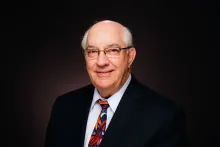
Mitchell Knapp is a graduate of Ambassador College with a BA in Theology. He has served congregations in California and several Midwestern states over the last 50 years and currently serves as the pastor of churches in Omaha, Nebraska, and Des Moines, Iowa. He and his wife, Linda, reside in Omaha, Nebraska.
