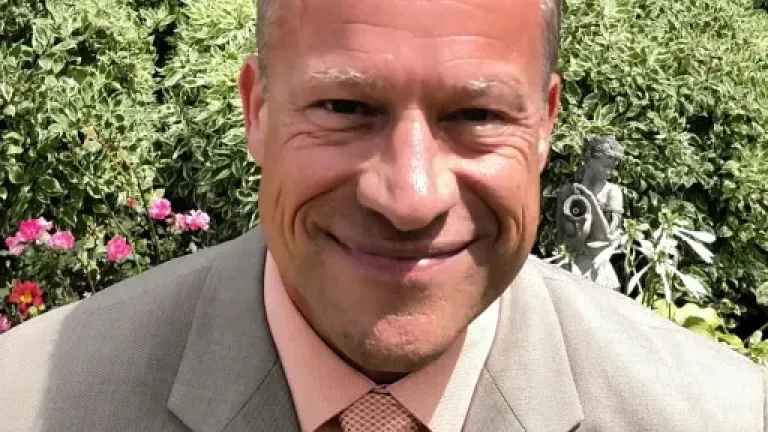

John Elliott
This transcript was generated by AI and may contain errors. It is provided to assist those who may not be able to listen to the message.
I love working in the media department. First of all, I went to school to work on TV, so it's super fun every day for me. But there's a lot of exciting things going on right now. The biggest thing we're working on is the Beyond Today live seminars that are going around the country. St. Louis is slated for February or March? March. March is when we're coming to St. Louis. I encourage you to come out if you get a chance.
It's an exciting sort of environment to be in, where we are reaching out to mostly Beyond Today subscribers. We did a couple tests of these live seminars, and we found that we're getting better responses from people who are familiar with us. The cold call, hey, Christmas is not right.
Those people are kind of like, well, I don't know what's going on here. But those people who have been getting the Beyond Today magazine, they're familiar with what we teach and what we believe, we're sort of getting a better response from that group. The other group that we're getting a good response from who are coming out is people who are actually invited by the membership. I think they're going to send pamphlets out. If you feel like, hey, I've been talking to somebody and they kind of know what we believe in, and if you feel comfortable to invite them, they're more than welcome, because those people have a direct witness of God's way of life through you.
So if you feel comfortable with that, by all means, invite people to come out, because that is another group who have said, you know, I was invited by someone else and I was grateful for what I heard. The message has all three of the presenters speaking, 20 minutes each. The very first one is very doctrinal, where we're at, sort of in the world and what we see going on in the world around us.
The second message is very... oh, did I say doctrinal? I meant prophetic. Sorry. Prophetic. The second message is very doctrinal. What is God doing with humanity? We're very honest. We say God is building a family and you can be a part of that today. It's very, very direct and very honest. And then the third thing that comes out is a very strong call to action. It's like, okay, now you know the truth.
What are you going to do about it? So if you get a chance to come out in March to hear the Beyonce Live Seminar, I think you'll be very pleased with what we have going on. All right. Good? Okay. Today on the Feast of Pentecost, it's an exciting day. The Feast of Pentecost is always very exciting.
When we read in the Book of Acts about the church and what's happening at that time, the people are excited. A massive work happens right away through some very powerful miracles as well. The gift of tongues that was given at that moment to kick-start God's church, we read about that, and it is so exciting. So I'm grateful to be here to share a message on the Feast of Pentecost. The largest living organism in the world probably isn't what you're thinking. It's not some whale. It's not some random sea creature beast that we haven't found in the depths of the ocean yet. It's not even the great sequoias in California.
Has anyone gotten to see those in their lifetime? Okay. That is not the largest living organism either in the world. This right here is a picture of Quaking Aspen. This picture was taken from Zion National Park in Utah. Is anyone familiar with a Quaking Aspen? Okay. Good. A couple of you are. It's a Quaking Aspen. This is a forest of one. This next slide here, this is in the fall, as the leaves are starting to change color, a Quaking Aspen and Fish Lake National Forest in Utah.
Has anyone gotten to see that in their lifetime? There's very little travel I've done west of the Mississippi, so I have not seen these yet. This is a photo of a grove of Quaking Aspen, and it's made up of 47,000 tree trunks, spread out over quite a few acres, 106 acres, actually.
Conservatively, if you collectively add it together, it weighs about 13 million pounds. What's interesting about this grove of Quaking Aspen is that, though it looks like a forest made up of individual, unique trees all sprouting around, it's actually a single organism. A single organism. The root structure is all one thing.
It's gigantic. What happens, how it works, is that if a tree dies, it will start to shoot sprouts. It sends a chemical down to the root system, and it will start to shoot sprouts so that it will continue to grow. It's one single organism. It's the oldest one, and it's also called the pando, which is Latin for eye spread. It's this gigantic one organism with all these individual trees shooting up. It's massive, and you can see in the fall, it's very beautiful. Let's go over to John 17.
John 17. I'll start reading in verse 20. This is Jesus Christ praying, I do not pray for these alone. I do not pray for the disciples just here, who are among me, but for those who will believe in me through their word. That's us. That's us today. We have received understanding and knowledge, and it has tripled down from the time of Jesus, and he is praying specifically for us. Verse 21.
That's interesting. He is praying that we be one so that the people around us will know that Jesus Christ had come, that he was sent by the Father. On his feast of Pentecost, as we reflect on the giving of the Holy Spirit, on the establishment of the Church as we know it today, let's focus on this message today, on what God's intention for his Church was. That his Church be a Church of unity and peace. I'm basically jumping off Mr. Wells' third point, and that's where we'll be going today. His Church be a Church of unity and peace. You know, we are a work in progress. We're all in different places, spiritually, and understanding, and knowledge, and overcoming. And it makes it difficult sometimes for unity and peace. Where there's humanity, there's going to be, you know, some difficulties. You know, and the history of the Church hasn't always resembled an environment of unity and peace. We've all been stung with the pains of schisms and divisions. And it hurts. But that's not what God wants for his Church. Absolutely not. Jesus Christ, on the last night before he died, prayed for unity among his followers.
And it's not easy. And that's why not everyone can hack it. Because it takes work. It takes work. Like any relationship that we have, where we're expected to come together and work in peace and harmony, just like a family, it takes work. It's not always easy. You know, when you hear stories of someone whose family member has been sort of ostracized by the rest of the family, you're like, Whoa, wait, why? That's not right. Because it's a family member. It happens. But when you hear it, you're like, that is... It doesn't feel right because that's not the intention. That wasn't the intention.
We need to be a church of unity and peace. Let's go to Ephesians, the book of Ephesians.
Ephesians 4, starting in verse 1, Paul writes, Okay, so he's saying, there is some action that you need to take. For the calling that you have received, there's some action. And you need to be able to walk, be worthy of that calling that you've been called. Verse 2, We need to use peace to keep the unity of God's spirit. We're the temple today, right? We house the Holy Spirit in us at baptism. God gives us the greatest gift that we heard about today. He gives us that greatest gift. And we need to use peace to keep that spirit united.
We need to endeavor. You know, when I read this, you read the word here that says, bearing with one another, you know? When you bear with somebody, what does that mean? There are many times, I know in my own personal life, that I feel like if someone has done something, I feel like I can't even bear to be around this person. But when it comes to God's church, that is not God's intention. He brought us together for a specific purpose and calling and a work.
And He wants us to be united in that. You know, if we are to accomplish anything as a church, it takes unity. It takes unity. When unity is not present, nothing gets done. Absolutely nothing gets done. If you ever worked on a team, you know, on a project, and there is discord, you know, there is a lot of spinning wheels.
There is a lot of things that are not happening. You know, and other teammates, or other teams may see, like, what's wrong with this team? They are getting nothing done. What's wrong with them? You know, Jesus prayed. I pray that they be one as we are one so that others will believe that you sent me.
There needs to be unity so that we can accomplish things as a church, accomplish the mission that we've been given. You know, when we read about the Tower of Babel, that's exactly how God put that thing on hiatus, permanently. He, there was disunity after he confused the language. They couldn't accomplish the Tower of Babel any longer. It was done. Just like that. Disunity didn't allow them to accomplish that.
But when there is unity among a people, you know, miraculous things can happen. All inspiring things can happen. Things that you do not think are possible can happen. When there is peace and unity and togetherness and teamwork and love, purpose of mind, when you see that, you notice something's different. You say, there is something unique that's happening here. Let's go back to the book of Nehemiah, because we can see in the book of Nehemiah what that looks like.
Now, at this point, Nehemiah is getting ready to make a return to Jerusalem from captivity. This will be the third return you read in the book of Ezra, two other times when people have returned from captivity. One was to start to build the temple. The second one was to set up magistrates, some civil leaders in Jerusalem at that time. In this section is about this third return. The world leaders have changed now. Persia is now the world empire on the scene. So long Babylon. Nehemiah is the cup-bearer in the king's court. He is very high in the Persian empire at this point. He has direct contact with Artaxerxes the king.
Nehemiah is bringing him his wine or whatever he is drinking. He is the cup-bearer. He is bringing him something to drink. He says, what is troubling you? What is going on? Nehemiah says he knows that he wants to go back and build the wall in Jerusalem to help unify his people. He just says it. He tells him. Artaxerxes gives him permission. He gives him permission to go back and build the wall.
He asks him how long he is going to be there. All the things that a high ruling king would ask. He gives him permission. Nehemiah 4. He goes back. He talks to some of the leadership who are already there. Verse 6, it says, so we built the wall. The wall was joined together up to half its height. What it says here is the main point here.
For the people had a mind to work. They were unified in their mission. If you go through chapter 3, it says, this person worked on this section of the wall. This person worked on this section of the wall. This person put the bars in and bolted in the gates. They weren't saying, hey, I want to work on that part of the gate. This should be my spot right here because I'm really good at bolting together the latches.
The people had a mind to work. They were unified. They were unified in what they wanted to do. If we go back just a couple chapters to chapter 6, verse 15, something miraculous happens. In chapter 6, verse 15, the wall was finished on the 25th day in 52 days.
This is a wall of a city. The people, they had a mind to work. There wasn't anything in between them. They weren't letting little disagreements get ahead of them. Hey, you should ratchet it in that way. You should use acacia wood here instead of cedar. They were unified. They were working together in peace. At the home office, this is the picture of what we have in the conference room. This is the vision statement of the United Church of God. All of the major meetings that we have, this is hanging in the wall.
If we go back one more second, Clayton. What we decided to do is we were trying to think, what can we have in there that can give us a little bit of encouragement as we're working and making decisions. This is the council. This is not me. I hit record on a video camera. What we did is we put the vision statement in there and then also very intimate photographs of things that we do together as a people.
There are pictures of camps, pictures of the Feast of Tabernacles, pictures of good works projects, projects that we've done throughout the world to help some of our members who also in turn help those around them in their communities.
It's encouraging to read this. I'm sure you can't read this, so now I'll show you what the vision statement of the Church is. It says this, This is so inspiring to me. I think when this was decided on, the council realized we're not here yet, but let's set a very strong goal for us.
Let's set a very strong goal. We should see this and think, you know what? What can I do in my part? I can't control what you do or you can't control what someone else does, but for me, what can I do to make this come to fruition? Because this is the Church I want to go to. I want to be a part of this Church.
And to have this as the vision is very encouraging. Because I want to be a Church where we're all joined in it together. Everyone supplying what they're able to, doing their share, and growing in love. That's what I want. You know, and a lot of times for us, we read other scriptures that say things like, you know, work out your own salvation and fear and trembling.
And we think, well, maybe that's a very individual thing. And it's true. But we can't accomplish something on an island on our own. When this statement was put forth by the Council a few years ago, Mr. Bill Eddington from Australia gave the message that day explaining sort of how this came to be. And he said something very poignant that changed how, you know, I sort of saw the Church as a whole. Actually, it was so powerful. I put it in the feast video that year. If you go back and watch the 2012 feast video, you'll see it in there. But this is what he said. He said, you were called individually.
And that's true. And that feels very personal to us. It feels very encouraging for us to know that God chose you individually. But then Mr. Eddington said, but you weren't called to stay that way. You were called to become part of the body of Christ. You were called to be united with others of like mind, working together, given a mission by Jesus to bring many children to glory, to go out and preach to a world that is hurting because they're clueless of the truth of God.
You weren't called to stay as individuals. You were called to become part of a body. That's the design. That's the design. The plan has always for us to become a congregation. God's a family. He's a family. It's what he wants. He wants people to come together in love and unity. John 13, 34. John 13, 34. A new commandment I give to you that you love one another, as I have loved you, that you also love one another. By this, all will know that you are my disciples, if you have loved one for another.
What does that look like? We can read through this and read through it. Oh, yeah, God's supposed to love other people. What does that look like? Are we there yet? Are we comfortable with saying, if Jesus comes very soon, are we comfortable saying, yeah, yeah, I loved everybody. I was supposed to. Are we comfortable with where we're at in that? We need to dig deep and root out our personal biases and yield to that gift that God's given us. That's how we overcome. That's how we overcome disunity. We need to ask God through His Holy Spirit to unite us in love.
When that statement was put together, you know, it's an aspiring, we're aspiring to become that. A church growing and working together in peace that has so much love and unity that it's attractive to other people.
That it's attractive. And people come into contact with it and say, something's different about you. You know, something's different. I recognize it. I recognize that there is something completely different about the way you live your life and the people you come in contact and the relationships you have.
It's different.
This is where the rubber meets the road with Christianity. We can know, we can read this whole book and memorize it. But it's the putting into practice. That's what's going to be required of us and measured. It's the putting into practice. It's not easy, but we do have a gift to help us. The most precious gift. It's not easy for us to walk in unity and peace at times. It's true. But what makes it so hard? God's called a very diverse group of people from all over, rams us together and says, okay, get along. And He expects it. He throws us together and tells us to get along. He says it's strive for unity and the bond of peace. The analogy of a body is very insightful because a body can do things. A body can accomplish things. When you are a person with all your physical things working, you can build a house. We can build spaceships to go to outer space. We can accomplish things as a body. But there are times when you're working with a hammer and you smash that thumb. There are times when you're walking along the street, you trip up yourself. Isn't there? So what do you do in those situations? Let's go back to collagions. The book of collagions.
Collagion is three. Starting in verse 12, there is a lot here, but there's only one section I want to focus on. But for unity and peace, this section is fantastic. I'll go ahead and read through the whole thing starting in verse 12. Therefore, as the elect of God, that's us, holy and beloved, put on tender mercies. Put on kindness, humility, meekness, long-suffering. That's an easy one, right? Oh, here it is again. Bearing with one another. Forgiving one another. If anyone has a complaint against another, even as Christ forgave you, so you also must do. But above all these things, put on love, which is the bond of perfection.
Verse 15, and let the peace of God rule in your hearts, to which also you were called in one body. And be thankful. There's so much here. There's so much here in terms of creating an environment of unity and peace, yielding to God's Holy Spirit.
But I'd like to focus on this one section right here that says, let the peace of God rule in your hearts. What is that? What is that peace of God rule in your hearts? Let's go back to John. Hold your place here. We're going to come back to that. But John 14.
John 14.
Verse 25.
These things I have spoken to you that while being present with you, but the Helper, the Holy Spirit, whom the Father will send in my name, will teach you all things and bring to your remembrance all the things that I said to you. Verse 27. Peace. Peace I leave with you. My peace I give to you. Not as the world gives peace do I give you. Let not your heart be troubled, neither let it be afraid.
It's interesting. He says that he is going to leave us a peace. And then he differentiates it from the peace of the world. He says, my peace is different and I'm going to leave it with you. When you receive the Holy Spirit, there is a level of peace that you will have that is different than anything you see around you. Completely different. When we're striving for unity and peace among each other, God has given us the power to create that peace through his Holy Spirit. And it's way different than anything we see around us. Last year, the anniversary of one of the great wars, we had an article in Beyond Today magazine. It was called, Hiroshima When Hell Came to Earth. I'd like to read you a little bit of a quote from this article. There's something very interesting about the decision to use the nuclear bomb in Japan. This is from a book, and it says this, quoting from Prime Minister. It says, In his history of the Second World War, British wartime Prime Minister Winston Churchill summarized the thinking behind the decision of dropping the atomic bomb. And Prime Minister said this, Churchill, To avert a vast, indefinite butchery to bring the war to an end, to give peace to the world, To lay a healing hand upon its tortured peoples by a manifestation of overwhelming power at the cost of a few explosions, Seemed, after all, all our toils and perils, a miracle of deliverance. And then the writer of the article says, And since then, the world has lived in the shadow of the bomb. Peace achieved in this world always comes with other problems. Yeah, we decided to do that for, you know, to end the war. But since then, what are we afraid of right now? Nuclear bombs in the hands of everyone else. That peace is way different than what Jesus Christ has in store. That peace is way different than what we can accomplish through His Holy Spirit. It doesn't have to be this aftermath, this now looming nuclear world we live in.
The peace that Jesus gives us through His Holy Spirit, God the Father, is different, and it's powerful. Let's go to Philippians real quick.
Philippians.
Philippians 4.
Verse 6, Be anxious for nothing, But in everything by prayer and supplication, with thanksgiving, let your request be made known to God. And the peace of God, which surpasses all understanding. I don't think that's hyperbole. That's not written in there just to say, oh yeah, you know what, if you have peace of God, it's pretty comforting. That surpasses all understanding will guard your hearts and minds through Jesus Christ.
This is the peace we need in our personal relationships with each other.
When we need peace, we need to ask for it. Because we need our hearts and minds guarded at times. My heart isn't the purest yet, and neither is yours. So we need to yield to God's Holy Spirit, ask for the peace that He is able to give, not the peace that we bring on ourselves.
The forest that I showed you at the beginning, it's sick, actually. For the last couple of years, when a tree dies, there's a sprout. Sprouts are not coming up. It's not regenerating. It's a very old grove of trees. The panda, but it's sick.
And the people there on the reservation, the rangers, they've fenced off areas, and they're doing everything they can to try and get the rest of the land. They try to get this thing to sort of regenerate so that it doesn't die out. But, you know, 106 acres, it's struggling to sprout out a couple sprouts that take root...it's all one root system, but, you know, that start off to continue the thing going. When we choose a way of life that's not united and peaceful, it hurts. It hurts the whole ecosystem. Because the Church of God, if you consider the analogy, is bonded by God's Holy Spirit. You know, and we're bearing His name as a witness to the earth. We're called to teach and make disciples and be an example of the Kingdom, which is going to be a Kingdom of peace and unity. We have to have a mind to work, yielding ourselves to God's plan, working together, working on overcoming personally, and doing the work that God's given to us. It's always encouraging when we read, you know, of the increase of His government and peace, there will be no end. We're looking forward to that, but we are helping to lay a foundation of that now. So when there's sickness, when there's hurts, we have to put down, you know, what we see in our little tree around us and step back and see the whole forest. It hurts the whole forest. No one ever walks out that door and doesn't cause pain. It's never happened.
So now is our time to say, I can make a change. I can, you know, put aside my own thing and step back and see the entire forest. That forest is sick and they're working on it, but as the Church of God as a whole, we can do something about it. Let's go back to Colossians 3. Colossians 3.15, let the peace of God rule in your hearts. It's interesting, this word rule, when you look it up, it means to act as an umpire. You know, I know baseball. I don't know a whole lot of sports, but I know baseball. I'm grateful to be back in Cardinal's area, actually, by the way. Those Reds, you know. Those Reds fans. Gotta watch out. But you gotta let the peace of God act as an umpire. You know, umpires read situations. They know how the game works. They know all the rules. They know what the outcome should look like. And they make judgment calls.
It's not always what the players want to hear, but the umpire of our hearts is God's spirit. And if we let ourselves yield to that, you know, we can sort of see the forest as a whole. The vision of the United Church of God is forward-looking. It's forward-looking. And we're working on it. Because, you know, God called us all to overcome. You know, He didn't call us to a perfect church working out, you know, I'm not perfect. We are a work in progress. And there's a point where we have to realize, okay, yeah, that's right. We're a work in progress. You know, and I need to let this person come up to where they need to be. I need to come up to where I need to be in certain areas of my life. We're a work in progress.
And I think that it's encouraging to come back here to this area. Because I know that there is a love here, a strong love of unity and peace. You know, some of you taught me YS lessons.
I think that, you know, growing up here gave me a really strong foundation that I'm grateful for. Judy and I were talking. Before we moved to Cincinnati and we had kids, we would always arrive to church early so we can talk to the Himes. So we could hear your stories about, you know, church in the old days. Judy and I called it our Hime Time. It was always in the morning, not prime time.
There are others that we look to that, you know, has shaped how we feel. When Judy moved here from Canada, the grooms took her under her wing. She couldn't work for a year. That's very difficult. You know, moving to a new country, I was away at work or school. And we were shown love through your care.
I think that those of you in St. Louis, that you have ties that you feel, you know, this person I really connect with, and I'm grateful for them for that. And that's great, because that, you know, when you build those bonds of relationships, you know, and when you are intimately involved in people's trials, you know, it binds you. You kind of put aside all the differences you have. And that's what we should be doing, is not talking about what makes us different with each other, but what unites us. And what unites us is so powerful, because we are looking forward to a coming kingdom of peace. The foundation is being laid today among us.
We can't be sidetracked by differences. God's Church is a church of unity and peace. We haven't always seen it, but today, yielding to His Spirit, the greatest gift, the most powerful gift of all. The most powerful gift He could have given us. We can do it. We can work towards it. We should strive to be peaceful. Use His power to be the umpire of our hearts. When it comes down to it, it doesn't matter what someone else has done to us, or said something wrong to us, or has even apologized for it. Perhaps we were in the wrong. Perhaps they were the wrong. We can't control what someone else does. We're only able to control our reaction and our ability to overcome the situation. Step back. See the big picture. See that large forest that's really one. On this day of Pentecost, we read about a group of people who were moved to repentance, united themselves, looking forward to a future kingdom that Jesus is going to return and establish on this earth. The attention God has for His people, for His Church, is to be a church that is a church of unity and peace.

Rudy Rangel attends the Cincinnati East, Ohio congregation along with his wife Judy and two children.
