

Bill Bradford
This transcript was generated by AI and may contain errors. It is provided to assist those who may not be able to listen to the message.
Last Sabbath, I talked about a topic that was given at the General Conference on elders. Today, I want to do the same thing, but on a different topic. One of the keynote addresses at the General Conference of Elders was given by Bill Bradford from Australia. He was talking about another foundational principle that we want to address today. He talked about how a third of our membership is departed from the Church over the last six months.
Half of our salary pastors did so to form a new organization. This is like many in the past, a new alternative, so to speak, claiming that they will fulfill the true intentions and purposes that God has at this time. One thing that was a little different, these individuals came from our own ranks, as we know. This is a pattern that's been repeated over the ages, down through the centuries, over and over again. You'll find this. You'll find it in the New Testament, being mentioned several times. Because of the crisis we've gone through recently, the United Church of God has been under assault. The beliefs, the purpose of the Church, the integrity of the Church, the intention of the Church has come into question.
People have personally been attacked. The integrity of the organization of the United Church of God has become a stumbling block to some. Some have said, I can't stay with it. It's a stumbling block.
Brethren, who are we? And can we have confidence that God is working and will work through us to accomplish His work? Do we have a clear picture of our identity, who we are, our calling? That God has called us, as we know, to do two basic things. Preach the gospel to the world and care for those disciples that God calls. Take care of them. Prepare them for the Kingdom.
There are founding principles of the Church that you and I should etch in our minds, put in our hearts, become a part of us. That should never be shaken. Something that should never be upset. We, I think, need to focus on fundamentals, because sometimes those are forgotten. And as they're forgotten, they lead to all kinds of actions from different individuals. Perhaps, how we define the fundamentals is part of the issue.
Today, I'd like to define some of those and apply them. Let's start with, when we're talking about the Church, the most fundamental issue there could be. What is the Church? What is the Church? Well, the Church clearly... I'll just summarize it for you, and we'll go through some Scriptures. The Church clearly is the spiritual body of Jesus Christ. It's not a building, as we know. Buildings are not the Church. Structure isn't necessarily the Church. It is the spiritual body. It is those people in whom dwell the Holy Spirit of God. Those whom God has called chosen to be firstfruits, that He has made a part of the body.
We know that the Day of Pentecost is coming up very quickly. The Day of Pentecost is called by another name, also called the Feast of Firstfruits. So, we who are sitting here today are the firstfruits that God is working in and through. Now, it is Christ who puts those that the Father chooses into His body, into Himself. Now, let's notice in John 6.44 some very basic Scriptures that many of you may have memorized here.
John 6.44. Jesus Christ said, no one can come to Me. In other words, no one can be a Christian. They can't come to Me unless the Father who sent Me draws them. So, God has to draw you. It is like a magnet.
Have you ever seen two magnets put together and they get close enough? They snap together. This is the way God begins to call people. Now, some people, a lot of people, have a great deal of resistance to that call. They don't respond to it, but those who do, He says, no one can come unto Me unless the Father who sent Me draws them. So that means you don't come to God on your own. You and I are here specifically because God handpicked you. That's the only way you're here. Not because of your righteousness, goodness, good works, anything of that nature.
Now, God gives us to Christ, but we have to come to the Father through Christ. Turn over to chapter 14 in the book of John, chapter 14 in verse 6. We'll see that there is a process here that the Bible talks about. Jesus said to Him, I am the way, the truth, the life. No one comes to the Father except through Me. God draws us, and through drawing us, He brings us to Christ. But it's through Christ that we have then access to the Father. Now, in 1 Corinthians, chapter 12, verse 12, we read an interesting Scripture.
For as the body is one, and as many members, look at your body. You've got two eyes, two ears, nostrils, teeth, legs, arms, fingers, toes, internal organs. They're all kinds of members to the body. But your one body, are you not? So, it is here. As the body is one, and as many members, but all members of the body being many, are one body. So also is Christ. For by one Spirit, we were all baptized into one body. So what makes you a member of the Church? When you receive the Holy Spirit, when you repent, you're baptized, have hands laid on you. You receive the Holy Spirit. The receiving of the Holy Spirit places you into the Church. Baptizes you into the Church. Whether you're Jew or Greek, whether slave or free, we've all been made to drink into one Spirit. So there is only one Spirit. The Spirit of God, the Holy Spirit. For in fact, the body is not one member, but many.
Now Jesus Christ, in Matthew 16, verse 18, made a statement, in Matthew 16, verse 18, talking to Peter. And He told Peter, I also say to you that you're Peter. And on this rock, He's talking about Peter Petros, small stone. On this rock, Petra, meaning a huge crag of a rock, notice He says, He's talking about Himself. I will build My Church. That's a promise. Now did He fulfill that promise? Absolutely. We find where the Church was built in the New Testament.
And He says, the gates of Hades shall not prevail against it. So Christ said, I'm going to build My Church, and the power of the grave shall not come against it. That Church would never be wiped out. Now that's a fundamental that you and I need to always remember. A promise that Christ gave that will always exist in the world, because Christ began it, Christ is in it, and He sustains it.
Now if God has turned over to Christ, the responsibility is sustaining the whole universe. Trillions, billions of stars and galaxies and everything that that implies. Can He not sustain His Church? Can He not look after His Church and His people? Can He not intervene on your behalf and your life? Can you need help?
He does that individually. He does it collectively for us. The Church is here today because Jesus Christ made that promise. He began it, and He's in it. You see, we are His body. He's the head. We're the body. So we're in Christ.
Jesus Christ, you might remember, said, all authority has been given to Me, all power and heaven and earth. So there's no other power or authority that can get under thought what Christ said He would do. He will accomplish what He says. Nothing can keep Christ from doing what He intends to do with the Church. If God wants a million people in the Church, there will be a million people. If God wants a hundred in the Church, there will be a hundred. God will do what He wants to do as far as the Church.
It is the intention of Christ for those who He puts in the body. Now notice this. To not only be the body, I mean, we look around and say, okay, we're all members of the body. But we should function as a body. There's a difference. You can be a part of the body and not function as a body. You and I should function as a body. What does a body do? Well, my body carried me up here on stage. I mean, your body works. You've got members in that body, and the body collectively works together to work, recreate food, clothing, and shelter, have family, just whatever.
As 1 Corinthians 12 tells us in verse 18, God has set the members, every one of them, in the body just as He pleads. God is one who places in the body.
He's the one who is responsible for that. Now, do we all function together as we should? I don't think we fully achieve that, as we would like to. But one thing that we would like to achieve, and that is unity in the body. How can we be united? I think people have striven to be united in ways contrary to what the Bible says.
Now, let's notice in Ephesians 4, verse 1. Ephesians 4, verse 1. Unity can only come in one way. I therefore, the prisoner, Ephesians 4, verse 1, of the Lord beseech you to walk worthy of the calling, which you were called. So we are to walk worthy of that calling. How are we to do that? Well, with lowliness, humility, gentleness, with long suffering, bearing with one another in love. Sometimes we just have to bear with one another, don't we? But we do it out of love. Endeavoring to keep the unity of the Spirit. Where does our unity come from? Unity of the Spirit. Our unity comes through God's Spirit, because we have the Spirit of God in the bond of peace.
There is one body, one Spirit, just as you were called, in one hope, one calling, one Lord, one faith, one baptism, one God and Father of all, who is above all, through all, and in you all.
But to each one of us, grace was given according to the measure of Christ's gift. We should come to understand the body, the Church of Christ, and realize that unity is only going to be achieved through the Spirit of God. Now, wherever the Church is, it will be promoting those virtues that we will strive to function as one, one body.
Now, let's go over to 1 Corinthians 10.16. Scripture we don't normally think of in this context, 1 Corinthians 10.16, because we read it normally at the Passover. Here, one body is described for us. The cup of blessing, which we bless, is it not the communion of the blood of Christ? If you'll notice, the word communion in the margin says, fellowship or sharing. When you and I fellowship with one another, we're sharing with one another. But communion, you share.
And the bread which we break, is it not the communion or the fellowship of the body of Christ? So our fellowship spiritually is with the body, with those in the body.
For we, though, many, so here again, the analogy, body, many members, are one bread, one loaf, and one body. For all partake of that one bread. So we all partake of the one bread who is Jesus Christ.
So, brethren, what is the basis of our communion, our fellowship, our sharing with one another? Well, it's answered right here. Is it not that all of our sins are forgiven in the same way through Jesus Christ? When we come to the Passover, when we sit down and take the Passover, we pass the bread plate. And each one of you takes a piece of the bread that has been broken. And you eat it. You're sharing something in common. All of us, at one time, said, yes, I accept Christ as my Savior, and I look to Him for guidance and healing and direction. We take the wine, and we say that we look to Christ, who shed blood for the sacrifice for our sins. This we have in common. This is why we are together. Simply because we're given God's Spirit in this way, and we can't be given God's Spirit unless we repent, have our sins forgiven. So this is a fundamental principle that we need to understand that helps to form the basis of our fellowship with each other. When we also fellowship with each other, we are accepting the way of life that God has called us to live, are we not? We are accepting the example of Christ, what He went through.
Peter said that Christ suffered, leaving us an example that we should follow in His steps. We follow what He went through. We partake of the same bread. We partake of Christ. We eat of the same table, and we have the same spirit dwelling within us.
All of this should be a bond that will unite us together and hold us. It's a very fundamental. Unity will be of the Spirit or be preserved by the Spirit with the foundation of fellowship firmly in mind.
Where comes disunity? If unity is produced through the Spirit, then why would there be disunity? Well, disunity can come about through any number of things. One could be a lack of the Spirit. If the Spirit helps to produce unity, a lack of it would produce disunity or lead to that.
Also, it would be a lack of focusing on the fundamental principles that God has given us. What I'm trying to cover here with you today are things that are so foundational, we sort of overlook them and think we know them. And yet, they form the very fundamental approach that you and I are to have.
We are here today because of the same reason. Our sins are forgiven through Christ. We have agreed to live through Him. When you begin to forget some of those fundamental ideas, you can go off and have your own ideas, your own thoughts, your own concepts. A person can cite doctrine or other differences, but in the end, it's a departure from the values we should all individually possess that help us to maintain unity.
This is why Paul, when we read back in Ephesians 4, you might want to turn back there again. When describing the Church, he was careful to describe it in this way. Endeavoring! He used the term to keep the unity. The word endeavor means to make effort, to be prompt or earnest, to be diligent, to labor.
It's something that you strive to do. You don't always have unity. You have to strive for it. You have to work at it. It's not easy. It says, of the Spirit. Our unity is of the Spirit.
Then, how are we to approach it with lowliness, meekness, long suffering, forbearance, or forbearing one another, and doing it in love or out of love, kindness, concern for one another?
Now, with that in mind, talking about the Church, I mentioned a little earlier that the Church is organized, or we're members of the Church, and that we need to be able to function as a body. Now, how does the Church function together? What if we had 60 people in here, and everybody had his own idea of how things should be run?
So, one Sabbath, I'll run it my way. Next Sabbath, Stan Martin gets up and runs it his way. Next Sabbath, somebody else gets up, and they do it their way. And there's confusion. And then we say, well, we need to do this. We need to have some type of outreach. And we can't agree, and everybody goes out and does his own little thing. And there's no unity. There's no harmony.
People of the Spirit will find a way to function together as a body. We are a body, not a dead body. We're an active body. I'm active. I can move. I can work. I can do things. A dead body doesn't do anything. So, if we're active, we're able to work and accomplish. So, how do we function? We realize that in any organization, anything, marriage, you've got to function according to certain rules and regulations. Somebody's got to be in charge. Somebody's got to guide and direct that. Any business, somebody's got to guide and direct it. The same thing is true of the Church.
So, if we understand what the body is, we need to understand what the body does. We are, and we do, those two things. So, we have to be faithful. United has established a system of governance that we use to help carry out the work of God, to do the will of God.
Any organization that's going to try to do some type of an outreach is going to have to be organized to function. That only makes sense. 1 Corinthians 12, again, let's go back to verse 18. 1 Corinthians 12, 18 says, Now God has set the members, each one of them, and the body, just as he pleased. And if they were all one member, where would the body be? So, if we were all one big eye, we could see well, but that's it. If we were all one big ear, we could hear well. Without the brain, you're not going to hear much.
Without the brain, you're not going to see much either. So, it says, verse 20, How indeed, or now indeed, there are many members, yet one body, takes all the members of the body, functioning together, to be able to produce the body, to be able to work, to be active. In the eye cannot say to the hand, I have no need of you, nor again the head to the feet, I have no need of you.
No much rather those members of the body, which seems to be weaker, are necessary. Notice verse 24. What our presentable parts have no need, but God composed the body, having given greater honor to that part which was lacking, that there should, why has God done this, that every part in the body contributes. Why? That there should be no schisms or division in the body, that the members should have the same care, one for another.
My hand should care for my other hand, my foot should care for my other foot. The various parts of the body should care for the body. And I think when we stump our toe, we do something of that nature, we immediately, the whole body, you know, hurts and is concentrated on that part. So the parts of the body must work together. And we have to have confidence that the system that we're working with is able to do that.
Now, why does God set up order in the Church? Well, let's notice verse 40, chapter 14, 1 Corinthians 14. When it comes to the Church, Paul clearly wrote, Let all things be done decently and in order. So the Church is going to be run and needs to be organized and done decently in order. In verse 33, God is not the author of confusion, but of peace, as in all the churches of the saints. You see, you don't make one system more attractive by attacking other systems.
What do I mean by that? Well, there are various ways to organize. If you consider when Mr. Herbert Armstrong was alive for 55 years, God used him to do the work. Look at what was accomplished. Churches were raised up worldwide. The Gospel was preached. At one time, we had 8 million plain truths going out. We were the largest program in television. At one time, we were the largest program in radio. We published millions of booklets and sent them out. Ministers were trained. Three colleges were raised up.
Income went up to $200 million in a given year. There was growth. There was fruit that was born. The type of system we had at that time, we had one man in charge. God used him to start the work at that time. So, there have been those who have since condemned that.
That's the only way you can be organized. And yet, when you look back through the history of the Bible, which is the basis of what we base everything on, you'll find that God has functioned through any number of systems or approaches.
To begin with, there was a patriarchal system. Whoever was the oldest member of the family, he was in charge. And he normally guided and directed the family. When God decided he was going to deal with one nation, he chose one man, Moses, to lead that nation. So, God worked through one individual. Now, later on, during the period of the Judges, God used Judges. And there were elders. And I covered that last week with you, how the elders were given responsibilities and duties.
And they were the ones who many times made judgment. Over a period of time, you find that kings ruled in Israel. David is a classic example of that. God used prophets also to guide and direct the people. They went into captivity, came out of captivity. And there were religious leaders and secular leaders like Ezra, Nehemiah, and some of these individuals who came along to guide and to lead the people. Christ stayed, the Pharisees and Sadducees were responsible. I don't know if they were responsible.
They took the responsibility. They were a sect, both of them. You come to the New Testament church, and you find there were 12 original apostles. There were other apostles. Paul was an apostle. Barnabas was an apostle. James the Lord's brother was an apostle.
Jude was an apostle. So, there were a number of apostles. The word apostle means one cent bearing authority, carrying a message. Now, was there one over all of them? Well, nobody was over Paul that I know of. Barnabas went off on his own. You'll find that when you go back and study the history of the original 12 apostles, that each one of them went to where the tribes of Israel were. Some of the apostles went over into India. Some went down into North Africa. Others went up into Europe.
Some went into Britain. All of these areas were covered by them. Did they have to send a donkey and a ship and find out what to do? No, they were autonomous. They carried on at that time. When there was a major item that threatened to divide the church, all the elders got together that could be reached there in Jerusalem, Acts 15.
They discussed the information backwards and forwards. Finally, there was a decision made. We find that God has worked down through the ages, through various systems. There have been times when the church has been very small, scattered all over the place. There were local ministers who were in charge of an area. They had very little contact with other areas, so it was more of a local work.
It wasn't until the end time when we had the opportunity to have radio, television, printing press, and all of that that you began to see a work being consolidated. We find that one of the things that was restored during the period that God used, Mr. Herbert Armstrong, and he referred to this. You might remember he always talked about the 18 fundamental truths being restored.
There were certain truths that were restored. They were not invented. He didn't invent them. They were in the Bible. God revealed to him understanding and comprehension. He added to that, I've seen various lists of 18 different restored truths, but they were restored. They were restored not just because somebody studied it, wrote a book on it, but because they were preached, they were taught. You and I believe them, and we're here today, many of us, as a result of that. That's how truths are restored. They were restored simply because they were taught. People lived by them, and you and I are living proof that God's way works, that the truths of the Bible work.
Now, there are those who will argue, well, this system is better, that system is better, and the way that they try to advance their organization is putting some other organization down. I don't think we should do that. Any organization, any system, any way of being organized, of itself, can work if, that's a big if, the people who are in it are willing to work together, are willing to cooperate. The system, any system, any form of governing or ruling, is neutral of itself.
By neutral, I mean we have a constitution of violence, we have rules of association. Those can't speak, they don't give opinions, you can't go and talk to them and get wise counsel. People do that. The system is good as long as the people in the system are good. Let me illustrate what was wrong with God's system. From the very beginning of the universe, God has ruled. And, you know, there was one time there wasn't any, what we call, physical universe. God created angels, then He created what we know as the physical, what we can see and detect.
And He placed the angels, gave them responsibilities, various duties, and guess what? One third of the angelic sons that He created rebelled against His system. He said, what do you mean, His system? Did God not have a way of organizing the angels, telling them what to do? They weren't all just out here floating around doing nothing, they were given responsibilities and duties. He was in charge, He's always been in charge.
The word was second in charge. And the third of the angels under Lucifer decided one day, I don't think He should be in charge. I'm going to rebel. They didn't call it rebel. They said, I've got a better system. I've got a better way. I think this way works. And so they introduced a new way into the universe, a competition of vanity, of pride, of selfishness, of get, of wanting their own way.
And so they discounted God's way. So what was wrong with God's system? Absolutely nothing, and yet a principle. If you don't have the character and the integrity, then it doesn't matter if the system is totally perfect, there will be those who will rebel against it. And they certainly did originally. They rebelled against God and against God's way. And so the angels thought that they had come up with a better way. See, God created the angels perfect, but they still had to choose. Two-thirds of them chose the right way, one-third chose to go the wrong way. And so their character was set. Character comes how? Knowing the right, knowing the wrong, choosing the right, and going that way.
That's where God comes in. God gives us His Spirit to give us the strength and power to go in the right way. The system United came up with, and Norm and I, as I've mentioned to you before, were back in Indianapolis when we were discussing this back in 1995. Our system was set up and devised to give opportunity for as many participants, those who want to participate as possible. It is devised to allow a large number of people to function within the system.
At all levels of that system, it's designed to give advantage to the least without distracting from the leadership. It has to be leadership. It has to be somebody who gives direction. But it also provides an opportunity where those on the local level can be involved and learn. It has, as its hallmark, fairness, justice, equity.
As a member, you can have a voice. As I mentioned last week, your input did not fall on deaf ears when it came to the Council about our critical lesson statement, which was meaningful relationship, which has now been changed to godly relationship. Why did we do that? Well, we got a lot of feedback on that.
And so we considered it, we discussed it, and felt that was better. And so it was changed in that way.
So the system is only good as the people who are in it. The system will work when the people who are in it will work.
The system we put in place requires people who will follow principles, follow truth, above all. No system will work if people who agree to that system are not people of the utmost integrity.
I want you to notice a Psalm, Psalm 15.
Psalm 15 not only tells us who's going to be in the temple, but who will rule with Christ forever.
Who's going to be with him in his temple, his tabernacle?
Psalm 15 beginning here in verse 1.
Lord, who may abide in your tabernacle, and who may dwell in your holy hill?
He who walks uprightly, and works righteousness, and speaks the truth in his heart, who does not backbite with his tongue, nor does evil to his neighbor, nor does he take up a reproach against his friend, and whose eyes a vile person is despised.
But he honors those who fear the Lord, who swears to his own hurt, and does not change, who does not put out his money to usury, nor does he take a bribe against the innocent.
He who does these things shall never be moved.
You won't have to worry about him.
Now, when God sets up his kingdom, he's not going to have a kingdom made up of human beings who've been made immortal, who will rebel against him like Lucifer and a third of the angels did.
That's what this life is all about. We're being tested, we're being tried, we're being purified now.
We have to prove to God that we will put him first, above all, and that we do agree with him.
So this basically explains who will be in the government of God.
Why will this government work in the millennium and for all eternity?
It'll work because there will not be any corrupt leaders in it.
God will not give eternal life and mortality to anyone who's going to turn against him.
He must know beyond a shadow of a doubt that we will not turn, that our character has been formed, has been set, and will go that way.
So any system is not about the person, it's about the promotion of God's will, God's work, not the promotion of oneself.
Any system that is set up can be taken advantage of where the few benefit.
It can be taken advantage of by people benefiting by power, or by gathering allies in order to stay in power, or by the perks that go with the office.
Or, wanting an office, a title, a position, entitlement, although this becomes more important than what you're doing.
That becomes more important.
Truth is always compromised and righteousness comes to an end, and that's the approach.
So, I've been giving you here some fundamentals for those who will be in God's government.
Now, what does the Bible say about God's government?
Revelation 9, verse 7 tells us that the increase of that government, there will be no end.
It will go on forever. It will continue to grow. We will continue to grow and develop.
So, this speaks to the success of God's government, His way of life that God will have.
So, the principles, our founding principles, they're a matter of integrity.
They are a matter of the character of the individual, one who walks upright, who speaks the truth in his heart. If you remember here in chapter 15, you might wonder why Christ says so often that he tries the heart to know what's in it.
It's not what a person claims to be. It's not what a person shows himself to be.
It's a matter of what the heart is, and who sees the heart?
Who knows the heart? Who knows the attitude, the thoughts? God does. So, we can deceive others, but we cannot deceive God.
It goes on to talk about, here in Psalm 15, he does not backbite with his tongue, or does he speak evil of his neighbor, nor take up a reproach against his neighbor.
Now, why would somebody do that? Well, there are many reasons why.
We probably think of dozens of reasons.
One reason would be retribution.
Thinking that somebody has done something against you, I'll get back at it.
That's one reason why people do this. Jealousy is another reason.
Other reasons are very similar, wanting to get your own way.
In the government of God, we must put God first, his way first, not our way, not wanting what we want.
I don't care who you are, you never always get your way.
We never get our way, always.
And that's good for us. We need to learn that lesson.
That's a lesson sometimes that children are not taught.
In child rearing today, we see so many families where they don't so much on their children, that their children are never taught. No! You can't have that. There's a reason for it.
And you are in charge.
You and I, brethren, have to be totally dedicated to God and to his work.
This is where the principle of faith comes in.
The principle of faith must be in the church, be among God's people, that we have faith that Christ is the head of the church.
You and I have to trust. We have to be able to trust one another and be able to trust each other.
There's an accountability.
God says here in Psalm 15, if you do these things, you will never be moved.
You only add one chapter in the Bible.
You can take Psalm 15 to give you a guideline on how to get in the kingdom, how to treat your neighbor, how you should react to others, how God wants you to react.
Perhaps the most fundamental principle we should pay attention to, and this is the last thing we'll talk about, is one that we talk about all the time.
That is, Christ is the head of the church.
This is His body, but He's the head of the church.
It's fundamental. Christ is the head of the church.
What does that mean?
If Christ is the head of the church, what does that mean to you personally?
He's in charge, and He tells everybody at the home office what to do.
Is that what it means?
In His most elementary application, it means that at all levels of our life, and everything that we do, that we seek to do, God's will.
If He's the head of the church, that means He's the head of us individually and collectively.
In everything that we do, how much is Jesus Christ in the picture?
How much does He come into play?
Is He in our families? Is He in our life?
Is He in the house? Is He in the tabernacle?
Is the cloud over the tabernacle?
This was true in ancient Israel, they didn't have to wonder.
The glory of God came and dwelt there.
Let's notice a startling prophecy in Revelation 3.19.
Revelation 3 and verse 19, talking about the Laodicean church. Christ, as we know, talked about the Laodiceans being lukewarm.
He says, As many as I love, I rebuke and chasten, therefore be zealous and repent.
Behold, He says, I stand at the door and knock.
He's not inside, He's outside knocking on the door, saying, Open the door.
If anyone hears my voice and opens the door, I will come in to Him and dine with Him and He with me.
Here we find a church that apparently, at the end of time, being lukewarm, lackadaisical, that Christ is not in the center of it, doing the work, or doing whatever it is that He wants.
I'm not saying they don't have God's Spirit, but it says here that He's knocking on the door, let me in.
He wants to come and sup with them.
He's standing outside knocking, saying, Allow me to enter.
When we say that Christ is the head of the church, is that just a slogan? Is that just words that we parent?
It shouldn't be a slogan or a sentiment.
It has meaning, and it means that He's the head. He should be the head of our life. He should be the head of the church.
I think we understand this in two major ways. Number one, He's the head of the body. He dwells in the body.
And when I say this, I'm talking about speaking collectively.
He must be recognized as the leader, and He must be spiritually present in our meetings.
When we have an opening prayer, as we did, we ask Christ to be here, God to be here, His Spirit to be here, to guide and lead us.
Is that just a bunch of spiritual jargon? Does that mean something?
We get down and pray, and we ask God in the morning, please guide me through this day.
Do we believe that He's the head, and He's going to guide us? He's going to lead us?
Do we seek His guidance? Is His purpose clear in our mind?
You can say, I know that I prayed for God's guidance, but God's guidance is going to come through our actions.
Do we believe that He's the head? Is His purpose clear in our mind? Are we living our lives?
Knowing that He's alive, He's there, is His vision for the Church clearly in our minds, should be, and should be as a Church.
And, secondarily, Christ is the head of each one of us individually. Personally, He's the head.
That is, He's the head of us, collectively as a Church, He's the head of us individually.
Ephesians 5, verse 29, we find this mention, Ephesians 5, verse 29, talking here about marriage.
It says, For no one ever hated his own body or flesh, but nourishes and cherishes it, just as the Lord does the Church.
For we are members of His body, of His flesh, of His bones.
Remember what Adam said when God took a rib and some flesh and made Eve? He said, She's now bone of my bone, flesh of my flesh.
That was a type of what Christ is doing with us. We become a part of His body, of His flesh, of His bones.
For this reason, a man shall leave his father and mother, be joined to his wife. So God is joined to us, and the two shall become one flesh.
This is a great mystery, but I speak concerning Christ and the Church.
So this is a mystery, but He's talking about what Christ and the Church.
Christ becomes united with us. We are the bride, and we are of His flesh, of His bones, of His body, spiritually speaking.
So that means that each one of us must, out of necessity, seek for Christ to be the leading force in our lives, to guide us, to lead us.
I think we need to study His example, perhaps a little more than maybe sometimes we do.
Let's turn back to chapter 4 here, right across the page of my Bible.
We find in chapter 4 of the book of Ephesians, beginning here in verse 13, that the body is only as good as the members in it, as those who are there, their character.
In verse 13 it says, talking about the ministry helping the membership, till we all come, in the unity of the faith, be united, of the knowledge of the measure, or excuse me, the knowledge of the Son of God, to a perfect or a mature man, to the measure, the stature, the fullness of Christ.
That we should no longer be children, tossed to and fro, and carried about, with every wind of doctrine, by the trickery of men, in the cunning craftiness of deceitful plotting, but speaking the truth in love may grow up.
So you see, we're to speak the truth, we're to do it in love, that we may grow up in all things, into Him who is the Head Christ, from which the whole body join and knit together by what every joint supplies, according to the effective working by which every part does its share.
We all have a responsibility, we all do our share. If we do, if we're all involved, what happens? What causes growth of the body, for the edifying of itself in love?
So you and I are to grow, and the body grows.
If the spiritual body of Christ does what is outlined here, it will grow.
You will grow individually, spiritually, in your character, in your way of life, but we will also grow as an organization.
It is unified in growth by people who can't be blown to and fro by the cunning of men.
Every part works for the growth of the work of the Church.
People lead, not systems lead. Christ is the Head, He's the Living Head, He's very active, and we should have a live body.
The Chattanooga congregation is part of that body. We need to be a live body, an active body.
We need to be turned on, we need to be asking God to lead and to guide us.
So, brethren, do we have the framework to move forward as a Church? Absolutely.
Do we have the assurance that Christ will be with us? Absolutely.
Do we have people who can lead, guide, and direct under Christ? Absolutely.
You and I need to emerge from the crisis we've just come through and establish the Church on these founding principles, these fundamental principles.
I haven't said anything here today that's new, but maybe a little differently, that these are foundational principles that we need to live by.
How well the United Church of God emerges from our recent distress depends on how well we embrace these fundamental principles.
Thank you.
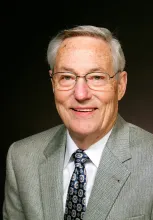
At the time of his retirement in 2016, Roy Holladay was serving the Operation Manager for Ministerial and Member Services of the United Church of God. Mr. and Mrs. Holladay have served in Pittsburgh, Akron, Toledo, Wheeling, Charleston, Uniontown, San Antonio, Austin, Corpus Christi, Uvalde, the Rio Grand Valley, Richmond, Norfolk, Arlington, Hinsdale, Chicago North, St. Petersburg, New Port Richey, Fort Myers, Miami, West Palm Beach, Big Sandy, Texarkana, Chattanooga and Rome congregations.
Roy Holladay was instrumental in the founding of the United Church of God, serving on the transitional board and later on the Council of Elders for nine years (acting as chairman for four-plus years). Mr. Holladay was the United Church of God president for three years (May 2002-July 2005). Over the years he was an instructor at Ambassador Bible College and was a festival coordinator for nine years.
