


Greg Thomas
This transcript was generated by AI and may contain errors. It is provided to assist those who may not be able to listen to the message.
Well, the sermon I have here this afternoon ties a little bit into the 4th of July, which we observed not too long ago. We actually were in Michigan for the 4th of July and had a family get together there with our daughter and son-in-law and our son and daughter-in-law and, let's see, seven grandchildren. So we had a good 4th of July back in Michigan. As we know from history, the original 13 colonies signed the Declaration of Independence for the United States on July 4th, 1776, which we are celebrating every 4th of July. And they signed that to declare independence from British rule. And many count that day July 4th, 1776, as the birthday of the United States of America. Counting from that point in the past July 4th would have been the, if I counted correctly, the 236th birthday of the United States. But there's a lot more to the story. And I want to touch on a little bit on the story today, the beginning of the sermon. King George III, King George III was a king of England at the time, and he decided to tax what was, at that time, the British colonies in America. And he imposed, actually, three cents, a three-cent-per-pound of British tax on tea being imported to the United States, which, as we know, resulted in what is called the Boston Tea Party, which occurred on December 16th of 1773. And on that particular date, on December 16th, 1773, protesters disguised as Mohawk Indians dumped the tea into Boston Harbor, that they were taxed on. Now, that wasn't the tax. The tax was not all that much. Three cents a pound was not all that great a tax. But the problem was they were protesting taxation without representation. The American colonies had no representation in England, and that's what they were protesting, maybe more than just the fact that they were being taxed three cents a pound on the tea. But those protests then continued to escalate into what became known as the Revolutionary War, the War of Independence. Now, the first shots of the Revolutionary War were fired on the morning of April 19th, 1775, from Lexington, Massachusetts. Now, a lot of people may not know this, but it was not long after those first shots were fired that Benjamin Franklin actually wrote a Declaration of Independence for the United States to make itself independent from Britain. But at that particular time, many Americans were loyal to Britain, and the delegates to the Continental Congress revolted the thought of declaring independence from British rule. After all, Britain at that time was the greatest empire in the world. A lot of Americans and all those American colonies were not too keen on being independent from the greatest nation on the face of the earth at that particular time. It would take another year of bitter conflict to persuade the Congress to vote for the Declaration of Independence, as then written the second time by Thomas Jefferson, and passed on July 4th, 1776. Think about that, though. 1776, we declared independence. Then the Revolutionary War broke out for seven years. It would take seven more years of Revolutionary War before Great Britain finally acknowledged America's independence with the signing of the Treaty of Paris in 1783. That's when we finally got our independence. It took seven years later, 1783, when Britain gave us independence.
In 1776, part of that, after the Declaration of Independence was signed, in 1776 the Continental Congress chose George Washington to be the general of the Continental Army, as you know.
And George Washington's army was kind of a ragtag volunteer army of farmers and small businessmen, pitted against the greatest and most developed army of the world at that time, the British Empire. So they were pitted against the army of the British Empire. You know, you study the history of George Washington, and we have a lot of George biography of George Washington, not an autobiography of George Washington, and which Evelyn and I have read, and it's kind of 800 pages. It takes a lot of weight, too, but it's quite interesting. But George Washington actually lost more battles than he won.
And it's also interesting when you study the Revolutionary War that action was halted in the winter months when it was severe weather. Of course, all the British Redcoats, they, they wintered over in New York City and in people's homes or whatever uncomfortable quarters in New York City, while George Washington's army was freezing to death out, you know, camped outside in their winter quarters like Valley Forge. And at that time you read about the history of the Revolutionary War. Many of those in the American counties were split. Many were British loyalists and were opposed to the Revolutionary War. And the Continental Army of George Washington was seldom paid. They continually lacked clothing and coats and shoes and food and other essential supplies. So you might say it was a miracle that they were able to win the War of Independence. But then I have to ask, or was it a miracle? Was there more to it? Today I want to focus on the story of the United States of America, how it began, and where we are today, 236 years after the Declaration of Independence was signed, and why we are where we are today. Now the title may seem like a strange title to start with, but you'll understand when we get a little bit more into the sermon. My title is A Closer Look at Ground Zero. A Closer Look at Ground Zero. First question I want to ask is, when did it really all begin? I mean, United States of America, when did it really all begin? Did it begin with the Declaration of Independence on July 4, 1776? Did it begin with the Revolutionary War? Did it begin with the signing of the Treaty of Paris, where we actually gained independence from Britain? Or did it begin with the inauguration of George Washington as the first President of the United States? Or did it really begin nearly 4,000 years ago? Let's turn to Genesis 12. And a promise that God made to Abraham, and Abraham is descendants. Genesis 12, beginning in verse 1, just going to read the first three verses, Genesis 12. Now the Lord has said to Abram, Get out of your country and from your family and from your Father's house, and go to a land that I will show you.
I will make you a great nation. I will bless you. I'm going to make your name great.
And you shall be a blessing. I will bless those who bless you, and I will curse him who curses you. And in you, all of the families of the entire earth are going to be blessed because of you someday. Because of Abraham, the blessings that God would pour out on Abraham and Abraham's descendants.
Could this end be where it all began? With a promise blessing from God on Abraham and Abraham's descendants. Of course, as we know, and you go through the story, I'm just going to summarize it, but as we know, Abraham had a son Isaac in his old age by miracle of God, Abraham and Sarah, who in turn had a son by the name of Jacob, whose name was then later changed to Israel.
And Jacob, or Israel, had twelve sons, one of whom was Joseph. And Joseph, in turn, had two sons, Ephraim and Manasseh.
And as his father was dying, I should say, as Joseph's father Jacob was dying, Joseph took his two sons, Ephraim and Manasseh, to his father to have them blessed. Let's turn to Genesis 48. Genesis 48, beginning in verse 13. Cut in with the middle of the story here. So Joseph took them both, Ephraim and Manasseh.
Ephraim was with his right hand toward Israel's left hand, and Manasseh with his left hand toward Israel's right hand, Israel being his father who was dying, or Jacob. And he brought them near him. Then Israel stretched out his right hand and laid it on Ephraim's head, who was the younger, who was the secondborn. And his left hand was on Manasseh's head, guiding his hand only, for Manasseh was the firstborn. And he blessed Joseph and said, God, before whom my fathers Abram and Isaac walked, the God who has fed me all my life long to this day, and the angel who has redeemed me from all evil, bless the lads. And then, the latter part of verse 16.
Israel, as he was blessing Ephraim and Manasseh, he said, Let my name, let my name Israel, be named upon them, upon these two boys, Ephraim and Manasseh. And the name of my father is Abram and Isaac, and let them go into a multitude in the midst of the earth. And then in verse 18, and Joseph said to his father, Well, wait a minute, you got it backwards.
Not so, my father. For this one, Manasseh is the firstborn, put your right hand on his head. But his father refused and said, I know, my son, I know. He also should become a people, and he also should be great. But truly, his younger brother shall be greater than he, and his descendants should become a multitude of nations. So he blessed him that day, saying, By you Israel will bless, saying, May God make you as Ephraim and Manasseh.
And thus he said, Ephraim to be great before Manasseh. Ephraim's greatness would come before Manasseh's greatness, and even become an empire consisting of a multitude of nations, it says here. For Manasseh, after that, would become a great nation. When would all this be fulfilled? Well, tell this in Genesis 49, verse 1. And Jacob called his sons and said, Gather together that I may tell you what shall befall you in the last days, in the days leading up to the return of Jesus Christ. And if you read through here, then there's two particular blessings that God said would be bestowed upon these particular boys their descendants in order to make them great.
What two particular things would make the descendants of Joseph great in the last days? First is Genesis 49, verse 22. Genesis 49, verse 22. Joseph, it says, Joseph and Joseph's descendants, even Manasseh, is a fruitful bough, a fruitful bough by a well. His branches run over the wall. So, you look at this carefully, it indicates that one of the great blessings that's going to be bestowed upon these descendants of Joseph would be economic prosperity. Economic prosperity is one of the things that's going to make them great in the last days.
And of course, you look at the United States of America today, being the second one who'd become great. The United States of America has been the most prosperous nation the world has ever known. We've been blessed with tremendous economic prosperity. But that economic prosperity is now being taken away and is greatly threatened by nearly $16 trillion debt, national debt.
What was the second thing here that's mentioned that would make them great? Verse 23 of Genesis 49. So the archers have bitterly grieved him, shot at him and hated him, but his bow remained in strength, and the arms of his hands were made strong.
So on the last day, Joseph's descendants were prophesied to be strong militarily. And since World War II, the United States of America has been the strongest military power of the world. What is the real source of that power? And has America forgotten the source of the real power? Verse 24. His bow remained in strength, and the arms of his hands were made strong. How? By the hands of the mighty God of Jacob. So our military strength is a blessing that God has promised to bestow upon Great Britain and the United States of America for the last days. So that is when it really all began. With a promise blessing on Abraham, and with a special blessing on Joseph, on Ephraim and Manasseh for the last days, a blessing of economic prosperity and military might.
Now, did that promise blessing contain a warning? Turn to Deuteronomy 28. A lot of us are familiar with this, but maybe you haven't looked at it for a while. Deuteronomy 28, beginning in verse 1, where God then gave this warning. It took unto pass that if you diligently obey the voice of the Eternal, your God, to observe carefully all His commandments, which I command you today, the Lord your God will set you high above all nations of the earth.
After World War II, the United States of America was set above all the nations of the earth. It all began, of course, with Pearl Harbor. My mom and dad, my dad got a job in Hawaii in 1939, and it was all set to move to Hawaii. They had already made their plans, and then at the last minute, they got cold feet. They didn't want to be separated from the family that far, but they actually had been in Hawaii, so they decided not to go.
If they had gone, and things had gone as they had did go, I would have ended up being born in Hawaii, just about six months before Pearl Harbor, or about eight months before Pearl Harbor, actually. But Pearl Harbor forced the United States to build military might, and military spending helped bring the United States out, of course, the economic depression of the 1930s.
And advanced technology brought the atom bomb, which in turn brought about the end of World War II. Deuteronomy 28, verse 7, The Lord will cause your enemies who rise against you to be defeated before your face. They should come out against you one way and flee before you seven ways. And after World War II, the United States militarily became the greatest nation in the world. The U.S. gained military superiority over the rest of the world to where we had to be feared and respected by all the nations of the world. And we were, after Hiroshima and Nagasaki, as terrible as those events were.
Because after World War II, there were no other nations in the world who could rival the United States militarily. Now, as we know, in World War II, the overall general of the United States of America was Dwight D. Eisenhower. I'll never forget, of course, right after that, well, I was going to say he was rewarded in 1952 by being elected to be the president of the United States, when he was president from 1952 through 1960, but I know he was campaigning here in Seattle in 1951.
And back then, they campaigned by train. And my dad wanted to go down and see him. He was coming to Seattle sometime in that campaign in 1951. When he was running for president, he took me with him. I was 10 years old. And we went down there to the train depot in Seattle. And dad got right up there in the front, and he gave us, of course, a president—and he wasn't president of Eisenhower.
He was just General Eisenhower. He gave a speech, and at the end of the speech, he stuck his hand out and shook hands. And I happened to be right there, so I stuck my hand out, and he shook my hand. So I actually—I've got to say, he was the one president of the United States I've actually shaken hands with, although that was before he actually became president.
He was president for eight years. Interestingly, his main economic goal was to achieve a balanced federal budget. And when he left office in 1961, he returned the federal budget into a surplus. He actually had a surplus budget when he left office. During the 1950s, as a lot of us remember, who were—a lot of us, I say a lot of us in this age would probably do remember, because we were living in those days.
But during the 1950s, consumer spending skyrocketed, and economic prosperity blossomed. And it's very interesting. A lot of you—if you were living back in that time in the 1950s, you remember that oil was rather cheap. Evelyn remembers in Arkansas when she was a girl that gasoline was like 14 cents a gallon, she said, one time. I remember here in Seattle, when I first started driving, that would have been 1957. Gas—you could get gas—there was sometimes gas competition between stations, but you could get gas as low as— I remember, like, I think the lowest I remember in 1957 was 22 cents a gallon.
But usually between 25 and 30 cents a gallon, you could get gas. Here in the Seattle area, 1957, 1958. And of course, one thing that's interesting is, you go back to that period of time, the United States at that time was actually exporting oil.
We were the greatest export of oil in the world because oil was being discovered in Texas, and most of our oil was from domestic production at that time. That's one reason why gas was so inexpensive. In the 1950s, Americans made up just 6% of the world's population, but consumed 30% of all the world's goods and services. And America became the most prosperous nation in the world to ever know.
With the largest middle class of any nation in the world to probably ever know, producing more food than any nation ever before produced. We used to export food to all the nations of the world. We'd export food. We had tremendous grain storage, grain and food, surpluses. Deuteronomy 28, verse 5, we count some of these blessings we experienced back then. Blessed should be your basket and your eating bowl. You're going to be blessed by having a tremendous amount of food and grain to export to other nations.
Blessed should be when you come in, and blessed shall you be when you go out. Verse 8, the Lord will command the blessing on you in your storehouses, and all to which you set your hand. He will bless you in the land which the Lord your God has given you. So we're blessing our storehouses. We had tremendous surpluses of food and grain. Verse 12, the Lord will open to you His good treasure, the heavens, to give the rain to your land in His season, and to bless all the work of your hand. And then, the latter part of verse 12, you shall lend to many nations, but you shall not borrow. Interestingly, after World War II, beginning with the Marshall Plan or the European Recovery Program to help rebuild war-torn Europe, the United States became the greatest lending nation the world had ever known.
We lent to nations all over the world, most of which never got paid back. But we lent to nations all over the world, and we didn't borrow from anybody. Just like this was prophesied here. We became the head of the world, both militarily and economically. Verse 13, the Lord will make you the head. We were. Militarily and economically, we're the leading nation of the world.
The Lord will make you the head and not the tail. You shall be above only and not be beneath. If you heed the commandments of the Lord your God, which I command you today, and are careful to observe them. Verse 14, so you shall not turn aside from any of the words which I command you to this day, to the right or to the left, to go after other gods, to serve them.
Of course, I know the United States did not obey God fully or completely as we would look at it, but nevertheless, God is very merciful. And we were a nation that looked to God, to some degree at least. And I think God honored that. He kept these blessings.
There are promises from God, and He fulfilled His promises. But all those promise blessings came with a warning beginning in verse 15. It shall come to pass, if you do not obey the voice of the Lord your God, to observe carefully all His commandments and statutes, which I command you today, then all these curses will come upon you, and eventually they're going to begin to overtake you.
Verse 16, curse shall ye be in the city, and curse shall ye be in the country. All you've got to do is turn on the news, and you don't need to make any more comments. That has come to pass. Verse 17, curse shall be your basket and your kneading bowl. In other words, a warning that we could lose our economic prosperity if we as a nation, openly, rejected and turned against God. We could lose our economic prosperity. Verse 43, the alien who is among you shall rise higher and higher above you, and you shall come down lower and lower.
And then, verse 44, And the alien foreigners will lend to you, but you shall not lend to him. And he shall be the head, and you shall be the tail. What a reversal since the 1950s. Today, the United States of America has become the greatest debtor nation of the world.
No nation has ever had the debts that the United States of America has. We now have a national debt approaching $16 trillion, and it's hard to even imagine what that is, and rising rapidly. You know how much our national debt is increasing by? It's increasing by $1 million every minute. Every minute. It's increasing by $1 million. It's hard to imagine. So our economic prosperity is now in grave jeopardy, and many people in the news see that, and they realize that. And they're concerned about where we're heading and what's going to happen. And we've had to drastically reduce our military budget, and we are involved in a war in Afghanistan with a no-win solution, which we're now trying to pull out of, which then takes us back to Deuteronomy 28, back to verse 25 of Deuteronomy 28.
It says, That's interesting. A lot of the nations of the earth, they don't look on the United States for respect anymore, do they? As they once did. I mean, they look on us as being a troublesome nation, as being a problem. A lot of nations do. We've become troublesome to many nations of the world. That has happened. Now, as we know, Leviticus chapter 26 parallels Deuteronomy 28. Let's just note two verses in Leviticus 26. First, in regards to the Promised Blessings. Let's go to Leviticus 26. And let's just look at a couple verses here.
Leviticus 26, verse 6, in regards to the Promised Blessings. It says here, I will rid the land of evil beasts, and the sword will not go through your land. The sword will not go through your land. Now, almost all the nations of Europe during the 20th century, with all the World War I and World War II and the other wars that went on, the sword went through their land, but not the United States of America. Even with all the wars in the 20th century, God put a hedge of protection around the United States of America.
No foreigners, no foreign nations, penetrated into the continental United States. We had peace at home, you might say. We had peace in our own land. And the sword did not go through our land, even as God here promised. But that also came with a warning. Leviticus 26, beginning in verse 14, But if you do not obey me, and do not observe all these commandments, and if you despise my statutes, as you as a nation now, come to despise God's laws and God's commandments and God's statutes, and if your soul pours my judgments, so that you do not perform all my commandments, but break my covenant, I will also do this to you, verse 16, I will appoint terror over you.
Well, we all know what happened on 9-1-1. Our hedge of protection was breached for the first time. Our entire world changed overnight, and the symbol of our economic prosperity, the World Trade Center, came crashing down, with the loss of nearly 3,000 lives and giving rise to the term ground zero. Now, since 9-1-1, we have been on a steady path of ever increasing economic decline, as we know. And we now, as we also know, since that terror strike, we now have an enemy that our military is unable to defeat.
We still have the strongest military in the world, but we can't defeat this enemy. Why? Because we don't know who they are, exactly, and we don't know where they are. They could be somebody in our neighborhood. We don't know who they are. They're scattered all over. You don't know. We can't identify them specifically as individuals. We don't know who they are, and we don't know where they are. Now, it first appeared after 9-1-1 occurred that that might be a wake-up call.
But now it seems like all that has faded. Should it have been a wake-up call? Will a closer look at Ground Zero answer that question for us? It ought to be a wake-up call. But as we begin to look at that, first let's go back to the inauguration of George Washington as the first President of the United States. I think it's very, very interesting some of the statements he made in his first inaugural address back in 1789.
In the sitter of the Revolutionary War, it ended with the Treaty of Paris in 1783. Think of that. 1783. That's when America gained its independence from Britain. Now, when the war ended, go look at the history of George Washington. When the war ended, George Washington, of course, he was the General of the Continental Army.
When the war ended, what did he do? He resigned his commission. He resigned his commission from the military to retire to his home in Mount Vernon to spend his remaining years in retirement with his wife, Martha. They had no children. Now, that came as a great surprise to King George III, the King of England.
He thought George Washington would become a harsh dictator and that the Americans would then, once again, long for British rule. When King George was told that Washington had resigned his commission, his report is saying, if he does that, he will be the greatest man in the world. Well, he did do that. George Washington did resign his commission. He wanted to retire from public service. But retirement wasn't in the cards for George Washington, as we know.
Now, you think about it. In 1783, we gained our independence, but we never got a government form. We didn't have our first president take office until six years later. For the next six years, the Continental Congress struggled to form a constitution and he worked in governmental structure. Some bitter arguments went on to form that. Very difficult. Now, we've marked July 4, 1776 as the birth of our nation, but our first president was not sworn into office until April 30, 1789, 13 years after the signing of the Declaration of Independence.
And George Washington, against his will, and with a great deal of anxiety, was unanimously then chosen for that position of leadership to be the first president. Now, as we know, today, the president of the United States resides in the White House in Washington, D.C., with Washington, D.C. as a capital. But I wonder how many really understand some of the early history of the United States. In our history, beginning in 1789, how many capitals have there been in the United States of America?
How many capital cities have there been? There have actually been three. A lot of you know the second. Prior to Washington, D.C., the capital of the United States of America actually, as a lot of you know, was Philadelphia, Pennsylvania, which is where George Washington resided during the last six years of his presidency. During the last six years of George Washington's presidency, he resided in Philadelphia, Pennsylvania, which was the capital of the United States prior to Washington, D.C. But where was the first capital of the United States of America located?
And where did George Washington give his first inaugural address to Congress? On what street did George Washington give his first inaugural address? As you know. And as he was sworn in, he said a president. George Washington did this. He said a president that had been followed ever since. What president did he set? And what was the very first act set forth by the first president of the United States of America? Interestingly, the first capital of the United States of America was New York City.
The first two years, our capital was New York City, before it went to Philadelphia and then later became Washington, D.C. And President George Washington delivered his first inaugural address on the balcony of the Senate chamber at Federal Hall on Wall Street. On Wall Street. Anybody talk about Wall Street? You think about the financial capital of the world. But that's where George Washington delivered his first inaugural address.
It was in the Federal Building on Wall Street in New York City. George Washington gave his inaugural address on Thursday, April 30, 1789, in New York City on Wall Street, in the heart of what would become the financial center of the world. And he set a precedent, which has been followed ever since, by being sworn into office by placing his right hand on a Bible.
He did that. It wasn't our constitution to do that. George Washington, that was the only way he was going to be sworn in, by placing his right hand on a Bible. The reason he did that was he felt unworthy for fulfilling the office of his nation, that the nation would be still divine. He felt unworthy to fulfill that office. And he began his initial inaugural address by pointing that out.
You can Google, go to Google Search and put down George Washington's first inaugural address, and it's only about two pages. You can print it out and read it for yourselves. Quite interesting. I'm going to close portions of it. He loved the new nation that had now come into existence, but he deeply felt it was all by the province of God. And you can see that in his inaugural address. He felt it was God's doing, that he won the Revolutionary War and that we became an independent nation.
Here's what he said toward the beginning of his first inaugural address. He said it would be peculiarly improper to admit in his first official act my fervent supplications to that Almighty Being who rules over the universe, who presides in the consuls of nations, and whose providential aids can supply every human defect. No people can be bound to acknowledge and adore the invisible hand which conducts the affairs of men more than those of the United States, because every step by which they have advanced to the character of an independent nation seems to have been distinguished by some token of providential agency.
In other words, George Washington, in his first inaugural address, he stated that he felt the formation of the United States of America was by the will of God to fulfill a purpose of God. And he wanted to state that in his first inaugural address. You know, what he said reminds me of a passage in the book of Daniel before I quote more from his inaugural address. Let's go to Daniel chapter 2. Daniel chapter 2, beginning in verse 20.
Let me just read a couple of verses here. Daniel 2 verse 20. Daniel answered and said, Blessed be the name of God forever and ever, for wisdom and might are his. And he changes the times. He changes the times. And we could say that God determines a time for a nation to come to power and the time for a nation to be removed from power.
He changes the times and the seasons. God can determine the duration of time that a nation will stay in power and continue to exist. God determines that. He changes the times and the seasons. He removes kings and raises up kings. And George Washington humbly felt it was by God's design that he was being raised up to be the first president of the United States. And there was something that wanted to make him a king. George Washington didn't want to be a king. He said to another president, after two terms of office, he resigned. He retired. He didn't want to be a king. He wanted to share power. He didn't want to have power only on himself. He was very humble and very different individual in that way.
But he did believe it was God's doing, and that God has the one who could raise up kings and remove kings. So after acknowledging God's hand in the formation of the United States of America, George Washington gave this warning. This is part of his inaugural address again. And part of that inaugural address contained a warning as well. He said this, Now, it's kind of awkward the way he wrote that. But in other words, what he was saying was, that if we as a nation disregard God totally, our blessings can be removed. And the preservation of our freedoms and the very destiny of our nation will be in jeopardy. That's what he was stating there in simple terms. Now, here's how George Washington concluded his first inaugural address. This is the conclusion of it. He said, Now, again, other words, Now, again, other words, what he was saying there is, he included by saying the success of our government and our success as a nation is going to be on our enlarged view as a nation, as he put it. On a view that our existence and our blessings have been given to us by God. He said, if we ever lose that view as a nation, that our blessings have been given to us and bestowed upon us by God, he said, we're going to, it's going to, we're in trouble. Our nation could come to an end if we ever go take that view.
But that view, the view that our nation was founded by God and that our blessings have come from God and everything we've had and blessings we've had have been given to us by God and held by God, that view no longer prevails the United States of America. As a nation, we don't have that view anymore. That was all God's doing. We have now become a very secular nation, which relies on its own power and its own resources rather than on the power and the providence of God. What then leads us to take a closer look at Ground Zero, the title of my sermon. What was the very first act of George Washington? What was the very first act that he initiated as a president once he got sworn into office? Where did it take place? And what was it? After delivering his inaugural address on Wall Street in New York City, he led the members of the United States Congress to St. Paul's Chapel. I don't know if you've heard of St. Paul's Chapel or not. He led them to St. Paul's Chapel. Today, it's a National Historic Landmark. It's the oldest surviving church in New York City. It was built in 1766. And after delivering his first inaugural address, George Washington led the Congress to St. Paul's Chapel. And his very first act as the first president of the United States was an act of prayer. An act of prayer to dedicate America to God and to ask for God's blessing on this nation. And that act of prayer took place at St. Paul's Chapel. Do you know where St. Paul's Chapel is located? It's located at Ground Zero. The rear of St. Paul's Chapel faces Church Street. It's across the street from the site of the former World Trade Center. When the Twin Towers collapsed on 911, even though it was directly across the street, St. Paul's Chapel survived intact without so much as even one broken window. It was the only building that close that survived intact. Now, interestingly, between the Twin Towers and St. Paul's Chapel was a large sycamore tree, which was uprooted and which absorbed much of the blast of the falling debris, which then spared St. Paul's Chapel. That particular tree root has been preserved in the form of a brown memorial, a bronze memorial, I should say, near Ground Zero on Wall Street. I want to read a little history of St. Paul's Chapel. You can go online and get this yourself. St. Paul's Chapel is an Episcopal Chapel located in Lower Manhattan and New York City. It is the oldest surviving church building in Manhattan. St. Paul's was built on land granted to the United States by Queen Anne, Queen Anne of England. Queen Anne was a British monarch. She was the Queen of England in the early 1700s. Interestingly, she was the last in the line of the Stuart monarch. She was the last of the Stuarts. Very tragic life. I went to Queen Anne High School. I didn't know much about Queen Anne, but Queen Anne High School was named after Queen Anne, who ruled England for about ten years or so in the early 1700s. Of course, she'd been married for some time before she became Queen. Tragically, she had no heir. She was the last of the Stuarts. But she was married to her husband for quite a number of years, and she got pregnant. This is a tragic part of the story. You look it up, do a search on Queen Anne. She got pregnant 17 times and did not have one surviving heir. About half of them were stillborn. And the rest, except I think of one daughter, all died within a very short time after birth. Some died minutes after birth. Some died within a day or just a few days. I think there was one daughter who lived to be eight or nine years old, I think. But anyway, she has no surviving heirs, even though she was pregnant 17 times.
But she was the one who donated the land on which St. Paul's Chapel was then built. The building was declared a National Historic Landmark in 1960 because it was the oldest public building and continuous use in New York City. The chapel survived the Great New York Fire of 1776 when a quarter of New York City, then confined to the lower tip of Manhattan, burned following the British capture of the city after the Battle of Long Island during the American Revolutionary War. George Washington, along with members of the United States Congress, worshipped St. Paul's Chapel on his inauguration day on April 30, 1789. Washington also attended services at St. Paul's during the two years New York City was the country's first capital. The rear of St. Paul's Chapel faces Church Street opposite the east side of the World Trade Center site. After the attack on September 11, 2001, which led to the collapse of the Twin Towers of the World Trade Center, St. Paul's Chapel served as a place of rest and refuge for recovery workers at the World Trade Center site. The church survived without even a broken window. Church history declares it was spared by a miracle sycamore tree on the northwest corner of the property that was hit by debris. The tree's root has been preserved in a bronze memorial by sculptor Steve Tobin.
And in November of 2003, interestingly, an evergreen tree was implanted with a sycamore tree had been uprooted. Now, that might not seem significant to you, but I'm going to read you something that's kind of interesting.
On July 4, 2004, on the third end of, you know, three years after 9-1-1, I was doing two and a half years or so, but on July 4, 2004, a 20-ton stone, which was hewn out of anderon-dite granite, was then laid as a symbolic cornerstone for the new Freedom Tower they were going to build where the Twin Towers had been before they collapsed.
To honor and remember those who lost their lives on 9-1-1.
At the dedication ceremony of the 20-ton hewn cornerstone, New York Governor of the time, George Pataki, said this.
He said, today we take 20 tons of anderon-dite granite, the bedrock of our state, the state of New York, and place it as the foundation, as the bedrock of a new symbol of American strength and confidence.
You know, that's great, that's patriotic, and it's great. The only one thing.
He's looking to America as a strength.
Should America's strength and confidence be in God, and humbly turning back to God?
If not literally as we might see, at least symbolically, as George Washington may have looked at it, and people of George Washington, maybe have looked at it?
Now, the Freedom Towers, they don't call it the Freedom Tower now, it was called that for quite a while, but they're still building it, as you know.
But the Freedom Tower is now called One World Trade Center. That's the name that's been designated for it, One World Trade Center.
It is scheduled for completion next year, in 2013.
After completion, this can be the tallest building in the Western Hemisphere, and the third tallest building in the world.
And its fire will then reach a symbolic height of 1,776 feet.
Kind of to tie in with our Declaration of Independence in 1776, the fire will be 1,776 feet high.
But there's a big difference today between, you know, 1776. Today, America has forgotten its God, and has basically declared independence from God to a large extent.
And it relies now on its own strength.
Now, it's interesting, I want to go back and look at the Scripture here, this kind of interesting, it ties into this.
Ancient Israel and ancient Judah made the same mistake.
They relied on their own strength instead of looking to God, and they abandoned God, which led to this warning, to the descendants of Jacob.
A warning that fits into what took place at Ground Zero.
Let's go to the book of Isaiah.
Turn to Isaiah, Chapter 9.
When it were very familiar with a couple of verses here in Isaiah 9, especially verses 6 and 7, let's start there in verse 6, because it's quite interesting.
Isaiah 9, verse 6, For unto us a child is born, unto us a son is given, And the government will be upon his shoulder, of course, obviously a prophecy of Jesus Christ when he returns to the service of the King of Kings.
And his name will be called Wonderful, Consular, Mighty God, Everlasting Father, Prince of Peace.
Of the increase of his government and peace, there will be no end, upon the throne of David and over his kingdom, to order it and establish it with judgment and justice, from that time forward, even forever.
And the zeal of the Lord of Holst will perform this.
But then, so it talks about the time when Jesus Christ was going to return as King of Kings.
But then it talks about what's going to happen just before that, that's going to lead up to Jesus Christ's return.
God gives a warning to the descendants of Jacob.
The Lord sent a word against Jacob. Now, notice very carefully, this is against Jacob.
This is a word against Jacob because of a ban on God.
And this word is fallen on Israel because Israel's name was named on who?
Ephraim and Manasseh, the United States and Great Britain.
And all the people will know, Ephraim, in the inhabitants of Samaria, and Samaria, of course, is the capital of the northern tribes of Israel, who say in pride and arrogance a heart.
Now, as we read the next verse, we have to ask, is not America today saying the same thing?
As a matter of fact, two of our political leaders, this is quite interesting, I just want to point this out, two of our political leaders have already quoted this verse, the next verse we're going to read, verse 10, by Isaiah 9. Two of our political leaders have already quoted this verse in relation to what happened to ground zero on 9-1-1. They tied this verse into ground zero.
But what they don't realize, this is a warning against Israel. On the day after 9-1-1, on September 12, 2001, Tom Daschle, who was at that time the Senate Majority Leader, spoke to the U.S. Senate about how America would rebuild and be stronger than ever.
In his speech, which is a part of the record of the United States Senate, he quoted Isaiah 9.10 in making his point.
But I wonder if he realized that this verse, Isaiah 9.10, is actually a warning against Israel.
Then, exactly three years after 9-1-1, on September 11, 2004, on the third anniversary of 9-1-1, John Edwards, who was at that time John Kerry's vice presidential running mate, he gave a speech at a prayer breakfast in which he also said America would rebuild and be stronger than ever.
And in his speech, he also quoted Isaiah 9.10 to make his point.
And it wasn't too long ago. President Obama was there not too long ago, and he didn't quote Isaiah 9.10, but he did say America would rebuild and be stronger than ever.
But both Tom Daschle and John Edwards directly tied Isaiah 9.10 to the collapse of the World Trade Center and to the events of 9-1-1 at Ground Zero. Let's read that verse for ourselves. Let's read it up to you again. Verse 8, The Lord sent a word against Jacob, and has fallen on Israel, and the people will know, even in the happiness of Samaria, who say in pride and arrogance of heart, The bricks have fallen down.
Now we're going to rebuild with hewn stones. With a hewn stone. Remember, it was a hewn stone that was laying in a cornerstone?
To rebuild?
We will rebuild with hewn stones. The sycamores are cut down. It was a sycamore tree that saved St. Paul's Chapel.
But we will replace them with cedars. Now, a sycamore tree was replaced with an evergreen tree. Cedar is an evergreen tree.
And the symbolic cornerstone was hewn out of a 20-ton piece of granite.
I have to ask, was that coincidental, or was it a warning for America to turn back to God, at least to the extent that God was acknowledged by George Washington?
Notice how God responded to ancient Israel when they said this, as we just read in verse 10. Here's how God responded in verse 11. Therefore the Lord shall set up the adversaries of resin against him, and spur his enemies on. The Syrians before and the Philistines behind, and they shall devour Israel with an open mouth.
Now, those are the ancient enemies of ancient Israel, but today the United States and the group can have enemies.
Different enemies, different names, but they're enemies. And it's very interestingly that our enemies today, they devour us with an open mouth. They don't fear at all to speak anything against the United States. In fact, it's amazing to me that not only do our enemies speak against us, they'll have no respect for us at all. They'll speak any evil against us. There are even citizens of the United States of America who speak evil against the United States of America with an open mouth.
But even now our enemies are not afraid to threaten us or to speak all men and people against us. Even some Americans do that. They are trying to devour us with an open mouth. Why is God allowing this? Verse 13. For the people do not turn to Him who strikes them, nor do they seek the Lord of hosts. What will happen if we as a nation don't try to return to God and seek the Lord of hosts? Verse 14. Therefore the Lord will cut off head and tail from Israel, palm branch and bulrush in one day. In other words, it's going to fall suddenly if we don't wake up.
George Washington, his first inaugural address, looked to God as the one who rules and presides over the destiny of nations, and he credit God for the establishment of the United States of America, and he credit God for our liberties that we have.
And George Washington also warned that the propitious miles of heaven can never be expected on a nation that disregards eternal rules of order and light, which heaven itself has ordained.
That then is the history of the United States of America, how it began and where we are today. Before we close, I want to ask two final questions, look at two final scriptures real quickly. As we know, King Nebuchadnezzar was the king of ancient Babylon, once became the greatest power of the world back at that time. And he became lifted up with pride, as we know, and God drove him insane. And God taught him an all-important lesson.
What lesson did King Nebuchadnezzar learn that applies to our current leaders today? Well, here is the answer to King Nebuchadnezzar himself. Turn to Daniel 4. Daniel 4. The last verse in Daniel 4. Daniel 4, verse 37.
This is the lesson that Nebuchadnezzar learned after God had given him his saying and gave him his sanity back and his power back.
Now I, Nebuchadnezzar, praise and extol and honor the King of heaven, all whose works are truth, in his ways justice, and those who walk in pride, he is able to put down.
Are we as a nation and are our leaders now walking in pride? Have we forgotten God? Are we now leaving God out of the picture? And are we now, instead, relying on our own strength and our own resources?
Did God himself testify that pride would be our stumbling block that would lead to our downfall?
To the downfall of Israel, whose name was placed on even Manasseh, as we read in Genesis 48, verse 16. Will pride be the stumbling block that will lead to the downfall of Great Britain and the United States of America? And to the downfall of Judah as well. Let's go for our final scripture to Hosea, chapter 5.
Hosea, chapter 5, verse 5, the pride of Israel testifies to his face. Therefore Israel and Ephraim stumble in their iniquity. Judah also stumbles with them.
With their flocks and herds they shall go to seek the eternal. In old times we know the way they worshiped God was by making animal sacrifices. Today people try to honor God by going to church or whatever they do. But what this is saying is that they're going to make a pretense of sacrificing to God. They make a pretense of worshiping God and seeking after God. There's only a pretense. With their flocks and herds they shall go up and seek the eternal. But they will not find Him because He has withdrawn Himself from them. Why will God have drawn Himself from them? Verse 7, because they have dealt precious with the Lord, for they have begotten pagan children. Or they will have begotten strange children or foreign children. But it really says there. Therefore then it concludes in verse 7 by saying, Now a new moon to devour them and their heritage. Now Melvin Rose referred to that verse in the recent letter that he wrote on June 8th, where he said, Hosea 5 reminds us that Ephraim and Manasseh and Judah will all fall at the same time within a period of 30 days or a new moon. Now as we know, God did not cause 911, but He allowed it to happen by removing His hedge of protection, which we had throughout the 20th century. And by God removing that hedge of protection, we began at 911. That should cause all of us assistance of the United States, especially of God's Church as well, to take a closer look at Ground Zero.
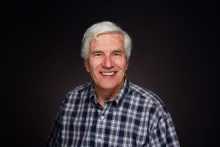
Steve Shafer was born and raised in Seattle. He graduated from Queen Anne High School in 1959 and later graduated from Ambassador College, Big Sandy, Texas in 1967, receiving a degree in Theology. He has been an ordained Elder of the Church of God for 34 years and has pastored congregations in Michigan and Washington State. He and his wife Evelyn have been married for over 48 years and have three children and ten grandchildren.
