


Don Ward
This transcript was generated by AI and may contain errors. It is provided to assist those who may not be able to listen to the message.
Title of the sermon today, Comfort You, Comfort You, My People. If you could bring comfort to the peoples of the world today, where would you start? Would you start with making everyone physically comfortable, or start with relieving the peoples of the world of fear, anxiety, and mental anguish? Sometimes it would be difficult to know where you would start. Would you start with the physical side of things, or would you start with the mental, spiritual side? To make people physically comfortable, you need, of course, to provide food, clothing, and shelter, and to heal them of all their diseases. At least do those four things. Food, clothing, shelter, heal them of their diseases.
Physical comfort is often something we take for granted. If we have it, it's one of our greatest blessings. To be able to lie down in a house that's warm, doesn't leak. Maybe sometimes hear the rain on the rooftop. Have a nice warm bed to be in, full stomach. Food, clothing, shelter. To be free of pain. Remember the old saying, you don't miss your water till the well runs dry.
So we take so many things for granted. Then you pass along the freeways here, and see the interchanges, and you see the homeless people under those underpasses. And sometimes you just wonder, well, what would life be like if I were there? Physical comfort is a luxury for them. The number of people around the world who are just seeking some sort of physical comfort in the face of pain, in the face of heat and cold, in the face of hunger, and all of these things they face on a daily basis.
Sort of staggering, mind-boggling to contemplate. And there are lots of people who go to bed hungry and cold, and their bodies rack with pain every night. It's amazing that people will do almost anything to seek physical comfort. They will forge streams, climb the highest mountain, cross the deepest and darkest jungles in search of physical comfort.
Instinctively, people want to survive. We want to survive, and we'll do almost anything to survive. But the greatest pain in suffering that the peoples of the world are suffering from is mental and spiritual. In fact, so much of the physical discomfort that we see in the world today can be attributed to the fact that people have forsaken the spiritual.
The world is in search of a comfort zone, and they don't know where to find it. And if they did, perhaps they wouldn't recognize it if they did find it. Because it is available, it's very near. So let's note the true source of comfort. Go to 2 Corinthians, please. 2 Corinthians 1. 2 Corinthians 1 and 3. 2 Corinthians 1 and 3. Blessed be God, even the Father of our Lord Jesus Christ, the Father of mercies, and the God of all comfort. Now, later on in the sermon, we'll see that where Jesus Christ says that He would send the comfort error. The comfort error and comfort in the New Testament is from the Greek, and the root word is P-A-R-A-K-A-L-E-O.
PARA means alongside, and KALEO means to call. To call alongside. So a comforter is called alongside. But we'll see that we have not only one alongside, but one in us through God's Spirit, the Father of all mercies and the God of all comfort, who comforts us in all our tribulation that we may be able to comfort them, which are in trouble by the comfort we're with, we ourselves are comforted of God. So in the Greek, this word is PARA-A-KALEO, and it means one called alongside for the purpose of consolation and the purpose of relieving pain and fear and agony, the purpose of consoling.
There is great comfort just in the Scriptures themselves. If you wouldn't notice Romans 15, and I really shouldn't say just in, because the Scriptures in one sense, they're everything.
I have been teaching and preaching the Bible. Well, if I go back to when I was in the Baptist Church, I started teaching adult Sunday school when I was 20 years old. I've been preaching and teaching the Bible for many decades, but those years in the Church of God, which have been 40 and more, I have taught the John 663 and tried to impress it upon people's minds, the words I speak, they are spirit and they are life. In other words, another way of saying it, they're everything!
They're everything. Several years ago, when I was Pastor in Big Sandy, we had a man there who had terminal cancer. Very often, I would speak about the Word of God in sermons and the power and consolation that you can gain from the Word of God. One day, she called me and told me, said, I know what you're talking about with regard to the comfort, the strength that can be drawn from the Word of God, because I just read the Psalms to my husband.
Remember, he has terminal cancer. And it's obvious that when I do that, that he is strengthened by it. In Romans 15, verse 4, for whatsoever things were written before time or written before our learning, that we through patience and comfort of the Scriptures might have hope. So brethren, if you are in need of comfort, and I think at this time in our lives, we see so many different things in our lives. We're troubled on many fronts, as Paul writes about in several of his epistles, many trials and troubles.
One of the places to turn for comfort, of course, is in the Scriptures. And we should use our spiritual gifts to edify and exhort and comfort others. If you would now, turn to 1 Corinthians, 1 Corinthians chapter 14, verse 1. To set the backdrop just a little bit, remember in 1 Corinthians chapter 12, Paul talks about spiritual gifts. And that the spiritual gifts are given to edify everyone.
And then, he talks about in chapter 13, the more perfect way, the way that it far surpasses all other ways, and that is the way of love, of becoming as God is, and God is love. And here in 1 Corinthians 14, he somewhat summarizes again the purpose of spiritual gifts, and he identifies three things in particular to focus on. Chapter 14, verse 1, follow after charity the more excellent way, and desire spiritual gifts, but rather that you may prophesy, prophesy has to do with inspired preaching and teaching, as well as foretelling the future.
For he that speaks in an unknown tongue speaks not unto men, but unto God. For no man understands him, albeit in the spirit, he speaks mysteries. But he that prophesies speaks unto men, to edification and exhortation and comfort. And so that is how we should be using our spiritual gifts. So today we want to search out the keys to God's comfort.
In 1741, a man named George Friedrich Handel composed a great composition known as Handel's Messiah. Handel was depressed. He was in debt, and he began sometime in August of 1741, setting Charles Jennings's biblical libretto to music at a breakneck speed within 24 days, sometime in September of 1741. Handel had finished composing what is known as Handel's Messiah. From time to time, and I used to, I haven't done it in recent times, but he used to play at least some of Handel's Messiah every week, sometime during the week.
Last night, I got a good dose of it. Today's world on the Internet, all you've got to do is put in Handel's Messiah, and you can listen. You don't have to even go buy it. You can listen off the Internet if you have high-speed Internet. Handel's Messiah. A large majority of the words are taken from the book of Isaiah. The last 26 chapters of the book of Isaiah are sometimes referred to as the comfort volume.
It would be 27 chapters, including chapter 40. Forty through 66 would be 27 chapters. Let's go to Isaiah 40. One of the great works is, Comfort You, Comfort You, My People. It's one of the Adrias in Handel's Messiah. In Isaiah 40 and verse 1, here's where we get the title of the sermon. Comfort you, comfort you, my people. Sayeth our God. Speak you comfortably to Jerusalem and cry unto her with her. With her warfare is accomplished.
With the handel's Messiah, what it does is it begins with the prophecies prophesying the birth of the Messiah, and then the birth of the Messiah, a big part about His ministry and what He'll do, and then finally culminating with the hallelujah chorus and coming as Lord of Lord and King of Kings. Speak you comfortably to Jerusalem and cry unto her that her warfare is accomplished.
Of course, at the end of the age, Jerusalem will be surrounded by armies. It is through God's mercy and His intervention that they are spared. That description of Jerusalem being surrounded by armies is given in Zechariah 12, the first three or four verses there, that her iniquity is pardoned because they're going to look on Him whom they've pierced, and they're going to mourn, they're going to cry, they're going to repent, they're going to turn to God.
She has received of the Lord's hand devil for all her sins. Yes, Israel is going to be punished for her sins. At the present time, of course, in Orthodox Judaism, they don't even accept that the Messiah has come. They, quote, in Orthodox Judaism, are still looking for the Messiah. So they have some very hard lessons to learn. The voice of Him that cries in the wilderness, and of course this hearkens to Malachi chapter 3, the prophecy of one that would come, the voice crying in the wilderness, John the Baptist, and Mark 1, prepare you the way of the Lord, make straight in the desert the highway of our God.
Every valley shall be exalted. Then there's another oria or piece that begins and handles Messiah about every valley being exalted. And every mountain and hill shall be made low. And every crooked shall be made straight, and the rough place is plain. And the glory of the eternal shall be revealed, and all flesh shall see it altogether, for the mouth of the Lord has spoken. Now hold your place there.
Let's go quickly to Revelation chapter 1. It says, all flesh shall see it. One of the remarkable things about handles Messiah is its scriptural accuracy. In Revelation chapter 1, verse 7, Behold, he comes with clouds, and every eye shall see him. And they also which pierced him, and with all the kindreds of the earth, shall wail because of him, even so, Amen. So you also begin to see through handles Messiah what I continually talk about and emphasize that the Bible is a beautiful tapestry, like a beautiful rug with all the threads woven together to make a beautiful hole.
And so once again we are in Isaiah verse 5, And the glory of the Lord shall be revealed, and all flesh shall see it together, just like we read from Revelation 1.7, For the mouth of the Lord has spoken it. The voice said, cry, and he said, What shall I cry? All flesh is grass, and all the goodliness thereof is as the flower of the field. The grass withers, the flower fades, so it is with flesh.
Because the Spirit of the Lord blows upon it, surely the people is as grass. The grass withers, the flower fades, but the word of our God shall stand forever.
O Zion, that brings good tidings, get you up into the high mountains. Remember what Isaiah symbolized, and what is your reference verse in the New Testament? Reference verses Hebrews 12 verse 22, that you have come to Mount Zion, to the city of the living God, the church of the firstborn. O Zion, that brings good tidings, get you up into the mountain. O Jerusalem, that brings good tidings, clip up your voice and strength. Lift it up, be not afraid, and say unto the cities of Judah, Behold your God.
Behold the Lord God will come with him, with a strong arm, and his arms shall rule for him. Behold, his reward is with him, and his work before him. He shall feed his flock like a shepherd. He shall gather the lambs with his arms, and carry them in his bosom, and shall gently leave those that are with young. And of course, we look for that time. Remember the sermon that I gave in recent weeks, titled, The Great and the Chief Shepherd, and about John 10, how the Good Shepherd lays down his life for the flock.
The hireling, when he sees the wolf coming, flees because he is in hireling. But the Good Shepherd, he gives his life for the flock. And so Jesus Christ, even here in Isaiah, before Jesus Christ came on the scene, the prophecy about the shepherd. Feed his flock like a shepherd, shall gather the lambs with his arms, carry them in his bosom, and shall gently leave those that are young.
So, the first 12 or so verses here of Isaiah give you this wonderful picture of Jesus Christ and him coming again, and some of the events that surround that. And of course, we can take great comfort from that. Also, in Isaiah 51, I would encourage you to read from Isaiah 40 through the end of the book of Isaiah.
Because it has a lot to do, of course, with what is coming in the future. And also, it can be applied to the present as well, because these last 27 chapters of Isaiah really focus on the church to a large degree. A few years ago, and I'm going to give that sermon again, update it, and so on. It was titled, The Church in the Book of Isaiah. Sometimes you might not just recognize it with a cursory reading that is talking about the church.
In Isaiah 51, Harken to me, you that follow after righteousness, you that seek the Lord. And hopefully that's all of us, that we're following after righteousness, speaking God, look under the rock from which you are hewn. Remember the Scripture in Matthew 16, verse 18. Christ speaking to Peter says, upon this rock I will build my church, Petra, a big rock, Jesus Christ Himself. The gates of hell, Hades, will not prevail against it. Look under the rock when you are hewn, and to the hole of the pit when you are digged.
Look unto Abraham, your father, and the Sarah that bear you. For I called him alone and blessed him, and increased him. For the Lord shall comfort Zion. He will comfort all her waste places. He will make her wilderness like Eden, and her desert like the garden of the Lord. And gladness shall be found therein, thanksgiving and the voice of melody. So God is going to comfort Zion. Before Christ comes again, now if you'll turn to Isaiah 61. In Isaiah 61, the church is going to be in mourning. M-O-U-R-N-I-N-G. Remember the encounter after Jesus was baptized in River Jordan, and he went back to Nazareth to his hometown.
And on the Sabbath day, he went into the synagogue, and he stood up, and he pulled from the scroll the book of Isaiah, and he read Isaiah 61, at least part of it. And then he sat down. In Isaiah 61, Jesus Christ read that first verse, and he read in verse 2, to proclaim the acceptable year of the Lord, and he sat down. Now this last part is yet to be, beginning there after that comma in verse 2. And the day of vengeance of our God. Vengeance's mind says, the Lord I will repay. So vengeance is coming to comfort all that mourn.
Rather than the rest of this age, it's not going to be easy for anyone. The world is changing so dramatically, and it's changing at such a rapid pace. But we hardly even discern at times what has really happened to us. Basically, this nation has become a police state. And the whole world, to some degree, is becoming a police state. And more and more, our liberties and our freedoms are taken away from us.
And it's going to get a lot worse. Now I don't say this to, I guess that's oxymoronic in the face of trying to give a sermon on comfort. But to let you know upfront what the promises are of God. We have read them in Isaiah 40, Isaiah 51, and also here in Isaiah 61. That we must never be turned from the big picture. To keep our focus on the big picture.
That what we are here for. Why God created us in the first place. To be in His family. And to be in the Kingdom of God. It says, to comfort all that mourn, to appoint unto them that mourn in Zion. Remember what Zion symbolizes, to give unto them beauty for ashes, the oil of joy for mourning, the garment of praise for the Spirit of heaviness. That they might be called trees of righteousness, the planting of the Eternal. That He might be glorified. And these ones, those who are in the first resurrection, verse 4, And they shall build the old wastes, they shall raise up the former of desolations, they shall repair the waste cities, the desolations of many generations.
So that's what God has promised us. But here we are in the meantime. We're living now, today. So what can we do? How can we be comforted? Comfort is, the word comfort at times is a little bit difficult to define. In the Old Testament, the word I've already talked about in the New Testament is pyrokulele. In the Old Testament it's nakam, spell N-A-C-H-A-M, N-A-C-H-A-M. And Strongs defines it to be sorry, to console oneself, to repent, regret, comfort, be moved by pity, have compassion, to console, to be consoled. Basically, the word comfort has many different components, many different aspects.
It's several different things. It's not just one thing for a person to be comforted. And helping a person who's been injured, we take care and try to make everything just right. Pillow under the knee. Is the cover just right? What about the light? You've got too much light coming in here. Are you cold? Are you warm enough?
And we go through all the various steps. What about, are you thirsty? You need something to drink? Are you hungry? Can I get you some food? It seems to me that comfort has to do with removing all the things that cause a person to feel pain. Things that causes anxiety, stress, distress. In short, removing anything that raises a sense of pain, anxiety, guilt, shame, stress, irritability. If one is truly comforted, they're totally at ease. They do not fear, they do not dread what it is that set before them.
Now, you see, then you get a dichotomy here. Because on the one hand, you can be in pain and experience a certain amount of stress. And I know this sounds paradoxical, but yet at the same time, you could have the peace that surpasses all understanding. You know, as I stand before you here today, my body is wracked with pain in many different places.
It's not excruciating bad pain, but I have a type of peace and a type of confidence and a type of knowing within of what God is going to do. Like the opening hymn that we say. You know, there is joy, there is joy in my heart, knowing that Christ is going to come again. But at the same time, there can be joy even now. Because we can have that comfort, we can have that joy, we can have that peace that surpasses all understanding.
The 23rd Psalm, the wood turned there, is just about as perfect an example as can be found in the Scriptures, or for that matter, in any piece of literature you want to name. Psalm 23. The Lord is my shepherd, I shall not want. I mean, it says it all, if that truly is the fact in our life. The Lord is my shepherd, I shall not want. This makes it clear that this person, a person who can truthfully say that, that that person is trusting implicitly in the shepherd to supply all its needs.
Therefore, they will be comforted. The Lord is my shepherd, I shall not want. I have all my needs taken care of. Now, this word, want, means to be lacking, to diminish, to cause to lack, having a need. So if the Lord is truly my shepherd, I shall not want. There may be things physically that you want and need, but at the same time, there is a kind of peace that you can have and a comfort if you really understand in the deepest spiritual sense what this is saying and what the psalmist is embracing here. And this is a psalm of David.
He makes me to lie down in green pastures. He leads me beside the seal waters. He restores my life essence. He leads me in the paths of righteousness for His name's sake. The rest of the psalm is basically devoted to explaining how the shepherd takes care of every need. The problem with us at times is that we're weak in faith, and at times our faith wavers, and we don't really understand at times, and at times we don't really accept the shepherd's great love, care, and concern for us.
And we get so focused on whatever our problem is that we get our eyes off the shepherd. At times we're looking for all things in the universe to be made straight and everything returned to the state in which we felt comfortable. Now, one of the psychologists talk about defense mechanisms and when you're under stress and you really need help. One of the defense mechanisms that people employ is what they call retreat to bonanza land. You go back to a state in your life in which it seemed that everything was just right.
And you didn't have the worry, you didn't have the stress, you didn't have all of the things that you're having to face today. The world was just different then. The world was slower, and the world was this, and the world was that. And I felt so comfortable in 1956 or whatever year you want to go back to.
And of course there's a scripture in the Bible that even warns it says, Say not if the former things are better than that which lies ahead. Of course we know that that which lies ahead is better, but here we are. We're living in the present. So we're not going to find in this world where everything is going to be made straight, and everybody is going to be the way we want them to be. Because you're not ever going to be probably, and neither am I, probably going to be the way I would like to be.
And you probably are never going to be exactly the way you would like to be.
But on the other hand, sometimes we expect somebody else to be the way we'd like for them to be. And if they could be the way we would like for them to be, then we would all be happy.
But we can't go back there, and we can't change anything. Here's what the poet has written.
The Moving Finger Writes and Having Ripped, that's the title. The Moving Finger Writes and Having Ripped Moves On, nor all your piety nor wit shall lure it back to cancel half a line, nor all your tears wash out a word of it.
O Mark, I am. So that which is written in the past is a past, and we can't do anything about it. We can fret, we can cry, we can do whatever we want to do. But it's gone. And here we are. And of course, we can feel however we feel, and human emotions can toss us in every direction you want to name. And if we give sway to human emotions alone, we will be tossed to and fro. We will become pawns on Satan's chessboard, and he will move us about at his will.
But if you're strong in the faith and you take the shield of faith with you, it says if you take the shield of faith above all things, take the shield of faith whereby you'll be able to quench all the fiery darts of Satan, because you'll know and know that you know that God will deliver us. At times, I think how wonderful it would be to make everyone comfortable in the world tonight.
Sometimes I think this when I lie down at night. You know, I lie down in a nice warm bed. Or if it's summertime, the temperature's comfortable, my belly is full, my physical needs have been taken care of. And you think it's sometimes, well, what if I could make everyone comfortable tonight? Every person on earth would be healed.
There'd be no strife among the peoples of the world. Everyone would have a roof over their heads. They would have a nice warm, soft, dry bed, full stomach, good clothes to wear, a way to get about, as we call it, transportation, and on and on it goes. Then you quickly note that you have no such power. At times, hard-pressed to even do that for your own household.
Then you think, well, God has the power. Why doesn't God provide all these things for all of humanity? And that's the way humankind is. When the calamities come, they want to blame God. But yet, at the same time, they want freedom of choice. They want to be free. They want to be, quote, liberated. So, if God were to suddenly take care of everybody's needs, He would do away with the prerogative of choosing.
However, we should not take this reasoning too far, because much of the suffering that is extant in the world today centers on the fact that Satan the devil is the God of this world, the present evil age, and he has influenced the leaders of the nations of the world to do some awfully oppressive things. One of the main reasons why there has been so much war, so many wars, so much bloodshed, so much poverty, so much— you fill in the blank of that which is negative.
It is because of the way that humans have ruled over humans under the influence of Satan the devil. Look at Isaiah 14. Isaiah 14. Verse 4, You shall take up this proverb against the king of Babylon, who is the type of the devil, and say, How hath the oppressor ceased? The golden city ceased. In that word, golden city, if you look it up, it means exactress.
That means taking away exactress of gold. In other words, gathering the treasures of the earth for themselves. And the rulers, the elite, the governments of this world, and more, gather the treasures of the peoples. In the name of, we're going to take care of you.
And we're willing, apparently, to surrender everything to them. The Lord hath broken the staff of the wicked and the scepter of the rulers. He who smote the people in wrath with a continual stroke, he that ruled the nations in anger, is persecuted and non-hinders. The earth is at rest and is quiet, and they break forth into singing. See, when Satan is put down, when he's dealt with, then the world can be comforted.
As long as we're in the flesh, we're going to oftentimes use human reasoning and make wrong choices, and it results oftentimes in discomfort. The large degree of the peoples of the world are at the mercy of their governments and their religious leaders. So the problems of humankind will never be solved until right government has been restored.
You've heard me oftentimes refer to Hebrews 11.6. First article of faith. Who would come to God must, first of all, believe that he is, and he is a rewarder of those who diligently seek him. So we have to be willing to follow the solution to our problems. You know, I find myself wanting to fix things by returning to the way things used to be. But as we've already read from the poem, that the moving hand having writ moves on.
All our piety, tears, or anything can erase a single line that has been written. As I was sitting back there, and I looked at us here today, about 40 people. And in past Sabbaths, we've had up to 150. And then I thought, you know, when I was speaking at the feast in St. Petersburg, somewhere around 1980, 81, 13,500 people in one auditorium. And you think, well, maybe I'd like to go back there. Wasn't that the good old days?
See, God knows our hearts, and he knows everything about us, and he knows what's happening, and he gives us choices. And I hope that each one of us is able to really look to God, the source of all comfort, and let him guide us, and not be guided by other things.
The Word of God. And if you're going to reason, reason from the Word of God. Let's go to Psalm 77. One of the things that hinders us from being comforted oftentimes is we refuse to accept the simplicity that is in God, that is in Christ, and the comfort that they offer. Psalm 77. I cried unto God with my voice, even unto God with my voice, and he gave ear unto me. So God says, well, here I am, I'm listening.
In the day of my trouble I sought the Lord. My sore ran in the night and ceased not. The position of prayer is on the knees with hands extended toward the heavens in the Old Testament. Facing Jerusalem usually as you read about Daniel in Daniel chapter 6. My sore ran in the night, ceased not. My soul refused. My soul refused to be comforted. And oftentimes we go over the same thing, over the same ground, 50 times.
Sometimes I go over to 100 or more. And you think, well, I have met that, I've conquered that, but then it comes back. And you go over it again. And God, if we don't accept His comfort, what can He do? He won't force you to be comforted. I remembered God and was troubled. I complained, which in another place is translated communed, and communed is the preferred translation. Commune means that in this case I communed with my own spirit. In other words, I went over all my problems. Well, I've got this, I've got that, and I've got this one.
And look at the other things that I'm facing. And my spirit was overwhelmed. I mean, there's so much there, how can I deal with it? My spirit was overwhelmed. You hold mine eyes waking. I'm so troubled that I cannot speak. So weighted down by everything that's on my plate. I've considered the days of old, the years of ancient times, so that's the retreat.
I call to remembrance my song in the night. I commune with mine own heart, going over his problems again. And my spirit made diligent search. And then here come the four enemies of faith. Anxious care, fear, doubt, human reasoning. And he is employing all of them. Will the Lord cast off forever, and will he be favorable no more? So that's doubt. And it's also, in a sense, human reasoning, because we know God's promises, and we have to claim them, believe them, and accept His comfort. Is His mercy clean gone forever? Does His promise fail forevermore? Have God forgotten to be gracious?
Have He in anger shut up His tender mercies? Has God just forsaken me and gone away? And I said, finally comes through his senses, and I said, this is my infirmity.
This is what's wrong with me. In short, my problem is my problem. So my eyes are so clouded, and my mind and heart are so filled with the here and now, what's before me, and all the problems that all of that has formed a thick veil over my face and hidden God from me. And I said, this is my infirmity. This is what's wrong with me. But I will remember what's the solution. But I will remember the years of the right hand of the Most High. I will remember the works of the Lord. Surely I will remember your wonders of all. I will meditate also of your work and talk of your doings. Your way, O God, is in the sanctuary. In other words, where you dwell, who is so great a God as our God. So he got his focus back on God and the problems went away, and he was comforted. So, brethren, we can't dwell on the past of what could have been. We can't dwell on our feelings alone. We can't have a root of bitterness. You know, the admonition in the Scripture is, Be you angry and sin not. Let not the sun go down on your wrath. Turn to Ephesians 4, verse 26. Remember the sermon that I gave here a few weeks ago, a fenide monster about jealousy, about jealousy and what it does. Where there is envy and jealousy, there is every evil work. In Ephesians 4, verse 26, Be you angry and sin not. Let not the sun go down upon your wrath. Neither give place to the devil. Because if you do let your anger, the sun go down on your wrath, it will give place to the devil. And oftentimes, in our dealings in the church and with others, even within the family, husband and wife, wife and husband, children, we let the sun go down on our wrath and it builds up.
And then that can even cause jealousy. It can cause anger. It can cause strife. It can cause all of the things that are works of the flesh that you heard about in the sermon before, first sermon. Don't let the sun go down on your wrath. There's no way that we can pay for our sins and carry all our burdens and the burdens of everyone we love.
We can't do that alone. We all need help. And God and Christ are the source of help. Jesus Christ came to this earth to die for the sins of the world. And it says in Psalm 103 that He removes our sins as far from us as the east is from the west. That's infinity. And yet we want somehow to bring them back.
We got our bag. When we used to pick cotton, we'd put a strap and a bag behind us. And we'd put that cotton in that bag. I did it with my left hand. And we'd pick cotton. And we would drag that sack around all day. And that's the way we are today in some cases. We want to drag that sack around. But God says that He has forgiven our sins. That Jesus Christ came and paid the price. In Matthew 11, verse 28, this is also nearly everything I'm saying today is in the Messiah in one way or the other.
For about ten bucks, you can buy a copy, get a good choral work of the Messiah, begin to listen to it, and I guarantee you it will give you some strength and some energy that maybe you don't have and some comfort.
In Matthew 11, verse 28, Come unto me, all you that labor and are heavy laden, and I will give you rest. I'll give you comfort. I'll give you consolation. Take my yoke upon you and learn of me, for I am meek and lowly in heart. And you should find rest under your souls. For my yoke is easy and my burden is light. Jesus promised us that He would send us a comforter. In the New Testament, we've already talked about the word that is translated comfort is pot-o-kaleo. And its various derivations, depending on whether it's a verb or a noun or how it's used in the syntax of a sentence, may be a little different.
But the root word is one who is called alongside, someone that you can summon to one's aid or call along to help out. It also has a connotation to encourage, to cheer, to exhort. Notice in John 16. All the world could have access to this comforter here, if they would but here.
Of course, we know John 6.44. No man can come to me except the Father draw him, and I will raise him up at the last day. But the veil is going to be taken off the faces of all humankind one of these days, and they'll all have access to the comforter. You have access to the comforter now. In John 16 verse 6, But because I've said these things and the use, sorrow has filled your heart.
Nevertheless, I tell you the truth, it is expedient for you that I go away. For if I go not away, the comforter, the peracolyte, I'll just say it the way I can say it, the peracolytus, the comforter, the one called alongside, but as we shall note with this comforter, it's not just called alongside. You know, when someone is really sick or distressed, you may go visit them and you sit down beside them, and you're one alongside to be a comforter. And we do take comfort from the presence of other people, and we can't help one another. But this comforter is not only alongside, this comforter lives within each one of us. The Spirit of the Living God and Christ.
I will send a comforter, the comforter, to you. It is expedient for you that I go away, for if I go not away, the comforter will not come unto you, but if I depart, I will send him unto you. The comforter is not a person. The comforter is the Holy Spirit, as we shall note here in John 14. Beginning in verse 15. John 14 verse 15. If you love me, keep my commandments, and I will pray to the Father, and he will give you another comforter, that he may abide with you forever. This one called alongside to comfort, to cheer, to exhort.
Even the Spirit of Truth, whom the world cannot receive, because it sees him not, neither knows him, but is known, but you know him, for he dwells with you and shall be in you. Now, some of the Trinitarians try to use this, another comforter, to say, well, the Holy Spirit is a person.
Now, the Holy Spirit is not a person. The Holy Spirit is the essence of God. And the Holy Spirit is in several persons. The very essence. Verse 18, And I will not leave you comfortless, I will come to you, yet a little wild, and the world sees me no more, but you see me because I live, you shall live also. At that day you shall know that I am in my Father, and you in me, and I in you.
You see, we've always got one, not only alongside, a comforter alongside, but a comforter within. The Holy Spirit of God, we can have communion, fellowship with God in Christ, 24-7, all the time. He's always there. He's always on the job. He ever lives and makes intercession for us. He that hath my commandments and keeps Him, He that is that loves me, and He that loves me, shall be loved of my Father, and I will love Him, and will manifest Myself to Him.
Judas said unto Him, not as carriot, the other apostle that was named Judas. How is it then that you will manifest yourself unto us, and not unto the world? In other words, you're going to manifest this, but not to the world. Of course, the Holy Spirit is invisible. Jesus said unto Him, if a man love Me, he will keep My words, and My Father will love Him, and we will come unto Him and make our abode with Him.
He that loves Me not keeps not My sayings, and the word which you hear is not Mine, but the Father's which has sent Me. These things I have spoken unto you, because I am yet present with you.
But the Comforter which is the Holy Spirit, mark it well, the Comforter is the Holy Spirit whom the Father will send in My name. It shall teach you all things, and bring all things to your remembrance, whatsoever things I have said to you. So, brethren, we have that Holy Spirit within us, and Jesus Christ is sitting at the right hand of the Father. He ever lives to make intercession for us. He's always on the job. He's always available. We can come boldly before the throne of God and make our wants and petitions known.
Jesus Christ has lived in the flesh. He suffered in the flesh. He's seen every trial in the generic sense that we can ever possibly imagine to face. And He will help us through it. 1 Peter 5, verse 7 says, Cast all your care on Him, for He cares for you. Brethren, we cannot carry our burdens. Jesus Christ says, Come and learn of Me.
Cast all your cares on Me. Because My yoke is easy. My burden is light. And I'll take care of you. So we have to go to God in order to receive God's comfort, and He will comfort you. And we'll close here with the words from Johannes Hilarius, written in 1671. This is before Handel's Messiah, but it closely parallels Handel's Messiah. Comfort, comfort you, my people. Tell of peace, thus says our God.
Comfort those who sit in darkness and bow beneath oppression's load. Speak you to Jerusalem of the peace that waits for them. Tell them their sins I cover, and their warfare now is over. For the herald's voice is calling in the desert far and near, bidding us to make repentance since the kingdom draws near. O, that warning cry obey, now prepare for God away. Let the valleys rise in meetings, and the hills bow down in greeting. Never make you straight what long was crooked. Make the rougher places plain. Let your hearts be true and humble, as befits God's holy reign. For the glory of the Lord, now o'er the earth, is shed abroad.
And all flesh shall see the token that God's word is never broken. And that day will come. But until that day comes, we must allow God to comfort us here and now. And we also can be a source of comfort. We can be one alongside our friends, our neighbors, our husbands, our wives, our children. And we can all be a source of comfort, one to another. So, brethren, let's pray. Thy kingdom come, thy will be died on earth as it is in heaven. And let's accept the comfort of our Heavenly Father.
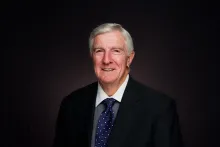
Before his retirement in 2021, Dr. Donald Ward pastored churches in Texas and Louisiana, and taught at Ambassador Bible College in Cincinnati, Ohio. He has also served as chairman of the Council of Elders of the United Church of God. He holds a BS degree; a BA in theology; a MS degree; a doctor’s degree in education from East Texas State University; and has completed 18 hours of graduate theology from SMU.
