

Don Ward
This transcript was generated by AI and may contain errors. It is provided to assist those who may not be able to listen to the message.
The Meaning of the Day of Atonement. I'd like to title this, though. Atonement, continual reconciliation, living in the holy of holies.
Continued. And you could use the word, see, in some places, like in the New Testament, the word, the Hebrew word for katalage that is used for atonement is translated, translated reconciliation, that one place there in Romans is translated atonement. So atonement, continuing atonement, living in the holy of holies.
Ask any Church of God member what does the Day of Atonement represent, and they will immediately say the binding of Satan.
That is true, but it means so much more to us in living our lives every minute of the day, 24-7, 365, as they say.
God commands us to keep the Day of Atonement. Let's read that. We need the refresher every year and more about the holy days that reveal the sequential steps in the plan of salvation and what they mean. And I think sometimes what they actually mean in our everyday lives go over our heads. God is more interested, for those of you, and those of us who have been called out and received His Spirit, of what we're going to do on a daily basis and whether or not we are growing in grace and knowledge of our Lord and Savior, Jesus Christ. Leviticus 23, 26. And the Lord spoken to Moses, saying, also on the tenth day of the seventh month, then that shall be a day of Atonement. It shall be a holy convocation unto you, and you shall afflict your souls, which means to fast, and offer an offering made by fire unto the Eternal. And so shall you do no work in that same day, for it is the day of Atonement to make an Atonement for you before the Lord our God. The Jews call this Yom Kippur. Yom is the Hebrew word for day, so it is day of Atonement. Kippur is a plural form of Kaphar. Kaphar is the Hebrew word that is mainly translated as Atonement in the Old Testament. Write that down. K-H-A-P-E-R K-H-A-P-A-R Kaphar is the Hebrew word that is mainly translated as Atonement in the Old Testament.
The word Kaphar literally means covering.
The high priest went in the Holy of Holies at least three times on the day of Atonement, and Kippur, as I said, the Jews call it Yom Kippur. Day, actually Kippur is a plural form of Atonement, and it literally means the day of coverings or the day of Atonements, or the day of Kaphars, of coverings. The sacrifices offered under the terms of the Old Covenant provided only a covering for sin, as we shall see later. It made the adherence ceremonially clean, but it could not purge their conscience, as we may read from Hebrews 9.
As noted earlier, the high priest went into the Holy of Holies three times. Now, some sources say Ford. It's a little bit unclear there in Leviticus 23 through 26, if after the scapegoat left was sent away, did he enter back into the Holy of Holies once again. So he went the first time to make reconciliation for himself and his family. Then he went a second time to cleanse the altar and the sanctuary, and then he went a third time to make reconciliation for the people. The Jews consider this the most holy day, most sacred day of the year, and as you heard in Dr. Baker's sermon on trumpets, that it is considered the most sacred time in the holy year, and also it's observed for two days. The greatest day in the seven-year cycle, of course, there was an economy that was revealed to Israel. One of the things that we tend to forget and have forgotten from time to time, and I think it's caused a lot of problems in the church over the years, and we sort of lived through all of that, that the church and state, the government was combined. The church and state, the government was combined, and really the religious authorities had the final say with regard to life and death.
And there were many, many aspects of the Old Covenant that had to do with anything from the Levitical priesthood to the land Sabbath to so many different things.
But the greatest day in the seven-year cycle in ancient Israel was the day of Jubilee, the year, the 50th year in the cycle. Seven sevens. And on the 50th year, you were to declare a day of Jubilee, a day of release. Now most of us have heard of the Liberty Bell in Philadelphia, Pennsylvania. I've been there. I've read the words inscribed on the Liberty Bell. It says, proclaim liberty throughout the land. And of course, the atonement is a liberating kind of holy day. The words on the Liberty Bell are intended to reflect mainly political liberty. In contrast, liberty that will be proclaimed when this day is finally fulfilled will be a day of spiritual liberation for the universe. As it says in Romans 8, the whole creation groans for the manifestation of the sons of God. So the Jubilee year was proclaimed on the day of atonement. I guess we should turn there. Leviticus 25 verse 8. As a speaker-teacher, I make assumptions that really shouldn't be made. I assume that people memorize scripture and do that kind of work. We used to place a lot, a great deal more emphasis on it. When I first graduated from college and was going out as a coach, my mother said, well son, I have only one bit of advice for you. Just remember, everybody doesn't love it like you do. So we want to love the truth as much as God in Christ loves the truth, and they gave themselves for it. God gave his son, and Christ gave his life. Leviticus 25 verse 8.
And you shall number seven Sabbaths of years unto you, seven times seven years, and space of the seven Sabbaths of years shall be unto you, forty-nine. Then shall you cause the trumpet of the Jubilee to sound on the tenth day of the seventh month and the day of atonement. Shall you make the trumpet sound throughout all the land, and you shall hallow the fiftieth year, and proclaim liberty throughout all the land unto all the inhabitants thereof. It shall be a Jubilee unto you, and you shall return every man unto his possession, and you shall return every man unto his family. And there was some release at the end of six years in the seventh year. The economic system that God ordained for Israel was not one of perpetual poverty, as we see today, that generation after generation is held in the grips of just life, just taking the life out of people poverty. God's creation cannot be truly liberated until Satan is bound, and he is shown for what he is. So let's look at Isaiah 27. The Old Testament prophets, and perhaps you haven't looked at it in this way or realized that be the word with regard to one of the names of Satan in the Old Testament is Leviathan. So we look at Isaiah 27 in verse one. In that day, remember, in that day is a prophetic utterance. It introduces a prophecy, a saying from God, the Lord with his sore and great strong sword shall punish Leviathan, the piercing serpent. Remember that old serpent, Satan the devil, who's deceiving the old world? Revelation 12, 7, even Leviathan, that crooked serpent, and he shall slay the dragon that is in the sea. Verse 7, hath he smitten him as he smote those that smote him, or as he slain according to the slaughter of them that are slain by him. Satan is a destroyer, and his goal is to kill you, to destroy you. Verse 13, and it shall come to pass in that day that the great trumpet, I'm convinced this will be on the day of Jubilee. See, we just read from Leviticus 23. I'm not Leviticus 23, but Leviticus 25 verses 8 through 12, that the great trumpet will be blown, and Jubilee will be declared throughout the land. It shall come to pass in that day that the great trumpet shall be blown, and they shall come, which were ready to perish in the land of Assyria, and the outcast in the land of Egypt, and shall worship the Lord in the holy mountain of Jerusalem. So I'm thinking that the symbolism of binding Satan on the day of atonement sounds very literal here. The great trumpet will be blown, and Satan, of course, is going to be bound and put away, where he will be rendered of non-effect forever. Now let's go back to Job 41, another place that uses Leviathan. I'm not going to totally exhaust this. In Job 41 verse 1, cast you draw out Leviathan, or can you, can you draw out Leviathan with a hook or his tongue with a cord, which you let down? Can you put a hook into his nose, or bore his jaw through with a thorn? Will he make many supplications unto you? Will he speak soft words unto you? Verse 11.
Who hath prevented me that I should repay him? God has said he's going to judge. Whatsoever is under the whole heaven is mine. I will not conceal his parts. He's going to reveal Satan for what he is, nor his power, nor his calmly proportion. You remember how in Ezekiel 28, the great beauty of Satan is described in one of the things that says that he was corrupted by his beauty. Who can discover the face of his garment, or who can come to him with his double bridle? Of course, God can. In verse 31, of course the whole chapter is taken up with this, hitting highlights here. In verse 31, he makes the deep to boil like a pot. He makes the sea like a pot of ointment. He makes a path to shine after him. One would think the deepest to be hoary. Upon earth there is not his like who is made without fear. He belongs, he beholds all high things. He is king over all the children of pride. And of course, that is one of the main things that Satan appeals to. On the other hand, some have speculated as to whether there is any representation of Satan on the day of atonement. And some who claim to be members of the Church of God claim that the Azazo goat represents Christ. In short, some have tried to interpret this goat as a symbol of Christ and not the devil. Both goats represent Christ and the Messiah and taking away of sins. Last evening, as I often do on a holy day, I just want to see what the Jews are doing in their celebration, as they call it, of the various holy days. So you turn to the Jewish Broadcasting System, which is 288. Oh, no, it's 388 on DirecTV. And they had from the Sinai Synagogue in downtown Los Angeles their atonement services for Friday night. Beautiful chanting and voices and all that. Most of it in Hebrew you can understand. Listen to a little of that. They understand and they praise God, but they deny Christ. Christ says in 1 John 2, if you deny me, you've denied the Father. Of course, that's in other places as well. Then I turn to another station in Jonathan Cahn. Jonathan Cahn, the author of the Harbinger, he came out several years ago. Now he has Harbinger 2. He led one of the marches on Washington this past Sabbath, and he made Barabbas the scapegoat and Christ the offering for sin in his talk about atonement. Well, Barabbas is not the scapegoat, and the scapegoat is not the one who pays for our sins. Okay, let's go now to Leviticus 16, the most complete description of the goats and the atonement ceremony in the Old Testament. It is said that the elders, the priests who had been around a long time, would bring the high priest in days before the day of atonement, and they would rehearse all of the ins and outs of the garments that he should put on, and the times that he should go in and out of the Holy of Holies, and what he should do each time he was in the Holy of Holies. So here we are, Leviticus 16, 5, and he shall take the congregation of the children of Israel, two kids of the goats, for a sin offering, one ram for a burnt offering. Aaron shall offer his bullock of his sin offering, which is for himself making atonement for himself and for his house. He shall take two goats and present them at the door of the tabernacle of the congregation, and Aaron shall cast lots upon the two goats. And of course, the casting of lots in the Bible has to do with you are leaving the decision to God. When Judas is carried, committed suicide, betrayed Jesus, committed suicide, had to choose one in his place, Matthias. Matthias was chosen by lot.
And Aaron shall cast his lots upon the two goats, one a lot for the eternal, one lot for the eternal. This should answer the question right here. And one lot for Azazel, or the scapegoat. The scapegoat in some translations are translated as a goat of departure, the goat of separation.
Here in old King James, it's scapegoat. See, it's for that goat, that goat upon which the sins of the people are confessed over its head. And when you put something on somebody's head, what are you saying? You are responsible for it. It's on your head.
And Aaron shall cast lots. We've read that in verse 9. And Aaron shall bring the goat upon which the Lord's lot fell and offer him for a sin offering. But the goat on which the lot fell to be the scapegoat shall be presented alive before the eternal, make an atonement with him, a covering, and let him go for a scapegoat, go to separation into the wilderness.
In verse 10, the Azazel goat was for an atonement. And once again, the Hebrew word for atonement is what? Kaphar, K-A-P-H-A-R, which means covering, to cover, purge, make an atonement, make reconciliation, cover over with pitch, to coat over, to cover, atone for sin, make atonement. All of those definitions apply or can apply, depending on the circumstances. Under the terms of the old covenant, the sacrifices only made a covering for sin. Those sacrifices could not provide ultimate spiritual forgiveness. So let's look at the first place in the Bible that Kaphar is used. It's in Genesis chapter 6 and verse 14. Genesis chapter 6 verse 14. This is the chapter in which God instructs Noah to build the ark because the great sins are upon the face of the earth, and God says he's headed up to his breaking point, as it were, and he's going to do something about it.
In verse 14, make you an ark of gopher wood, rooms shall you make in the ark which shall pitch it within and without, with pitch, kaphar, a covering. The ark was covered with this pitch, a type of, I guess, some kind of tarry substance that was waterproof. The word pitch is kaphar, meaning to cover. And now let's notice in Exodus 29 and verse 33. Exodus 29 and verse 33 were the were the word kaphar. Now why are we turning here? In Exodus 29 verse 33, it's the first place in the Bible in which kaphar is translated as atonement. So Exodus 29 and verse 33.
Exodus 29 verse 33, and they shall eat those things wherewith the atonement, the kaphar, the covering was made, to concentrate, to sanctify them, but a stranger shall eat thereof because they are holy. That is, the offering, the sacrifice, is holy. Those sacrifices that were offered under the terms of the Old Covenant allowed the people to remain ceremonially clean so they could have access to God under the terms of the Old Covenant. This part now about coverings and atonement is important, but those sacrifices could not purge the conscience of dead works. They could only make them, those sacrifices, could only make them ceremonially clean. Now we go to Hebrews 10 and verse 1. Hebrews is a book that compares and contrasts elements of the Old Covenant with the New Covenant. Here the New Covenant is contrasted with the offerings under the Old Covenant. So in Hebrews 10 and verse 1. Hebrews 10 verse 1, For the law having a shadow of good things to come, and not the very image of the things, it was a pattern, a symbol, a figure, can never with those sacrifices which they offered year by year continually make the comers there unto perfect. Now there are other places in Hebrews that says was not possible that they should be made perfect under the terms of the Old Covenant, paraphrasing not exactly quoting. The Hebrew word azazel, translated as scapegoat in the King James translation, means complete removal. So we read in verse 10 that he will be for an atonement, but that for a covering, that has to do with the complete removal of sin from, at that time, the nation of Israel. Of course, Jesus Christ has made it possible for our sins to be completely removed as far as the east is from the west. Satan's sins apparently cannot be purged, and oftentimes we say, well, what is the unpartable sin? The sin you won't repent of, but it's more than that. But Satan can be rendered of non-effect. Satan will be bound, removed to a place, to a place cut off. And when will the sins of the world, the universe, be removed? When that great trumpet is blown, as we read in Isaiah 27, is there evidence that the azazel goat was a symbol of the devil or a demon? So we have had people, and I think we still have some in the church, who would hold that a zazel also represented Jesus Christ. As noted already, the priests were to select two goats. We read it from verse 8, Leviticus 16 verse 8. One was to be taken as a sin offering, the other was to be offered as a scapegoat or goat of complete removal, complete separation, or a land removed or a land cut off.
Another way to express it would be the scapegoat. Many translations, such as the revised standard version, RSV, simply use the word azazel in the text. A lot of the more modern translations instead of using scapegoat use azazel. The Greek Septuagint and the Latin Vulgate translate azazel as a goat of departure. When interpreting what a word in scripture means, it's helpful to look at what the meaning of the word is in the secular literature of the time. And according to DeSantis, DeSantis writes, this name was used for what, for that of an evil demon historically. The name of zazel is also used by the Arabs as that of an evil demon. And so in DeSantis's Hebrew caldelexicon, page 617, there's a quote once again. This name was used for that of an evil demon. The Arabs also use it for that of an evil demon. In latter times, the word azazel was regarded as Satan himself. In latter times, and up until more recent times is what is meant by that, azazel was viewed as Satan. In many of the early theologians, one was a Raijin, who viewed Satan, who viewed the azazel goat as Satan himself. Once again, Leviticus 16a clearly states that one lot is for the eternal and the other lot is for azazel. The sins of the people were confessed over the head of the azazel goat, signifying that this is the one responsible for sin and sent away into the wilderness. Once again, when you say we're placing it on your head, when we say we're placing it on your head, in almost every language, that means something like, you're the one responsible. You're the one responsible. Satan is the one responsible for sin. John 844 says that he was a liar and a murderer. Turn to 1 John 3-8. Verse 3-8 says something similar in 1 John chapter 3 and verse 8.
Again, He that commits sin is of the devil, for the devil sins from the beginning. For this purpose, the Son of God was manifested that he might destroy the works of the devil.
And you look at Ephesians chapter 2, it might be more clearly stated, there is a spirit that is at work, the spirit in the children of disobedience. And believe you me, that spirit has been greatly stirred up in recent times. We see lawlessness, and we have never seen lawlessness throughout the land. In Ephesians chapter 2 and verse 1, and you hath he quickened which were dead and trespasses and sins, where in times past you walked according to the course of this world, according to the prince of the air, the spirit that now works and the children of disobedience, the children of iniquity. What does iniquity mean? Lawlessness. What are the lawless ones called? The wicked ones. God is angry with the wicked every day. That's what it says in the Bible.
So we all at one time walked according to that spirit. The prince of the power of the air, and Satan is the prince of the power of the air. He rules over all the children of pride, as we read from Job 41. Now back to Leviticus 16. Leviticus 16, we see the priest confessing the sins of the people on the head of the goat of departure, the goat of separation, the goat that represents Satan, the goat for Azazel, not for God, for Azazel.
Leviticus 16, 21. Aaron shall lay both his hands upon the head of the live goat, confess over him the iniquities, the lawlessness of the children of Israel, all their transgressions and all their sins, putting them upon the head of the goat, and shall send him away by the hand of an able man into the wilderness, or a fit man, an able man into the wilderness. Now just a little bit about that. God is never called Azazel. Search the Bible, you won't find God called Azazel. Neither will you find Christ, Messiah, called Azazel. How could a person who believes that Jesus Christ is the Lamb of God, slain from the foundation of the world, believe that the goat for Azazel represents Jesus, who died for the sins of the world, contrary to Jonathan Cahn, and they named him right, that last name, Cahn.
The sins of all the people were confessed over the head of the goat. Well, perhaps I shouldn't have said that. I mean, he has said a lot of things with regard to what is going on in this nation, and judgment is coming upon the land, and those voices are crying out, and they're crying out mightily. But when it comes to their theology, like Glenn Beck, I was listening to him one morning this week, and Glenn Beck was talking about, you know, biblical times, and maybe this is the time. Well, if you want to know something about the time sequence, which I have covered in three Bible studies here recently, of the time sequence of the abomination of desolation, the tribulation, the countdown, and all of that, you know that a lot of things are yet to transpire. But of course, these are the beginnings of sorrows.
This goat was led into the wilderness never to return.
Of course, they changed that later, because one time the goat did return. And so, after that, this was after, apparently after the Babylonian captivity, apparently they didn't lead him far enough or whatever. But according to the story, the goat returned, and now someone goes with the goat and pushes him over the cliff to make sure he's dead, that he won't return.
So the goat was led into the wilderness never to return. He was cast out, and Satan, of course, is cast out into outer darkness never to return. Perhaps we'll read those scriptures later.
We're all sinners because we have sinned. Now, some people say we are sinners. Maybe we should look at that Romans 5 verse 13, that they talk about original sin and sin. Sin entered the universe with Satan. As far as humankind, Adam and Eve were the first human sinners, and because of their sin, sin entered into the world. But we are sinners because we have all sinned ourselves. In verse 13, for until the law, this is Romans 5 13, for until the law, sin was in the world, but sin is not imputed where there is no law. The law had not been codified, taught, and so on. Nevertheless, even though that was not the case, death reigned from Adam to Moses, even over them that had not sinned after the submittitude of Adam's transgression. Adam and Eve had God as their teacher. They interfaced with God in a perfect environment with a perfect teacher, and yet they succumbed to the prince of the power of the air. Who is the figure of him that was to come, but not as the offense, so also as a free gift? Or if through the offense of one man many be dead, much more the grace of God and the gift by grace, which is by one man Jesus Christ, has abounded unto many, and not as it was by one that sinned, so is the gift, for the judgment was by one to the commandment, unto justification.
Now we read verse 12. Go back there. Wherefore, as by one man, centered in the world, and death by sin. And so death pass upon all men. Why? Because all have sinned, and come short of the glory of God. Now there is other evidence for the existence or calling Azazel a demon in Satan from the book of Enoch. A lot of people don't know it, but at one time Enoch, what we call the Apocryphal books, there are 11 of those. The Apocryphal books were in the canon. The canon is what is called the complete Bible. And the Apocryphal books were in the Bible for a long time, and then they were after the, I guess the rabbis went over and over and compared manuscripts and so on. And eventually 11 books were taken out, including the book of Enoch. But Enoch is quoted in Jude 14, verse 14 of Jude says, Now Enoch, the seventh from Adam, prophesied about those, these men, talking about ungodly men, who left their first estate, meaning the devil and the demons. Behold, the Lord comes with ten thousands of his saints. So going all the way back to Enoch, he prophesied that Christ would come with ten thousands of his saints, and a similar quote is found in the book of Enoch, chapter 1, verse 9. The book of Enoch can give us insight into how the word is Ozo, which was used in the centuries before Christ. Sorry. In Enoch 8, in verse 1, you don't have that unless you have the Apocrypha, it states, this is information showing extra-biblical evidence. And as Ozo taught men to make swords and knives and shields and breastplates, and made known to them the metals of the earth, and there arose much godliness, and they committed fornication. They were led astray and became corrupt in their ways. The book of Enoch describes Ozo as one of the angels, a corrupted man, at some time in the past. And here is a direct quote from Enoch about the banishment of Satan. This is Enoch 10, chapter 10, verse 4. I mean, you can get a copy of Enoch. All you have to do is Google it, and there it is. And again, the Lord said to Raphael, bind Ozo, bind Ozo, hand and foot, and cast him into the darkness and making opening in the desert, which is in Doudell, and cast him therein. And we turn quickly to bind him, hand and foot, cast him into darkness. We turn quickly to Revelation 20, in verse 1.
I think we have shown that there is undoubtedly that the Ozoza vote represents Satan. In Revelation 20, verse 1, and I saw an angel come down from heaven, having the key of the bottomless pit and a great chain in his hand, and he laid hold on the dragon. Remember the dragon in the sea from Isaiah 27, Leviathan? He laid his hand on the dragon, that old serpent, which is the devil in Satan, and bound him a thousand years, and bound him a thousand years, and cast him into the bottomless pit, shut him up, and set a seal upon him, that he should deceive the nations no more, till the thousand years should be fulfilled, and after that he must be loosed a little season. And then verse 10, the ultimate fate, and the devil that deceived them was cast in the lake of fire and brimstone, where the beast and the false prophet were cast, they were burned up, and shall be tormented day and night for ever and ever. So those scriptures about ever and ever have to do with the torment of Satan and the devils. Christ, he came, and he bore our sins on the stake, and was resurrected from the dead. He was not led out into the wilderness, never to return. He was not cast out into outer darkness. Ironically, Christ was led away into the wilderness one time to be tested and tried of the devil. So we look at Matthew 24, and this is, we will, every day of our lives, be tried and tested by the devil. And one of the things that says in Hebrews chapter 3, so often when I sin, when I open my big mouth, where I should not have opened my big mouth, I was not thinking about that per se. And then you say something, and there it is. It says in Hebrews 3, sin is deceitful. Well, what does that mean in everyday language? It can sneak up on you. Sin can sneak up on you, and before you know it, you have a sin. And so you have to be careful. I said Matthew 4 in verse 1. After Christ had been baptized, Matthew 4, 1. Then was Jesus led up into the spirit, into the wilderness to be tempted of the devil, tried, tested. And when he had fasted forty days and forty nights, he was afterward hungered. And when the tempter came to him, he said, If you be the Son of God, see, that's the great test. Are you the Son of God? See, after he was baptized, a voice came descending upon him like a dove, and a voice from heaven saying, This is my beloved Son, in whom I am well pleased.
So if you be the Son of God, then see how clever Satan is, then turn these stones into bread.
And then in each one of the temptations, man shall not live but bread alone, but every word that proceeds out of the mouth of God. 2. Verse 10, Then said Jesus unto him, Get you him, Satan, for it is written, Ye shall worship the Lord your God, and him only shall you serve.
And continually we talk about single-mindedness. You cannot serve Satan. You cannot serve God and mammon. 3. Then the devil left him, and behold, angels came and ministered unto him.
So when Jesus was led into the wilderness, he was tempted by the devil, and he resisted him. In this test, he overcame Satan. Remember what Jesus said in John 6, 63? The words I speak, they are spirit in their life. When you are bothered by demons, call upon God and Christ to rebuke the demons. The words I speak, Jesus says, they are spirit and they are life. The greatest enemy of Satan is life. Satan wants you dead. Satan's goal is to kill and destroy you, but Christ has the power over Satan. He has the power over all principalities, thrones, and dominions, as it says in Colossians chapter 1. Christ came and he defeated the author of sin and death.
Now, to say that is so easy. Christ came and defeated the author of sin and death. Christ said on that night that he was betrayed and being wrongly accused, be a good cheerer, for I have overcome the world. John writes in John 4, greater is he who is in you than he who is in the world. But Christ has triumphed over all of that. Look at Hebrews chapter 2.
Hebrews 2 verse 12. This should give us great insight with regard to the love-caring concern that we're going to get into just shortly here in a moment about living in the holy of holies.
In Hebrews 2 and verse 12. Saying, I declare your name unto my brethren in the midst of the church, will I sing praise to you? And again I will put my trust in him, and again behold I in the children which God hath given me. For as much then as the children are protectors of flesh and flesh, and I will put my trust in him. And again, behold, I in the children which God hath given me. For as much then as the children are protectors of flesh and blood, he also himself likewise took part of the same, that through death he might destroy him that hath the power of death. What have I said at least two times? I think three. Satan wants you dead.
Him that hath the power of death, that is the devil. And deliver them who through fear of death were all their lifetime subject to bondage. Of course, as you've heard in recent times from the pulpit here and and prayers, God does not want us to live in fear. For verily he took it not on himself the nature of angels, but he took on himself the seed of Abraham. Wherefore, that it means flesh. Wherefore, in all things, it behooved him to be made like unto his brethren, that he might be a merciful and faithful high priest in things pertaining to God, to make reconciliation, to make atonement for the sins of the people. For in that he himself has suffered, being tempted, he is able to succor them that are tempted.
So what should the day of atonement mean to us? Is there a relationship between the day of atonement and Passover? To a large degree, it seems that the day of atonement is just a rehash of Passover. So what's the big deal? If atonement is the same as Passover, why observe it as a separate festival?
Is there meaning to this day that goes beyond Passover? Most assuredly there is. As in the case with all the spiritual meanings of the Holy Days, the day of atonement is to be continually lived by Christians. So let's trace the history of this festival. The initial redemption takes place, the initial redemption that is the buying back. In this case, we're not talking about reconciliation or redemption. Some of them are similar. But the buying back of Israel, the initial redemption took place in the book of Exodus. The book of Exodus, chapter 1 verse 1, it says, these are the names. Exodus 1.1, these are the names. In Greek, it means the way out, the going. Exodus is a book of redemption, buying back. Let me say it again. X means out of. The book of Exodus is a book of redemption, going out of slavery into freedom.
It records Israel coming out of Egypt, symbolizing sin and death through the Passover. The types in Exodus are of redemption. That is the initial buying back. How are our sins forgiven? Initially, we go through the Passover. We repent of our sins. We're convicted of our sins. We repent of our sins. We exercise faith in the sacrifice of Christ. We receive the laying on of hands. So the initial buying back, the initial repentance. But then we are to continually live the resurrected life as pictured by baptism. Coming up out of the baptism of watery graves of baptism. Exodus 12, verse 6. I want you to follow this. It may be a little bit difficult. In Exodus 6, verse 6, and you shall keep it until the 14th day talking about the lamb without blemish of the same month and the whole assembly of the congregation of Israel shall kill it in the evening. And they shall take of the blood and strike it on the two side posts and on the upper door post of the houses wherein they shall eat it. This was done outside the sanctuary. Now, eventually the tabernacle was built and the temple was built. And there after the tabernacle was built and the temple was built, they brought their offerings to the tabernacle or to the temple. But even there, they did not go into the Holy of Holies on the day on Passover. They did not go in. Only one time year did you go into the Holy of Holies. So Passover work was done outside the temple proper, that is, the Holy of Holies. Passover is individual, it's personal, it's specific. Today, the blood is sprinkled on the door post of our hearts individually, specifically. Then the blood was sprinkled on the door post of their dwellings. The sanctuary, now we turn to Exodus 25, Exodus 25 followed this sequence. In Exodus 25, first part of the chapter, they took up an offering to build a sanctuary. If you remember, after they crossed the Red Sea, they sang the victory song of Moses. And in that victory song of Moses, they said, we will build him and habitation, build God and habitation. In Exodus 25, we see them building the habitation. Exodus 25 verse 8.
And let them make me a sanctuary that I may dwell among them.
He dwelt among them. He didn't dwell in them. According to all that I show you after the pattern of the tabernacle and the pattern of all the instruments therein, even so shall you make it. And they shall make an ark of kenim wood and two cubics, and a half shall be the length thereof, and a cubic and a half the breadth thereof, and so on. So build me a sanctuary that I may dwell among them. When the tabernacle that they built was raised up, the glory of God filled the tabernacle. So we go to Exodus chapter 40. Exodus chapter 40, the tabernacle is reared up. Verse 17, it came to pass in the first month and the second year on the first day of the month that the tabernacle was raised up. Then they were to dedicate it.
Verse 33, and he raised up the court round about the tabernacle and the altar and set upon the hanging of the court. So Moses finished the work, then a cloud covered the tent of the congregation, and the glory of the eternal filled the tabernacle. The glory of God is representative of his presence. So God's glory is now in the sanctuary. Now we go to where Leviticus might be able to just look across the page. What is Leviticus? Leviticus is the book that describes God in his temple. It is the call to worship. God is in his sanctuary.
Leviticus literally means, Leviticus literally means, and he called. It is trying to get these consonants, vehkara, something like that, which means, and he called. It is a call to worship. So we read that first verse of Leviticus 1, and what does it say? And the Lord called unto Moses and spoke unto him, Where out of the tabernacle of the congregation saying, Speak unto the children of Israel, say unto them, If any man bringing offering unto the Lord, you shall bring your offerings of cattle, even of the herd, and of the flock. So now the offerings are not done at home. They're done at the tabernacle, but they are not done in the Holy of Holies. But God is in his holy sanctuary. The types in Leviticus relate to worship. They perform physical rituals that were symbolic of what was to come. Today we worship God in spirit and in truth. Remember in the Old Testament the word kaphar, which is translated atonement, it meant covering. The covering for sin took place in the tabernacle when they offered the blood of bulls and goats, and the remains were burned outside.
Passover makes access to God possible. The priests continue. Now we go to Hebrews 9. Hebrews 9 is one of the few places in the New Testament where we find the priest going into the Holy of Holies once a year. Hebrews 9.
We know that the priest went in there once a year.
These pages. Hebrews 9.1. Then verily the first covenant had ordinances divine service, a worldly sanctuary. Notice that word worldly. You can read right over there. Had a worldly sanctuary.
But there was a tabernacle made. The first wherein was a candlestick, the table, the showbread, and so on. And we notice in verse 6, now when these things were thus ordained, the priest went always into the first tabernacle, accomplishing the service of God. But into the second went the high priest alone once every year, not without blood, which he offered for himself and for the errors of the people. The Holy Spirit thus signifying. Now look at this verse. The Holy Spirit thus signifying that the way into the holiest of all was not yet made manifest well as the first tabernacle was yet standing, which was a figure for the time then present in which were offered both gifts and sacrifices that could not make him that did the service perfect as pertaining to the conscience. But see, now we have Christ, verse 13, for if the blood of bulls and goats and ashes of a heifer and sprinkling the unclean sanctifies to the purifying of the flesh, how much more shall the blood of Christ, who through the eternal Spirit offered himself without spot to God, purge your conscience from dead works to serve the living God? See, your sins are not just covered kaphar. Your sins are removed. The conscience is purged. You say, well, I remember when I did this, I'd whatever your sin was, but you should not feel guilty for that sin if you have gone to God and Christ, repentant, and ask for forgiveness. God does not want us dragging our sins behind us, front of us, or any other place.
Christ has entered into the holy place for us once and for all. Look at verse 23. Let us hold fast the profession of our faith. Hebrews 9. I'm reading in chapter 9. It was therefore necessary. Listen to this.
The preceding verse, last clause there, says, without the shedding of blood, is no remission. It was therefore necessary that the patterns of things in the heavens should be purified with these, but the heavenly things themselves with better sacrifices than these. For Christ has not entered into the holy place made with hands, which are the figures of the true, but in the heavens itself now to appear in the presence of God for us. What office does he hold as he is there? He holds the office of high priests ever living to make intercession for us. Nor yet that he should offer himself often as the high priest entered into the holy place every year with the blood of others. For then he must have suffered from the foundation of the world. But now, once, in the end of the world, the end of this age, hath he appeared to put away sin by the sacrifice of himself. So Jesus Christ, he makes it possible for us to go into the holy of holies. Look now at Hebrews 8, back of page or two, Hebrews 8-1.
Hebrews 8-1. Now the things which we have spoken, a summary verse here, once again telling you that Hebrews compares and contrasts Old Testament with New Testament. This is the song. We have such a high priest who has set on the right hand of the throne of the majesty in the heavens, a minister of the sanctuary and of the true tabernacle, which the Lord pitched and not man. See, and you are the temple.
That's what it says, 1 Corinthians 3, 16, where you are the temple of God. God's Spirit dwells in you. Apparently, the heavenly sanctuary was tainted by Satan's rebellion in the sins of humans through the ages. You remember when the high priest went into that earthly sanctuary, he made a sacrifice for the purging of the purging of the sins there, or cleansing of the sanctuary. So today we have a high priest. We have the access. We have access to the holiest of all.
We are in, or we can be. We live in the holy of holies. How so? And we have a high priest who ever lives to make intercession for us. Now we look at Hebrews chapter 4.
Hebrews 4, verse 14, see and then that we have a great high priest that is passed into the heavens, Jesus, the Son of God. Let us hold fast our profession, for we have not a high priest which cannot be touched with the feelings of our infirmities, but was with the all points tempted like as we are, yet without sin. Let us therefore come boldly unto the throne of grace, see the very throne of God, into the holy of holies. That we may obtain mercy and find grace to help in time of need. See, we can live, and we are living in the holy of holies. Do we live like? Do I live like? We're in the holy of holies. You look at chapter 7, verse 25. Chapter 7, verse 25.
Wherefore, he, being the high priest, Jesus, is able also to save them to the uttermost, that come unto God by him, seeing he ever lives to make intercession for them. The sacrifices provided in the Old Testament provided a covering for sin. Today, God wants us to go on to perfection. He wants us to be thoroughly changed. He wants us to be thoroughly separated from sin. He wants us to bind Satan now.
God wants us to live in the holy of holies if we knew that we can live in the holy of holies. Now look at these verses. Hebrews 10, verse 19. Hebrews 10, verse 19. Having therefore, brethren, boldest to enter into the holiest by the blood of Jesus. A different way of saying it than what we read in chapter 4. This tells you how you got there. By a new and living way, which he hath consecrated for us through the veil, that is to say, his flesh.
And having a high priest over the house of God, let us draw near with a true heart in full assurance. Full assurance of faith, having a heart sprinkled from an evil conscience, and our bodies washed with pure waters. Living in the holy of holies. Remember this verse. Let's turn back here to Romans 5 again. Remember this verse that we're about to read, that we're saved by his life. You ever thought about what that verse means?
Well, we talk about it. Well, we have Jesus living in us. We're saved by his life. You see, he is living. He's sitting on the right hand of God. He ever lives to make intercession for us. Now look at this. Romans chapter 5. Verse 6, from when we were yet without strength at due time, Christ died for the ungodly. And we have that Passover, this initial conversion, and we receive God's Spirit. But even after we receive God's Spirit, we still sin. But we have one there, an advocate at the right hand of the Father, a high priest, who ever lives to make intercession for us.
He is alive, a living intercessor, where scarcely for a righteous man will one die yet for adventure. For a good man, some would even dare to die, but God commends his love toward us, in that while we were yet sinners, Christ died for us. Much more than being now justified by his blood at Passover, we shall be saved from wrath through him. For when we were enemies, we were reconciled to God by the death of his Son. Much more being reconciled, we shall be saved by his life.
See, he is ever living at the right hand of God. We have now boldness to enter into the holiest of all through the blood of Christ. God and Christ have made their abode in each one of us. God's presence, Christ's presence, is in each one of us individually, and collectively we comprise the temple of God, the church of God, those who have God's Spirit, God's sanctuary. Today, the church is the sanctuary.
We're to go through a continual cleansing every day of our lives. We don't wait until the end of the year as they had to wait when the high priest could go in. And no wonder the Jews placed so much emphasis on atonement because it was that time in which sin would be driven away from them. After justification, we continue the atonement in the sanctuary, being saved by his life. He is able to save them to the uttermost, seeing that he ever lives to make intercession for us. Does that mean that we're free to go sin and do whatever we want to?
Of course not. But it is so comforting to understand. Not only do we need to bind Satan and cast him out of our lives and understand that he wants us dead, but to understand that Passover was done outside the sanctuary, that is the Holy of Holies, and atonement is in the sanctuary. And we can live in the sanctuary. And if we have God and Christ in us, that is their sanctuary. That's where they're living. Now there is a temple in heaven. There is a temple there, and there's an ark of the coming in in heaven.
But we can live right now in the Holy of Holies. So you see the fact that Christ is living in us. We can live in the Holy of Holies. The high priest is there with the incense, the intercessory prayers of all the saints, and he ever lives to make intercession for us. Now we'll close in Romans chapter 16. About four or five verses in Romans here will be through.
I felt the best I've ever felt physically, and hopefully it catches spiritually on the day of atonement.
In Romans 16 and verse 19, For our obedience has come abroad unto all men. I am glad therefore on your behalf, but yet I would have you wise unto that which is good and simple concerning evil. And the God of peace shall bruise Satan under your feet shortly. The grace of our Lord Jesus Christ be with you.
Now verse 25. Now to him that is of power to establish you according to my gospel and the preaching of Jesus Christ, according to the revelation of the mystery which was kept secret since the world began, but now is made manifest, and by the scriptures of the prophets, according to the commandment of the everlasting God, made known to all nations for the obedience of faith, to God only wise, to God only wise be glory through Jesus Christ forever. Amen.
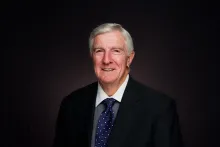
Before his retirement in 2021, Dr. Donald Ward pastored churches in Texas and Louisiana, and taught at Ambassador Bible College in Cincinnati, Ohio. He has also served as chairman of the Council of Elders of the United Church of God. He holds a BS degree; a BA in theology; a MS degree; a doctor’s degree in education from East Texas State University; and has completed 18 hours of graduate theology from SMU.
