

Rick Shabi
This transcript was generated by AI and may contain errors. It is provided to assist those who may not be able to listen to the message.
We live in an age where it seems everything you do, how was your stay? Did you like our motel? And so everybody's trying to find out from a survey what's going on, what your opinion might be. A few thousand years ago, Solomon apparently did some type of a survey. Let's go back to the book of Ecclesiastes, chapter 7, and beginning in verse 25. Whether he did an official survey or he just simply used observation, you'll find in verse 25 that he wanted to find something out. He wanted to see who was honest and upright.
So he said, I applied my heart to know, to search, seek out wisdom for the reason of things, to know the wickedness of folly, even of foolishness and madness. So he wanted to find out what is it like to be mad or an idiot or lacking wisdom. Verse 27, he says, here's what I have found. Says the preacher, saying one thing to another to find out the reason. So he observed, he reasoned, he talked, and he added everything up, and this is his conclusion.
Which my soul still seeks, but I cannot find. One man among a thousand I have found, but a woman among all these I have not found. Truly, this only I found that God made man upright, but they have sought out many schemes. So the problem wasn't with God, the problem was with man, he said. But out of all of his research, he could only find one out of a thousand that he would consider upright.
So he was trying to find the end result of wisdom and of folly and to truly know. Let me read this to you out of the NIV translation, because I think the NIV helps to make it even a little clearer. Verse 25, so I turned my mind to understand, to investigate, to search out wisdom and the scheme of things, to understand the stupidity of wickedness and the madness of folly.
I want you to notice he calls people who are wicked stupid. Those are his words. Verse 27, what says the teacher? This is what I've discovered. This is what I've found out. Here are my conclusions, adding one thing to another to discover the scheme of things. And verse 28, while I was still searching but not finding, I found one upright man among a thousand, but not one upright woman among them all. So I'm not sure where he was looking, but these were his conclusions. This I have found God made man upright, but man has gone in search of many schemes. And so this was his conclusion. So he found one out of a thousand who he would consider upright, or we might say today, who perhaps fear God, try to obey him, do what is right, maintain right standards, have right values, you know, that type of thing.
When you look today on Earth, there are approximately 7 billion people. Actually, this morning when I looked at the world's clock, somewhere around 11 o'clock, there were 6,800,277,393, to be exact. That changes every second as your babies are being born. If you try to count, and I don't know how you're going to count, how many people today are truly converted?
Part of the Church of God community who really believe still serve God? Let's just use a conservative number, maybe 100,000. That means that maybe one out of what, 6,000, 7,000 people, would be considered today as one who would fear God, our part of being upright and truly doing what is right, and what one should do. How many truly converted people do you find in East Tennessee? In North Georgia, North Alabama, Western North Carolina.
You begin to consider all of the areas that meet here. How many out of that number are truly converted? Now, there was another occasion back here in Romans 11. Let's go there. Romans 11, beginning in verse 1. When somewhat the same observation was made, and this was by Elijah, on another occasion in Israel, says, I say then, verse 1, has God cast away his people? Well, certainly not. For I also am an Israelite of the seat of Abraham, of the tribe of Benjamin.
God has not cast away his people, whom he foreknew. Or do you not know what the scripture says of Elijah? How he pleaded with God against Israel, saying, Lord, they've killed your prophets, they've torn down your altars, and I alone am left, and they seek my life. So Elijah looked around and he said, well, I'm the only one trying to obey God.
Everybody else has gone astray. But what does the divine response say? What did he say to him? I have reserved for myself 7,000 men who have not bowed the knee to Baal. Even so then, at this present time, there is a church we have been told would never die out. He said, I'll be with you always.
The gates of hell would not prevail against the church. So God has said that the church would always be there. Well, would you and I be classified today as one of those among the thousand as being the upright? Well, I would certainly hope so. That's where we should be. Would we be classified as God-fearers today?
You look in the Scripture, there are certain types of Christians that all of us should fear. I'm talking about widows. You say, why should I be afraid of a widow? Widows have clout with God. They've got all kinds of clout with God. God listens to our widows. He hears that. He hears what they have to say. And so, therefore, you don't want to get cross with the widows. Same thing is true of the orphans, because God himself looks down on the orphans, and he becomes a father to the fatherless. So God himself is concerned about them. God also is very concerned about the helpless sheep. Are those sometimes who are mistreated and not properly dealt with? So God's concerned about all of us, but there are those that God himself, the Scriptures indicate, gives some very personal attention to. God is looking around today, and he's looking to see who are those who are upright, who fear him, who put him first in their lives, in their thoughts, in their actions, in everything that they do. This is the one out of the thousand that we want to be talking about today. And hopefully that includes all of us. Let's go back to the book of Deuteronomy chapter 6, and verse 4. Deuteronomy 6, and we will begin here in verse 4.
If we are going to be those who are the remnant of God today, the handpicked ones, those that God has reserved for himself.
Notice what God tells us the way we must be. Hear, O Israel, God says. That was physical Israel then, spiritual Israel today. The Lord our God, the Lord, is one. You shall love the Lord your God with all your heart, with all your soul, with all your strength.
And these words which I command you today shall be in your heart.
So we find the teachings that Jesus Christ gave in the New Testament. How that the first and the greatest commandment is to love the Lord your God with all your heart or your soul or your might.
That was said in the Old Testament. And also that these words should be engrafted, engraved, written into our hearts. And so God, if we are going to be one of his remnant, one who obeys him, then God should become the center of our lives, as it clearly states here.
That we love him with our whole being, with every fiber within us. When God looks around for his remnant, for his people, one of the shining characteristics that he sees is those who put him first. As we read back here in verse 29 of chapter 5, chapter 5, verse 29, Oh, that they had such a heart in them, that they would fear me, God says, that they would fear me and always keep my commandments, that it might be well with them and their children forever.
So God is looking for people who will worship him with their whole heart and put him first.
Brethren, there is a remnant on the earth today. How do you identify who they are? How do we ensure that we become a part and we remain a part of that remnant? That we never deviate from those that God is calling, that small group that God has reserved for himself today, that God is working through? Well, Isaiah chapter 66, let's go back to Isaiah 66 and verse 1. Isaiah tells us, the ones that God looks to. There are some very cardinal scriptures in the Bible, scriptures that we're all familiar with, but scriptures that just stand out when you begin to think about what God is doing, who he's dealing with, who he looks to. Isaiah 66 is one of those. Thus says the Lord, heaven is my throne, the earth is my footstool, where is the house that you will build me? And where is the place of my rest? For those things my hands have made, and all these are those things exist, says the Lord. But on this one will I look. So this is the one that God's going to look to. On him who is of a poor and a contrite spirit, and who trembles at my word.
So the first identifying characteristic of those that God looks to who are his remnant is that they will have a broken and contrite spirit before God. This is part of that one out of a thousand that God is looking for. The word poor is interesting in the Hebrew.
It means poor or weak, afflicted, wretched, humble, or lowly. So God is saying that the ones that he will look to are not those who are filled with vanity, filled with pride, filled with ego, walking around in their inflated opinion of themselves, but those who have a broken spirit. Then he goes on to say broken and contrite. The word contrite means to be stricken or smitten. It implies being crushed, someone who has been crushed.
All of us, when we were baptized, when you were baptized, you said, I've been crushed, I've been knocked down, I've been humbled, I've come to see myself the way God sees me. I understand what I need to repent of. Baptism brings a person to an awareness of who we are as human beings, and that we need God's help. God is looking on him who is of a poor and contrite spirit, and notice, who trembles at my word. He doesn't argue with it, trembles at it, and is responsive to the word of God. Obviously, such a person has a tender heart, because you're not one who is a poor and contrite spirit, unless you do have a tender heart. When I say tender hearted, I'm talking about someone who's easily to be reached. Not someone who is hard-hearted, but somebody who's easily entreated can repent, and God is able to deal with that particular individual. Back up to chapter 57 here in the book of Isaiah. Isaiah 57, in verse 15. You'll find that this is the type of person that God is searching for, that he's looking for. For thus says the high and the lofty one, who inhabits eternity, so God lives in eternity, whose name is holy. I dwell in the high and the holy place with him who has a contrite and humble spirit to revive the spirit of the humble and to revive the heart of the contrite ones. And so God is with those who are contrite and humble. And again, the word contrite means to be crushed, to be pulverized, or to be contrite. So he's talking about somebody who's not lofty, but been pulverized, who's been humbled. The word humble here, again, means low or a based.
It's not a person who's all self-conscious, who is not concerned about others, but has his mind on others. What happens to you as a parent? Have you ever had a child come in and tell you, dad or mom, I did it? And they confess to you. It could be something you don't even know about. There have been an occasion or two, our children who confessed to something that they thought we knew and we didn't know. We found out about it because they confessed. And when you have a child who comes in and confesses, is willing to admit that I did it, I broke it, or whatever it might be, you're drawn to that child because you know that they're willing to be truthful.
Well, so is God with us. When we come before God, and before God has to, in a sense, pulverize us or crush us and say, Father, I'm guilty. I've sinned. I've done this wrong. We acknowledge our state, who we are, our faults, our sins. God is one who is drawn or attracted to us.
God dwells with those of his people who confess their sins to him, who are open with him, who are not trying to play games with him, who are not trying to hide things from him, but are open and honest. Back in Psalm 34, beginning in verse 15, we find again that God is nigh unto certain people, certain attitudes. There are certain attitudes that you find that every pulse God, to turn God off, that he uses the term, they're an abomination to him, or he despises them. He doesn't like them. Beginning in verse 15, Psalm 34, the eyes of the Lord are on the righteous.
So God's eyes are open. He sees the righteous. His ears are open to their cry.
The face of the Lord is against those who do evil. They cut off the remembrance of them from the earth. The righteous cry out, and the Lord hears. So if we're doing what is right, we cry out to God. God will hear us. And you see, we have that absolute confidence.
I think sometimes troubles, crisis, problems, difficulties come along, we begin to waver in our confidence. But, brother, we can have absolute confidence that if we are doing what's right, we're really seeking God, that he will hear our prayers, and he delivers them out of their troubles. The Lord is near. To whom? Well, to those who have a broken heart. And he saves such as has a contrite spirit. So we have a broken heart. We have a contrite spirit. These are the ones that God is near to. Many are the afflictions of the righteous. So he says, okay, you may be righteous, but you're going to have problems. You'll have difficulties. But the Lord delivers him out of all of them. So again, God is nigh unto them. So you find God is talking about a certain category of people, and they're not those who are vain or pompous. You know, when a person is vain, basically they're very selfish because they concentrate on themselves. They're not concentrating on others. They don't love others as they should, and they tend to cut others down. They judge them. They compare them, and basically are interested in the self. This is what happened with Lucifer. Is it not? The Bible clearly indicates that his original problem was one of pride, and pride leads to vanity. Pride leads to thinking you're more important than you should be, whereas humility leads you to realize that, you know, compared to God, were nothing.
Well, Lucifer, even though he was created as a great angel compared to God, was nothing, and yet he became inflated with his own ego. And so what did he do when that happened?
Well, he began to find fault with God, the perfect God, and to cut him down. And then he convinced others that he was right. So a vain spirit is a stubborn spirit full of hatred, and God wants us to get rid of our stubbornness, the hard shell that perhaps many times we have needs to be broken and crushed. We need to get rid of the self-love. That's a battle we all have all of our lives that we have to struggle with. A person who's broken by God is meek.
Remember the example back here in the book of Moses, book of numbers about Moses? It is one of the book of Moses, but I don't think there's a book titled Moses. Chapter 12, Numbers 12, verse 1. Numbers 12, and verse 1. It says, Then Meriam and Aaron spoke against Moses because of the Ethiopian woman whom he had married, for he had married an Ethiopian woman. Now, we don't know necessarily all of the particulars about this. Josephus, if you can rely on Josephus's account, states that while Moses was in Egypt, he was a general. He went down into Ethiopia to capture Ethiopia or to conquer it. He came to this city with high walls. He wasn't able to penetrate it, but the Queen, looking out, seeing him, fell in love with him, that Moses was a handsome, beautiful individual.
She agreed to turn the city over to him if he had married her. That's why Josephus says so. Apparently, according to Josephus, he entered into a contract to marry her, took the city, conquered it, and went back to Egypt. Now, whether that's exactly what happened here or not, anyway, they were holding this against him. Now, I want you to notice what God says. So, they said, has the Lord indeed spoken only through Moses? Is Moses the only one that God can speak through?
Who are we? Are we just dirt over here? So, they set themselves up. Has he not spoken through us also? And I want you to notice. And the Lord heard it. You know what we think?
God hears or knows what we say God knows. And too often, people forget that God hears.
Now, notice, it says, now the man Moses was very humble. I think King James Version says meek, or that more than any or all men who were on the face of the earth. You stop and think about that statement. Nobody else on earth more humble than Moses at this time in history.
Now, how could that be? Moses had grown up in Egypt. Moses lived 40 years in Egypt. He was trained to rule. He lived in the royal household. He had privileges. He had servants waiting on him hand and foot. Again, Josephus said that he was a leading general. And so, he was vain, pompous, but guess what God did? God drove him out of Egypt, and he went down into the Sinai Peninsula, and for 40 years took care of sheep. During that 40-year period, guess what happened?
He became humble. All of this ability, training, schooling, everything that he had before, God was able to use it to organize people, to march people, to camp, and do all of this. You do that with an army, and when you've got three million people, you've got to have them organize and do all of that likewise. But finally, when God came and said, okay, Moses, now I'm going to use you to lead the people out of Egypt, Moses said, I can't speak, get somebody else. And God had to bring Aaron along to be a mouthpiece for him. Forty years had made a big difference. Forty in the Bible is a sign of trial and testing. And so God allows us to go through trial and test.
He allows us to go through all kinds of difficulties of this nature, I should say.
As I read earlier, many are the affliction of the righteous. So we go through those things, why?
To humble us so that we come to totally realize who we are, our need for God, and our total reliance upon Him. God is concerned foremost about our heart.
He's foremost concerned about our motives, that our motives be right, that our heart is right before Him, and that we serve Him with our whole being. In Psalm 51 beginning in verse 16, we find David, who the Bible says is a man or was a man after God's own heart, that David made some horrible mistakes. And after he had committed adultery with Bathsheba, had Uriah murdered, you find the prophet came to him, explained to him what he had done.
And Psalm 51 again is his repentance before God. Notice in verse 16, he says, For you do not desire sacrifice, or else I would give it. You do not delight and burn offerings. The sacrifices of God are what? What kind of sacrifice is it that God's looking for?
A broken spirit, a broken and contrite heart, these, O God, you will not despise.
So David got carried away. He had been made king. Here he was. Perhaps he had begun to get a little pompous and vain, thinking he could take anything he wanted, and he stopped relying upon God the way that he should. And so he had to be humbled, and he repented. And here we find David crying out to God for God's help. So these are the sacrifices. This is what God is looking for in us as his people.
The one in a thousand, those who are upright, those who are seeking God, the remnant at this end time.
That you and I must not be vain, but God is looking at our hearts, he's looking at our motives, and we need to have this teachable attitude. So one of the qualities that God is looking for in the remnant of his people is that we have this contrite spirit, this broken spirit.
Now there's something else that God is looking for. Let's go back to the book of Joshua, and we find God himself telling Joshua what he's looking for. Joshua beginning in verse 1 of chapter 1. Joshua 1 verse 1. It says, After the death of Moses, the servant of the Lord, came to pass, that the Lord spoke to Joshua, the son of none, Moses assisted, saying, Moses, my servant is dead. Now therefore arise, go over this Jordan, you and all this people, to the land which I am giving to them, to the children of Israel. So God said, okay, I'm going to use you to lead the people into the promised land. Now Joshua could have gotten very cocky about this. Hey, Moses is dead. May it be chief. I'm number one here.
But notice what God told him in verse 5. Verse 5, No man shall be able to stand before you all the days of your life. As I was with Moses, so I will be with you. I will not leave you nor forsake you. Remember Hebrews 13.5? I will not leave you, I will not forsake you, God says. Same thing here.
God told him, okay, you've got a monumental task in front of you. You're going to lead all of these millions into the promised land. You're going to settle the promised land. You're going to drive all of these nations out, and I will never leave you. I will be with you always. I will not forsake you. So what does God tell him to do? He says, Be strong and of good courage. You need to be strong.
Have good courage. For to this people you shall divide as an inheritance in a land which I swore to their fathers to give them. Only be strong, very courageous, that you may observe to do according to all the law which Moses my servant commanded you. Do not turn to the right hand or to the left hand that you may prosper wherever you go. Now verse 9, Have I not commanded you to be strong and of good courage? Do not be afraid nor be dismayed, for the Lord your God is with you wherever you go. Well, rather than reading through that, I think God says the same thing to us today.
That you and I should not be dismayed. That we simply need to look to God to be courageous, to ask God for courage, and to ask God for strength. The second quality that God is looking for in the remnant of his people today is the quality of inner strength, inner power, inner strength to do God's will, to be highly self-disciplined in serving and following God.
Where does our strength emanate and come from?
Is our strength because we can bench press two or three, 400 pounds?
That's not the kind of strength that God's interested in. Is our strength because our legs are as solid as oak? Our neck is like a limb of a tree, as hard as it can be.
We've got all of this strength. That's not the strength God is looking for.
Our strength is inside, and it comes from God. It comes through the Holy Spirit.
The Spirit of God is what? Well, let's go over here to Acts 1.
You'll notice what we read about the Spirit of God. Verse 8, Christ said, but you shall receive power, strength. The word is dunamis, the word from which we get dynamite. You shall receive power when the Holy Spirit has come upon you, and you shall be witnesses to me in Jerusalem and all Judea and Samaria and to the rest of the earth. So God tells us very clearly that He gives us power. And as 2 Timothy 1.7 says, God has not given us the Spirit of fear. You and I do not need to be fearful. We should never be fearful before our God, because He's with us. But He's given us the Spirit of power and of love and of a sound mind. So God gives us His power, His strength. So our strength comes from God through His Spirit. And depending on how much of that Spirit we have in us flowing out from us depends on how strong we are. Our strength depends on our humility.
Our strength depends on how much we yield to God. Our strength depends on how much we get out of the way and serve others and give to others.
So God is looking for those who will depend upon Him. This kind of strength comes through daily repentance, walking with God on a regular basis, comes through prayer, comes through Bible study. Otherwise, let's not kid ourselves. We're doing it on our own. We're trying to obey God. And the hardest thing in the universe to do is to obey God on your own because you don't have the strength. You don't have the power. The power and the strength has to come from God. Now, in 1 Corinthians 16, in verse 13, let's notice the admonition given here by Paul. He says, watch, stand fast in the faith, be brave, be strong, let all that you do be done with love.
So we are commanded to stand fast. The words, first of all, watch, stand fast, don't waver, don't give up, don't quit, don't vacillate, just stand fast in the faith.
And then we're told to be brave. And that's not always easy, is it? To be courageous, to be brave, that if you know what is right and what you need to do, that you don't compromise with it. And then he says, be strong. So again, our strength comes from God, and everything that we do must be done in love. Without love being the motivation, it comes to nothing. So we have to have a firm resolve to do what is right. Do we say no to our instincts, to our desires, that when we know that they're lust and they're wrong and do what is right, you and I should walk around, not cocky or vain, but exuding the power of God, the strength of God, and people ought to be able to see that there's something about us that's different, that there's a confidence, there's a faith that we have, that we don't walk around and say, woe is me, I don't know what's going on. We walk around that my God is with me, and he's never going to leave me or forsake me. He's going to help me. We have that confidence. We're discussing the type of person who, at the very hint that he's doing something wrong, is willing to take the correction and change and be different. Isaiah 40, verse 28, we read again about what God is looking for. Isaiah 40 and verse 28. I want you to notice.
It says, Have you not known, have you not heard, the everlasting God, the Lord, the Creator, the ends of the earth, neither faints nor is weary, his understanding is unsearchable. He gives power to who?
To the weak. So God will give us power, and to those who have no might, he increases strength. Even the youth shall faint and be weary, and the young man shall utterly fall, but those who wait on the Lord, or those who are waiting on God, trusting God, relying on him, shall renew their strength. They shall mount up with wings like eagles, and they shall run and not be weary, and they shall walk and not faint. And so God promises that we need to wait on him, we need to be patient. We don't always know exactly, as I've covered here recently, why God works certain things out in our lives, but we trust him, we rely upon him. God doesn't always answer our prayers immediately, does he? We pray, we ask, and it would be nice, you know, if we prayed, and you get up, and immediately the answer is there. It doesn't happen that way. God is wanting us to trust him. He wants to see what we're made of. He wants to see that we will obey him to the end. It doesn't matter. We're going to put our trust in him. We can all, walking this Christian life, become weary, become discouraged, but God says he will strengthen us, and we need to hold him to his promise.
And what he says here is promise, that he will strengthen the weak, give power to the weak, increase the strength, and give us the help that we need. There is physical strength, and there is spiritual strength, and it is the spiritual that we need. 1 Chronicles 29. Let's notice David's example here. 1 Chronicles 29, beginning in verse 10. 1 Chronicles 29. Therefore, David blessed the Lord before all the assembly.
David said, Blessed are you, Lord God of Israel, our Father, for ever and ever. Yours, O Lord, is the greatness, the power, the glory, the victory, and the majesty.
For all that is in heaven and earth is yours. Yours is a kingdom, O Lord, and you are exalted as head over all. Both riches and honor come from you.
Your reign over all and in your hand is power and might. In your hand it is to make great and to give strength to all. So David realized that God was able to give strength to all.
That all power, all might, is in God's hands. Notice in verse 13. Now therefore, our God, we thank you, praise your glorious name, but who am I and who are my people that we should be able to offer so willingly as this? All things come from you.
And of your own we have given you. And so we are all aliens and pilgrims before you.
And so David goes on to talk about this. Verse 17, I know also my God that you test the heart and have pleasure in uprightness. So David had a wonderful relationship with God. When we walk with God, we're strong. If we don't, then we're weak. You stop and think about it. You just sort of go back through the servants of God, and you look at how they obeyed God. It wasn't always easy for them. Noah built Mark over a period of 120 years. Everyone on earth thought he was crazy.
Those who knew about it, because nobody believed him. If they had, they would have been building their own ark, or they would have helped him. So he went that whole time obeying God, knowing, receiving ridicule, criticism, and yet he did what God commanded him to do in spite of that.
Remember when Mr. Herbert Armstrong began work back in the 30s, late 1920s and early 30s, although the opposition he got, he was constantly belittled. Every time he tried to do something, he was run down. This includes the beginning of Ambassador College, and yet he constantly moved forward. There was one time in his life, you may have heard him say this, when he was trying to purchase the property for Ambassador College, what was known as the library, later on. He thought he had the money, thought he had the loan, and I forget all the details, but that didn't work out. And it looked like the deal was going to fall through. And he sat down and asked God to take his life. He had. Well, where would we be today? God had said, okay, you give up, and he had taken his life. Well, in a period of 30 days, the money came in to be able to put a down payment on this place from members. More money than we had ever collected before, and God encouraged him and strengthened him. We need to remember these examples in the Scripture anytime we feel like quitting or giving up. What about Jacob wrestling with God and how he had to prevail with God? What about Joseph being sold into slavery? And for 17 years, you know, he was a slave, much of that time in jail. And yet God exalted him to be second in command of Egypt.
David had one persecution after another. You might remember there was a time when Saul was trying to kill him, and he hadn't run for his life. There was a time he had to feign being mad, drooling, and just going around like a madman so that he wouldn't be killed.
His own son turned against him, and he had to flee Jerusalem.
Absalom. And yet, David is a man after God's own heart, and the end result was God blessed him and his son Solomon. His attitude was right with God, and God took care of him. Daniel being thrown in the lion's den and all that he went through with that. What would you have done if you had been in Babylon and told, no, you can't? You can't pray unless not allowed. And he knows that there are his enemies out there that are just trying to catch him, and yet three times a day he still went and prayed to God. And God delivered him. What about his three friends who had not bowed down and worshipped the statue and thrown in the fiery furnace, and God delivering Shadrach, Meshach, and Abednego? What about Ezekiel being asked by God to lay on one side 390 days and then turned over and laid on the other side 40 days? What would you have thought? What about it? Isaiah walking through Israel naked? What if God had asked you to walk through Israel naked? Of course, today they'd lock you up, but God asked him to do that as a picture of what was going to happen in the future to the nation of Israel. Hosea was asked to marry a harlot, and he did, and he had children, and those children were named. And their names depicted what God was going to do to his people. He was going to scatter them, and then he was going to bring them back. And so his marriage revolved around that. What about the 12 apostles? Every one of them except John was martyred.
So, you know, they went through persecution. Many of them lived to see the time when the New Testament church began to be infiltrated, see the church begin to disintegrate around them, have problems. John lived to see, and God gave him prophecies to prophesy what was going to happen in the future.
So much of what they had started, they lived to see, began to fall apart.
Look at all of the persecution that the Apostle Paul went through, and he enumerated how many times he was in prison, how many times he'd been shipwrecked, how many times he'd been beaten with 39 stripes. On and on, he had gone without food, clothing, and shelter. He knew how to abound, how to be abased. And so the servants of God down through the ages have had to go through those types of trials. None of us here have had to go through what they went through.
And yet we read how they triumphed, how God was with them, how God strengthened them, and helped them. Well, brethren, God will be with us. This is how we can be the one in a thousand.
We can be the true servants of God. We have to have that broken and contrite spirit, and we have to have the inner strength that comes from God to obey him.
Now, how do you go about doing that to be that one in a thousand?
Well, let me just summarize what we've touched on here today.
You've got to surrender your life completely to God. No strings attached, make a clean break from the self and the world. You don't owe the world any allegiance or the self.
Your allegiance is to God, to his kingdom, and to do what he says. You have to renew your commitment to God every day. That commitment to God comes about that you've called me, I'm your son, I'm your daughter, I'm going to obey you, and you remind yourself of the calling that you have. You sustain a consciousness of God throughout the day. You and I have to, throughout the day, remind ourselves why we're here.
When you lose your temper, you're tempted to yell at somebody, curse, do something wrong, you need to stop and remind yourself. Jesus Christ is right here. And is that the way Christ would react? Is that how he would be? As Proverbs 23 and verse 17 tells us, Proverbs 23 and verse 17, Do not let your heart envy sinners, but be zealous for the fear of the Lord all the day.
So you and I have to, all day long, fear God, obey him. We don't take time off.
We have to actively seek God's Spirit. We've got to cry out for it. There have got to be times, rather, when you have tears coming down your face and you cry out to God and you tell him, I can't do it. I need your help. And God gives us the strength. He gives us the power that we need, because we cannot do anything of ourselves. We've got to pray daily for self-control that we need.
You know, God has not given us the spirit of fear, but of love, power, and a sound mind. Actually, the word sound mind in the Greek means self-control. If you have a sound mind, it means one who's able to rule over his mind, his thoughts. You have that self-control.
So that means that we start today with prayer. We set goals. We go after them. We learn to say no to ourselves, yes to God. We're constantly on guard so that we don't sin. We don't compromise with our conscience. And we realize that each day, every day, is a new page in the book.
You can turn the page over. Just like reading a book, you've got a new page and you slate.
You can ask God to forgive you, and you can start over. You can start forward in obeying God.
Realize that we walk by faith, not by sight. That faith is a moment-by-moment process. When you walk by faith, it means every step you take. That it's got to be by faith.
We strive to please and glorify God, that that becomes the supreme desire in our lives, to glorify Him, and to honor all men. Put God first, but to honor all men.
We make love and serving mankind our highest motivation. That what good does it do us to gain the whole world? What good does it do us to be able to have all wisdom, understand all prophecy, understand all prophecy without love? And then we've got to reflect in integrity in our whole life to be faithful in small things as well as the big. We realize a character building is incorporating the Bible into our lives on a daily basis. That that's what our developing the right and the proper character is. That we view all of the problems that we have here in this physical realm and its proper perspective. That we go through these things as preparation for all eternity. That God is preparing us for a future. So we need to make sure that our anchor is secure, that we hold fast to what is right. That you and I need to learn the meaning of true humility and service.
So those are the points that we covered in this in the sermon. I thought it would be good to just go back and try to summarize all of those. God is looking for people. God will be near to people who are of a broken and a contrite spirit. Who look to him, who have courage, who have faith, who have trust, who have this inner strength that emanates. That inner strength will be reflected in obedience and will be reflected in how we treat other people. So rather than these are two elements that we all need. So as we go through life, let's realize that God is there. And he has promised, once again, we read it in the New Testament. I read it a week ago. We read it in the Old Testament that I will never forsake you and I will always be with you.
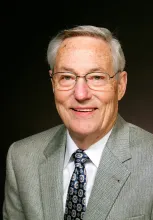
At the time of his retirement in 2016, Roy Holladay was serving the Operation Manager for Ministerial and Member Services of the United Church of God. Mr. and Mrs. Holladay have served in Pittsburgh, Akron, Toledo, Wheeling, Charleston, Uniontown, San Antonio, Austin, Corpus Christi, Uvalde, the Rio Grand Valley, Richmond, Norfolk, Arlington, Hinsdale, Chicago North, St. Petersburg, New Port Richey, Fort Myers, Miami, West Palm Beach, Big Sandy, Texarkana, Chattanooga and Rome congregations.
Roy Holladay was instrumental in the founding of the United Church of God, serving on the transitional board and later on the Council of Elders for nine years (acting as chairman for four-plus years). Mr. Holladay was the United Church of God president for three years (May 2002-July 2005). Over the years he was an instructor at Ambassador Bible College and was a festival coordinator for nine years.
