

Steve Shafer
This transcript was generated by AI and may contain errors. It is provided to assist those who may not be able to listen to the message.
Today I want to give a kind of a special sermon from notes I took at a lecture that I attended over 30 years ago. I attended the lecture back on. I took, I found my notes on that lecture, looking through some old sermon notes. I found the notes that had to do with that lecture, and I said that would be good to give a sermon on that. I don't know if I covered the aspects of it here before, but I didn't recall that I have. But the lecture I attended back on March 24, 1986. So it was quite a while ago. First, I want to begin with two scriptures. Let's go first, in my introduction here, to 2 Timothy chapter 3.
The scriptures we're quite familiar with. 2 Timothy chapter 3, we talked about the last days, beginning in verse 1. But know this, in the last days, perilous or dangerous, stressful times will come. Why? Because men will be lovers of themselves. Lovers of money, boasters, proud, blasphemers, disobedient to parents, unthankful, unholy, unloving, sometimes unforgiving, slanders, without self-control, brutal, despises of good, traitors, headstrong, haughty, lovers of pleasure rather than lovers of God, have any form of godliness but denying its power, and from such people turn away. That's quite a list. But what have we got in a situation whereby we couldn't turn away from such people? I'm going to give you an example that happened of an electronic region. It's a individual who was in that boat. He couldn't turn away from such people. But we can all agree that we are now living in perilous and dangerous and stressful times. Living in the Bible prayer phrases verse 1, this way. You never see how a prayer phrases it. It says, you may as well know this too, Timothy. In the last days, it's going to be difficult to be a Christian.
So it is going to be difficult. For many it is today, it's difficult to be a Christian. There's a lot of animosity towards Christians. Things are going the other way, our nation even, to some degree. But the other thing that I will also paraphrase is verse 5 by saying this. They will go to church. Some people will go to church, but they won't really believe what they hear. Hopefully we don't have any in God's church that might fit that description. But what about those people who read the Beyond Today magazine or listen to the Beyond Today telecast? I mean, they hear it, but do they really believe it to the extent that they begin to act on it? Not too many people do. Lots of people hear. And they hear it and they understand it, but they don't very often act on it to make a commitment. But in addition to 2 Timothy 3.1, what is a second scripture that may describe the times we are now living in? Again, this is another one you've probably heard a lot in the past. Let's go back to Jeremiah 30. I think this describes the time we are now living in as well, at least that we are heading into these times. If not, we are beginning to come into them. Jeremiah 30. And I want to begin by reading, beginning in verse 5 of Jeremiah 30. Jeremiah 30 verse 5, For thus says the Lord, We have heard a voice of trembling, of fear, and not of peace. Ask now, and see whether a man is ever in labor with child. So why do I see every man with his hands on his loins like a woman in labor? Why are even men having problems and difficulties in going through a lot of painful experiences and situations?
And why do I see all faces turn pale? Alas, for that day that's coming, he says it's great, so none is like it before. It is the time of Jacob's trouble, but he shall be saved out of it. Ends in a positive note. So are we about to enter that time, or are we about to enter the time of Jacob's trouble for our nation? And maybe Great Britain as well, as the sons of Jacob. Well, nearly 40 years ago, back on January 20th, I'm going to go to an inauguration date right now. Back on January 20th, 1980, 40 years ago, nearly, Ronald Reagan was inaugurated as the 40th President of the United States. How many of you remember what else happened on that very day? Raise your hand if you think of something else that happened on that day. Something very, very historic happened on that very day that he was inaugurated. Yes, exactly, that's right. As Reagan was delivering his inaugural address, 52 American hostages were released by the Iranian government in Tehran. They had been held hostage for 444 days. Chief Justice Warren Burger administered the presidential oath of office to Ronald Reagan, who placed his hand upon the family Bible. Too many people know this. He didn't just use any Bible, he wanted his family Bible there to take the oath of office. And that family Bible had been given to him by his mother. But Reagan, purposely, on that day, he had the Bible open to a particular scripture. He had it open to 2 Chronicles 7, verse 14, as he took the oath of office. So why did Reagan have his family Bible open to 2 Chronicles 7, 14? He had it open to that scripture, that particular place, because he knew that was the only way America could prosper moving forward. What does that Bible say? Very interesting. Let's go to 2 Chronicles 7, verse 14. 2 Chronicles 7, 14 says, 2 Chronicles 7, 14 says, 16.
Ronald Reagan knew that was the only way that the nation could prosper moving forward. See, now we have another president since then, and we have the 45th president now, Donald Trump, who wants to make America great again. But the only way America can be made great again is given to us right here in 2 Chronicles 7, 14. My people are called by my name. They will have to humble themselves and pray and seek God's face and turn from their wicked ways. Then I will hear from heaven and forgive their sin and will hear their land. Unfortunately, that's not likely to happen. My first perilous times will come, which will then lead to the time of Jacob's trouble. But again, on January 20, 1980, on the day Ronald Reagan became our 40th president, 52 American hostages were released.
I went to attend this lecture back in 1986 in Bellevue, Washington. We were living in Bellevue, and he gave the lecture in Bellevue, Washington. I saw it advertised, and that would be an interracial lecture to attend, so I attended it. The man who gave the lecture that I attended back on that day, March 24, 1986, was one of those hostages. He was one of those 52 hostages. He wasn't just one of the 52 hostages. He was the highest-ranking military officer taken captive of those 52 hostages. He was a colonel in the Air Force. His lecture was titled, Coping with Adversity, Growing with Change. Of the 444 days spent as a captive in Iran, for currentless colonel in the Air Force, 150 of those days were in solitary confinement. His name was Colonel Thomas E. Shafer, spelled S-C-H-A-E-F-E-R. I was curious, I wondered if he was still living. I found an article that I downloaded. This is from the Associated Press, dated June 4, 2016. Thomas E. Shafer, Air Force colonel, taken hostage in Iran, dies at age 85. I'm sad to see that. He died two years ago. I want to read the article. Thomas E. Shafer, retired Air Force colonel, the ranking military officer among the 52 Americans, held hostage in Iran for 444 days before being released in 1981, died on May 31st at a hospice in Scottsdale, Arizona. He was 85. From the first day of the takeover, Colonel Shafer was singled out for special attention. As a ranking U.S. military officer in the embassy, he was accused of running a nest of spies. His captors prayed him blindfolded in front of television cameras and repeatedly threatened to put him on trial and execute him. He spent 150 days in solitary confinement and began his captivity by enduring 14 days of relentless interrogation in a cold prison cell with damp floors and only a thin blanket for warmth. He says I could see my breath the entire time. He said in a 2004 interview, they were breaking me down both physically and mentally. I could feel myself losing it. Colonel Shafer was among the last hostages released on January 20, 1981. Colonel Shafer retired from the Air Force less than two years later and was a professional speaker for decades. His family said he spoke to more than 250,000 students and adults about facing adversity. Really, he was a positive guy, David Shafer, his son, said Friday, two years ago, he tried to educate and help people deal with really bad situations in their lives because he had to deal with one of the worst situations anybody could possibly deal with. Here's the thing that's interesting. He was a religious man. When he was in prison, he asked him if they could have a Bible. And believe it or not, they actually did. They gave him a Bible. They didn't believe in the Bible anyway, but he was able to have a Bible. And he said there was one particular psalm that he read in this lecture. He said he read this one psalm every day.
It's a great psalm to read when incorporating with adversity. Let's turn there and read it. A short psalm, six verses. Psalm 13. You can see how he ought to read this psalm. He could feel this psalm. He lived this psalm. But the amazing thing is the last verse. Psalm 13, verses 1 is the psalm of David. How long, O Lord? Will you forget me forever? You can imagine Colonel Shafer saying that in his situation. How long will you hide your face from me? Do you know the situation I'm in? How long shall I take counsel in my soul, having sorrow in my heart daily? How long will my enemy be exalted over me? You can imagine why he wrestled with that every day. Consider and hear me, O Lord my God. Enlighten my eyes, lest I sleep the sleep of death, because he knew they could put him to death at any time. Lest my enemy say, after he failed against him, lest those who told me rejoice when I am moved. But I have trusted in your mercy, my heart shall rejoice in your salvation. Verse 6, I will sing to the Lord, because he has dealt bountifully with me. Now, how could he read that verse and say that? How could he say, God has dealt bountifully with me as a captive, facing the possibility of death at any moment?
In his lecture, he gave seven overall points, telling how he coped with his adversity and how it changed him and helped him to grow spiritually. Today, I want to cover those seven points, plus the one thing he said at the end that we must all hold on to at all costs. My title for my sermon here, then, this afternoon, is Coping and Growing with Adversity.
He gave seven ways. I'm going to go through those. He didn't give all the scriptures with him. I've added scriptures to it. He just gave the points. We'll look now at seven ways that he gave in his lecture to cope with adversity. The very first point that Colonel Shafer brought out was, always remember that you are never alone. Remember, he was in solitary confinement in a very small room. As I'll give you the dimensions a little bit later, in a moment here. He was in a solitary confinement for 150 days for five months. He was in solitary confinement. But he said, remember, you're never alone. And there are two aspects of this to keep in mind if we are to be encouraged rather than become discouraged. One is, Christ is always with us, and he understands what we're going through. Let's look at a couple of scriptures to show that. First, let's go to Hebrews 13.
Christ is always with us, and he understands what we're going through. Hebrews 13, beginning in verse 5, Let your conduct be without covetousness. Be content with such things as you have. For he himself has said, I will never leave you nor forsake you. That's a promise from Jesus Christ. I don't care how alone you are, how isolated you are. He said, I will never leave you nor forsake you. I wear your situation. I know what you're going through. So he may boldly say, verse 6, The Lord is my helper. I will not fear what man can do to me. I mean, I know they can take my life, but hey, whether they do or not, I'm not going to fear what man can do to me. Because God understands, and he knows I'm here. Remember those who rule over you, and so on. I was just going to stop at verse 6. Let's go back to Hebrews 4. Excuse me. Let's go back now to Hebrews 4. The second scripture shows that Christ is always with us and understands what we're going through. Hebrews 4, verse 14, Seeing then that we have a great High Priest who has passed through the heavens, Jesus the Son of God, let us hold fast our confession, or our profession, as Christians. For we do not have a High Priest who cannot sympathize with our weaknesses, but was in all points tempted as we are, and yet without sin. Or as the old King James has it, for we have not a High Priest who cannot be touched with the feelings of our infirmities. Now the second aspect of never being alone is this. You know, others are also facing similar trials and adversities. There's no trial and adversity we can go through that's totally unique to us. There are others that are going through similar trials or maybe worse trials all over the entire world. So our trials are not unique. Many others are going through similar trials or maybe even far worse trials. In 1 Peter 5, verses 8 and 9, Peter wrote this, Be sober, be vigilant, because your adversary the devil walks about like a roaring lion, seeking whom he may devour. Resist him. Remain steadfast in the faith, knowing that the same sufferings are experienced by your brotherhood in the world. You're not going through anything different than other people are going through. I'll be going through very similar trials, maybe worse trials.
Why do we sometimes experience those same sufferings?
Well, I think we go through those sufferings because, number one, we can receive and experience God's comfort. You can go through a very severe trial, wrestle with it, but in the end, you pray to God, God, how give me comfort? And God can actually give you comfort. Many of you have probably experienced that. And the second reason is because we can then turn to others and say, you know, they may have their every trial they come to you and say, wow, how am I going to get through this? You get through it. I've been through a trial like that. I know what you're wrestling with. I know what it feels to have this trial. We've been through it and God got me through it. So then we can, through the experience we've had of receiving God's comfort, we can then comfort others when they have a trial and come to us for help. So remember then that while we may experience trials and adversity, that we are never alone. Christ is always with us and He knows and understands what we're going through. And He wants us to be strengthened by those trials so He can then help strengthen and encourage others who are going through very similar trials. The second point Colonel Shafer brought out was, there is no instant solution to success. There is no instant solution to success. I mean, Colonel Shafer knew that there was no instant solution to his imprisonment. He knew he would have to endure and persevere until a solution came. He didn't know how it would come or when it would come, or if it would come, to be his favor or not. But he knew that solution was entirely out of his control in that particular situation that he was in. He had no idea when or how that solution would come about, but he knew it wouldn't be released anytime soon. He knew it was not going to be quick solution. In that being the case, what must we do if we ever find ourselves in a situation where there is no instant solution? Oh, there it comes!
What do you have to do to be successful when you know there is no instant solution? Well, I just thought of Matthew 24.13, He who endures to the end shall be saved. You have to endure. To be successful, you must endure to the end. And while we are enduring to the end, what else must we not do? What does it say in Matthew 24.12? It says, because law and sense will abound, the love of many will grow cold. So what must we not do? We must never let our love toward God or our love toward our fellow man grow cold, no matter how bad the situation is.
We must even try to love our enemies. That's hard. That's probably the biggest thing you could do, is to love your enemy. We must even try to love our enemies who may be leaving us, in his case, keeping him captive. That was his case. But he had to even try to learn to love his enemies. As it says in Matthew 5.44. Why? Because love never fails. Love never fails. 1 Corinthians 13.8. And here's another thing, that loving your enemies or praying for your enemies, why it's such a wonderful thing, is because that will keep your mind in a positive frame of mind, to keep your thinking in a positive frame of mind, where you won't get negative and bitter and upset. That can destroy us. If we allow that to happen. When you love your enemy, then it will keep your mind always in a positive frame of mind, and not allow any bitterness or resentment to creep in there and take over. So remember, there may be no instant solution, in which case we must endure to the end, to the end of that situation we're in, or to the end of our life, whichever may come first. The third point Colonel Shafel brought out was, he said, take one day at a time. Take one day at a time. He said, my goal was to just make it through that next 24 hours, if he could. He knew he could be put to death at any time. He said, well, I'm just going to see if I can make it through one more day, one more 24-hour period. What did Christ teach us in that regard? Let's go to Matthew 6. Matthew 6, we are very familiar with verses, most of us are familiar with. Matthew 6, verses 33 and 34. Matthew 6, 33. Seek first the kingdom of God and His righteousness. And all the other things you need will be added to you, taken care of, one way or another. Verse 34, therefore do not worry about tomorrow. Worry about today, but not tomorrow. For tomorrow will worry about its own things. Sufficient for the day is its own trouble. Or, as the Living Bible paraphrases, verse 34, don't be anxious about tomorrow. God will take care of your tomorrow. Live one day at a time.
Don't worry about the future before it comes. Put God at His righteous first and live one day at a time. The fourth point Colonel Shafer brought out was, accept the fact that there will be events in our life that we can do little or nothing about. Accept the fact that there will be events in our life we can do little or nothing about. See, there are some things that we will go through that only God can work out the solution. It's out of our hands to a great degree anyway. Colonel Shafer realized he was simply in the wrong place at the wrong time when he was captured, and that there was nothing he could have done to prevent what happened from happening. He was just in the wrong place at the wrong time. Here's the amazing thing that he told us. This was not the first time he'd been taken captive. When he was taken captive in Iran, as one of those hostages, it was the third time! As a member of the Air Force and the military that he'd been taken captive. He was first taken captive in World War II, and then he was taken captive again in Korea. He was 50 years old when he was taken captive the third time in Iran. Now, what would you think? If you were taken captive the third time, what would your first thoughts be? Well, he told us the first thing he asked himself after being taken captive the third time in Iran was, Why me? Not a kid. Why me?
Job, in his severe trial, asked himself a similar question. Just turn there real quickly to Job chapter 3. I'll just read two verses from Job 3. Job 3 verses 11 and 12. Of course, Job was a righteous man, feared God, shunned evil. And then all this came upon him suddenly. And finally, he got to the point where he says in chapter 3 verse 11, Why did I not die at birth? Why did I perish when I came from the womb? Why did the knees receive me? Or why the breasts that I should nurse? He's thinking to himself, I've always feared God and shunned evil. So why is this happening to me? Why? Why has God allowed this to happen? Why me? But once Colonel Shafer analyzed his situation and realized there was nothing he could have done to prevent it from happening, he decided to reverse the question by asking himself, Why not me?
I've been through this twice before. I made it through then. You know, I'm really as capable as anyone here to help others make it through this, because I've already been through it. And no, God can work it out. He has worked it out before. I made it through it twice. I can encourage these other men. Don't get discouraged. Don't give up. Don't become hopeless. I've been through this before. You can encourage them.
And as I said, there's no one really better than me to help others make it through this trial. After all, I've already made it through a similar situation twice before. So by asking the question, Why not me? He accepted his situation so he could then effectively help others. So, except the fact that there will be situations in our life that we can do little or nothing about, then when that happens, instead of asking, Why me? Maybe we can ask, Why not me?
And for all of us, we can say, you know, we've got God's Word. We understand God's promises. We know Jesus Christ. We know He can help us through anything. He's never going to forsake us. We can help others if they go through really severe situations where they can seem hopeless. We can help them, encourage them. What was a fifth point Colonel Shafer brought out when it comes to coping with adversity? The fifth point was, Don't take life too seriously. Colonel Shafer analyzed his situation, and he concluded that there were only really two things that actually threatened his life. He had to really worry about. One was a court trial, which would convict him as a spy and probably lead to death by a firing squad. But then he realized, well, there's really nothing you can do about that one way or another. It's either going to happen or it's not. Nothing can do about it, so he wouldn't do him any good to worry about it. It comes and comes.
Similar to what Chad Rakmishak and Abednego faced with Nebuchadnezzar. Let's go back and read that very interesting Scripture. They're very encouraging. Daniel chapter 3. Daniel chapter 3, let's begin in verse 14 of Daniel 3. Nebuchadnezzar spoke, saying to them, Is it true, Chad Rakmishak and Abednego, that you do not serve my gods, or worship the gold image, which I have set up myself? Now, if you are ready at the time you hear the sound of the horn, the flute, the harp, the lyre, the psaltery, and symphony with all kinds of music, then if you fall down and worship the image which I have made of myself, then good. But, but if you do not worship, you shall be cast immediately into the midst of a burning fiery furnace. And who is the God who can save you and deliver you from my hands? They knew there was a God who could deliver them from his hands.
So then Chad Rakmishak and Abednego answered and said to the king, Oh Nebuchadnezzar, we have no need to answer you in this matter. We have no need to think about it. We already know what our answer is. We know what the answer is. We don't have to give any time and thought to it. If that is the case, if you're going to throw us into this fiery furnace, our God whom we serve, He can deliver us. We absolutely know He can. He has absolute power over everything. He knows our situation. He knows what we're in. And He can deliver us from your hand. And He can deliver us from the burning fiery furnace. And He's going to deliver us one way or the other.
He's either going to deliver us from your hand right now, or if we die, He'll deliver us from death later. So He's going to deliver us one way or another. They had absolute faith and confidence in that as we can also. But let it be known in verse 18 to you, O king, that we do not serve your gods, nor we worship the gold image which you have set up.
So He knew the outcome was out of their hands, and other than depend on God to deliver them. Because it wasn't something for them to worry about one way or the other to take too seriously. Either God was going to deliver them or not. Either way, even if they died, they would be delivered from death later on in a resurrection. Now, the second thing that Colonel Shafer thought about that threatened his life was to be accidentally shot by a guard who at times he noticed they weren't real good with their rifles, weren't great with them, and they sometimes go off accidentally. So he realized that he better keep his eye on the guards and keep his distance, or he might get shot accidentally.
But the bottom line was that he had to learn not to take his situation too seriously to where it could wear him down mentally and emotionally. He also realized that time and chance can happen to all of us. Let's go to Ecclesiastes 9, written by Solomon, who received wisdom from God. Ecclesiastes 9, verse 11, he says, He says, Like birds caught in a snare, so the sons of men are snared in an evil time when it falls suddenly upon them, as it did with Colonel Shafer.
But also, we have to realize this, that all things work together for good to those who love God, to those who are the called according to his purpose. Romans 8, verse 28, no matter what happens, it can work out for good. And it certainly did, in the case of Colonel Shafer. He was able to lecture for years and give encouragement to all kinds of people, a quarter of a million or more people, on how to cope with adversity. But don't think life too seriously. Now, the sixth point Colonel Shafer brought out was, always remain positive.
He made this statement in his lecture, and I thought it was so profound that I actually wrote it down word for word in my notes, which I discovered about a month or two ago. But he made this statement. He said, There is a two-position switch in our mind, positive and negative. Only you control that switch. He said, Hotwire it in the positive position, as he had to do. That's the way he could cope with that and make it through. He had to hotwire his brain in the positive position and not think negatively, where he'd get discouraged and mostly distraught.
You know, the Apostle Paul did the same thing. The Apostle Paul was also taken as a prisoner and taken captive on three occasions, like Colonel Shafer was. Apostle Paul also remained positive as he admonishes us to do. I just want to look at one scripture here. Philippians 4, verse 8. Paul's letter to the church in Philippi. Philippians 4, verse 8, where Paul says, Finally, brethren, whatever things are true, in a positive sense, whatever things are noble, whatever things are just, whatever things are pure, whatever things are lovely, whatever things are of a good report, if there's any virtue, and if there's anything praiseworthy, meditate on these things.
Hotwire your mind in a positive position. Ours remained positive. Now, the seventh point he brought out was, keep your life productive. You know, as I previously stated, he was in solitary confinement for 150 days, or five months. For those five months, he was locked into one very small room by himself. He said the room was only six feet by six feet, just barely big enough to lay down him. He told us that he developed a routine in order to keep his life productive.
How do you keep productive in a six-foot cell, six by six-foot room, in solitary confinement? How can you keep your life productive? He said, I've got to do that. Otherwise, I'm going to go insane. So he said he developed a routine in order to keep his life productive. And he'd spend one hour doing each of these five things I'm going to mention to you, and then he'd repeat it.
He would read and study for one hour, because he did have access to books, including a Bible. Most of the books were high school books, and the embassy that were there, they were taken over by a random American embassy that was a library in there, and they would let him read those books from the American Embassy Library. A lot of them were high school books, but they let him read. He said he read over 200 books during his captivity, including some German language books. He said while he was in captivity, he taught himself how to read and speak German. He was in there for five months and saw it to everybody, but he was there for four to four days, way over a year.
He actually taught himself to read and speak German, which was very advantageous to him, because then they gave him a Der Spiegel magazine in German, and he read in Der Spiegel magazine how they were attempting to rescue him. They didn't think he'd read German, so they didn't worry about him seeing that. But he was able to read German, so he was able to realize there was hope. There were people trying to rescue him, the hostages. The second thing he did was he exercised for an hour. He tells the embassy work-up to being able to do 1,000 push-ups a day.
He was 50 years old. The third thing he did was he spent an hour walking around the room, singing and meditating, to keep his mind positive. Some song would come to his mind and he would sing it, and he'd meditate on some song or something that was positive.
The fourth thing he said he did was he spent an hour doing mind games to exercise his mind, to keep his mind active. He was a bridge player, so he said, I would imagine the cards for four different hands of bridge and play all four hands in my mind. He also did the same with poker hands. He imagined different poker hands and what was the first person to play and how he'd counterplay and so on. He played mind games for an hour to keep his mind active.
And then he said he spent one hour relaxing and daydreaming. He'd just relax and daydream about his family, his friends, and his hopes and plans for the future. And he'd repeat those five one-hour routines throughout the day in order to keep his life productive and to keep his situation from getting the best of him. Carl Schaeffer then concluded his lecture with one overall point by telling us, the one thing we must cling to at all costs and under all circumstances. He said there was one thing he always kept uppermost in his mind which enabled him to make it through his 444 days of captivity, which is also the one thing we must always keep in the forefront of our minds as well when we are faced with severe trials and adversity.
Carl Schaeffer summed this up in one word. He said, the one word to always keep in the forefront of your mind is hope. No matter how severe your trial, no matter how difficult or impossible your situation seems to be, never lose hope. Never give up. Along with faith and love, hope was one of the three greatest attributes we can possess and cling to, as expressed to us by the Apostle Paul in his first letter to the Church of Corinth, where he wrote, and now abide faith, hope, and love, these three. But the greatest of these is love, 1 Corinthians 13, verse 13.
But one of the reasons that love is the greatest is because hope is incorporated within love, as Paul expressed in 1 Corinthians 7-7, where he wrote that love bears all things, love believes all things, love endures all things, and love hopes all things. So, hope is incorporated into love. So, how can we cling to hope in a seemingly hopeless situation?
Well, because with men there may be situations that seem impossible, but with God, all things are possible. Mark 10, verse 27, which is why the one thing we must cling to at all costs and under all circumstances is hope. In conclusion, then, learn from Colonel Shaffer's experience as a captive in Iran for 444 days, and from what we read in God's Word. Apply those lessons in your life when you experience trials and diversity. Just review them.
One, remember you're never alone. Two, remember there is no instant solution to success. Three, take one day at a time. Four, accept the fact that there will be events in our life that we can do little or nothing about. Five, don't take life too seriously. Six, always remain positive. And seven, keep your life productive. And remember that the one thing we must cling to at all costs and under all circumstances is hope.
Never lose hope. But if we do all these things and someday in the not too distant future, the fulfillment of our hope will become a reality. Our hope will be fulfilled when Christ returns to establish God's kingdom on the earth. So never lose hope because that is how we can grow and overcome with adversity.
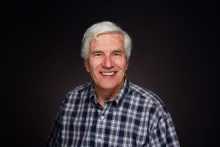
Steve Shafer was born and raised in Seattle. He graduated from Queen Anne High School in 1959 and later graduated from Ambassador College, Big Sandy, Texas in 1967, receiving a degree in Theology. He has been an ordained Elder of the Church of God for 34 years and has pastored congregations in Michigan and Washington State. He and his wife Evelyn have been married for over 48 years and have three children and ten grandchildren.
