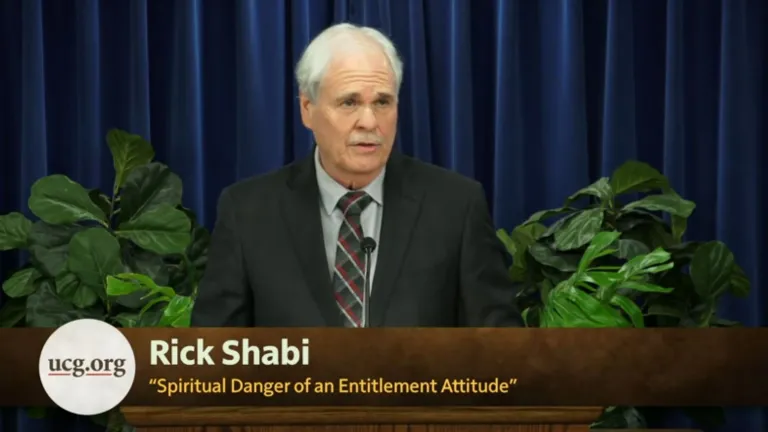

Rick Shabi
This transcript was generated by AI and may contain errors. It is provided to assist those who may not be able to listen to the message.
Well, this past week, the nation celebrated the Fourth of July. The Fourth of July was always one of my favorite holidays growing up. We always had something to do on it. There was family together. We always knew what the Fourth of July meant and always appreciated what we've been able to enjoy in this country that God has allowed us to live in and in this country that God has so richly blessed. You think back over the times of this country, and if you think back to the 1600s and the 1700s when it began to grow, it's very evident that you see God's blessing on it.
It's very evident that you see the spirit of the people that came over to America, because indeed, America is a land of immigrants. Everyone that came here, except for the Native Americans, they all immigrated from another nation. I think back to my grandfather on my father's side.
He came over to America in the late 1800s, and I don't know much about him. But I know the spirit of the people that came over during that time is that they came here to become part of a new nation. They had an opportunity. They were excited about what they were coming to. They came here to work. They came here to be part of something new and to assimilate into the nation. Immigration has always been one of the things that America has stood for.
Today, immigration has become a hot topic in our country for a number of reasons. There's a number of hot topics that we could talk about as we look at the world around us and how things have so dramatically changed over the centuries that the United States has been here. But one of the hot topics in America today is immigration. You hardly turn on the TV without hearing about it. You hardly turn on the TV without hearing a protest about it. It seems so escalated certainly in the last year, the last six months.
The Bible is very clear on immigration and what a country does. When God was forming the nation of Israel, giving them their land, He told them that if a foreigner wanted to dwell among you, that's fine, but there was one law. He said in Exodus, Leviticus, and Numbers, one law for the stranger and for the natural-born in Israel. If they were going to come and live in Israel, they had to do things the way that God and Israel did them.
For many of the years, that's what happened in America. Lately, it's been a different attitude that's there. People that want to come over kind of want to still do things their way. They don't want to assimilate into America. They want all the benefits that America has because it is a very rich nation. It has a number of benefits that people can adhere to. It has become almost, it seems, a right among the world for people to be able to come over to this nation. A week ago, I was reading about one of the protests, and it was in the wake of the recent Supreme Court ruling that allowed the travel ban, if you want to call that, to go forward in a revised fashion, if you will.
There are a number of articles that appeared around that time, some supportive of it and some not supportive of it. But it is the law of the land. One article in particular that I was reading about the Supreme Court decision caught my eye, and it caught my eye because of the title that the man had on it.
It was written in the National Review. It was published on June 29, and the man's name is Jonathan Tobin. He had a very good article where he talked about what's going on in America today. He tied it into the immigration issue because that was a hot topic. Through the article, he talked about how people are today. He talked about the number of protests that we have and how the attitude of the nation and really the attitude of the world, when you look at what's going on over there in Hamburg, Germany over the last few days, the protests that are everywhere and that the world has gotten into a state where, if I didn't get my way, I'm going to protest and make your life miserable.
I want my way, and when I don't get it, I want to know that you're going to be a price to pay. No more new people except, you know, when America was founded on majority rules and everything. If things don't go the way I want to do that, I'll protest, I'll be violent, I'll make my wishes known. And through the article, he would give some examples of immigration. He would talk about how the media, you know, will use some anecdotal stories and some sad stories about immigrants in order to try to prove the case that the immigration laws that have stood forever, you know, should not any longer be adhered to.
And the article was very well constructed. I wouldn't say he was anti-everything or pro-everything. He was a very balanced approach. Let me read the concluding paragraph from the article. And the reason it caught my attention is because of one word in that, and one word that's been coming back to me here over the last few weeks. The title of the article was, Is Immigration to the United States an Entitlement? Is it an entitlement? Does everyone in the world, are they entitled to come to the United States just because they want to?
Here's his concluding paragraph. He says, Arguments for more liberal admission policies are as legitimate as those that call for more stringent vetting. But if a sympathetic backstory or subsequent health concerns are more important than following the rules for legal entry, then the result is the end of the rule of law. And a couple weeks ago, we talked about because lawlessness abounds, what results in our lives. And I thought it was very interesting in an article that talked about, is it an entitlement to the world to come here?
Is it a right that everyone has to just automatically come here and do what they want in this country? That he would say, the way things are going, entitlements can lead to the end of the rule of law. He goes on to say, This is what's being demanded by those who think that sad stories about refugees and illegals justify flouting immigration laws. People who hold these views are not advocating immigration reform, but the end of law itself. So, if we follow his line of thinking of what entitlement means and that everyone, no matter what the case, in the United States has no right to say no to someone, that entitlement and this entitlement mentality could lead, or the end result would be, the end of law itself.
That the laws are rendered useless because everyone has a sad story, everyone has a story that they should be exempt from the laws. When you follow all those things, all of a sudden the law has no effect at all. I think you can understand that.
We are called and God's law is something that we live by. In the Bible it says, This is the law. You will live it. God doesn't listen to our sad stories about how hard it is for us to overcome this. This happened and this happened to justify. It's basically, this is the law. You live by it. That was the law and was intended to be. So, entitlement, if you remember a couple weeks ago in my weekly letter, I talked about entitlement and entitlement mentality.
What caught my attention a few weeks ago was something I wasn't even looking for that said entitlement, the attitude of entitlement is what leads most people to leave churches. As I read that article, I thought, you know what?
That's right. And then this, this, you know, hits me and I, you know, I've been thinking about entitlement a lot and wondering, can the attitude of entitlement creep into our lives as well? What happens if it creeps into the Church of God? Because we live in a world that is becoming very, very entitled. Let me read you the excerpt from another article that had to do with what the way the world is today and the way that it's becoming.
And this article also talked about the entitlement mentality that is gripped America and seems to be gripping the world. So, people are preoccupied with the notion that everyone owes them. They believe their parents, the rich, society, the government, and everyone else owes them. This is the driving force behind the personal rights movement, the free sex culture, the judicial system that promotes ridiculous lawsuits, a welfare system that is rewarding millions who refuse to work or lead a life of discipline.
And I think he's right. Because, you know, when you look at history over the last 30, 40 years, entitlement in America has become almost our mantra. And when you look at it in the last 10 years, we see it gripping even more. We can see it among our youth, you know, and people grow up and they think just because someone else has something, they're entitled to everything.
And sometimes our youth can show us exactly what entitlement means and why it is so dangerous in our thought process. Entitlement means that, basically, to put it in the modern vernacular, I want what I want, when I want, where I want, and how I want. It's about me. I deserve it. You owe it to me. Therefore, I'm going to have it.
And that's the attitude that you can see pervasive as you watch the news, as you watch protests, as you see America, and as you see the youth in America. I want what I want, and you owe it to me simply because I am. Now, the second part of entitlement is, you give it to me, but I owe you nothing in return. I don't owe you gratitude. I don't owe you respect.
I simply am, and you give it to me, and I don't care what happens to you. You just give it to me, and I owe you nothing in return. It's a dangerous, dangerous, dangerous mentality. And it's the opposite, the opposite of what we've been called for. There is no room in the Church of God or anyone that's in the Church of God to harbor or to put up with an attitude of entitlement. Let's go back to Colossians 1. Colossians 1. To set this record straight here before I go into the rest of the sermon, you know, God has called us, and God gives us many promises. Many promises. He promises us eternal life. He promises us to be in His kingdom.
He promises the first fruits that they will be kings and priests in His kingdom. But there's something tied to it. There's something tied to it. Colossians 1. Let's pick it up in verse 21. All right, then. You, you, speaking to you and me, you who were once alienated and enemies in your mind by wicked works, yet now He has reconciled.
It's God who paid the price for us. It's Him who called us back to Him. It's Him who gave us the opportunity that we have. Nothing about us. Nothing that was so sacred about us that He thought, I've got to have that person in my church. He's the one who sacrificed everything so that we had the opportunity to come back and be reconciled to Him. You who were once alienated and enemies in your mind by wicked works, yet now He has reconciled in the body of His flesh through death to present you holy.
He didn't do it and just say, hey, you exist. I'm going to give you everything. He says, I do it to present you holy, separate from the world, working on the things that God wants us to work on, becoming like He wants us to become. My purpose for doing this and reconciling is, you will become holy and blameless.
That means purification, reading out the faults in our life, recognizing and acknowledging the faults in our life, letting God, letting God clean us up, letting God perfect us, not harboring them, not resisting them, not pretending that they don't exist, but acknowledging them as every true Christian should because we live in a state of life of constant repentance, as we see things about ourselves that we yield to God and ask Him to clean them up.
To present you holy and blameless. He wants us to become blameless. He wants us to become pure. He wants to give us the promises that He has made us. An above reproach in His sight, not in the world's sight, not in our own sight, above reproach in His sight. And then verse 20, grace starts with the biggest two-letter word in the Bible. If, if indeed, you continue in the face, grounded in steadfast, and are not moved away from the hope of the gospel which you heard, which is preached to every creature under heaven.
He will give that. He will make you that way if you continue, if you yield to Him, if you lead a righteous life. He's not going to give it to you just because you are. There's something we have to give back to Him, and that is our lives, as Paul says, a reasonable service in Romans 12.1, that we would give our life to God and allow Him to mold us into who He wants us to be, and that our desire would be to become pure, like He wants us to become pure, because we have that hope and we have that faith in Him.
There's no entitlement with God. He owes us nothing. He promises us much. We owe Him. We owe Him everything. So, let's go back to this attitude of entitlement that permeates the world around us today. Let's look at a couple of examples in the Bible.
But, you know, as you look at some of the Internet websites to talk about some of the psychosis in the world today, narcissism is one of them that has exploded exponentially over the last 30 years, they say. Narcissism is an extreme view of oneself. Everything gets filtered through what you want, what you think, what you believe. Everything and everyone around you is supposed to count out to what you want them to be.
And that has exploded in narcissism in this extreme case, but they say this attitude of entitlement when it has settled into someone's mind is a subset of narcissism, because it is all focused on self, all focused on self, what I want, how I want, when I want, where I want. Again, it's the opposite of what the Holy Spirit puts in us, and the Holy Spirit, which is outward directed. How do we help others?
How do we serve God? What are the needs of others and not everything about us? Let's go back to James 4. James 4, verse 1. He talks about wars, and when we read this verse, you'll think of wars, but he talks about fights as well.
Wars are one thing, but we all have fights from time to time as well, I guess. James 4, verse 1. Where do wars and fights come from among you? How do you get into these fights? How do you get into the nations, get into wars?
Do they not come from your desires for pleasure, that war in your members? Aren't the wars all about this nation saying, I want the land you have? I want the resources that you have? The fights we have among us isn't it about, I want what I want? I want you to believe what I believe. I don't believe you should do this or that. I want to control what you believe, and I want it all focused on me.
Do they not come from your desires for pleasure, that war in your members? He goes on to say, you lust and don't have. You murder and covet and cannot obtain. You fight and war, yet you don't have because you don't ask. It's not about life. It's not about us going out and getting what we want. It's about living what God wants us to live, allowing Him to develop that righteousness and then when we do that, He promises He will provide. He will give us what we need when we live His way of life, not just because we exist, not just because we ask.
He goes on in verse 3. He says, you ask and you don't receive because you ask amiss that you may spend it on your pleasures. I hear your prayers, he says. You do ask for this and that, but I know your heart is in it because you're asking for what you want. You want it for what you want to do.
You're not asking for the right reason. Your prayers are not structured. Your prayers are not the way that God will want them to be because they're still about you and what you want done. So when we talk about an attitude of entitlement, I think these verses talk about that as well. Entitlement is about the lust of the flesh. I want. The lust of the eyes, I want that. The pride of life, I want that position. I want that job. I'm qualified for that. I deserve that. My boss owes that to me. It's what I need because I've judged that that's what it should be. So I ask again, could an entitlement, could an entitlement mentality creep into our lives?
I ask myself, is there an entitlement mentality that may be lurking around in there in some fashion that I need to be aware of? Could it be in the church? Could that seep in because it's certainly not the way of God. It certainly is the way of the world. Let's go back and look at a couple of examples here among many that we could talk about. Let's go back first to 2 Samuel 14. In 2 Samuel 14, we find a young man by the name of Absalom.
And you know the story of Absalom. He was David's son. The Bible says he was very good looking. He had great hair, and his hair was his undoing, if you will. But he had some ideas about who he was. And he was very close to his sister Tamar and his half-brother Amnon. Great, his sister Tamar. And Absalom thought that he, that Amnon, should atone for her death.
But he sat back for two years and waited. And at the opportune time, he killed Amnon. He took matters into his own hands and killed him, and immediately fled from Israel. And he stayed away from Israel for three years, kind of self-banishment, if you will, because he knew the law of the land. And his father would say, you know, you murdered, and therefore the law of the land would be this.
So he laid low. But there came a time in life that he thought, I want to be back in Israel. I want the life I used to have.
I want to be back in my father's land. So let's go back to 2 Samuel 14. And he engaged the commander of the army, Joab, to plead his case for him. And Joab did that. In 2 Samuel 14 verse 21, says the king, David, said to Joab, All right, I've granted this thing.
All right, Absalom can come back. Go therefore, bring back the young man Absalom. And Joab fell to the ground on his face and bowed himself and thanked the king. And Joab said, Today your servant knows that I have found favor in your sight, my lord, O king, and that the king has fulfilled the request of his servant. Thank you for listening to me. Thank you for paying attention to what I have to say. So Joab arose and went to Geshe, and brought Absalom to Jerusalem. And the king said, Let him return to his own house, but don't let him see my face.
He can come back. He can live in his house. He can be restored here to live in Israel. I don't want to see him. I don't want to see him. So Absalom returned, but he didn't see the king. And for a few years, it continued that way. He might have on the surface looked like he was content to be back in the land, enjoying the benefits of living in Israel that was prospering at that time. But there was something harboring in Absalom. He wanted more than just to live there. It wasn't enough. He was someone more than just someone who was going to be another citizen of Israel.
And after a few years passed, he decided he wanted to see the king's face. He wanted to be back in David's court. He wanted to be in that position. He wanted to be seen by the people in that area. So in verse 29 it says, Absalom took two full years since Jerusalem, and he didn't see the king's face.
Therefore Absalom sent for Joab again. Joab, go plead my case, to send him to the king. But Joab didn't come. And when he sent again the second time, he wouldn't come. Maybe Joab thought, you know what? This is what it was.
You should be very grateful for the fact that you're even living here and that you haven't gotten the death sentence on your head. And so Joab didn't come. It wasn't good enough for Absalom. He was going to force the situation. Who does Joab think that he is? That he isn't coming to my service. If I call him, he should be here to do what I want. And so, Absalom takes matters into his own hands. Verse 30, Joab says to his servants, see, Joab's field is near mine, and he has barley there. Go and set it on fire.
And they did. Joab's not doing what I want. Harm him. Get his attention. I don't care what destruction. I don't care what it costs him. He should have known better than to refuse me. Go out and set his field on fire. And so Joab, he certainly did get his attention. Joab came to Absalom and said, What are you doing? Why have you set my fields on fire? Absalom tells him why. And so Joab does go to King David and asks if Absalom can see him again. Let's pick it up in verse 15, verse 1.
David says, Okay, I will see Absalom. That's not good enough for Absalom either. He has something else in mind. He sees Israel. He sees what's going on there. He sees what his father has, and his eyes are looking on that in a covetous matter. First, chapter 15, verse 1. After this had happened, Absalom provided himself with chariots and horses and fifty men to run before him. Now, it doesn't sound like someone who's just satisfied now to be living there and whatever. He's got something else in mind. He's providing himself and fortifying himself. Absalom would rise early and stand beside the weight of the gate.
So it was whenever anyone who had a lawsuit came to the king for a decision, Absalom would call to him and say, Where are you from? And he would answer your servants from such and such a tribe of Israel. And Absalom would respond to him, Look, your case is good and right, but there is no deputy of the king to hear you. What a shame. David's too busy. It's too bad that someone can't hear your case. You've got a good case. And it was whenever, moreover, Absalom would say, Oh, that I were made judge in the land and everyone who has any suit or cause would come to me.
I would give him justice. See what he's doing? David led him back in the land. David let him see his face. Absalom now is infusing himself into it because he's got a far greater idea of who he is and what he should be doing than what he was commissioned to do. He will go out and he will infuse himself into this and he will be appointing himself a position that he wasn't given.
And so it was, verse five, whenever anyone came near to bow down to him, that he would put out his hand and take him and kiss him. In this manner Absalom acted toward all Israel who came to the king for judgment. So Absalom stole the hearts of the men of Israel. David was gracious enough to let him back in. Absalom should have been grateful for that alone. It wasn't enough for Absalom. I want what David has. I want these people to look to me.
And so he went out and by what he did, he stole the hearts of the men of Israel. He had an entitlement mentality. I should have this. I'm the king's son. I deserve this. I owe it. Or you owe it to me. I'll go out and take it. I won't let it become rightfully mine. I will do what it takes to get that for myself because I want it.
Well, you know the rest of the story, what this entitlement mentality led to. We already heard in the first article an idol mentality of entitlement can lead to the breakdown of law and the end of law. In the case of Absalom, it led to all sorts of misery for Israel and David and ended up in Absalom's death.
Absalom revolted against David, who led him back in. People died. David had to flee the city. And eventually Absalom was hung by his heir and killed by the men of Joab.
If he just hadn't had that attitude of entitlement, I owe it or you owe it to me, I deserve it.
I want it. I'm going to take it because it's rightfully mine. And I'll take it however I need to. An attitude of entitlement never leads to anything good. It always leads to misery, strife, dissension, division. And if it's in us, it can lead to our spiritual death.
Something much more significant than just physical death.
So let's look at a few scriptures here. Psalm 84.
Psalm 84.
Now verse 10. If Absalom had had this attitude when he was allowed to come back into Israel, if we have this attitude as God works with us and as we are year after year after year in the Church, 84 verse 10 says, For a day in your courts is better than a thousand. I would rather be a doorkeeper in the house of my God than dwell in the tents of wickedness. I would rather be a doorkeeper in the house of my God than dwell in the tents of wickedness. If Absalom had been content to take what God had given him and not reach out for more and thought he deserved more and he was going to take whatever twist and turn to get what he wanted, his life, David's life, Israel's history would have been better during that time. If we will take that position, if we will have that in our minds, that no matter what God wants us to do, we will follow and let him lead us to where he wants us to lead. We will let him put us where he wants us. That we, a day in his courts as a doorkeeper, is better than anything we get by our own will and by our own devices. If we would just get rid of this sense of entitlement and, you owe me, I deserve this, and I'm going to take it however I can get it, let God, let God do those things. Let God put you where he wants you. Learn what he wants you to, and don't play the game that Absalom played. Don't play the entitlement game and think, you deserve or you are owed. I think of that myself. Let's look at John 3, verse 30 as well.
John 3, verse 30. John the Baptist. John the Baptist, you know, he, for six months before Jesus Christ, he was out preaching the kingdom of God. He was preaching repentance. He was baptizing people. He was doing the work of God. He was doing exactly what God told him to do. And there came a time when Jesus Christ came to be baptized. And as people saw Jesus Christ, they were saying, you know, his disciples were saying, look, more people are following him, John.
That shouldn't be. That shouldn't be. The end of the carnality came in. They should be following you. We can't let this happen. And John said a momentous thing in John 3, verse 30, that we can all remember. If it ever comes to that point in our life, that we would have this attitude that he had.
He must increase, John said. It's time that God has determined that Jesus Christ will be the one to increase. But I must decrease. It's God's will. I'll take the lower position. I'll take the lesser responsibility because that's what God wants. And John the Baptist did that perfectly. He certainly could have, if he was going to play the carnal game, he could have said, now, wait a minute, God.
I did this for six months. I've lived out here in the wilderness. I baptized people. I've been walking around in camel's air and eating locusts and honey. I deserve better than this.
In a carnal mind, it would make sense, right? He didn't have that at all. We can't have that sense among us, either. I deserve better than this. We deserve what God gives us. And whatever he gives us, we should be very thankful that he has even called us and acknowledged us and allowed us to know what we know and to have the opportunity to be reconciled to him and to have his spirit dwelling in us. Matthew 23, verse 11, you don't need to turn there. Matthew 23, verse 11 says, See you as greatest among you, let him be your servant, just like Jesus Christ was, just like Jesus Christ was among us. Let's look at another example. Absalom's example of entitlement mentality didn't turn out so well. It led to strife, division, death of many people, death of Absalom himself. Let's look at another one. It turned out a little bit differently. Let's go back this time to the Second Kings. Second Kings, chapter 5.
And a familiar name is Second Kings 5 as well, the commander of the Syrian army, Naaman.
Naaman. He was a big name in Syria. He reported to the king of Syria, well known in that country, had a position when Naaman walked into a room, people noticed. He expected people to salute. He expected people to bow down or whatever they did in that time. But Naaman was at the top of the heap, apart from the king of Syria. And he was a mighty warrior, but he had a problem.
He had leprosy. And in those days, leprosy was a death sentence. It wasn't something that you were going to get over. The only way it was going to be healed was if God healed you. There was no clinic. There was no experimental treatment. There were no doctors specializing in the treatment of leprosy in another nation. There was only one way to be healed of leprosy, and that was God.
And Naaman knew it. There was nothing they could do. But as they had someone in their country, from Israel, they said, you know, there is a God of Israel that heals these diseases.
He can heal leprosy. And Naaman believed. Naaman believed it. Let's pick it up in verse 9 of 2 Kings 5. Naaman believed it, and he went with his horses and chariot, and he stood at the door of Elisha's house. Elisha was the prophet at that time. The king of Israel, when he heard that Naaman was coming, he was a little alarmed, like, I don't know that we can heal this disease. But Elisha heard of it, and he said, well, God can heal the disease. Send him to me. So this is why Naaman is going to Elisha. Now, Naaman, as he went to Elisha's house, you think of who he was and what his expectations were. Because just like you and me, when he went to Elisha's house, he had expectations. He's the commander of the Syrian army. The king has sent him here with a letter, heal this man. And as Naaman went there, I'm sure he was used to having people kowtow to him, bow to him, and everything. And he expected the same treatment as he went up to Elisha for this. Let's see what the treatment that he got. He's standing at the door of Elisha's house, knocks on the door, and in verse 10 it says, Elisha sent a messenger to him, saying, go and wash in the Jordan seven times, and your flesh will be restored to you, and you will be clean. That wasn't what Naaman expected to have happen. He expected Elisha to come out there. He expected Elisha probably to, well, certainly to greet him, praise him. What a wonderful guy he was, what an honor it is to meet him. And here I will do this, and everything is going to be wonderful, Naaman, and to have all this fanfare around him. That's what he expected. And who he was, you can understand that. We go to God sometimes with expectations, don't we? When we go to God, we have in our minds, God would do it this way. If it works out this way, that would be perfect. And we might know, subconsciously we should know, God doesn't always work the way we want. His ways are much higher than us, and his thoughts are much higher than us. But sometimes God works in ways we don't expect. And here Elisha doesn't even come to the door. Naaman's there. He sends a messenger to him and says here, this is what you do. Go and wash in the Jordan seven times. And Naaman, who's not used to this type treatment, he's not even coming to the door to say, hi, doesn't react well because he expects praise. He expects to be recognized. He expects him to know who he is. Look at the next verse. Naaman became furious. He was in a rage. You know, people with an entitlement mentality, one way you can tell, they get in a rage. When they don't get what they want, they get mad.
When you don't agree with them, they get mad. When you don't give them what they want, they get mad.
Naaman didn't get the treatment that he wants. He got mad. I'm entitled to this. Do you know who I am? You should have been out here and you should have been making sure that I am recognized for who I am. Naaman became furious and went away and said, indeed, I said to myself, he'll surely come out to me and stand and call on the name of the Lord as God and wave his hand over the place and heal the leprosy. That's what I expected he would happen. He'll come out here. He's going to anoint me, touch the leprosy, and that's going to be immediately healed. That's what I had pictured in my mind. It didn't happen that way. He got mad. He got mad and he walked away.
He was ready to spit nails at someone because it didn't go the way he wanted.
Now, that's a sense of entitlement, isn't it? I deserve this. Don't you know who I am?
This is the way I need to be treated and this is the way I wanted it to come down.
And sometimes we can have that same attitude toward God. This is the way I wanted it to go.
You said you'd answer my prayer. You said this is what would happen. And it didn't happen the way I wanted it to. I'm a little mad now. I'm a little mad now. Well, Naaman could have died with leprosy. He could have led his rage and his anger, take him and the rest of his life he could have been absolutely nowhere and he would have ended up dying with leprosy. But Naaman listened.
To his credit, he listened when someone talked to him.
Oh, and once it's talked down to verse 13. His servants saw the rage that he was in, saw what he was saying, and they came near and spoke to him and said, My father, if the prophet had told you to do something great, wouldn't you have done it?
How much more then? When he simply says, Do you wash and be clean?
To his credit, Naaman calmed down. To his credit, Naaman thought, you know, you're absolutely right.
If I had just done it, or if I just do what the prophet says, he said I'd be healed.
Sometimes we have to step back and say, if I would just do what God said, things would work out.
And what God says is, follow me, yield to me, give yourself to me, let your spirit lead me, repent, acknowledge, step back, let God do it, and when we let God do it, things are healed.
If Naaman had just stormed off, Naaman would have never been healed. But Naaman sat back and he thought, you know, you're right. And so in verse 14, he went down with the right attitude, and he said, he went down and dipped seven times in the Jordan, just exactly the way Elisha said to do it.
According to the saying of the man of God, and his flesh was restored like the flesh of a little child, and he was clean. He did it God's way. He did it God's way and not his way.
And my heart came back to James 4.3. We read James 4.3 back several minutes ago now. And James 4.3 you know says that you ask, but you ask amiss, that you may spend it on your own pleasures.
And sometimes when we don't get the response from God, and I hate to use the word expecting, or we don't get any response from God, maybe we need to ask God, am I asking amiss? Teach me how to ask you. Teach me how to pray to you. Teach me how to come to you with a proper attitude. Get self out of the way. Get my own desires, and my own wishes, and my own ideas, and my own will out of the way. And let your will be done. It's not an easy thing to do. Our minds are all wrapped up with self-will, and what we want, and what we'd like to see happen in things. But we have to, little by little, let that be unwound, and then permeated with God's Spirit, and the way He wants things done. Let's go back to Psalm 37.
Psalm 37. And verse 5.
Naaman did this. Commit your way. Commit your way to the Eternal.
Trust in Him, and He will bring it to pass. Trust Him. Don't give Him the exit card, because it's not going to work. If you give God the exit card, commit to Him. Do it His way, and it'll work out. And He will bring it to pass.
So we can look at those two examples, and we can ask ourselves some questions, and bring it to the Church of God today, and say, well, how do those examples affect us?
Do I think I'm owed something? Do I think I deserve something?
Do I expect God to do it my way? And maybe deceiving myself into thinking that I really want God to do it His way, but in a way that I really want it done my way. Let's look at one more example. One more example. This one I'll talk about a little bit.
We can see all those things happen in the world today. You know, we have people in society that think they deserve such and such an office. And so they get mad when they don't have it, and their supporters get mad, and they protest, and they get furious, and they get angry, and they get more violent. We have people who want things done their way, and we have a medical profession who comes up with way after way after way after way, and treatment after treatment after treatment after treatment after treatment after treatment to do things. And people follow along in that.
We have the entitlement mentality in those two areas. One other area that is well known and very much alive in the world today is this entitlement to what we are owed financially.
We live in a world where we have entitlement programs. I always thought that was an interesting title, an entitlement program. Social Security is an entitlement program. Medicare is an entitlement program. Medicaid is an entitlement program. And somewhere along the line, they became known as entitlement programs. Well, back in the 30s when Franklin Delano Roosevelt introduced Social Security, in the 60s when Medicare was introduced, they didn't have the title entitlement programs. They had the title earned entitlement programs. So you earned the entitlement to Social Security because you paid into it. If you never worked, you're not entitled to Social Security. You earned it by what the work you did and what you paid into it. You earned your way into Medicare because you worked and you paid into it throughout all your life. It wasn't an entitlement program just because you are, you get it. Medicaid was created to rightfully, and these are great programs. I'm not downing them at all. They are an absolute blessing and a good thing that America has done.
Medicaid was there for the disabled who can't work to make sure that we're taking care of those who need those things. The programs were great. They were exactly what a country should do, and so many nations of the world have followed suit in that. But what has happened in the last several years, in the last 10 to 20 years especially, those programs have gotten totally out of control. Totally out of control. People, I'm not even going to go into details, I heard a comment during the recent presidential campaigns. A comment was made that if you could take all the fraud, out of the fraud of the Social Security, Medicare, and Medicaid programs, I think the comment was you could balance the budget. And I think that's right. I think that's right. When I worked in healthcare, we would see it. We would see it among people. We would see people on roles that were abusing the system and whatever. And it was like, things are out of control. You don't need this. You should be out working, right? But it's an entitlement program. And over the last few years, it's been give more people food stamps, put more people on Medicare, let the government pay. And the government and society and news media has fostered the thing. The government owes me. I have the right to this. I want what I want. And so things are out of control. And a large part of our budget problems are the entitlement programs that are no longer seen as earned entitlement programs, but just entitlement programs. That's a government problem, but it's an attitude that's out there in the world around us today. Now, again, I'm not saying anything negative about them except the fraudulent cases that are there and what has happened in people looking at them in a different way. In the meantime, on the religious front in America, we have TV evangelists who are out there who preach what you have heard called a prosperity gospel.
And you will hear a preacher, a notable one, and a few others that will be out there and say, all you need is to believe God. If you believe God, He will give you whatever you want. He'll give you a spouse. He'll give you the job. He'll give you the house. He'll give you whatever you want. All you have to do is believe. There's nothing attached to it like in Galatians 1, verse 23, that says, if you do this, if you commit yourself to Him, if you follow His way of life, if you forsake self and give yourself to Him and yield to Him that He will perfect you, and you will give up your ideas and your will to do His. None of that at all.
Many people call it gospel light, right? Because it's a very light gospel. It's all there. It's almost like God is the genie. You know, you remember Aladdin's lamp? You rub the bladgett lamp, and all of a sudden, God's going to pop out and, hey, I believe you. Just give me what I want.
And so we have this idea, even among the religious circles, that we're blasted across the TV. If we will just believe we don't have to do anything, God will give. He's here just to give us what we want.
The Bible doesn't say that. God will bless us. He wants to bless us. He wants us to have the fine things of life. But when you read through Deuteronomy, when you read what Jesus Christ said, He doesn't say, just because you exist, just because you're alive, I'm going to give it to you.
It's the righteous that He will bless. It's those who turn their life to Him, who forsake past and embrace His way, who make the odd conscious decisions day after day to reject self and follow Him and commit to that way. Then He will bless. Then He will do the things that so many people want Him to do. You know, in America, among so many people, they developed the idea that God owes them something. God owes them something. Let's go back to 1 Chronicles. 1 Chronicles 29. And we forget, we forget that we are the ones who have earned nothing but death.
We haven't earned any entitlement with God. He gives it to us. You know, King David was a good king. He suffered many things in his life, including that incident with Absalom. But God is the one who placed him on that throne. And God taught him during the years that he was on that throne. And David became a man after God's own heart. He made mistakes, but he learned from those mistakes. He acknowledged them, and he turned around and went the other way, always drawing closer to God.
But when David wanted to build the temple, God said, no. No, it won't be you. It'll be your son.
If David had an attitude of entitlement, he could have said, not fair, God. I'm the one who's done this. I've served you all these years. I want to build it. I deserve to build it. You owe me the opportunity to build it. David didn't do that. David accepted what God said. Let's pick it up in verse 11. The first Chronicles 29. An attitude we always need to remember if we ever believe that God owes us something that we can have this attitude. He says, yours, O Eternal, is the greatness, the power, and the glory, the victory, and the majesty. For all that is in heaven and in earth is yours. Yours is the kingdom, and you are exalted as head over all.
Both riches and honor come from you, and you reign over all. In your hand is power and might. In your hand it is to make great or to give no strength or to give strength to all.
You see what David is saying? It's all in your hands. What you give us, we gratefully accept.
But all power is vested in you. All power is vested in you, and everything that we know and everything that we have comes from you. Verse 13. Now therefore, our God, we thank you and praise your glorious name. And then David humbly asks, Who am I, and who are my people, that we should be able to offer so willingly as this, for all things come from you? And of your own we have given you. We are aliens and pilgrims before you, as were all our fathers. Our days on earth are as a shadow, and without hope. Without you, we have nothing. We thank you for being mindful of us. We thank you for calling us. We thank you for giving us what you have. Everything we do in every day of our lives should be marked with gratitude toward God, not ever a sense of entitlement. God owes us nothing. He promises us many things. He promises us He will give us eternal life. He promises us He will be in His kingdom. He promises us that we will be the bride of Christ if we follow Him, if we commit to Him, if we forsake self and follow Him, if we forsake the old ways and adopt and put into practice in our lives His ways. But you know we have ultimate faith in God. We believe He will do those things, because as God, He could say, Ha-ha! I'm not giving any of those things, could I? He would have the right to do that, because He's got power over you and me.
He could say, all you've done is whatever, but we don't believe that. We know He's a good God. We know that He's an honest God. We know that we trust in Him implicitly, because we know that what He promises He will give, if we remain true to Him. But at no point in our lives can we go back and say, God, I deserve this. God, I deserve this. You owe this to me. He'll give it if we yield to Him and give ourselves to Him. So, we can ask ourselves, do we think God owes us anything?
Do we think God owes us physical things?
Anything God owes us. He tells us what to do. Even if we look into the financial area that I glossed over a little bit with some of the financial things, He promises us that He'll provide what we need. Let's go back to Psalm 37.
And there's promises that we come from. We absolutely believe and know. We've seen this happen in our lives. In Psalm 37, verse 23, David writes, we were earlier in here in verse 5.
Verse 23, it says, The steps of a good man are ordered by God. You know what that means? That man chooses to follow God. He makes the choice to follow God and let God order His steps. The steps of a good man are ordered by the Lord, and He delights in His way. God is pleased when He sees us following His way. Though He fall, He won't be utterly cast down. We sin, we get up, we're forgiven, we forgive each other. God forgives us. Though He fall, He will not be utterly cast down, for the Lord upholds Him with His hand. I've been young, and now am old, yet I have not seen the righteous forsaken. Who are the righteous? Those who follow God. Remember, the righteous are the opposite of the lawless. The righteous, those who follow God, those who are led by His Holy Spirit. I have been young, and now am old, yet I have not seen the righteous forsaken, nor his descendants begging bread. God will provide. He never promises He's going to provide every luxury and every want in life. He'll provide what we need. We'll have shelter. We'll have clothes. We'll have food. It may not be exactly the house we want. It may not be the designer clothes that we want, but He'll provide. Just like He says in Matthew 6, don't worry about those things. You follow Him. You live your life in accordance with Him, and He will provide what you need. One of the entitlement, one of the results of the entitlement vitality in America today is, people really don't know what needs are anymore compared to luxuries. We have an awful lot of luxuries in our life. We could do without a lot of things that we do. One day we may learn the lesson of what is a necessity and what is the luxury in life. But God says, you do those things, and I'm not going to forsake you. David said, I have never seen the righteous begging for bread.
He does expect us to work. He does expect us to work hard at our jobs. He does expect us to be faithful, good employees who do want the blessing of their employer and who are willing to give more than what they received from them. Just the way Jesus Christ did, just the way Jacob did in his example, just the way the men of the Bible do. Let's look at one last scripture here. Back in Luke.
Back in Luke there is a parable.
Luke 17. Luke 17, verse 7.
Which of you, which of you, Christ says, having a servant plowing or tending sheep, will say to him when he's come in from the field, come at once and sit down to eat?
So you see the picture here, the setting that we have. We have a servant. He's employed by us.
His job is to go out there, tend to sheep, pile the fields, whatever he does. And when the day is done, part of his responsibility is also to see that our supper is prepared. And he says, if you have this servant, this is what you expect him to do. Which of you are saying, okay, you've done your work. Now I'm going to serve you. Might be a noble thing to do, but that isn't what we do, he says. Which of you are going to do that and say, come in at once and sit down to eat? But will he not, verse 8, rather say to him, prepare something for my supper and gird yourself and serve me till I have eaten and drunk and afterward you will eat and drink? Isn't that more the way things go in life? Even in an employer-employee situation. You're hired for a job to do. Job's also isn't going to come in and say, yeah, you know what, you did a pretty good job. I'm going to do the rest of this job for you. He expects you to get it all done. And if you work 10, 12, 14 hours, do it. Get the job done and do it right. Does he thank, verse 9, that servant because he did the things that were commanded him? Might be a nice thing to do, but he says, I think not. So likewise you, when you've done all those things which you are commanded, say, we are unprofitable servants. We have done what our duty was to do. Let me read with Adam Clark's commentary and another commentary say about those verses. Adam Clark says, it is never supposed that the master waits on the servant.
The servant is bound to wait on his master and to do everything for him to the utmost of his power.
Nor does the servant expect thanks for it, for he is bound by his agreement to act in that way because of the stipulated reward, which is considered as being equal in value to all the service that he can perform. So we spend our lives in service to God. If we yield our entire mind, body, and soul to him, as he says, it's what he expects to us. And he says, if you do that, I promise you this. And he'll deliver it. But he's not going to settle for less than that.
He's not going to say 75% there, 95% there. When it meets your expectations or when it meets your ideas, then yield to me. And everything yields to me in your ways, in your wishes, in your desire, in areas that may even be very painful to acknowledge a problem. Do it! It's your job.
It's your job to yield to God wholly and fully, just like a servant must do his entire job before God. If a servant or employee says, you know what, Mr. Bloss, I'm going to do 75% of this. I'm not doing that. I'm simply not going to do what you want me to do in this area.
Now, if you were bosses and someone said that, you might look at that person a little differently from that time forward. What do you mean? If it's legal, if it's right, if it's not against God's will, and someone says, I'm not doing that, how do you think God responds to that? Probably the same way you and I would in a situation when said, I'm not doing that.
Anyway, let me read what another commentary here says about this. It is the obligation of each disciple to serve the Master without expectation of release or reward.
His followers must give complete obedience to him no matter what trials come upon them, and like Christ, they must conquer their own nature with his Holy Spirit. It's our job to use his Holy Spirit to become the way he wants us to be, to overcome self, overcome desire, overcome human nature. That's what he called us to do.
An entitlement mentality is the opposite of that. John F. Kennedy made a notable comment back at his inauguration in 1961.
And as he was looking at a country, and as he was looking at the United States back then, which is so far different than it is now 56 years later, he made a comment that has gone down in history, but it speaks to this entitlement mentality. He said, ask not what your country can do for you. Ask what you can do for your country. What he was saying is every one of us who lived in this country that God has blessed, we should be so thankful that we live here. There are so many other places and so many other people who would love to change positions with us.
We should ever be grateful. We should ever be thankful. We should be looking to see, he said, how we can serve our country. Don't ask selfishly, what can you do for me?
Ask what you can do out of a sense of gratitude, responsibility, and an opposite of an entitlement mentality. Ask what I can do for you. In the Church of God, we can say and coin that same phrase, we should never ask God or the Church, what can you do for me? What can you do for me?
We should be asking God, never with a sense of entitlement, always with a sense of gratitude, always with a sense of respect, always with a sense of awe, always with a sense of fear. I don't care what position you put me in. I don't care what type house I live in. I don't care, I don't care what sickness comes my way. I don't care what trial comes my way. I will always see what I can do for you. I will serve you and I will learn to live the way that you want me to live.
Ask not, God, what He can do for you. Ask not what the Church can do for you. Ask what you can do to serve Him better. And let's none of us harbor or be guilty of a mentality of entitlement.

Rick Shabi (1954-2025) was ordained an elder in 2000, and relocated to northern Florida in 2004. He attended Ambassador College and graduated from Indiana University with a Bachelor of Science in Business, with a major in Accounting. After enjoying a rewarding career in corporate and local hospital finance and administration, he became a pastor in January 2011, at which time he and his wife Deborah served in the Orlando and Jacksonville, Florida, churches. Rick served as the Treasurer for the United Church of God from 2013–2022, and was President from May 2022 to April 2025.
