
Greg Thomas
This transcript was generated by AI and may contain errors. It is provided to assist those who may not be able to listen to the message.
To develop into the image of God, as we see in Jesus Christ. He is a new creation. Old things have passed away. Behold, all things have become new. God is going to renew the earth. He's going to renew humankind and give them an opportunity to have His laws written in their hearts that they might become a new creation. We are the first fruits of that creation, being made new day by day as we walk in the Spirit.
Now, all things are of God, who has reconciled us to Himself through Jesus Christ, and has given us the ministry of reconciliation. God's agenda is to reconcile the world to Himself. He desires that all mankind become one with Him. That is His plan. That is, verse 19, that God was in Christ, reconciling the world to Himself, not imputing their trespasses to them, and has committed to us the word of reconciliation. We're all about reconciliation. God is about reconciliation, and that's His agenda, and we should be about reconciliation, one to another, and certainly with Him.
Given that agenda, what does it say in verse 20, then, we are to do? Therefore, we are ambassadors for Christ. As though God were pleading through us, we implore you on Christ's behalf, be reconciled to God. Based on this agenda, our role is to be ambassadors for Christ, and to share this ministry of reconciliation. Years ago, there was a university called Ambassador College, later Ambassador University, named from this verse.
The representatives of the church in years past carried a business card that said Ambassador College, an institution based upon the word of God and dedicated to recapturing true values. God's agenda and our calling is not to be participating in the agendas, programs, and movements of society. What is then the role of an ambassador? I could take an example of the US ambassador to France. His main role is to be the communication mechanism by which the US government conveys its values and priorities. But the US ambassador to France cannot vote in French elections.
He or she does not participate in the yellow vest protests or involve him or herself in the domestic affairs and politics of the nation of France. That would be overstepping the role and boundaries of the role of an ambassador.
As ambassadors for Christ, our obligation is to convey the values and priorities of God's coming government to our communities in which we have been placed. We live in California and we therefore must communicate godly values in our California communities. If these values are not respected by our communities, then we rely on our government, our government meaning the government of God, to make decisions on how to respond.
We don't, just like the US ambassador to France, doesn't take into his own hands programs to punish France. Just like the US ambassador to France doesn't take into his own hands programs to punish France or to incent France, he's just or she is just the communication vehicle. We also don't take things into our own hands. It is not our role to make those decisions.
We are simply the ambassador. I want to share a just a short video that I saw on CNN the other day. This is a CNN video, but I've seen this in other in other places as well. I'll go ahead and roll this here.
What you can see here is that in the city of Marseille, the second largest city in France, police, armed police, are walking through the streets of the city enforcing mask regulations and they will find you or arrest you for a failure to be wearing your mask in public. $160 is the fine. I'm gonna go back to what I was doing here. So now some might look at that and really frankly be horrified to see that level of participation of French authorities in enforcing masks.
Others might be very excited to see that there's actually some serious focus on making sure that the virus is not spread. God's people in France, and we're going to see them soon, as ambassadors, would be overstepping their roles if they participated in a movement to stop that or to promote that. Just like if you went to France and you started petitioning the government to stop that, well you're not a French citizen. What role do you have? That's just your opinion. Again, to stop or promote. I'm not trying to take it either side.
I'm just using an example here of something where people tend to have strong feelings. In this country, in three weeks, there will be an event on the National Mall in Washington, D.C., called The Return, where mainstream Christian leaders will speak to all who desire to gather for a global day of prayer and repentance. The organization sponsoring this event is called Revival by individual national and global repentance, and it uses as its core scripture 2 Chronicles 7, verse 14.
2 Chronicles 7, verse 14. I won't turn there, but I'm going to read it to you. It says, if my people who are called by my name humble themselves and pray and seek my face and turn from their wicked ways, then I will hear from heaven, and I will forgive their sin and heal their land. Personally, I think it's wonderful to see people who desire to repent. I mean, that's what we preach, right? We preach the need to repent. But as ambassadors for Christ, should we participate in something like this?
I mean, attending it in order to report on it, for example, for one of our publications, I think, would be a very good idea to understand how to compare and contrast what they're doing with what God speaks about in Scripture. But if we think about the Scripture of 2 Chronicles 7, verse 14, which I just read to you, if my people who are called by my name will humble themselves, who is that Scripture referring to?
It's referring to the physical nation of Israel and those physical promises under the Old Covenant. That's what it's referring to. Now, some might say, hey, hold on, but doesn't the Scripture have spiritual significance for people today? I mean, you know, should we just ignore, you know, all the Scriptures in the Bible about the Old Covenant? No, of course not. The Scripture does have spiritual significance today, but only for those who are in a covenant relationship with God. The Scripture says, my people, that is God's people, and who are God's people today under the New Covenant?
These are people who are in this covenant relationship, who have written God's laws on their hearts and who are seeking to be reconciled to God and are ambassadors for Christ. And if we're going to observe the day of Pentecost that speaks to an early and small harvest, and then we're going to observe in a few weeks the Feast of Tabernacles in the eighth day that pictures a great harvest, then we must confront the fact that, quote-unquote, my people is not referring to the vast majority of people today, whether in this country or elsewhere in the world.
Quote-unquote, my people, under the terms of the New Covenant, is not America. It's not France. This is not the theology of the Bible.
And if we somehow start putting those nations or people into that Scripture where they don't belong, it's going to fly in the face of the entire plan of God as laid out in the Holy Days, and as we the Covenant people keep for that very reason, that we should not lose sight of God's plan. And just as significantly, if we read the prophetic events told to us by Jesus Christ in Matthew 25 and in the book of Revelation, we know that in the days leading up to the Feast of Trumpets and the return of Jesus Christ, that those days are going to be so bad that, quote, unless those days be shortened, no flesh would be saved, but for the elect's sake, those days will be shortened. That's Matthew 24 verse 22, if you want to make that note. Matthew 24 verse 22 tells us that despite well-intended efforts for national repentance, God's plan, after the first man Adam made his choice, God's plan is to allow humankind complete latitude to run and manage his affairs on this planet for the sole purpose of showing that without God, mankind, humankind, will destroy himself from off the planet.
So when God's church preaches repentance, we preach an individual repentance that allows access to God's Holy Spirit and to be part of the early harvest, to be part of the firstfruits. That is God's message today. We do not preach national repentance with a view of somehow humanity would wake up and turn to God and make obsolete all the prophecies of the day with a capital D, the day of wrath, as I talked about in sermon last Sabbath in 1 Thessalonians 5 verse 9. We don't preach contrary to the prophecies of the Bible. Yeah, I know we have all those prophecies and there's going to be a day of wrath and there's this book of Revelation and no flesh will be saved, but that doesn't have to happen. Just repent now. No, we don't preach against those prophecies. And to participate and embrace in movements like that, I think, is despising prophecies, as referenced in 1st lesson in 5 verse 20. The days in advance of the Feast of Trumpets will be shortened to spare us as God's covenant people the pain and suffering that will come from evil being perpetrated in the world. And like Daniel living in a world that did not share his values, we are lights. We are salt. We are ambassadors communicating the values and priorities of God's government, God's coming government, and we are living a life worthy of our calling. This is our obligation under the covenant. Now, some might say, you know, well, am I supposed to just sit and watch the divisions and decline of this country? You know, isn't that kind of fatalistic and kind of aloof? Shouldn't we do something? Shouldn't we stand up for truth? Shouldn't we stand up for justice, for godly values that we read in Scripture? And the answer is certainly we should act justly. We should love mercy. And we should walk humbly with our God as Micah 6 verse 8 says. But once we start lending our voice to movements of this world, we must, by definition, take sides. And that side might be the return that's going to take place this big movement in Washington, D.C. on the National Mall. It might be to decry police violence against people of color. It might be arguing that churches in California have the constitutional right to hold indoor church services. All of these movements are addressing injustice. I mean, real injustice. This is real, real injustice in this world right now. These are good things. But by doing this, by lending our voice to those movements, we are aligning ourselves with organizations that are not part of God's government. We are aligning ourselves with organizations that are not part of God's government. And sometimes organizations that are not part of God's government, and sometimes these organizations can be on opposite sides of issues from where God's government would be. And sometimes they can cause members to be on opposite ends of viewpoints. I showed the picture of police walking down the streets and forcing mask ordinances. That's a very real issue right now. And God's people can be on opposite sides of that issue and in conflict.
But that's not how God wants it to be. We have been given a ministry of reconciliation. We are about reconciliation, not division. And of course, some would also argue that the values of repentance or being against racism or against whatever evil people might be fighting against in the world would actually align with God's value. So what's the problem? Right? What's the problem? Well, the problem is that all the evil we see around us, such as racism, for example, are just symptoms of a humanity without God and are not solvable by human beings. If we believe that humankind can somehow make laws and decrees that would actually change people's hearts so that they stop being racist, then we don't get it. Human beings without God are heading to destruction and only God and his Spirit can change us. That's why God wants to set up this covenant to write his laws in our hearts and to believe otherwise and to think that these problems can be solved by human beings is called humanism, not Christianity. We're not humanists. We're Christians. Now, this doesn't mean that we can't help and support good causes that we see around us. I'm not saying that. My wife and I have contributed to the City Year program, which funds AmeriCorps volunteers to help in underperforming schools here in San Jose. We've been pleased to help that organization for years.
And I'm sure each of you have organizations that you feel a connection to, that maybe you support financially. That's fine. The point, though, is where we draw the line in terms of our emotional attachment to these causes, our allegiance, our covenant, is to God and his plan and not to these organizations that we might have a connection to. We see evil in the world and we want to fix it. That's normal. But as ambassadors, that's not our job. Our job is to role model the values and priorities of our government. Our government is not the American government. Our government is God's government. And to allow our government, God's government, to exercise judgment as it sees fit. And in this capacity, and for those who we come into contact with, we are lights. This is our role as lights, as salt. I'd like to finish by telling a story. It's the story of a man who was imprisoned as a political prisoner in Iran in one of the most infamous prisons really on the planet today. It's called the Even Prison. You can look that up online and read about it. There was a piece just done recently. And you can... I came across this story in the New York Times. It's titled Science Watch. Doctor finds also remedy while in Iran prison. And it's dated from June 21, 1983. And it's such an interesting story. This doctor, his name was Dr. F. Badmajan Halij. It's kind of a long name to pronounce. And this doctor was imprisoned in 1979. And he was in this prison until 1982. This prison was built by the former Shah of Iran to house political dissidents. And since that time, and to this day, that prison is the scene of unthinkable torture, execution, and misery on a scale that I truly believe would make any one of us in God's church pray thy kingdom come this very second. When you leave that prison, you leave in a bag and you're thrown into a mass grave and your body is lost to your family forever.
And this doctor was in prison there for nearly three years, waiting his fate, never knowing from one day to the next whether he would be tortured or killed.
And during this time, being a medical doctor, he found that his fellow prisoners suffered from terrible ulcers, peptic ulcers. Now, peptic ulcers are caused by bacteria and different types of things. And once you get them, stress can aggravate them. Stress doesn't actually cause the ulcer, but it definitely can aggravate the ulcer. And you can imagine the people in prison there being under enormous stress day to day. So whatever bacteria or things might have caused the ulcer, it just exacerbated. And so they're not only dealing with the psychological terror, the physical pain, but they're dealing with medical conditions as well. And so this doctor had no medicine. He had so few resources available to him except what was in his head. And he himself was confined as a prisoner and he wanted to help. And one day he decided that it seemed as though one of his fellow prisoners was dehydrated. And so he brought two glasses of water, 16 ounces of water, to this prisoner. And after the prisoner drank these two glasses, he started feeling a little bit better. And the doctor realized that a lot of the prisoners were dehydrated because of the stresses and what they went through. And so he began to prescribe water. He prescribed two glasses of water six times a day. And what he found was that it provided incredible relief for these prisoners who were suffering from these peptic ulcers. It gave them relief from the pain that they were going through.
Even in the darkest places, thinking about and considering others in ways that we can help with our limited resources can have an impact. He had so few resources available to him, but he reached around and looked for what he could do. And he found a way to help people with water. Let's turn to Matthew 10 and verse 40 to 42, because the Bible speaks about giving someone a glass of water as well. Matthew 10 verse 40 to 42. It says here, He who receives you receives me, and he who receives me receives him who sent me. This is interesting because Christ is speaking to his disciples, and really by extension, he's speaking to us, that as representatives of his government, as ambassadors for his government, those who receive us as ambassadors receive Jesus Christ. Verse 41, He who receives a prophet in the name of a prophet shall receive a prophet's reward, and he who receives a righteous man in the name of a righteous man shall receive a righteous man's reward. And now in verse 42, it says, and whoever gives one of these little ones only a cup of cold water in the name of a disciple, assuredly I say to you, he shall by no means lose his reward. The little ones are not some special class of disciples. They are all those who desire to follow the teachings of Jesus Christ, and I believe that this command is not about us judging who that person would be. We are to help those in need with whatever resources we have, however small, to show kindness and represent the values and priorities of a covenant people to our communities, to ease suffering, to promote well-being, and to be lights of a better way. That doesn't mean we cross the line of our passion and begin to pursue our agenda and some national cause that we make our own, but it does mean that we can make a difference in our communities by our actions. Zachariah 14 verse 8, you don't need to turn there, but it says that in that day it shall be that living waters flow from Jerusalem half and half both in the summer and in the winter it shall occur and the Lord shall be king over all the earth in that day and it shall be the Lord is one and his name one. We are not the living water and our efforts will not save humanity from destruction, but we can give a glass of water to our neighbor. As a covenant people, we have obligations under the ministry of reconciliation to be ambassadors for Christ. Let's make sure that we maintain a laser focus on the meaning of the firstfruits, the meaning of the resurrection, and the place that it has in the Feast of Trumpets, and on the ultimate heart of the firstfruits, and on the ultimate harvest, the ultimate harvest, as pictured by the Feast of Tabernacles and the eighth day.
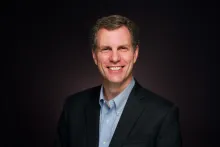
Tim Pebworth is the pastor of the Bordeaux and Narbonne France congregations, as well as Senior Pastor for congregations in Côte d'Ivoire, Togo and Benin. He is responsible for the media effort of the French-speaking work of the United Church of God around the world.
In addition, Tim serves as chairman of the Council of Elders.
