


Robin S Webber
Scripture exhorts us --"teach us to number our days". This isn't a math lesson, but a life lesson of what those days should consist of and how we fill them before God and man. So often we fill them with "stuff" rather than the essentils of a "spirit-led life" that matters--and God, alone, truly knows "our number of days". Let's create a spiritual bucket list which really matters before God and man as we journey around biblical locales and visit people that guide us towards "teaching us to number our days".
This transcript was generated by AI and may contain errors. It is provided to assist those who may not be able to listen to the message.
Well, this afternoon, for those that are here, we know that we're going to be having a memorial service for somebody that was, for many years, with us. With that thought in mind, I wanted to bring a message prior to that, one that is of reflection and one that is of projection, as I'm going to be inviting you to an adventure, a spiritual adventure in a few minutes, as we move further into the meat of this message. There's a true life story that later became a movie, some years ago now, I think a couple of decades ago, about two men that were sharing a hospital room together. Both gentlemen were terminally ill, and what they did then is they carried out a self-made wish list of things that they wanted to do before they proverbially kicked the bucket. And thus, the term, the bucket list. It's interesting, out of the two, you know, roommates, that one man was incredibly wealthy, and asked the other man who shared a hospital room to combine their personal list together and proceed it with that grand adventure.
Now, when looking at it, they proceeded, once they got to going, they proceeded across and around the world, whatever it took, to tackle all the different fantasies and all the different hopes and dreams that they'd always wanted to touch. And in some instances, strive to mend, stay with me, some personal relationships. That is, that is, while they drew breath. In so doing, they accomplished much, but not all. And in so doing, learned also just a lot about themselves along the way, and then, and then, the time ran out. Regarding the story that I've just shared with all of you, what can we, as members of the body of Christ, glean from this story? That was true at the beginning. It's very human to allow and elevate, at times in our lives, a bunch of stuff. Stuff. It's almost like a four-letter word, stuff, but it's five letters. I can spell. Stuff that gets in the way of God's purpose for us, and having a purposeful life, having a life that does not limit itself, but that expands and grows, and literally is on what I would call a spiritual adventure. I think that is what conversion is, that when we surrender ourselves to Jesus Christ of baptism, you know the two phrases that I use the most in my life. This is the way. Walk you in it, and follow me. And when Jesus says to follow me, it's an adventure. It's an adventure. It's not a solo flight. It's not a solo flight. We're not Lindbergh going across the Atlantic. But we have somebody with it. And this stuff gets in our way. I just want to ask you, because this is going to kind of get personal, what stuff are you dealing with right now that just kind of comes like that closet in your house that you just keep on stuffing, you know? Stuffing, and I'll deal with it later, and stuffing, and stuffing. And I thought the stuffing was supposed to be just on Thanksgiving Day coming up. But we put all of this stuff, and then it begins to overwhelm us. And then it begins to blockade the purpose that God has called us to. And we get caught up so much in this rat race of life, and taking on so much that what we do is that we mistake the—we put in front of the things that God wants us to do by those urgent things that come all at once. We put the urgent ahead of the needful, saying, one day, some day, I'll get to it. What does that do with us, and how does that squelch our adventure in Christ-like development?
Not all in this room are going to be able to do what that wealthy man did with his compadre there in the hospital room and go all around the world. But there's something I want to share with you. What we can do is we can make a spiritual bucket list—a spiritual bucket list—of things that we kind of know that are in here, but we never get to. And we never really understand that what it is is this is a directional by God placed in the Scripture to allow us to come into relationship with the Almighty and to be able to grow in grace and knowledge in our Lord and Savior Jesus Christ. And it doesn't take a lot, money-wise, expense-wise, but it will take one thing, and that will be your heart.
And what value you put on the new heart, the new mind, that God has placed in you as a member of the body of Christ. And not to get sidetracked by the things that seem so important, but we push them aside, always thinking there's always going to be like scarlet, gone with the wind.
You know, well, there's always tomorrow, and then the organ music begins at the end and the clouds part back, and for any of you—you have to watch when you mention these things, because some people don't even remember Gone with the Wind because they were born 40 years later.
They don't know what it is. But, well, there's always tomorrow. The question is, and the reality is, all we have is the moment today. The moment today to tackle these things. So what I would like to do then is to create with you, show you how it's done, create a spiritual bucket list. We're going to do this together. Now, what I want to share with you is don't write down everything. Just watch how I have created my own bucket list, because you would probably want to add some other things that I'm not going to add, and I'm not going to have fully the time to explore everything that's on my pages.
So I do want to share. I have about 20 places to go, but I only have so many minutes to go because we have the memorial service afterwards. So I want to show you how this works and what would happen.
So I'm going to share this, and we're going to pack it together. You know, you pack it, you know, kind of get ready, you know, get your suitcase out, and I'm going to need this. I'm going to need this because I'm going to go here, here, and there. So let's talk about that and what we might do. I'm going to give you a few. And what you're going to see is, and you might want to jot this down, this bucket list is now about being on a vacation.
It's about being on a vocation. Totally. It almost sounds like only one letter difference between vacation and vocation. We're on a vocation. We are pilgrims talking about Thanksgiving coming up. We are spiritual pilgrims. So I'm going to do a couple of geographic spots here, and we're going to not only travel to the spot, we're also going to talk with the individuals, or we're going to see who the individuals were and what was going on.
The first place that I would like to go on my bucket list is I would like to go to the rainless arid plains of the Middle East. And you say why? Because I'm going to find there in my scriptures that arid, dry place in the Middle East and perhaps flat. I'm going to find an older man, and his name is Noah. So the first geographic spot I want to hit is the desert. God does a lot in deserts. He really does when you just go through the Bible to develop and to help us grow spiritually with him. And we're going to go there, and when we're there, what is the lesson that we're going to learn?
What's the relationship that we're going to learn? We're there, and what is happening? We're going to learn that we're never too old to learn. Simple point. A relationship. When we are in God's hands, we are never too old to learn. When God comes to Noah and asks him to do what? What's his assignment? Can somebody help me here in this group? What's he supposed to do? I can't hear you. He's going to build a boat. Have you or I sometimes said, well, we're too old to do something.
How old are you? I'm not going to ask the ladies. That's not polite as a gentleman. But we always say, I'm just getting old. My life is, the best part of my life is over. The most important part of my life is over. I'm 74 years of age. No, my life is not over. I wake up every day praying and asking that God will bring the best to come, yet recognizing my age.
But what is the lesson of Noah? It says, but comma, I let you know how I love small words in the Bible. They just, you know, scream at me, but comma for Noah. He found grace. And that grace included as God went to him said, Noah, I want you to build a boat. Some of us are not even 100 years of age here, or 90.
Some people are gone. They know anyway, so that to build a boat. And it's very interesting that he had to build that boat in that sense. When you think about the Ark, there was no sail.
There was no rudder, and there was no anchor assigned for him to put on that boat. I want to go through that second. There was no sail. There was no rudder. There was no anchor. What does it tell you that God looked down and took this older man to give him something new to do on behalf of God? That man was a man of faith. Faith is something that continually grows day by day, month by month, and year by year as God alots us breath. You ready for another spot to visit? Right here? Another spot is, I'd like to go to a certain road. I'd like to go to a pathway and just sit there and watch somebody coming out of the city.
I'm not talking about being on the Appian Way in Italy. I'm not talking about the Champs-Elysees in Paris. I'm not talking about being on the Silk Route that would go from what is now Turkey to China. None of those roads. But I would like to just deposit myself on the major road outside of Ur of the Chaldees. Ur. You are. That's it. And hone the spiritual heart set that my first instinct granted by the Holy Spirit is knowing that wherever God tells me to go, it's for my good.
And he will be my guide. First instinct. Now, God allows us, as you know, by his mercy and by his grace, he at times allows us. He's merciful and kind of waits for it to kick in. But when you read the story of the father of the faithful, Abram, leaving Ur, as I've often said, you've got a picture like what I've just come out of. And Susan came with me. She's such a good passenger in these days. And what I'm going to say is that coming down the freeway is to recognize here in the megalopolis that we live in between Tijuana and Ventura with 22 million people and half of them are out on the road, you've got to recognize that in that time, river civilizations were being built up.
Whether it would be the Indus River or whether it be the Mesopotamia Plain or whether it be the Nile, people were coming into the city. So you think of the traffic jam coming into the city. Traffic. Bumper to bumper with camels. Okay. Whatever that traffic might have been. On the other road, the road going out of town because everybody wanted to be wall to wall together. And you only see, think picture this for a second. We can use the 15 right here. You see everybody going into San Diego going south. Are you with me? This is the PowerPoint. They're going south on the 15 right out here. And there's only one vehicle going north.
And you notice on the license plate, it says, a brahm. That's it. And he told, God told a brahm, go. You're going to be on a lifetime pilgrimage.
And it's the famous phrase in Genesis 12 where it says, and he went and he departed. One of the great lines in all of the scriptures. Because everybody else was coming into town.
And this man along with some of his family members, they're the only ones going north when everybody's coming south. In general, a brahm's first instinct was always to follow God, to move himself away from the complexities of civilization. And he would be the man that would be the man of the tent and of the altar. An altar that was only sacrificed to the living God. There's no record recorded here in scripture that a brahm ever sacrificed on an altar to a pagan God. Or used an altar that was to a pagan God for the sacrifice to the one true, living God.
Isn't this exciting? We're on this adventure. We're making progress. This is what we need to be thinking about today. And that takes faith.
Let's take number three. We've been in the desert. We've been by the ocean in Ur, but now we're going to do some hilltop adventure.
I'd like to visit the top of the hills of Moriah. The top of the hills of Moriah with Abraham and with Isaac.
Knowing that if and when I don't learn from that lesson with him, just kind of picture it. Be in your mind that you're kind of coming up. You're right there with Abraham and Isaac.
And you're able to actually hear the words on your tour, on your bucket list. You're hearing the words where Isaac, you know, pretty smart boy. You know, dummy. They're almost at the top of the mountain. What does he ask? What's the big question that Isaac asks?
He says, hello, dad. I don't know how you say that in Aramaic, but dad, where's the sacrifice?
One plus zero equals meek. And yet, Abraham said three of the most beautiful words God will provide. God will provide. And he did. And then to recognize that when he came down off the mountain, what did he name the mountain? You know, we have, you know, here we have Mount Palomar. We have Mount Baldy up in L.A. We've got Mount St. Gorgonio, you know, and we know them by name. Basically, a lot of them have Spanish names, Mount San Jacinto, etc. Is this any way to name a mountain? What was the name of the mount that, what did they rename it? God will provide. It was to be a forever lesson. And I'd like you to join me if you would for a second. Let's turn to Scripture in Hebrews 11-17. Hebrews 11-17. Let's take note here. By faith, Abraham, when he was tested, offered up Isaac, and he who had received the promises offered up his only begotten son, of whom it was said in Isaac, your seed shall be called. And concluding that God was able to raise him up, even from the dead, from which he also received him in a figurative sense. Wow! God had promised that through this seed, through the Son of promise, that the world would ultimately be blessed by that greater. That second Isaac that would come. So he didn't quite know how it was going to work out, but he stood fast and almost did what later on God the Father and Jesus Christ would have to do in that same set of hills called Mariah.
Now, lest we forget, Abraham, do I dare say, I'm not totally his judge, he got an A on this one, I would say. But also then, there were times later when, or before, that he had not, with Hagar, with Sarah his wife, and did not believe that the promise would come through he and Sarah, and so he took a handmaid.
That was earlier. But by this time, you could see how he had grown on the adventure, grown in the trust and the confidence and the surrender, and that that first instinct that took him out of err continued to develop. Sometimes it would falter, but God is merciful. He said, get back on the track, and maybe some of us right now are off track. Off track.
And we remember the initiation of that relationship with the God of baptism, but somehow we've done a sidetrack.
But by this example, you see that God is patient on the spiritual bucket list, and he's not going to abandon us. We just need to walk right behind him.
Let's take another one here, and that is, I'd like to visit Job in the land of us. How many of you have ever been to us? I didn't say us. That's Dorothy.
But the land of us, I'd like to go visit the land of us and recognize that I'm not going to understand everything here and now. Here and now. That's why I took 42 chapters, not one to two or three. Sometimes we have this itch in us that we feel that we need to personally scratch without God's permission to figure out everything in the moment, in the time, and set dates and give God, God, I've got it all figured out here. This is the jigsaw puzzle that I've made, and of course I see myself in the jigsaw puzzle. That's good. But he might have different plans. He might have different color to put into that jigsaw puzzle. He might want to frame it in the larger sense. And Job had to recognize, and Job was not a bad guy, was he? He was a peach of a follower of the one true God. And yet God worked with him, stayed with him. What is the lesson here? For many of us, some of us have been in this journey for 20, 30, 40, 50, 60 years. Mwah! Susie! Some of you. There's always something more to learn. And at times, just when you think you have arrived, God says that there's going to be more for you to understand. More for you to think like myself and my son. Even in that, I will not be alone. Let's take a look at Job 42 for a second. Job 42. You know, I'm just not going to find Job in the New Testament. I was over there. Job 42, the very end of Job. We're almost there. Pardon me. Job 42. Let's take a look here. Job 42 and verse three. Here we go. You asked, Who is this who hides counsel without knowledge? This is Job's talking back to God. You ask, Who is this who hides the counsel without knowledge? Therefore I have uttered what I did not understand. Things too wonderful for me, which I did not know. Listen, please, and let me speak. You said I will question you and you shall answer me. Therefore, then I have heard of you by the hearing of the ear, but now my eye sees you. Now my eye sees you, and therefore I abhor myself in repentant dust and ashes. Just when we think that we understand God, understand God's Word, feel that we are fully on His spiritual ball team. He takes us to a new level. And that level does not always come gently, does it, like Job? It does not always come gently. Sometimes it is with pressure of life. It's with pressure of illness. It might be pressure of losing a loved one, as we'll be talking about later this afternoon in the memorial service.
Think about it. Think about it.
God's promises are true.
And one thing, I think, I don't know if I mentioned it here or somewhere else, the one thing that ties the book of Job together, from Job 41 to Job 42, there's a beautiful verse right in the middle of Job.
I think it's Job 19.
The one thing that held him, whatever the onslaught that was going on back as Satan tried to bully him, frankly torture him, but he would not recant.
And the one thing, it's an echo. It just resounds out of Job. If there's any one verse that, you know, just fills you and lifts you up.
It says, I know, I know that my Redeemer liveth.
It's interesting that we talked about those two men that are terminally ill in that hospital room until they took their last breath.
Don't want to be morose about this, but honest about this. Do you realize to one degree or another, we are all terminal? We are terminal.
Death and taxes does not happen to everybody else.
There's a rendezvous that only God knows. God tells us in Scripture that we are to consider our ways, consider our days, teach us to number our days.
The teaching, the most important teaching, is to not have what is seemingly urgent crowd out that which is needful in our lives day by day.
The teaching is to absorb the lesson that we are never alone, that we have a father, that we have an elder brother, and that even when suffering, and I'm not a masochist, I don't like to suffer. I don't think you like to... anybody here want to raise their hand and just tell you how much you're enjoying suffering today?
But at times it is allowed to produce fruit.
While we are in... thanks for bringing it up... while we are in the land of us, there's one other site that I'd like to visit, and that is where Job's friends hang out for a drink.
I don't know if they did. I'm just using that as a colloquialism. Why? Why would that be?
I'd like to visit the locals so I could visit with Job's friends and understand that some people think that they have an answer for everything and they don't know what they're talking about.
They come to conclusions on their own that is not what God is doing.
And if there's one thing that we can use today, even with Memorial service coming up, and every day of our life is simply this.
What you learn by visiting us and hanging with the locals and meeting Job's friends, if you can call them that, is to learn simply a big lesson in life.
To hug more and to talk less.
To hug more, to talk less, and not get ahead of what God is doing.
This is a lesson that I continue to learn as a pastor, as an elder, when I'm counseling people. Robin, stop the talking. Listen. God's given us two ears and only one tongue for a purpose to kind of tell us which ones to use.
Because sometimes I may want to override where that person is coming from, but I'm not with them. And oftentimes a hug will speak so much more than all of this.
Susanna, years ago, what was that movie that we watched, Susie with Hugh Grant?
Sense and Sensibility? Yeah. If you've ever seen Sense and Sensibility, Hugh Grant, who plays this gentleman, every time people, everybody, every time that, you know, this is like what?
Early 1800s, very British, very gentry. And every time they come in, they would bow. The man would bow to the woman, and then the woman would bow to the man.
And this was years ago when Susanne saw this, probably about 25 years ago when girls were younger.
And we took away from that, we took a major lesson in life that it is better to bow more and to talk less, and to show respect.
And that's a little bit like the message I gave on Philemon a couple of weeks ago. Start with an entry. Start with respect.
Bow. Listen more. Listen more. Talk less. But you've got to be on this bucket list with me. And you're going to find out how you're going to make up your own bucket list as we're visiting all these things. Let's take another one.
I'd like to visit Bethlehem. You know, it's a little town outside of Jerusalem, five or six miles, whatever it is. I'd like to go to Bethlehem, kind of get out of town, and go over by a ridge because there's an old man talking to another old man who has a bunch of these young dudes, these young studs, these young guys.
And Jesse has them all lined up from good to bad, and handsome to ugly. And what happens is, you know, Samuel is about to anoint the next king of Israel. Right? Do we know the story? But we're there now. Doing a little geography. This is the bucket list. And I would like to just stand there and watch Samuel go to work.
He looks at the first one, and the guy's a rock star, so he thinks, that must be it. And then finally there's somebody missing. And you know who's missing, right? He's not there yet. Then he finally shows up.
So what is a very simple, in our bucket list location here, what is something that we learn about our vocation? Patience. Patience.
And don't judge a book by its cover. And patience.
I wonder if Samuel had had fast hands and went right over and set apart the other son, and didn't wait until David came up. Patience. It's a fruit of God's spirit.
And I'm talking to myself. People that have a type A personality are not always the most, do I dare say, patient people.
I have a very patient wife, and I learn. And we all need to learn what Samuel exhibited there, is to develop the patience, and not make our selections, but be sure we're making God's selections in our life.
Let's take another one here. I'd like to drop in. We've done deserts, we've done hills, we've done little local towns like over and us.
Let's do a valley. We're going to go into a valley now. And that's the valley of Elah. And we're going to drop in on King Saul and David and the whole gang there. And learn a big lesson here. Simply put, as we watch David go into action, and we remember later on he would ascribe this in the 23rd Psalm.
He's down there. And King David, a man that's going to be leading the Israel of old, does not copy the mistake that the spies made going into where? Into the Promised Land. They said, we're like grasshoppers. We're not going to be able to do this. And yet he recognized because God was with him and he was looking to God. Yes, he had to do his part. He had to pick up the five stones. He was going to keep on twirling until he was going to bring that giant down, or he's going to strangle him with his sling string. Whatever it was going to take. But he gave the battle to the Lord. He gave the battle to the Lord. He said, you know, Bud, do you know who you are? Can we talk? But he had to look up because the guy was nine feet tall. Can we talk? Little guy down here. He says, you have come up against the armies of the living God. And you have not respected that. Guess what? You're coming down. And by the way, not tomorrow, now. And he runs towards the—he doesn't walk. He doesn't skip. He runs.
We need to take a lesson here and to recognize this, that in our battles, that the battle is the Lord's. We give it to him in faith and in confidence.
I'm going to go real quickly here. I would like to visit—I'd like to visit that location in the Mesopotamian River Plain where Babylon was.
And I'd like to visit Daniel. I'd like to visit Babylon of old. And Daniel, so that you and I, as citizens of the heavenly Jerusalem, can live down here in Babylon now.
See, the lesson is there in Daniel. Daniel taught us how to live in Babylon. And I wish we could see a reconstruct, because it's been, after all, 2,600 years. I'd love to see a reconstruct of a part of the palace where there's a balcony, where he would pray.
I'd love to see that courtyard, too, the courtyard with Hananiah, Mishael, and Azariah, otherwise known as Meshach, Shadrach, and Abednego. See, those were pagan names that were put on them. And to see them, everybody's like Marines going into a battle. They've all hit the dirt. They've all hit the pavement.
And there's only three people standing in that courtyard. They never kneeled. They took a stand. Number one, it's one thing to take a stand. Number two, they kept on standing. That's just as important.
And kept on standing. And number three, they weren't going to castigate the other people at that time, but they knew as the chosen people of God what God had called them to do and to be.
We're on the move. We're adding to our bucket list. I'm going to give you one more here. Let me pick one out here right now. I'm going to see which one I want to give. Give me a second.
Yeah, I'm going to give this one. We're going to go east a little bit. We're going to visit what is modern-day Iran, which is then the center of the Persian Median Empire.
And we're going to bump into Nehemiah. And the one thing that is so impressive about Nehemiah, the whole book of Nehemiah, it's a bunch of Old Testament stuff and this and that and I want to tell you something. If you want to read Nehemiah, Nehemiah is how to pray.
The book of Nehemiah teaches you how to pray. And there are so many prayers in the book of Nehemiah, it's no wonder that God used him later on to help develop Jerusalem. Join me if you would. We're going to finish on this one in Nehemiah 2. Join me there, please.
In Nehemiah 2, let me notice verse 1. It's simple, but it's incredible. Are you with me? It's simple, but it's incredible.
And it came to pass in the month of Nisan in the twentieth year of King Artaxerxes, when wine was before them, that I took the wine and gave it to the king. And now I had never been sad in his presence before. He was the cup bearer. You know, he took the poison just in case, you know, for the king.
And so he had really trust. He had a, the king trusted him with his life in one sense. Therefore, the king said to me, why is your face sad since you are more sick? This is nothing but sorrow of heart. So I became dreadfully afraid. Oh, I hope I haven't upset the king.
And then therefore, then, and so I became dreadfully afraid. And said to the king, may the king live forever. That's always a good thing to say if somebody's getting upset with you. May you, the boss, live forever. May you, the teen. No, anyway.
He went right in the mode and said to the king, may the king live forever. Why should my face not be sad when the city, the place of my father's tombs, lies waste and its gates are burned with fire.
And then the king said to me, what do you request? Verse four, please jot down this. If you don't jot anything else down today, Nehemiah 2 and verse four. Notice what it says here.
So I prayed to the God of heaven. And I said to the king, if it pleases the king, and if your servant has found favor in your sight, I ask that you send me to Judah to the city of my father's tombs, and I may rebuild it.
Going to conclude here. Is that not incredible? Is that what we do in our lives when we're about to go into a situation where all of a sudden the situation has turned around and we're on the hot seat?
Here he is before a type of the beast, the kingdom of Persia, a man that controls all territory from India to Thrace up in northeastern Greece.
And he bears down on Nehemiah for a moment. Nehemiah does this. King lives forever, gives him a little bit of time. King gets a little bit happier.
And during that time he prays. What I take away from this on my spiritual bucket list is if I can walk and chew gum at the same time, one plus one equals two, maybe I can for a moment stand still and pray. It doesn't have to be as long as Psalm 119.
But I can pray to the God of heaven. It's the same God of heaven that looked after Job, looked after Abraham, looked after David, looked after Samuel. Look after Nehemiah. And the God in heaven above that looks over each and every one of us and invites us to continue in the journey and always remind us that we read to know that we are not alone. I'm going to be sending out my notes to all of you because I have about 12 to 15 more places I'd like to have you visit with me. I'll be getting that out to you all tomorrow.
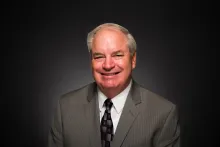
Robin Webber was born in Chicago, Illinois, in 1951, but has lived most of his life in California. He has been a part of the Church of God community since 1963. He attended Ambassador College in Pasadena from 1969-1973. He majored in theology and history.
Mr. Webber's interest remains in the study of history, socio-economics and literature. Over the years, he has offered his services to museums as a docent to share his enthusiasm and passions regarding these areas of expertise.
When time permits, he loves to go mountain biking on nearby ranch land and meet his wife as she hikes toward him.
