

Jay Ledbetter
This transcript was generated by AI and may contain errors. It is provided to assist those who may not be able to listen to the message.
There are some incredible things going on in the Middle East that are directing us towards the fulfillment of the time of biblical prophecy. And I thought I would talk about that today because I take prophecy very seriously, but those of you who know me know that I try not to go overboard. I don't try to interpret every small event as something significant. But when significant events occur, we need to understand what's going on. And we need to watch and be prepared. And those kinds of events are absolutely going on in the Middle East at this time. Obviously, the Middle East has been in the world news. Recently, some events have occurred that are shaking up the entire Arab world. It was all sparked by something called the Jasmine Revolution in Tunisia, where there were two weeks of spontaneous demonstrations last month that resulted in the resignation of its president. And since that period of time, almost the entire Arab world has been unstable and has been in turmoil. Here are some of the things that's occurred. The Tunisian leader Zini Alban bin was forced to flee last month after a national uprising. Then, an event happened in Yemen. It caused the country's veteran president Ali Abdullah-Sela to announce he would not be seeking another term. Clearly, he was unnerved because he even abandoned hopes of creating a ruling family dynasty. He promised not to hand power to his son Ahmed, which is quite unusual in that part of the world, where there are a lot of family dynasties, like in Syria and Jordan, and the Saudi family in Saudi Arabia. That's actually quite common for families to rule nations. King Abdullah of Jordan dismissed his very unpopular government last week, and he made a lot of comments about promising reform of government in Jordan, trying to hold off demonstrations from occurring in his nation. He can certainly sense where the winds are blowing. After 11 days of protests in Egypt, these demonstrations had forced a 30-year dictator, Hosni Mubarak, not to run for office in September, nor again to allow his son to run for president, because it was his original intent to have his son replace him. When he stepped down, I believe he's 82 years old, so President Mubarak is getting up there in years. One day this past week, throughout Egypt, one million demonstrators were in the streets on one particular day throughout the cities of Egypt. So that's a tremendous protest. Now, in Saudi Arabia, which is ruled by a royal family, they have been shaken up over this, because they find themselves completely out of step with the calls that are going on in other Arab nations regarding democracy. Now, the House of Saud is probably too rich and powerful to be swept away anytime soon, but they certainly are terrified over what's happening. Oil prices have climbed on fears that unrest could spread throughout the world. It could affect Saudi Arabia if their oil fields are attacked. Of course, many of the oil supplies come from the Red Sea, go through the Suez Canal to get to Europe, so Europe is quite alarmed over the events that are going on in Egypt. And unrest is spreading like wildfire throughout the region, including Libya, Algeria, Morocco, and Syria have had at least small demonstrations, and their governments are threatened. Well, these events are momentous, and the dictators are falling in this part of the world where they've always been accepted before. People are clamoring for more democratic types of governments. Now, at first thought, one might say, well, that's good. Isn't democracy good? Isn't democracy a wonderful form of governance? Well, it is, except when you consider the fact that democracy means that the majority that gains power gets the rule. In these nations, the majority of the people, not only Muslim, but the majority of the people, have leanings towards radical Islamic groups. Which means, if these dictators fall, and more democratic principles are instituted in these nations, most likely the governments that will take over will be anti-Western, anti-the United States, and anti-Israel.
And that is not a good thing for the Western world, but it is an interesting thing when you consider its effect on Bible prophecy, and what the Bible says will occur.
So, let's go to the scriptures today. Obviously, prophecy is a huge subject. It would take many, many sermons to go into tremendous detail. But I thought there are some things that would be good for us to highlight today regarding what's going on, what we can expect to see in the future, and what's going to happen in Egypt. And we'll begin by going to Daniel, Chapter 10, beginning in Verse 1, if you'll turn there with me, please.
Daniel was a unique prophet because God revealed to him, after an extended time of denying himself, of being in an attitude, of humility, God revealed to him things that would occur at the end time in probably more detail than any other prophet. Because it is remarkable the things that Daniel saw in his message and in his vision, down to the very detail of who individuals would be and what their activities and actions would be during their lifetime. And that's what makes Daniel so fascinating. Beginning in Chapter 10, it says, in the third year of Cyrus, King of Persia, a message was revealed to Daniel, whose name was called a Belchazar. The message was true, but the appointed time was long, and he understood the message and had understanding of the vision. So after a period of time, he understood what the angel told him. He, in a vision, could see end time events. He says, verse 2, In those days I, Daniel, was mourning three full weeks. He actually was with a group of other Jews who were experiencing this with them, and they decided to mourn, to humble themselves, and to put themselves in a frame of mind that God would be able to open their hearts and minds and reveal things to them.
He says, in verse 3, I ate no pleasant food, nor meat, or wine came into my mouth, nor did I anoint myself at all, till three whole weeks were fulfilled. Now, on the 24th day of the first month, I was by the side of the great river, that is the Tigris. I lifted my eyes and looked, and behold, a certain man clothed in linen, whose waist was girded with the gold of Uphaz. This obviously was an angel. It says, his body was like virile, his face like the appearance of lightning, his eyes like torches of fire, his arms and feet like burnished bronze in color, and the sound of his words like the voice of a multitude. So, after this period of time, he sees this brilliant, very powerful angel stand before him. Verse 7, Daniel alone saw the vision, for the men who were with me did not see the vision, but a great terror fell upon them, and they fled to hide themselves. Which is probably something I would do if I experienced this. We're going to see it also physically and emotionally affected Daniel. He says in verse 8, He too was terrified as you and I would be, through the experience of seeing this incredible spiritual being and being touched by this being. And he said to me, Oh, Daniel, man greatly beloved, understanding the words that I speak to you, and stand upright, for I have now been sent to you. While he was speaking this word to me, I stood trembling, and he said to me, Do not fear, Daniel, for from the first day that you set your heart to understand, and to humble yourself before your God, your words were heard. And I have come because of your words. Verse 13, But the prince of the kingdom of Persia withstood me twenty-one days, and behold, Michael, one of the chief priests, came to help me. And this gives us an indication of the war, the constant war that goes on in the spiritual world that you and I aren't even aware of. This angel is saying that a dark spiritual force that he refers to as the prince of the kingdom of Persia literally stopped him from getting to Daniel after he had been sent by Jesus Christ, by God, to reveal things to Daniel. He actually was prohibited, he was stopped, from being able to go to Daniel until the Archangel Michael came and made it possible for this angel to complete his task.
He says, Now I have come to make you understand what will happen to your people in the latter days, for the vision refers to many days yet to come. So we see the beginning of opening up the book of Daniel.
This prophecy was revealed to Daniel about 536 B.C. in the third year of the reign of Cyrus. And as I mentioned here, with spiritual warfare going on, and there is always spiritual warfare going on, we don't see it. But there is governmental influence that is occurring throughout this world right now in the spirit world that affects the United States, Western Europe, the Muslim community. And the nations of this world are pushed, prodded, sometimes guided by spiritual forces to make decisions and do things that they don't totally understand. And this is a reminder, and what we read here, that this goes on even if we don't see it or perceive it.
Now, Daniel 11, verse 2, this is now I will tell you the truth. Behold, he's talking about the kings of Persia, three more kings will arise in Persia, and the fourth shall be richer than them all. By his strength through his riches, he shall stir up all against the realm of Greece. And when you look at history, that's exactly what happened. This fourth king was Exerxes, who invaded Greece and burned Athens to the ground. He did. He ruined the city-states of Greece.
He was finally defeated in a great sea battle and returned back home. But he wreaked havoc on the Greek city-states. This Persian king, Exerxes, reigned from 486 to 464 BC. We know him in the book of Esther, is Asheris, and he was the son of Darius the Great and the grandson of Cyrus the Great. But sure enough, as this prophecy said about this fourth king that would arise, he did certainly stir up all the realm against Greece. And he actually defeated Greece and burned Athens to the ground.
Now down to verse 3, speaking of another individual. Then a mighty king shall arise, and he shall rule with dominion, and do according to his will. And when he is risen, his kingdom shall be broken up and divided towards the four winds of heaven, but not among his posterity, nor according to his dominion, with which he ruled, for his kingdom shall be uprooted even to others besides these.
Now this is referring to a historical figure known as Alexander the Great, and sure enough, when he died, his kingdom was divided into four of his generals, not to his children, not to his own lineage, but four of his generals. The world was divided up between them. He was a rather masterful, powerful Greek ruler who conquered most of what was called the civilized world at that time.
He did defeat the Persian Empire that had been previously spoken about here in verses 2 in 330 B.C. He was a remarkable character in that at age 32 he died. He conquered the whole known world by age 32, and before he died it said he wept because there were no more worlds to conquer. Just a remarkable military genius of his time. But he died unexpectedly, and his massive kingdom was divided into four smaller kingdoms.
Two of them became insignificant and unknown in history. They were a Pergamon and Macedon, and they're not important. But there are two that are very important because one became known as the King of the North and its descendants, and the other became known as the King of the South, which certainly ties in with what we read about in Daniel.
One was a prophetic role of the northern ruler, meaning North of Judea, and it occurred that its headquarters at the death of Alexander the Great became the nation of Syria. And it was the general Seleucids, who also became known as the Seleucid Kingdom that lasted for a long period of time, the Seleucids, which again ruled that area of the world around Syria. The fourth kingdom, which was south of Judea, became known as the King of the South, was an individual Ptolemy, who was a general who became known as the Ptolemaic Kingdom, and it was centered in Egypt.
So you had the King of the North in Syria, and you had King of the South in none other place than located in ancient Egypt. So much of Daniel focuses on this North-South divide that would occur in the world. And poor Judea was caught in the middle, and throughout history passed back and forth from being controlled by the King of the North, the King of the South, the King of the North, the King of the South. So Judea during this time in prophecy was more of a pawn than anything else. We're going to take a look now at a very significant King of the North, known in history, if you'll go to verse 28 in Daniel chapter 11.
Someone who was a type, and the reason I want to highlight him for a minute is that Antipathnes was a forerunner, a type of someone else who will arise yet in the future, that was spoken of by both Jesus Christ himself and the Apostle Paul. He was a Syrian King of the North, and we'll read about him here in Daniel chapter 11 and verse 28, speaking about him.
It says, while returning to his land with great riches, his heart shall be moved against the Holy Covenant, and he shall do damage and return to his own land. And indeed, he did go to Jerusalem, he did conquer Judea, and we'll continue here in verse 29, And the appointed time he shall return and go toward the south, but it shall not be like the former or the latter, for ships from Cyprus will come against him. Therefore he shall be grieved. Let me tell you what happened in history. He decided to go south and conquer Egypt.
And on his way to Egypt, he runs into a lone Roman senator, who said to him that if you go any further, Rome declares war against you, and we will absolutely wipe you out.
And he said to the one Roman senator, by the way the Roman fleet was off, you can see the Roman fleet off in the Mediterranean Sea, he said to the Roman senator, I want to talk to my counselors and get their opinion. And what did the Roman senator do? He drew a circle in the sand around Antiochus, and said, if you cross the line in the sand, that's where we get that saying from, if you cross the line in the sand, Rome will destroy you. Rome will conquer you. And he said, okay, I give up, I'll go back home to Syria.
But what happens? When he's going back home, he receives news that puts him in a rage. You see, when he had conquered Jerusalem, he removed the high priest and appointed his own man to be high priest. While he was gone on his way to attempt to conquer Egypt, the high priest that had deposed gathered a small army together and had rebelled against the other high priest and was causing riots and disturbances in Jerusalem. When Antiochus heard this, he was in an absolute rage. And here's where we pick it up here in verse 30. For ships from Cyprus shall come against him, that was the Roman fleet, therefore he shall be grieved and return in rage against the Holy Covenant. And due damage he shall return and shall regard for those who forsake the Holy Covenant. And forces shall be mustered by him, and they shall defile the sanctuary fortress, and they shall take away the daily sacrifices and place there the abomination of desolation. So again, this is talking about the Syrian king Antiochus Epiphani. By the way, his name is God Manifest. Show you how humble he was. He came to power about 175 BC. So again, he controlled Jerusalem. He replaced the high priest with one of his own choice. He went to conquer Egypt and he was stopped and humiliated by the Romans. And on his way back he learned that the deposed high priest had raised an army and rebelled against him. So by the time he got to Jerusalem, he was not in a very good mood. And they were going to have a bad day and a bad life. Because he decided that the practice, the Jewish faith, would now be punishable by death.
Some of the things that he did was if you were an observant Jew, you were to be killed on the spot by law. If you were a woman and you gave birth to your son and had him circumcised, he forced the woman topless to walk through the streets of Jerusalem with her infant, then took them to tall buildings and pushed them off the roof. I mean, he was just in an absolute rage and committed to destroy anything left of Judaism among the people. He placed the statue of the pagan god Zeus in the temple and then he took swine's blood and offered it on the altar just so he could desecrate the temple of God and obviously discouraged the Jewish people. He was a type, and the reason I'm bringing him out and talking about it, he was a type of a later European dictator who was yet to arise in the final days. Who knows how many years from now? But he is an important person in history because of what he did to the temple and his attempt to destroy the Jewish people. Time went on and in 65 AD, the Roman Empire conquered and absorbed what was left of this Seleucid Empire. And Europe, Western Europe, the Romans, became at that time inherited the role of the king of the north. And since that time, the descendants of the Western Roman Empire in Europe are biblically referred to as the king of the north. I'd like to take a look at chapter 11, verse 36, and we'll see some comments made about Rome, the Roman Empire, and some of the claims of its emperors. Remember, its emperors claimed to be living gods, and they were very tolerant of other religious faiths as long as the followers gave superiority to the Roman emperor. Here's what it says in verse 36.
Then the king shall do according to his own will, he shall exalt and magnify himself above every god, and that's what the Roman emperors certainly did. Shall speak blasphemies against the god of gods, and shall prosper till the wrath has been accomplished, for what has been determined shall be done.
Verse 37, he shall regard neither the god of his fathers, nor the desire of women, nor regard any god, for he shall exalt himself above them all. And that was typical of many of the Roman emperors who looked upon themselves as the ultimate superior god above all other gods.
But in their place he shall honor a god of fortress, and a god of which his fathers did not know, and shall honor with gold and silver with precious stones and pleasant things. Thus he shall act against the strongest fortresses with a foreign god which he shall acknowledge, and advance its glory, and he shall cause them to rule over many, and divide the land for gain.
Of course, we know the Roman Empire existed, the original ancient Roman Empire, for well over a thousand years, and was feared throughout the world. I might also add that Rome was very amenable to foreign gods being included in their pantheon. The Roman soldiers were attracted to the religion that was not Roman, called Mithraism, and they became devout followers of the god Mithras. That was just kind of a cult thing that occurred within the Roman Empire among Roman soldiers.
So they were very accepting of other gods, as long as you continued to believe and proclaim that the emperor was superior to all other gods. As I mentioned, Rome allowed other conquered peoples to worship their own gods, as long as they gave superior allegiance to the emperor. That's why there was always conflict among Judah, the Judeans, and the Roman authorities, after the Jews had been conquered. We know, of course, that the Roman Empire, the ancient Roman Empire, collapsed, but it's had a lot of resurrections, according to biblical prophecy over time.
That included Justinian, and a man named Charlemagne, Otto the Great, Charles V, Napoleon, and most recently, in some of our lifetimes, Hitler and Mussolini was a resurrection of that empire. Europe was devastated as a result of World War II. Europe was on the verge of collapse. The United States instituted something called the Marshall Plan to help Europe to rebuild itself and combat communism, which was trying to get foothold throughout all of Europe.
At that time, an important event occurred in 1947, known as the Treaty of Rome. A number of European countries got together and decided to create something that eventually would be an empire similar to the United States. It would be the United States of Europe. It later was replaced by a stronger union, known as the European Union. We know from Scripture that a dictator will arise who will fulfill the small role that Antiochus Epiphanes fulfilled only in a much greater way.
We'll take a look at that in just a little bit when we get farther along in the sermon. That's the King of the North. The King of the North started in Syria, one of the generals of Alexander the Great. The Seleucid Empire was eventually taken over by Rome, and Rome, the culture of Rome, the history of Rome in Northern Europe, has received the mantle of the King of the North. Now, how about the King of the South? Well, after Alexander the Great, Egypt was the center of the King of the South, the Ptolemies, or the Ptolemaic Kingdom. And they were always warring against the Seleucids.
It was a constant battle between these empires. Many folks don't realize that Cleopatra, we all have seen the movie of Cleopatra and heard the history of Cleopatra, but she was one of the last of the Ptolemaic rulers of Egypt. She also happened to be the last Pharaoh that Egypt ever had. But she was very powerful. You may remember the story how she at first had an allegiance with Rome, and then she turned against a Roman emperor, and her relationship with Mark Anthony caused Rome to come in and conquer Egypt, and cause all kinds of problems for her.
But she was very political, and there again was another example of the King of the North and the King of the South crossing swords and causing problems with one another. Well, during the New Testament period, Egypt was under the direct role of the Roman emperors, because it was literally the breadbasket of Rome. Egypt was able to grow enough food, enough grain, in order to feed the city of Rome, so it was considered very, very important. But eventually, Egypt lost its influence. It became part of something called the Byzantine Empire until 642 AD, when it became converted to Islam. It became part of the Muslim world. And that influence from Egypt shifted to Baghdad, where the religious leader of Islam was located at that time. In time, also, Egypt became part of the Ottoman Empire.
But at the end of World War I, the Ottoman Empire, growing old and having existed for a long period of time, fell apart and collapsed, and Egypt became part of Britain, a British protectorate, until 1937. But then something began to happen when Egypt gained independence. In 1945, Egypt became part of something called the Arab League, and it jointly attacked a brand new state that existed in the world, known as the State of Israel.
And it had a war with the State of Israel, and it lost. But I think what many of us forget is that for a short period of time, there was a confederacy among major Islamic nations that, again, was a type or a forerunner of what we're going to see in the future.
From the years 1958 to 1961, the nations of Egypt, Syria, Yemen, and the United Arab States all became one country, and it became known as the United Arab Republic. And their goal was to destroy Israel. They had one president, and all of those nations were bonded together.
And if you look at maps that were printed at that time between 1958 to 1961, you'll see all those nations in the same color in the designation, the United Arab Republic. Well, it was a little bit too early for prophecy. It was a little bit before its time. But, brethren, I'm here to tell you that that was a forerunner, a small type, of what we're going to see in the immediate future.
Turn with me to Psalm 83, and we'll take a look at a prophecy about this Islamic Confederacy that is soon going to be formed. Again, Psalm 83, beginning in verse 1.
Psalm 83, it says, They have taken crafty counsel against your people, and consulted together against your sheltered ones. They have said, Come, let us cut them off from being a nation, that the name of Israel may be remembered no more. For they have consulted together with one consent. They form a Confederacy against you.
The tents of Edom in the Ishmaelites, Moab in the Hegrites, Gebel Amalek, Felicia with the inhabitants of Tyre, Assyria has also joined with them. They have helped the children of Lot, Selah, deal with them as with Midian, as with Sisera, as with Jabin at the Brook, Kishon, who perished at Endor, who became as refus on the earth.
Make their nobles like Orev and Zeb. Yes, all their princes like Zebah and Zalmuna, who said, Let us take for ourselves the pastures of God for a possession. Oh my God, make them like a whirling dust, like a chaff before the wind. So this prophecy is talking about this soon-coming Confederacy of these Islamic nations that will become the king of the south. And there are a lot of names that are mentioned here, but to give you an idea, when it mentions Edom, those are the Palestinian peoples. Moab is modern central Jordan today. Obviously Ammon is Jordan. The Amalek are the Edomite Palestinians. Felistia is what we know today as the Gaza Strip. And Tyre is southern Lebanon. The nation of Assyria, geographically, was ancient Iraq and Iran. So all of which today, I might add, are Islamic, very devout Islamic peoples. So this, again, this prophecy speaks of an Arab Confederacy that's going to come together at the end time in an attempt to destroy the Jews and the modern nation of Israel. It's no secret among anyone that these Arab nations, for generations, have hated the Jewish people and wanted to destroy the state of Israel. Except for Egypt, no one has, none of these peoples, have ever signed a peace treaty with Israel. And some of them may tacitly accept the fact that Israel even exists, but most of them, at least publicly, say that Israel is a nation that is not legitimate or real. So there has always been a lot of hatreds. But again, there's going to be a Confederacy of these nations, and what the Bible refers to as the King of the South will be a leader that guides this Confederacy. And that leader may very well come from Egypt, who historically had a very prominent role in the mid-eats. Let's go now to Daniel chapter 11, verse 40. It says, Why will they attack the European Union? Well, it could be that Europe will make overtures to create a peace treaty with Israel when Israel feels threatened, so they might respond to that. It also could be that they understand that Europe is about to seize their oil fields, which could very well happen because about 58% of the world's oil supply comes through the Middle East. And Europe cannot produce anywhere near the oil that it needs. And why is oil important? Well, it's important for heat, like on a day like this, and Europe has some very cold climates as part of the European landscape. And it's important for industry, not just automobiles, but factories and industry. Oil is the lifeblood of our modern economies. And if the Europeans feel threatened, they're not going to hesitate to attempt to take over the oil fields if they feel that their own security is threatened. Let's take a look now, chapter 11, verse 41.
He shall also enter the glorious land, speaking of this king of the north, and many countries shall be overthrown, but these shall escape from his hand, Edom, Moab, and the prominent people of Ammon. He shall stretch out his hand against the countries, and the land of Egypt shall not escape.
So Egypt will be pounded militarily by the king of the north. He will have power over the treasures of gold and silver, and over all the precious things of Egypt. When you think of the National Museum of Egypt, and all of the ancient pharaohs and mummies and the culture that exist in Cairo, that's what I think of when I see the precious things of Egypt. By the way, those were threatened by rioting this week. I read somewhere they were very close to the mask of Tututah Common or something, and they had to be stopped. But you know how people, when they get riotous and they get subversive, they destroy precious things. And that almost occurred in Egypt this week as people broke into the National Museum. It says, And also the Libyans and Ethiopians shall follow at his heel. So it says here in this prophecy that Europeans will invade the Holy Land, and they will conquer Egypt and Libya, Ethiopia. They will take over Jerusalem. And it also implies here certainly that Jordan will be spared from a European attack. Let's now pick it up in chapter 12 and verse 1.
It says, Now this is the time known as the Great Tribulation that we'll read about the words of Jesus in a minute. But we should realize that these will be horrendous times that exist in the future, and there is going to be much suffering in the world. However, I want you to know and believe and understand this. That God's promise is that He will protect His people, those whose names are written in the Book of Life. Now that doesn't mean that times aren't going to be hard. We are going to experience scarcity. We're going to have needs. It's going to be really tough times to live in the whole world. And that's why it's called the Great Tribulation. The whole world will suffer from these events. But I want to encourage you to know that Daniel says here in chapter 1 that your people shall be delivered. Everyone who is found written in the Book of Life. And that includes you. So we shouldn't be terrified with these coming events. We should be sober. We should understand how horrific they're going to be. We should understand that it's a time of tribulation. That we will be affected in various ways. Some of us may lose our jobs. Things are going to be scarce. But God promises to protect His people. And we need to believe and claim that promise. Now let's go to Matthew chapter 24 and verse 14 and see a parallel account spoken by Jesus here in Matthew chapter 24. 14 to what we just read in Daniel chapter 12. Beginning in verse 14 is our part. And this gospel of the kingdom will be preached in the world as a witness to all the nations. And then the end will come. Therefore, when you see the abomination of desolation spoken by Daniel the prophet, standing in the holy place, whoever reads, let him understand. Let me stop right there. This shows that prophecy was dual because it was fulfilled in a small way by Antiochus. As we mentioned earlier. But Jesus says that in the larger, prophetical sense, it hasn't been fulfilled yet. Antiochus was just a small version of something much bigger and much more powerful that we're going to see in the future. Verse 16. Then let those who are in Judea flee to the mountains. Let him who is on the housetop not go down to take anything out of his house. Let him who is in the field not go back to get his clothes. In other words, run for your life. Don't stall. If you're in Jerusalem at this time, don't stall. Don't hesitate. Don't waffle. Don't think about it. Go. And go as fast as you can. Verse 19. But woe to those who are pregnant and those who are nursing babies in those days and pray that your flight may not be in winter or on the Sabbath. Isn't it interesting that Jesus talking about the end time actually expected that people would still be keeping the Sabbath day? It's kind of interesting to think about when you consider the theology that many people have that the Sabbath was done away. Anyway, verse 21. For there will be a great tribulation, such as not been since the beginning of the world until this time, no, nor ever shall be, and unless those days were shortened. No flesh would be saved. But for the elect's sake, those days will be shortened. For your sake, you, the elect of Jesus Christ, those days would be shortened because God has promised to protect you. We read about that in Daniel chapter 12. So this is a parallel that Jesus speaks of. A parallel to the time that Daniel refers to as the time of trouble that never was in chapter 12 of Daniel.
And again, I want you to notice, anciently, that Antiochus was simply a type of the abomination of desolation that is yet to occur. This leader from the king of the north will war against the king of the south and cause great turmoil around Jerusalem, and the Arab world will take over Jerusalem. And here are some of the things, the qualities, the characteristics that I believe we can expect to see from this particular individual. I believe that this leader, part of the king of the north, will pretend to desire peace with the Jewish nation of Israel, but will be very deceitful and underhanded, like Hitler was, with the Soviet Union and most people that he negotiated with. This will be the beast power spoken of in the book of Revelation. It indicates here, and we'll see in 2 Thessalonians in a minute, that the physical temple will be rebuilt once again in Jerusalem. The Jews have wanted to rebuild the temple for generations. The only thing that has stopped them is a mosque. But there may come a time when they defy and once again rebuild the Jewish temple and dedicate a new altar and resume sacrifices once again, which is very important to observant Jews. It says that this leader will stop, will invade Jerusalem, will stop the sacrifices, will erect a pagan idol in this rebuilt temple, and he will claim to be God and see himself, his own throne, his own headquarters in the very temple of God. And we have to understand that this will also influence the Church of God, and many in the world and in the Church will be deceived. Let's go to now the 2nd Thessalonians, chapter 2 and verse 1, where Paul gives us a little more detail about this particular individual. He refers to him as the son of perdition. Again, that's 2nd Thessalonians, chapter 2 and verse 1.
Paul wrote to the congregation at Thessalylife, and now, brethren, concerning the coming of our Lord Jesus Christ and our gathering together to him, we ask you not to be soon shaken in mind or troubled, either by spirit or by word or by letter, as if from us, as though the day of Christ had come. Let no one deceive you by any means, for the day will not come unless the falling away comes first, and the man of sin is revealed, the son of perdition.
So, again, this is a, we might say, a charismatic religious leader who, continuing in verse 4, he opposes and exalts himself above. All that is called God and that is worshipped, so that he sits as God in the temple of God, showing himself that he is God. Now, at the time that Paul wrote this, the Jewish temple was still standing. Some people say, well, this is referring to someone who arises in the church. I think that's very doubtful, because if you look at the context of when Paul wrote this, the temple was still standing.
Verse 5, do you not remember when I was still with you and I told you these things? And now you know what is restraining, that he may be revealed in his own time. For the mystery of lawlessness is already at work, only he who now restrains will do so until he was taken out of the way, and then the lawless one will be revealed.
Once again, that's talking about a spiritual battle that we don't see with our physical eyes going on. But there is spiritual warfare, and there is an individual that's already been designated as the son of perdition. And the only reason that he is not doing his work is that spiritually, he is being held back until the time is right.
It says in verse 8, and then the lawless one will be revealed, whom the Lord will consume with the breath of his mouth and destroy with the brightness of his coming. Let's read now in verse 9. It says, and the coming of the lawless one is according to the working of Satan, all powers and signs and lying wonders, and with all unrighteous deception among those who perish, because they did not receive the love of the truth that they might be saved.
We think times are hard now, and if we think that it's easy for us to be deceived because of something that's on the Internet, I have to wonder, what are we going to do when an individual arises who literally can call fire down from heaven, who literally can make things materialize out of nothing, who literally can perform miracles to astound people, if we're confused today with things that are around us, what's it going to be like when this individual comes who has incredible abilities?
It says, all power and signs and lying wonders. It says in verse 11, and for this reason, God will send them a strong delusion that they should believe the lie that they all may be condemned to, did not believe the truth but had pleasure and unrighteousness. But we are bound to give thanks to God always for you, brethren, beloved by the Lord, because God, from the beginning, chose you for salvation through sanctification by the Spirit and belief in the truth.
So this is a very powerful, magnetic, convincing religious figure who rules with his part of the King of the North, only on the religious side of the King of the North rather than a political side, and makes his capital in Jerusalem after the King of the South is defeated. It says that Christ will destroy this religious figure in his second coming, but not before many in the world. And perhaps even some in the Church of God will have been deceived and have a delusion and believe that this man really is God, that this man, because of his power and his signs and the lying wonders, really is the return to Jesus Christ, and it's going to influence many.
So, brethren, we have to be in guard. We have to stay close to God through prayer and study and fellowshiping with his flock so that we don't become victims of delusions. You know, the political rest we see going on in Egypt today and many Islamic nations are leading to the fulfillment of what we've been reading about in the Book of Daniel.
The King of the North, the King of the South, the Confederacy of Islamic nations as part of the King of the South, and a world war that is going to involve the two of them. And it's not going to be pretty because both possess nuclear weapons. I believe that Egypt, I think, has today, if I recall correctly, has the largest standing army of any Arab nation.
This that I've been talking about cannot be sanitized. It's going to be horrible. And many multiple millions are going to die because of warfare and disease and the carnage that's going to occur. And that's very sobering. But again, we must always understand that God is promised to protect his people. Have you ever considered the love-hate relationship that Egypt has with Israel throughout history? That's been going on for generations. Egypt has been both a protector and a destroyer or a persecutor of the Jews.
Remember in Genesis 12 when Abram went to Egypt to avoid a famine, he went there and Egypt saved him. Unfortunately, he told a half-truth about his wife Sarah being his sister, caused problems, and ended up being reviewed and basically thrown out of Egypt. But Egypt protected him at that time. Remember in Genesis 47, the descendants of Abraham, there was a huge famine in the land. As if it hadn't been for Joseph and his connection with Pharaoh, who said, you know, Pharaoh said, bring your whole family to live here in the land of Goshen. And at that time, many small tribes were wiped out and died because of the famine.
But Egypt once again protected the Jews so that they could survive. Unfortunately, over a period of time, Egypt turned against the descendants of Abraham. And we know in Exodus 12 that God had to punish Egypt in order to force Egypt to allow Israel their freedom to go heading towards the Promised Land.
We read in 1 Kings 3 where Solomon married Pharaoh's daughter as a political alliance. That wasn't a good thing because it was his foreign wives that turned Solomon against the worship of the true God. And he began to paganize his thoughts and his ideas. Egypt often threatened the nation of Israel. When the nation of Israel was established in 1 Kings 14, we read that in the fifth year of Rehoboam, that the Shishak, the king of Egypt, came up against Jerusalem. Another example of when Egypt came up against Jerusalem was 2 Chronicles 35.
Yet there were times when Egypt was allied with Israel in its battles. Jesus Christ was protected in Egypt as a small child. We read in Matthew 2 that when Herod was looking to kill all of the children in order to eliminate the coming Messiah, Matthew tells us that Jesus Christ went to Egypt to be protected during that period of time.
So you see the contrast. This love-hate relationship, Egypt at times, has been a great friend to the Jewish people, and at other times has been a violent enemy to the Jewish people. We read in Zechariah 14 that it's possible that Egypt may stubbornly refuse to worship the king of kings during the Feast of Tabernacles in the world tomorrow, and will be punished. And the reason I say may is it says, if the nation of Egypt will not come up. But it's interesting that Egypt is mentioned as an example. So there has always been that kind of a relationship.
So why is the world concerned, and why should you and I be concerned, about what's going on in the Mideast today? It's because, perhaps in the last 30 to 40 years, they're the most significant prophetic events that have occurred in a long, long time. This is a game changer. In the past, all the United States had to do was prop up a dictator, give them lots of foreign aid, and they may not be ideal, but they were at least our friend, and we could control them. Well, if these dictators and their family members are deposed, and the people, democracy, literally takes over these nations, and they're ruled by the majorities of people who are anti-Western and anti-Israel, we are going to lose the influence that we have in the Mideast.
As I mentioned earlier, 57% of all known oil reserves are in the Mideast today, and Europe is heavily dependent on Mideast oil for its survival. If the democracies are established in these nations, again, they will be anti-Western. The most influential group in all of these nations is an old organization known as the Islamic Brotherhood. It's an influential in virtually every Islamic nation on the Earth. It's actually been banned in Egypt for years. I'd like to just read you a paragraph from Wikipedia on the Islamic Brotherhood. It says, the Society of Muslim Brothers is an Islamist transnational movement and the largest political opposition organization in many Arab states.
The group is the world's oldest and largest Islamic political group and the world's most influential Islamist movement. It was founded in 1928 in Egypt by the Islamic scholar and Sufi school teacher, Husan al-Varna. It says, the Brotherhood's stated goal is to instill the Quran as the sole reference point for ordering the life of Muslim family, individual, community, and state. So they want the Quran to be the constitution of the nations that they take over. Since its inception in 1928, the movement has officially opposed violent means to achieve its goals with some exceptions, such as the Israeli-Palestinian conflict or to overflow secular Ba'athist dictators in Syria where they are routinely massacred.
Continuing, Islamic governments must be based on this system and eventually unified under a caliphate. The Muslim Brotherhood's goal, as stated by the Brotherhood founder, was to reclaim Islam's manifest destiny and empire stretching from Spain to Indonesia. Well, guess what that includes from Spain to Indonesia? First of all, it includes Spain, and it includes much of the Balkans, which have had Muslim presence for many, many generations. Continuing, it says, it preaches that Islam enjoins man described for social justice, the eradication of poverty and corruption, and political freedom to the extent allowed by the laws of Islam.
This is the most significant and powerful political force throughout the Arab world, and they had been planning this for a long time, and I'll give you an example. What they've been doing for many years is providing services to local citizens that the governments do not. For example, they have food kitchens, they provide free health care to anybody, and they've been enduring themselves into the hearts of the citizens of the Arab world because their governments have not been providing these services for the people.
So they have a very strong following. Following this past Monday, a leading member of the Muslim Brotherhood in Egypt told an Arabic-language Iranian news network, Al-Alam, on Monday that he would like to see the Egyptian people prepare for war against Israel. That's not very happy news. You know, Israel has been at peace with Egypt since 1979.
Something that occurred in most of our lifetimes is the Egyptian president, Anwar Sadat, signed a peace deal with Manakam Begin that was brokered by Jimmy Carter as president of the United States. And it's been a very stabilizing influence in the Arab world because Egypt has been the only friend that Israel's had in a very dangerous part of the world. Much like our cultural history, since the time that that was signed in 1979, we've given $65 billion in aid to Egypt.
Do we know how to buy our friends or not? We're very good at that. Egypt also has the most modern American weapons, very sophisticated American weapons that it has purchased and it has a large standing army. A new government in Egypt is likely to abandon this peace treaty with Israel that will soon be isolated without a single friend in the Arab world. Now, some other things that can happen that might affect you and I, gas prices could spike, causing financial collapse throughout the world.
If we think $3 a gallon is bad, that's nothing compared to the fact that if something happens and the Suez Canal is closed and they can't ship that oil from the Mideast and they have to go all the way around the Horn of Africa to get to Europe and other areas of the world to provide oil, that could be very devastating to our already fragile economies that are still recovering from the recession that we're going through.
Did you know quietly that even basic food prices have been rising throughout the world? I mentioned that this all started a few weeks back in Tunisia. Do you remember that? It all started in two simultaneous weeks of rioting in Tunisia. You know what caused that initial rioting in Tunisia that brought down the president?
It was the result of rising food prices. And for the poor, who are already at basic survival limits in the Middle East, rising food prices has a terrible effect on their already meager lifestyles. That's what began this whole thing, was food prices. So not only could we be affected by energy prices like gasoline, heating oil, we could also be affected by food prices. Brethren, we need to watch these events, and hopefully these events will motivate us to a higher commitment to God's two great works.
First of all, we need to support, more actively than ever before, the preaching of the Gospel. And secondly, the second great work is we have to allow God to change us and develop His culture and His character in our own hearts and minds. We who are alive at this end time are in for a wild ride of world events. If you thought Cedar Point was fun, you have no idea what lies ahead of us.
But again, we are going to be protected. We must never forget what all of this is about. And if you turn to Revelation 21, verse 1, I'll read my final Scripture. We're going to experience some incredible events that we will be talking about in generations. Generations from now, in the Kingdom of God, thousands of years, people will say, what was it like to live at the end time?
What was it like when the King of the North attacked the King of the South? What happened in your area of the world that you lived in? What was the Church like at that time? How did you people remain faithful and not become suckered into believing the Son of Perdition with all of His powers and the ability to lie so convincingly and the miracles He performed? What made you different? How were you able to keep the faith? We are going someday to be able to tell people about these events that we're going to experience.
But we should never, ever lose our perspective on why these terrible events must happen in our world. And why we may be the very generation that's called upon to live through it. Revelation 21, verse 1, And now I saw a new heaven and a new earth, and the first heaven and the first earth had passed away, and there was no more sea. The night John saw the holy city, new Jerusalem, coming down out of heaven, prepared as a bride adorned for her husband.
And I heard a loud voice from heaven, saying, Behold, the tabernacle of God is with men, and he will dwell with them, and they shall be his people. God himself will be with them and be their God, the ultimate fulfillment of the feast of tabernacles. When God comes and tabernacles on the earth in the kingdom of God. And all of these horrific events are part of that plan that makes this possible.
The nations have to learn that only God's ways are righteous, only God's ways work. Selfishness and coveting and lust for power and control are not God's ways. And that's what this world is founded on. And it has to grow and understand that those ways do not work. That sin is costly, and sin is painful. And there's a terrible price to be paid for sin, and that's why we all need the shed blood of the Lamb of God to forgive sin. Verse 4, God will wipe away every tear from their eyes.
There will be no more death, nor sorrow, nor crying. There will be no more pain, for the former things have passed away. Then he who sat in the throne said, Behold, I make all things new. And he said to me, Right, for these words are true and faithful. And he said to me, It is done. All of the horrific events, everything that led to the point in time when God's kingdom, when the very throne of the Father, could come down to this earth from heaven. All of that stuff that had to occur to make that point in time possible, it is done.
I am the Alpha, the Omega, the beginning and the end. And I will give the fountain of the water of life freely to him who thirst. And then there is a word of encouragement for you and I. He who overcomes shall inherit all things. And I will be his God, and he shall be my son. Not just my friend, not just my servant, not just my employee. He, she, will be my sons and my daughters and my very family. So, brethren, keep overcoming the world and its negative influences.
Keep drawing on God's Spirit to grow in grace and in knowledge. Keep fellowshiping with your fellow believers to strengthen your faith. And be prepared in every way you can to inherit all things. Because that is the destiny that God has ordained for you. Have a wonderful Sabbath day.
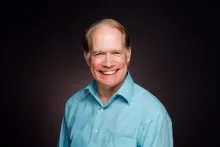
Greg Thomas is the former Pastor of the Cleveland, Ohio congregation. He retired as pastor in January 2025 and still attends there. Ordained in 1981, he has served in the ministry for 44-years. As a certified leadership consultant, Greg is the founder and president of weLEAD, Inc. Chartered in 2001, weLEAD is a 501(3)(c) non-profit organization and a major respected resource for free leadership development information reaching a worldwide audience. Greg also founded Leadership Excellence, Ltd in 2009 offering leadership training and coaching. He has an undergraduate degree from Ambassador College, and a master’s degree in leadership from Bellevue University. Greg has served on various Boards during his career. He is the author of two leadership development books, and is a certified life coach, and business coach.
Greg and his wife, B.J., live in Litchfield, Ohio. They first met in church as teenagers and were married in 1974. They enjoy spending time with family— especially their eight grandchildren.
