
Joe Dobson
This transcript was generated by AI and may contain errors. It is provided to assist those who may not be able to listen to the message.
Let's turn over to chapter 4. I had a lot of ideas as to how much we were going to cover today. I don't know if we'll be able to cover what I want, but we'll take a look at it. In Daniel chapter 4, we see one of the...and again, this chapter 4 and chapter 5, I want to get into some of chapter 5 today. But chapter 4 deals with an issue that is critical for us as Christians.
The idea here in chapter 4 of the book of Daniel is the idea of arrogance, or on the other side of that coin, the idea of humility. Pride and arrogance is one of the worst evils in the world today. As a matter of fact, wars have been fought because of people and their pride and their arrogance. Wars are not fought because of people being so humble. But there is a tremendous amount of toll that has been taken on the people of this planet because of arrogance. So we're going to see somebody today, Nebuchadnezzar, who's going to pay for his arrogance.
And brethren, you and I need to be very careful as Christians that you and I aren't arrogant, that we are not haughty, that we are not puffed up. You know, we are approaching a days of unleavened bread. And we want to make sure that we've got the attitude that God wants us to have, not the attitude that we see King Nebuchadnezzar having. Now, as we go through Chapter 4, there's a lot of narration here. I'm going to be doing a lot of reading. I don't think I go to very many other places, other than Daniel Chapter 4 and Chapter 5. Again, this might be the kind of sermon, since I'll be moving rather quickly, that you might want to get a CD and listen to it again.
One of the lessons that we can begin, right off the bat with Daniel Chapter 4, is that God inspires the ungodly to do the godly at times. God inspires the ungodly to do the godly.
Now, why do I say that? I say that because Chapter 4 of the book of Daniel is largely written by Nebuchadnezzar. God inspired an unconverted man to write a portion of his sacred scriptures. Every word of what Nebuchadnezzar is saying here, I believe firmly in my heart, that God inspired. Even though he was no more converted than your pet cat. And yet, here God is using somebody who's unconverted to do something godly, write a portion of the scriptures.
Now, the ramifications for us are very important. Can God work with an unconverted maid? Can God work with an unconverted employer? Can God work with an unconverted neighbor? Unconverted relatives? Yes, God can. And so, this is something that we want to keep alive very intently in our prayer life. That God would, just as God worked with Pharaoh to soften his heart, there may be people in your life who are not a part of the church. There may be people in your life who are a part of the church.
That God needs to soften their heart. And certainly God can do that. So that's one of the lessons we see through the first 18 verses of chapter 4. But let's get into the chapter. Chapter 4, Nebuchadnezzar, verse 1, Nebuchadnezzar the king, to all peoples, nations, and languages that dwell on all the earth, peace be multiplied to you. I thought it good to declare the signs and wonders of the Most High God has worked for me.
How great are His signs! How mighty His wonders! His kingdom is an everlasting kingdom and is dominion from generation to generation. So here we see basically what probably formed an edict that went throughout the whole of the empire, written by Nebuchadnezzar, to peoples all through this great Babylonian empire. It was a proclamation. It was a document of praise toward God. He might have written this for any number of reasons, but perhaps to explain why for seven years he wasn't running the empire. Now, after I gave this sermon in Detroit last week, we had somebody over in the Chicago area listen to it, and they said, Mr.
Alessandro, who did run Babylon for those seven years? And I thought, well, you know, that's a really good question. I don't think anyone's ever asked that question of me before, so I did some research, and it's really unclear.
Some people think that Daniel ran the empire. Other people think that Nebuchadnezzar's trusted advisors ran the empire. Some people thought maybe his son or grandson ran the empire. But there's not a lot of hard historical evidence, first of all, on his seven years of insanity, and then secondly, who ran the empire at that time.
So I can't speak with great dogmatism as to who did that, but when God gave him his right mind, the kingdom was his again, and he ruled for a number of years after that point. So God did not remove the kingdom from him, but God did allow him to realize that, you know, human flesh is nothing to be desired. You think you're great, you think you're mighty, you think you put together this world-ruling kingdom? You didn't. God says, I gave it to you. You know, here we have today in this country, we've got people wanting to be president of the United States. And, you know, I don't know about you, but I'm getting disgusted by the whole thing that I'm watching.
I watched the Republican debate that was hosted by Fox News there in Fox Theater in Detroit. I was totally disgusted by the deportment in the way that those candidates were acting one toward another.
And then, of course, on the other side of the coin, we've got Mrs. Clinton, who in my humble estimation should be behind bars for what she has done. Other people who have done what she has done are already behind bars. But her name is Clinton, and she'll probably get a pass on all of that. But that's my opinion. Anyway, let's go back to chapter 4, starting in verse 5.
I, Nebuchadnezzar, was at rest in my house and flourishing in my palace. So notice he's comfortable. Things are going well. He's fat and sassy and so forth. I saw a dream which made me afraid in the thoughts of my bed, on my bed in the visions of my head, and troubled me.
So, you know, here's a man who's in the high clover, as they would say down south. He's doing really well. But God is about to take him down quite a few pegs, because this man is very arrogant. And if you're going to lead people, God wants you to lead people properly. And you don't lead people properly by being arrogant.
Verse 6. Therefore, I issued a decree to bring all the wise men of Babylon before me, that they might make known to me the interpretation of the dream.
The magicians, the astrologers, the Chaldeans, the sous-seirs came in, and I told them the dream, but they could not make known to me its interpretation. But at last!
Now, why at last? Didn't this man learn something back in chapter 2?
Now, it may well be, brethren, that this what we're reading here took place a good many years after chapter 2. This book is not written in a strictly chronological sense. The first number of chapters in this book are like little stories that are woven together, but not necessarily chronologically. So perhaps as much as 20 or more years have passed since the events we read of in chapter 2.
Both Nebuchadnezzar's age, Daniel's age as well. But at last, verse 8, Daniel came before me. His name is Belteshazzar, according to the name of my God.
So here we see that even though in chapter 2, Nebuchadnezzar is praising the great God, he's hedging his bets.
In his mind, he's probably thinking, yeah, Daniel's God is a great God, but so is mine. So he's not really seeing the full picture properly.
He says about Daniel, In him is the Spirit of the Holy God. And I told him the dream before him, saying, Belteshazzar, chief of the magicians, because I know that the Spirit of the Holy Spirit, God is in you, and no secret troubles you. Explain to me the visions of my dream that I have seen at its interpretation.
So another lesson, a couple of lessons we learn here in verses 8 and 9, is that people recognize God's Spirit in us.
If we're the Christians we should be, God is... people around us who aren't converted, are gonna... they may not know to call it the Holy Spirit, but they're going to know something's different about you.
There's something special about you, that you've got your act together, that you have, you know, some things really figured out.
And, you know, depending upon, you know, your personality, you know, if you're the kind of person who likes to talk to people, and you're a people person, you might have people actually coming to you and saying, well, you know, can we sit down and talk? You know, you've got your act together, and you seem to know the Scriptures, and you know, you keep that seventh day, and you go to these festivals and so forth. Let's sit and talk. So we see that, at least to some degree, Nebuchadnezzar sees this, that here's a man who's got God's Holy Spirit. Verse 10. These were the visions of my head while on my bed. I was looking, behold a tree. Now, Nebuchadnezzar's going to start talking about what he sees here. I was looking, behold a tree in the midst of the earth, and its height was great. The tree grew and became strong, its height reached to the heavens. It could be seen by all the ends of the earth. Its leaves were lovely, its fruit abundant, and it was food for all. The beast of the field around found shade under it. The birds of the heavens dwelt in its branches, and all flesh was fed from it.
So here in verses 10 through 12, we see Nebuchadnezzar seeing this huge tree in the middle of the earth. The tree grows, very enormous. The world prospers because of this tree. And as we're going to see, as Daniel begins to explain this, this represents Nebuchadnezzar himself.
Verse 13. And I saw visions of my head while on my bed, and there was a watcher, a holy one coming down from heaven.
Perhaps this was an angel. Perhaps it was even the angel Gabriel. Gabriel was the one who brought messages. He cried aloud and said thus, Chop down the tree and cut off its branches. Strip off its leaves and scatter its fruit. Let the beast get out from under it and the birds from its branches. Nevertheless, leave the stump and roots in the earth. Bow with a band of iron and bronze in the tender grass of the field. Let it be wet with dew of heaven and let him graze with the beasts on the grass of the earth.
So here in verses 13, 14, and 15, we see this messenger beginning to give him the interpreta- or more of the dream.
And we see that things are going to be taken away and stripped from Nebuchadnezzar. And only the great God was able to do this. And we'll talk more about this as we get into chapter 5 a little bit.
The fortress that Babylon was.
Babylon was about two-thirds of the size of New York City. If you take the size of New York City today, it was roughly two-thirds the size of New York City.
Babylon was one of those types of places that people thought was simply, would never come to an end. Had three massive walls around the city for protection.
The first wall was 25 feet thick.
25 feet thick.
Now, I don't know how far 25 feet is from the place I'm standing.
Could be back to that first pillar there. 25 feet thick. Then there was a space almost 40 feet.
And then there was a second wall. That wall was 22 feet thick. Then there was another space. And there was a third wall 12 feet thick. Now, if you're standing on the outside of that city, what do you think the chances of you taking that city are with fortification like that? Walls that were 90 feet high. Every 160 feet there was a tower.
So, if you break through the first wall 25 feet, you're in that no man's land of 40 feet. And you've got people shooting arrows down at you, or throwing rocks, or burning hot oil, or whatever. Then you got to get through that second wall, then you get it through the third wall.
And, of course, Babylon had enough food stored up for several years in case of a siege. And one of the great things that they thought was their protection was the Great River Euphrates, one of the great rivers of the world, flowed right through the middle of Babylon.
Got plenty of water.
Now, we're going to see, as we begin chapter 5, if we ever get to chapter 5, how that actually is going to turn against them.
Okay, starting here in verse 17.
This decision is by the decree of the Watchers and is sentenced by the word of the Holy Ones, in order that the living may know that the Most High God rules in the kingdom of men, and gives it to whomever he wills, and sets over the lowest of men.
Now, I've made mention in the past that this is one of the great themes of the Book of Daniel.
If you drop down to, where is it here? Verse 25.
And they shall drive you from men, and your dwelling shall be with the beasts of the field. They shall make you eat grass like oxen. They shall wet you like the dew of heaven, and seven times shall pass over you, seven times referring to seven years, until you know that the Most High rules in the kingdom of men, and gives it to whomever he chooses, whomever he chooses. So there in verse 17 and verse 25, we see one of the great themes of this whole Book.
God is the one who is in charge.
If you go back to verse 18, This dream I, King Nebuchadnezzar, have seen, Now you, Belteshazzar, declare its interpretation, that all the wise men of my kingdom are not able to make known to me the interpretations. But you are able, for the Spirit of the Holy One, holy God, is in you. Again, another lesson learned. It takes God's Holy Spirit to see things that are spiritually discerned. Now, we know that, but we're seeing this in the Old Testament.
You know, all the false ministers, all the false prophets in the world couldn't interpret what was going on. But because Daniel had God's Holy Spirit, because God was guiding him, he was able to see with 20-20 spiritual vision. Verse 19, Then Daniel, whose name was Belteshazzar, was astonished for a time.
The Hebrew gives the thought that Daniel probably stood there, maybe for as long as an hour. Josephus writes that perhaps he stood there for as long as an hour. Because what Daniel saw was not going to be pleasing to the king. It wasn't like chapter 2, where Daniel is saying, Well, you know, you're this head of gold. No. I mean, you're standing in front of one of the most powerful people on the face of the earth, and basically you're about to tell him, Look, for seven years, you're going to go stark, raving, and sane.
Now, how would you like to say that to somebody who could have your head lopped off at any second? You know, people in those kinds of positions of authority don't like to hear bad news. And so, Daniel there is kind of stunned. But notice the response from Nebuchadnezzar. Then Daniel, whose name was Belteshazzar, was astonished for a time, and his thoughts troubled him. Troubled him because he knew what he was about to say. So the king spoke and said, Belteshazzar, do not let the dream or its interpretation trouble you. Belteshazzar answered and said, My lord, may the dream concern those who hate you, and its interpretation concern your enemies. You know, Daniel's trying to be diplomatic there. He knows full well who this is. He wished it was otherwise. But Nebuchadnezzar, who has a fond feeling toward Daniel, they've been together for perhaps decades. He says, Listen, I want to know what this dream means. Obviously, from your silence right now, I can tell it probably doesn't bode well for me. But I want to know the truth. So please tell me what it means. So Daniel comes up to me and says, So Daniel proceeds, verse 20.
So again, seven years and a come and go, he's going to be insane, acting like one of the beasts of the field. But as verse 23 shows, the tree, you know, there's going to be a stump there. It's not going to be uprooted and thrown away into the fire. It's going to remain in the earth. The roots are still going to be there. After seven years, Nebuchadnezzar is going to be given his kingdom back again. Verse 24, this is the interpretation, O King, and this is the the Cree of the Most High, which has come upon my Lord the King. Verse 24, very important. This is not something I'm saying, King. This is something God is saying. And, brethren, this is something for us to appreciate. God gives us a lot of rope. God gives us a lot of leeway. God gives us, He's very patient with you and I. But there comes a time for you and I and for all flesh where enough is enough. And God simply must act. We're certainly going to see that in chapter 5 of the book of Daniel. And we're seeing a little bit of it right here. Nebuchadnezzar, the way he was ruling, he thought he was such great stuff. Well, God's going to say, you know, you're just human flesh and you need to be taught a lesson. Verse 25, they shall drive you from men. Your dwelling shall be with the beasts of the field. They shall make you eat grass like oxen. They shall wet you with the dew of heaven. And seven times shall pass over you until you know that the Most High rules in the kingdom of men and gives up to whomever he chooses. So God is grabbing him by the shoulders, shaking him and saying, you better acknowledge me. And brethren, again, let's take this as a message to us. If there are areas in our life where we are haughty or arrogant or, you know, our opinion is king, then we need to let God shake us. We need to come to realize, you know, that we are nothing. So this is not just a lesson for Nebuchadnezzar. This is one of the reasons why it's inspired Scripture for us to learn from this. Verse 26, and inasmuch as they gave the command to leave the stump and the roots of the tree, your king shall be assured to you. You're not going to lose your kingdom. After you come to know that heaven rules. Therefore, O king, let my advice be acceptable to you. Break off your sins by being righteous and your iniquities by showing mercy to the poor. Perhaps there may be a lengthening of your prosperity.
So, verse 27, another great spiritual lesson. God always wants us to repent. God always wants us to come to our spiritual senses and to do the right thing.
Verse 28, all this came upon Nebuchadnezzar. At the end of 12 months, he was walking about the royal palace of Babylon.
Now, we can read past that verse very quickly. I've been doing a lot of quick reading.
But I want us to pause at verse 29.
Here's a man who's given a dream by God.
God gives him a full year to chew on it.
To think about it. To do something about it. It shows God's great mercy. It shows God's great grace.
And brethren, how many times has this happened to us? Where in our lives, we've heard a sermon or a Bible study, or we've had a conversation with a brother or sister in the faith.
And we realize what we're hearing is something we need to act on.
And yet, maybe we don't act on it.
And yet, does God act on us immediately? Or does God, in his loving kindness and his grace and mercy toward us, give us a space of time to chew on things. To think on things. To deal with things. And I think verse 29 is a very important verse in this whole discussion. Not very many words in this verse. But, you know, God gave him a whole year to do something about what he's heard.
You know, when I read the scriptures, I'm sure when you read the scriptures, we want to have the attitude of being self-correcting.
Let's say you and I pray that we are that way. Verse 30, the king spoke saying, Is not this great Babylon that I have built? Is not this great Babylon that I have built for our royal dwelling by my mighty power and for the honor of my majesty?
While the word was still in the king's mouth, you know, God is perfect with his timing. So, as this man is talking about, you know, in his total arrogance, you know, what I have done, my kingdom, my power, my glory, you know, my hanging towers, my military, my conquests.
You know, one of the things that I mentioned last week in Detroit, since these first few chapters of Daniel are not necessarily chronologically in terms of, you know, one happening right after, literally split after another, that there may be a number of gaps of years.
You just thought that in chapter 3, you know, where you see in chapter 4 here, and other parts of this book where you see, you know, like the great image, chapter 2 especially, where you see this great image that maybe by that point in Nebuchadnezzar's life, he'd already conquered Egypt. He had seen the monoliths in Egypt, and that's what he wanted for, you know, his kingdom of Babylon.
And so he's thinking, I've done all these great things, all these great, you know, accomplishments.
While that's still in his thinking, God acts. Verse 31, while the word was still in the king's mouth, a voice fell from everything, saying, King Nebuchadnezzar, to you it is spoken, the kingdom has departed from you.
Again, there's a point in time where God works. There's a time where God is merciful.
You and I enjoy that. There's a time, though, where God says, enough's enough. You know, in the book of Genesis, it talks about the sins being complete. And time for action.
Verse 32, and they shall drive you from men, and your dwelling shall be with the beasts of the field. They shall make you eat grass like oxen, and seven times shall pass over you, till you know that the most high rules in the kingdom of men, and gives it to whomever he chooses. So we see this phrase again. God is making this abundantly clear. God calls the shots. Who's going to be the next president of the United States?
You'll probably, a number of you will vote. You'll vote your conscience. But you know, God's going to put in office who he wants in office.
Verse 33, that very hour the word was fulfilled, concerning Nebuchadnezzar. He was driven from men, the ate grass like the oxen. His body was wet with the dew of the heavens, till his hair had grown like eagle's feathers, and his nails like bird's claws. You know, for a fellow that probably dressed like something out of GQ, he was a royal mess. You know, I'm sure that if I was a hairdresser, I wouldn't want any part of this guy. And if I was the kind of person who worked on people's fingernails, I would say, please see the next person. You know, I don't want to have to work with this. Verse 34, and at the end of time, I, Nebuchadnezzar, lifted my eyes to heaven, my understanding returned to me, and I blessed the Most High in praise and honored him who lives forever. Now, there are some, I would not be among these, who think that maybe he was having a real literal come-to-Jesus moment here. I don't tend to buy that, because we've seen this in him before.
He obviously understands that our God, the true God, is a God of wonders, but I don't know that he's factoring out all the other false gods. For his dominion is an everlasting dominion, his kingdom is from generation to generation, and all the inhabitants of the earth are reputed as nothing. He does according to his will in the army of heaven, and among the inhabitants of the earth, no one can restrain his hand or say to him, what have you done? At the time of my, at the same time, my reason returned to me, and for the glory of my kingdom, my honor and splendor returned to me.
Again, I don't know if I'm a real humble person, if I'm talking about my splendor returning to me.
I'm not sure that he's still getting it here. He's getting some of it here, but not all of it. My counselors and nobles resorted to me. Again, verse 36 shows, who may have been running the kingdom in over seven years, his counselors and nobles. I was restored to my kingdom, and excellent majesty was added to me. Now I, Nebuchadnezzar, praise and extol the honor of the king of heaven, all of whose works are truth, and his ways justice, and whose walk and pride he is able to put down. So, you know, the whole thought there in verse chapter 4 is we don't want to be arrogant. We want to be humble. We want to realize we're just flesh, and whatever is accomplished, yes, we have a partnership with the great God. The great God, you know, he doesn't just give us things, we have to work for things. But let's not think that everything we work for is simply because of our intellect, our ability, and so forth. That's a part of it, but a great part of it is also what God has done for us. The doors he opens, the fact that he gives us breath of life so we can do anything. So we are very much in a partnership with God, and we need to be very humble about whatever accomplishments we have in life. Okay, chapter 5. We'll get into a little bit of this. I don't think we'll be able to cover the whole chapter, but we'll be able to get into a little bit of this. A little bit of background about chapter 5. Many years have now come and gone. Daniel is now in his early 80s. He's an old man. He probably is not even, you know, he may be in probably in retirement, as we would consider retirement. Events are transforming in the area.
Persia has been gobbling up various city-states, territory. It's becoming a kingdom and a power to be reckoned with. Babylon is declining. It's declining morally. It's declining economically. It's declining in every way, largely because the current king, Belshazzar, is not a good king.
He's basically living on the past glory of Babylon. But again, it didn't seem humanly possible that this great kingdom was ever going to fall. Yet we know from history that Babylon, as a kingdom, as a world-ruling empire, only lasted 87 years, a relatively short period of time.
One of the quotes I may mention a bit ago about the walls and the towers have already gone through that. But let's take a look at a couple of major lessons to be learned in this chapter.
Number one, God's will shall prevail over the nations. God's will shall prevail over the nations.
In your notes, you might doubt that on Isaiah chapter 44 and 45, because in Isaiah 44 and 45, we see where it talks about Persia overcoming Babylon. Now, you and I can watch TV all day long, especially if you're watching a conservative channel like Fox News. And over and over, I watch a lot of Fox News. And you'll have various pundits, various commentators. Well, you know, America is in a downtime right now. Things are looking pretty bleak. You know, three quarters of the people think that we're on the wrong track. But America will respond, will get back on track. Things will, our greatest years are ahead. That we don't believe is simply very true. You know, just as all the great empires that we've seen here in the book of Daniel, they have come and gone. The American Empire, we are on the slippery slope. We are on the way down. And we need to realize that's, you know, we're when we, you and I get upset about what we see happening in our government and in our nation. It's because, brethren, the things we prophesied and talked about for years and years and years are now coming to pass. And you and I are watching a company, a country, our country that we love so much, we are watching it go down the drain.
We are watching it go down the drain. The second major lesson for chapter 5 is that the defiant and the pleasure seekers will face God and judgment. And we certainly see Belchazar here as a defiant individual. And he's going to face some very bad times here and lose his life.
Let's get into it as far as we can get in the next 10 minutes.
Chapter 5, verse 1, Belchazar the king made a great feast for a thousand of his lords and drank wine in the presence of the thousand. Now understand something.
Outside those huge, thick walls, those high walls, sat the army of the Persians. The Persians were set to attack Babylon. And so the king said, well, we've got to do something for morale here. We've got this great army outside of our gates. We're not worried about them. We're not even going to call a council of war. We're not going to make sure we're extra ready or anything like that. But what we're going to do, we're going to throw this great feast for a thousand of my chief rulers, bring them all in and give them lots of drink. Tell them to forget about what they see outside. So here we have a false sense of security. Brethren, does America have a false sense of security? Does America have a false sense of security? One of the things that they were so secure in is the fact that, boy, we've got this great river Euphrates that runs right through the middle of our city. Have water. Don't have to worry about water. But, of course, the Persians saw that too. And the Persians deflected that river to the place where, when they finally wanted to come march into the city, the river was only about up to a man's thigh. And that's how they came in. The city was so huge that, as the city was being taken, people at various ends of the city didn't even know what was happening when the soldiers were coming in. Again, it was almost the same size of New York City. We view, America views, the fact that we've got our vaunted military. And you know something? If I was a foreign nation, I wouldn't want to touch this country. But so much of our military now is based on our computers and our gadgets. And what happens when somebody who's really smart, we've got a lot of smart people, but what happens when somebody who's a little smarter than us knows how to take all that stuff down? And we are vulnerable. I've read to you the scripture before that says, you know, when Israel falls, they won't even know what's happening. The call to war will go out and no one will answer. Why won't they answer? Maybe they won't hear the call to war. Maybe they can answer. Maybe communications are down. Maybe the electric grid in this country is down. All those things can happen. And all those things probably will happen.
So I think chapter five speaks a lot to us today. So here's throwing this great feast here. Verse two, While he tasted the wine, Belshazzar gave the command to bring the gold and the silver vessels which his father Nebuchadnezzar had taken from the temple, which had been in Jerusalem, that the king and his lords, his wives and the concubines might drink from them. So to add insult to injury, here you've got a man who was just as vain as his father Nebuchadnezzar. But now we see where he says, you know, let's bring in those goblets, those precious, those beautiful gold and silver things that we took from the temple of God in Jerusalem. And let's have a, let's have kind of a drunken night with all of those things. Let's keep on drinking and just keep on passing the wine and the strong drink and so forth. Well, this was an affront to the great God. And again, God will be merciful for a time. God will be giving people an opportunity to repent. But there comes a time and a point when this all comes to an end. Then they brought the gold vessels that had been taken from the temple of the house of God, which had been in Jerusalem, the king and his lords and his wives and his concubines drank from them. They drank wine and praised the gods of gold and silver, bronze and iron, and wooden stone. So, you know, again, sacrilege mocking the great God. In the same hour, fingers of a man's hand appeared and wrote opposite that lampstand on the plaster of the wall of the king's palace. And the king saw a part of the hand that was that wrote. And the king's continents changed. His thoughts troubled him so that the joints of his hips were loosened, his knees knocked against each other. As I said when we were the very first sermon, he may have had to use the restroom at this point. Obviously, here's a man who sees something. He's very terrified. He's afraid. He doesn't know exactly what's happening. But, you know, brethren, in your notes, you might want to jot down Hebrews chapter 10, verse 31. Hebrews 10, 31. It is a fearful thing to fall into the hands of the living God. It is a fearful thing to fall into the hands of the living God. And that's exactly what's taking place here. He's falling into the hands of the living God. The king cried aloud to bring in the astrologers, the Chaldeans, the Susayers. Verse 7 and 8. Doing the same thing Nebuchadnezzar had done. These people aren't able to help him at all. Verse 9. Then King Belshazzar was greatly troubled. His continents was changed, and his lords were astonished. These people couldn't help him. And, you know, brethren, much like we're going to see at the end of our age, when people are asking the religious types of our country, why don't you tell us what we need to know as a country? You know, Isaiah talked about, we went through that verse by verse a few years ago, where the religious leaders of the nation are at fault. They didn't warn the people. They didn't give the people the information they needed. The same thing is true here. The false religionists could not help the king of Babylon. Verse 10. The queen, because of the words of the king and his lords, came to the banquet hall. Now, who's the queen here? Historians think this is either his mother or his grandmother. You know, this is an older woman who knew the kingdom when it was great.
The kingdom is about to fall. It's going to fall in the next few hours. But she knew the kingdom when it was great. She knew leaders who were great leaders. This king isn't great. And so, she hears what's happening. She rushes to the banquet hall. The queen spoke saying, Oh, king, live forever. Do not let your thoughts trouble you, nor let your continents change. Basically, what you have is this woman who knows her stuff coming to the king. His mother or his grandmother saying, Would you get a grip? You're the king. You're supposed to know what's going on. You're supposed to know what to do. Act like a king. Verse 11. There's a man in your kingdom, and whom is the spirit of the holy God. In the days of your father, light and understanding of wisdom, like the wisdom of the gods were found in him. And king Nebuchadnezzar, your father, your father the king, made him chief of the magicians, astrologers, chaladeans, and sousaites. This is one of the reasons why, brethren, we think that, you know, at this point, Daniel is in retirement. He's in his 80s. He's an older man. We know that from the chronology of when Daniel was captured in 605 BC. We know this is 539 BC. We can add up the numbers. We know he's in his 80s. In retirement, this is probably one of the reasons why the king didn't even remember who Daniel was. Probably wasn't that much of a factor in the kingdom as he once had been. Inasmuch as an excellent spirit, knowledge, and understanding, interpreting dreams, solving riddles, and explaining amigos were found in Daniel, he says, Go get this guy! Verse 13. Daniel was brought in before the king. The king spoke and said to Daniel, Are you that Daniel who is one of the captives from Judah, whom my father the king brought in from Judah? So, you know, a little bit of a discussion there. Are you the guy? Yeah, you're, yes, I'm the guy. Verse 16. And I have heard of you that you can give interpretations and explain amigos. Now, if you can read the writing and make known to me its interpretation used to be clothed purple and have a chain of gold around your neck. And you should be the third ruler in the kingdom. So, you know, here, you know, I will pay you. What's Daniel's response, just like his response was in Chapter 2. Then Daniel answered and said before the king, Let your gifts be for yourself, and give your awards to another, that I will read the writing to the king and make known to him the interpretation. You know, we said the same thing back in Chapter 2. We have Matthew Chapter 8. Chapter 10, Verse 8. Freely you have received, freely give. It's been a hallmark of our church through the generations. God has given us information. We give it free.
Daniel's given information. He gives out that information free.
Okay, I'm going to pause and stop there for today. We'll pick up next week. We'll go through a little bit of review and go through the rest of this chapter. Then continue on with Chapter 6.
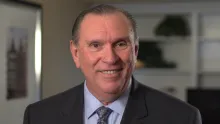
Randy D’Alessandro served as pastor for the United Church of God congregations in Chicago, Illinois, and Beloit, Wisconsin, from 2016-2021. Randy previously served in Raleigh, North Carolina (1984-1989); Cookeville, Tennessee (1989-1993); Parkersburg, West Virginia (1993-1997); Ann Arbor and Detroit, Michigan (1997-2016).
Randy first heard of the church when he was 15 years old and wanted to attend services immediately but was not allowed to by his parents. He quit the high school football and basketball teams in order to properly keep the Sabbath. From the time that Randy first learned of the Holy Days, he kept them at home until he was accepted to Ambassador College in Pasadena, California in 1970.
Randy and his wife, Mary, graduated from Ambassador College with BA degrees in Theology. Randy was ordained an elder in September 1979.
