
Jim Tuck
This transcript was generated by AI and may contain errors. It is provided to assist those who may not be able to listen to the message.
For our sermon today, we will hear from our new pastor, Mr. Jim Tuck.
Happy Sabbath! So good to see everybody be here. Last evening, it was very, very beautiful. My wife and I took a Sabbath walk, which in the last few weeks we have not been able to do. Because I think we would have melted on the way if that would have happened. It's been a very busy week. Mr. Scriber and I ended up going into the home office. We didn't expect that to happen. But anyway, if you received the note, and I apologize if you did not receive the announcements, but I mentioned that in the announcements. It's not purposeful if you got left out. In fact, I left my own son out, so he didn't receive the announcement either.
So I'll have to correct that in some way. I'm dealing with Google. I typically have not used Google. I've used SBC Global Yahoo mail account. It is a little bit different. Quite a bit, so I'm getting used to it. So bear with me. It's like the little girl who was wearing the t-shirt.
All of us remember, if you've been around a long time, God isn't finished with me yet. So it may take a while before I get Google, and I understand it. I was thinking about this in regards to the sermon today. My wife, as she, and I met at Ambassador College in Big Sandy, I had to think, when I was courting my wife, I probably made all the mistakes a young man can make. It's really a wonder that we ended up getting married, quite frankly. Not because, necessarily, we didn't basically have the same ideas and thoughts and so forth, and have them very compatible, but because of all the dumb things I did.
I will say this one time, it's like young men. You've got to understand, this was quite a few years ago, but at Ambassador College, I remember my wife had on this beautiful, kind of lime-green dress. I came up, and I was going to act like I was going to pour ketchup on her. Again, young men, these are the things that people do. Or at least I did them. Maybe none of you ever made mistakes here. But anyway, the cap came off of the ketchup, and you know, red does not go with lime-green.
It just does not. Also, when we went to Israel, to the archaeological dig, on the way back, we went and we were having a nice ice cream date with a couple of other people. On the way back, I got her lost. I've done that many times since. But anyway, we just happened to get lost in the Orthodox section of Jerusalem, where basically, if you swat a fly, they'll stone you for it.
It's a wonder we made it through that. So there were a lot of things I did, brethren. Steve and I will say this, be thankful you're here. Because if we had not, you know, if she had chained your mind about me, you wouldn't be here today. Well, wives, you know, forget about again my inability to court, but wives, what if you received a special invitation from your husband that said this, beautifully, nicely written note?
Note, I request the honor of having you join me for a special evening out. Please wear your very best apparel and be prepared for a most enjoyable occasion. And suppose he arrived, brethren, in a stretch limousine, dressed in a tuxedo, and you were taken out to one of the most exquisite candlelit dinners you've ever had in your life, and you and your husband slow danced all into the evening.
I made it a very, very memorable evening. Well, brethren, what one burning question would that man's wife have in her mind? Wives, what would you think if your husband was doing this? You know, you'd probably think, what did he do now? But, you know, that's not, of course, normal, is it, to take your wife out to do that kind of thing? At least, I don't think most husbands do that all the time.
But the thing that she's thinking in her mind the whole evening is, what's the special occasion? What's the special occasion? Now, why would she have that question? Well, she knows that's not the MO, is it? No limos, champagne, tuxedos, evening dresses, and nice dinners like that are not the MO that typically is his way of doing things. Now, think about, brethren, this. What do you do to make something special?
What do you do to make something special? It doesn't happen on its own, but it must be something that you don't normally do to make something special. That it's above and beyond what you would expect, you know, your mate to expect, basically. That you would do something surprising. I remember when I was in Big Sandy as well, again, further explaining my theory that if, you know, my wife and I did not love each other, you know, we wouldn't have survived, I went to...
I'd gone down to Lake Loma in Big Sandy canoeing on the lake, and it was so pleasant in the evening. And so I had the bright idea on the Sabbath. I thought, you know, after services, after, you know, we had been able to enjoy a nice Sabbath, it would be, you know, very nice to sort of canoe out on Lake Loma.
And it's just a short distance, of course, from all the hub of activity at a master's college, if you've ever been to Big Sandy, you know, nothing more than a mile or so down there. But anyway, so my wife and I, to be, you know, after services, we had our Sabbath dress on. I had a, you know, my Sabbath dress on, a nice coat in tie. It's going to be sort of like the 20s all over again.
You know, you got... I'm sailing along on Budolai Bay, you know, and she would be just overwhelmed by that. Well, anyway, I had the canoe up by the dock, and of course I held the canoe, so my wife-to-be could get in, and I got in. And anyway, pushed off from the dock, and I think I had taken no more than a couple of swaths with the oar. And you know what? That boat went, ooh, right down into the water.
And again, I had my coat on, and she had her nice dress on, and we were soaked to the gills. So I attempted to make it special, and again, it's a wonder she stuck with me through that. But anyway, it was something out of the norm. You wouldn't normally do something like that. I wanted to make it special. Again, making something special does not happen on its own. You've got to do something that you normally don't do. It's above and beyond. But make sure, again, it's successful, unlike my desire to do. So, brethren, I want to ask you a question. How can you make the Feast of Tabernacles special? I looked at the moon last night. My wife and I were out behind the house, and we were looking at the moon as it came up. It was a full moon. You know what that means, don't you? The feast is one month away. When you see that moon come up again, and it's full, it will be time. You'd better be at the feast when that takes place. But, you know, I was thinking how close the Feast of Tabernacles was for us. And it's come very fast on us this year. You know, Joan and I visited one of our brethren up in the Oakland area. It's been some time ago now. And she was an invalid lady. She was bedridden. Paralyzed basically from the chin down. Could not really get around. She could not move very well. She could use her hands in a very rudimentary way. So she didn't really have a lot of mobility. But she said this. She said she enjoys the Sabbath because it's like a date with God. It's like being on a date with God. Now, since that time, this lady, dear lady, has died. But at that time, again, she was bedridden. And you know what? She could only keep the Sabbath in her mind. And she said it was like being on a date with God. Now, I want you to think about this, brethren. Here's a woman that was unable to attend the feast. She could not even come to church services.
But if we viewed, brethren, and treated the feast the way she treated the Sabbath, that it's like a date with God. And if that was our approach, brethren, we would make it special. Wouldn't we? No, can we get that vision, that understanding?
God wants us to make it special. Let's go over to Leviticus 23 and verse 1-2. I'm sure these things have been covered by various speakers. But in verses 1-2, let's notice here, And the LORD spoke to Moses, saying, Speak to the children of Israel, And say to them, The feasts of the LORD. We always point out that these are not our feasts. They don't belong to you or me. They belong to God, the feast of the eternal. And it says, Which you shall proclaim to be holy convocations.
These are my feasts. We have to point this out when we go and visit new people, especially. These aren't Jewish feasts. They're not even our feasts. They're God's feasts. And God has invited us into His feast, this special feast that we are told to observe. Of course, it starts with the spring feast and ends with the last great day, or the eighth day, of the feast.
Of course, keeping seven days of the Feast of Tabernacles. But think about the fact, brethren, that every time we come to church, you know what we're foreshadowing? We're looking forward to the Kingdom of God. When you go off to the Feast of Tabernacles, you're looking forward to the Kingdom of God. So the Sabbath pictures, the Millennium, and the Feast of Tabernacles pictures, the Millennium, as well. So every week we get a weekly reminder about the Millennium, the wonderful world of sorrow.
Remember all of us read that booklet, you know, when we maybe first come into the church, called the Wonderful World of Arro. What will it be like? We always want to know what the Wonderful World of Arro was going to be like. On down here, in verse 34, let's notice here, God commands us to do these things. It says, The first day is the Holy Convocation, and as we know, of course, then it culminates with the eighth day, or the last great day.
And so for seven days, we are to observe the Feast of Tabernacles. And God wanted His people to go to great lengths to prepare for His Feast. My Feast, as He called them, the Feast of the Eternal, the Feast of the Lord. And again, the first Feast that's mentioned is the Sabbath. Every week we have a Feast. But they look to, again, the Kingdom of God. Let's go over here to Isaiah 58.
Isaiah 58. Just a couple of verses over here. But in Isaiah 58, the prophet Isaiah here is inspired to write this down for us when it comes to holy time. It wasn't that many years ago, if somebody could go back to the 90s, when our former association rejected the Sabbath, and basically said you could make holy time any time you wanted it to make it. And I'm sure it would have made my dad very happy, because he always liked to go fishing on Saturday.
And I always, he got this close to accepting the Sabbath, but he never did, because I think he was afraid he might not get to go hunting. You know, with the boys who were doing that and going fishing as well. But Isaiah 58, verse 13, it says, if you turn away your foot from the Sabbath, from doing your pleasure on my holy day, again, we could substitute here, feast as well.
You take your foot off the feast, take your foot off the Sabbath, from doing your pleasure on my holy day, and call the Sabbath a delight. Call the feast a delight, something that's wonderful, that's special. And it is special to God. The holy day of the Lord honorable, and shall honor Him, not doing your own ways, nor finding your own pleasure, nor speaking your own words. Then you shall delight yourself in the eternal.
Now, it will cause you to ride on the high hills of the earth and feed you with the heritage of Jacob your father. And He says, the mouth of God, the mouth of the eternal, has spoken it. So God invites us, brethren, into His feasts, to observe His feasts. And He wants us to observe them His way, because they are His feasts.
Not our way, but His way. He wants us to keep them special, make them special, and keep them special. And God wants us to realize, brethren, that in fact it is very special to Him. You know, when we're observing, brethren, the Feast of Tabernacles, think about the fact that the Feast of Tabernacles is the most important thing going on on the entire face of the earth as far as God is concerned. There is nothing more important. I don't care if they're striking a deal between the Arabs and the Israelis. I don't care what people are doing in the world. The most important thing is the Feast of Tabernacles.
That's the focus. The entire focus should be, at least, of our life. Now, let's notice here, over in Genesis 2, when it talks about holy time over here, Genesis 2, we know that God, when He created the earth and the animals and even man, after He had finished His work, after He had done it, it says, Thus the heavens and the earth, and all the host of them were finished.
Now, that's a big project that God accomplished. And on the seventh day God ended His work which He had done, He rested on the seventh day from all His work which He had done. Then God blessed the seventh day and sanctified it because in it He rested from all His work which God had created and made. So every week it's a sanctified period of holy time. And when God gave the Holy Days, when He gave us the days of unleavened bread, when He gave us Pentecost, when He gave us trumpets and atonement and all of the Holy Days, brethren, He created holy time as well in those.
And we know they're very important holy days that picture some very momentous things, some of which have occurred. And that is, of course, the Passover, Christ Himself came and died. He was the Lamb, slave from the foundation of the world. And so, brethren, these tremendous things that we see, you know, here with the Sabbath, which pictures again the millennial reign of Christ and tabernacles that pictures the millennial reign of Christ as well, are very important to God.
When God created the Sabbath, He said that holy time was made for man and not man for holy time. And of course, God gives us an understanding about how to keep holy time, how to observe holy time, how to enjoy God's Sabbath. And we know all these same principles apply to the holy days as well.
But God enjoyed His creation, and He rested and reflected on His work He had done on the Sabbath.
And I wonder if the feasts are somewhat like that for God. He reflects on what He's doing, what He's trying to accomplish. They're like specific junctures of time in the year as they go by, and God reflects on those things.
You know, what did God do, by the way? For instance, after He had created the Sabbath, after He had created holy time, what did He do?
Well, let's notice in chapter 3. Let's notice over here in chapter 3. I think it's very revealing what God did. God didn't say, boy, I am done, and sort of walk off into eternity.
But notice here in chapter 3, in verse 8, And they heard the sound of the LORD God walking in the garden. Here was Adam and Eve in the garden. And they heard God walking in the garden in the cool of the day, and Adam and his wife hid themselves from the presence of the eternal God among the trees of the garden. Maybe God was coming and saying, Adam, where are you? And of course, they had run away and hid them. It's interesting here that man was hiding from God and not God hiding from man. But what God was wanting to do, brethren, on that holy time, what did He want to do? He wanted to spend time with Adam and Eve.
He wanted to spend time with His family on that day. And I submit to you, brethren, that at the feast God wants to spend time with us. He wants to be with us. And you want to be with God. You want to spend time with God. But I would think all of us would want to do that. God has such love for us. He wants to solidify that bond of love. And He wants us to grow in holy, righteous character. We're special to God because we are His bride. We're His bride. And you know, on the Sabbath, we do. Like the Karen, who was the woman I was talking about, did on the Sabbath. You know what? We have a date with God. And God wants to spend time with us at the feast. God wants to date us. He wants to come to know us better. To spend time with us, to get to know us.
And you know, when we fellowship with each other on the Sabbath, and at the feasts of God, brethren, who are we really fellowshiping with? You know, before I came into the church, I didn't know any of you. You didn't know me either. But there was a spirit that was the same. We had like minds. We fought alike because we have the same parents.
We're the same Father. Let's go over here to 1 John 1. 1 John 1. You know, what I have noticed, and I'm sure you've been through this, if you've been in the church very long, is that when somebody has a wrong spirit, you just can't get along with them. I don't care what you do. You can fall down and kiss their feet. You still won't be able to get along with them. Because if there's a wrong spirit that is there... Notice here 1 John 1 over here.
1 John 1. And we'll begin in verse 1 here, if you will turn with me to this. But in 1 John 1, verse 1-3, it says, "...that which was from the beginning, which we have heard, which we have seen, with our eyes, which we have looked upon, our hands have handled concerning the word of life. The life was manifested, and we have seen, and bear witness." Of course, talking about Christ. "...and declare to you that eternal life which was with the Father and manifested to us, that which we have seen and heard, we declare to you, that you may also have fellowship with us, and truly, truly..." John writes here, "...our fellowship is with the Father and His Son, Jesus Christ." When we're all of the same spirit, the same attitude, we're fellowshiping with God and Jesus Christ, the Father and Jesus Christ.
That special relationship, brethren, is there. It's been...you know, when we have our potlucks... I know you don't call them potlucks here, but you call them gourmet buffets, I guess. Or is it gourmet buffets? I can't remember which one. But anyway, in other words, you like to eat together, right? That's what God's people love to do. Eat together.
Spend time together. Talk to each other. Get to know each other. You know, if you want to make something special, you have a special meal together. And I think today is Mediterranean. Is it? Mediterranean. I see Aaron shaking his head up and down, yes. But anyway, it doesn't really matter what kind of food it is.
And maybe it does taste better if it's gourmet. But it's the fellowship, isn't it? It's spending time together. And that makes it special. So, brethren, at the feast, I encourage you, invite brethren to participate with you in observing the feast. If you're going to have a good feast, share with the brethren. Spend time with the brethren. Invite brethren out. Ask widows out. Have them either to your temporary dwelling or take them out for a special meal.
Wind them and dine them. God has blessed us all so that all of us can have fairly nice food for the feast. I assure you, I've been to Africa a number of times. You eat a whole lot better than they do.
But, you know, I'm not sure that we have the attitude some of those people have. How excited they are about being at the Sabbath and the feast of God. I think sometimes we take for granted, don't we, all the wonderful things God has given to us. If you came into the church a long time ago, I'm sure your standards have been improved since you came in. Rather than buying, say, a bottle of musketel, you might buy something else.
Some of the other wines I think about that people used to buy. I always told people, make the fee special rather than a $1 bottle of wine. Maybe buy a $10 bottle of wine. Some people, of course, would buy a whole lot better than a $10 bottle of wine. Rather than a $10 bottle of wine.
But anyway, make it special. Enjoy. The Bible says that we can enjoy whatever we want. Certainly within reason. But think about the fact that you can't eat more than one steak. Well, maybe some can. Some of our teenagers probably have no limits, in fact. When we had teenagers, by the way, I think what happens is they're sort of like cows. They don't have sick stomachs, but I think after a while the stomachs open up into the legs. So they sort of keep eating.
We almost went bankrupt when we had three boys. They were teenagers, by the way. It's good that they're on their own now. We would be bankrupt. But anyway, it's good to enjoy good food at the feast. That's a part of why we labor in this physical existence that we have. But let me mention this to you again.
Make it like something special, like you're having a date with God. Make it special. Get to know God. We get to know God by coming to know one another. First of all, we find out how patient God is. Sometimes it takes looking at other people for us to figure out that, you know, that person you've got to have a lot of patience working with. And then you finally figure out, you know, that's me. That's me. God's got to be patient with me.
And we're a little bit more understanding of other people. But, you know, when we go to the feast, brother, we should be able to live on a higher level. Because we've saved our second tithe, we should be able to live on a higher level than we normally do.
We should be able to eat better. We should be able to enjoy ourselves a whole lot more because of the second tithe. Hopefully, brethren, all of us again are doing that, doing what God commands us to do. And we say, faithfully, the second tithe. You know, when we don't do that, if you try to make it—do it another way, you're going to cheat yourself. Because you're going to end up robbing Peter to pay Paul if you do it that way.
And you won't enjoy the feast as much. So, faithfully, brethren, save your second tithe. Get the full benefit of the Feast of Tabernacles. And enjoy it without all the headaches. You know, you want, as Mr. Jutta was talking about, peace to mind. And I've heard people do all kinds of different things, you know, except what God commands, and that is to save the second tithe. You know, that festival tithe. Let's go over here to Deuteronomy chapter 14. Deuteronomy chapter 14. It's in the book, and God wants us again to do what the book says.
And you know, where we really make mistakes is when we start trying to do something different than the book tells us to do.
But in Deuteronomy 14, in verse 21, it says, And you shall truly tithe all the increase of your grain that the field produces year by year. Of course, that was a gregarian society. We understand that we pay a tithe of our income, our net income. In verse 23, And you shall eat before the eternally your God, in the place where he chooses to make his name abide, the tithe of your grain, of your new wine, of your oil, of the first part of your herd, your flocks.
Why? That you may learn to fear God always. Respect Him. No relationship is going to survive unless we have a respect for someone. And, you know, marriage is the same way. Friendship is the same way. Unless you respect someone and show respect to them, friendship won't go very far, will it?
Well, we're going to marry the Creator of the entire universe. So we have to learn to respect Him. And we know that word fear means to greatly respect. You know, in the Hebrew, here. But if the journey is too long for you so that you're not able to carry the tithe, and the tithe, of course, is 10% of our income, or if the place where the Lord your God chooses to put His name is too far for you, when the Lord your God has blessed you, then you shall exchange it for money.
So God certainly here points out what Moses records here for us, that was an agrarian society, but there was money as well that would be a medium of exchange. Take the money in your hand, go to the place which the eternal your God chooses. And there is a fee site here in Phoenix you can attend. And of course there are other fee sites around the world. And you'll spend that money for whatever your heart desires. What a wonderful husband we have. These provided this means, brethren, for oxen, for sheep, for wine, or a similar drink, for whatever your heart desires or rightly desires as we understand.
There are things that we should not desire, but rightly desires. And you shall eat before the Lord your God, and you shall rejoice you and your family, your household, because it's special to God. It's like a date with God. We rendezvous, as it were, with God at the feast of tabernacles. So again, don't cheat yourself. Do what God commands. Save a full second tie so that you can fully appreciate this date with God. To give you greater peace of mind. You know, all of us, of course, are familiar with Dave Ramsey. He tells people to basically go on a cash basis. He doesn't believe in credit cards.
Now, again, to each his own, as to what you do, I think if you don't control credit cards, you probably shouldn't have one. Frankly, we used to advocate plastic surgery 40 years ago in the church. Some people really do. They need to take the scissors and just cut those plastic credit cards up. But, you know, if you can't control it, but, you know, it's important for us, again, to do what God says so that we can appreciate the date we have with God at the feast of tabernacles.
You know, we don't want to always, when we go off the feast, just get by on a shoestring. That's no way to go to the feast. I remember my first feast, I didn't have much of anything. You know, of course, interestingly, my first feast was in Big Sandy, Texas. How many of you ever went to Piney Woods in Big Sandy? Could you raise your hands real high?
So I'm not alone. But I remember keeping my first feast. I had to stay in my dorm, by the way, at Ambassador College. But after services, oftentimes, I'd be invited to the Piney Woods. And, you know, I was a young man, 19 years of age. And I'll tell you, you could eat probably a dozen times before you left the Piney Woods.
It was almost like heaven on earth when you're a college student, but made so many friends in the Piney Woods. I'd go from one campsite to the other and get to know people and visit with them. And many of those friendships that were built, that particular feast, by the way, lasted, have lasted for many, many years since. But, you know, God, that year I didn't have much of anything in terms of 2T. It may have been like 50 bucks. It wasn't very much that I had available to me. But do what God commands and get the full benefit of it by doing what He says about the Second Tithe, the Festival Tithe.
Another thing, brethren, to do with regard to the feast, to make it a date with God, is anticipate the feast. Anticipate the feast. Get excited about the feast. We used to talk about in the church feast fever. Do you have the feast fever yet? Time to go off to the feast. It won't be long. Again, we'll be there. But think of it in this term, brethren, anticipating, because you're going to spend time with your future husband you're going to spend eternity with.
You're going to spend eternity with God and Jesus Christ. So anticipate it. Let's go to Luke 2, I should say. Luke 2. There was a man who was waiting for, anticipating, the arrival of the most important event on earth. You know the story, or may have read through it. But here in Luke 2 and down in verse 25, let's notice here, it says, And behold, there was a man in Jerusalem whose name was Simeon.
And this man was just and devout, waiting for the consolation of Israel, and the Holy Spirit was upon him. So we've been waiting a long time for this. It's like you and I, we've been in the church a long time, we've been waiting for the arrival of Jesus Christ. Waiting for the fulfillment of many prophecies that we know are sure are going to happen.
And it had been revealed to him by the Holy Spirit that he would not see death before he had seen the Lord's Messiah, the Lord's Christ. So he came by the Spirit into the temple, and when the parents brought in the child Jesus to do for him according to the custom of the law, he took him up in his arms and blessed God, and said, Lord, now you are letting your servant depart in peace. God fulfilled here what he told him he was going to do.
And he could depart in peace according to your word. In other words, it was something that obviously, when it would have been in his mind, uppermost of his mind, that he was anticipating. And it gave him peace of mind to see God fulfilling it, and doing it, and bringing it to pass. For my eyes have seen your salvation, would you have prepared before the face of all peoples, a light to bring revelation to the Gentiles and the glory of your people Israel?
And Joseph and his mother marveled at those things which were spoken of him. Then Simeon blessed them, and said to Mary, his mother, behold, this child is destined. It says, For the fall and the rising of many in Israel, and for a sign which will be spoken against. Yes, a sword will pierce through your own soul also, and the thoughts of many hearts may be revealed. As a result of Jesus Christ, brethren, the Holy Spirit has pierced your heart and changed you forever.
Sometimes the Holy Spirit, of course, reveals also the bad character of people who are no longer with us, have departed into the world and live in contrary to God's way. But brethren, Simeon anticipated this great event. And brethren, we need to anticipate the Feast of Tabernacles. We are to pray every day, in fact, your kingdom come. Thy kingdom come, in other words, as we all are maybe more familiar with. The reason why is we should yearn for the kingdom. Well, brethren, to the degree we are making the Feast of Tabernacles special, we will see the fruition of it in the world tomorrow. We'll be there when it happens, when it comes to pass. Unless we keep the Feast and make it special, because it is special, we won't be there when it's revealed, when it's brought to pass.
So let's make sure, again, we anticipate it. And as we pray, your kingdom come, let's look forward to keeping the Feast so that we are looking forward to the kingdom and the wonderful world tomorrow. There were different points of Paul's life where he, frankly, he would have liked to have died. You know, you can only fight so many battles. We're human beings. We get tired, don't we?
Like Simeon, I think, he got to the point where, you know, maybe it'd be a little better if I was gone. But on the other hand, Paul really knew as well that maybe if he did die, in the next split second, he would know he'd be in the kingdom, but he knew he had to help the brethren. He had that love for the brethren.
But he had this sincere and intense desire for God's kingdom. Oh, brethren, do we yearn for the completion of God's plan? To the extent we look forward to the Feast, to that same extent, brethren, we look forward to the fulfillment of it. There's no two ways about it, you know.
Frankly, if we look forward to the Sabbath, same thing. Each week, brethren, we need to again look forward to the Sabbath because we look forward to the kingdom and the fulfillment of it. We look forward to the wonderful world tomorrow. We've told people over the years, at least I know I have since being a pastor, get in the habit of wrapping your week around the Sabbath.
Wrap your week around it. You start preparing for the Sabbath as soon as you stop keeping, when that sun goes down this evening, you start preparing for the next one. And, of course, you wrap your week around it. You prepare, like I did on Friday, you know, I want to make sure my car looks fairly presentable when I drive into the parking lot. You know, it looks like it's not been beaten to death because God maintains His universe. We ought to maintain the things we have as God's people. I get prepared, I fill my gas tank up, you know, so that I can come to Sabbath service.
I don't think about having to do that. I don't want to worry about that. I don't want my thoughts to be on that. And, you know, we do other preparations as well, from Thursday sunset to Friday sunset. So we prepare for the Sabbath. In the same way, we need to prepare for the Feast of Tabernacles. Make sure, again, our cars are in good shape. You know, you want peace of mind.
You don't want to get to the Feast and be there on four-ball tires. Not a good way to begin, is it? You don't want to get over there and have engine problems. So make sure you check your car out. Take the time to check it out. Get it in shape. Get your clothing ready. You know, I need to buy some things in preparation for the Feast. But most of all, brethren, let's get our hearts and minds ready for the Feast.
And, you know, wrap your year around the Feast of Tabernacles. Wrap your entire year around the Feast of Tabernacles. You know, what I usually ask people when I'm leaving the Feast is, where are you going next year? I'm already thinking about next year. And I've got some ideas of where we'd like to go next year, but, you know, those are still solidifying. But, you know, we wrap our year around it. It's everything to us, the Sabbath, the Feast, everything to us and our family. We've been focused on it for many, many years now. Next, brethren, besides anticipating the Feast, put God first at the Feast.
Put Him first. Don't allow your focus, brethren, to be lessened when you go off to the Feast by physical, mundane things. You know, be focused on what you're doing. Now, it's not wrong to enjoy, again, the physical things. In fact, we're commanded to enjoy the physical things. But, you know what? The spiritual aspects are the most important. Prayer, you know, studying God's Word, listening to what God is saying. You know, those are the most important things, applying what God says.
Being rejuvenated spiritually, you know, by the church services and so forth. And God has given us such a beautiful atmosphere, brethren. Isn't this a wonderful Sabbath that we are participating in? The Feast is the same way. Usually we all meet in different locales. You know, typically, by the way, my wife was saying, you know, this year we're going to actually have to take your suits to the Feast.
And it occurred to me, yeah, that's right. Because normally we go to Hawaii. And we, you know, we have the Hawaiian shirts. So for some time I haven't actually worn a suit. You know, at the Feast of Tabernacles. But this year, again, we will do that.
But we'll take care of all those physical mundane things before we get there. So that we can put God first. Because He's our future Husband. Jesus Christ is our future Husband, our groom. And you know, He looks forward to the Feast. And you know, He's going to put us first. He'll be again like in the Garden of Eden.
He will be there, you know, talking with us, spending time with us, in the midst of us, just as He is on the Sabbath day. So God wants us to really, again, learn to seek Him first. And He says, if you seek Me first, everything you have need of, I'll supply. I'll give you. When you see things not working the way they should in your life, rather than think about that.
Are you putting God first? Again, all of us go through trials from time to time. I'm not saying that doesn't happen. But if that's par for the course, you know, maybe someone needs to work at looking at themselves. Are they seeking first the kingdom of God and putting that first? You know, make the feast special. Make sure you pray at the feast. Make sure you're reading and studying God's Word at the feast. If you're in a beautiful locale, brethren, you're in a beautiful place, enjoy the creation of God.
And, you know, take a walk and go and meditate. Think about the Feast of Tabernacles. Think about the things you're hearing at the feast. And really try to grow as a result of it. Rededicate yourself. Rejuvenate yourself spiritually speaking. And most of all, again, brother, make sure you fellowship at the feast. You know, live on a higher level, brethren, physically, but most of all spiritually.
You know, all of us, of course, are very busy. We're focused, have jobs that occupy a lot of our time, and it can be difficult that way. But here will be a time where you can focus spiritually, you know, for eight days, maybe longer, depending upon, you know, what you're blessed to do. Let's go over to 2 Corinthians 4. Have you ever thought about the fact, brethren, that, you know, God compares His Spirit to a flowing river?
But think about that, brethren. And it talks about, out of us will flow rivers of living water. So you and I are not a Hoover Dam, are we? The Spirit does not, it's not stored up inside of us somehow. You've got this, you know, Lake Mead, or you've got a lake of the Holy Spirit in you.
We compare the Holy Spirit, brethren, to tubes and channels rather than reservoirs. The Spirit flows through us and out from us in the form of good works, as the Bible tells us. We've always got to be seeking God, asking for God's Spirit. We always have to be pursuing God's way of life. But in 2 Corinthians 4, let's notice here, where it says here, down in verse 16, Therefore we do not lose heart. Sometimes, again, life can be pretty difficult, even though our outward man is perishing. You know, I, of course, have known some of you for quite a few years. And, you know, for some of you, your hair's gotten a little grayer over the years.
Some of you, the hair's disappearing. So things change, you know, in our lives, because the outward man is perishing. We're not promised eternal life in the flesh, but going on here, notice, yet the inward man is being renewed day by day. You know, we should be able to see the fire in the eyes. Still there. That same desire. I've seen many people that I knew many years ago, and the fire's still there.
Still willing to really give their all in their life. Verse 17, let's notice, For our light affliction, which is but for a moment, is working for us a far more exceeding and eternal weight of glory. You know, here Paul calls what we go through in our day-to-day life a light affliction.
Nothing can be compared with what God's going to reveal as it says in Romans 8. But it says, While we do not look at the things which are seen, but the things which are not seen, for the things which are seen are temporary, but the things which are not seen are eternal. That's what we're working for, brethren, in all we do, in putting God first in our lives.
That's why, brethren, we focus at the feast on the spiritual things. We lift our eyes from the earth, as it were, to the heavens. We focus on things that are good and excellent. We focus on what Jesus said and meant when he said, Man shall not live by bread alone, but by every word that proceeds out of the mouth of God. Set your mind, brethren, to spend time with your future husband. Focus on the spiritual and your life. Frankly, you will have greater peace of mind if you do that.
And you'll avoid a lot of problems because you're focused on those things that are going to be eternal. We must be motivated, brethren, by a focus on eternal values in our life. Teach your children about God's feast. I know all of you are doing this, striving to do that. Teach them the meaning of the feast. When they are given gifts, brethren, for the feast, make the gifts you give to them meaningful, related. I'm not sure that a bicycle necessarily is going to help them keep the feast better. If that's the case, I'd like to have a Maserati. Well, make it special for them so that they can have themselves a very special feast. Teach older children and teens to listen and follow along in their Bibles. I would hope that all of our older preteens even would have Bibles and a notebook, learning to take notes. That's Sabbath services, and they can do it at Sabbath services, have them do it at the feast. It's always better to give younger teenagers more supervision. So it's better that if they're going to sit with other teens at the feast to make sure that they have supervision. Sometimes I've gone off to the feast, and it's happened over in the Eskadetl. You've got a whole row of teenagers. You know what that spells to me? Trouble. And then any parent that doesn't really believe that probably is a little bit naive. Oh, but my child wouldn't do anything. Well, I'm sure your child would not do anything. It's what they do when they all get together. It's not what your child will do. I know I got a lot of trouble when I was growing up, pure and innocent, of course. He made me do it. It's like in the case of Adam and Eve. God said, why have you done these things? And what was it? Eve pointed to Adam. No, I mean Adam pointed to Eve, and Eve pointed to the serpent, and the devil didn't have a leg to stand on. So that was the way it was. But let's make sure again that we're teaching our children the right principles.
So, brethren, when we go off to the feast, it's a special date with God. And God has cordially invited you to come and enjoy His company at the Feast of Tabernacles. So let's make it special as God has set it apart. And He's made it holy. He's made it special. And set your heart, brethren, to do that. And if so, brethren, you will make it special for yourself. It will make it special for others. And you know what? It will make it special for God. You and I have a special date with our Creator God, our future husband. Let's prepare for that date that is coming in about a month away.
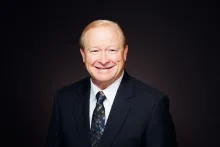
Jim has been in the ministry over 40 years serving fifteen congregations. He and his wife, Joan, started their service to God's church in Pennsylvania in 1974. Both are graduates of Ambassador University. Over the years they served other churches in Alabama, Idaho, Oregon, Arizona, California, and currently serve the Phoenix congregations in Arizona, as well as the Hawaii Islands. He has had the opportunity to speak in a number of congregations in international areas of the world. They have traveled to Zambia and Malawi to conduct leadership seminars In addition, they enjoy working with the youth of the church and have served in youth camps for many years.
