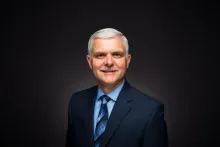


Randy Urwiller
This transcript was generated by AI and may contain errors. It is provided to assist those who may not be able to listen to the message.
I've entitled my sermon today rather... well, it's called Day of Atonement. That's the title of my sermon.
Oh, they're gonna love this when they get it on the web, and people are gonna tap in the type-in Day of Atonement. This will show up about... I'm sure Mr. Kubick could tell me there's probably another thousand messages or things out there, Day of Atonement. I was having a brain freeze this morning. That's the best I came up with for the title, but it's an appropriate title. So we have gathered here today in Holy Convocation, and that is according to God's timing, according to God's command, and as we heard in the sermon, we are commanded to observe the Day of Atonement. This day is very rich in spiritual meaning. Today's sermon I'm going to take you, as we... with me, I hope, as we review the significance of the Day of Atonement. In this day regards the unprecedented events in human history that are prophesied to occur after Jesus Christ returns to the earth. The Day of Atonement symbolizes the reconciliation of God in all humanity. All humanity. This is not the only holy day, of course, that focuses on the topic of reconciliation. The Day of Atonement, like Passover, uses animal sacrifice, those symbols, and the shed blood as symbols for the blood of Jesus Christ that atones for our past sins, or that reconciles us, that makes us at one with God. But while Passover concerns the redemption of the firstborn and applies most directly to Christians whom God has called in this age, like ourselves, Atonement looks forward to that time when God will begin to make available reconciliation, the forgiveness to sin, to all human beings. All human beings. It started that great ingathering of his harvest. But for that to occur, Satan, the primary cause of sin, must first be subdued and banished so that he cannot interfere with human beings.
Who is Satan?
In Hebrew, Satan means the adversary.
It means the accuser in Greek. Satan also bears other names, Abaddon, meaning destruction, Apollyon, meaning destroyer, Belial. Belial means worthless or wicked. By the way, we could call these traits of Satan. Belial means worthless or wicked. Beelzebub means Lord of Dung. D-U-N-G. There's another word we use in this country.
Or filth. He's also called Lord of Flies. In ancient times, that would have been seen as a rather fertility thing because out of this filth, life spontaneously occurred. They didn't understand butterflies, laying eggs, and all this thing. So they made a god and named him.
Nowadays, I think it's as we know, it's an appropriate name. Belzebub, one of the names of Satan. And then there's devil, Diablos, which means false accuser and slanderer.
Satan is the prince of the power of the air, the spirit who now works and sons of disobedience. Ephesians 2-2. A number of these scriptures we're not going to turn to. We're just going to lay them out there. He is the power of darkness, the wicked one who sways the whole world.
He is the god of this age, who blinds humanity from understanding God's truth.
He is the ruler of this world. Satan is our adversary, who walks about like a roaring lion, seeking whom he may devour. He is the great dragon, that serpent of old, called the devil and Satan, who deceives the whole world.
He is the originator of sin, for he has sinned from the beginning. He is the tempter, the enemy, the accuser of our brethren.
Let's read John 844. Let's turn to this one, John 844.
We see several traits of Satan mentioned in this scripture. John 844. John 844.
Here, Christ was speaking to his own enemies about him, or his detractors, who were trying to accuse him of being a son of Satan or something. Jesus speaks here, John 844. You are of your father, the devil, and the desires of your father you want to do. He was a murderer from the beginning and does not stand in the truth. Why? Because there is no truth in him. There's no truth in Satan.
When he speaks a lie, he speaks from his own resources, for he is a liar and the father of it. We don't want to be liars. We don't want to be like Satan.
Satan is also known for being cunning. Remember what he did to Eve in the Garden of Eden. He's full of hate. Let's be turning to Isaiah 14. He's not only full of hate, he's also full of pride. Isaiah 14 verses 12 through 14.
He was once called Lucifer before he fell. Isaiah 14 verse 12. How you are fallen from heaven, O Lucifer, son of the morning. How you are cut down to the ground. You who weakened the nation. You who weakened the nation. You who weakened the nation. You who weakened the nation. For you have said in your heart. Now I'm going to emphasize a certain pronoun here. For you have said in your heart, I will ascend into heaven.
I will exalt my throne above the stars of God. I will also sit on the Mount of the congregation on the farther sides of the north.
I will ascend above the heights of the clouds. I will be like the Most High. Aren't those beautiful scriptures to show us just how full of pride and arrogance and lacking humility, like we heard in the sermon, how lacking humility he is? Satan is also known for casting thoughts to sin into our hearts. It was he who cast his thoughts into Judas, and Judas immediately turned around and betrayed Christ. You can jot that down if you want to look at that.
John 13, verse 2. And Satan also masquerades as an angel of light. He can make himself appear like righteousness. But it's a mask. It's a tawdry mask that Satan wears. It referenced 2 Corinthians 11-14. Those are the traits of Satan. Deceivers, of course. Deception is his game. He likes to lie. We should be profoundly grateful that God will be putting an end to Satan's works of deceit and sin.
Satan's relentless efforts to bend what is straight, to twist what is true, his efforts to ruin God's every effort and every purpose, they've always failed, and they will continue to fail. The Day of Atonement points to the time when Satan will be bound and unable to influence humanity. And that's why, although we're fasting, we should have great joy in this day. Profound joy. Let's turn to Leviticus 16, where we find God's instruction to ancient Israel for observing the Day of Atonement. And what we will review here are some of the symbols that look forward to this binding of Satan. And not just the binding of Satan, but also the reconciliation of humanity with God.
So in Leviticus 16, 7-9, let's begin here. Here we read a description that Aaron the priest was to select two goats for the people. Leviticus 16, 7, he shall take the two goats and present them before the Lord at the door of the tabernacle of meeting. Then Aaron shall cast lots for the two goats, one lot for the Lord and the other lot for the scapegoat. We're going to talk about that word. It's really a zazzle.
I'm sure if you've been attending services in the Church of God, you know this, but we must not forget it. A zazzle is A-Z-A-Z-E-L. And so the other for the scapegoat, or we would say the a zazzle goat. And Aaron shall bring the goat on which the Lord's lot fell and offer it as a sin offering. Now this goat represented Jesus Christ, who would be sacrificed to pay the penalty for the sins of all humanity. Now that zazzle goat, or scapegoat, the scapegoat is a wrong word to use here.
A scapegoat, according to MiriamWebsterDictionary.com, a scapegoat is someone who unfairly, I stress the word unfairly, someone who unfairly bears the blame for others, or someone that is the object of irrational hostility. Well, that doesn't apply to Satan at all, does it? We have reason to be hostile against him, and he's not being treated unfairly by any means. And this actual Hebrew word here is a zazzle, and it's only used in Leviticus 16. It's the only place it appears, Leviticus 16.
Strong's concordance defines a zazzle as the goat of departure. I guess we could say the goat that is put away, which is quite appropriate, more accurate definition. And so this zazzle goat, serves a different purpose. Let's continue on verse 10. But the goat on which the lot fell to be the goat of departure, shall be presented alive before the Lord to make atonement upon it, and to let it go as the goat of departure as zazzle into the wilderness.
Now skipping down to verses 21-22, this is important. Aaron shall lay both his hands on the head of the live goat, confess over to all the iniquities of the children of Israel and all their transgressions, concerning all their sins, pointing them on the head of the goat, and shall send it away into the wilderness by the hand of a suitable man. The goat shall bear on itself all their iniquities to an uninhabited land, and he shall release the goat into the wilderness.
We understand the zazzle goat, whose goat of departure represents Satan, who bears responsibility for the sins of humanity. Aaron the high priest placed the sins of the people on this zazzle goat because Satan bears the responsibility for deceiving and leading humanity to sin.
And God will hold him accountable for his actions. Our God is a just and good God. The fate of the zazzle goat pictures, then, Satan's banishment at the start of Christ's reign on earth. Let's hold your place here in Leviticus 16 and turn back to Revelation 20, verses 1-3.
Revelation 20 verses 1-3. Shortly after Christ comes to the earth, the seventh trump, and we remembered this through Feast of Trumpets, the day of the Lord. Shortly after he arrives on earth, he will set about to get Satan away from humanity. He will have him put away. And that's what we find here described in Revelation 20 verses 1-3. This is Satan's future removal being described.
Then I saw an angel coming down from heaven, having the key to the bottomless pit, and a great chain in his hand. He laid hold of the dragon, that serpent of old, who is the devil and Satan, and bound him for a thousand years. And he shall cast him into the bottomless pit, and shut him up, and set a seal on him, so that he should deceive the nations no more, till the thousand years were finished. But after these things, he must be released for a little while. And so, as Satan restrained at the beginning of the start of the... boy, what your brain does when you're not percolating, at the beginning of the Tabernacles of that time period, beginning of the millennium, with Satan restrained and uneatable to interfere, well then God can sit about to begin that long awaited beginning of humanity's reconciliation to him. Now, let's do go back to Leviticus 16 verses 15 through 19. Now, these verses describe the actions the high priest had to complete once a year, and he could do this only on the Day of Atonement. What we're going to see here is that he used to take the blood of the go to the sin offering into the Most Holy Place, the holiest part of the Tabernacle, right there to the very mercy seat. That mercy seat was symbolic of the throne of Almighty God. And so now, verses Leviticus 16, 15, we find this described. He shall kill, then he shall kill the go to the sin offering, which is for the people, bring its blood inside the veil, do with that blood as he did with the blood of the bowl, which was described earlier, and sprinkle it on the mercy seat and before the mercy seat. So he shall make atonement for the Holy Place because of the uncleanness of the children of Israel and because of the transgressions for all their sins. And so he shall do for the Tabernacle of Meeting, which remains among them in the midst of their uncleanness. There shall be no man in the Tabernacle of Meeting when he goes in to make atonement in the Holy Place until he comes out, that he may make atonement for himself, for his household, and for all the assembly of Israel. And he shall go out to the altar that is before the Lord and make atonement for it. And shall take some of the blood of the bowl and some of the blood of the goat and put it on the horns of the altar all around. Then he shall sprinkle some of the blood on it with his finger seven times. Cleanse it, consecrate it, and clean this of the children of Israel. So we find on Leviticus 16 that the high priest, what this symbolizes, is that the high priest acted out the function that Christ performs for us. Having ascended to the very throne of God to present the blood of his sacrifice, Christ intercedes for us, as he has since his resurrection, as our high priest. Now let's turn to Hebrews and we'll see this symbolism unfold here in Hebrews. Hold your place. Let's turn to Hebrews 9 verses 11 through 12, and we can see that symbolism more clearly. Hebrews 9 verses 11 through 12.
Hebrews 9 verses 11. But Christ came as high priest of the good things to come, with the greater and more perfect tabernacle not made with hands. That is not of this creation, not with the blood of goats and calves, but with his own blood he entered the most holy place once for all, having obtained eternal redemption. So because of Christ's sacrifice, we have direct access to that true mercy seat which is in heaven, the very throne of God. But let's also turn and look at Hebrews 4.14. Hebrews 4.14 through 16. Jesus Christ is our high priest and he is our intercessor. And because of his sacrifice, we are told that we can and we must come boldly to the throne of grace. Hebrews 4.14. Seeing then that we have a great high priest who has passed through the heavens, Jesus the son of God let us hold fast, cling to it, cling to our confession. For we do not have a high priest who cannot sympathize with our weaknesses, but was in all points tempted as we are and yet without sin. He was a perfect sacrifice. Let us therefore come boldly to the throne of grace that we may obtain mercy and may find grace to help in time of need. And so we see that the high priest in Leviticus 16 represents Jesus Christ who now acts as our high priest and makes intercession at the throne of God for us. He understands the challenges we face in our battles with temptation and with sin.
And so when we pray to God, it's good to know that Christ is there too. He's suffered. He knows what it's like. He knows how hard this life can be. And because of that, we can take great confidence in going to Him and in our humility and in our sorrow and seeking forgiveness through Him and to the Father. And now there's another aspect, of course, of the Day of Atonement we must consider. And that was referenced in our sermonette today. And that's our part. On a Atonement, we afflict our souls. We fast. Fasting represents our humble desire to be faithful and repentant and to be at one with God. So again, back to Leviticus 16. And we read this in one verse. Leviticus 1629. Here is the instruction from God on what we're to do, how we're to keep the Day of Atonement. Leviticus 1629. This shall be a statute forever for you. Forever. In the seventh month, on the tenth day of the month, you shall afflict your souls and do no work at all, neither a native of your country nor a stranger who dwells among you. For on that day the priest shall make Atonement for you, to cleanse you, that you may be clean from all your sins before the Lord. It is a Sabbath of solemn rest for you, and you shall afflict your souls. And just to make sure we understand, it says, it is a statute forever. We have to do this. We don't weasel out of it. We need to do this. Now, fasting on Atonement or any day, we fast, must mean more than simply abstaining from food and drink. It's more than just not eating or drinking. There needs to be more to it than that. And we learn that the more we do this, I think, through the years. Afflicting our souls with a fast on the Day of Atonement helps us to be humble and to be contrite, as we heard, contrite before God. Humility is that check on our human pride, which we do have. We all have it. And human pride is that mindset we need to discern, because it reveals to us where we're sinning in our lives. Humility helps us to snoop it out, to see where we need to repent of sin. Humility helps us to seek God's forgiveness through Christ's sacrifice. Now, fasting weakens us physically, especially as we near the end of that 24-hour period. And I know our kids used to look at the clock a lot. They would fast with us. They decided to, and we let them. And as we get near the end of the 24-hour period, like we are now, we're starting to feel the full effects, I think. And after going without food and water for a day, it does give us that quick reality check. It makes us realize just how fragile we are, doesn't it? And how much we depend on things beyond our own capabilities to provide.
So when we feel shaky or headaches from fasting, we tend to remember there were not such tough stuff like we thought we were, are we? We can be pretty tough when we eat three or more square meals a day, throwing in the snacks and things like that. We can feel pretty tough and capable of conquering everything and anything. But when we fast get shaky in the knees and lighten the head, God wants us to recognize that as a humbling, to recognize that we do need Him. And it's crucial that we be reminded of how much we need God's physical blessings, and especially the blessings of having our sins forgiven. But being weak and physically also helps us focus on God's grace and mercy, His grace and mercy towards our spiritual well-being. Without Christ's willing sacrifice and paying our death penalty, our death penalty, for our sins, yours and mine, we would have remained dead in our sins. We would still be unforgiven, and we would still be cut off from God and without hope of any salvation. Without Christ's resurrection, we would not receive the Father's gift of His Holy Spirit, that begettle which gives us true hope of being born as sons and daughters in God's divine family in that first resurrection.
Afflicting our souls in atonement should remind us of just how much we need God.
We need God's blessings physically to stay alive. We need His blessings spiritually so that we might overcome sin, so that we might be forgiven. We need His blessings spiritually so that we might truly live. Life is fine, isn't it? But we want to live.
And let's not forget this truth, either. God blesses us not because we deserve it. He blesses us not because we've earned it. God blesses us because He is God. He is love, and He is faithful. God has made salvation possible for us and for all people because He wants an eternal relationship with us as members of His family. And so, like loving children, then, we should forever want to please our Father by staying close to Him, by believing and doing everything He says. Even to doing those things we don't quite understand, and yet we do because He says to do it. We must remain humble and repent and seek His forgiveness for sin while striving always to love God by obeying Him. We should always remember John 14 verse 15. As we heard, this world doesn't like commandments. But Christ said, John 14 and 15, if you love Me, keep My commandments.
Now, let me shift direction just a little bit and ask us this question.
When the Atonement fast ends this evening, and I'm not going to tell you how long. You're supposed to be looking at me, not the clock, right? Well, you don't have to look at me. Forget that I said that. So, when the Atonement fast ends this evening, what will we do to stay close with God every day? What will we do? You know, physically, fasting is great. It humbles us. It makes us get close to God. It sets, really resets our compasses, doesn't it? But we can't do this every day for 24 hours at a stretch. It won't work.
But certainly, we stay close to prayer and studying, focusing our thoughts on God, living our lives in obedience to God. We continue staying close to God through repentance and always seeking His forgiveness. And yes, we absolutely must be asking God to give us the faith of Jesus Christ so that we will believe Him more fervently and so that we can and will obey Him more diligently. We can and must be doing all those things, but is there something else you and I should be doing?
Yeah, let's look at Colossians 3. Let's turn to Colossians 3. Colossians 3. What can we be doing when the atonement fast ends this evening so that we can stay close with God every day?
What we need to be doing is we must make choices. We must make choices that will keep us close with God.
Choice is an awesome power that God has given to each one of us. It is a power. How great of a power is it? We don't have to turn there, but it seems God says our choice is the power of life or death for ourselves. It's pretty powerful.
Choice is a power God gives to each of us. We need to make right choices, both large and small, every day. Making good choice is what Paul is talking about in Colossians 3 verses 1 through 4. Paul says, If then you were raised with Christ, seek those things which are above, where Christ is sitting at the right hand of God. Set your mind on the things above, not on things on the earth, for you died and your life is hidden with Christ in God. When Christ, who is our life, appears, then you will also appear with Him in glory.
After we are baptized and have received God's Holy Spirit in us through the laying on of hands, we understand that Christ dwells in us through God's Spirit. We have the power of choice to set our minds wherever we want to place them. We can place them on things above or on things on the earth. Of course, Paul is a very strong advocate here, and rightly so, that we think on the heavenly, that we think on salvation, that we think on the way of God. In verse 5 continuing, Paul writes, Therefore put to death your members which are on the earth. And then here, Paul, these types of earthly or we can all say worldly things that we must not set our minds upon, things that we must avoid. Now, I thought it was interesting, looking up that phrase, put to death your members which are on the earth. There's this Greek lexicon, gives a little more meaning here. He says, Paul is urging us to deprive the power or destroy the strength of the evil desire lurking in the members of your body. I thought that's an interesting way of putting it. Deprive the power. It's kind of like we choke off that need to do evil. Of course, a good way of doing that is staying close to God, relying on his spirit, his help in us. The NIV translates this as put to death whatever belongs to your earthly nature. In the English Standard Version, ESV says put to death what is earthly in you.
Well, the earthly is this list. This is a short list in some ways. Here's the sinful things, the earthly things. Paul advocates and urges us to put to death. Fornication. We can define this as sex outside of marriage as God defines marriage. We have to throw that in nowadays. There's uncleanness, which is moral corruption. Passion. In this case, passion or strong emotion is not what's being talked about. It's actual lust. Lusting for something that is contrary to what is good and lawful. Evil desire. We must get rid of that. That's the desire for what is forbidden. What is forbidden by God's law. Whatever is sinful. In covetousness, I think a covetousness is greedy desire. Greedy desire, which is idolatry. Why is covetousness idolatry? Well, it's because covetousness means we've placed something else in our lives before God.
And we human beings are prone to doing that. Sometimes we'll put wealth, money before God, or people before God. Sometimes we even put the self before God, such as what Satan did in wanting to take the throne of God. Verse 6 or 7, continuing on, because of these things, Paul says, because of these things, these earthly, sinful things, the wrath of God is coming upon the sons of disobedience, in which you yourselves once walked when you lived in them. And so yes, God hates sin and lawlessness and rebellion, and the wrath of God would ultimately here refer to the wrath God will pour out on the earth and upon the stubbornly rebellious in the day of the Lord. And the sons of obedience are those who walk even now in the ways of Satan's world. They're totally focused and consumed with the earthly things. Many of these things Paul just listed here.
So the being walking with the sons of disobedience, that's the way of our fleshly carnal nature, and living a life of unrepentant sin and separated from God. And Paul's right. That's the way you and I walked until the Father called us, and we repented, we were baptized and forgiven, and then we received the indwelling of God's Holy Spirit. And that's the way Paul wants us to keep walking, and we want to keep walking in the way of God. We never want to go back to being among the sons of disobedience. And so Paul's whole point here is to urge us onward with our focus on God and His way of life, and not to go back to our old earthly, worldly ways we buried in the water of baptism. To maintain our right relationship with God, we must keep choosing, and always choosing, to repent of sin and to believe and obey God. Paul puts the idea of making these choices in terms of putting off the earthly things and putting on the heavenly things. Continuing verse 8, he says, but now you yourselves, and he's speaking to other believers, people who have walked with God, he's speaking to us, but now you yourselves have put off all these as well. Anger, wrath, malice, blasphemy, filthy language out of your mouth. We're going to talk a little bit more about those things at the end of the sermon. Verse 9, do not lie to one another, since you have put off the old man with his deeds. We put him off in baptism. And you have put on the new man who is renewed in knowledge according to the image of him who created him, the image of Christ, where there is neither Greek, nor Jew, circumcised, nor uncircumcised, barbarian, Scythian, slave, nor free, but Christ is all and in all. And so the attitudes were to put off are of Satan. Whose world is this?
Satan's. These are his attitudes. We could call him the temporary ruler of this earth. He's the ruler of this world. And all of Satan's attitudes, like his traits we reviewed earlier, are rooted in pride. In contrast, we're to put on the way of Christ. Pretty clear what that is. Unity, harmony, oneness of spirit, oneness of spirit and purpose, where he says there is neither Greek, nor Jew, nor slave, nor free, but Christ is all and in all. It's all about reconciliation. It's all about forgiving and being forgiven. Reconciliation truly exists when we reject sin, and when we allow, we choose to allow Christ to reign in us and make us one through God's Holy Spirit, that indwelling of his Spirit. And so, yes, we must exercise our power to choose right from wrong. That's what we have to keep doing. And forever, long after this day of fasting is done, we must use our power to choose right from wrong, and then you've got to go one step further. We can't just choose right from wrong. What's next? You've got to do it. You've got to do right, and you have to reject the wrong. It takes action. But we have access to God's Spirit and all the strength and faith of Christ we need to put off sinful attitudes and ways of Satan and to put on God's way of life.
And then we see more of what this means to put on things of heaven. Verse 12, As the elect of God, holy and beloved, put on tender mercies. Is this what we live? Put on tender mercies. Kindness, humility, meekness, long suffering, bearing with one another, forgiving one another.
That one can be tough, but we're to do it. We're to forgive one another. And if anyone has a complaint against another, are we just supposed to complain and walk away? Just complain to everybody about it? No. It's not what we're supposed to do. If anyone has a complaint against another, even as Christ forgave you, so you must also do.
Do you notice here, verse 12, that we are called holy and beloved? That's something special. We are set apart when God places His Holy Spirit in us. And though God is love, and though God loves all mankind, beloved designates a special relationship with the Father, both as individuals and both as a church. Beloved is a very special relationship.
And so God the Father has called us now to have this close and personal relationship with Him and with our brethren, with others in the body of Christ, the Church. And that relationship is built on God. It's built on His love. It's built on our rejection of sin and the seeking out of forgiveness through Christ. So Paul urges us to put on love the bond of perfection so that nothing will keep us from being at one with God. And love is an action. Let's look at verse 14 through 17. But of all these things, put on love, which is the bond of perfection. This word also means a state of spiritual completeness. It's teleotes. It's a state of spiritual completeness.
Verse 15. And we must let the peace of God rule in your hearts, our hearts, to which also you were called in one body. And be thankful, Paul says. Let the word of Christ dwell in you richly. Great abundance. God is a God of abundance. Let the word of Christ dwell in you richly in all wisdom, teaching and admonishing one another in psalms and hymns and spiritual songs. We do love to sing. Singing with grace in your hearts to the Lord. And whatever you do in word or deed, do all in the name of the Lord Jesus, giving thanks to the Father through him.
And so Atonement looks forward to the time, yes, when God will have Satan bound and made of no effect to humanity. And yet we also can see that God helps us now to resist Satan's influence. He does that by placing in us his Holy Spirit, which allows Christ to reign in our hearts. We have to choose to let Christ reign. We have to get out of his way sometimes. Well, pretty much all the time. And when we draw near God humbly and reverently and seek forgiveness for our sins, through Jesus Christ's sacrifice, like it's part of what we're doing today, and when we practice God's love and forgiveness towards our brothers and sisters, then we are achieving that bond of perfection with God and with his church. Now, even so, even with all this, is Satan just going to sit back and not bother us? Is he just going to say, oh, they have God's Spirit. You've got to leave him alone. And he walks away from us?
The kids used to say, you wish. That's not what he does. Even so, Satan will always work to turn us from God, always work to turn us back to the earthly. See, that's what he is. He is the earthly. He's a fallen spirit, but he is of this earth now.
And even when Satan is not directly persecuting the church or directly persecuting us individually, he can still tear at us like a lion. He can still tear us down. Do we understand how he does that? He does that indirectly. He often does it indirectly through the attitudes of society and culture around us. He is the ruler of this world. And so, should we be surprised that animosity and not reconciliation dominates the mood of our society right now? You look at our society right now in this country, do you see animosity or reconciliation?
Forgiveness, kindness, humility?
Well, if we can narrow it down, we can talk about our nation's leaders.
No, it's not reconciliation. I wish it were. It's animosity. What do we receive day in and day out for years? It's always been there, but it seems to be fanned a little hotter. There are nothing but endless reports and lots of talk. Endless reports and talk of accusations, of lies, deceitfulness, power struggles, pride. That's what fills our media. That's what fills conversations when you talk with people. Is that of Satan? Where else would that come from? That's the traits of Satan we read from Scripture as I started the sermon.
And I find it discouraging and troubling and even possibly dangerous. Everywhere, people are choosing sides.
Have you noticed that? People are choosing sides.
It's like every issue has a team, and you're either with this team or that team.
Everywhere, we find this we versus them mentality. Can I give you some examples? I'm going to.
What do we have? Blue states versus red states. Right? You've heard of that. Democrats versus Republicans. Rich versus poor. Progressives versus conservatives. Pro-choice versus pro-life.
Real news versus fake news. Secular versus religious. Globalism versus nationalism. City folk versus country folk. Sex identity versus gender identity. Yeah, you probably need to look that up, too, because the meaning of these things keeps shifting. It's shifting, like saying. Sex identity versus gender identity. Vegetarians versus meat-eaters. I was going to say carnivores, and I found out, no, I'm supposed to be saying meat-eaters. Vegetarians have their opinions, and meat-eaters have theirs, but we push each other into camps, and we get angry and hostile and bitter at each other. That's what I'm talking about. We're welcome to our opinions. We're welcome to the choices we make and the repercussions we have. It's old people versus young people. Woke versus un-woke. Do you know what that means? Okay, look it up. You hear it all the time out there. You've got to keep up with this newspeak.
Woke versus un-woke. Legal versus illegal. Half truths versus half lies. Yeah, same thing. Well, not some people. Anyway, our society seems to be increasingly filled with this cacophony of angry voices and angry rants and haughtiness. I love that word. I hate to do it, but I love the sound of that word. Hottiness, backbiting, posturing, politicizing, kicking and screaming over just about anything we can imagine. Anywhere you look, that's what's out there. And I agree. True humility is rare, and real forgiveness is unknown in society, in our culture. The rancor grows, and it's going to get worse. I just know it. I don't want it to, but it's going to get worse. And we can look to Scripture and know it's going to get worse. It will come down to bloodshed. The rancor grows, and I catch myself, and I realize, and so I'll throw this for all of us, we must be extremely cautious of choosing sides, brethren. We have to be very careful, very careful. We live in Satan's world, but we must not practice his ways. That's what Paul's been talking about. Don't put those things on. What I'm describing, this division, that goes right back to what Paul is describing. All that animosity and hatred and pride and arrogance and indictiveness, vengeance-seeking.
God's Word must guide us. God's Word must guide us. Matthew 5, 44 through 45. That's what Satan wants us to be partaking of. That's what he's trying to douse us with, day in and day out, whether we want to hear it or not. It's a rather indirect, subtle, we used to talk about broadcasting.
He's trying to get us to pick up his way of life. We cannot allow it. That is contrary to everything God is about. Instead of doing like society, look what we're supposed to do. Matthew 5, 44 to 45. Jesus said, but I say to you, love your enemies.
We're going to have enemies, but we're to love them. Bless those who curse you.
Do good to those who hate you, and pray for those who spitefully use you and persecute you. Why?
45. That you may be sons of your Father in heaven. You see, it's very important we make right choices. It's very important we don't get sucked into this animosity, this hatred out there. That's exactly what Satan wants us to do, because then he gets us, and he can clobber us and devour us.
Romans 12. Let's turn to Romans 12.
Something else we're supposed to be doing quite unlike the world. Romans 12, 17-19 tells us to live peaceably with all men and women. All people. Romans 12, 17. Repay no one evil for evil, but that's what we hear about all the time.
Repay no one evil for evil. Have regard for good things in the sight of all men, even when throwing evil at you. You toss back some good.
If it is possible, as much as depends upon you, and that's a fair statement.
This is reasonable and logical. If it is possible, as much as depends on you, and with God's help we can pretty much do the impossible, live peaceably with all men. Verse 19, Paul says, Be loved, do not avenge yourselves.
But rather give place to wrath. For as written vengeance is mine, I, God says, I will repay. But what do we do? There's been weeks I've had to give up Fox News, because it's not news.
I still keep up. You've got to keep up. We have to watch. We have to be aware. We don't want to be sleeping. But if you watch a lot of this commentary, does your blood pressure go up? And after a while you get this sense of righteous indignation, and you sit there and I'll go, Get him! Go get him! You ever feel yourself doing that? And I do that, and I stop and think, Wait a minute! I just embarrassed myself, I suppose.
I don't want to see any children doing that after we're done, okay?
But that's the attitude. We're carnal, and that's what we want. We want things right. We want justice. We want people to keep the law. We want people that are representing us and our government to do the good and right thing. And when we don't, we want them to be taken care of.
We can't give place to wrath. We have...
Well, here's what we have to do. Look at 1 Timothy chapter 2.
1 Timothy chapter 2. I don't like it when I get worked up about people. It makes me negative. And that's where I guess what I'm talking about has been my experience, and I think it's a common experience. Here's what we should do, and here's what I've been doing, and I think... and I know you've been doing too. 1 Timothy chapter 2 verses 1 through 2. We're exhorted to pray for our leaders. We're to pray for our leaders, and I always add this to pray for our leaders that the church might have peace. Paul writes, therefore, I exhort first of all that supplications, prayers, intercessions, and giving of thanks be made for all men. We're supposed to be recognizing God's blessing upon all people, both good and evil. He takes care of us, and he's got a plan for all people. We need to thank God for that. And also, verse 2, he goes on, supplications, prayers, for kings and all who are in authority, that we may lead a quiet and peaceable life in all godliness and all reverence. And so I do pray for the leaders of our country, and we need to. They need a lot of help. They don't know just how badly they're being manipulated and twisted, poked and prodded by Satan, because he's got his agenda. They're victims. And if we believe what we believe, if we believe what we're doing here in Day of Atonement, we should be concerned for those people, those leaders, because they are getting so twisted in the wickedness of this world. And yet God is going to help them understand. Who do you suppose will be among the ones teaching these people about forgiveness, about humility? I'm looking at them.
That's why we cannot get them right now. We let God take care of it. But we do pray for peace, so the church, so we don't have to worry about restrictions. We don't have to worry about our doors being locked. We don't have to worry about the internet being shut down so that we cannot get our material out there. That may happen one day. It probably will. But until then, we're going to keep on. We are not of this world. And Paul reminds us—you can jot this down, Philippians 3.20—we are not of this world. Paul reminds us, he says, For our citizenship is in heaven. It's up there where we're supposed to be thinking. Our citizenship is in heaven, from which we also eagerly, eagerly wait for the Savior, the Lord Jesus Christ. And so we must put off the earthly and put on the heavenly. Through Jesus Christ, we must remain reconciled to God.
That's the part. We have to keep making those right choices. Sometimes the choices means we're going to have to unplug from the world. And I kind of recommend we do that during the feast. Now, the predicament of the world we live in today, to me, is proof why humanity needs to be reconciled with God. The evidence around us shows why humanity needs to learn God's way of life and the forgiveness of sin that God makes possible through Jesus Christ. They really need God. And that will happen when Satan is bound after Christ returns. So understanding the significance of the Day of Atonement gives us greater hope, doesn't it? It gives us greater hope for the future peace that God will bring to humanity. And along with his assurance, God's assurance that Satan will absolutely receive God's righteous judgment.
And we can be greatly encouraged knowing that our Father and Jesus Christ will bring about reconciliation true at one meant with all humanity. Not just us, but every other human being, people we know and love and would love to see happier and not so miserable. All those people, too. All people will come to know the same God of love and mercy that God has chosen us, that we've been blessed to know. We didn't ask for it. He's opened our minds to know him. What a blessing. And so we want to be like God our Father, and we should want all people to be like God, too.
And God will make that possible as the Day of Atonement reveals.
